




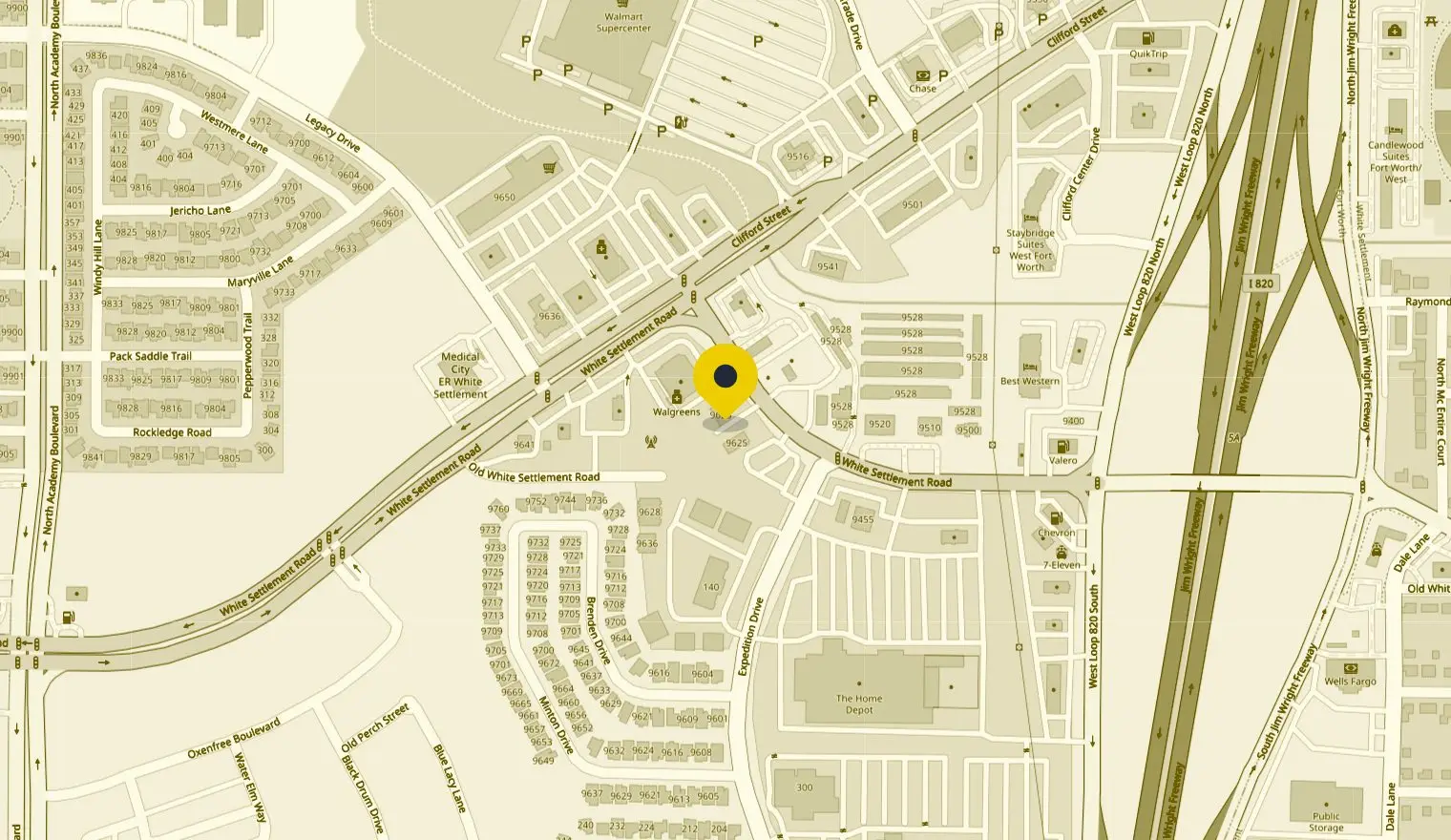
Delayed engagement means you shift an automatic into Drive or Reverse and the car pauses before it moves, often followed by a clunk or jerk. The most common causes are low or worn transmission fluid and lost hydraulic pressure inside the transmission. A pause that happens warm, every day, or gets longer deserves a professional diagnosis at our shop at 9613 White Settlement Rd, Fort Worth, TX 76108, before it turns into internal damage.
TL;DR
- A pause of more than about three seconds after you select Drive or Reverse is how some manufacturers define delayed engagement.
- A short delay on the first start after the car sat overnight can be normal on some models. A delay when fully warm usually is not.
- Low, burnt or contaminated fluid is the first thing to check. Pressure loss, worn clutches and stuck solenoids come next.
- Stalling, shuddering or jerking in the same period often has a related cause, such as a torque converter clutch that will not release.
- Early diagnosis is cheaper than waiting. Do not keep driving a transmission that slams into gear or slips.
Table of Contents
- What does delayed engagement feel like?
- When is a pause normal?
- What causes an automatic transmission to engage late?
- What if the car won’t go into reverse when warm?
- Why does the transmission jerk when slowing down?
- What is torque converter shudder at low speeds?
- Why does a car stall when shifting into Drive?
- How do technicians diagnose it?
- What fixes are available?
- When should you stop driving?
- Get it checked in West Fort Worth
- Our perspective
- FAQ
- Sources
What does delayed engagement feel like?
You move the lever from Park to Drive. The engine revs or idles, nothing happens, then the car lurches forward as the gear catches. Reverse does the same thing.
Manufacturers put numbers on it. One NHTSA-hosted Ford bulletin defines delay as more than 3 seconds between selecting the gear and the transmission input shaft stopping, measured after the vehicle sat 8 to 24 hours at 50°F (10°C) or above. A Chrysler tech tip uses the same three-second figure at start-up.
A healthy transmission should feel immediate. Think of it as the engine working before the car is ready to respond: the engine speed rises, but the power has not yet reached the wheels.
When is a pause normal?
Some designs lose fluid from the torque converter (the fluid coupling between engine and transmission) while parked. On the first shift of the day, it has to refill before the transmission can grab.
Ford’s service bulletin SSM 53879 says some 2020 to 2025 F-Super Duty trucks with the 10R140 transmission can pause after sitting overnight for this reason. Ford calls it normal and says it does not affect durability. Chrysler’s tech tip likewise treats a delay after several days parked as normal.
Use this pattern as a guide:
| What you notice | What it often points to |
|---|---|
| Delay only on the first start after sitting | Fluid draining back from the torque converter, old fluid or aging seals |
| Delay both cold and warm, with slipping or revving | Internal wear |
| Delay in Drive only | Forward clutch circuit |
| Delay in Drive and Reverse | Low fluid, pump or pressure problem |
The last three rows follow the pattern described in this diagnostic guide. A warm delay is the one that diagnostic guides treat as more serious.
What causes an automatic transmission to engage late?
An automatic works by hydraulic pressure. Fluid has to reach a clutch pack and squeeze it before power moves. Anything that leaks pressure or starves the pump adds delay. For a detailed look at the path, see this explanation of how oil travels to the forward and reverse clutches.
The usual suspects:
- Low or degraded fluid. Shop-based guidance says low or wrong fluid accounts for most cases seen in professional shops.
- Clogged filter or damaged filter seal. The pump cannot pull enough oil.
- Worn pump or sticking pressure regulator. Pressure is low in every gear.
- Worn clutch seals or plates. Pressure leaks at the piston, so the clutch grabs slowly.
- Stuck solenoids or a gummed valve body. The electronic or hydraulic command arrives late.
- Software or sensor faults. The control module times the shift wrongly.
Some models have known weak points. A GM bulletin for 2024 Silverado and Sierra 3500HD trucks ties delayed shifts and delayed reverse to degraded clutch piston seals, and says a valve body replacement does not fix it. A Honda bulletin on 2013 to 2014 Accord CVTs covers a longer first-shift delay after sitting, corrected with an updated valve body kit and software.
What if the car won’t go into reverse when warm?
Reverse typically needs higher line pressure than forward gears. One 4L60E guide notes that low fluid can cost you reverse before the forward gears. Worn internal parts or failing solenoids can also be the cause.
If Reverse fails only when hot, stop driving it hard and have the fluid level and condition checked right away. Heat thins old fluid and exposes worn seals.
Why does the transmission jerk when slowing down?
Jerking on deceleration is often a shift or converter-clutch issue rather than a clutch that is slow to engage. The transmission downshifts or releases the torque converter clutch as you coast to a stop. If a solenoid sticks or fluid is degraded, that handoff turns rough.
A GM bulletin on several 2013 models describes a stuck torque converter clutch solenoid that fails to release at the end of a coast-down, pulling the engine speed below idle. A TCM reprogram corrects it there.
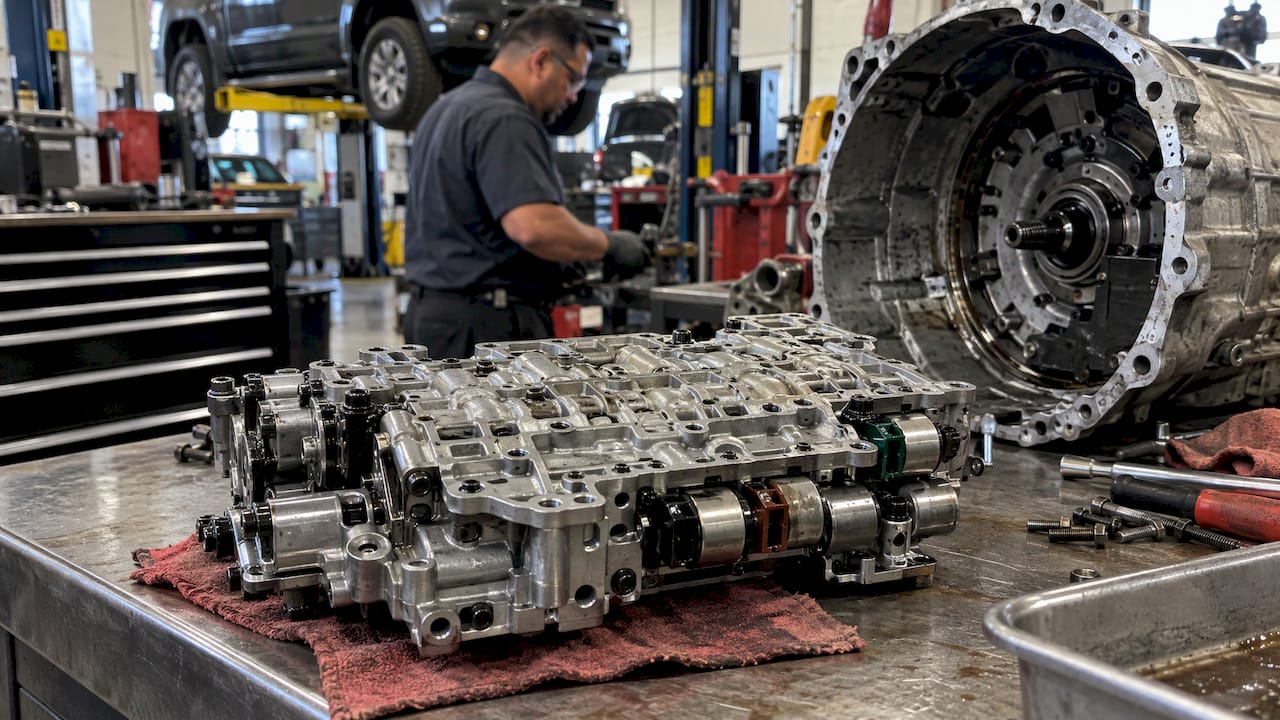
Common contributors include old fluid, a failing solenoid, a software calibration issue, or a worn converter. Heavy stop-and-go traffic on I-30 or Camp Bowie makes these shifts happen constantly, so the symptom shows up quickly.
What is torque converter shudder at low speeds?
Shudder feels like driving over rumble strips under light throttle. It can be mistaken for an engine misfire.
- GM bulletins for several 2019 to 2021 crossovers and SUVs link low-speed shudder to excess assembly lube in the fluid, corrected by a fluid drain and refill.
- Ford TSB 26-2171 covers shudder below 60 mph with no trouble codes. The correction involves converter replacement and further repairs.
- On the Honda Odyssey, a fluid change and reflash may work, but hardened seals need a converter rebuild.
The lesson is that a fluid service is a sensible first step, and a persistent shudder points to the converter itself.
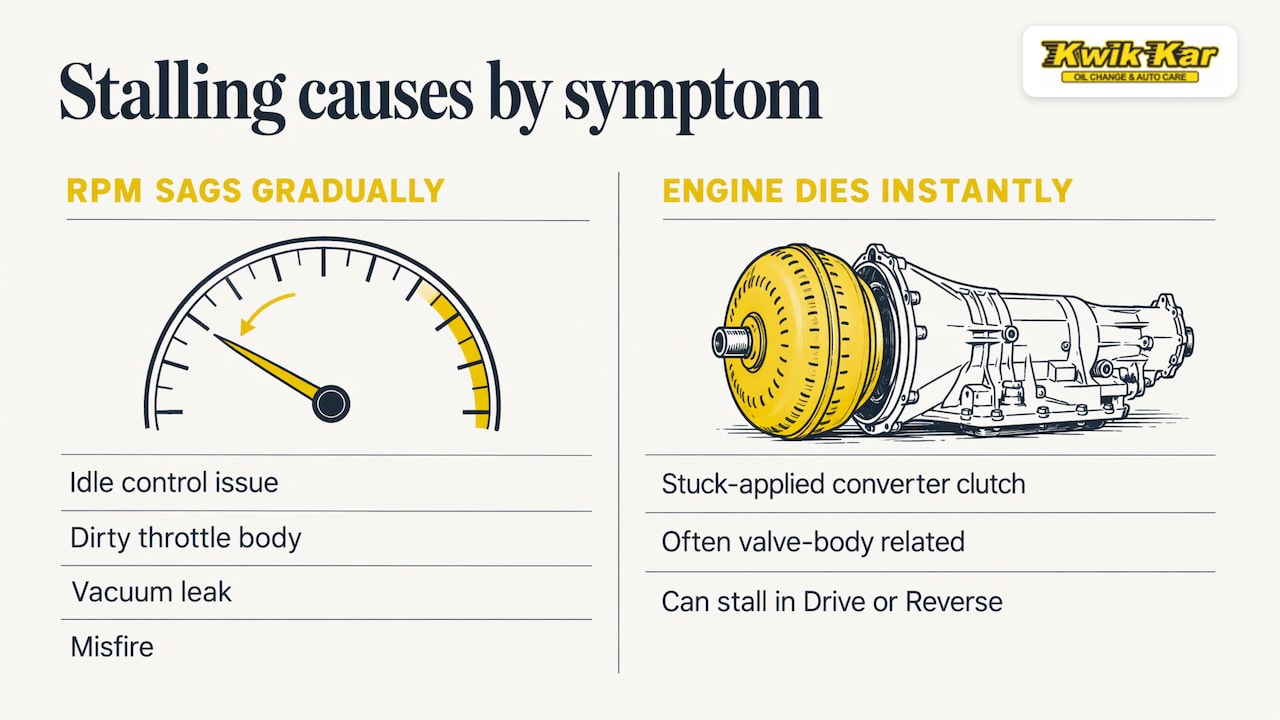
Why does a car stall when shifting into Drive?
Two families of causes exist. If rpm sags gradually, look at idle control, a dirty throttle body, a vacuum leak, a misfire or low fuel pressure. If the engine dies the instant the gear engages, a torque converter clutch that is stuck applied is likely, like stopping a manual car without pressing the clutch. This symptom guide lays out that distinction.
Manufacturers document it. A GM bulletin for 2024 to 2025 Silverado 1500 and Sierra 1500 names a stuck-on converter clutch, most often valve body related, as a cause of stalling in Drive or Reverse.
How do technicians diagnose it?
A proper diagnosis follows a sequence, not a guess:
- Check fluid level and condition. Healthy fluid is transparent red or light pink. Dark brown or black, a burnt smell, or a gritty or milky look all mean trouble.
- Scan for codes and review the pattern. Cold only, warm, Drive only, or both gears.
- Run a line pressure test. A gauge goes on the pressure port with the engine warm, and readings in each range are compared with factory specs. Low pressure in every range points to the pump or regulator. Low pressure in one range points to that circuit.
- Follow the result. Normal pressure with persistent delay suggests worn clutch seals that need disassembly.
At Kwik Kar we use professional diagnostic equipment and ASE-certified technicians for engine and transmission diagnosis, and we use digital vehicle inspections so you can see what we find. Our engine diagnostic and transmission services cover the whole chain from fluid to internal repair.
What fixes are available?
The repair follows the cause:
- Fluid service. Fresh fluid and filter can restore proper pressure. Read about the benefits of changing transmission fluid and how an automatic transmission fluid exchange works.
- Filter and gasket work. Our guide on dirty transmission filter symptoms shows what a clogged filter does.
- Valve body, solenoid or software repair. For stuck or slow shift hardware.
- Internal restoration. Worn clutches, seals or a converter need the unit opened up. See our page on rebuilding an automatic transmission.
Use the correct fluid for your vehicle. Some manufacturers specify one fluid only, so match the owner’s manual or the service document for your model.
When should you stop driving?
Get it looked at promptly if you notice any of these along with the delay:
- A hard bang or thud when the gear catches
- Engine revving without matching acceleration
- Burnt smell or dark fluid
- Stalling in gear
- A warning light
Fort Worth summers add heat load, towing and highway speeds, all of which stress a transmission that is already marginal. If you tow with a pickup or SUV, or drive rideshare or delivery routes all day, a small delay can escalate quickly. For related signs see common transmission problem symptoms and when a transmission is slipping.
Get it checked in West Fort Worth
Our shop at 9613 White Settlement Rd serves drivers from White Settlement, Westworth Village, Westover Hills, River Oaks, Lake Worth and Benbrook. We are a full-service repair center, RepairPal certified, and qualifying repairs carry a 24-month/24,000-mile warranty. Fleet owners can ask about fleet maintenance, and you can schedule a visit to have the pause diagnosed.

Our perspective
A transmission rarely fails without warning. The pause before Drive is the warning, and it is easiest to solve while the problem is still fluid, a filter or a solenoid.
We start with the basics: fluid level and condition, codes, then pressure. Our ASE-certified technicians use professional diagnostic equipment, and digital vehicle inspections let you see what we see before you approve work.
We would rather tell you the pause is a normal first-start trait of your model than sell you a repair you do not need, and we will tell you plainly when a repair is the right call.
Kwik Kar
FAQ
Is delayed engagement a sign the transmission is failing?
Not always. A short pause on the first start after sitting is normal on some models. A delay that happens when warm, grows worse, or comes with slipping or harsh engagement should be diagnosed.
Can low transmission fluid cause delayed engagement?
Yes. Low or degraded fluid is the most common cause, because the pump cannot build enough pressure to apply the clutch quickly. Checking level and condition is the first diagnostic step.
Will a fluid change fix it?
Sometimes. If old fluid or a clogged filter is the cause, a service can restore normal engagement. If the clutches or seals are worn, the transmission needs internal repair.
Why does my car stall when I shift into Drive?
Either the engine cannot handle the added load, because of idle, air or fuel problems, or the torque converter clutch is not releasing. A technician can tell which by when and how the engine dies.
Sources
- Ford bulletin defining delayed engagement
- Chrysler tech tip on delayed transaxle engagement
- Ford SSM 53879
- Delayed engagement pattern guide
- Delayed engagement diagnostic guide
- Hydraulic path explanation
- Delayed engagement diagnosis guide
- GM 2025 TSB on delayed shifts
- Honda Accord CVT bulletin
- 4L60E common problems
- GM bulletin on stuck converter clutch solenoid
- GM shudder bulletin
- Ford TSB 26-2171
- Honda Odyssey converter shudder
- Stalling when put in gear
- GM bulletin on stalling in Drive