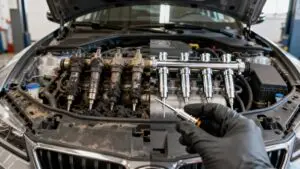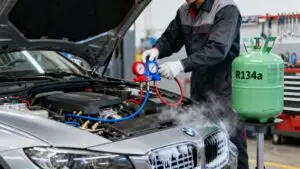




The most common symptom of an evaporative emission (EVAP) leak is a lit check engine light, usually with no change in how the car drives. Some drivers also notice a faint fuel smell, a gas pump that keeps clicking off, or hard starting after a fill-up. The EVAP system traps fuel vapor from your tank instead of letting it escape into the air, and the engine computer sets a code when it detects a leak. Most leaks turn out to be small, and many start at the gas cap.
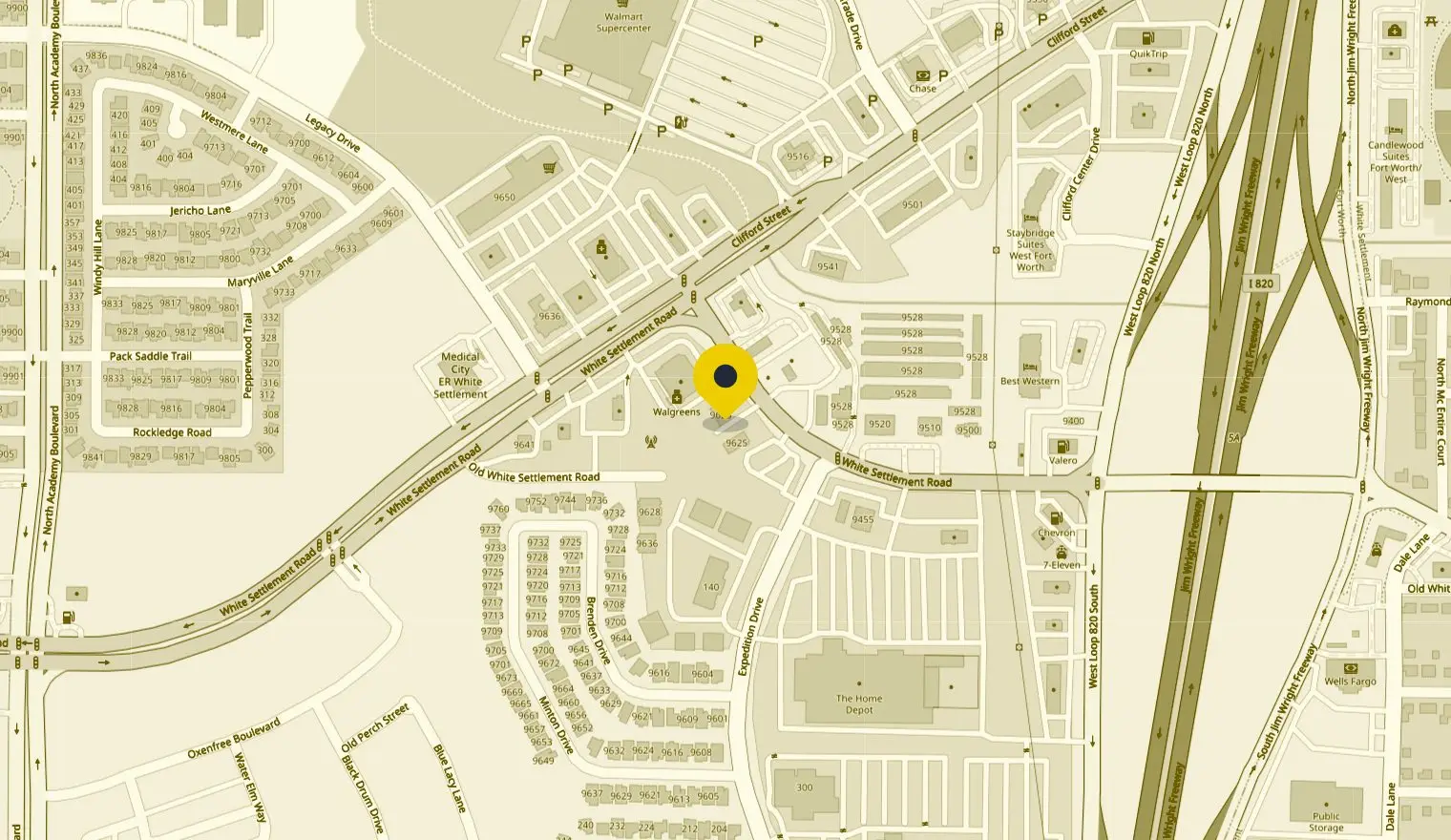
We see these codes regularly at our shop at 9613 White Settlement Rd, Fort Worth, TX 76108, from drivers in White Settlement, River Oaks, Westworth Village, Westover Hills, Lake Worth and Benbrook. This guide explains what an EVAP leak feels like, what causes it, what a P0456 code means, and when to book a diagnosis.
TL;DR
- The usual sign is a check engine light with no drivability change. A faint fuel odor may also occur, and symptoms vary by vehicle.
- P0456 points to a very small leak in the evaporative system. A loose, worn or damaged gas cap is a common first suspect, but not the only one.
- Other causes include purge or vent valve faults, cracked vapor lines, a damaged filler tube and a leaking charcoal canister.
- Driving with a small leak is generally not an emergency, but vapors escape and the problem will not fix itself. Have it checked.
- Texas dropped most non-commercial safety inspections on January 1, 2025, but Tarrant County still has emissions testing, and an active EVAP code can complicate it.
Table of Contents
- What does the EVAP system do, and what is a leak?
- What are the most common evaporative emission leak symptoms?
- What are the symptoms of a small EVAP leak?
- What does code P0456 mean?
- What causes a small EVAP leak?
- Is it safe to drive with an EVAP leak?
- How do technicians find and fix an EVAP leak?
- Perspective: why we start with the scan, not the part
- Will an EVAP leak affect an emissions test in Tarrant County?
- Get an EVAP leak diagnosed in West Fort Worth
- How can you prevent EVAP problems?
- FAQ
- Sources
What does the EVAP system do, and what is a leak?
Your fuel tank constantly gives off gasoline vapor, especially in heat. Instead of venting it to the air, the EVAP system stores it in a charcoal canister. Later, when the engine computer commands it, the stored vapor is purged into the engine and burned. The computer also tests the sealed system for leaks.
The main parts are:
- Gas cap and filler tube: seal the top of the system.
- Fuel tank and vapor lines: carry vapor toward the canister and engine.
- Charcoal canister: holds vapor until it can be burned.
- Purge valve: lets stored vapor flow into the engine.
- Vent valve: lets fresh air in as vapor is drawn out.
A leak is any place where that sealed path is no longer sealed. The size matters less than you might think. For vehicles built in 2002 and later, the system must be able to detect leaks as small as 0.020 inch, roughly the width of a pinhole. That is why a barely visible crack can light the dash.
What are the most common evaporative emission leak symptoms?
These are the signs, roughly from most to least common.
Check engine light
This is the main indicator. In most cases you will not notice the car driving any differently. The light may come on a day or two after you fuel up, because the computer runs its leak test under specific conditions and then reports the result.
Fuel smell
A faint gasoline odor near the rear of the car, or inside a closed garage, can point to escaping vapor. A strong smell, or any visible liquid fuel under the car, is different. That is a fuel leak, not an EVAP leak, and it needs prompt attention.
Trouble filling the tank
If the vent valve sticks closed, the tank cannot breathe as fuel goes in. The pump nozzle may click off again and again. If you have to fill slowly just to get a full tank, mention it when you book.
Hard starting after refueling
A purge valve stuck open can let extra vapor into the engine at the wrong time. Snap-on notes it can cause hard starting, especially right after refueling. It can also cause a rough idle for a few seconds after a fill-up.
Slightly lower fuel economy
A large leak may cause a slight drop in fuel economy and higher emissions. Do not expect to see this with a small leak. If your mileage fell sharply, look at other causes such as tires, spark plugs or sensors. Our guide to engine trouble signs you shouldn’t ignore is a good place to start.
What are the symptoms of a small EVAP leak?
Often, just one: the check engine light. A small leak releases a tiny amount of vapor and has no effect on power, shifting or idle. That is also why it is easy to ignore.
Typical small-leak pattern:
- The light comes on with no other change.
- The code is stored as a small or very small leak, commonly P0456 or P0442.
- The light may go out on its own after several drive cycles, then return.
- Nothing else seems wrong, until an emissions test.
If the light is flashing, that is a different problem, usually a misfire. Read what to do about a flashing check engine light and avoid driving hard until it is checked.
What does code P0456 mean?
P0456 means the computer detected a very small leak in the evaporative emission control system. Related codes describe different sizes or parts:
| Code | General meaning | What it usually suggests |
|---|---|---|
| P0455 | Large leak detected | Missing or loose gas cap, disconnected hose, major crack |
| P0456 | Very small leak detected | Worn cap seal, pinhole in a line, aging valve |
| P0442 | Small leak detected | Similar to P0456, slightly larger opening |
| P0441 | Incorrect purge flow | Purge valve or its wiring or vacuum supply |
The code tells you the computer’s test failed, not which part failed. Replacing parts from the code description alone is a common way to spend money and still have the light return.
What causes a small EVAP leak?
The usual suspects, from cheapest to most involved:
- Gas cap: a cap left loose, cross-threaded, or with a cracked or hardened seal. Snap-on notes seals can fail because the cap is repeatedly loosened and tightened.
- Damaged filler tube: rust or a crack where the cap seals.
- Purge or vent valve: a valve that sticks open or closed, or has a failed solenoid.
- Vapor lines and hoses: brittle rubber or plastic that cracks with age and heat.
- Charcoal canister: a leaking seam or a canister saturated with fuel.
- Sensors and leak-detection pump: faulty readings can look like a leak.
Gas caps matter more than their price suggests. An EPA study of 1998 model-year vehicles suggested gas-cap problems were more than 30 times as common as EVAP failures caught by the onboard monitor, which is why checking the cap first is sound practice.
Fort Worth conditions add stress. Summer heat increases fuel vapor and bakes rubber and plastic lines, and trucks and SUVs parked in sun for hours put the whole system through repeated heating cycles. We do not claim that heat causes any particular leak, but older vapor lines are exactly the kind of part that gets brittle over time.
Is it safe to drive with an EVAP leak?
It is technically safe to drive with an EVAP leak, but not recommended, because fuel vapors are released. You are not likely to stall or lose power. The costs are environmental, a possible smell, and the risk that the light hides a second problem.
That last point matters. A lit check engine light cannot warn you about a new, more serious code, such as a misfire, until the light is diagnosed. Do not drive on a flashing light.
If the light came on after you fueled up, first make sure the cap is clicked tight. Our article on a check engine light after getting gas walks through that check. If the light stays on after a few drive cycles, book a diagnosis.
How do technicians find and fix an EVAP leak?
A proper diagnosis follows an order, and skipping steps wastes money.
- Scan and record codes. Retrieve the trouble codes, look up the code-specific recommendations and record freeze-frame data, which shows conditions when the fault was set.
- Inspect the obvious. Cap seal, filler neck, visible hoses, and the canister area.
- Check valves and sensors with a scan tool, watching their commanded and actual operation.
- Pressure or smoke test when appropriate. Intermittent leaks can be hard to locate, and smoke, a gas-analyzer probe, or testing smaller sections of the system may help.
- Repair and verify. Replace the failed part, clear the code and confirm the monitor passes.
One caution applies to the shop, not the driver. A manufacturer service bulletin warns that smoke or pressure should not be the first step on some vehicles, because residual oil in the smoke can contaminate the leak-check module. That is a reason to use a shop that scans first rather than guessing.
A “small EVAP leak without a smoke machine” trick may find a bad cap or a loose hose. It will not reliably find a pinhole in a line or a canister seam. Professional diagnostic equipment exists for that.
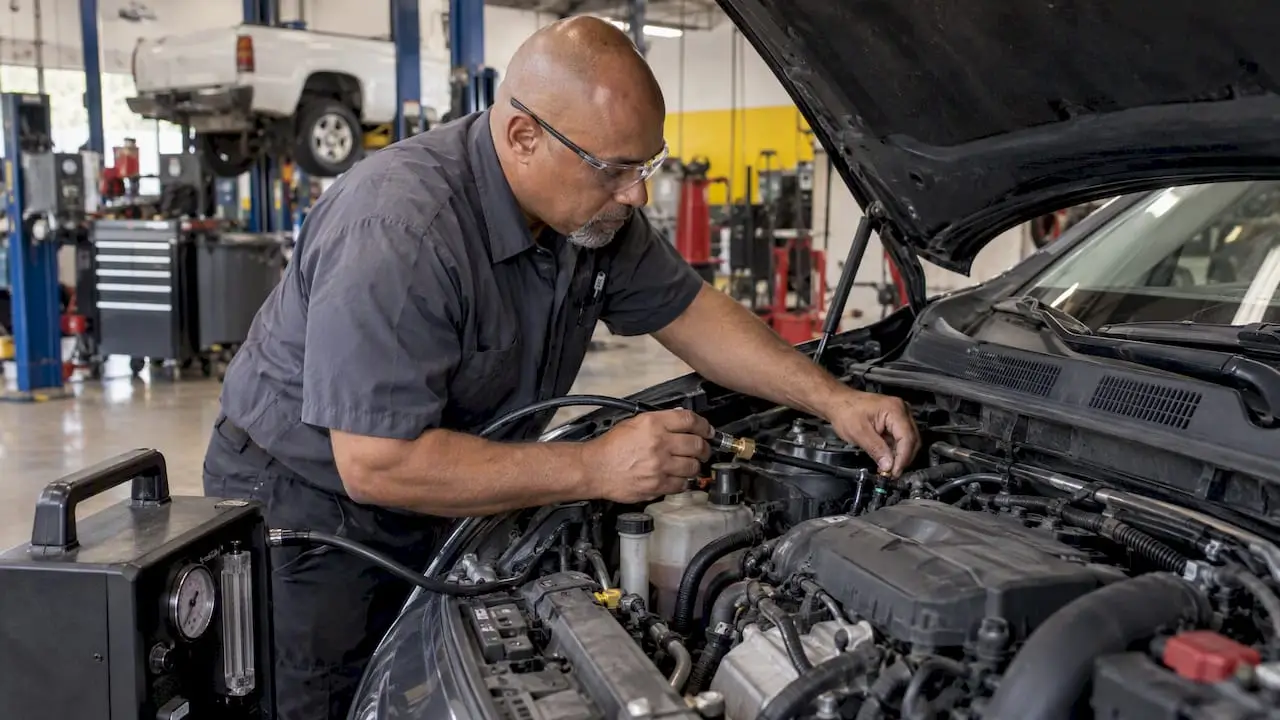
Perspective: why we start with the scan, not the part
Many drivers arrive having already swapped a gas cap or two. That is a fair first move, and sometimes it works. When it does not, the next step should be evidence, not another guess.
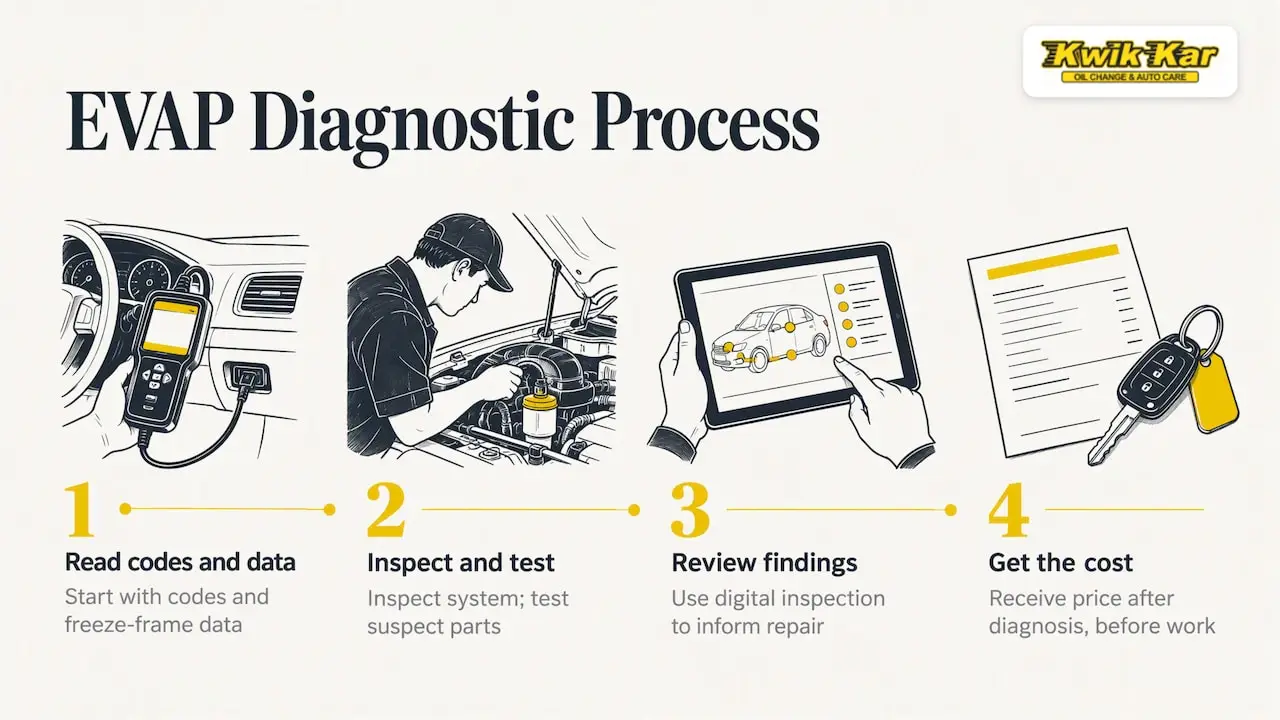
At our shop, ASE-certified technicians start with the codes and freeze-frame data, then inspect the system and test the suspect parts. Our digital vehicle inspections let you see what we see, so you can decide on the repair with real information. We are a RepairPal-certified full-service repair center, so an EVAP diagnosis sits alongside our brake, electrical, transmission, suspension and A/C work, and you do not need a second shop if the scan turns up something else.
We do not publish a price for an EVAP repair here, because the range runs from a cap to a canister, and quoting a number before diagnosis would be a guess. We will give you the cost after the diagnosis, before any work.
— Kwik Kar
Will an EVAP leak affect an emissions test in Tarrant County?
Possibly. Texas changed its rules in 2025, and it helps to separate the two kinds of tests.
- Safety inspections: As of January 1, 2025, non-commercial vehicles no longer need a safety inspection before registration. Owners still pay a $7.50 inspection program replacement fee at registration.
- Emissions tests: The same DPS notice says that vehicles registered in emissions counties still need emissions tests. Tarrant County is one of those counties for eligible vehicles.
- Commercial vehicles: Qualifying commercial vehicles remain subject to safety inspection requirements. If you run a fleet, check the current rules with DPS.
An emissions test reads your onboard computer. A lit check engine light or a stored EVAP code can cause a failed test. EVAP leak codes are among the most frequent codes found in OBD emissions inspections. Our Fort Worth emissions prep guide explains how to get ready, and you should confirm current requirements for your vehicle with the state.
Get an EVAP leak diagnosed in West Fort Worth
If your check engine light is on and you suspect an EVAP leak, our technicians can scan the codes, inspect the system and tell you what they find before you approve a repair. We serve drivers around White Settlement Road and West Fort Worth, from Westover Hills and River Oaks to Lake Worth and Benbrook, at one location: 9613 White Settlement Rd, Fort Worth, TX 76108.
See our full list of auto repair services, or schedule a visit at kwikkarwhitesettlement.com.

If your light has been on for a while, bring a note of when it first appeared and whether you had just refueled. It helps narrow the search.
How can you prevent EVAP problems?
You cannot prevent every leak, but a few habits reduce the odds:
- Tighten the gas cap until it clicks, every time.
- Do not top off the tank after the pump shuts off. Extra fuel can push liquid into the canister.
- Replace a cracked or hardened cap seal instead of reusing it.
- Have vapor lines and hoses looked at during regular preventative maintenance visits, especially on older vehicles.
- Follow your manufacturer’s maintenance schedule in the owner’s manual.
FAQ
Can a small EVAP leak go away on its own?
Sometimes the light turns off if the cause was a loose cap that you then tightened. After several drive cycles with passing tests, the computer may clear the code. If the leak is a cracked line or a failing valve, it will return.
Can a bad gas cap cause the check engine light?
Yes. A cap that is loose, missing or has a worn seal can break the seal of the whole system, and the computer will log a leak code. Tighten it until it clicks, then drive normally. If the light remains, have the system scanned.
How long can I drive with an EVAP code?
No fixed number applies, and the car will usually keep running normally. It is generally considered safe but not recommended because vapors escape. Schedule a diagnosis soon, and sooner if you have an emissions test coming up.
Does an EVAP leak make my car smell like gas?
It can, faintly, especially in an enclosed space such as a garage. A strong fuel odor or liquid under the car points to a fuel leak instead, which should be inspected right away.
Sources
- What Is an EVAP Leak And How Do You Diagnose It? (The Drive)
- REPAIRCARE: EVAP guide (Maryland Department of the Environment)
- Effectiveness of OBD II Evaporative Emission Monitors (EPA)
- Special Edition service bulletin (NHTSA)
- Evaporative Emission Control System (Snap-on)
- Technical Focus: Evaporative Emission Control System (Snap-on)
- P0442 code meaning (OBDadvisor)
- P0455 trouble code (AutoZone)
- Vehicle Safety Inspection Program Changes Now in Effect (Texas DPS)