



If your oil pressure light comes on while driving, pull over safely and turn the engine off. This warning usually points to dangerously low lubrication pressure that can damage your engine within minutes. Once stopped, check the oil level with the dipstick, or note if your vehicle uses an electronic monitor, before deciding whether to drive on or call for a tow.
TL;DR:
- Once parked on level ground, wait a few minutes, check the dipstick, and add oil listed in your owner’s manual if the level is low.
- A short, slow drive to a nearby shop is reasonable only if topping up extinguishes the light, the level is correct, and no unusual noises occur.
- Tow the vehicle if the warning persists or returns, oil looks milky or contains metal, or you hear knocking or ticking or see smoke.
- A shop should inspect leaks and sensor wiring, then measure actual pressure with a mechanical gauge to distinguish electrical faults from pump or passage problems.
Table of Contents
- What the oil pressure light means versus a service reminder
- Common causes behind the oil pressure light
- Step-by-step actions when the oil pressure light comes on
- How to check engine oil the right way
- Deciding between a short drive and a tow
- What a professional diagnostic visit typically includes
- How we handle oil pressure warnings at Kwik Kar
- Why we recommend a safety-first approach
- Get help fast when your oil light comes on
- FAQ
- Sources
What the oil pressure light means versus a service reminder
The oil pressure light and the oil-change reminder look similar but mean very different things. The oil-change reminder tracks mileage or time since your last service and signals routine maintenance. The oil pressure light monitors something more urgent: whether oil is actually circulating through your engine at a safe pressure right now.
Color and behavior matter here. A steady red oil can icon usually means active, serious trouble. A flickering or intermittent light can still signal danger, even though it looks less alarming. AAA classifies the oil pressure light as a stop-now signal, warning that continued driving with low oil pressure can destroy an engine quickly. Manufacturer guidance backs this up directly: Ford’s dashboard warning instructions tell drivers to stop in a safe place, check the oil, add some if needed, and get immediate service if the light stays on.
Common causes behind the oil pressure light
Several problems can trigger this warning, and they range from a quick fix to a serious mechanical failure. Here are the most frequent causes we see:
- Low oil level from a slow leak or an engine burning oil over time.
- Clogged oil filter restricting flow, or the wrong viscosity oil for your engine.
- Failing oil pump or worn internal clearances, which reduce pressure throughout the system.
- Faulty pressure sensor or damaged wiring, which can trigger a false warning even when oil pressure is fine.
- Oil sloshing during hard cornering or braking, which can cause the light to flicker intermittently without a true mechanical fault.
Some of these causes are inexpensive to resolve, like topping off oil or replacing a sensor. Others, like a failing oil pump, point to deeper engine wear and need prompt attention. If you’ve noticed oil spots under your vehicle, it’s worth reading about common causes behind oil leaks before the level drops low enough to trigger this light again. Manufacturer recalls occasionally play a role too. Ford issued a recall for certain EcoSport and Focus models tied to oil pump failure, a reminder that checking your vehicle’s recall status is a reasonable step if the cause isn’t obvious.
Step-by-step actions when the oil pressure light comes on
What you do in the next few minutes matters more than almost any other warning light on your dashboard. Follow these steps in order:
- Pull over as soon as it’s safely possible, moving fully off the road if you can.
- Turn off the engine immediately rather than letting it idle while you figure out next steps.
- Wait a minute, then check the oil level with the dipstick, if your vehicle has one.
- Add oil in small amounts if the level is low, using the type listed in your owner’s manual.
- Restart the engine briefly to see if the light clears once oil is restored to a proper level.
- Do not drive if the light stays on, flickers, or returns quickly. Arrange a tow or roadside assistance instead.
AAA’s guidance on low oil pressure notes that adding oil may extinguish the light without fixing the underlying problem, so a light that keeps returning after a top-off still needs professional diagnosis rather than repeated refills.
Pro Tip: Keep a quart of the manufacturer-recommended oil in your trunk. It won’t fix a mechanical failure, but it lets you respond safely to a low-level warning on the spot.
How to check engine oil the right way
Park on level ground and let the engine sit for a few minutes before checking, since oil needs time to settle back into the pan for an accurate reading. Pull the dipstick, wipe it clean with a rag, reinsert it fully, then pull it again to read the level against the marked lines. Oil below the lower mark means you’re running low; oil at or near the top mark is a full, healthy reading.
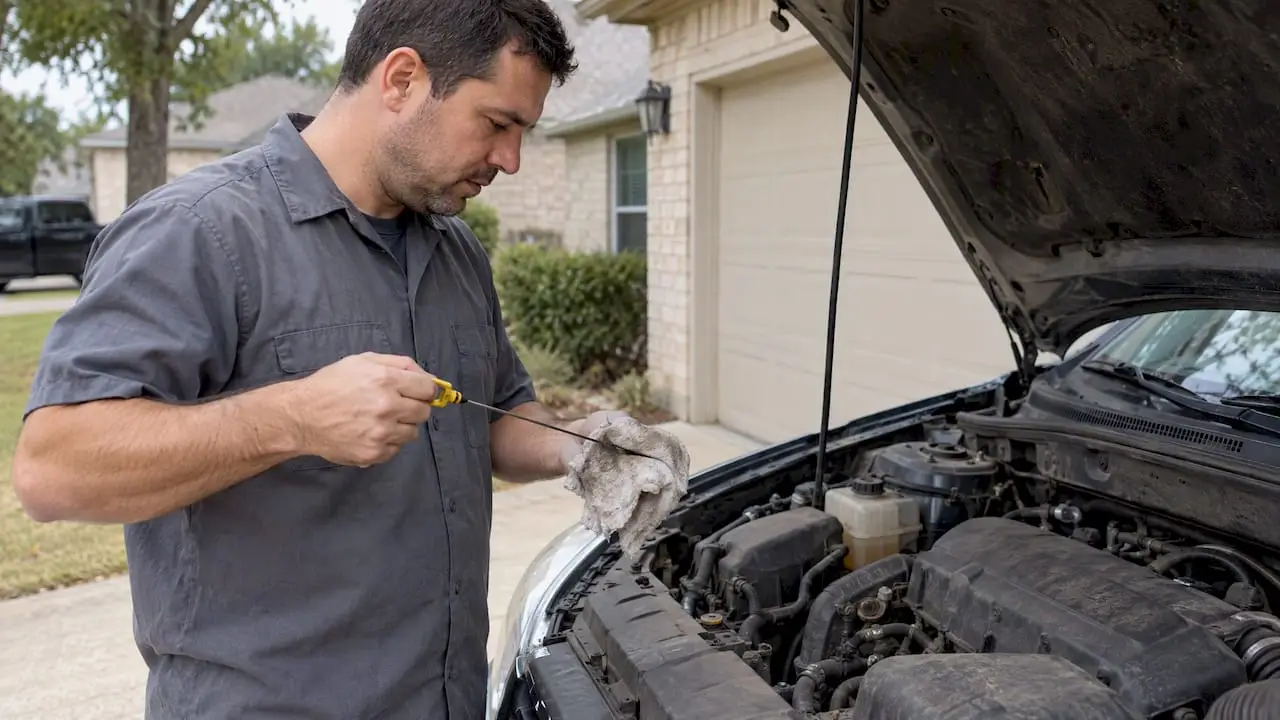
Pay attention to the oil’s condition, not just its level. Consumer Reports notes that milky oil can indicate coolant contamination, and visible metal particles can point to internal engine wear. Either sign means it’s time for a tow and a professional inspection rather than a drive to the shop. If your vehicle has no dipstick, many newer models rely on electronic oil-life monitors instead, so follow your owner’s manual for how to read and respond to that system.
Deciding between a short drive and a tow
A brief, low-speed drive to a nearby shop is reasonable only when the light went out after you added oil, you hear no unusual knocking or ticking, and the dipstick now shows a proper level. If any of those conditions aren’t met, don’t risk it.
Call for a tow when the light is steady red or keeps blinking, when oil looks milky or contains metal flakes, or when you notice new noises or smoke from under the hood. Vehicles without a dipstick or with electronic monitors you’re unfamiliar with are safer towed as well. Keep any oil receipts and note when the light first appeared, since roadside assistance and your shop will both want that information.
What a professional diagnostic visit typically includes
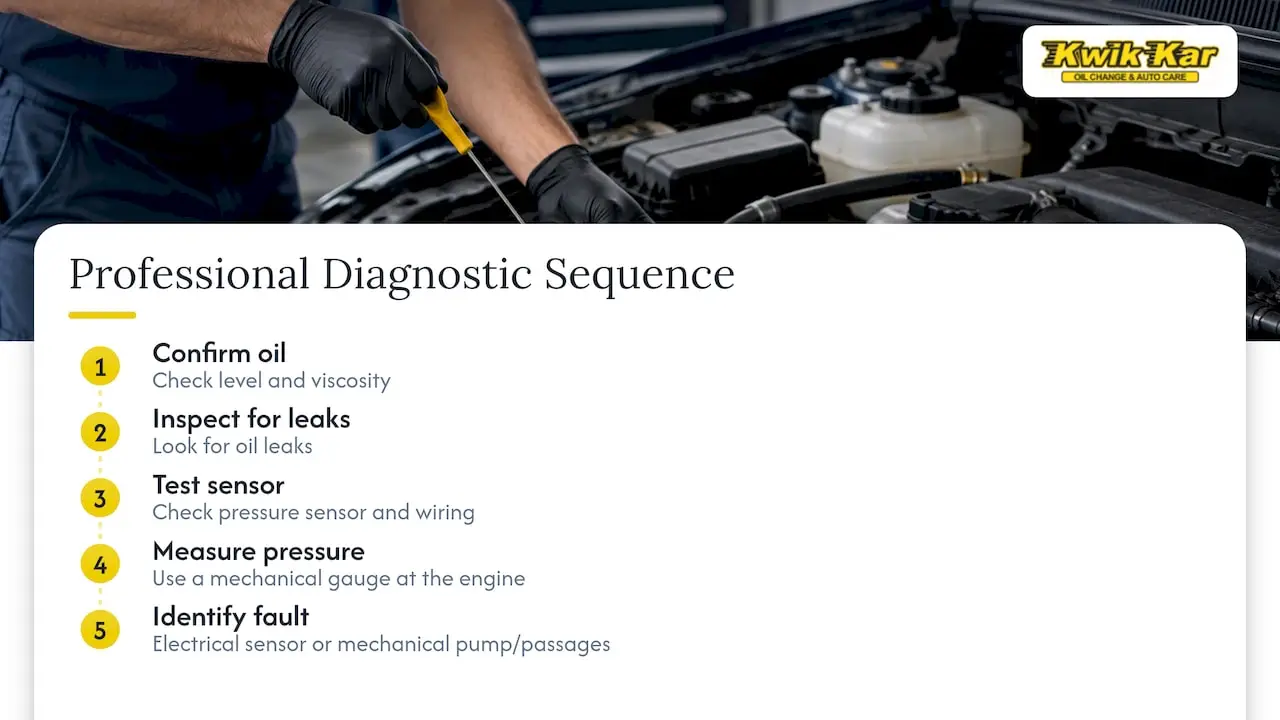
A proper diagnosis goes well beyond topping off the oil. AAA outlines the standard sequence a shop follows: confirming oil level and viscosity, inspecting for leaks, testing the pressure sensor and its wiring, and finally measuring actual oil pressure with a mechanical gauge at the engine. That gauge reading matters because it tells technicians whether the problem is electrical (a bad sensor) or mechanical (a worn pump or clogged passages), and shops test pressure directly before concluding the pump or engine needs replacement.
Bring your recent oil-change receipts, basic vehicle information, and a clear description of when the light appears, whether at idle, while cornering, or only when the engine is hot. That context speeds up an accurate diagnosis. Once the fault is confirmed, the parts needed and repair time will depend on what the testing shows.
How we handle oil pressure warnings at Kwik Kar
When a vehicle comes in with an oil pressure warning, our certified technicians follow the same sequence: confirming oil level and condition, checking for leaks, testing the sensor and wiring, and measuring actual pressure with proper equipment before recommending repairs. We hold RepairPal certification and stand by transparent pricing, so you know what a repair involves before we start. Every visit includes a digital inspection report with photos and notes, so you can see exactly what we found. If your light comes on, call us or have your vehicle towed in, and let us know so we can prioritize the safety check.
Why we recommend a safety-first approach
An oil pressure light is not a warning to manage around. Driving on low oil pressure can wear out bearings, seize the pump, or damage the engine in a matter of minutes, and that damage is far more expensive than a tow. Quick, honest diagnostics protect both your vehicle and your budget over the long run, which is why we always encourage stopping first and calling a trusted shop before the problem grows.
— Kwik Kar
Get help fast when your oil light comes on
If your oil pressure light is on right now, we’re ready to help. Call our shop or book a diagnostic appointment online and mention the oil pressure warning so our team can prioritize your safety check.
We also offer oil-change savings on Ladies Day every Wednesday for drivers who want to stay ahead of low-oil issues before they turn into warning lights.
FAQ
Can I drive my car if the oil light is on?
No, driving with the oil pressure light on risks serious engine damage within minutes. Pull over, turn off the engine, check the oil level, and only continue driving a short distance if the level was low and is now corrected with no unusual noises.
How often should I check my oil level?
Checking your oil level once a month, and before any long trip, helps you catch a slow leak before it triggers a warning light.
How do I reset my oil change light?
Resetting the oil change light is a separate function from the oil pressure warning and is typically done through a dashboard menu or a reset procedure listed in your owner’s manual. If the oil pressure light is on instead of the change reminder, resetting it will not fix the underlying issue and professional inspection is the safer move.
What does an oil change symbol look like?
The oil change symbol usually looks like an oil can with a drop coming from the spout, and it signals routine maintenance based on mileage or time. This is different from the oil pressure warning, which often appears as the same oil can icon but indicates an active lubrication pressure problem rather than a scheduled service.
Sources
- What do the lights on my dashboard mean | Ford Support
- How to check engine oil the right way | Consumer Reports