


Use a fuel injector cleaner for routine upkeep and minor symptoms like a rough idle or slightly lower gas mileage. Reach for a full fuel system cleaner, or a professional shop service, when you’re dealing with a persistent misfire, a check engine light that keeps coming back, or a GDI engine with intake carbon buildup. If you’re not sure which category your car falls into, a diagnostic scan beats guessing with another bottle off the shelf.
TL;DR:
- Fuel injector cleaners are best for minor issues like rough idle or slight mileage drops and should be used every few thousand miles as routine maintenance.
- Full fuel system cleaners and shop services are necessary when persistent misfires, recurring check engine lights, or significant carbon buildup are present, especially in GDI engines with over 60,000 miles.
- Chemical cleaners can’t fully remove baked-on carbon deposits on intake valves in GDI engines, which require mechanical procedures like walnut blasting for effective cleaning.
- Using Top Tier gasoline with enhanced detergents reduces deposit buildup and can minimize the need for costly fuel system treatments over time.
- Always follow product instructions for additives to avoid over-treating, which can harm fuel-lubricated components and trigger issues like check engine lights.
Table of Contents
- How fuel injector cleaner and fuel system cleaner compare
- Why detergents work and where they stop working
- Matching your symptoms to the right fix
- Getting the dose right and avoiding common mistakes
- What AAA and Consumer Reports actually found in testing
- Where a shop’s judgment matters more than a bottle
- How Kwik Kar helps when a fuel system needs more than an additive
- Sources
- FAQ
How fuel injector cleaner and fuel system cleaner compare
The two products sound alike, but they aim at different parts of your engine and solve different problems.
- Injector cleaners target the fuel injectors themselves, using a detergent poured into the tank, often at a ratio like 16 ounces per 20 to 30 gallons, to dissolve soft deposits and restore a clean spray pattern.
- Full fuel system cleaners work on a wider footprint, sometimes adding sprays or professional-grade solvents that reach the intake tract and throttle body, not just the injectors.
- Retail bottles for either type typically run a modest, one-time cost, while a professional flush or intake cleaning service costs more because a technician is doing hands-on work.
- For a healthy vehicle, an injector cleaner every few thousand miles is often plenty; a full system treatment is usually reserved for when symptoms show up, not a fixed schedule.
An injector cleaner is a maintenance habit. A full system cleaner or shop service is closer to a repair, aimed at deposits that have already built up enough to affect how the car drives.
Why detergents work and where they stop working
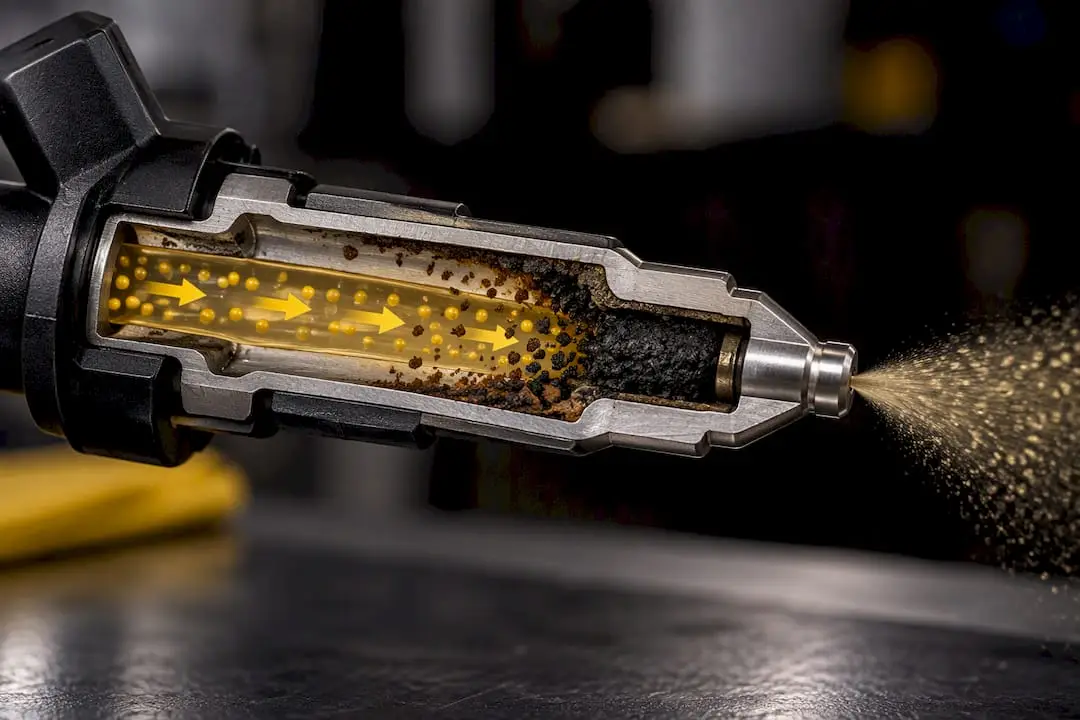
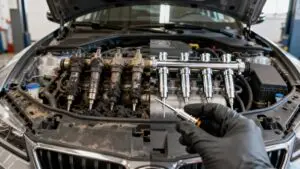
Fuel injector cleaners rely on detergent chemistry; for heavy-duty or diesel concerns, understanding what causes diesel injector carbonization can help you know when mechanical cleaning is needed. The additive mixes with gasoline, flows through the fuel system, and gradually breaks down the soft, sticky deposits that collect on the injector tip and disrupt its spray pattern. Full system cleaners often include stronger solvents, and some come as separate sprays applied directly to the throttle body or intake, since those areas don’t get exposed to whatever you pour into the tank.
There’s a limit to what any bottle can do. On direct-injection engines, fuel never touches the back of the intake valves the way it does in older port-injected engines, so baked-on carbon builds up there over time with nothing to wash it away. Chemical cleaners generally can’t reach or soften that kind of deposit. That’s the gap that walnut blasting fills: a mechanical process that physically blasts the carbon off the intake valves when a chemical approach won’t cut it.
- GDI engines are the most common candidates for this kind of carbon buildup.
- Older port-injected engines rarely need mechanical intake cleaning because fuel washes over the valves as it enters the cylinder.
Pro Tip: If your car is a GDI engine with over 60,000 miles and no history of intake cleaning, ask your technician to inspect the intake valves before assuming a bottle additive will fix a rough idle.
Matching your symptoms to the right fix
Not every symptom calls for the same response. Here’s a rough guide for deciding what your car actually needs.
- Minor idle roughness or slight hesitation usually responds well to a straightforward injector cleaner added at your next fill-up.
- A small drop in fuel economy with no other symptoms is often worth trying an injector cleaner before assuming a bigger problem.
- A persistent misfire, ongoing loss of power, or a check engine light that returns after clearing points toward something an additive alone won’t solve, and it’s time for a diagnostic scan.
- Heavy carbon buildup on a GDI engine, especially after years of skipping preventive fuel-system care, may need professional intake cleaning rather than another can of additive.
- A long history of using non-Top Tier fuel raises your risk of both injector fouling and intake deposits, so don’t be surprised if a first-time cleaning takes more than one treatment to show results.
If you’ve run two or three bottles through the tank and the symptoms haven’t budged, stop treating it as a maintenance question. That pattern usually means a shop diagnostic will find the real cause faster than continued guessing, and it can also help identify signs of bad fuel injectors that additives won’t fix.
Getting the dose right and avoiding common mistakes
Additives are only safe when you follow the label, not your own estimate of how much your car “probably needs.”
- Measure the dose against your tank size. Most injector cleaners are formulated for a specific ratio, often around 16 ounces per 20 to 30 gallons, and pouring in more doesn’t clean faster.
- Don’t double up on treatments back to back. Over-treating can reduce the fuel’s lubricating properties and stress components that depend on the fuel itself for lubrication, according to AAA guidance on restorative additives.
- Avoid topping off your gas tank after adding a cleaner. Extra fuel can saturate the charcoal canister in your EVAP system and trigger a check engine light you didn’t need.
- Skip continuous, every-fill-up use. Automakers generally don’t endorse ongoing aftermarket additive use, since they can’t test every product on the market.
One thing to watch: AAA’s fuel quality research found that gasoline with an enhanced detergent package can reduce intake valve deposits over several thousand miles of driving, which means the fuel you buy every week does more of the cleaning work than most people assume.
What AAA and Consumer Reports actually found in testing
Lab work backs up the idea that fuel quality matters more than most drivers realize. AAA’s testing found that Top Tier gasoline, which carries a stronger detergent package than the government minimum, kept engines meaningfully cleaner over simulated driving compared to non-Top Tier fuel. Separate Consumer Reports testing reached a similar conclusion, finding far fewer carbon deposits with Top Tier fuel and suggesting the modest price premium is often worth paying.
- Gasoline with enhanced detergent packages reduces the deposits that additives are designed to clean up in the first place.
- Consumer Reports has also flagged that shops sometimes package fuel system services as a broad, expensive upsell rather than a symptom-based fix.
Skip the “fuel system service” some shops recommend as routine maintenance if your car is running fine; it’s rarely something the manufacturer’s schedule actually requires.
Consumer Reports
The practical takeaway is simple: fill up with Top Tier fuel when you can, and treat additives as targeted cleanup rather than a subscription habit.
Where a shop’s judgment matters more than a bottle
A technician looking at a scan tool and a fuel trim reading can tell you whether an additive will help or whether you’re looking at intake carbon that needs mechanical attention. That’s a call worth getting before you buy a third bottle of cleaner. Documented findings, not guesswork, should decide whether the fix is a fuel system flush or something more involved.
— Kwik Kar
How Kwik Kar helps when a fuel system needs more than an additive
When symptoms point past what a bottle of cleaner can fix, a professional shop runs an engine diagnostic first, so any recommendation is based on what’s actually happening under the hood rather than a guess. Technicians handle everything from fuel injector inspection and cleaning to full tune-up services, and every recommendation comes with a clear explanation of what was found and why it matters.

- Engine Diagnostic identifies whether a symptom is fuel-related, ignition-related, or something else entirely.
- Fuel Injector service addresses injector-specific fouling that a retail additive hasn’t resolved.
- Tune-Up Services and Preventative Maintenance catch smaller issues before they turn into bigger repairs.
The shop holds certifications and uses certified technicians, providing transparent pricing before any work begins. If your check engine light keeps returning or your fuel economy has dropped and stayed down, schedule a diagnostic appointment and let us find the actual cause instead of another round of trial and error.
FAQ
Can I use fuel system cleaner and injector cleaner at the same time?
Most injector cleaners and full system cleaners overlap in ingredients, so using both in the same tank usually just means overdosing your fuel with detergent. Follow one product’s label at a time and space out treatments instead of combining them.
How do I know if I need fuel system cleaner?
You likely need a full system cleaner or professional service if you’re seeing a persistent misfire, a returning check engine light, or noticeable power loss, especially in a GDI engine. Minor idle roughness or a small mileage drop usually responds to a simpler injector cleaner first.
What is the best fuel injector and fuel system cleaner?
There’s no single best product for every engine, since the right choice depends on your symptoms and engine type. AAA’s testing suggests the biggest factor in keeping injectors and intake valves clean is consistently using Top Tier gasoline, with additives serving as a targeted follow-up rather than the main solution.
What happens if you put too much injector cleaner in your gas tank?
Overdosing an injector cleaner can strip away some of the fuel’s natural lubricating properties, which puts extra stress on fuel-lubricated components like the pump and injectors. Stick to the label’s dosing ratio and avoid stacking multiple treatments in the same tank.