




If your car’s heater is blowing cool air, the most common reason is that hot engine coolant is not reaching the heater core or warm air is not being routed through the vents. Before you troubleshoot, check your engine temperature gauge and coolant level: stop driving if the engine is overheating or you smell coolant. If heat comes and goes only at idle, low coolant or trapped air is usually the culprit.
TL;DR:
- The most common cause of a car blowing cool air from the heater is insufficient hot coolant reaching the heater core due to low coolant or trapped air in the system.
- A blower that only works on high speed strongly indicates a failed resistor, which can be identified by testing the fan at different speed settings.
- Signs of a leaking heater core include a sweet smell, foggy windows, and damp carpets, requiring immediate towing if detected.
- Repair costs vary significantly based on the underlying issue, with heater-core replacement being the most labor-intensive and expensive option.
- A professional diagnosis often involves pressure testing, system scans, and possibly system pressure or flow checks, especially for intermittent faults or complex cases.
Table of Contents
- Quick checklist: 5 to 10 minute checks you can do now
- Match your symptoms to the likely cause
- Step-by-step safe checks that give reliable clues
- What a shop checks that you can’t at home
- When to call a mechanic, and what to tell them
- Repair cost and time expectations by likely cause
- What our technicians see with heater complaints
- Schedule a heater diagnostic with Kwik Kar
- Sources
- FAQ
Quick checklist: 5 to 10 minute checks you can do now
Before you assume the worst, run through a few simple checks. These take just a few minutes and can save you an unnecessary trip to the shop, or at least give the technician a head start.
- Confirm your climate control is set to heat, the correct vents are selected, and the fan is actually running.
- Check the coolant reservoir level while the engine is cold, and look around the radiator and hoses for any signs of a leak.
- Let the engine warm up for several minutes, then carefully feel both heater hoses where they enter the firewall. They should feel similarly hot.
- Cycle through each fan speed. If only the highest setting blows air, that often points to a failed blower motor resistor.
- Write down exactly what you’re noticing: which vents are affected, whether you smell coolant, and whether the problem shows up more at idle or while driving.
Pro Tip: Keep notes on your phone as you test. Details like “cold at idle, warm on the highway” are the kind of clues that help a technician skip straight to the right diagnosis.
Match your symptoms to the likely cause
Once you’ve done the basic checks, your specific symptoms point toward a shorter list of suspects. Matching what you observe to a probable cause helps you decide what to test next, or what to tell the shop.
- Cold at idle but warmer while driving: usually low coolant or air trapped in the cooling system, since coolant flow through the heater core depends partly on engine speed.
- Only some vents blow cold: often a blend door or actuator problem, sometimes tied to a faulty vacuum line or servo motor.
- Air blows but never warms up: points to a blocked heater core, a stuck-closed heater control valve, or a thermostat that’s stuck open, according to Cars.com’s diagnostic guide.
- Little or no airflow at all: check fuses, the blower motor itself, or the blower resistor before assuming a bigger repair is needed.
- Heat that comes and goes unpredictably: often electrical, an intermittent actuator fault, or a coolant leak or air pocket that only affects flow under certain conditions.
For more detail on how these symptoms connect to specific parts, see our guide on how to fix a car heater and get warm air flowing again.
Step-by-step safe checks that give reliable clues
These checks are safe to do in your driveway and give you real diagnostic information, as long as you follow a couple of basic precautions.
- Check coolant level only when the engine is cold, looking at both the reservoir and, if accessible, the radiator. Never open a hot radiator cap: pressurized hot coolant can cause serious burns.
- Start the engine and let it reach normal operating temperature, then feel both heater hoses at the firewall. Equal heat in both hoses suggests good flow; one hose noticeably cooler than the other suggests a circulation problem such as a stuck thermostat, air pocket, or blocked heater core.
- Inspect hoses and clamps for softness, bulging, cracking, or oily residue, following the same visual checks AAA recommends for spotting leaks before they become bigger problems.
- Test the blower on every fan speed and check the fuse box for a blown HVAC fuse. If the fan only works on high, the blower resistor is a likely cause, since that speed setting typically bypasses the resistor entirely.
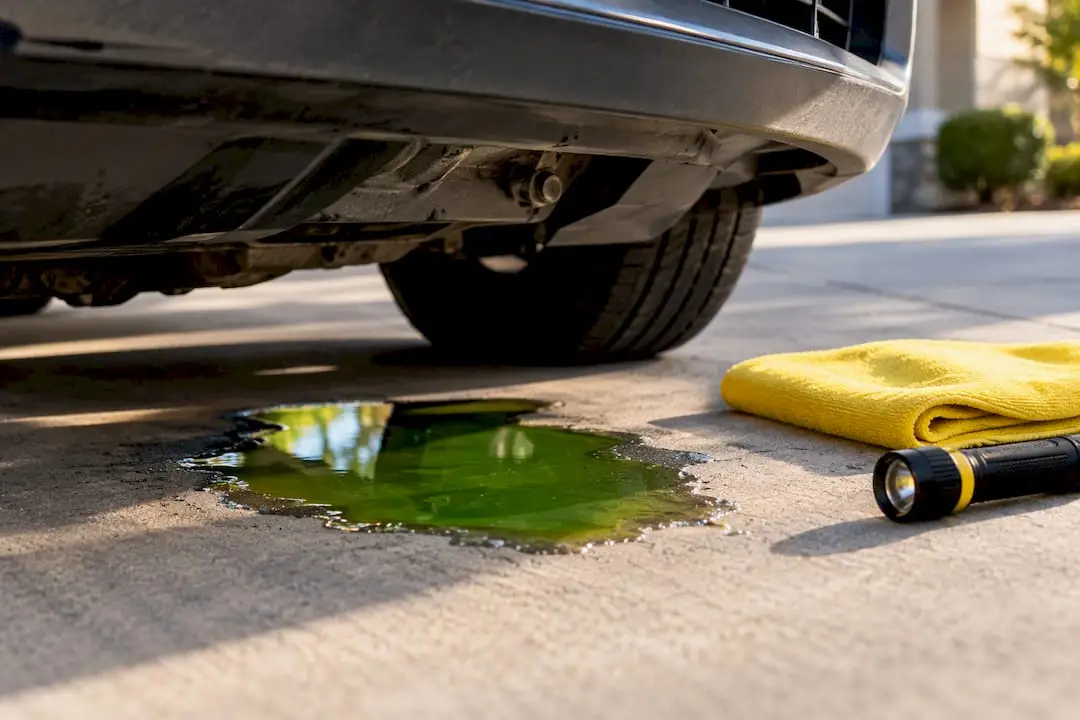
- Watch for a sweet smell, foggy windows, or a damp passenger-side carpet. These are classic signs of a leaking heater core, and if you notice them, stop driving and have the vehicle towed rather than risk overheating or coolant fumes in the cabin.
Statistic Callout: A blower that only works on its highest speed setting is a strong sign the resistor has failed, since that circuit path typically skips the resistor, according to Cars.com’s glossary of HVAC parts.
Pro Tip: If you smell coolant inside the car, don’t wait to “see if it gets worse.” Coolant vapor in an enclosed cabin isn’t something to drive through.
For a deeper look at leak detection, our guide on how to check for coolant leaks walks through the process in more detail.
What a shop checks that you can’t at home
Some heater problems need equipment and access that go beyond a home diagnosis. Understanding what a technician does helps explain why some repairs cost more than others.
- Blend-door actuators and servos are often buried behind the dashboard, which is one reason actuator repairs sometimes require more labor than parts.
- Live OBD-II scan data helps catch intermittent HVAC-related trouble codes that never show up when the car is sitting still in the shop.
- Technicians verify coolant flow the same way you did at home, by comparing heater-hose temperatures, but they can also pressure test the system to find hidden leaks or trapped air.
- Heater-core labor costs run higher because dashboard removal is often required just to reach the part, not because the part itself is expensive.
- If the fault is intermittent, a technician may need to ride along on a test drive or monitor the system over time to catch it in the act, similar to the approach described in technician discussions of intermittent HVAC faults.
Many climate-control faults never show up with the engine idling in a bay. Reproducing the exact driving condition is often the only way to catch them.
For more on how technicians approach tricky, hard-to-reproduce problems, see how to diagnose problems with a car like a pro.
When to call a mechanic, and what to tell them
Calling ahead with the right details can shave real time off your visit. Before you call, gather what you found during your own checks.
- Report exact timing: does it happen at idle, at speed, or both, and does it come and go.
- Note which vents are affected and whether you noticed any coolant smell or unequal heater-hose temperatures.
- Ask the shop to scan for HVAC-related diagnostic trouble codes and, if the issue is intermittent, to reproduce it during a test drive.
- Request an estimate that separates labor from parts, and ask what the safe next step is if the vehicle needs to be towed rather than driven in.
Stop driving and arrange a tow if you notice a strong coolant smell, visible leaking under the dash, or a rising temperature gauge. None of those are worth risking further engine damage over.
Repair cost and time expectations by likely cause
Costs vary widely depending on what’s actually wrong, so a diagnostic visit before any repair estimate is the norm, not an upsell.
- Low-cost fixes: a blown fuse, a clogged cabin air filter, or topping off coolant are typically quick, inexpensive repairs.
- Mid-range repairs: a stuck thermostat, a faulty heater control valve, or a failed blend-door actuator usually involve more labor because of dashboard or engine-bay access.
- Higher-cost repairs: heater-core replacement tends to sit at the top of the range, largely due to the labor involved in reaching it rather than the cost of the part itself.
Statistic Callout: Repair costs are strongly tied to diagnostic complexity, since many components sit behind dashboards or require specialized access, according to Cars.com’s overview of average repair bills. That’s part of why shops recommend a formal diagnostic before quoting a final number.
What our technicians see with heater complaints
Most no-heat visits we see fall into a short list: low coolant, a stuck thermostat, or a blower resistor that only lets the fan run on high. Technicians run thorough checks in a systematic order to avoid replacing parts without a clear diagnosis. Every finding is documented in a digital inspection report available for review before any repair approval. Routine maintenance practices such as topping off coolant, checking hoses, and replacing the cabin filter are effective ways to detect developing heater problems early.
— Kwik Kar
Schedule a heater diagnostic with Kwik Kar
A no-heat problem is easier to fix correctly than to guess at, and getting it checked properly the first time saves you from paying for parts you didn’t need. Kwik Kar’s technicians work through coolant flow, blower function, and control components in a set order, then walk you through what they found before any repair begins.

Services relevant to a heater complaint include:
- Engine Diagnostic, to check for HVAC-related trouble codes and confirm sensor readings.
- A/C, Heating & Cooling, which covers coolant flow, hose condition, and heater-core evaluation.
- Preventative Maintenance, including fluid checks that can catch a coolant problem before it causes no-heat symptoms.
- State Inspection, useful if you want a broader check while you’re already in the shop.
A diagnostic visit includes a visual and functional inspection, hose temperature comparisons, and where needed, a scan for stored codes, followed by a written estimate that separates labor from parts. If you’re dealing with cabin odors alongside a heater issue, this guide on tracking down the source of car odor is worth a look before your visit. You can book an appointment through our services page or explore preventive maintenance options to catch small issues before they turn into a cold cabin.
Sources
FAQ
Why is my car running but no heat?
This usually points to a coolant circulation problem, such as low coolant, a stuck thermostat, or trapped air preventing hot coolant from reaching the heater core. It can also mean an airflow issue, like a stuck blend door, that keeps warm air from reaching the vents even though the engine itself is running fine.
How much does it cost to fix a heater in a car?
Cost depends entirely on the cause: a blown fuse or low coolant is a simple, low-cost fix, while heater-core replacement tends to be more expensive because of the labor needed to access it. A shop can only give you an accurate number after a diagnostic check, since pricing on request is standard for repairs like these.
Why is my car blowing out cold air when the heater is on?
The most common reasons are low coolant, a stuck-open thermostat, or a blocked heater core, all of which prevent hot coolant from properly warming the air passing through the heater core. A failed blend-door actuator can cause the same symptom even when coolant flow is completely normal.
Why is my car’s heat blowing air but not heat?
Airflow without warmth almost always traces back to the coolant side of the system rather than the fan itself. Comparing the temperature of both heater hoses at the firewall after the engine warms up is one of the simplest ways to tell whether coolant is circulating through the heater core as it should.