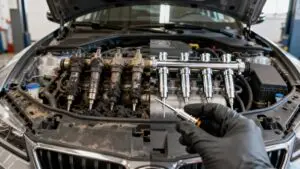





An engine misfire happens when a cylinder fails to properly combust its air-fuel mixture, and it almost always makes itself known through shaking, hesitation, or a loss of power. If your check engine light is flashing, stop driving and get the vehicle to a shop. If the light is steady and the symptoms are mild, you can usually drive carefully to your nearest service appointment, but the misfire will not fix itself.
TL;DR:
- Avoid driving if the check engine light is flashing or if severe shaking and power loss occur, as these signs indicate active misfire risks and potential damage.
- Worn spark plugs and ignition coils are the most common causes of single-cylinder misfires and are typically the cheapest repairs, especially affecting under load or during rain.
- Fuel delivery issues, such as clogged injectors or failing pumps, often cause misfires during acceleration or heavy load, impacting multiple cylinders or causing a general rough running.
- Mechanical failures like low compression or timing chain issues are less common but tend to produce persistent misfires across multiple cylinders and require more extensive repairs.
- Diagnosis should start with an OBD-II scan and targeted swap tests, avoiding unnecessary part replacements and reducing repair costs by pinpointing the root cause accurately.
Table of Contents
- Engine Misfire Symptoms: What You’ll Feel Behind the Wheel
- Car Engine Misfire Causes, Grouped by System
- How To Diagnose an Engine Misfire the Right Way
- Severity, Risk, and When to Stop Driving
- What to Expect at the Shop When You Bring It In
- Possible Intermittent Misfire Causes and Their Detection
- Preventive Maintenance Tips to Avoid Engine Misfires
- Cold Start Misfires vs. Misfires During Normal Driving
- Kwik Kar’s Approach to Diagnosing a Misfire
- Sources
- FAQ
Engine Misfire Symptoms: What You’ll Feel Behind the Wheel
Before you even think about codes or compression tests, your body usually catches the problem first. A misfire announces itself through the seat, the steering wheel, and the gas pedal long before you understand what’s causing it.
The most common engine misfire symptoms include a rough or shaking idle that you can feel through the floor or seat cushion, especially at a stoplight. You might also notice hesitation or jerking when you press the gas, almost like the car is thinking twice before responding. Loss of power is another telltale sign. It can feel like driving with the parking brake half engaged, particularly on hills or during highway merges.
Watch for these signs together, since misfires rarely show up alone:
- Rough, shaking, or uneven idle, most noticeable at stop signs and red lights
- Hesitation, stumbling, or jerking during acceleration or when climbing a hill
- Noticeable loss of power under load, along with a drop in fuel economy
- A sulfur or gasoline smell from the exhaust, or unusual popping and backfiring noises
- A Check Engine Light that’s either steady (lower-rate misfire) or flashing (severe, active misfire)
Pro Tip: Note exactly when the shaking or hesitation happens. Cold start only? Under hard acceleration? At highway speed? That single detail can cut a technician’s diagnostic time in half.
The Check Engine Light itself carries meaning beyond “something’s wrong.” A steady light generally means the onboard computer detected a misfire pattern that needs attention soon but isn’t causing damage by the minute. A flashing light means the misfire rate is severe enough that the system is actively warning you of ongoing risk. That distinction changes what you should do next, which we cover in the driving guidance section below.
Car Engine Misfire Causes, Grouped by System
Misfires trace back to four general systems, and figuring out which one is failing narrows the repair dramatically. Roughly speaking, worn spark plugs, failing ignition coils, clogged injectors, and vacuum leaks account for the overwhelming majority of cases technicians see.
Ignition failures are the most common and usually the cheapest to fix. Worn spark plugs, a cracked coil, or chafed wiring can all prevent a clean spark from reaching the combustion chamber. These issues typically affect one cylinder at a time, and symptoms often worsen when the engine is under load or during rain, since moisture can aggravate weak ignition components.
Fuel delivery issues show up differently. A clogged or failing injector starves a single cylinder of fuel, while a weak fuel pump or low fuel pressure can cause a rougher, more generalized misfire across multiple cylinders, especially under acceleration when fuel demand spikes.
Air and intake problems, like vacuum leaks, a faulty mass airflow sensor, or a badly clogged air filter, throw off the air-fuel ratio the engine needs. These tend to cause misfires that show up at idle and under light load, and they often bring a rough idle and a check engine light for a lean condition.
Mechanical causes are the least common but the most serious: low compression from worn rings, burnt valves, a blown head gasket, or timing chain problems. These usually point to multiple cylinders misfiring or a persistent problem that ignition and fuel repairs won’t solve.
- Single-cylinder misfire: usually ignition (plug, coil, wire) or one bad injector
- Multi-cylinder or random misfire: often fuel pressure, vacuum leaks, or a mechanical issue
If you suspect ignition components, our guide on when to replace spark plugs covers the wear signs worth watching for.
How To Diagnose an Engine Misfire the Right Way
Guessing at parts is how misfire repairs get expensive. A methodical, test-first approach reduces unnecessary part swaps and shortens the actual repair time, which is exactly how a competent shop should work through the problem.
- OBD-II scan first. Technicians pull stored codes, usually somewhere in the P0300 through P0312 range. The P0300 code meaning is “random or multiple cylinder misfire detected,” while P0301 through P0312 point to a specific cylinder. Per-cylinder misfire counters in live data help confirm which cylinder is struggling and how often.
- Check fuel trim data. Long-term fuel trim readings beyond roughly plus or minus 10 percent often signal a lean or rich condition tied to vacuum leaks or fuel delivery problems, giving the technician a head start before touching a single part.
- Swap testing. Moving a coil or injector from a healthy cylinder to a suspect one is a fast, low-cost way to isolate the failing component. If the misfire follows the swapped part, that part is the culprit.
- Compression and leak-down testing. When ignition and fuel come back clean, technicians move to cylinder balance and compression tests to rule out valve, ring, or head gasket problems. A notable deviation between cylinders usually points to a mechanical failure rather than an electrical one.
- Oscilloscope and advanced tools. For stubborn or intermittent misfires, an oscilloscope trace or crank-driven misfire detection can catch problems that a basic scan tool misses entirely.
Pro Tip: Ask your shop whether they use swap tests before recommending a full coil or injector replacement set. It’s a smarter, cheaper way to confirm the diagnosis before you pay for parts.
Suspect a fuel-side issue? Our breakdown on whether a bad fuel injector can cause a misfire walks through the specific symptoms to watch for.
Severity, Risk, and When to Stop Driving
A misfire doesn’t just feel bad. It actively damages other parts of your car the longer it runs. Unburned fuel from a misfiring cylinder gets pushed into the exhaust, where it can overheat and destroy the catalytic converter, along with fouling the oxygen sensors that help manage fuel efficiency.
The urgency comes down to how your check engine light is behaving:
- Steady light: A lower-rate misfire that needs prompt attention but generally isn’t causing damage minute by minute.
- Flashing light: An active, severe misfire that can damage your catalytic converter within minutes. Stop driving and arrange a tow.
- Severe shaking or repeated stalling: Treat this the same as a flashing light, even if the light itself hasn’t started flashing yet.
If your light is steady and symptoms are mild, drive gently, avoid highway speeds and heavy acceleration, and get to a shop as soon as you reasonably can. Delaying repair on a simple ignition problem is often what turns a low-cost spark plug or coil replacement into a much larger catalytic converter repair bill.
What to Expect at the Shop When You Bring It In
Before your appointment, jot down when the shaking or hesitation happens: cold start, idle, acceleration, or highway speed. Note whether the check engine light is steady or flashing, any unusual smells or noises, and any recent fuel fill-ups or repairs. That handful of details often saves diagnostic time.
A properly run shop follows a consistent sequence:
- Scan for stored misfire codes and pull live per-cylinder data
- Visually inspect spark plugs, coils, and wiring for wear or damage
- Run targeted swap tests to isolate the suspect component
- Move to compression or leak-down testing if ignition and fuel check out clean
- Recommend repairs with clear pricing before any work begins, then retest to confirm the fix
Simple ignition fixes, like a spark plug or coil replacement, are usually same-day repairs. Injector or mechanical issues, such as a head gasket or timing problem, take longer and cost more, which is exactly why an accurate diagnosis matters before parts get replaced. Certified technicians follow this same scan-first, test-before-you-replace approach so you’re not paying for guesswork. If your check engine light is on now, our guide to what a check engine light on really means is a useful next read while you schedule service.
Possible Intermittent Misfire Causes and Their Detection
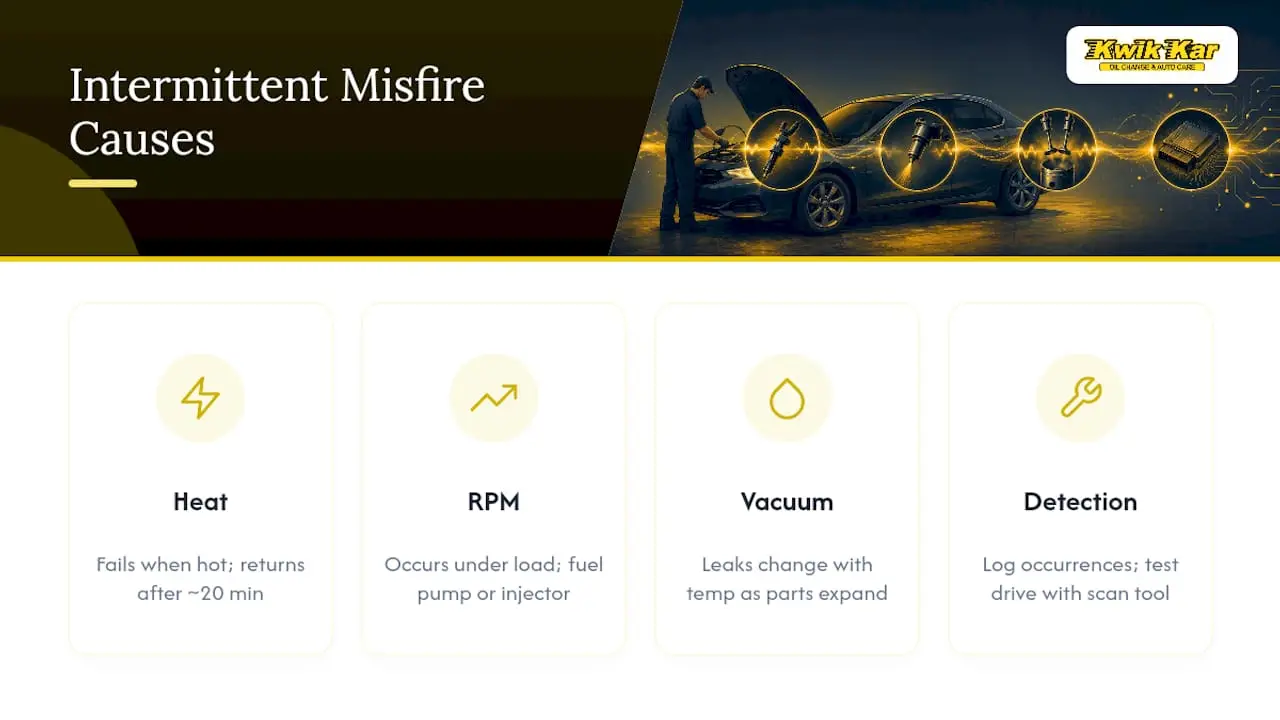
Intermittent misfires are the most frustrating kind, because they can vanish by the time you reach the shop. A misfire may be heat-dependent, RPM-dependent, or simply random, and distinguishing the pattern is often the key to a fast diagnosis.
Heat-related intermittent misfires often point to a coil that fails once it warms up, or a spark plug with a hairline crack that only arcs under heat and vibration. These misfires might disappear entirely on a cold morning, then reappear after 20 minutes of driving.
RPM-dependent misfires tend to show up only under load, such as during highway merges or hill climbs, which usually points toward fuel delivery. A fuel pump that’s losing pressure or an injector partially clogged with debris may perform fine at idle but stumble the moment demand increases.
Vacuum leaks can cause misfires that come and go with engine temperature, since some hoses and gaskets expand slightly as the engine heats up, sealing a leak that was open at cold start. This is one reason a misfire that’s present in the morning and gone by lunch doesn’t mean the problem resolved itself.
Detecting an intermittent misfire relies heavily on documenting exactly when it occurs, since technicians can then attempt to recreate those specific conditions on a test drive with a scan tool connected. Per-cylinder misfire counters help too, since even a misfire that isn’t currently active often leaves a stored count showing it happened recently.
Preventive Maintenance Tips to Avoid Engine Misfires
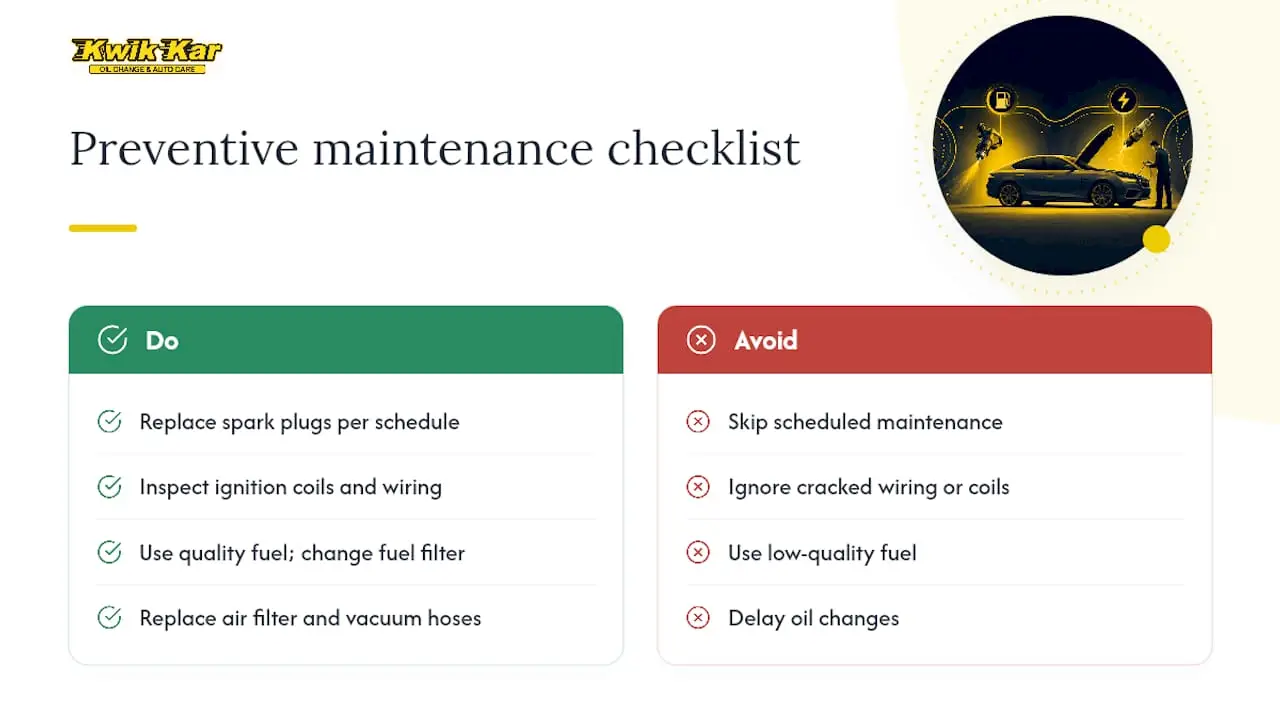
Most misfires are preventable with maintenance that costs far less than the repair a neglected misfire eventually causes. Spark plugs wear gradually, and replacing them on the schedule your owner’s manual recommends prevents the slow ignition degradation that leads to rough idle and hesitation.
Ignition coils and plug wiring benefit from a visual inspection during routine service, catching cracked insulation or corrosion before it causes a full misfire. Fuel system health matters just as much. Using quality fuel and keeping up with fuel filter replacement intervals helps prevent the injector clogging that causes fuel-related misfires.
Air filters are an easy one to overlook, but a severely clogged filter changes the air-fuel ratio your engine expects, straining the same sensors that get blamed for misfires. Checking and replacing vacuum hoses as they age also heads off the intake leaks that cause lean-running conditions.
Routine oil changes play a supporting role too, since a well-lubricated engine experiences less internal wear that can eventually affect compression. If you’re due for service, our guide to oil change types explains which option fits your vehicle and driving habits.
Staying on a mileage-based maintenance schedule catches small ignition and fuel issues while they’re still inexpensive to fix, rather than waiting for a misfire to force the issue.
Cold Start Misfires vs. Misfires During Normal Driving
A misfire that only happens on a cold morning tells a different story than one that shows up once the engine is fully warmed up, and recognizing which pattern you’re dealing with helps narrow the cause before you even reach the shop.
Cold start misfires often trace back to weak spark plugs or coils that struggle to fire consistently before the engine reaches operating temperature. Fuel that hasn’t fully vaporized in cold conditions can also make a marginal ignition component fail intermittently, then smooth out once things warm up. If your car stumbles for the first minute or two and then runs fine, ignition components and cold-start fuel enrichment are the most likely suspects.
Misfires during normal, fully warmed operation point more toward mechanical wear, vacuum leaks that widen with heat and vibration, or fuel delivery problems that only reveal themselves under sustained load. A misfire that appears specifically during highway driving or hard acceleration, rather than at idle, usually means the issue only shows up when the engine is working hardest, which fits with a fuel pump losing pressure under demand or a compression issue that’s borderline at low load.
Either pattern is worth reporting to your technician exactly as you experienced it. Whether the shaking happens at startup or two miles down the road changes which tests get prioritized first.
Kwik Kar’s Approach to Diagnosing a Misfire
Certified technicians work the same way this guide describes: OBD-II scan first, targeted coil and plug checks second, compression testing when the electrical side checks out clean. You get a clear explanation of what’s actually wrong and a cost-first repair plan before any work begins, not a guess dressed up as a diagnosis.
If your check engine light is on or your car has started shaking at idle, schedule a diagnostic appointment with a trusted auto care provider to find the real cause before it turns into a bigger repair. You can also browse current oil change and service coupons while you’re booking.
— Kwik Kar
Sources
- Engine misfire — O’Reilly Auto
- Shop Class: How to Diagnose an Engine Misfire — MotorTrend
- What happens if you keep driving with a misfiring engine? — The Motor Guy
FAQ
How Do You Fix an Engine Misfire?
The fix depends on the cause: worn spark plugs or a failing coil usually means straightforward replacement, while clogged injectors, vacuum leaks, or low compression require more involved repairs. A proper P0300 fix always starts with an OBD-II scan and targeted testing, not blind part replacement.
What Are the Three Most Common Causes of a Misfire?
Worn spark plugs, failing ignition coils, and clogged or failing fuel injectors are among the most frequent causes, with vacuum leaks close behind. Ignition problems tend to affect a single cylinder, while fuel and air issues often cause a more generalized misfire.
What Does a Misfire in Your Engine Feel Like?
Most drivers describe a shaking or vibrating sensation through the seat or steering wheel, along with hesitation or jerking when accelerating and a noticeable drop in power. Some also notice rougher idle at stoplights and reduced fuel economy.
Can I Still Drive if My Engine Is Misfiring?
If the check engine light is steady and symptoms are mild, you can typically drive cautiously to a shop while avoiding highway speeds and heavy acceleration. If the light is flashing or the shaking is severe, stop driving and arrange a tow, since continued driving risks catalytic converter damage.