





A wheel alignment typically costs between $60 and $150 nationally, with 2-wheel jobs running $50 to $100 and full 4-wheel alignments landing between $80 and $200. If your car pulls to one side, your steering wheel sits crooked, or your tires show uneven wear, that’s your cue to book one. Newer vehicles with driver-assist cameras may add an ADAS calibration fee on top.
TL;DR:
- Full 4-wheel alignments typically cost between $80 and $200, with luxury vehicles, EVs, and vehicles with advanced sensors at the upper end.
- The cost mostly depends on labor, which accounts for over 90% of the bill, especially for vehicles with suspension modifications or worn components.
- Vehicles with independent rear suspension, all-wheel-drive, or modifications usually require a 4-wheel alignment, which adds about $30 to $50 to the price.
- Shop tier and location significantly influence the price, with dealerships charging $90 to $250 and independent shops generally being more affordable.
- Vehicles with ADAS features require additional calibration, which can range from $100 to over $500, depending on static or dynamic procedures.
Table of Contents
- How Much Is a Wheel Alignment? Average Cost Ranges
- What Determines the Price of an Alignment
- Two-Wheel vs. Four-Wheel Alignment: Which Do You Need?
- Shop Tier: How Where You Go Changes What You Pay
- ADAS Calibration and Other Charges That Add to the Bill
- Is Paying for an Alignment Worth the Cost?
- What Happens During an Alignment Appointment
- Kwik Kar’s Take on Fair Alignment Pricing
- Book a Wheel Alignment With Kwik Kar Oil Change & Auto Care
- Sources
- FAQ
How Much Is a Wheel Alignment? Average Cost Ranges
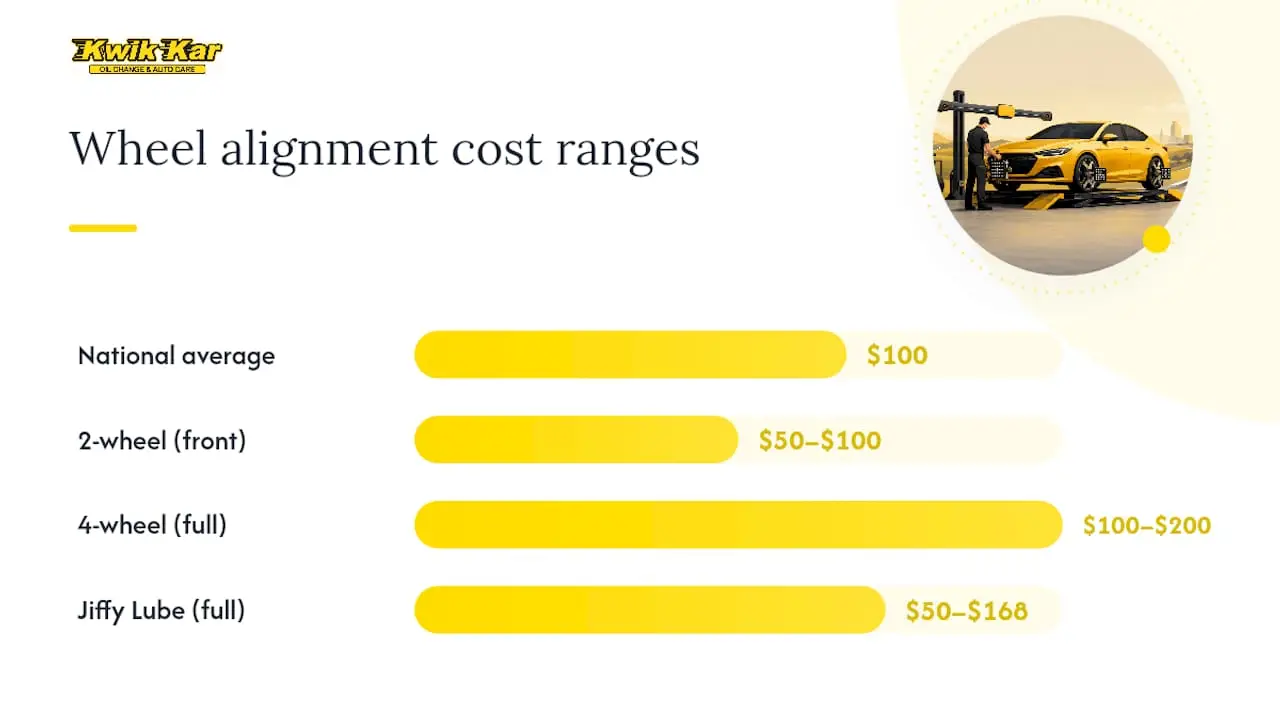
The national average for a wheel alignment sits around $100, but the range you’ll actually see quoted swings wider depending on what your car needs and where you take it. A 2-wheel, or front-end, alignment runs $50 to $100, while a full 4-wheel alignment typically falls between $100 and $200. Some chains publish even tighter windows. Jiffy Lube cites a full alignment range closer to $50 to $168, which overlaps with most independent shop pricing.
Vehicle type matters more than most drivers expect. A basic sedan with a simple strut suspension is the cheapest to align. Trucks, SUVs, and anything with independent rear suspension take longer and cost more. Luxury vehicles and EVs, which often carry stiffer tolerances and more sensors tied to the suspension, tend to sit at the top of the range.
State labor rates shift the math too, which is why the same alignment can cost $70 in one city and $140 an hour away.
| Vehicle type | Typical 2-wheel cost | Typical 4-wheel cost |
|---|---|---|
| Compact sedan | $50–$80 | $80–$200 |
| Truck or SUV | $70–$100 | $100–$200 |
| Luxury car or EV | $90–$130 | $130–$200 |
- Front-wheel-drive sedans usually need only a 2-wheel alignment.
- Trucks, SUVs, and all-wheel-drive vehicles almost always need the 4-wheel service.
- Local labor rates and shop overhead explain most of the price gap between towns.
What Determines the Price of an Alignment
Labor is the real cost driver here, not parts. AutOwner’s cost data puts labor at roughly 90% or more of the total bill, with parts making up a small fraction. That’s why the shop you choose, not the parts your car needs, usually swings the price the most.
A few factors decide where you land in the range:
- Shop tier and local labor rate. A tire shop in a smaller market bills differently than a dealership in a major metro.
- Suspension type and modifications. Lifted trucks, lowered cars, and aftermarket suspension kits often need extra adjustment time and sometimes specialty parts like adjustable control arms.
- Parts discovered during inspection. Worn tie rods, ball joints, or a damaged wheel bearing can’t be aligned around. They have to be replaced first, and that adds to the invoice.
- Equipment and procedures. Shops running modern computerized racks that reference manufacturer-specific geometry charge more than shops eyeballing camber with a bubble gauge, but they’re also more accurate.
Pro Tip: Ask the shop upfront whether their quote assumes your suspension is in good shape. If they find worn components mid-service, get a revised estimate before they proceed, not after the work is done.
Two-Wheel vs. Four-Wheel Alignment: Which Do You Need?
A 2-wheel alignment adjusts only the front wheels, correcting camber, toe, and caster on the axle that steers. A 4-wheel alignment adjusts all four corners, which matters because most modern vehicles have adjustable rear suspension geometry that can drift out of spec just like the front.
Here’s how to know which one your car needs:
- If you drive a front-wheel-drive car with a solid rear axle (common on older, budget sedans), a 2-wheel alignment is usually sufficient.
- If you drive an SUV, truck, all-wheel-drive vehicle, or nearly any car built in the last 15 years with independent rear suspension, you need the 4-wheel service.
- Lifted or lowered vehicles almost always need a 4-wheel alignment, since suspension modifications throw off both axles.
The price gap runs roughly $30 to $50 more for the 4-wheel job, and it usually adds 15 to 30 minutes of labor. If you’re not sure which your vehicle needs, ask the shop to check your suspension type before quoting. A shop that quotes a 4-wheel price without confirming your rear suspension type first is one to ask more questions of.
Shop Tier: How Where You Go Changes What You Pay
Not all alignment shops offer the same thing for the same money. Shop tier is one of the clearest price signals in the entire industry.
- Tire shops often run $50 to $130, and many offer free or discounted alignments with a new tire purchase, which can be the best deal available if you’re already replacing tires.
- Independent shops tend to land in a similar range and often provide solid value with less overhead than a franchise.
- National chains vary more, from $60 to $200, but frequently run coupon promotions worth checking before you book.
- Dealerships run $90 to $250 and are usually the safer choice when your car needs ADAS recalibration tied to specific manufacturer procedures.
Paying more makes sense when your car is newer, still under warranty, or equipped with driver-assist cameras that require calibration equipment a smaller shop may not own. For routine sedans with no ADAS features, an independent shop is often the smarter dollar-for-dollar choice, and transparent pricing matters more than the shop’s size.
ADAS Calibration and Other Charges That Add to the Bill
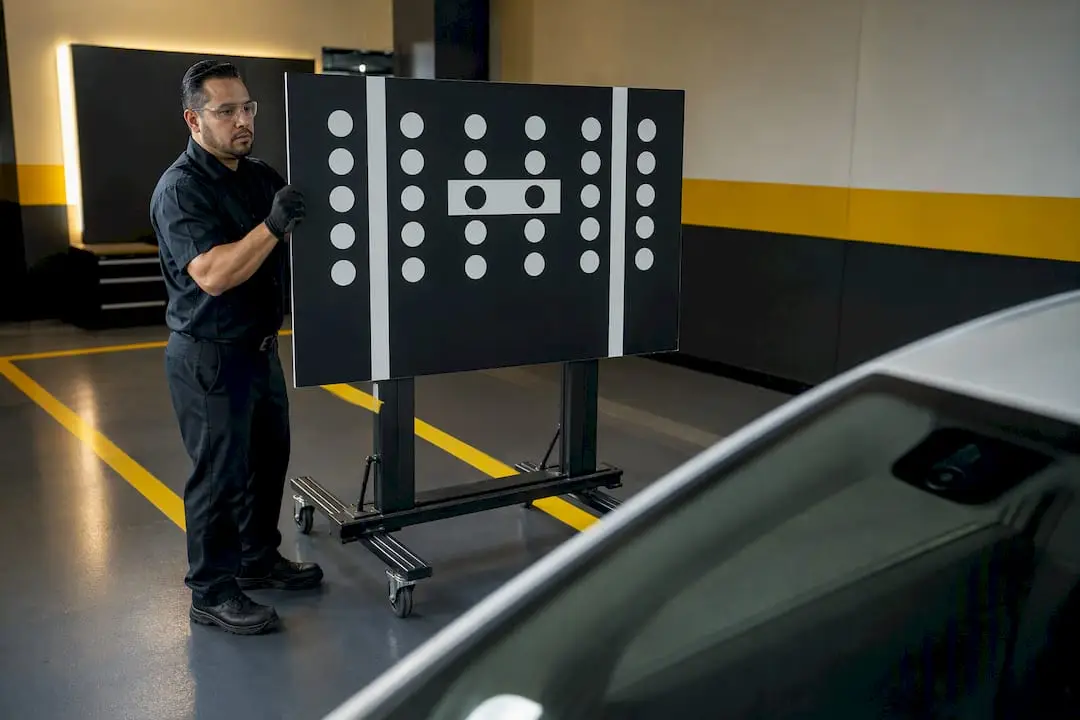
If your vehicle has lane-keep assist, adaptive cruise control, or automatic emergency braking, an alignment can knock the camera or radar sensors out of position. That means ADAS calibration is often required afterward.
Static calibrations, done in the shop using targets, typically run $100 to $300. Dynamic calibrations, which require a technician to drive the vehicle at specific speeds so the system recalibrates itself, can run $250 to $500 or more. Not every vehicle needs this, but if yours has a windshield-mounted camera, assume it does. Other common add-ons include tie rod replacement, ball joint repair, and control arm bushings found during the pre-alignment inspection.
Is Paying for an Alignment Worth the Cost?
Yes, in most cases, and the math backs it up. Misalignment increases rolling resistance, and studies estimate a fuel efficiency penalty of roughly 2% to 5%. On 15,000 miles a year, that can mean an extra $40 to $100 in fuel annually, on top of tires wearing unevenly and needing early replacement.
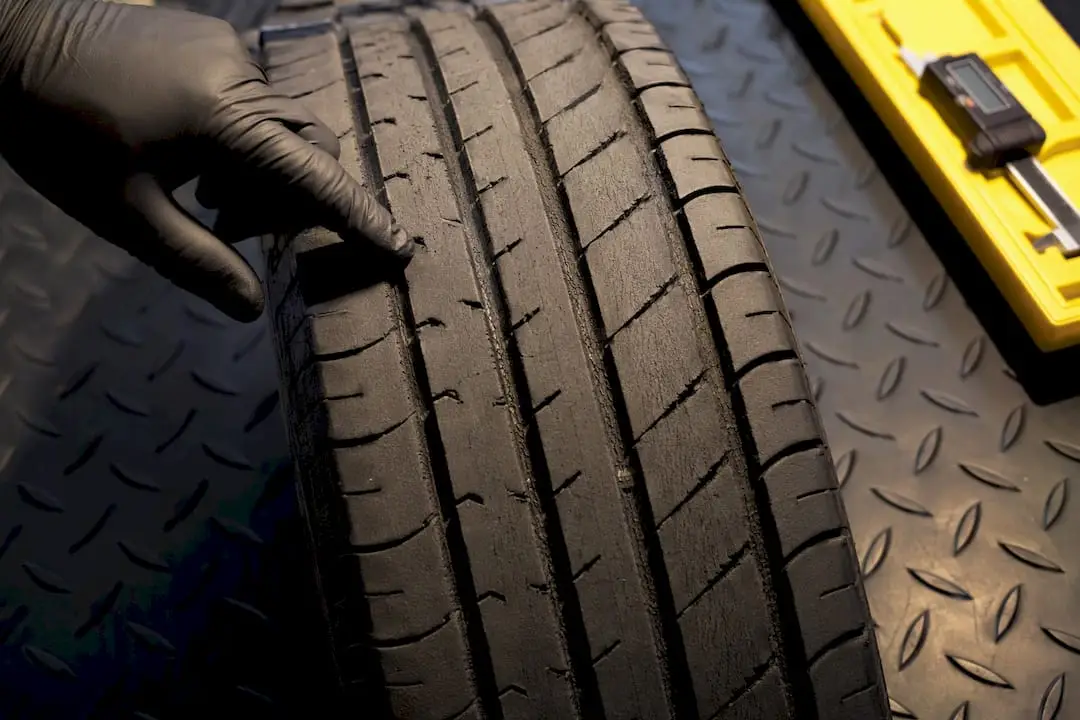
Get an alignment right away if you notice your steering wheel is off-center, your car pulls hard to one side, or you spot feathering or cupping on your tires . Those are safety issues, not cosmetic ones.
It’s reasonable to wait only if your car drives straight, your tires wear evenly, and you’re not due for new tires soon. Even then, most techs recommend checking alignment every 2 to 3 years or with every other tire rotation.
Pro Tip: If you’re buying new tires anyway, ask whether the alignment is bundled or discounted. Tire shops frequently offer this, and it’s one of the easiest ways to combine two services into one visit.
What Happens During an Alignment Appointment
A proper alignment measures and adjusts camber, toe, and caster against your manufacturer’s specific geometry, using a computerized rack rather than guesswork.
- Inspection. The technician checks tie rods, ball joints, and suspension components for wear before touching the alignment.
- Measurement. The car goes on the rack, and sensors read the current camber, toe, and caster angles.
- Adjustment. The technician adjusts each angle to match factory specs, which usually takes 30 to 45 minutes for a 2-wheel job and 45 to 60 minutes for 4-wheel.
- Printout and review. You should receive a before-and-after printout showing your angles against the manufacturer’s target range.
Ask to see that printout every time. Confirm whether ADAS calibration is included or billed separately, and ask what warranty covers the work if something drifts again soon after.
Kwik Kar’s Take on Fair Alignment Pricing
We believe you should never have to guess what you’re paying for. Kwik Kar Oil Change & Auto Care is ASE and RepairPal certified, which means our technicians work to the same standards those bodies hold shops accountable to nationwide. We show you the alignment printout, we quote ADAS calibration as its own line item instead of burying it, and we’ll walk you through any parts an inspection turns up before we touch them. If a price doesn’t make sense to you, ask us to explain it. That’s what fair pricing actually looks like.
— Kwik Kar
Book a Wheel Alignment With Kwik Kar Oil Change & Auto Care
If you’ve read this far, you already know what a fair alignment quote should look like. Kwik Kar Oil Change & Auto Care backs that up with certified technicians, a printout you can actually verify, and ADAS calibration quoted separately instead of tucked into a vague line item.

Our wheel alignment service covers both 2-wheel and 4-wheel jobs, and we’ll tell you upfront which one your vehicle needs based on its suspension setup, not just guess and upcharge. Check our current oil change and auto service coupons before you book, since alignment is often more cost-effective bundled with other maintenance you’re already due for. Call your local Kwik Kar or book online, and ask us to show you the printout before you leave. That’s your alignment, in writing.
Sources
- Wheel Alignment Cost – CostWhale
- Wheel Alignment Cost 2026 – What You Should Actually Pay
- Wheel alignment: everything you need to know | John Bean
- Wheel Alignment Cost: $75 – $220 (2026) | AutOwner
FAQ
How Much Does a Full Alignment Cost?
A full 4-wheel alignment typically costs $80 to $200, depending on your vehicle type and the shop’s labor rate. Dealerships and shops handling ADAS calibration usually charge toward the higher end of that range.
Do I Need a 2-Wheel or 4-Wheel Alignment?
You need a 4-wheel alignment if your vehicle has independent rear suspension, which includes most SUVs, trucks, and all-wheel-drive cars. Older front-wheel-drive sedans with a solid rear axle usually only need the front-end, or 2-wheel, service.
Can I Drive My Car With Bad Alignment?
You can drive with misalignment in the short term, but it accelerates uneven tire wear and can reduce fuel efficiency by 2% to 5%. If your steering wheel is noticeably off-center or the car pulls hard to one side, treat it as a safety issue and get it checked soon.
Is Paying for an Alignment Worth It?
Yes. The cost is minor compared to what you save on premature tire replacement and wasted fuel, and Kwik Kar Oil Change & Auto Care quotes the service with a clear printout so you know exactly what you’re paying for. Skipping it tends to cost more down the road, not less.
Does ADAS Calibration Cost Extra After an Alignment?
Yes, if your vehicle has driver-assist cameras or radar sensors. Static calibration typically runs $100 to $300, while dynamic calibration requiring a road test can run $250 to $500 or more.