

Auto care is defined as all services performed to maintain, repair, or improve a vehicle’s performance, safety, and appearance. The types of auto care available in Tarrant County span routine maintenance, collision repair, mobile mechanic services, and advanced diagnostics, each serving a distinct set of vehicle needs. Knowing which service type fits your situation saves you time, money, and frustration. Tarrant County also carries a specific local requirement: emissions testing is mandatory for most gasoline vehicles as part of annual registration renewal, making it a factor every local driver must plan around.
1. Routine maintenance: the foundation of vehicle health
Routine maintenance is the scheduled, preventive work that keeps your vehicle running reliably and legally on Tarrant County roads. It covers oil changes, tire rotations, brake inspections, fluid top-offs, filter replacements, and the state-required emissions test. Skipping these services is like ignoring a slow leak in your tire. It feels fine until it suddenly is not.
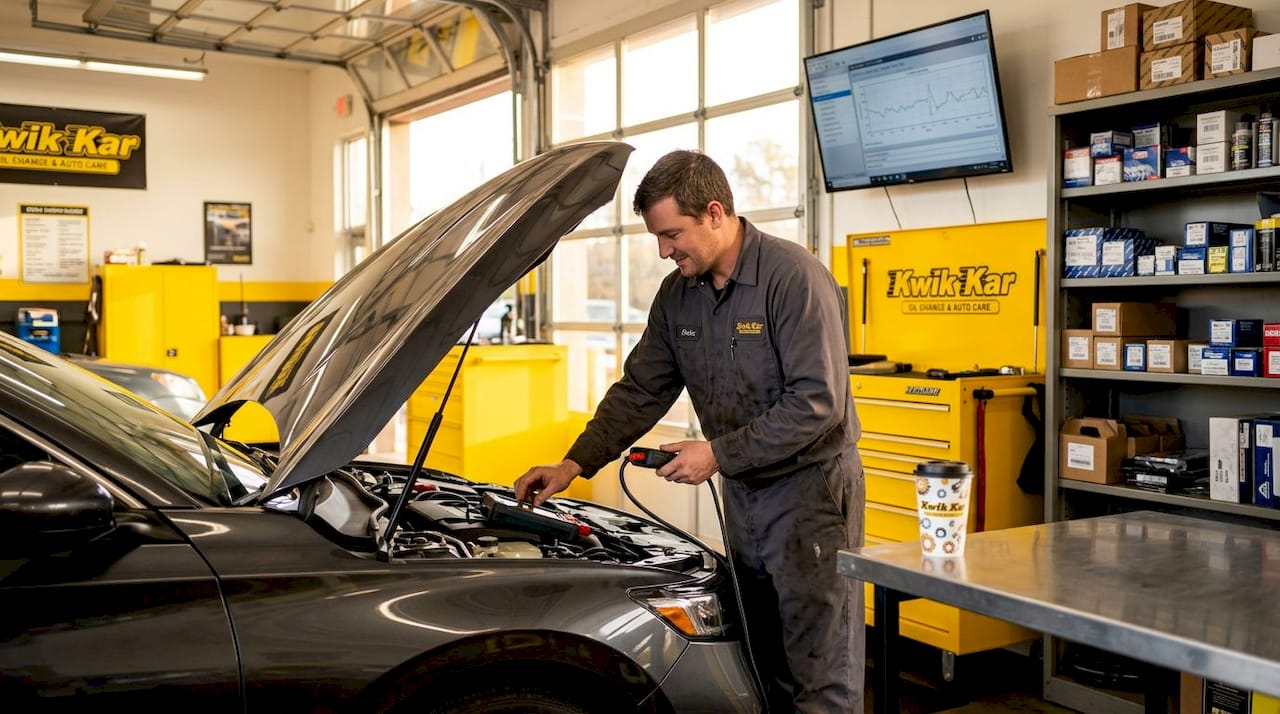
Tarrant County is part of the DFW emissions zone, meaning most gasoline-powered vehicles must pass an OBD-based test at a Texas DPS-certified station before registration renewal. Many drivers confuse this with the old annual safety inspection, which was removed for most non-commercial vehicles in 2025. The emissions test remains, and missing it delays your registration.
Essential routine maintenance tasks for Tarrant County vehicles include:
- Oil and filter changes (every 3,000 to 7,500 miles depending on oil type)
- Tire rotation and pressure checks
- Brake pad and rotor inspection
- Coolant, transmission fluid, and power steering fluid top-offs
- Air filter and cabin filter replacement
- OBD emissions test at a certified station
Pro Tip: Before your emissions test, ask your shop to confirm your vehicle’s OBD monitors are in “ready” status. A monitor that is not ready will cause an automatic failure, even if nothing is mechanically wrong with the car.
Certified mechanics at shops like Kwik Kar Oil Change & Auto Care handle all of these services under one roof, which reduces the number of appointments you need to manage across the year. For a full auto service checklist, it helps to review what your vehicle needs at each mileage interval.
2. Collision repair and certified body shops
Collision repair is a specialized category of auto care focused on restoring a vehicle’s structural integrity, body panels, and finish after accident damage. This is not the same as general mechanical repair. Collision centers use frame straightening equipment, OEM-certified parts, and paint-matching systems that standard shops do not carry.
Platinum Auto Collision USA is a certified collision repair center in Tarrant County that handles insurance-claim management, OEM parts sourcing, and towing services. They also carry certifications for luxury vehicle brands, which matters when a standard repair could void a manufacturer warranty. Choosing an insurance-approved shop protects both your safety and your vehicle’s resale value.
Key services offered by certified collision repair centers include:
- Frame and structural alignment repair
- OEM and aftermarket panel replacement
- Paint color matching and refinishing
- Airbag and sensor recalibration after impact
- Insurance claim coordination and rental car assistance
- Towing and vehicle recovery
| Factor | Certified collision center | General auto shop |
|---|---|---|
| Structural repair capability | Yes, with frame equipment | Limited or none |
| OEM parts availability | Standard practice | Varies by shop |
| Insurance claim handling | Direct insurer coordination | Usually not offered |
| Luxury brand certification | Available at select centers | Rarely available |
| Warranty on repairs | Typically included | Varies |
Selecting a certified body shop over a general repair shop for collision work is not just about quality. It is about making sure your vehicle meets safety standards after an impact, which affects how it performs in a future accident.
3. Mobile mechanic services: repairs at your location
Mobile mechanics bring the shop to you, performing diagnostics and repairs at your home, office, or roadside location. This service model is growing across the DFW area because it removes the single biggest friction point in auto care: getting your car to the shop when it is not running well.
MKM Mobile Kar Mechanic operates branded service trucks across Dallas-Fort Worth, providing on-location repairs that reduce customer downtime significantly. Services commonly performed on-site include check engine light diagnostics, brake service, A/C system repair, battery replacement, tune-ups, and module programming.
Common mobile mechanic services available in Tarrant County:
- Check engine light and OBD diagnostics
- Brake pad and rotor replacement
- Battery testing and replacement
- Starter and alternator repair
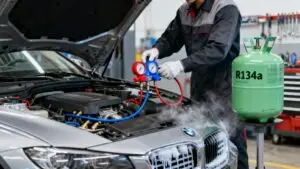
- A/C system recharge and leak detection
- Spark plug replacement and engine tune-ups
Pro Tip: Mobile mechanics are ideal for repairs that do not require a lift or specialized shop equipment. If your car needs a transmission rebuild or major suspension work, a full-service shop is the right call. Use mobile services for what they do best: fast, convenient fixes for common mechanical issues.
The benefits of a local mechanic in Tarrant County extend to mobile providers as well. When a technician knows the local roads, weather conditions, and common vehicle issues in the area, the diagnosis tends to be faster and more accurate.
4. Advanced diagnostics and electrical system repair
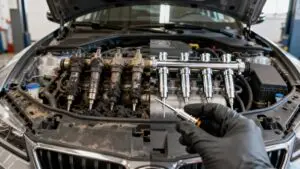
Advanced diagnostics is a specialized auto care category focused on identifying and repairing faults in a vehicle’s electronic systems, including the engine control module, transmission control unit, ABS, and body control modules. Modern vehicles run on dozens of interconnected computers, and a fault in one can create symptoms across multiple systems.
Diagnostics shops in the DFW area increasingly focus on complex electronics, which require a different expertise level than standard repair shops. Brittni’s Automotive Repair on TX-114 is a certified diagnostics specialist offering CAN-bus diagnostics, module programming, and warranty-backed repairs for domestic and Asian vehicles. This level of specialization prevents the recurring misdiagnoses that happen when a general shop uses a basic scan tool and replaces parts without confirming the root cause.
Services covered under advanced diagnostics include:
- OBD-II and CAN-bus fault code analysis
- Engine and transmission module programming
- ABS, traction control, and stability system repair
- Electrical short and wiring harness diagnosis
- ADAS (advanced driver assistance system) calibration
- Hybrid and EV battery management system checks
If your ABS warning light is on or you are seeing multiple unrelated warning lights at once, a diagnostics specialist is the right first stop. A general oil change shop will read the code, but a diagnostics specialist will trace the fault to its actual source.
5. Vehicle detailing and appearance services
Vehicle detailing in Tarrant County covers the thorough cleaning, restoration, and protection of a vehicle’s interior and exterior surfaces. Detailing is not a car wash. A full detail involves paint decontamination, clay bar treatment, polishing, ceramic coating or wax application, and deep interior cleaning that includes upholstery extraction and odor treatment.
Appearance services matter beyond aesthetics. Paint protection coatings reduce UV damage and oxidation, which is a real concern in North Texas summers where temperatures regularly exceed 100 degrees Fahrenheit. Interior detailing removes allergens, bacteria, and contaminants that affect air quality inside the cabin.
Tarrant County detailing shops typically offer three service tiers: basic wash and vacuum, full interior and exterior detail, and paint correction with ceramic coating. The right tier depends on your vehicle’s condition and how long you plan to keep it. For a vehicle you are preparing to sell, a full detail can meaningfully increase perceived value and justify a higher asking price.
6. Tire services and wheel alignment
Tire services represent one of the most frequently needed types of auto care for Tarrant County drivers, given the mix of highway driving on I-30 and I-20 and the road surface conditions across Fort Worth. This category includes tire mounting and balancing, rotation, flat repair, and full replacement, as well as four-wheel alignment.
Wheel alignment is often overlooked until a vehicle starts pulling to one side or the tires show uneven wear. Misalignment is like walking with one shoe on a slight incline. You adapt to it without realizing how much extra effort it takes. Correcting alignment extends tire life, improves fuel economy, and reduces stress on suspension components.
Most full-service auto shops in Tarrant County handle tire services, but shops with a dedicated alignment rack and computerized balancing equipment deliver more precise results. Kwik Kar Oil Change & Auto Care provides tire rotation and inspection as part of routine service visits, which makes it easy to catch alignment issues before they become costly.
7. Comparing auto care service types: which one fits your situation
Matching the auto care type to your specific vehicle problem is the most direct way to avoid wasted time and unnecessary expense. The table below outlines the main service categories and when each one applies.
| Service type | Best for | Typical cost range | Insurance involved |
|---|---|---|---|
| Routine maintenance | Scheduled upkeep, emissions testing | Low to moderate | No |
| Collision repair | Accident damage, structural repair | High | Yes, typically |
| Mobile mechanic | Convenient minor repairs, diagnostics | Moderate | No |
| Advanced diagnostics | Electrical faults, module issues | Moderate to high | Sometimes |
| Vehicle detailing | Appearance, protection, resale prep | Low to moderate | No |
| Tire and alignment | Wear, handling, fuel efficiency | Low to moderate | No |
Certified auto repair services in Fort Worth and Tarrant County cover most of these categories, but not every shop handles all of them. Knowing what you need before you call saves you from being sent to three different places for one problem.
Pro Tip: Combine your routine maintenance visit with a tire rotation and alignment check. These services take similar amounts of time and share some of the same inspection steps, so bundling them reduces your total shop time and often lowers the combined cost.
Key takeaways
Tarrant County drivers get the best results from auto care when they match the service type to the specific vehicle problem rather than defaulting to the nearest shop for every issue.
| Point | Details |
|---|---|
| Emissions testing is separate from safety inspection | Tarrant County requires OBD emissions testing for registration; the safety inspection was removed in 2025 for most vehicles. |
| Collision repair requires certified shops | OEM parts, frame equipment, and insurance coordination are only available at certified collision centers. |
| Mobile mechanics suit minor repairs | On-site services work well for brakes, diagnostics, and tune-ups but cannot replace a full-service shop for major work. |
| Advanced diagnostics prevent recurring issues | Specialists using CAN-bus tools find root causes that basic scan tools miss, saving money on repeated repairs. |
| Bundling services saves time and cost | Combining routine maintenance with tire rotation and alignment checks reduces total shop visits per year. |
What we have learned from years of serving Tarrant County drivers
After working with Fort Worth and Tarrant County drivers for years, one pattern stands out clearly: most vehicle problems that become expensive started as something small that got misrouted to the wrong service type. A driver brings in a car with multiple warning lights and ends up at a quick lube for an oil change. The codes get cleared, the lights come back in two weeks, and now the repair costs twice as much because the underlying electrical fault has progressed.
The removal of the annual safety inspection in 2025 created real confusion locally. Many drivers assumed all vehicle inspections were gone. They are not. Emissions testing remains required in Tarrant County, and drivers who show up unprepared, with incomplete OBD monitors or a recent battery reset, fail on the first attempt and lose time they did not budget for.
What I have seen work consistently is a simple pre-planning habit: know your vehicle’s service intervals, book your emissions test at least two weeks before your registration deadline, and use a trustworthy certified mechanic for anything beyond a basic oil change. Transparency in pricing and a willingness to explain the diagnosis are the two clearest signs that a shop is worth your time. If a shop cannot tell you why a part needs replacing, that is your answer.
The growth of mobile mechanics and specialized diagnostics shops in the DFW area is genuinely good for drivers. More options mean more competition, and more competition tends to push quality up and prices toward fair. Use those options deliberately, not randomly.
— Kwik Kar
Kwik Kar Oil Change & Auto Care: serving Tarrant County drivers
Kwik Kar Oil Change & Auto Care in Fort Worth handles the full range of vehicle maintenance and repair services that Tarrant County drivers need, from oil changes and emissions-ready inspections to brake service and diagnostics. Every service is performed by certified technicians using quality parts, with transparent pricing so you know what you are paying before work begins.
If cost is a concern, auto repair financing options are available to help spread the expense of larger repairs without delaying necessary work. For drivers who are not sure where to start, the guide to finding a reliable mechanic walks through exactly what to look for in a local shop. Kwik Kar Oil Change & Auto Care is RepairPal certified and ready to help you keep your vehicle road-ready all year.
FAQ
Does Tarrant County require emissions testing in 2026?
Yes. Tarrant County requires emissions testing as part of vehicle registration renewal for most gasoline vehicles. The annual safety inspection was removed for most non-commercial vehicles in 2025, but the emissions test remains a separate, mandatory step.
What is the difference between a diagnostics shop and a general auto repair shop?
A diagnostics shop uses CAN-bus scan tools and module programming equipment to trace electrical faults to their root cause, while a general shop typically reads basic OBD codes and replaces the most likely part. Advanced diagnostics specialists prevent the repeated repairs that result from misdiagnosis.
When should I use a mobile mechanic instead of a shop?
Use a mobile mechanic for repairs that do not require a lift, such as brake pads, battery replacement, A/C recharge, or a tune-up. For structural work, transmission repair, or alignment, a full-service shop with the right equipment is the better choice.
How do I know if a collision repair shop is certified?
Ask the shop directly whether they hold OEM certifications for your vehicle’s brand and whether they work directly with your insurance provider. Certified centers like Platinum Auto Collision USA list their certifications and handle insurance coordination as a standard part of the repair process.
What routine maintenance does my car need most in Tarrant County?
Oil changes, tire rotations, brake inspections, and the OBD emissions test are the four most time-sensitive routine services for Tarrant County vehicles. North Texas heat also accelerates coolant degradation and battery wear, so both deserve attention at each annual service visit.