




Most of the time, a steering wheel locks because the car’s normal anti-theft feature has engaged, and the fix is simple: gently wiggle the wheel while turning the key or starting the car with the recognized fob. But if the wheel feels like it locked while you were driving, that points to a very different problem, usually a steering-system fault that makes the wheel suddenly very hard to turn.
You’re probably here because one of two things just happened. Either you got in the car, turned the key, and the wheel wouldn’t budge. Or worse, the steering suddenly went heavy on the road and felt locked up. Those situations sound similar, but from a mechanic’s point of view they are not the same problem, and they do not carry the same level of risk.
That difference matters. A wheel that won’t move in the driveway is often annoying but manageable. A wheel that goes stiff in traffic is a safety issue and needs immediate attention.
That Startling Moment Your Steering Wheel Wont Budge
A common scene goes like this. You park, shut the car off, turn the wheel a little as you get out, and later the steering wheel won’t move when you come back. The key may feel stuck too. That’s enough to make anybody think something expensive just broke.
Most of the time, nothing failed. The steering lock has just loaded up against the column. Put one hand on the wheel, apply light pressure in the direction it still wants to move, and use your other hand to gently turn the key or start the car. Usually, you’ll feel it release.
Practical rule: If the car is parked and the wheel won’t budge, think anti-theft lock first. If the car is moving and the wheel suddenly goes heavy, think steering failure first.
Where drivers get tripped up is the wording. People search why do steering wheels lock for both of these situations, even though one is normal and the other can be dangerous. That’s why bad advice online can waste time. A parked-car lock and a driving-time steering failure need different responses.
There’s one more place confusion shows up. A weak electrical system can sometimes make starting problems feel like steering or ignition problems because several systems are trying to wake up at once. If your car also has slow cranking, dim lights, or an intermittent no-start, this guide on troubleshooting car battery problems is a useful companion read.
Understanding the Standard Anti-Theft Steering Lock
The simplest way to think about the standard steering lock is this: it’s a deadbolt for the steering column. It’s there on purpose. It is not the car having a panic attack.
Why your car has it
Steering-wheel and steering-column locks exist because early cars were unusually easy to steal. Wheel locks were being patented by at least 1916, and in the United States nearly all major manufacturers selling cars in the U.S. market began installing steering column locks in 1969 to make vehicles physically impossible to steer without the correct key, according to the crime prevention history reviewed by Arizona State University’s problem-oriented policing center.
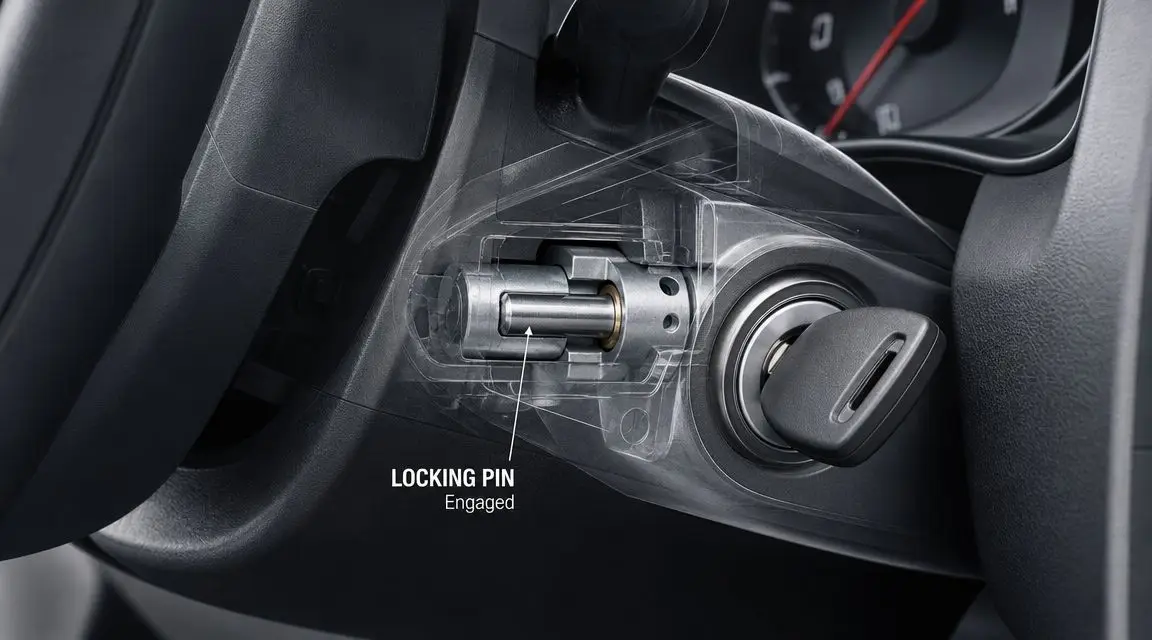
In modern vehicles, the steering wheel “lock” is usually an anti-theft immobilizer built into the column. When you turn the ignition off and remove the key or walk away with the fob, a spring-loaded locking pin or solenoid engages and prevents the wheel from rotating until the proper ignition signal is present, as described in Jalopnik’s explanation of why steering wheels lock when parked.
That’s why this lock often catches people by surprise. It feels dramatic, but it’s doing exactly what it was designed to do.
How to unlock it safely
If your steering wheel is locked in the driveway, use this sequence:
- Settle the wheel first. Hold the wheel with one hand and feel which direction it has a tiny bit of movement.
- Apply gentle pressure. Don’t yank. You’re trying to relieve pressure on the locking pin.
- Turn the key or start the car at the same time. On push-button cars, press the brake and start the vehicle while keeping that light pressure on the wheel.
- Stop if the key feels like it might twist. Forcing a worn key or cylinder can turn a simple lock release into an ignition repair.
Why it happens again and again
A few habits make the lock more likely to bind:
- Parking with the wheels turned: This loads the steering system and can put extra tension on the lock.
- Letting the car rest against a curb: That added pressure can make the wheel harder to release.
- Turning the wheel after shutdown: Even a small movement can engage the lock pin.
If the wheel unlocks once you start the car, the anti-theft system did its job. If it stays stiff with the engine running, you’re dealing with something else.
When a Locked Wheel Means a Dangerous Failure
If you were driving and the steering suddenly felt locked, this is the part to pay attention to. In that situation, the anti-theft lock is usually not the culprit. What drivers describe as “locked” is more often extreme steering resistance.
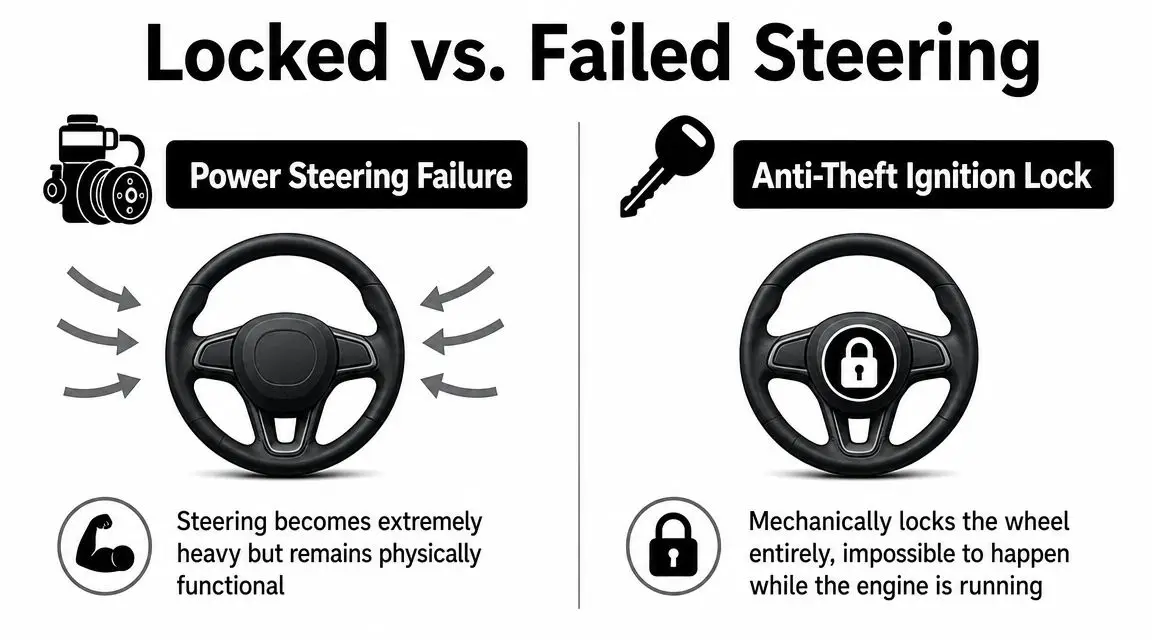
According to J.D. Power’s guide to steering wheels that lock while driving, the root cause is usually a steering-system fault that creates severe resistance, not the theft lock engaging. Common causes include low power-steering fluid, a failing hydraulic pump, a jammed steering column, or frozen linkage joints.
Hydraulic power steering problems
Older and many mid-era vehicles use hydraulic assist. That system depends on fluid pressure. When it loses pressure, steering effort goes way up.
Here’s what that can feel like:
- Low or aerated fluid: The wheel gets heavy, especially at low speed or while parking.
- Weak pump: You may hear a whine or groan as steering assist fades.
- Belt-related trouble: If the pump isn’t being driven properly, assist can drop suddenly. If you want to understand that connection, this explanation of what a serpentine belt does helps show why one belt can affect multiple systems.
A hydraulic issue doesn’t usually create a literal lock. The wheel still turns, but it may take much more force than you expect.
Electric power steering problems
Newer cars often use electric power steering, also called EPS. Instead of fluid pressure, these systems rely on sensors, a control module, and an electric assist motor.
When EPS has a fault, drivers often say the wheel “locked up” because assist disappears so abruptly. The steering is still mechanically connected, but it becomes far heavier than normal. That’s frightening if you’re in a turn, merging, or trying to avoid something.
Mechanical binding and column issues
Some faults aren’t assist-related at all. Parts can physically bind.
Examples include:
- Jammed steering column components
- Frozen or binding linkage joints
- Suspension or steering parts that no longer move freely
The diagnostic line is a key indicator. A normal anti-theft lock should release when the proper ignition state is detected. A steering system with mechanical binding often stays difficult to turn even with the engine running.
A wheel that’s hard to turn while driving is a safety emergency, even if the car still moves straight.
There’s also a less common but relevant overlap with electronic steering lock systems on certain vehicles. If your issue involves an ignition switch module, steering lock actuator, or messages related to electronic start authorization, specialist help may be needed. This overview of auto locksmiths solving EIS problems gives a good example of how electronic steering lock faults differ from ordinary power steering problems.
Your Immediate Safety Plan If Steering Fails While Driving
When steering suddenly goes heavy, your job is not to diagnose it in traffic. Your job is to get the vehicle stopped safely.
A simple visual can help fix the order of operations in your mind.
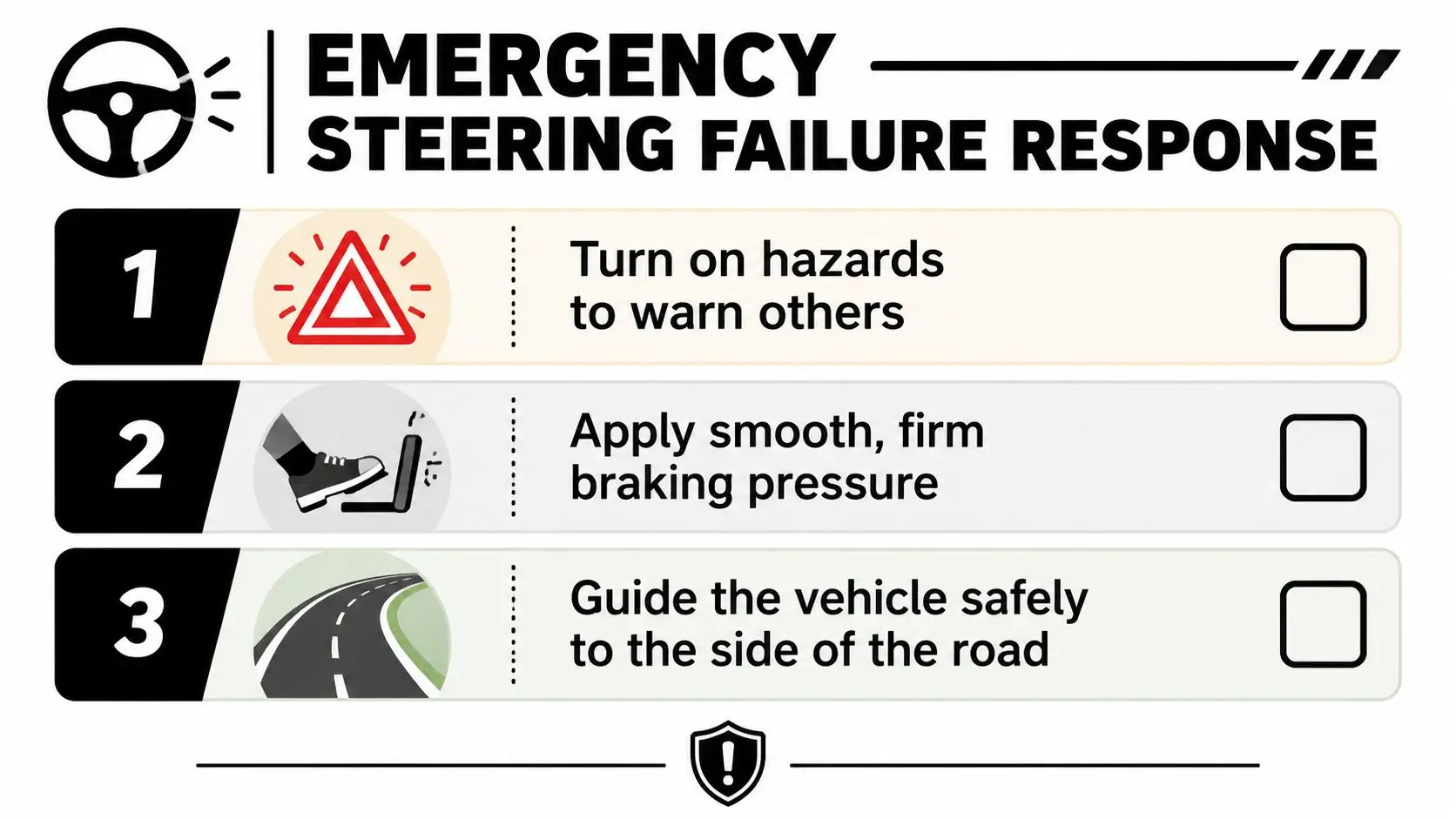
What to do right away
- Grip the wheel firmly and stay calm. Even with lost assist, the mechanical connection usually remains. The wheel will just take much more effort.
- Turn on your hazard lights. Let other drivers know you’ve got a problem.
- Brake smoothly. Don’t slam the pedal unless you have no other choice.
- Guide the vehicle to a safe place. Aim for the shoulder, a parking lot, or the nearest safe stopping area.
- Shut the engine off after you stop. Then call for help rather than trying to push through and keep driving.
The car may still steer without power assist, but it can require significant force, especially at low speed.
This short video shows the kind of calm, controlled response drivers should aim for in a roadside emergency:
What not to do
- Don’t keep driving to “see if it clears up.” Intermittent steering faults often come back worse.
- Don’t force tight turns at parking-lot speed. That’s when a no-assist wheel feels heaviest.
- Don’t assume it’s just the normal steering lock. That logic applies when parked, not while moving.
Common Repairs and Estimated Service Costs
This is the point where many drivers ask the practical question. What am I looking at for repairs?
First, a reality check. Steering column locks have been around for a long time and became a major anti-theft measure after a voluntary agreement in Britain and broad U.S. adoption in 1969, but their core parts can still wear over time, as noted in the same historical review from Arizona State University’s problem-oriented policing center. That means both security components and steering-assist components can need service, depending on the symptom.
Checks you can do before booking service
Before a shop gets involved, a driver can safely look at a few basics:
- Power steering fluid level: If your vehicle uses hydraulic steering, low fluid is a major clue.
- Fluid condition: Dark, burnt-smelling, or foamy fluid points to trouble.
- Visible leaks: Wet hoses, pump area residue, or spots under the car matter.
- Drive belt condition: Cracks, glazing, or looseness can affect pump operation.
- Ignition key condition: If the issue is parked-car lock only, a worn or bent key can complicate release. If that happens, this Quick Keys broken key guide is useful for understanding when to stop before a key snaps in the cylinder.
If you need a shop to take it further, it helps to know how to choose one. This guide on how to find a trustworthy mechanic is a practical place to start.
Common Steering Repair Costs
Because no verified pricing data was provided, the table below uses qualitative ranges only, not dollar figures. Actual cost depends on vehicle design, parts access, and whether the issue is hydraulic, electric, mechanical, or ignition-related.
| Repair Type | Common Symptoms | Estimated Cost Range |
|---|---|---|
| Power steering fluid service or flush | Noise during turns, sluggish assist, dirty fluid | Lower |
| Leak repair | Fluid loss, wet hoses, recurring heavy steering | Lower to moderate |
| Power steering pump replacement | Whining, weak assist, hard steering at low speed | Moderate |
| Serpentine belt replacement | Sudden assist loss with belt wear signs | Lower to moderate |
| Steering rack or gear replacement | Persistent stiffness, leaks, poor steering response | High |
| Electric power steering sensor or module diagnosis and repair | Intermittent heavy steering, warning messages, assist cuts in and out | Moderate to high |
| Steering column or ignition lock repair | Wheel locks while parked, key won’t turn, recurring bind at startup | Moderate |
| Linkage or joint repair | Binding, uneven steering effort, physical stiffness | Moderate to high |
One local option for maintenance and steering diagnosis is Kwik Kar Oil Change and Auto Care, which offers general steering-related inspection and power steering service as part of routine auto care. The right repair still depends on testing, not guessing.
Preventative Care and When to Visit Kwik Kar
Most steering problems give warnings before they become a roadside event. Drivers just don’t always connect the dots until the wheel feels heavy.
Listen for pump noise. Pay attention to steering that feels slower on cold mornings. Notice if the wheel effort changes from one day to the next. On hydraulic systems, checking the power steering fluid level is one of the simplest ways to catch trouble before assist drops out.
Good habits that help
- Keep the front wheels as straight as possible when parking: This reduces bind in normal lock situations.
- Don’t ignore new noises while turning: Groans, whines, and rubbing sounds mean something changed.
- Fix leaks early: Running low on fluid can turn a small repair into a larger one.
- Get sudden stiffness checked promptly: Steering should feel consistent. If it doesn’t, don’t wait.
If the issue only happens when parked, try the gentle wheel-and-key release first. If the wheel ever goes stiff while driving, skip the home remedies and get the car inspected. Steering is not a system to gamble with.
If you’re in Fort Worth and your car has a steering lock, heavy steering, pump noise, or an ignition-related steering issue, Kwik Kar Oil Change and Auto Care can inspect the system, explain what failed in plain language, and help you choose the safest next step without guesswork.