

You're usually looking this up for one of two reasons. Your car has started doing something new, like a slight delay going into gear, a soft shudder on an upshift, or a faint whine that wasn't there last month. Or you glanced at the odometer, remembered you've owned the car a long time, and realized the transmission may be overdue for attention.
A transmission fluid and filter change sits in that category of maintenance people often postpone because it feels less familiar than an oil change and more intimidating than brake pads. That hesitation makes sense. The job can be straightforward on some vehicles, annoying on others, and a bad fit for DIY on a few.
The practical answer is this. If your vehicle uses a serviceable pan and filter, a careful owner with the right tools can handle it. But the details matter. Fluid type, temperature, fill procedure, pan bolt torque, and cleanliness all affect the result. I'll walk through the job realistically, including where DIY works, where it goes sideways, and when having a shop handle it is the smarter move.
Is It Time for a Transmission Service
The first clue is often subtle. The transmission still works, but it doesn't feel as clean as it used to. You may notice a pause when shifting from park into drive, a rougher shift when the transmission is cold, or a change in how the car behaves in traffic.
Some signs point to service being due soon. Other signs suggest you shouldn't wait.

What drivers usually notice first
Watch for these common warnings:
- Delayed engagement: You shift into drive or reverse and the car takes a moment to respond.
- Rough or inconsistent shifting: One shift feels normal, the next feels abrupt or drawn out.
- Dark or burnt-smelling fluid: Healthy fluid generally looks cleaner and smells neutral. Burnt odor is a bad sign.
- Slipping or flare between gears: Engine speed rises, but the car doesn't pull as it should.
- Heat-related complaints: Trouble gets worse in traffic, towing, or hot weather.
If you're seeing those symptoms, it helps to compare them with other signs of transmission problems before deciding whether you're dealing with overdue maintenance or a larger fault.
Practical rule: If the fluid smells burnt or the vehicle is slipping badly, don't assume a service alone will fix it. Maintenance can help a healthy transmission. It can't reverse mechanical damage.
Mileage matters, but use matters more
A lot of owners want one universal answer, and there isn't one. A strong baseline is the manufacturer schedule. Toyota says transmission service commonly falls between 30,000 and 60,000 miles for many vehicles, with some guidance extending to 100,000 miles under normal conditions, and it also notes that “lifetime” fluid claims don't erase the need for shorter intervals in severe use like towing, hauling, frequent stop and go driving, or harsh weather (Toyota transmission fluid guidance).
That lines up with what shows up in the shop every day. A vehicle that spends its life cruising at steady speed usually treats fluid better than one that bakes in Texas traffic, idles with the A/C on, or pulls a trailer on weekends.
A quick decision check
Use this simple filter before you commit to DIY or book service:
| Situation | What it usually means |
|---|---|
| Near a scheduled mileage interval | Good time for preventive service |
| Fluid is dark or smells burnt | Needs inspection soon |
| Hesitation or rough shifting started recently | Service may help, but verify condition first |
| Slipping, harsh banging, or warning lights | Diagnose before doing routine maintenance |
If you're on the fence, lean toward acting early. Transmission service works best as preventive maintenance, not as a last attempt after damage has already shown up.
Gathering Your Tools and Parts for the Job
A transmission service usually goes wrong before the pan ever comes off. The owner buys fluid without checking the exact specification, forgets the filter seal, or gets the car in the air and realizes there's no way to refill the unit cleanly. Preparation saves the job.
For a DIY transmission fluid and filter change, I treat setup like a pre-flight check. If one critical item is missing, stop and get it before you start.
The parts that must match your vehicle
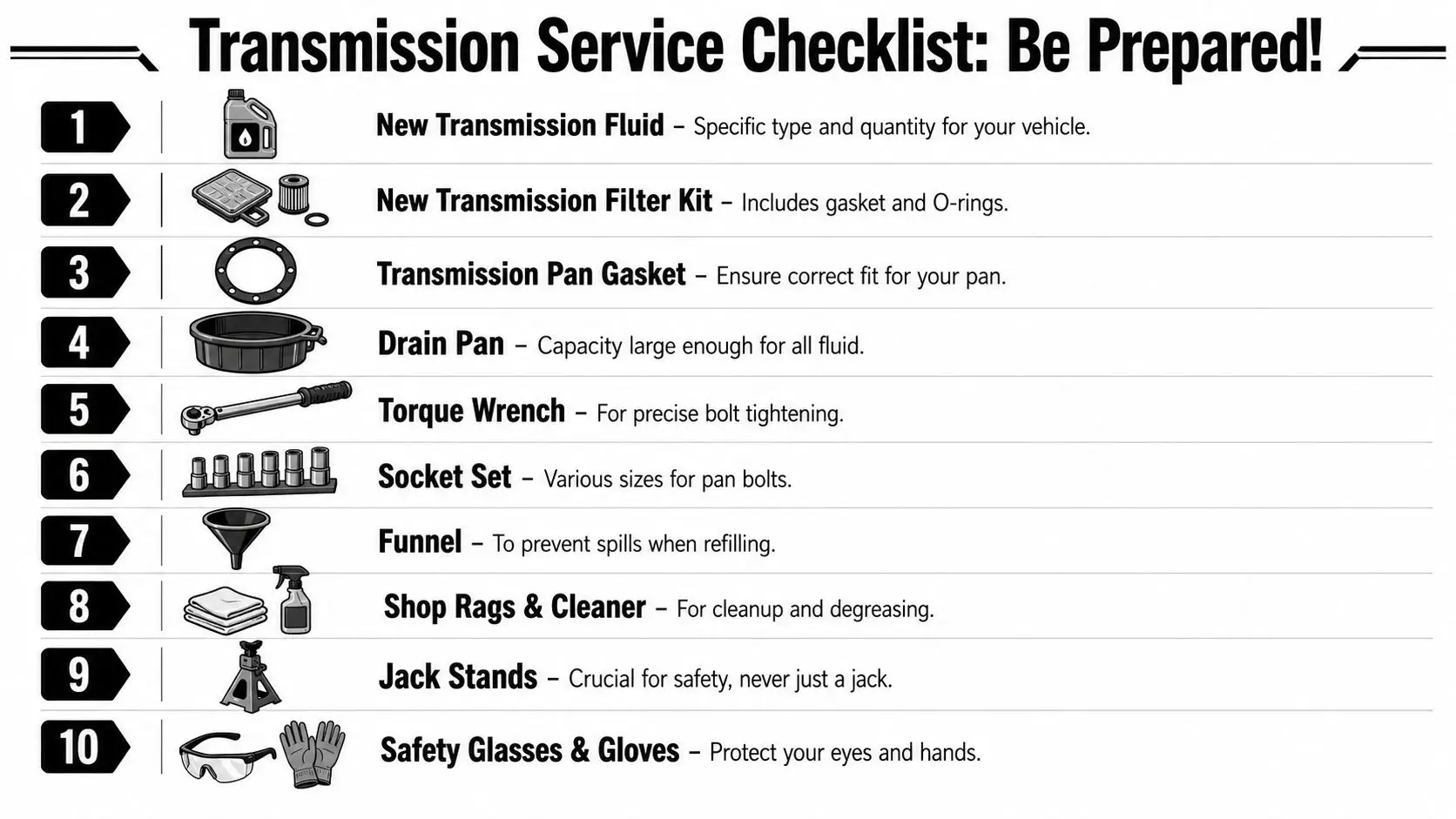
Start with the vehicle-specific items:
- Correct automatic transmission fluid: The exact ATF spec matters. “Close enough” can create shift quality problems.
- Transmission filter kit: On many vehicles, this includes the filter, seal or O-ring, and sometimes the pan gasket.
- Replacement pan gasket: Some kits include it. Some don't. Confirm before parts day.
- Possible drain plug washer or sealing hardware: Small part, big leak if ignored.
If your transmission doesn't have a serviceable pan filter, don't force the job into a standard template. Some units are designed differently, and the procedure changes with them.
The tools that make the job safe and clean
You don't need a professional lift, but you do need control.
- Floor jack and jack stands: The stands matter more than the jack. The car must sit stable and level.
- Socket set and extensions: Pan bolts are often small and awkwardly placed.
- Torque wrench: This is how you avoid warped pans, stripped threads, and seepage after the job.
- Large drain pan: Transmission fluid spreads fast and usually finds the one spot you didn't cover.
- Funnel or fluid pump: Some vehicles refill from above, others from a side fill port.
- Shop rags and brake cleaner: You need clean mating surfaces and a clean pan before reassembly.
- Gloves and safety glasses: Old fluid is messy, and splashes happen.
If your refill method depends on guessing or balancing a bottle over the engine bay, your setup isn't ready yet.
What experienced techs double-check first
Before loosening a single bolt, confirm these three things:
- You can open the fill point. A pan that's already drained doesn't help if the fill plug is seized.
- You know the fluid level procedure. Some vehicles check fluid hot, some with the engine running, and some through a temperature-based procedure.
- You have the service info for your exact transmission. Same model year doesn't always mean same transmission.
This is also the point where some owners decide to hand the job off. That's reasonable. A shop such as Kwik Kar Oil Change and Auto Care can perform transmission service when the procedure is too vehicle-specific, the fill method is awkward, or you don't want to work under the car.
A Step-by-Step DIY Transmission Service
A clean, careful service is better than a rushed one. Give yourself enough time that you won't feel pressure to shortcut the cleaning, refilling, or fluid check. Most mistakes happen when someone is trying to finish before dinner.
Get the vehicle safely in position
Park on level ground and let the exhaust cool enough that you won't burn your forearm every time you reach near it. Chock the wheels, raise the vehicle at the proper lift points, and set it securely on jack stands. If the transmission's fluid check procedure requires the vehicle to be level, take that seriously.
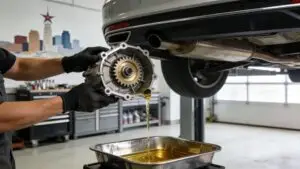
Slide your drain pan into place before you loosen anything. Some pans have a drain plug. Many don't. On those, I loosen bolts around the perimeter and leave a few threaded in at one end so the pan can tip and drain in a controlled way instead of dumping fluid all at once.
Remove the pan without making a bigger mess
Loosen the pan bolts gradually. As fluid begins to run from one side, let it drain until the flow slows, then support the pan with one hand while removing the remaining bolts. Don't pry against the case sealing surface unless the design specifically calls for it.
Once the pan is down, inspect what's inside.
- Gray paste on the magnet: Usually normal wear material.
- Metal chunks or sharp debris: Not normal. That points to internal damage.
- Heavy sludge or varnish: A sign the fluid has been working hard for a long time.
This inspection is one reason service matters. The filter is there to catch debris, but it isn't magic. Discussion cited in automotive forums notes that contamination above about 25 mg/L is associated with sharply increased wear rates, and that a complete exchange after break-in may be recommended as early as 5,000 to 10,000 miles for a new or rebuilt transmission (Bob Is The Oil Guy discussion). The practical takeaway is simple. Debris has to go somewhere, and some of it ends up in the pan and filter.
Replace the filter and prep the pan
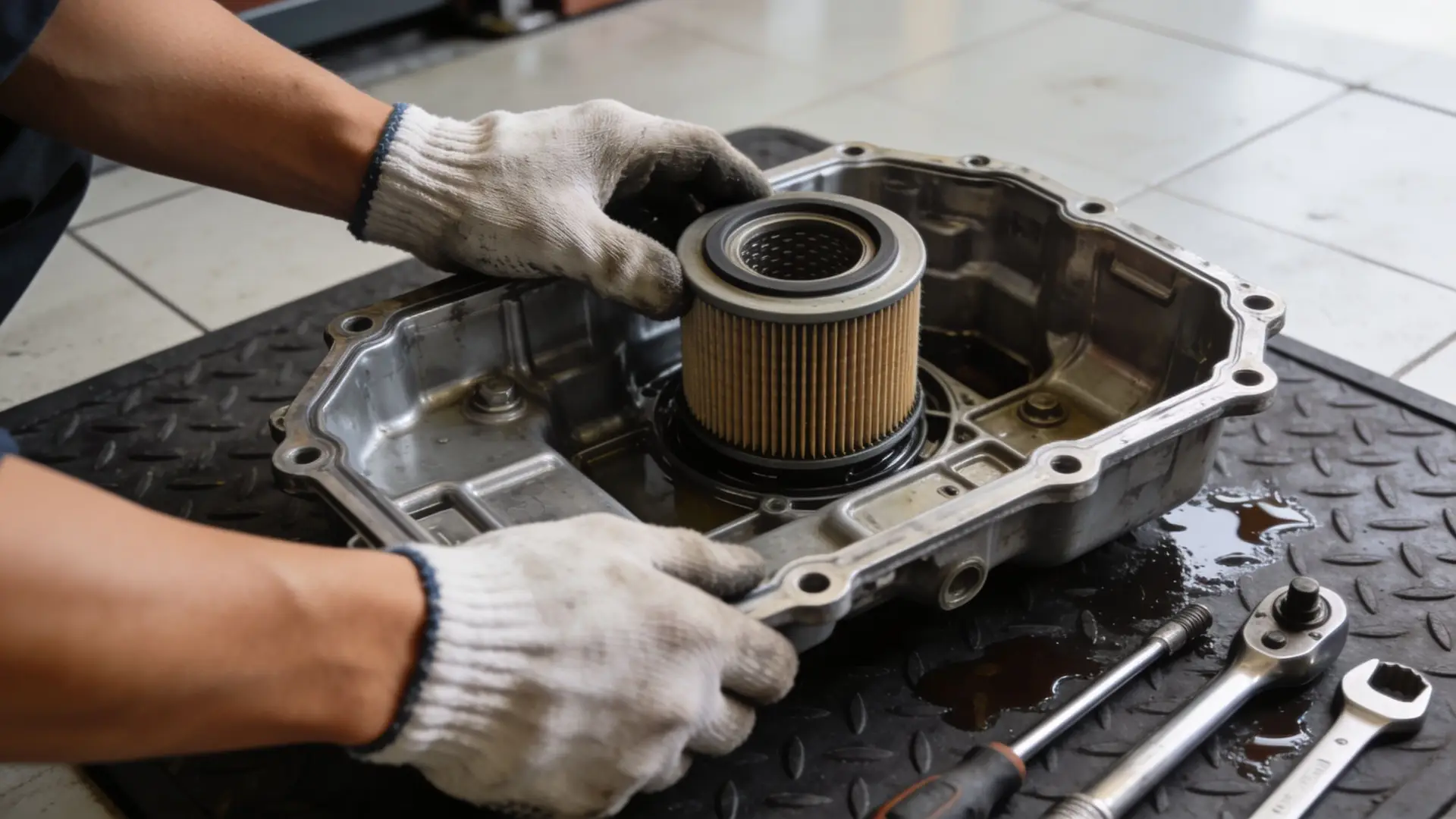
Remove the old filter carefully. Some filters are held by bolts. Others pull straight down and may bring a seal with them. Make sure the old seal came out. A double-stacked seal can cause major problems when the new filter goes in.
Clean the pan thoroughly. Wipe out sediment, clean the magnet, and remove old gasket material without gouging the pan rail. If the pan is bent around the bolt holes from previous over-tightening, flatten those spots gently before reassembly.
For a closer look at what the pan does and why condition inside it matters, this overview of the transmission fluid pan is useful.
Cleanliness matters here more than force. Dirt introduced during service can undo the benefit of fresh fluid.
Install the new filter exactly as the old one came out. Seat the seal properly. Position the new gasket according to the design. Some gaskets install dry. Others follow product-specific instructions. Don't add sealant unless the procedure calls for it.
A visual walkthrough helps if this is your first time seeing the pan and filter layout in real life.
Reinstall and refill carefully
Lift the pan into place and thread all bolts by hand first. That prevents cross-threading and helps the gasket seat evenly. Tighten the bolts in a gradual, alternating pattern with a torque wrench. Small transmission pan bolts strip easily, and overtightening is one of the most common DIY leaks.
Then refill with the correct fluid. Add less than you think you need at first. It's easier to top off than to pull excess fluid back out.
After the initial fill, start the engine if your procedure requires it, hold the brake, and move the selector slowly through the gear ranges. That circulates fluid through the valve body and passages. Recheck the level using the correct method for your vehicle, which may require specific fluid temperature conditions.
Finish with a leak and road check
Once the level is set, clean any spilled fluid from the pan and surrounding area. A short test drive should feel normal and controlled. Then bring the car back, inspect for leaks, and verify the level again if your procedure calls for a hot check.
If the shifts feel worse after service, stop guessing. Wrong fluid, wrong level, an installation mistake, or an existing transmission fault can all show up right away.
Common Mistakes and Critical Safety Warnings
Transmission service isn't hard in the same way engine rebuilding is hard. It's hard because small mistakes carry big consequences. A fluid mismatch can affect shift behavior. A dirty funnel can contaminate fresh fluid. One stripped pan bolt can turn a maintenance job into a thread repair.
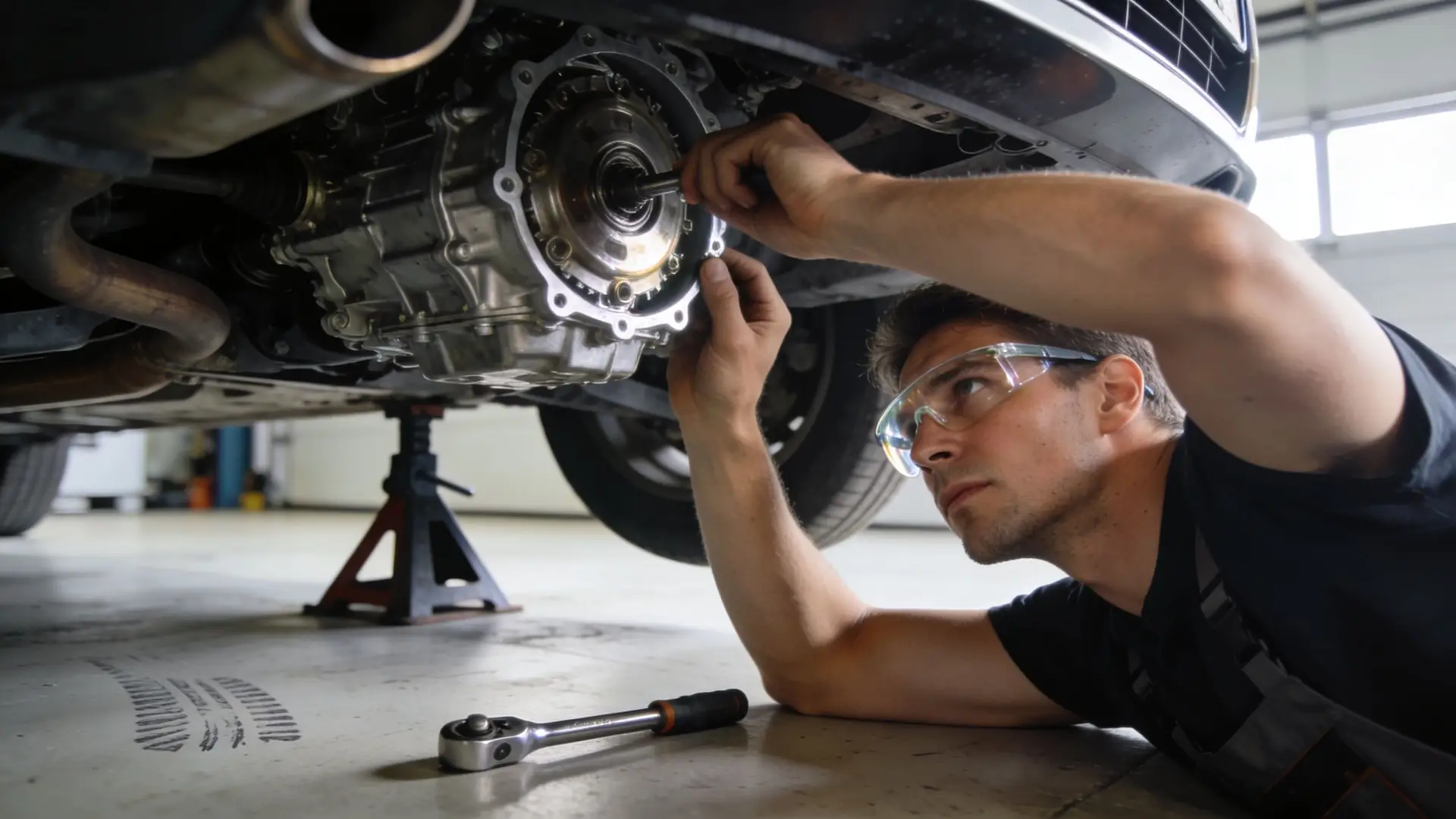
The first safety rule is critical. Never work under a vehicle supported only by a jack. Use jack stands on solid ground, and shake the vehicle lightly before climbing underneath. If it moves, reset it.
The mistakes that hurt transmissions most
Here's where DIY jobs usually get expensive:
- Using the wrong ATF: Similar bottle labels don't mean interchangeable fluid.
- Checking fluid at the wrong temperature: The reading can be off enough to cause underfill or overfill.
- Over-tightening pan bolts: This bends the pan rail and creates leaks.
- Leaving old gasket material behind: Even a small ridge can keep the pan from sealing.
- Ignoring what came out of the pan: Fresh fluid doesn't solve internal failure.
Hot-running transmissions punish neglect quickly. Severe use changes the service decision, not just the schedule.
Why heat changes everything
Transmission fluid is extremely sensitive to temperature. One cited rule of thumb says every 20°F increase above 175°F cuts fluid life in half (temperature and ATF discussion). You don't need to be towing a race car trailer for that to matter. Stop and go traffic, steep grades, and summer heat can all push fluid harder than owners expect.
That's why fluid level checks aren't just bookkeeping. On many transmissions, the level only reads correctly within a narrow operating window. Too little fluid can aerate the system or reduce pressure. Too much can foam, overheat, and shift poorly.
When to stop the DIY job
Walk away and reassess if any of these show up:
| Problem | Why you should stop |
|---|---|
| Fill plug won't come loose | You may drain a unit you can't refill |
| Pan contains significant metal debris | Likely internal damage |
| Service info is unclear or inconsistent | Wrong procedure can cause damage |
| Fluid level method requires specialized monitoring | Better handled with proper equipment |
If you can do the work safely and exactly, proceed. If not, handing it to a professional is the responsible call, not a failure.
The Professional Choice The Kwik Kar Service
There's a point where DIY stops being a money-saving project and starts becoming a gamble. That point usually arrives when the transmission has a strict fill temperature procedure, no easy dipstick access, signs of wear, or unknown service history. High-mileage vehicles especially deserve a diagnosis-first approach.
One of the biggest misunderstandings I hear is the idea that every transmission just needs a “flush” or every older one should only get a pan service. Real life is more nuanced. Many service pages frame the decision as change versus flush and note that a drain-and-refill may replace only 20% to 40% of total fluid volume, but the more important question is how to reduce failure risk in a high-mileage vehicle (transmission fluid change versus flush discussion).
What a good shop actually adds
A trusted shop isn't only selling labor. It's adding judgment.
- Condition assessment: Techs look at fluid color, odor, debris in the pan, leaks, and how the vehicle shifts before recommending a service type.
- Procedure control: Modern units may require exact fill methods, temperature checks, and vehicle leveling.
- Correct parts selection: The shop verifies fluid spec, filter kit, gasket design, and any one-time-use seals.
- Post-service verification: A road test and leak inspection catch problems before the car goes back to the owner.
That matters more than people think. Some transmissions respond well to a standard pan drop and filter service. Some are better served by a more complete fluid exchange. Some need diagnosis before either is attempted.
Why the shop environment helps
Clean work changes outcomes. Transmission service rewards patience, organization, and clean parts handling. If you want a sense of how serious professional shops are about contamination control and parts cleaning, Evo Dyne Products' auto cleaning guide offers useful context on why cleaning methods matter in modern repair work.
For local drivers who'd rather skip the uncertainty, professional transmission service at Kwik Kar gives you a path that includes inspection, service selection based on actual condition, and a process built around the correct equipment. That's especially valuable when the vehicle is a daily driver and you can't afford a do-over in your driveway.
A transmission service should fit the condition of the unit in front of you, not a generic rule you found on a sticker or forum post.
The practical trade-off
DIY makes sense when the transmission is serviceable, the procedure is clear, and you're comfortable working cleanly and safely. Professional service makes more sense when the transmission is sealed, temperature-sensitive, already showing symptoms, or too important to risk.
That's the core comparison. It isn't DIY versus shop pride. It's control, risk, time, and the likelihood of getting the result you want.
Keeping Your Transmission Driving Smoothly
The smartest transmission work usually happens before the transmission asks for help. If your vehicle is due by mileage, shifts a little differently than it used to, or sees hard use in traffic, heat, towing, or hills, paying attention now is cheaper and simpler than reacting later.
A transmission fluid and filter change can be a solid DIY job when the design is serviceable and you follow the exact procedure. It's also a job that punishes shortcuts. Wrong fluid, bad fill level, poor cleanliness, and unsafe lifting can turn routine maintenance into a real problem.
Seasonal conditions also affect how hard your vehicle works. If you're building a broader maintenance plan, this Titan Coatings guide to winter auto prep is a useful reminder that fluid condition, battery health, tires, and visibility all work together.
Take the practical route. Do it yourself if you can do it correctly. Use a professional if that gives you the better outcome.
If your vehicle is due for transmission service or you're noticing rough shifting, delayed engagement, or dark fluid, schedule an inspection with Kwik Kar Oil Change and Auto Care. A good transmission service starts with the right diagnosis, the correct fluid and parts, and a procedure that matches your vehicle.