




You turn the key, the engine starts, and then you hear it. A squeal from under the hood. Maybe it goes away after a few seconds. Maybe your steering feels heavier than usual, or the A/C doesn’t seem as cold on a hot Fort Worth afternoon. Most drivers don’t think, “That must be the serpentine belt.” But that small belt often sits right in the middle of the problem.
If you’ve ever asked what does a serpentine belt do, the short answer is simple. It transfers power from the engine to several important parts your car depends on every day. The longer answer matters more, because when that belt wears out, comfort, convenience, and even safety can change fast.
Your Car’s Unsung Hero The Serpentine Belt
The serpentine belt is one of those parts drivers rarely notice until it starts making noise or fails. That’s understandable. It doesn’t get the attention that brakes, batteries, or tires do. But under the hood, it does an enormous amount of work every time you drive.
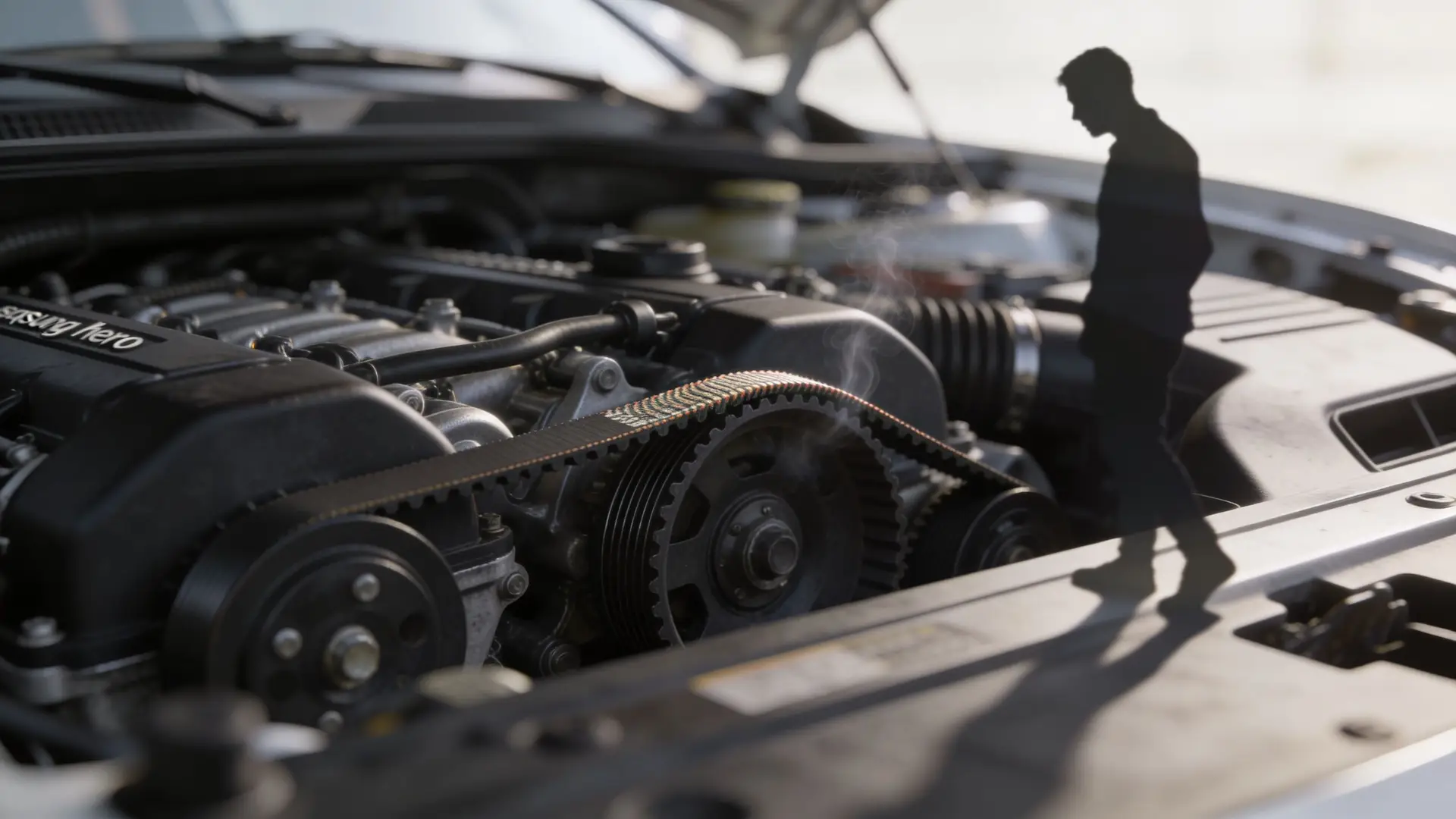
Think of it as the engine bay’s main drive loop. One belt wraps around several pulleys and keeps key systems moving together. If that sounds more efficient than using several separate belts, that’s because it is.
Why modern cars use one belt
Older vehicles often used multiple V-belts. Each one handled a separate accessory. That meant more parts to inspect, more things that could slip, and more clutter under the hood.
The serpentine belt became common in the 1980s and replaced up to 5 separate V-belts, improving power transfer efficiency by 20 to 30% and extending maintenance intervals by about 60%. Typical belt life also grew from under 50,000 miles to around 60,000 to 100,000 miles, according to this serpentine belt overview from Sunset Cadillac Bradenton.
Practical rule: If a single part affects charging, steering, cooling, and cabin comfort, it isn’t a minor part.
Why drivers feel belt problems quickly
A lot of car parts fail unnoticed. A serpentine belt usually doesn’t. It tends to announce trouble with noise, changes in steering feel, warning lights, or an overheating engine. That’s why I tell customers to take belt symptoms seriously even if the car still runs.
For Fort Worth drivers, this matters even more in stop-and-go traffic and summer heat. If your belt can’t keep accessories turning properly, the first thing you notice might be inconvenience. The next thing might be a breakdown.
How a Serpentine Belt Works
The easiest way to picture it is like a single rope turning several wheels on a workshop machine. The engine creates the motion. The belt carries that motion to the parts that need it.
The crankshaft pulley starts the whole process
The belt gets its power from the crankshaft pulley, which spins whenever the engine runs. That pulley is the source. Everything else is downstream from it.
As the crankshaft pulley turns, the belt moves along a winding path around other pulleys. That’s where the name “serpentine” comes from. It snakes around the front of the engine.
The other pulleys each have a job
Not every pulley does the same thing. It helps to separate them into roles:
- Accessory pulleys turn the parts that do real work, such as the alternator, power steering pump, A/C compressor, and sometimes the water pump.
- Idler pulleys don’t power a component. They guide the belt along the right route.
- The tensioner keeps the belt tight enough to grip without slipping.
If the belt is too loose, it can squeal and slide instead of turning the pulley properly. If something is out of line, the belt can wear unevenly. If a pulley seizes, the belt can get damaged fast.
The belt doesn’t create power. It distributes power already coming from the engine.
Why tension matters so much
Drivers sometimes hear belt noise and assume the belt itself is the only issue. Sometimes it is. Sometimes the problem is instead the tensioner or a pulley that isn’t running true.
That’s why a belt system works best when all the pieces are doing their part. The belt is the link you can see, but the whole setup depends on alignment, grip, and proper tension. When everything is working correctly, you don’t notice it at all. Your steering feels normal, your battery stays charged, your engine stays cool, and your A/C keeps the cabin comfortable.
The Critical Systems Your Serpentine Belt Powers
A serpentine belt problem rarely feels like “just a belt” from the driver’s seat. It feels like the steering gets heavy in a parking lot, the A/C stops cooling on a Fort Worth afternoon, or a battery light comes on during the drive home. That is why this part matters to your daily comfort, safety, and confidence behind the wheel.
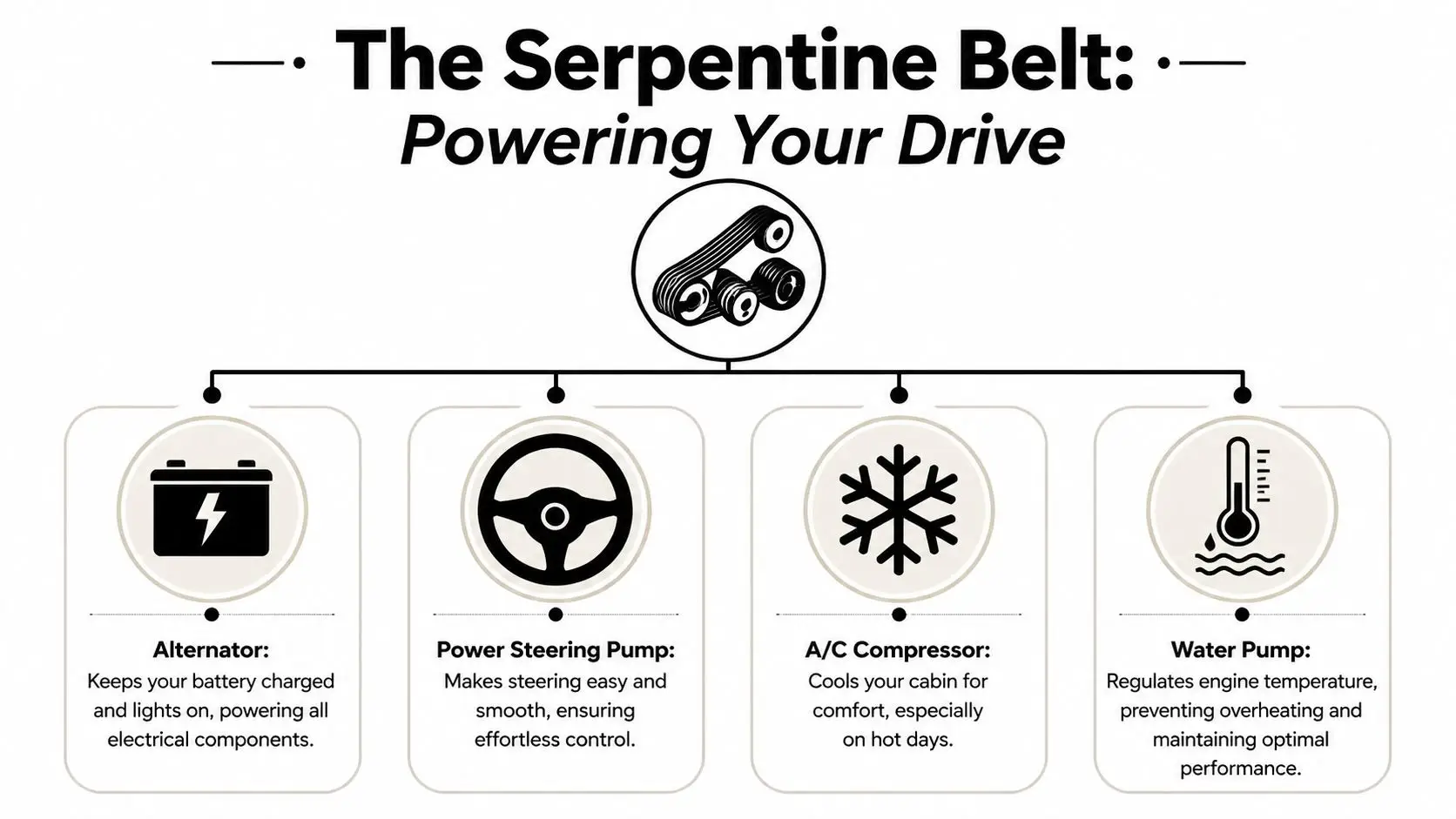
Alternator and electrical power
The alternator works like your car’s charging station while the engine runs. The belt spins it so it can keep the battery charged and supply power to things you use every trip, such as headlights, dashboard electronics, and phone charging.
If the alternator is not being driven properly, the battery starts carrying the load alone. If you are sorting out charging-related symptoms, this guide to alternator replacement cost explains what that service usually includes. For a second opinion on overlapping warning signs, the Richland Hills alternator diagnostics guide is also helpful.
Power steering and vehicle control
Power steering is one of those systems you barely notice until it changes. With the belt doing its job, the wheel feels light and predictable. If belt drive is lost, turning can take much more effort, especially at low speeds when you are pulling into a driveway, backing out of a space, or correcting quickly in traffic.
That change is not just inconvenient. It can affect how confidently you control the vehicle.
Water pump and engine cooling
On many vehicles, the serpentine belt also turns the water pump. The water pump moves coolant through the engine and radiator, carrying heat away so temperatures stay in a safe range.
If that circulation stops, heat builds fast. What starts as a belt issue can turn into an overheating problem that leaves you stranded or facing a much larger repair bill.
A/C compressor and cabin comfort
In Texas, air conditioning is more than a nice extra. It helps keep the cabin tolerable in summer traffic and can make a long commute much less draining. When the belt turns the A/C compressor, you get cold air. If the belt slips or breaks, that comfort can disappear right away.
The bigger point is simple. These systems often stop together, not one by one. A single worn belt can affect charging, steering, cooling, and cabin comfort at the same time.
As noted earlier from Jiffy Lube’s overview of serpentine belt function, the alternator may generate 50 to 150 amps, the power steering pump can create up to 2,000 psi, and the water pump may circulate 20 to 50 gallons of coolant per minute. That gives you a sense of how much everyday driving depends on one belt doing its job well.
Signs Your Serpentine Belt Is Failing
A serpentine belt problem often shows up the same way many roadside breakdowns start. You are heading across Fort Worth, the A/C quits cooling at a stoplight, the steering suddenly feels heavier in a parking lot, or the battery light comes on during the drive home. Those symptoms can feel unrelated, but one worn belt can connect all of them.
What you hear
Start with the sound.
A squeal or chirp from the front of the engine usually means the belt is slipping across a pulley instead of gripping it cleanly. You might notice it on startup, when you accelerate, or right after you switch on the A/C.
That noise does not confirm the belt will break the same day. It does tell you the belt system needs attention soon. In plain terms, the belt is acting like a shoe that has lost traction on a slick floor. It may still move, but not the way it should.
What you see and feel
Some drivers never hear a noise first. They notice a warning light, a hot-running engine, heavier steering, or weak air conditioning.
Those changes matter because they affect the parts of driving you feel right away. Steering can become harder during low-speed turns. Cabin comfort can disappear in Texas heat. If the water pump is belt-driven on your vehicle, rising engine temperature can turn from a small warning into a much more expensive repair if you keep driving. If the gauge starts creeping up, this guide on why a car overheats can help you spot related warning signs.
Charging symptoms can be confusing because a weak alternator and a slipping belt can look similar from the driver’s seat. The Richland Hills alternator diagnostics guide gives helpful context if your battery light is on or the vehicle struggles to stay charged.
| Symptom (What you Hear, See, or Feel) | Potential Cause | What to Do |
|---|---|---|
| Squealing at startup | Belt slip, worn belt, weak tensioner | Schedule an inspection soon |
| Chirping while driving | Misalignment or pulley issue | Have the belt path and pulleys checked |
| Battery light comes on | Alternator may not be turning properly | Limit driving and get it diagnosed |
| Steering feels heavy | Power steering assist may be reduced | Treat it as a safety issue |
| Temperature gauge rises | Water pump may not be circulating coolant properly | Stop driving if overheating begins |
| A/C blows warm | Compressor may not be driven correctly | Inspect the belt system before more use |
If the battery light comes on and the steering suddenly feels heavier at the same time, pull over when it is safe. That combination can mean the belt is no longer driving key accessories correctly.
How to Perform a Quick Belt Inspection
You can do a basic belt check at home, as long as you keep it simple and safe. The engine should be off before you put your hands anywhere near the belt path.
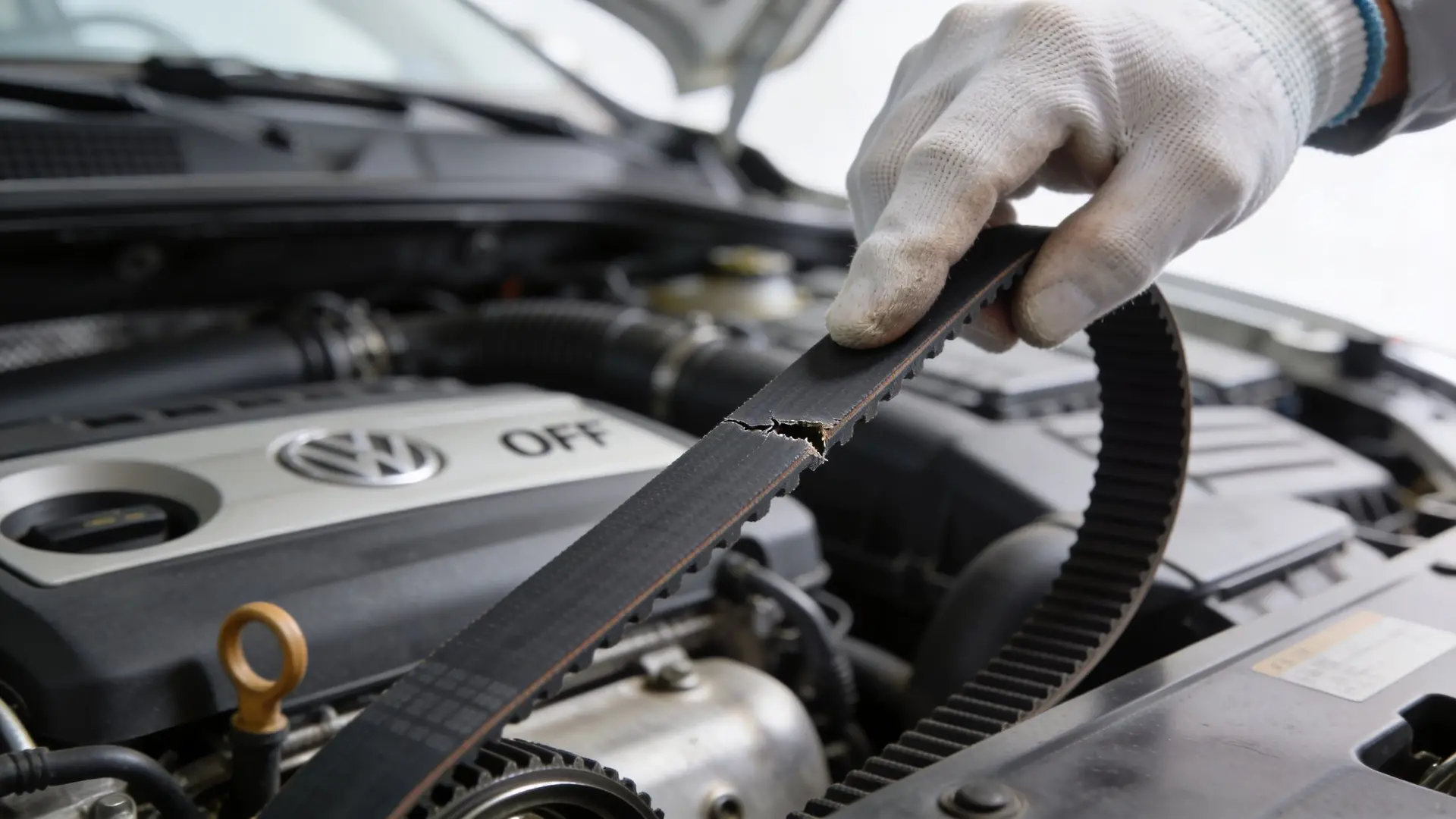 timing belt with a tear clearly visible over the engine bay.” />
What you can check yourself
Open the hood and locate the belt at the front or side of the engine, depending on vehicle layout. Look for obvious wear without touching anything that could still be hot.
A quick visual check should focus on a few things:
- Cracks in the ribs that look deep or widespread
- Frayed edges that suggest the belt is wearing unevenly
- Glazing, which looks shiny and slick instead of matte
- Fluid contamination from oil or coolant leaking onto the belt
If you’re newer to under-hood maintenance, this primer on car maintenance for beginners gives a helpful overview of what you can safely inspect yourself.
What a technician checks that you usually can’t
A visual check is useful, but it has limits. Professional technicians inspect rib wear more closely and check for cracks deeper than 1/16 inch. They also test belt tension, which is typically 300 to 500 N, because low tension causes slippage and heat that can cut belt life from over 100,000 miles to under 50,000 miles, according to Kwik Fit’s technical explanation of serpentine belt operation.
That matters because a belt can look decent from above while the system still has a weak tensioner or alignment issue.
This short video gives a helpful visual of what belt inspection looks like in practice:
Shop-floor advice: A belt inspection isn’t only about the belt. We also look at the pulleys and tensioner, because a new belt won’t last long on a bad path.
Serpentine Belt Replacement at Kwik Kar
By the time a serpentine belt is noisy, cracked, slipping, or affecting how the car drives, replacement is often the smart move. In many vehicles, belt service becomes more likely somewhere in the 60,000 to 100,000 mile range, based on the lifespan data cited earlier from Sunset Cadillac Bradenton. The exact timing depends on the vehicle, the belt material, heat exposure, and the condition of the rest of the drive system.
Cost is one of the first questions drivers ask, and that’s fair. The earlier verified data notes that serpentine belt replacement averages $150 to $250, qualitatively reflecting that this is usually far less expensive than dealing with the collateral damage that can follow a failed belt.
What professional replacement includes
Replacing the belt isn’t just a matter of slipping on a new one and calling it done. A proper service also includes checking pulley condition, confirming alignment, and making sure the tensioner is doing its job. If those parts are worn, a brand-new belt can still squeal, track badly, or wear out early.
At Kwik Kar Oil Change and Auto Care, belt service can include inspection of the belt path, pulley movement, and tensioner operation, along with replacement using the correct belt for the vehicle. That’s the practical difference between a quick guess and a diagnosis.
Why this service protects more than one part
A failing belt doesn’t stay in its own lane. It can affect charging, cooling, and steering in one event. That’s why replacing a worn belt early is usually cheaper and less disruptive than waiting for a roadside failure.
If you’re trying to keep an older vehicle reliable, belt service is one of those repairs that pays off in predictability. You spend a manageable amount now to avoid a much bigger problem on a busy day.
Frequently Asked Questions About Serpentine Belts
Is a serpentine belt the same as a timing belt
No. They do completely different jobs. The serpentine belt drives outside accessories like the alternator and A/C compressor. A timing belt is part of the engine’s internal timing system. They are not interchangeable.
Can you drive with a broken serpentine belt
You shouldn’t. If the belt breaks, you can lose charging, steering assist, engine cooling, and A/C operation depending on the vehicle design. Even if the engine still runs for a short time, it’s not a situation to gamble on.
Why would a new belt still make noise
A new belt can still squeal if the tension is wrong, a pulley is misaligned, or fluid has contaminated the belt path. Sometimes the belt was only the visible symptom, not the whole problem. That’s why a full inspection matters more than swapping parts one by one.
How often should you have it checked
A good habit is to have it inspected during routine maintenance, especially as the vehicle gains mileage. Belts wear gradually, and catching wear early is easier than dealing with a sudden failure.
If your car is squealing, steering feels different, or you want the belt system checked before it becomes a bigger problem, schedule service with Kwik Kar Oil Change and Auto Care. A clear inspection and straightforward explanation can help you decide whether the belt is still in good shape or ready for replacement.