



TL;DR: Modern car engines typically last 150,000 to 200,000 miles, and with proper maintenance many can reach 250,000 miles or more. Ultimately, the answer depends on how the engine is built, how you drive, and whether you stay ahead of service instead of reacting after problems start.
You glance at the odometer during a stoplight and feel that little knot in your stomach. Maybe your car just crossed a mileage number that sounds high. Maybe it still runs fine, but you’re wondering if every startup is a gamble.
That worry is common, especially if you depend on your vehicle every day around Fort Worth. The good news is that engine life usually isn’t decided by one magic number. In most cases, it’s shaped by habits, conditions, and timing. Think of the odometer as one clue, not the verdict.
The Heart of Your Car and Its True Lifespan
A car’s engine is a lot like a heart. It works every time you ask for movement, whether that’s a cold morning school run, a long highway drive, or stop-and-go traffic in summer heat. And just like a heart, it doesn’t usually quit without a history. It gives signs. It responds to care. It wears differently depending on how it’s treated.
I’ve seen two vehicles with similar mileage behave very differently. One owner changes the oil on time, watches the temperature gauge, and gets small leaks handled early. The other waits until a warning light stays on long enough to become impossible to ignore. On paper, the mileage may look close. In real life, the engines are in very different shape.
That’s why asking how long do car engines last is only half the question. The better question is, what kind of life has this engine had so far?
Mileage matters less than engine history
A high-mileage car isn’t automatically worn out. A lower-mileage car isn’t automatically healthy. A vehicle that took short trips, ran low on oil, or overheated once may be in worse condition than one that spent years getting regular service and easy highway miles.
A well-cared-for engine usually ages gradually. A neglected engine often fails suddenly.
When drivers understand that difference, they stop treating the odometer like a countdown timer. They start treating engine health like something they can manage.
The goal is control, not guesswork
If your engine is running well today, you want to keep it that way. If it’s starting to show age, you want to catch problems while they’re still fixable. That means paying attention to engine type, driving conditions, and service milestones instead of waiting for a breakdown to make the decision for you.
The rest of this guide is built around that idea. Not just a lifespan number, but a practical way to judge where your engine stands and what to do next.
What Is the Average Lifespan of a Car Engine
You pull into your driveway, glance at the odometer, and see a number that makes you wonder whether the engine is nearing the end or just entering its second half. That question comes up all the time, and the answer starts with a range, not a deadline.
Many modern car engines reach 150,000 to 200,000 miles in normal use, and well-maintained engines often go beyond that, according to this engine lifespan overview.
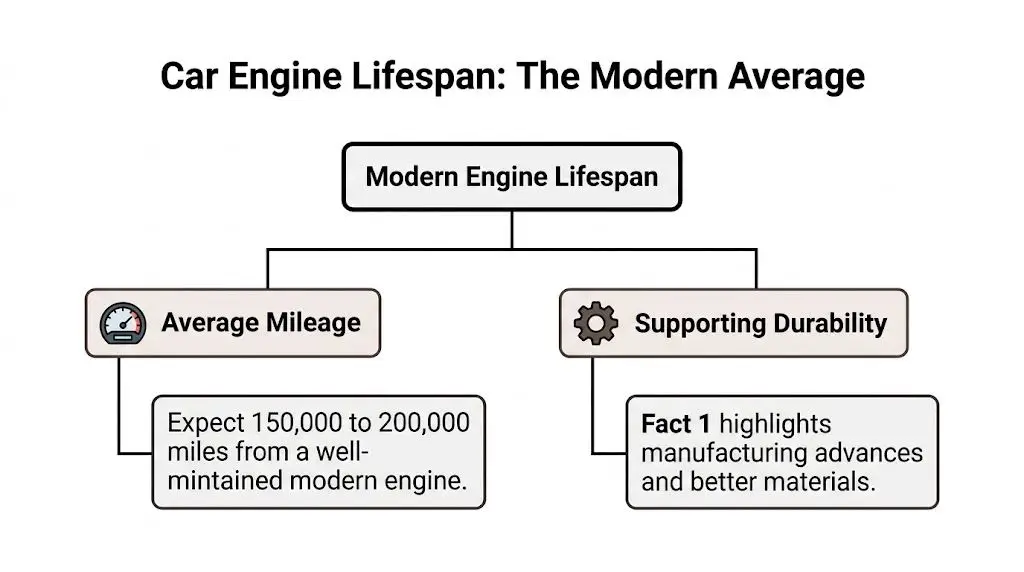
That range helps set expectations, but it does not tell the whole story. Two cars with the same mileage can be in very different condition because engine life depends on three things working together. The engine’s design, the kind of driving it sees, and whether key service jobs were done on time all shape how long it stays healthy.
Older engines often wore out sooner than modern ones because machining tolerances, oil quality, cooling systems, and fuel management were less refined. Today’s engines are built with better materials and tighter control over heat and lubrication. That gives owners a better starting point, but it still takes consistent care to turn that potential into real lifespan.
Use the average as a reference point
A mileage range is best used the way you would use a weather forecast. It gives you a general idea of what to expect, but you still need to look outside and see what conditions are doing. With engines, those conditions include cold starts, short trips, towing, overheating history, oil change habits, and whether major wear items were addressed before they caused trouble.
Timing components are a good example. A car with a neglected belt or stretched chain can run into major engine damage long before the odometer suggests trouble. Knowing the difference between a timing belt and a timing chain helps you judge what maintenance milestone matters for your vehicle.
What the number means for your car
If your engine is still well below the common lifespan range, your focus is preservation. Keep oil changes on schedule, watch fluid levels, and take small leaks or temperature issues seriously.
If your engine is already well past that range, the better question is whether it is still wearing its miles well. A strong high-mileage engine usually shows steady oil pressure, stable temperature, clean fluid condition, and consistent performance. A tired one often leaves clues before it fails, such as increased oil use, rough running, smoke, or new noises.
Practical rule: Evaluate mileage together with service records, engine temperature history, oil condition, startup behavior, and the way the car drives under load.
That approach gives you a clearer decision framework than the odometer alone. Instead of waiting for one big number to tell you the story, you can judge where your engine stands, what it needs next, and how to help it last longer.
Why Some Engines Outlast Others
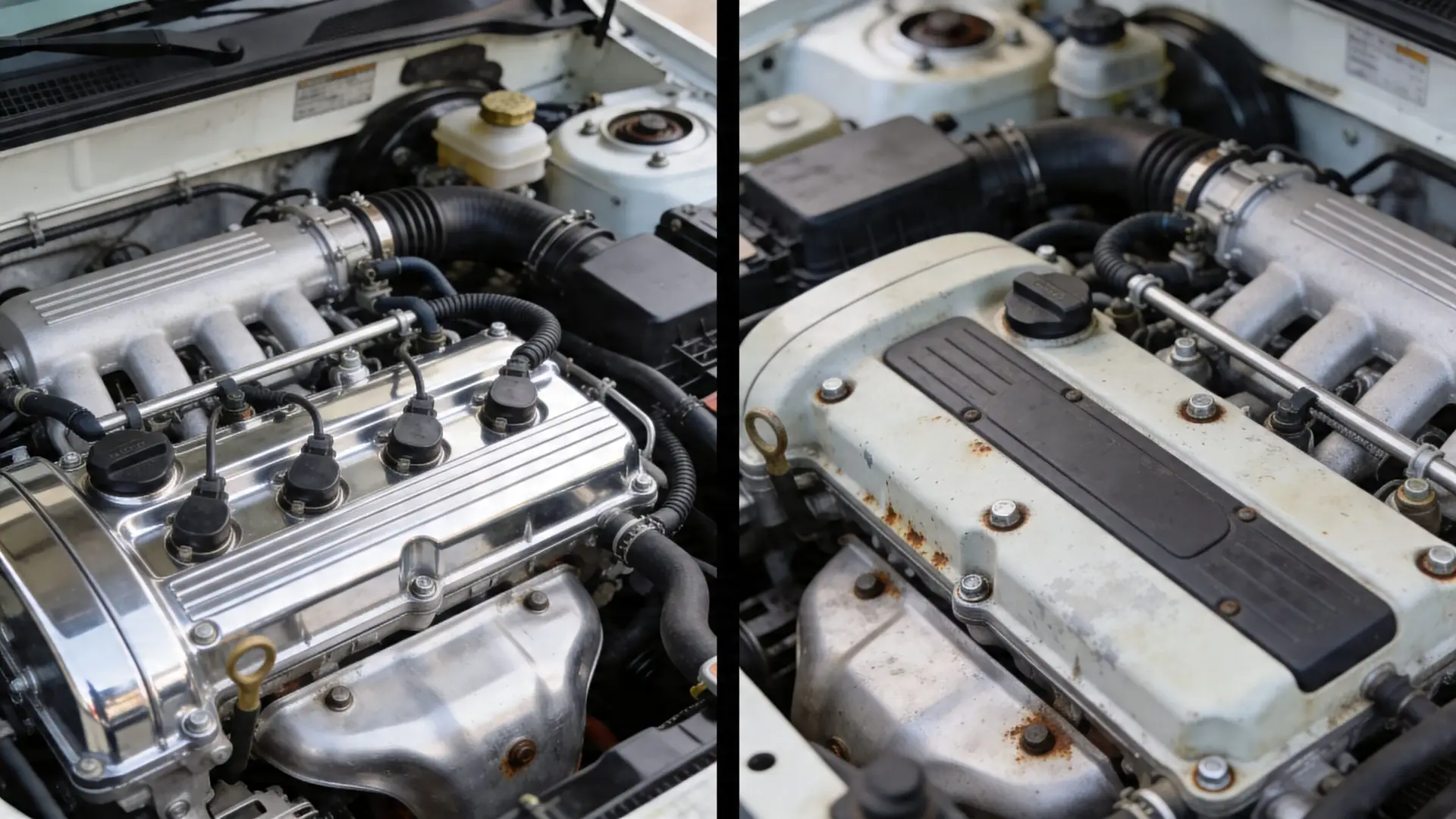
Two engines can leave the factory looking nearly identical and end up with very different futures. One reaches old age with steady compression and smooth idle. The other starts burning oil, running hot, or losing power much sooner. The reason usually comes down to four things working together.
Maintenance changes the whole story
Oil is the engine’s lifeblood. When owners stretch oil changes too long, use the wrong oil, or ignore leaks, internal wear speeds up. That wear doesn’t always show itself right away. It can build up until bearings, timing components, or valve train parts start complaining.
Cooling matters just as much. An engine can survive many years of normal use, but repeated overheating does real damage. Heat can stress seals, warp parts, and break down oil faster.
Driving habits create either easy miles or hard miles
Not all miles are equal. Highway driving is usually easier on an engine than repeated short trips where the engine rarely warms up fully. Aggressive acceleration, heavy loads, long idling, and frequent cold starts all increase stress.
A driver who eases into the throttle, warms the car naturally, and handles small issues early will usually get more life from the same engine than a driver who treats every merge like a race.
Build quality and design matter
Some engines are more forgiving than others. A sturdy design with durable internals and well-managed heat tends to age better. Timing system design is one example. If you’re trying to understand whether your vehicle uses a belt or chain and why that matters over time, this guide on timing belt or timing chain is worth reading.
That doesn’t mean “good” engines are indestructible. It means they tolerate normal wear better and often recover from small lapses that would hurt a more fragile design.
Turbocharged and naturally aspirated engines don’t age the same way
A common failing of many guides is oversimplification. Modern engines aren’t all working under the same conditions internally.
Some analyses suggest turbocharged direct injection engines have failure rates that are 20 to 30 percent higher before 150,000 miles than naturally aspirated engines, often because turbos run under greater heat and stress and are more sensitive to neglected oil changes, according to this discussion of engine type and lifespan.
That doesn’t mean a turbo engine is bad. It means it’s less forgiving.
A simple way to think about it
A naturally aspirated engine is like someone doing steady work at a reasonable pace. A turbocharged engine is like someone doing that same job while also carrying extra weight uphill. It can perform very well, but it needs cleaner lubrication, better cooling, and less neglect.
For turbo owners, a missed oil service matters more. Cheap oil matters more. Driving hard and shutting the engine down immediately after heavy load can matter more. If you own a turbocharged vehicle, precision maintenance isn’t optional. It’s part of the design.
Turbo engines reward disciplined care. They also punish shortcuts faster.
Your Proactive Engine Maintenance Checklist
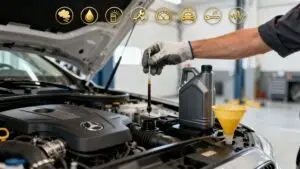
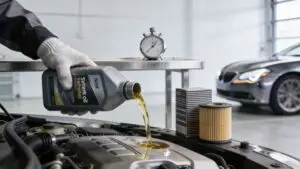
If you want the shortest path to a long-lasting engine, start with routine service. A 2024 study found that regular preventive maintenance, especially oil and filter changes every 5,000 to 7,500 miles using manufacturer-specified oil, can extend engine life by up to 50% by preventing sludge buildup and maintaining lubrication, according to this maintenance and engine longevity reference.
That’s a big reason experienced mechanics focus so much on the basics. They aren’t boring. They’re what keep metal parts separated by a protective film instead of grinding against each other.
The maintenance schedule that protects engine life
Here’s a simple framework you can keep in mind.
| Mileage Interval | Key Service | Why It Matters for Longevity |
|---|---|---|
| Every 5,000 to 7,500 miles | Oil and filter change with manufacturer-specified oil | Keeps internal parts lubricated, reduces sludge, and protects bearings, camshafts, and timing components |
| Regularly between services | Check oil level and look for leaks | Helps catch consumption or seepage before low oil causes wear |
| At routine inspections | Inspect cooling system hoses, radiator area, and fluid condition | Prevents heat-related damage that can shorten engine life |
| At routine inspections | Replace dirty air filters as needed | Helps the engine breathe properly and reduces strain |
| As recommended by your vehicle maker | Spark plug service and related tune-up items | Supports smooth combustion and reduces misfires |
| As mileage climbs | Inspect belts, hoses, and timing-related components | Catches wear before a failed part leaves you stranded or causes damage |
| Any time a warning light appears | Run diagnostic testing promptly | Finds small faults before they turn into bigger repairs |
What owners often miss
A lot of drivers think maintenance means only changing oil. It’s broader than that. Engine longevity depends on a system.
Consider these common misses:
- Low coolant level: Even a small leak can let temperatures creep up over time.
- Dirty air filter: The engine has to work harder when airflow is restricted.
- Ignoring small oil leaks: A drip on the driveway can become a dangerously low level between services.
- Delayed tune-ups: Misfires don’t just hurt performance. They can stress other components.
- Using the wrong oil: Viscosity matters, especially on modern engines with tight internal tolerances.
Milestones matter more as mileage builds
As a vehicle ages, inspection quality becomes more important than the calendar alone. Older engines need more attention to seals, oil consumption, cooling efficiency, and unusual noise. This is also the stage where the right oil choice can help. If your vehicle has been racking up miles, this article on the best oil for high-mileage engines can help you understand what changes and what doesn’t.
For drivers who want a shop to handle these checks as part of scheduled upkeep, Kwik Kar Oil Change and Auto Care provides oil service, inspections, and broader maintenance that fits this kind of preventive approach.
A simple checklist you can actually follow
Keep this short list in your glove box or phone:
- Check fluids monthly: Oil and coolant tell you a lot about engine health.
- Listen at startup: New ticking, rattling, or rough idle deserves attention.
- Watch temperature behavior: If it starts running hotter than usual, don’t wait.
- Use the correct oil: Follow the manufacturer’s specification, not guesswork.
- Fix leaks early: Seals, hoses, and gaskets are cheaper when they’re caught early.
- Don’t skip inspections: A technician can spot patterns that most drivers can’t see yet.
The cheapest engine repair is often the one you prevent before parts start knocking, overheating, or running dry.
Listening to Your Engine Recognizing Early Warning Signs
Engines usually don’t fail out of nowhere. Most of them complain first. The problem is that drivers often don’t know which complaints matter and which ones can wait.
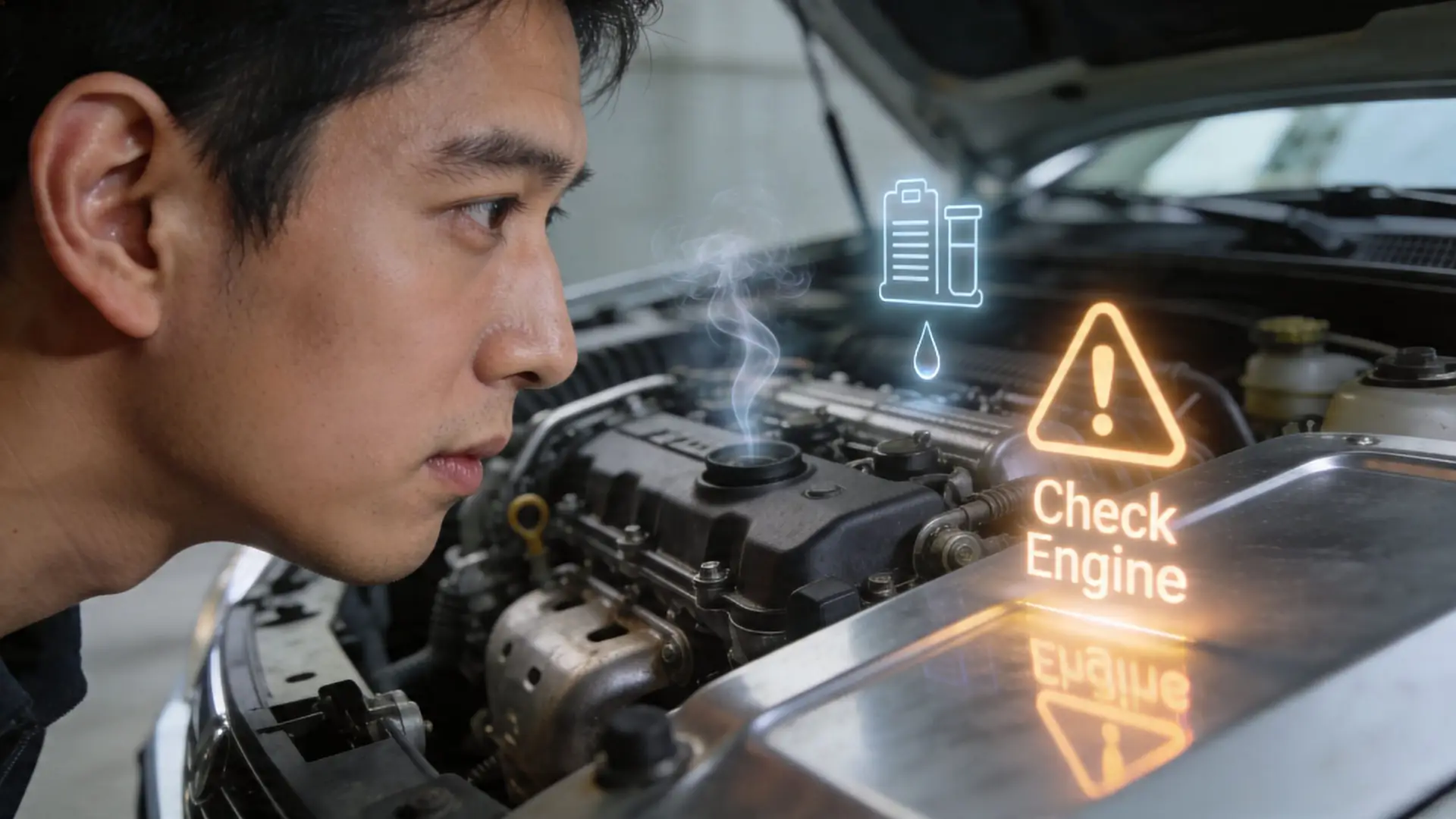
If your car suddenly sounds different, smells hot, shakes at idle, or loses power, pay attention. You don’t need to diagnose it yourself. You just need to notice the change and act before the issue grows.
Sounds you shouldn’t ignore
A ticking noise can point to valvetrain issues or lubrication problems. A knocking sound is more serious and can mean internal wear. A hissing sound may suggest a vacuum leak or a cooling system problem.
A rough idle often tells you combustion isn’t happening evenly. That could be something as straightforward as a tune-up issue, or it could be a symptom of a deeper engine problem.
Sights and smells that deserve quick action
Blue smoke, white smoke, black smoke, and a flashing warning light all mean different things, but none of them should be brushed off. The same goes for the smell of burning oil, raw fuel, or hot coolant.
If you want a simple visual reference for what electronic checks can uncover, examples of computer diagnostic services can help you understand why modern warning lights need scanning, not guessing.
If your temperature warning comes on, stop treating it like a suggestion. This guide on the engine temperature light explains why overheating can escalate so quickly.
A warning light is often the engine’s way of asking for help before damage becomes permanent.
What the car feels like on the road
Sometimes the clue isn’t a sound. It’s a feeling.
- Loss of power: The engine may be struggling with airflow, fuel delivery, ignition, or compression.
- Shaking under load: Misfires or mount-related issues may be developing.
- Hesitation on acceleration: The engine isn’t responding cleanly and needs inspection.
- Hard starting: Wear, fuel issues, or sensor problems may be building.
A short explainer can help you see how these symptoms connect to real problems in the bay.
When to get it checked
If the symptom is new, persistent, or getting worse, schedule a diagnostic visit. Don’t wait for “one more week” if the engine is overheating, knocking, flashing a warning light, or running badly enough that you notice it every trip.
Small issues tend to stay small only when someone catches them early.
Repair Rebuild or Replace Navigating High-Mileage Decisions
There comes a point when the question changes from “How long will this engine last?” to “What should I do with it now?” That decision gets emotional fast, especially if the rest of the vehicle still suits your life.
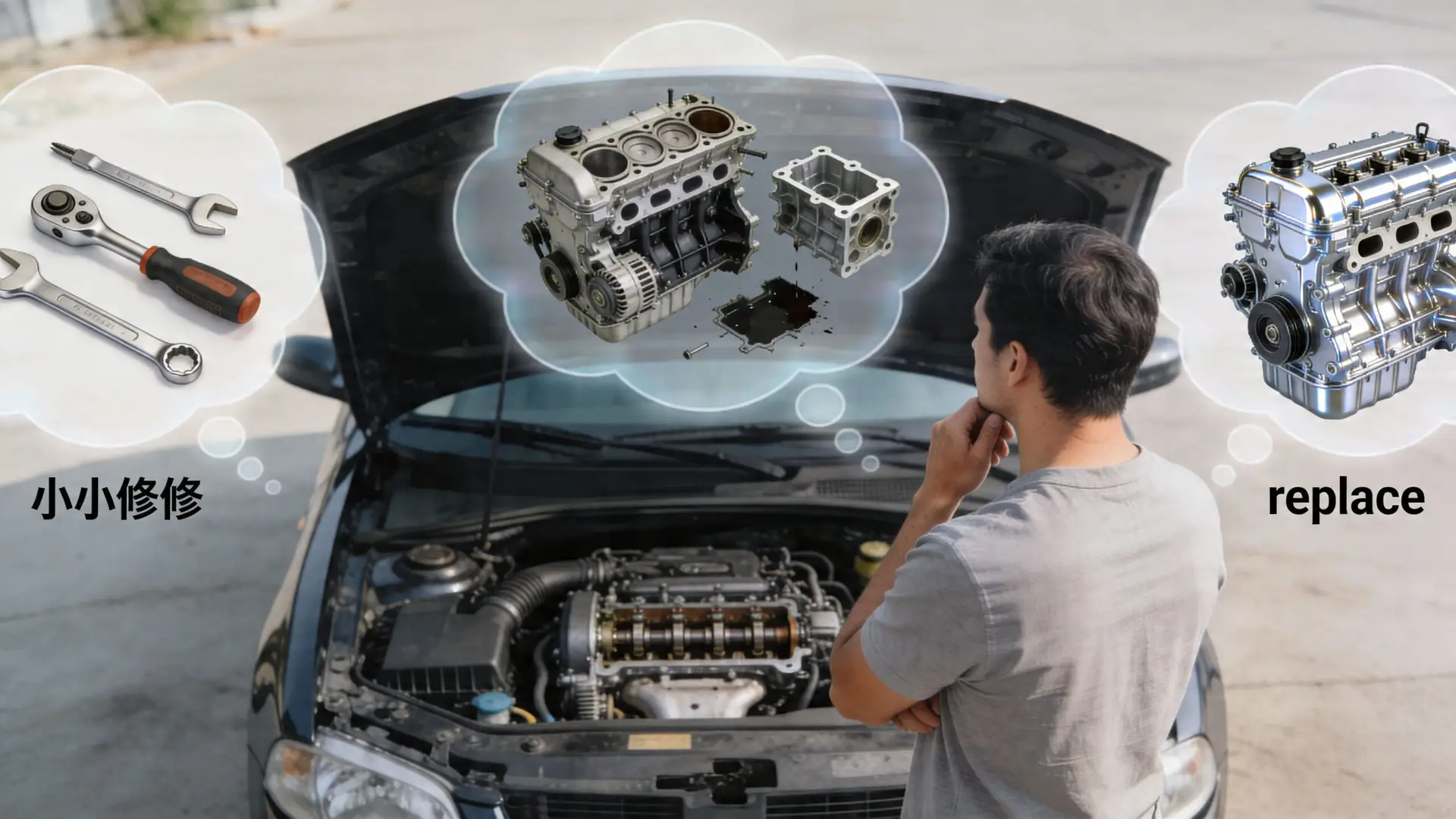
The smarter approach is to slow down and evaluate the problem like an investment decision. Start with the engine’s actual condition. Then look at the rest of the car.
When a targeted repair makes sense
If the issue is limited to one area, a focused repair may be the best move. An oil leak, ignition problem, cooling issue, or sensor fault can often be handled without touching the whole engine assembly.
This route makes the most sense when the engine still has solid underlying health, the vehicle is otherwise in good shape, and the repair addresses the true root cause.
When a rebuild deserves consideration
A rebuild is a deeper reset. It can make sense when the engine has internal wear but the vehicle itself is worth keeping. Owners who know their car’s history sometimes prefer this path because they aren’t gambling on an unknown replacement engine.
Modern automotive manufacturing innovations have also changed how many components are designed and produced, which helps explain why some engines are more rebuild-friendly and durable than older drivers might expect.
When replacement is the better answer
Replacement becomes the stronger option when damage is widespread, the engine has suffered severe overheating or internal failure, or the labor required to save the original engine stops making practical sense.
Use a simple checklist before deciding:
- Overall vehicle condition: Is the transmission, suspension, and electrical system in decent shape?
- Ownership timeline: Do you want to keep the car for years, or just get through the next season?
- Reliability needs: Can you tolerate downtime, or do you need dependable daily use?
- Diagnosis quality: Do you have clear test results, or are you guessing?
Don’t choose repair, rebuild, or replacement based on fear. Choose based on confirmed condition and how long you plan to keep the vehicle.
A good diagnosis is what turns this from a stressful guess into a sensible decision.
Frequently Asked Questions About Engine Longevity
Can a car engine really go past 250,000 miles
Yes, many do when they’re maintained carefully. That doesn’t happen by luck alone. It usually comes from consistent oil service, cooling system care, and quick attention to smaller problems before they spread.
Are some brands better for engine life than others
Yes, some engines build stronger long-term reputations than others. But reputation shouldn’t replace inspection. A well-maintained average engine can outlast a neglected “reliable” one.
Do diesel engines last longer than gas engines
In passenger vehicles, diesel engines are often known for long service life when maintained properly. They’re also less common for many everyday drivers, so the better comparison for most owners is still between gas engines of different designs and maintenance histories.
Does Fort Worth heat make engine wear worse
Yes. Hot weather puts more strain on oil, cooling systems, seals, and hoses. That’s why local drivers should pay close attention to coolant condition, oil quality, and any temperature-related warning signs.
Is highway mileage better than city mileage
Usually, yes. Steady highway driving is often easier on an engine than short trips and heavy stop-and-go use. City driving creates more heat cycles, more idling, and more wear from repeated starts.
What’s the biggest mistake owners make
Waiting too long because the car still “mostly” feels fine. Engines often give early warnings, but those warnings are easiest to fix at the beginning, not after performance drops sharply or the car overheats.
If your vehicle has high mileage, new symptoms, or just needs a careful look from experienced technicians, Kwik Kar Oil Change and Auto Care can help you evaluate engine condition, stay ahead of maintenance, and make a practical plan for the miles ahead.