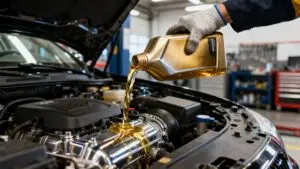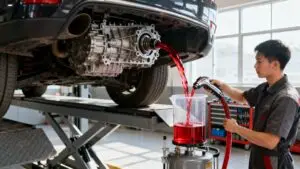




An automatic transmission service is one of the most important—and often overlooked—health checkups for your vehicle. It’s not just a quick fluid swap; it’s a deep, preventative service that cleans out harmful deposits, replaces worn-out fluid, and keeps your car shifting smoothly to head off massive repair bills down the road.
Understanding Your Automatic Transmission Service
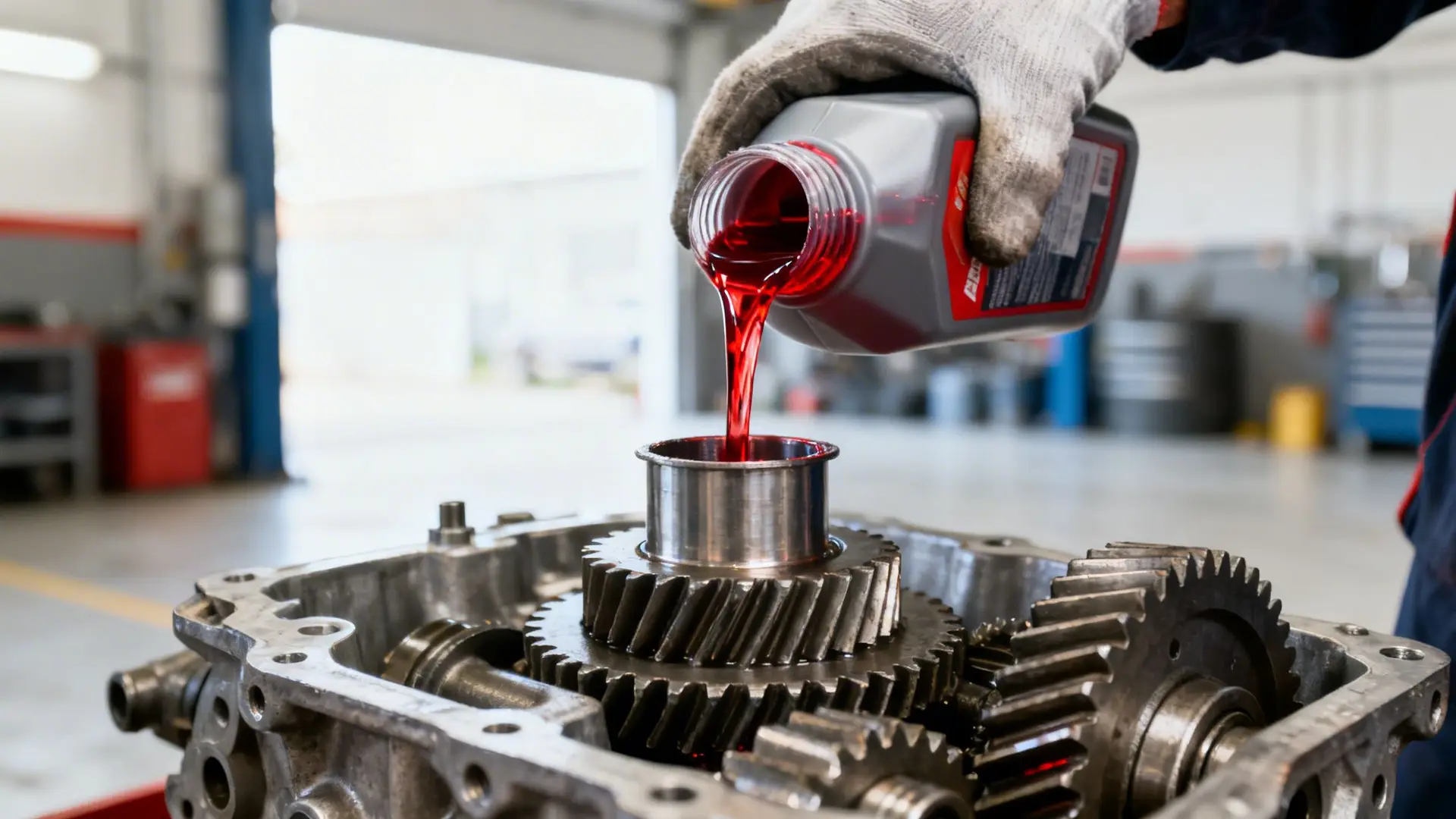
Think of your automatic transmission as the brain behind the brawn. It’s an incredibly complex system of gears, clutches, and hydraulic passages that makes sure your engine’s power gets to the wheels at just the right moment, all without you having to do a thing. An automatic transmission service is the essential maintenance that keeps this critical system thinking clearly and working flawlessly.
The secret to its success? The transmission fluid. This isn't just any oil; it's the lifeblood of the entire system, and it has several jobs to do all at once.
The Role of Transmission Fluid
Transmission fluid is a true multi-tasker. It acts as a lubricant for all the moving parts, a hydraulic fluid to power the gear shifts, and a coolant to carry away the intense heat generated by friction. But over time, this hard-working fluid just wears out.
Heat and pressure cause it to break down, losing its ability to protect the transmission’s delicate internals. Worse yet, it starts to get contaminated with tiny metal shavings and debris from the clutch packs. This is where things get risky.
Driving with old, dirty fluid is a gamble. The global automotive transmission market was valued at $183.5 billion in 2025 and is expected to hit $191.3 billion in 2026—a testament to how vital and complex these systems are. Letting the fluid go bad is the number one reason they fail.
A professional automatic transmission service isn't just about replacing fluid. It's about preserving the intricate mechanics that provide a smooth, reliable ride and protecting you from a breakdown that could cost thousands to repair.
Key Benefits of Regular Service
Keeping your transmission properly serviced is one of the smartest investments you can make in your vehicle. The benefits are immediate, tangible, and go a long way toward keeping you on the road and out of the repair shop.
Here's a quick look at what you gain by staying on top of your transmission's health.
| Benefit | Impact on Your Vehicle |
|---|---|
| Extends Transmission Life | Fresh fluid properly lubricates and cools, drastically reducing wear on hundreds of moving parts. |
| Improves Shifting Performance | Clean fluid ensures smooth, crisp, and responsive gear changes without hesitation or jerking. |
| Prevents Overheating | New fluid efficiently removes heat, which is the leading cause of catastrophic transmission failure. |
| Avoids Expensive Repairs | A routine service costs a fraction of a transmission rebuild or replacement, which can easily run into the thousands. |
Ultimately, regular maintenance is about peace of mind. It ensures your car performs as it should, keeps you safe, and protects your wallet from the kind of surprise repairs no one wants to see.
- Extends Transmission Life: By providing superior lubrication and cooling, fresh fluid significantly reduces the wear and tear on all those intricate moving parts.
- Improves Shifting Performance: Clean fluid allows the hydraulic system to work as designed, resulting in much smoother and more predictable gear changes. You can learn more about the benefits of changing transmission fluid in our detailed guide.
- Prevents Overheating: Old, broken-down fluid can't manage heat well, and overheating is the transmission's worst enemy. A service restores this crucial cooling ability.
- Avoids Expensive Repairs: The cost of a transmission service is pocket change compared to the price of a full rebuild or replacement. It’s a classic case of an ounce of prevention being worth a pound of cure.
Recognizing the Warning Signs of Transmission Trouble
Your car has its own way of telling you something is wrong. It won’t use words, but it will give you plenty of signals through strange sounds, smells, and feelings as you drive. When it comes to your transmission, paying close attention to these warnings is key to avoiding a complete—and very expensive—failure. Catching a problem early can be the difference between a simple automatic transmission service and a full-blown rebuild.
Most drivers get used to the normal hums and vibrations of their vehicle, which can make it easy to overlook a new symptom. But your transmission will almost always let you know when it’s in trouble. You just have to know what to listen, feel, and look for.
Strange Noises You Shouldn't Ignore
Unusual sounds are often the very first sign of a problem. A healthy transmission is nearly silent, so if you start hearing something new, it’s time to get it checked out.
- Whining or Humming: Does the car make a whining sound that gets higher in pitch as you speed up or shift gears? This often points to a problem with the transmission fluid pump or other internal parts.
- Clunking or Banging: Hearing a sharp "clunk" when you shift from Park to Drive or Reverse is a major red flag. This can signal anything from worn-out universal joints to serious internal damage.
- Buzzing: A steady buzzing noise might mean you have a clogged internal filter or that your fluid is low, causing parts to vibrate against each other.
Think of these noises as your car’s alarm system. Ignoring them won’t make the problem go away; it will only get worse.
Weird Feelings While Shifting
Besides noises, you can often feel when your transmission is on the fritz. The smooth, seamless gear changes you’re used to might suddenly become clunky, hesitant, or just plain weird.
A classic symptom is gear slipping. This is when the engine revs up, but the car doesn’t accelerate accordingly. It might feel like the car has slipped into neutral for a moment before lurching back into gear. This is a clear sign that the internal clutches or bands are worn out and can’t grip properly.
A transmission that slips is more than just annoying—it's a serious safety risk. If you can't rely on your car to accelerate when you need to merge into traffic, you're putting yourself in a dangerous position. This issue needs a professional inspection right away.
What You Can See and Smell
Sometimes, the most obvious warnings are the ones right in front of you. These clues are usually related to the transmission fluid, which is the lifeblood of the entire system.
One of the clearest signs is a puddle of bright red or dark brown fluid on your garage floor. Fresh automatic transmission fluid is reddish and has a slightly sweet smell. If you see it leaking, you’ve got a bad seal or gasket somewhere.
Another big warning is a burning smell. If your transmission fluid gets old or runs low, it can overheat and give off a sharp, acrid smell, almost like burnt toast. This means the fluid can no longer cool and lubricate the transmission, and serious internal damage is likely happening. For a deeper dive into these symptoms, check out our guide to common auto transmission problems.
There’s a reason the automatic transmission service industry is growing. As cars get older, they need more care. The market for stepped automatic transmissions (SAT) is projected to grow at a compound annual growth rate of 5.9% through 2034. This trend shows just how important professional service is for keeping the millions of automatic vehicles on the road running smoothly.
Comparing Different Types of Transmission Service
So, you know your car needs a transmission service, but then the mechanic starts throwing around terms like "drain and refill," "filter service," and "flush." It can be confusing, but understanding the difference is key to making the right call for your car and your wallet.
Think of it like cleaning a cloudy fish tank. You've got a few ways to go about it, and each one gets you a different result. You could scoop out a couple of buckets and top it off with fresh water—it helps, but a lot of the gunk is still floating around. Or you could do a full cleanout. Each approach has its place.
The Basic Drain and Refill
A drain and refill is the simplest, most basic option. A technician just opens the drain plug on the transmission pan and lets gravity pull out some of the old fluid. Once it's done draining, they top it off with fresh fluid.
While it's quick and straightforward, it has one major drawback. This method only removes about 30% to 50% of the old transmission fluid. The rest of it is still sitting in the torque converter, the cooler lines, and all the little passages inside. It's better than nothing, but you're essentially just mixing new fluid with a lot of the old, worn-out stuff.
The Filter and Pan Service
Taking it a step further, the filter and pan service is a more involved and effective middle-ground. This service starts with a drain and refill but adds a crucial maintenance step: replacing the transmission filter.
To do this, a technician drops the entire transmission oil pan. This gives them access to swap out the old, dirty filter for a new one. While the pan is off, it gets a thorough cleaning to remove any sludge or metal shavings that have settled on the bottom.
- Process: The pan is removed, the old filter is replaced, and the pan is cleaned before being reinstalled.
- Benefit: That old filter gets clogged with tiny metal bits and gunk, which can choke off fluid flow and mess with your shifting. A new filter is vital for proper performance.
- Result: You get a cleaner system than a simple drain, but a good amount of old fluid still remains in the torque converter and lines.
The Comprehensive Fluid Flush
A transmission fluid flush is the gold standard. It's the most complete and effective service you can get, using specialized equipment that connects directly to your transmission’s cooler lines.
This machine does two things at once: it pumps out the old, broken-down fluid while simultaneously filling the system with brand-new, clean fluid. It’s a full exchange that replaces over 95% of the old fluid, cleaning out the torque converter, valve body, and all the lines in the process.
A transmission flush is the only service that removes virtually all the harmful contaminants and worn-out fluid from the entire system. For most modern vehicles under a regular maintenance schedule, it is the superior choice for maximizing transmission life and performance.
Transmission Service Comparison: Drain vs. Flush vs. Filter Service
Deciding between a drain, a flush, or a filter service can feel complicated, but it really comes down to your car's specific needs and maintenance history. A simple drain and fill might be okay for a car with a perfectly documented service record, while a flush offers a near-total reset for the system's lifeblood. The table below breaks down the key differences to help you see which service aligns best with your goals.
| Service Type | Process Overview | Effectiveness | Best For |
|---|---|---|---|
| Drain and Refill | Drains fluid from the pan via gravity and tops it off with new fluid. | Low (replaces 30-50% of old fluid). Leaves contaminants in the torque converter and lines. | Very frequent maintenance schedules or older, high-mileage cars with no service history where a flush could be too aggressive. |
| Filter and Pan Service | Drains fluid, removes the pan, replaces the filter, cleans the pan, and refills with new fluid. | Medium. Removes more contaminants and sludge by replacing the filter and cleaning the pan. | A good middle-ground that addresses the filter, which is a common point of failure and fluid restriction. |
| Transmission Flush | Uses a machine to exchange nearly all old fluid with new fluid throughout the entire system. | High (replaces over 95% of old fluid). Removes contaminants from the pan, torque converter, and lines. | Most modern vehicles, or as a way to restore fluid condition and maximize transmission lifespan. |
Ultimately, choosing the right service ensures your transmission gets the care it needs to keep running smoothly for years to come.
Not sure what those strange noises or feelings are? The chart below can help you start troubleshooting what might be going on with your transmission.
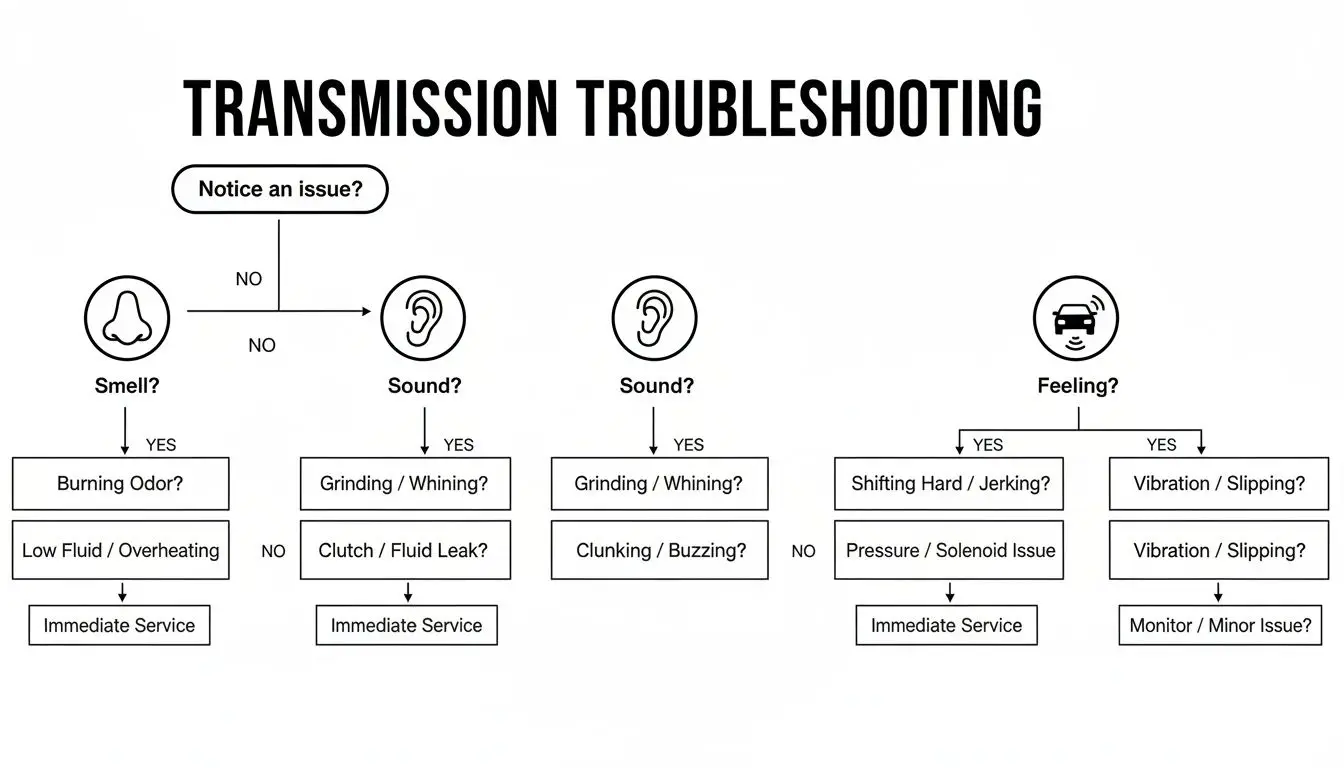
This guide can help you describe symptoms to your technician, but the best approach always depends on your car’s age, mileage, and service history. For a closer look at what a full flush involves, check out our guide on an automatic transmission fluid exchange. A certified Kwik Kar technician can inspect your vehicle and give you an honest recommendation for the safest and most effective service.
How Often Your Transmission Needs Service
Figuring out the perfect time for an automatic transmission service can feel like a bit of a guessing game. While your vehicle’s owner's manual is a great place to start, it gives you recommendations based on "normal" driving conditions—something that doesn't quite match the reality most of us face on the road.
The truth is, real-world driving puts a lot more strain on your car than any controlled test ever could. That’s why you should think of the manufacturer's suggested interval as a baseline, not a hard-and-fast rule. Your daily driving habits are the biggest clue to how often your transmission really needs attention.
Adjusting for Real-World Driving
Think of your transmission fluid like a marathon runner. A casual jogger can go longer between rest days, but a serious athlete pushing their body daily needs more frequent recovery time. The same idea applies to your transmission—severe driving conditions speed up the breakdown of its fluid.
So, what exactly counts as "severe" driving? The list might surprise you.
- Heavy Stop-and-Go Traffic: If you’re a daily commuter in a busy area like Fort Worth, all that constant shifting generates a ton of heat and friction, which degrades your fluid much faster.
- Towing or Hauling Heavy Loads: Pulling a boat or loading up your truck bed puts a massive strain on the transmission, causing it to run hotter and wear out the fluid.
- Driving in Hilly or Mountainous Areas: Constantly shifting gears to go up and down hills increases the workload and temperature inside your transmission.
- Aggressive Driving: Frequent hard accelerations and sudden stops also put a whole lot of extra stress on the system.
If any of these sound like your typical drive, you'll want to service your transmission more often than the manual suggests.
General Mileage Guidelines
While every car is a little different, most automakers and repair experts recommend an automatic transmission service every 30,000 to 60,000 miles. For vehicles that see a lot of "severe" driving, aiming for the lower end of that range is a smart, proactive move.
Why this window? It all comes down to how transmission fluid breaks down over time. After thousands of miles of intense heat and pressure, the protective additives in the fluid start to deplete. It gradually loses its ability to lubricate parts and keep the system cool.
Waiting too long is a costly gamble. By 90,000 miles, a transmission that has never been serviced can have fluid so degraded that it no longer prevents damaging friction, setting the stage for catastrophic failure.
Sticking to a consistent schedule ensures the fluid gets replaced before it becomes a problem. A simple service every 30,000-60,000 miles is a small investment to avoid a transmission replacement that could cost thousands. This simple step keeps the lifeblood of your transmission fresh, clean, and ready to protect the complex parts that give you a smooth, reliable ride. A certified technician can help you nail down the perfect service interval for your specific car and driving style.
The Cost of Service vs. The Price of Failure
Every driver eventually asks the question, "Is this maintenance really worth the money?" It’s a fair question, especially with something like an automatic transmission service. It’s a predictable expense, but one that can be tempting to put off. When you look at the numbers, though, the difference between proactive care and a reactive repair tells a very clear story.
Think of it less as an expense and more as a smart financial move. It's a small investment in your vehicle's future and, more importantly, your own peace of mind.
Understanding the Cost of an Automatic Transmission Service
The price for a professional transmission service can change based on a few things. The final cost depends on your vehicle's make and model, the specific type of transmission fluid it needs, and the service you choose—whether it’s a straightforward drain and refill, a more involved filter service, or a complete fluid flush.
Typically, you can expect an automatic transmission service to cost somewhere between $150 and $400. If you drive a luxury car or one that needs a special synthetic fluid, you might be on the higher end of that range. While that might feel like a decent chunk of change, it’s tiny when you consider what it’s preventing. It’s like a small insurance payment against a massive mechanical disaster.
The Staggering Price of Neglect
Saving a few hundred dollars today by skipping your transmission service could expose you to a financial nightmare down the road. When old, dirty fluid keeps circulating, it can no longer protect the hundreds of precision parts inside your transmission. That leads to grinding wear, overheating, and, eventually, complete failure.
This is where the true cost of putting off maintenance becomes painfully obvious. If your transmission gives out entirely, you’re not looking at a service anymore—you’re looking at a major, wallet-emptying repair.
- Transmission Rebuild: A specialist has to take the entire unit apart, check every single component, replace what’s broken, and then piece it all back together. This is a complex, time-consuming job that usually costs between $2,500 and $4,500.
- Transmission Replacement: Sometimes, the damage is just too severe. The only option is to replace the whole transmission with a new or rebuilt unit. This is the worst-case scenario, often running from $4,000 to over $8,000.
The financial gap between maintenance and failure is enormous. A routine service costs, at most, about 10% of what a major rebuild would. By skipping a $250 service, you are essentially gambling against a potential $4,000 repair bill.
A Smart Financial Decision
Let's put those numbers side-by-side. For what you’d pay for a single transmission rebuild, you could have serviced your car’s transmission for its entire life—and likely avoided the failure in the first place. The math just doesn’t lie.
Investing a small, manageable amount in a proactive automatic transmission service is one of the smartest things you can do to protect yourself from one of the most expensive auto repairs imaginable. It isn't just about keeping your car on the road; it’s about making a sound financial choice that saves you thousands of dollars and a whole lot of stress.
Why Trust Kwik Kar for Your Transmission Service
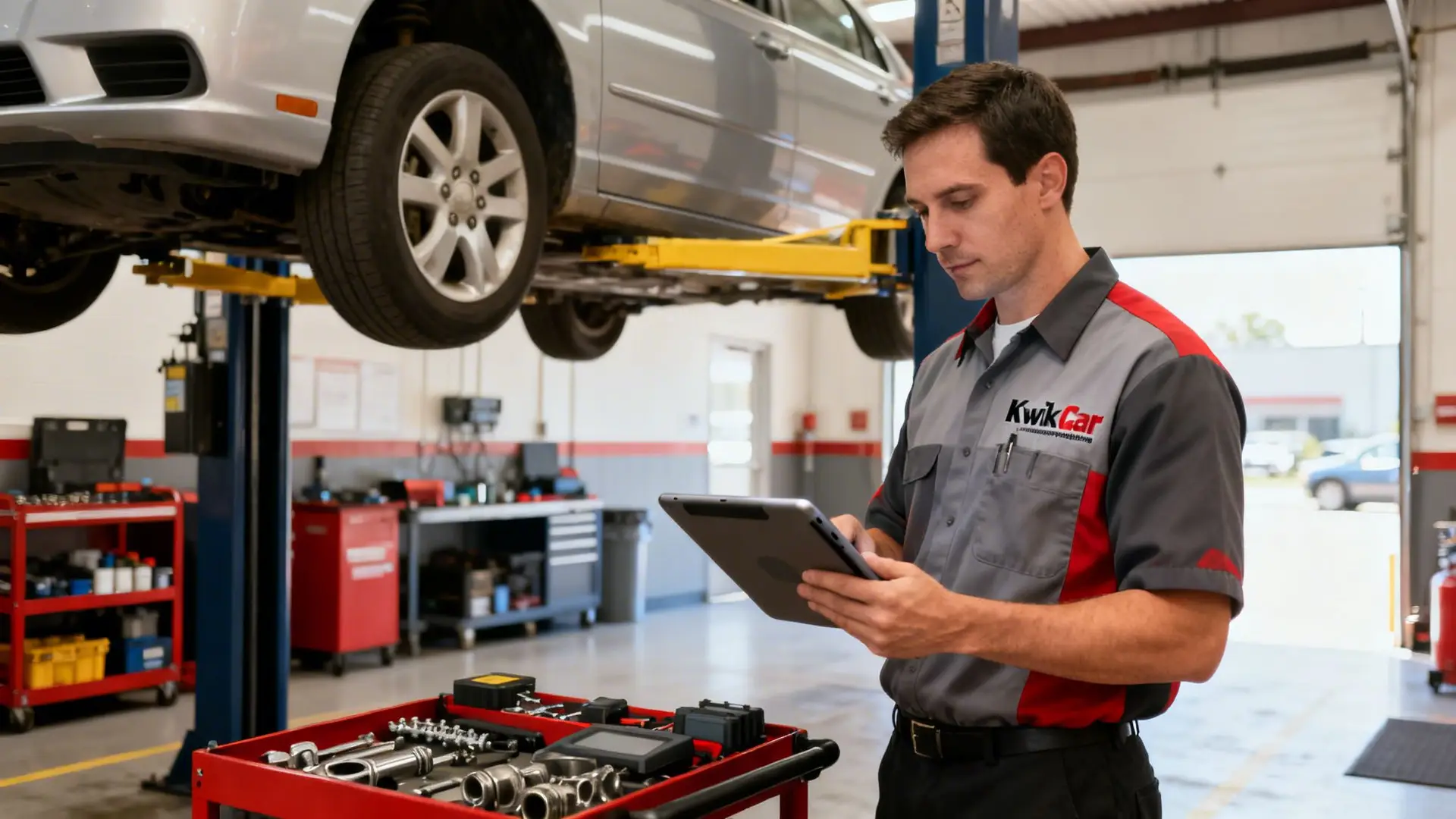
When it’s time for transmission work, picking the right shop is just as important as the service itself. Your transmission is one of the most complex parts of your car, and you need to feel confident in the team you hand your keys over to. At Kwik Kar, we’ve earned our reputation by providing a reliable, honest, and expert automatic transmission service that drivers across Fort Worth have come to count on.
We get it—you’re not just trusting us with your car, but with your peace of mind. That’s why we’ve built our entire process around clear communication and doing what’s genuinely best for your vehicle, combining deep expertise with a real commitment to our customers.
Expertise You Can Count On
A modern transmission is a sophisticated piece of engineering, and servicing it correctly takes more than a basic toolset. It requires skilled technicians who truly understand the nuances of different makes and models, from knowing the exact fluid type your car needs to running precise diagnostics.
Our team is made up of ASE and RepairPal certified technicians, which is your assurance of automotive excellence. This isn't just a framed certificate on the wall; it’s a guarantee that the person working on your vehicle has proven their skills and stays up-to-date with the latest automotive technology. We start with state-of-the-art diagnostic tools to get a crystal-clear picture of your transmission's health before we even think about touching a wrench.
To ensure top-notch customer service and make sure no call goes unanswered, many service centers are adopting new technologies. For example, some are exploring specialized AI receptionist solutions for auto repair shops to stay responsive and accessible when you need help most.
The Kwik Kar Process: Transparency and Quality
We believe a great service experience is founded on clear and honest communication. When you bring your car to our Fort Worth shop, we don't just tell you what needs to be done—we show you. Our process is designed to take the guesswork out of auto repair and give you complete confidence in our work.
Here’s what you can expect from us:
- Thorough Diagnosis: We start with a complete evaluation to pinpoint the exact condition of your transmission. This includes checking fluid levels and quality, inspecting for leaks, and scanning for diagnostic trouble codes.
- Clear Explanations: Our service advisors will walk you through our findings in plain, easy-to-understand language. We’ll explain our recommendations and why, whether it’s a simple fluid swap or a more involved filter service.
- Honest Pricing: You will always receive a clear, straightforward estimate before any work begins. We don’t do hidden fees or surprise charges.
- Quality Parts and Fluids: We only use high-quality parts and the specific transmission fluid recommended by your car's manufacturer to ensure peak performance and long-term protection.
At Kwik Kar, our goal is to be your trusted partner in vehicle maintenance. We’re not here to sell you services you don’t need; we’re here to provide the expert care that keeps your car running reliably for years to come.
Choosing Kwik Kar for your automatic transmission service means choosing a team that values integrity just as much as technical skill. We stand behind our work and make sure every job is done right the first time. Come experience the difference a dedicated, certified, and honest auto shop can make.
Frequently Asked Questions About Transmission Service
We get it. Your transmission is one of the most complex parts of your car, so it’s natural to have questions before committing to a service. It's smart to be thorough. Here are some straightforward answers to the questions we hear most often from drivers just like you.
Can I Just Top Off My Low Transmission Fluid?
While topping off the fluid might seem like an easy fix, it’s almost never the right long-term solution. Think of it this way: your transmission is a sealed system. If the fluid is low, it means there’s a leak somewhere.
Just adding more fluid is like putting a band-aid on a much bigger problem. You’re ignoring the root cause and letting old, degraded fluid keep circulating, which can cause even more wear. A proper automatic transmission service will track down and fix that leak, then replace the old fluid entirely. This is the only way to fully protect your transmission and solve the real issue.
Is a Transmission Flush Safe for My Older Car?
This is a great question, and the answer really depends on the car’s history. If you have an older, high-mileage vehicle that’s been well-maintained with regular services, a flush can be incredibly beneficial. It’s a great way to clear out built-up contaminants and get things running smoothly again.
The story changes, however, if that same transmission has been neglected for a long time.
In a neglected, high-mileage transmission, a powerful flush could potentially dislodge large deposits of sludge that might then clog narrow hydraulic passages. This is why a professional diagnosis is absolutely essential before proceeding with any service on an older car.
Our technicians will always start by carefully assessing your vehicle’s condition and maintenance history. From there, we’ll recommend the safest and most effective service, whether that's a full flush or a more conservative drain and refill.
Will a Transmission Service Fix My Shifting Problems?
It really depends on what’s causing the trouble in the first place. If your car is shifting hard, hesitating, or jerking because the fluid is old, burnt, or low, then a service can make a night-and-day difference. In many situations, fresh fluid is all it takes to get things back to normal.
However, if the shifting problems are due to worn-out internal parts or failing electronics like solenoids, a fluid service alone won’t be the fix. Consider the automatic transmission service the critical first step. It lets our technicians rule out fluid-related causes so we can accurately pinpoint if more advanced repairs are needed.
Ready to give your transmission the expert care it deserves? The certified technicians at Kwik Kar Oil Change and Auto Care are here to help. Schedule your appointment online or visit our Fort Worth shop for an honest and professional automatic transmission service.