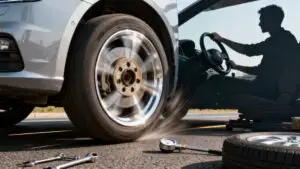





If your daily drive feels more like a boat on choppy water, that’s your car trying to tell you something important. A car that bounces while driving isn’t just an annoying quirk; it’s a clear signal that there’s a serious problem with the suspension system—the very thing responsible for keeping your tires glued to the road. This isn’t about comfort; it’s about control.
Understanding Why a Bouncy Ride Is a Red Flag

Think of your car’s suspension as its first line of defense against bumps, dips, and uneven pavement. Its main job is to absorb those impacts, keep the tires in firm contact with the road, and give you stable, predictable steering. But when key parts like shocks and struts get old and worn out, they can no longer do their job of damping the springs’ movement. The result? That queasy, continuous bouncing long after you’ve passed the bump.
That uncontrolled motion is way more than just a nuisance—it’s a real safety hazard. A worn-out suspension can seriously mess with your car’s handling and how quickly you can stop.
When your car bounces, your tires are literally losing contact with the road surface over and over. This dramatically reduces your ability to steer precisely and can add dangerous feet to your stopping distance, especially when you need to brake hard in an emergency.
The Real-World Impact of a Worn Suspension
The numbers really drive home the risk here. A 2023 study revealed that an estimated 1 in 5 American vehicles with over 100,000 miles is driving around with failing shocks. This kind of wear can slash tire contact by as much as 50-70% on rough roads, sending the risk of a crash way up. On the flip side, a healthy suspension can shorten your stopping distance by up to 30 feet from 60 mph. That’s a car-length difference that can easily be the deciding factor in avoiding a collision. You can discover more insights about these critical safety statistics and what they mean for drivers.
In this guide, we’ll break down the usual suspects behind a bouncy ride, walk you through a few simple checks you can do yourself, and help you know when it’s time to call in the pros. Ignoring a failing suspension just isn’t worth the gamble. By learning to read the signs, you can take the right steps to keep your ride safe, smooth, and predictable.
Diagnosing Worn Shocks And Struts
The number one reason your car bounces while driving is almost always tired, worn-out shocks and struts. Think of them as the unsung heroes of your suspension. While the big springs are there to soak up the initial shock from a pothole, the shocks and struts are what stop those springs from bouncing over and over again.
When they’re doing their job, your ride feels smooth and controlled. But after tens of thousands of miles, the fluid inside them breaks down and the seals wear out, making them pretty much useless. Without that damping force, your car’s springs are free to just keep bouncing, turning every little bump into a long, drawn-out event.
This lack of control isn’t just about comfort—it creates a ripple effect across your vehicle’s handling and is a major safety issue that needs to be addressed right away.
Look For More Than Just The Bounce
A bouncy ride is the most obvious sign, but it’s rarely the only one. Worn shocks and struts tend to announce themselves in a few other ways during your daily drive. If you pay attention to these extra clues, you can be pretty sure your suspension is the real problem.
Keep an eye out for these tell-tale signs:
- Nose Diving While Braking: When you step on the brakes, does the front of your car dip forward hard? Good shocks keep the car level, but worn ones let the car’s weight lurch forward.
- Swaying on Turns: If your car feels like it’s leaning or rolling way too much when you take a corner or even just change lanes, it means the shocks aren’t keeping the body stable. This makes your steering feel loose and unpredictable.
- Rear End Squatting During Acceleration: Just like the front can dive, the rear can squat down when you hit the gas. This happens when the worn rear shocks can’t handle the shift in weight.
- Unusual Tire Wear: A specific kind of tire damage called “cupping” or “scalloping” is a dead giveaway. It looks like patchy, scooped-out spots on the tread and is caused by the tire literally bouncing on the road instead of rolling smoothly.
A vehicle with just one failing shock absorber can require up to 20% more distance to stop in an emergency. That extra length can easily be the difference between a close call and a serious collision.
Visual Clues And Physical Damage
Sometimes, you can spot the problem just by taking a look. Park your car on a flat surface, and peek behind your wheels at the shock absorbers or strut assemblies. You might need a flashlight to get a good view.
Look for any signs of leaking fluid. Shocks and struts are filled with hydraulic oil. If you see an oily, wet film coating the body of the shock, that’s a sure sign the internal seals have failed and it’s time for a replacement. Any obvious dents or physical damage to the shock’s body are also clear signs of trouble.
Knowing what these symptoms mean is the key to figuring out the issue. To learn more about how professionals handle these parts, check out our guide on expert shocks and struts services. At the end of the day, a healthy suspension is the foundation of a safe car.
Checking For Unbalanced Tires And Alignment Issues
While worn-out shocks are a common culprit, that bouncy ride isn’t always a suspension problem. Sometimes, the issue is much simpler and lies with the wheels themselves. If your car bounces while driving, especially when you get up to highway speeds, it could be a dead giveaway for unbalanced tires or poor wheel alignment.
These problems create vibrations that can feel a lot like a bad suspension, but the root cause is entirely different.
Think about a washing machine that starts shaking violently during the spin cycle because the wet clothes have all bunched up on one side. That’s almost exactly what happens with an unbalanced tire. Even tiny differences in weight distribution around the wheel will cause it to wobble and hop as it spins faster, sending those annoying vibrations straight through the steering wheel and into the cabin.
Likewise, poor alignment means your tires aren’t all pointing in the same direction. Instead of rolling down the road in harmony, they’re essentially fighting each other, scrubbing and dragging against the pavement. This not only creates a shaky, unstable feel but also chews up your tires in a hurry.
This flowchart is a great way to visualize the common symptoms that point to worn shocks or struts, helping you tell them apart from tire-related issues.

As the graphic shows, if your car keeps bouncing after a bump, nose-dives when you brake, or sways around corners, you’re likely looking at a classic case of failing suspension.
Distinguishing Between Suspension And Tire Problems
So, how do you tell the difference? The trick is to pay close attention to when the bouncing or vibration is happening.
- Suspension Bounce: This is most obvious right after you hit a bump, pothole, or dip in the road, regardless of your speed. The car will continue to oscillate up and down, feeling floaty long after you’ve passed the obstacle.
- Tire/Alignment Vibration: This problem is almost always tied to your speed. The car might feel perfectly smooth around town, but as you accelerate onto the highway, a distinct shake or vibration appears and often gets worse between 50-70 mph.
To make it even clearer, this table breaks down the typical symptoms you might feel from the driver’s seat.
Pinpointing The Problem: Suspension Vs. Tire Issues
| Symptom | Likely A Suspension Issue | Likely A Tire Or Wheel Issue |
|---|---|---|
| Bouncing After Bumps | The car continues to bounce or “float” after hitting a dip or bump. | The car feels firm over bumps, but a vibration is present. |
| Speed-Related Vibration | Bouncing occurs at any speed, usually after hitting an obstacle. | Vibration starts at a specific speed (e.g., 50 mph) and may smooth out at higher speeds. |
| Steering Wheel Shake | The steering might feel loose or wander, especially on turns. | The steering wheel shakes or shimmies consistently at highway speeds. |
| Uneven Tire Wear | Tires show “cupping” or scalloped dips along the tread. | Tires show wear on one edge (inner or outer) or a feathered pattern. |
| Behavior During Turns | The car sways, leans excessively, or feels unstable in corners. | The car pulls to one side while driving straight. |
This table should help you narrow down the possibilities before you even bring your car into the shop.
These tire and alignment problems are more than just a nuisance; they’re a sneaky safety risk. Globally, tire and wheel issues are noted to affect 10-15% of fleet vehicles in major markets like Texas, leading to the uneven wear that causes that telltale bounce and compromises your grip on the road.
A car that bounces while driving due to alignment issues isn’t just uncomfortable—it’s inefficient. Misalignment can reduce your fuel economy by up to 10% because your engine has to work harder to overcome the resistance of scrubbing tires.
Thankfully, correcting these problems is a straightforward job for a professional. A tire balancing service adds tiny counterweights to your wheels to make sure they spin perfectly smoothly. An alignment service adjusts the angles of your wheels back to the manufacturer’s precise specifications.
If you think your bounce is coming from your wheels, you can learn more about our professional tire and alignment services and how we can restore a smooth, safe ride. Fixing these issues not only gets rid of the vibration but also helps your tires last longer and improves your gas mileage.
How To Perform The Bounce Test At Home

Before you start dialing up a mechanic, you can get a surprisingly good feel for your suspension’s health right in your own driveway. It’s called the “bounce test,” and it’s a classic for a reason—it’s simple, effective, and anyone can do it.
Think of it as the perfect first step. If you’ve noticed your car bounces while driving, this quick check helps confirm if your shocks or struts are the culprits. You’re basically doing the shock absorber’s job for a second—compressing the suspension—and then watching to see if it can control the rebound like it’s supposed to. A healthy shock stops the spring from bouncing, and this test makes it obvious when it’s failing.
Step-By-Step Guide To The Bounce Test
First things first: park your car on a flat, level surface and make sure the parking brake is on. Safety first. Now, you’ll repeat these steps for each corner of your vehicle.
- Position Yourself: Head to one corner of your car, like right over the front driver’s-side tire.
- Apply Firm Pressure: Put your hands on the hood (or trunk, if you’re in the back) and use your body weight to push down firmly. Give it a good two or three rhythmic pushes to get the car moving.
- Release and Observe: On that last push, let go quickly and take a step back. Keep your eyes on how that corner of the car reacts.
You’ll want to do this for all four corners—front driver, front passenger, rear driver, and rear passenger. It’s totally normal for shocks and struts to wear out at different speeds, so one corner might fail the test while the others pass.
What a Healthy Rebound Looks Like
A car with healthy shocks will rebound up once and then immediately settle back to its normal ride height. That’s it. Any more movement is a red flag.
Interpreting The Results
So, what are you looking for? It all comes down to how many times the car bounces after you let go.
If the corner you tested continues to bob up and down two, three, or even more times before it finally settles, you can be pretty confident the shock or strut on that corner is worn out. It’s no longer strong enough to dampen the spring’s energy.
This simple, no-tools-required test gives you solid information before you even make a call. For more tips on figuring out what’s going on with your vehicle, you can learn how to diagnose common car problems with our other guide. Armed with this knowledge, you can walk into the shop and explain exactly what you’re experiencing.
When You Need A Professional Diagnosis And Repair
The bounce test is a great first step, and it’s a pretty solid indicator that something’s off. But think of it as just the first clue in a much bigger mystery: why your car bounces while driving.
While worn-out shocks or struts are the usual suspects, they’re just one part of a complex, interconnected suspension system. When one component fails, it puts a ton of stress on everything else.
Imagine your suspension system is like a team of athletes. If your star player (the shock absorber) gets injured, the rest of the team has to overcompensate. This leads to more fatigue, wear, and potential injuries for everyone else. This is why a professional diagnosis is so crucial. A trained technician sees the entire field—not just the most obvious problem. They know that a bouncy ride could also point to worn-out ball joints, crumbling control arm bushings, or even damaged tie rod ends.
Just swapping out the shocks without checking the surrounding parts is like patching a crack in a dam but ignoring the shaky foundation. You might stop the leak for a bit, but you haven’t fixed the real issue.
What To Expect During A Professional Inspection
When you bring your car to a shop for a suspension check, a certified technician does a lot more than just push down on the bumper. They’ll get your vehicle up on a lift for a proper, hands-on inspection of the entire undercarriage. It’s a deep dive that you just can’t do in your driveway.
Here’s what a pro will typically do:
- Visual Component Check: They’ll meticulously look over every part for signs of wear, damage, or fluid leaks. This means hunting for cracked rubber bushings, bent metal parts, or that tell-tale greasy film on the shocks.
- Physical Manipulation Test: Using special tools (and their own hands), they will check for any excessive play or looseness in critical joints like ball joints and tie rods. Any wiggle or clunking sound is a dead giveaway that something is worn out.
- Road Test: A seasoned technician will take your car for a spin to feel and hear how the suspension performs under real-world conditions. They’re listening for specific noises and feeling for instability that confirms what they found during the physical inspection.
An expert diagnosis gets to the root cause of the problem, ensuring it’s fixed right the first time. This approach saves you from the frustrating—and expensive—cycle of replacing one part, only to have another related component fail a few months later.
The Value Of Getting It Right The First Time
Investing in a professional diagnosis will absolutely save you money and headaches in the long run. Misdiagnosing a suspension issue can lead you down a rabbit hole of unnecessary repairs while leaving you behind the wheel of an unsafe vehicle. A technician’s expertise ensures the true source of the bouncing is found and fixed completely.
At Kwik Kar in Fort Worth, our certified technicians have the experience and the right equipment to accurately pinpoint any suspension failure. We don’t guess—we diagnose. This commitment means your car gets repaired correctly, restoring its safety, control, and ride comfort. If your car bounces while driving, don’t put it off. Schedule an inspection with us today and let our experts give you back your peace of mind on the road.
Your Guide to a Safe and Smooth Ride
So, let’s put it all together. When your car bounces while driving, it’s not just a minor annoyance—it’s your car’s way of sending up a flare. This is a clear warning sign that needs your immediate attention because it’s a critical safety issue, not just a problem with ride quality.
We’ve walked through the usual suspects, from tired shocks and struts that can no longer tame the springs to unbalanced tires and alignment problems that cause those high-speed shakes. The simple bounce test we talked about is a great first step you can take right in your driveway to get a feel for what’s going on. But if there’s one thing to take away from all this, it’s that you should never, ever ignore these symptoms.
Think of it this way: a healthy suspension is the bedrock of your car’s entire safety system. It’s what keeps your tires glued to the road, giving you the grip you need to slam on the brakes, swerve accurately, and handle whatever the road throws at you with confidence.
Taking the Next Step
Getting this fixed isn’t just about comfort; it’s about making sure you and your passengers are protected. When you let it go, you’re risking longer stopping distances, sloppy handling around corners, and a much higher chance of losing control. A stable ride is a safe ride. It’s as simple as that.
Your car’s ability to navigate turns, handle bumps, and stop effectively is directly tied to the health of its suspension. A bouncy ride is a direct indicator that this system is compromised, putting your safety at risk with every mile.
And looking beyond just bouncing issues, keeping your whole car in good shape means following a regular maintenance schedule. A holistic approach that includes Essential Vehicle Maintenance Procedures is the best way to keep every system working as it should.
If you’re dealing with a bouncy ride here in the Fort Worth area, don’t wait for a small problem to become a big one. Trust the certified pros at Kwik Kar to run a thorough inspection and get your vehicle’s safety and performance back where they need to be.
Your Questions Answered: What to Know About a Bouncy Ride
Even after you’ve noticed the signs, it’s completely normal to have questions swirling around your head. What’s this going to cost? Is it safe to drive to work tomorrow? We get it. Let’s tackle some of the most common concerns drivers have when their car starts bouncing.
Think of this as your practical guide to navigating the repair process and getting back on the road with confidence.
How Much Does It Cost To Fix A Bouncy Ride?
The honest answer? It really depends. The final bill for fixing a bouncy suspension can swing quite a bit based on your car’s make and model, which specific parts have given up the ghost, and the local shop’s labor rates.
Something simple like a tire balance might be a relatively cheap fix, often landing under $100. But if the problem is your shocks or struts, you’re looking at a more significant investment. For a typical sedan, replacing a pair of struts can run anywhere from $400 to over $1,000 for parts and labor. If you drive a luxury car or a heavy-duty truck, expect to be on the higher end of that scale. The golden rule is to always get a clear, detailed quote before you give the green light for any work.
How Long Can I Drive With A Bouncy Suspension?
Technically, the car will still move, but you absolutely shouldn’t drive it if you can help it. Every mile you cover with a failing suspension is a serious gamble with your safety. Your car’s ability to brake hard and steer precisely is massively compromised.
A bouncy ride is a clear sign your tires aren’t staying firmly planted on the road. This can actually increase your stopping distance by over 20% and dramatically raises the risk of losing control, especially if you need to swerve suddenly or you’re driving in bad weather.
Pushing your luck also puts a ton of extra stress on other suspension and steering parts. Ignoring it can quickly turn a moderate repair into a much bigger, more expensive headache. It’s always best to get it inspected as soon as you notice something is off.
Can A Bouncy Ride Damage My Tires?
Yes, absolutely. In fact, it’s one of the most common side effects of a bad suspension. When your car bounces while driving, the tires aren’t rolling smoothly—they’re hopping and skipping along the pavement. This creates a really distinct wear pattern known as “cupping” or “scalloping.”
If you look at the tread, you’ll see what looks like scooped-out patches. This pattern doesn’t just ruin a perfectly good set of tires; it also creates a loud, annoying hum and reduces your grip on the road. Fixing the suspension problem quickly is the best way to protect your investment in your tires.
Don’t let a bouncy ride put your safety at risk. The certified technicians at Kwik Kar Oil Change and Auto Care have the expertise to diagnose the problem correctly and get your vehicle’s stability back where it needs to be. For a smooth, controlled ride you can trust, schedule your professional suspension inspection in Fort Worth today.