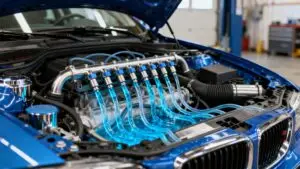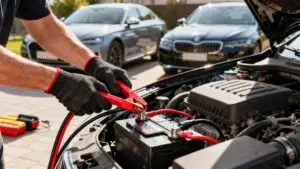





There’s nothing worse than turning the key and getting nothing but silence. It’s a frustrating moment every driver dreads. When your car battery keeps dying, the simple explanation is that something is out of balance—either an electrical component is drawing power when it shouldn’t, or the battery itself simply can't hold a proper charge anymore.
This guide will walk you through the usual suspects so you can figure out what's really going on under the hood.
Why Your Car Battery Keeps Dying

Think of your car battery like a small power bank for your vehicle. Starting the engine is a huge energy withdrawal. As you drive, your car’s alternator is supposed to act like a charger, topping that power bank back up. In a healthy car, this give-and-take works perfectly. But when the battery drains unexpectedly, it’s a clear sign that this balance has been thrown off.
Sometimes, the culprit is a sneaky "parasitic draw." This happens when something—like a glove box light that won't turn off or a faulty aftermarket stereo—quietly sips power long after you’ve parked and locked the doors. Other times, the problem lies with the charging system itself. A weak or failing alternator can't do its job, leaving the battery undercharged no matter how long your commute is.
Common Causes of Car Battery Drain At a Glance
Your daily driving habits and the battery's age also play a massive role. If you only take short trips around town, the alternator never gets enough time to fully replenish the energy it took to start the car. And just like any other battery, an old one eventually loses its ability to hold a strong charge.
The average lifespan of a car battery is three to five years. Factors like the intense Fort Worth heat, driving habits, and electrical load can significantly shorten this timeline, making age a primary suspect in many battery drain cases.
To help you get a quick read on what might be happening with your car, the table below breaks down the most common culprits. It lists the tell-tale signs for each and points you toward the right next step.
| Primary Cause | Key Symptoms to Look For | Recommended Action |
|---|---|---|
| Parasitic Draw | Battery dies overnight or after a few days of sitting. | Perform a parasitic draw test or seek professional diagnosis. |
| Failing Alternator | Dimming headlights, dashboard warning light, strange noises. | Test alternator output; professional inspection is advised. |
| Battery Age/Health | Battery is over 3 years old; slow engine crank. | Test the battery's voltage and cold cranking amps. |
| Corroded Connections | Visible white/blue powder on terminals; trouble starting. | Clean terminals and ensure cables are tight. |
| Frequent Short Trips | Many drives under 20 minutes; consistent battery issues. | Take longer drives weekly or use a battery tender. |
Think of this table as your starting point. It will give you a good idea of where to look before we dig deeper into how to diagnose each of these issues.
Unmasking the Silent Killer: Parasitic Draw

Think of a tiny, slow leak in a garden hose. You wouldn’t notice it right away, but if you leave it overnight, you’ll come back to a big puddle in the morning. That’s exactly what parasitic draw does to your car battery. It’s a slow, silent drain on your battery’s power that happens long after you've shut the engine off.
Now, every modern car has a small, perfectly normal amount of parasitic draw. This tiny bit of electricity is what keeps your car’s clock ticking, the alarm system armed, and your radio presets saved. But when that little sip of power turns into a steady gulp, you've got a problem on your hands.
A faulty component is almost always the culprit, turning a normal function into a battery-killing issue. It could be something you’d never suspect, leading to that frustrating moment when you turn the key and get nothing but silence.
Common Sources of Excessive Power Drain
The gremlins behind a significant parasitic draw can be surprisingly simple or frustratingly hard to find. They often hide in plain sight, doing their work long after you've locked the doors and walked away.
Some of the most frequent offenders include:
- A Faulty Glove Box or Trunk Light A switch that gets stuck can leave a light burning all night long, slowly draining the battery.
- Malfunctioning Computer Modules A body control module (BCM) or another computer that doesn't "go to sleep" properly will keep pulling power indefinitely.
- Stuck Relays If a relay gets stuck in the "on" position, it can keep an entire circuit live, constantly drawing current from the battery.
It’s not just factory parts, either. Aftermarket accessories or security systems, like certain anti-theft devices, can sometimes cause an unexpected drain if they're installed improperly or develop a fault.
"A healthy car battery should be able to sit for weeks without dying. If your battery goes flat in just a day or two, an excessive parasitic draw is the most likely suspect. It’s an electrical 'leak' that needs to be found and fixed."
This slow drain is one of the most common reasons a car battery dies without warning. For context, experts say newer cars normally have a parasitic draw between 50 and 85 milliamps, while older models should be under 50 milliamps. Anything higher will dramatically shorten your battery's life, which is already just 3 to 5 years under the best conditions.
Finding the source of the drain requires a methodical diagnostic process, which we’ll dive into later in this guide.
When Your Alternator Stops Recharging the Battery
Think of your car's electrical system like a two-person team. The battery is the sprinter, delivering a massive, short-lived burst of energy to get the engine cranking. The alternator, on the other hand, is the marathon runner. It’s built for endurance, tirelessly generating power to keep everything running for the long haul.
The alternator's main job is to power all your car’s electronics while you drive—everything from the headlights and radio to the A/C. But its second, equally critical task is to constantly recharge the battery, topping it off after the energy burst it used to start the engine. When this marathon runner gets tired and stops doing its job, the whole system collapses.
A failing alternator is a classic answer to the question of what causes car battery to drain. The battery is suddenly forced to power the entire vehicle on its own, a demanding job it was never designed for. It’s like asking the sprinter to run the full marathon; it’ll exhaust itself in no time, leaving you stranded.
Telltale Signs of a Failing Alternator
Unlike a sneaky parasitic draw that drains your battery silently overnight, a bad alternator usually gives you some warning signs. Learning to spot them can help you figure out if your battery just can't hold a charge anymore, or if the charging system isn't giving it a charge in the first place.
Here are the most common symptoms to look out for:
- Dimming or Flickering Headlights: This is one of the most obvious clues. You might notice it most when you’re idling at a stoplight. Your headlights might get brighter when you hit the gas and then dim again when you stop, signaling an inconsistent power supply from the alternator.
- Dashboard Warning Light: Most modern cars have a dedicated warning light for the charging system. It often looks like a small battery or has "ALT" or "GEN" on it. If this light pops on while you're driving, your car is sending you a direct message that the alternator is in trouble.
- Strange Noises From Under the Hood: A distinct grinding or whining sound coming from the engine bay can mean the bearings inside the alternator are failing. A bad alternator can also trigger other issues, and you can learn more about how a bad alternator can cause a misfire in our other guide.
- A Frequently Dead Battery: If you find yourself constantly jump-starting your car, only for it to die again after a short drive, the alternator is a prime suspect. The battery isn’t getting recharged on the go, so it depletes quickly.
Your alternator should produce a steady voltage between 13.5 and 14.5 volts when the engine is running. If you test it with a multimeter and the reading is below this range, it’s a strong sign the alternator isn't generating enough power to charge the battery and run the car's electronics.
At the end of the day, even a brand-new, top-of-the-line battery can’t overcome a faulty charging system. No matter how strong your battery is, it will inevitably go flat if the alternator isn’t there to replenish its power.
How Everyday Habits Drain Your Car Battery
Beyond a faulty alternator or a hidden electrical issue, sometimes the biggest threat to your battery is just… you. Your daily routine, driving habits, and even the Texas weather can silently chip away at your battery's health, cutting its lifespan short without you ever realizing what’s happening.
It’s easy to think your battery just magically recharges itself, but the reality is a bit more complicated. Think of it like a phone battery: constantly unplugging it at 20% is way worse than letting it get a full, deep charge. Your car’s electrical system works on a similar principle, and some of your everyday habits are the equivalent of pulling the plug way too soon.
The Problem with Frequent Short Trips
Starting your engine demands a massive jolt of electricity. That initial surge takes a huge bite out of your battery's charge, and it's the alternator's job to put that power back in as you drive. The catch? That recharging process isn't instant.
This is why frequent short trips are such a sneaky battery killer. If you’re just zipping around town for quick errands, you’re often not giving the alternator enough time to fully replenish what was lost during startup. Any drive under 15-20 minutes is a gamble.
Do this day after day, and you’re slowly draining the battery into a deficit it can never recover from. This habit alone can slash a battery's lifespan from the typical 3-5 years down to just 2 or 3. You can learn more about how short drives impact battery life on lesschwab.com.
To fight back, try to take your car for a solid, continuous drive of at least 20-30 minutes at least once a week. This gives the alternator plenty of time to top off the battery, making sure it’s ready for the next cold start.
How Texas Heat and Lingering Accessories Hurt Your Battery
The environment and a few small oversights also play a huge role. Extreme temperatures—both scorching heat and bitter cold—put a heavy strain on your battery’s internal chemistry.
Here in Texas, the intense summer heat is especially brutal. High temperatures actually cause the liquid electrolyte inside the battery to evaporate and speed up the corrosion of its internal lead plates. This permanently damages the battery's ability to hold a full charge.
On top of that, our modern conveniences can become slow-draining culprits:
- Leaving Devices Plugged In: That phone charger, dash cam, or GPS unit you leave plugged into an "always-on" power outlet can create a slow but steady drain overnight.
- Forgetting Lights: While most new cars have auto-off features, it’s still surprisingly easy to leave an interior dome light or map light on. That’s enough to kill a healthy battery in just a few hours.
When you combine these factors with short trips, you're creating the perfect storm for premature battery failure. Being mindful of these seemingly minor habits can make a huge difference in extending your battery’s life and saving you from the frustration of a car that won't start.
Performing a DIY Battery and System Check at Home
Before you pick up the phone to call a pro, you can play automotive detective right in your own driveway. A few simple, safe checks can often point you straight to the cause of your battery drain, saving you time and giving you a clear idea of what to do next. The first step is always a good old-fashioned visual inspection.
Pop the hood and find your battery. Give the case itself a good look-over. See any cracks, leaks, or—most importantly—a noticeable bulge on the sides? A swollen or bulging battery case is a huge red flag. It’s a sign of internal damage, often from being overcharged or cooked by extreme heat, and it means that battery needs to be replaced immediately.
The Visual Inspection
Next, zoom in on the top of the battery where the cables connect to the positive and negative terminals. These connections need to be clean and rock-solid.
- Check for Corrosion: Look for that crusty, white, or sometimes bluish-green powder that can build up on the terminals. This gunk is a great insulator, which is the last thing you want here. It can block the flow of electricity, making it hard to start your car and preventing the battery from charging properly.
- Confirm Tight Connections: Give the battery cables a gentle wiggle right where they clamp onto the terminals. If either one feels loose, you’ve likely found a problem. A loose connection can cause all sorts of intermittent starting issues and stop the alternator from doing its job.
If you do spot a bunch of corrosion, cleaning it off is a straightforward and effective fix. Just be sure to wear gloves and eye protection anytime you're working around a battery.
Sometimes, the culprit isn't a faulty part but our own habits. Things like frequent short trips, extreme weather, or leaving that phone charger plugged in all the time can slowly but surely drain your battery's life.

It’s easy to see how these seemingly harmless routines can trap your battery in a cycle where it never gets a chance to fully recharge, eventually leading to that dreaded click-click-click when you turn the key.
Using a Multimeter for Voltage Tests
For a more data-driven approach, a multimeter is your best friend. This affordable little tool, available at any auto parts or hardware store, gives you a clear window into the health of your battery and charging system.
A healthy, fully charged car battery should read around 12.6 volts or higher when the engine is off. If you see 12.4 volts, it’s about 75% charged. Anything below 12.2 volts means it's significantly drained and might not have the oomph to start the engine.
To check it, just set your multimeter to DC volts (the 20V scale is perfect). Touch the red probe to the positive (+) terminal and the black probe to the negative (-) terminal. This one number tells you whether the battery is even holding a charge.
Now, let's check the alternator. With the multimeter still connected, go ahead and start your car. The voltage reading should immediately jump up to somewhere between 13.7 and 14.7 volts. If that number stays down around the 12-volt mark or even drops, your alternator is probably not recharging the battery.
Of course, if you need a boost just to get the engine running for this test, check out our guide on jumping a battery safely for step-by-step instructions. These two simple tests give you concrete evidence, helping you figure out if you're dealing with a bad battery or a failing charging system.
When You Need Professional Help in Fort Worth
While doing your own checks is great for spotting the obvious things, like a loose battery cable, some automotive electrical problems are true ghosts in the machine. They show up, disappear, and make it nearly impossible for the weekend mechanic to track them down with a simple multimeter. That’s your cue to call in the pros.
If you’ve tested your battery and alternator and they both seem fine, but your car is still dead every other morning, you're likely dealing with something more complex. It could be an intermittent parasitic draw, a computer module that isn’t going to sleep properly, or a short circuit buried deep inside a wiring harness. These kinds of issues need advanced diagnostic tools to be found accurately.
What to Expect at the Shop
Bringing your car to a trusted Fort Worth shop is a totally different ballgame than a simple voltage check in your driveway. An experienced technician has the gear and the know-how to dig deep.
They’ll typically:
- Perform a Parasitic Draw Test: This isn't just a quick check. It's a methodical test that isolates every single circuit in your car to find out exactly which component is secretly sipping power.
- Conduct a Full Charging System Analysis: This goes way beyond a basic alternator test. It involves checking all the related wiring, connections, and even the computer controls that manage the system.
- Load Test the Battery: A professional load test is the real deal. It mimics the intense power demand of starting your engine, confirming once and for all if the battery is truly healthy under pressure.
Don't waste a whole weekend pulling fuses and playing a guessing game. A pro can often find the source of a complex electrical drain in under an hour, saving you a massive headache.
Getting a clear cost estimate is key. While prices obviously change depending on the vehicle, a typical battery replacement will usually run between $150 and $350. A bigger job, like swapping out an alternator, can cost anywhere from $400 to over $1,000, especially on newer or more complex models.
At Kwik Kar, our ASE-certified technicians in Fort Worth have the expertise and the right technology to solve even the most stubborn electrical mysteries. To finally get to the bottom of your battery woes, check out our professional battery services and let our team get your car back to being reliable.
Frequently Asked Questions About Battery Drain
Even after you've got a good handle on what drains a car battery, there are always a few specific questions that pop up. Let's tackle some of the most common things drivers worry about when they find themselves with a dead battery.
Can a Brand New Car Battery Drain Overnight?
You bet it can. While it’s pretty rare for a brand-new battery to be defective right off the shelf, it’s much more likely that another issue is secretly at play. The usual suspect is a parasitic draw, where something—like a glove box light that won’t turn off or a poorly installed aftermarket stereo—is quietly sipping power long after you’ve locked the doors.
If you just put a new battery in and it dies almost immediately, that's a huge red flag. It’s a strong sign that an external problem is draining the life out of it, and you'll need a professional to hunt down that power leak.
A perfectly healthy car battery, even one fresh from the store, can be completely drained overnight by a significant parasitic draw. An electrical pull of just one amp is enough to kill a battery in a matter of hours.
How Long Should I Drive My Car to Charge the Battery?
To give your alternator a real chance to top off the battery after starting the engine, you should aim for a solid, continuous drive of at least 20-30 minutes. Ideally, you want to get it up to highway speeds without a lot of stop-and-go traffic.
Think about it this way: starting your car takes a huge jolt of energy. Quick trips around town often don't give the alternator enough time to "pay back" that energy debt. If your daily commute is just a few minutes here and there, a battery tender is a fantastic tool for keeping it healthy and avoiding an early trip to the auto parts store.
Will My Car Battery Drain if I Do Not Use My Car?
Yes, it absolutely will. Every car battery naturally loses a tiny bit of its charge over time, a process called self-discharge.
But that’s not the only thing going on. Your car is never truly "off." There's a small but constant power draw from things like the onboard computers that store your settings, the security system, and the clock. If you know you're going to park your car for a few weeks, the best way to avoid coming back to a dead battery is to hook it up to a battery tender or simply disconnect the negative terminal.
If you're tired of dealing with a dead battery, let the experts at Kwik Kar Oil Change and Auto Care get to the bottom of it. Our ASE-certified technicians in Fort Worth can pinpoint the issue and get you back on the road with confidence. Schedule your service with us today!