


Owning a car is so much more than just getting behind the wheel; it’s about smart management. Thinking about car maintenance for beginners shouldn't feel like a chore—it’s hands down the single best financial move you can make to protect your investment. A little proactive care ensures your vehicle stays safe, reliable, and holds its value for years to come.
Why Basic Car Care Is Your Best Investment
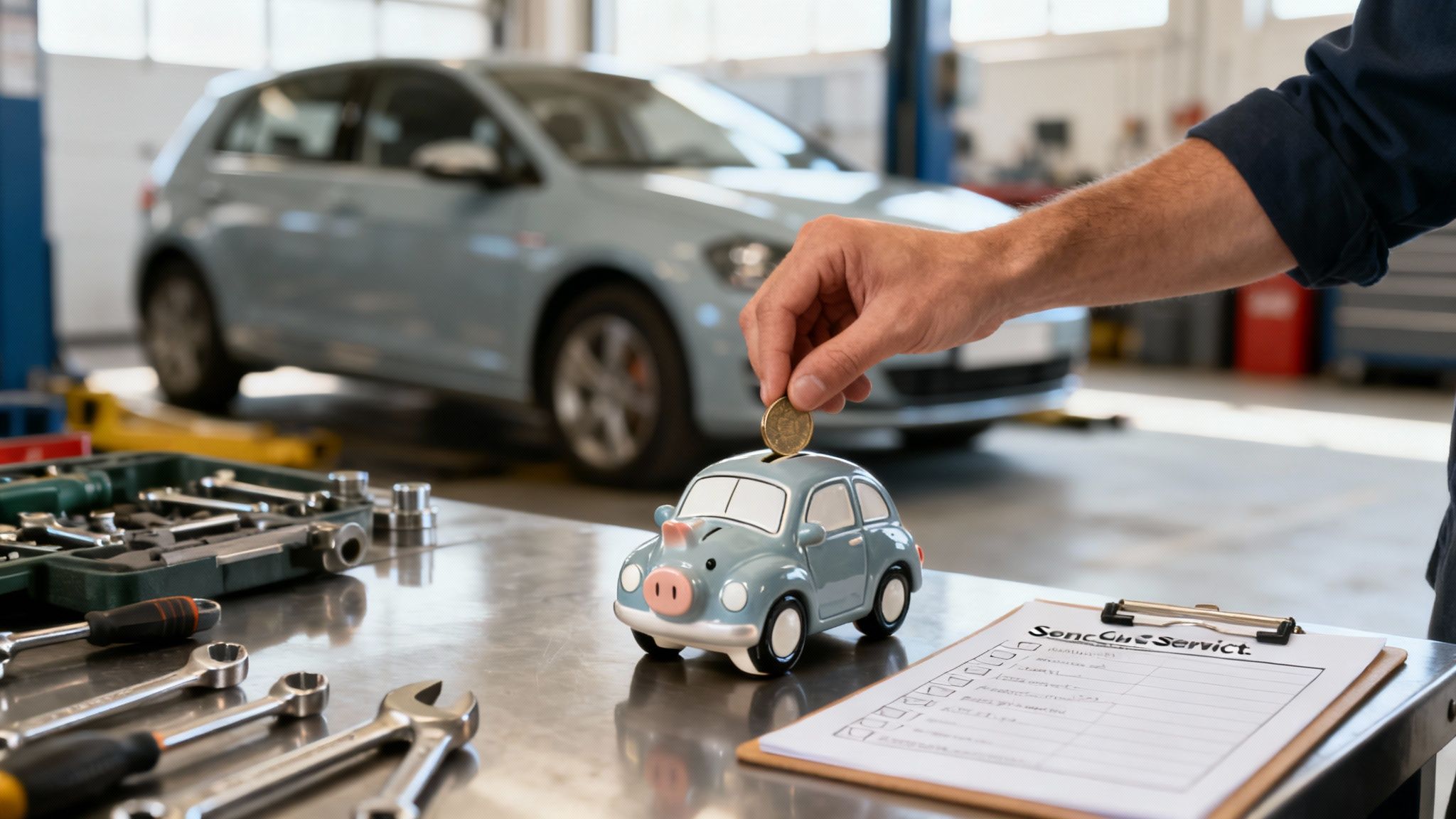
Think of your car like a long-term savings account. Every small, proactive step you take—like checking the oil or keeping an eye on tire pressure—is another deposit. These consistent habits prevent massive, unexpected withdrawals in the form of emergency repair bills down the road. Ignoring the basics is like letting that account drain until it's empty, leaving you with a costly problem and no way to get where you need to go.
For those of us driving around Fort Worth, this approach is non-negotiable. The intense Texas heat, endless stop-and-go traffic, and our daily commutes put a ton of stress on every part of a vehicle. A simple, routine check can be the one thing that separates a minor adjustment from a major system failure on the side of I-30 during rush hour.
Protecting Your Wallet and Your Peace of Mind
The financial argument for basic car care is a slam dunk. A small investment in preventative services will save you thousands over the life of your vehicle, and this is especially true as cars get older.
America's vehicles are getting older than ever, averaging over 12.8 years on the road as of 2024. This statistic highlights a vital truth for beginners in car maintenance: neglecting routine care on these aging rides can lead to skyrocketing repair bills and safety risks. For budget-conscious owners, investing $50-$100 quarterly in tune-ups beats $1,000+ emergencies. Explore the full report on auto care industry growth.
Beyond the savings, regular maintenance delivers something priceless: confidence. When you know your car is in top shape, that nagging worry of a potential breakdown just disappears. It's security for you and your passengers on every single trip.
Building a Partnership for Long-Term Health
While learning the basics empowers you as a car owner, you don’t have to go it alone. In fact, building a relationship with a trusted auto care partner is a key part of any smart maintenance strategy. Having a team of certified professionals who know your vehicle's history makes all the difference.
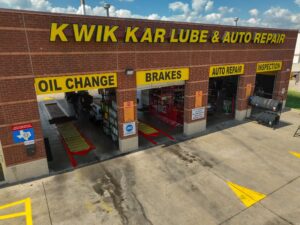
At Kwik Kar in Fort Worth, we see ourselves as your co-pilot in vehicle health. We handle the essential checks and services that keep you safely on the road, all while giving you expert advice and transparent service. We believe in empowering our customers with knowledge, helping you understand the "why" behind every recommendation we make. This guide is your first step toward becoming a confident, informed car owner.
Mastering the Four Vital Systems of Your Car
Every car, whether it's a zippy little sedan or a rugged work truck, really only runs on a few core principles. You don't need a mechanic's license to get a handle on basic maintenance—you just need to understand four vital systems. I like to think of them as your car's essential organs. Each one has a specific job, and when they're all healthy, the whole machine runs like a dream.
By learning to perform a few simple checks on these "Core Four," you can spot little problems before they snowball into wallet-draining, day-ruining repairs. This isn't about getting greasy and overhauling an engine; it's about becoming a confident, observant car owner.
Engine Oil: The Lifeblood of Your Vehicle
Just like your body can't function without healthy blood, your engine can't survive without clean, sufficient oil. Engine oil is the ultimate multi-tasker. It lubricates all those fast-moving metal parts to cut down on friction, it cleans away gunk and deposits, and it helps carry away the intense heat your engine creates.
When oil gets low, old, or dirty, friction skyrockets. That leads to premature engine wear, sluggish performance, and eventually, total failure. An engine without proper oil is like a heart without blood—it just won't work.
How to Perform a DIY Oil Check
Checking your oil is one of the easiest and most powerful things you can do for your car. It takes less than five minutes and gives you a direct window into your engine's health.
- Park on a Level Surface: Make sure your car is on flat ground to get an accurate reading. It's best to check when the engine is cool, or at least 10 minutes after you've turned it off.
- Locate the Dipstick: Pop the hood and look for the dipstick handle. It's usually a brightly colored ring (think yellow or orange) and might have a little oil can symbol on it.
- Pull, Wipe, and Re-insert: Pull the dipstick all the way out. Grab a clean rag or paper towel and wipe it completely clean. Now, slide it all the way back in.
- Read the Level: Pull it out one more time. You'll see two marks near the bottom—sometimes they're lines, holes, or a cross-hatched area. The oil level should be somewhere between those two marks.
If the oil is near or below the 'MIN' mark, you need to add some. But more importantly, take a look at the oil itself. If it looks dark black, gritty, or has a milky-brown color, that's a red flag. It means you're due for a professional oil change. Here at Kwik Kar in Fort Worth, we can get that old, tired oil out and replace it with the high-quality stuff your engine deserves.
Tires: The Foundation of Your Drive
Your tires are the only part of your car that actually makes contact with the road. They are the entire foundation for your vehicle's safety and performance, affecting everything from grip and handling to how quickly you can stop. Neglecting them is like trying to build a house on a shaky foundation—it's just not safe.
When your tires are properly inflated and have good tread, you have the traction you need to accelerate, steer, and brake effectively, especially when the weather turns nasty. Underinflated tires are a major hazard; they can overheat, wear out unevenly, and drastically increase the risk of a blowout.
How to Check Your Tire Tread Depth with a Penny
You don't need any fancy gadgets for this. A simple penny is all it takes to perform this critical check.
- The Lincoln Test: Grab a penny and place it into one of your tire's tread grooves with Lincoln's head facing down.
- Check the Depth: Can you see the top of Honest Abe's head? If so, your tread is worn down to a dangerous level (below 2/32 of an inch) and your tires need to be replaced immediately.
- Be Thorough: Do this test in a few different spots on all four of your tires. If you notice the tread is wearing unevenly, that could be a sign of an alignment problem that needs a professional look.
Brakes: Your Most Important Safety System
If your tires are the foundation, your brakes are the command center. They're arguably the most critical safety feature on your entire vehicle, turning your decision to stop into immediate action. A healthy brake system gives you the control you need to slow down and stop on a dime, helping you avoid collisions.
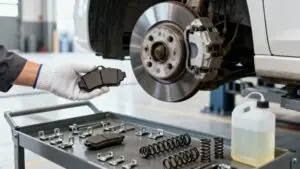
The global auto repair industry hit a staggering $966.04 billion in 2024, and brake work is a huge part of that. According to 2023 NHTSA data, brake issues are a factor in 25% of accidents where a mechanical failure is the cause. The good news? Simply replacing your brake pads every 30,000 to 70,000 miles can slash those risks by up to 50%.
Warning Signs of Failing Brakes
A full brake inspection is best left to the pros, but you can absolutely be on the lookout for the tell-tale signs that it's time to head to the shop.
- Squealing or Grinding Noises: A high-pitched squeal when you press the pedal is the classic sign of worn-out brake pads. If you hear a harsh, metallic grinding, it means the pads are completely gone and you have metal scraping against metal—a dangerous situation that's also destroying other parts of your brake system.
- Spongy or Soft Brake Pedal: Does your brake pedal feel mushy or sink further to the floor than usual? This could signal a fluid leak or air bubbles in the brake lines.
- Vehicle Pulling to One Side: When you hit the brakes, your car should stop in a straight line. If it yanks to the left or right, you could have a stuck caliper or a bad brake hose.
For a deeper dive, check out our guide on how to tell if your brake pads are worn. If you notice any of these symptoms, don't put it off. Bring your car to Kwik Kar for a professional brake inspection right away. Your safety depends on it.
The Battery: The Heartbeat of Your Car
Your car's battery is the heart of its electrical system. It delivers that first jolt of power needed to crank the engine, and it also runs all your electronics—headlights, radio, power windows—when the engine is off. A weak or dead battery means your car isn't going anywhere.
Think of the battery as the ignition key for the entire vehicle. Without that initial spark, the engine—the powerhouse—can't even begin to do its job. A healthy battery is the first step to a reliable start, every single time.
How to Visually Inspect Your Battery
A quick visual check can help you catch battery trouble before you end up stranded.
- Look for Corrosion: Check the battery terminals—the metal posts where the cables connect. If you see a fuzzy, white or blue-green powder, that's corrosion. It can interfere with the electrical connection and prevent your car from starting.
- Check the Cables: Make sure the cables are clamped down tight on the terminals. A loose connection can act just like a dead battery.
- Inspect the Case: Look for any cracks, leaks, or swelling in the battery's plastic case. Any of these signs are a serious red flag, and the battery needs to be replaced immediately.
If you spot significant corrosion, our technicians at Kwik Kar can safely clean the terminals and test your battery's health to see if it’s still holding a proper charge. It's a simple service that can save you from the dreaded "click-click-click" of a car that just won't start.
Your Essential Car Maintenance Checklist
To tie it all together, it helps to have a quick-reference guide. Think of this as your cheat sheet for keeping your car healthy and on the road. Sticking to a simple schedule like this is the best way to prevent small issues from becoming big, expensive headaches.
| Maintenance Task | Recommended Frequency | DIY or Professional? | Why It Matters |
|---|---|---|---|
| Check Engine Oil | Once a month | DIY | Prevents engine wear, overheating, and catastrophic failure. |
| Inspect Tire Pressure | Once a month | DIY | Ensures safety, improves fuel economy, and extends tire life. |
| Check Tire Tread | Once a month | DIY | Critical for traction, handling, and preventing blowouts. |
| Test Brakes | Listen/feel during every drive | Listen (DIY), Inspect (Pro) | Your #1 safety system; early detection prevents accidents. |
| Visual Battery Check | Every few months | DIY | Ensures your car starts reliably and avoids electrical issues. |
| Professional Oil Change | Every 5,000-7,500 miles | Professional | Keeps your engine clean and properly lubricated. |
| Tire Rotation | Every 5,000-7,500 miles | Professional | Promotes even tread wear, making your tires last longer. |
| Brake Inspection | Once a year or if you notice issues | Professional | A comprehensive check of pads, rotors, and fluid for safety. |
This checklist isn't meant to be intimidating—it's empowering. The simple DIY checks take just a few minutes a month, while the professional services are your long-term insurance policy for a reliable and safe vehicle. At Kwik Kar, we're here to handle the professional side so you can drive with confidence.
Decoding Your Dashboard: A Visual Guide
A sudden, glowing light on your dashboard can feel like your car is trying to tell you something in a foreign language. It’s often jarring, but it doesn’t have to be a cause for panic. Think of these symbols as your car’s way of communicating, and learning to interpret them is a fundamental skill for any driver.
The real key is understanding the urgency behind each color. A simple traffic light analogy can help you instantly figure out how to react when a new symbol lights up your dash.
The Traffic Light System of Your Dashboard
Not all warning lights are created equal. Their color is the first and most important clue, telling you whether you need to pull over immediately or just make a note to visit a mechanic soon.
- Green & Blue Lights: These are purely informational. They're just letting you know a system is active, like your high beams being on (blue) or your cruise control being engaged (green). No action is needed; consider them simple status updates.
- Yellow or Orange Lights: Think of these as your "caution" signs. They indicate a potential issue that needs to be checked out in the near future. You can typically keep driving, but you should schedule a service appointment to diagnose the problem. The infamous Check Engine Light falls squarely in this category.
- Red Lights: These are urgent, stop-what-you're-doing warnings. A red light means there is a critical system failure or a safety issue that requires immediate attention. When you see red, you should find a safe place to pull over and shut off the engine as soon as you possibly can.
This visual guide shows how the four main systems of your car connect and communicate through these dashboard warnings.
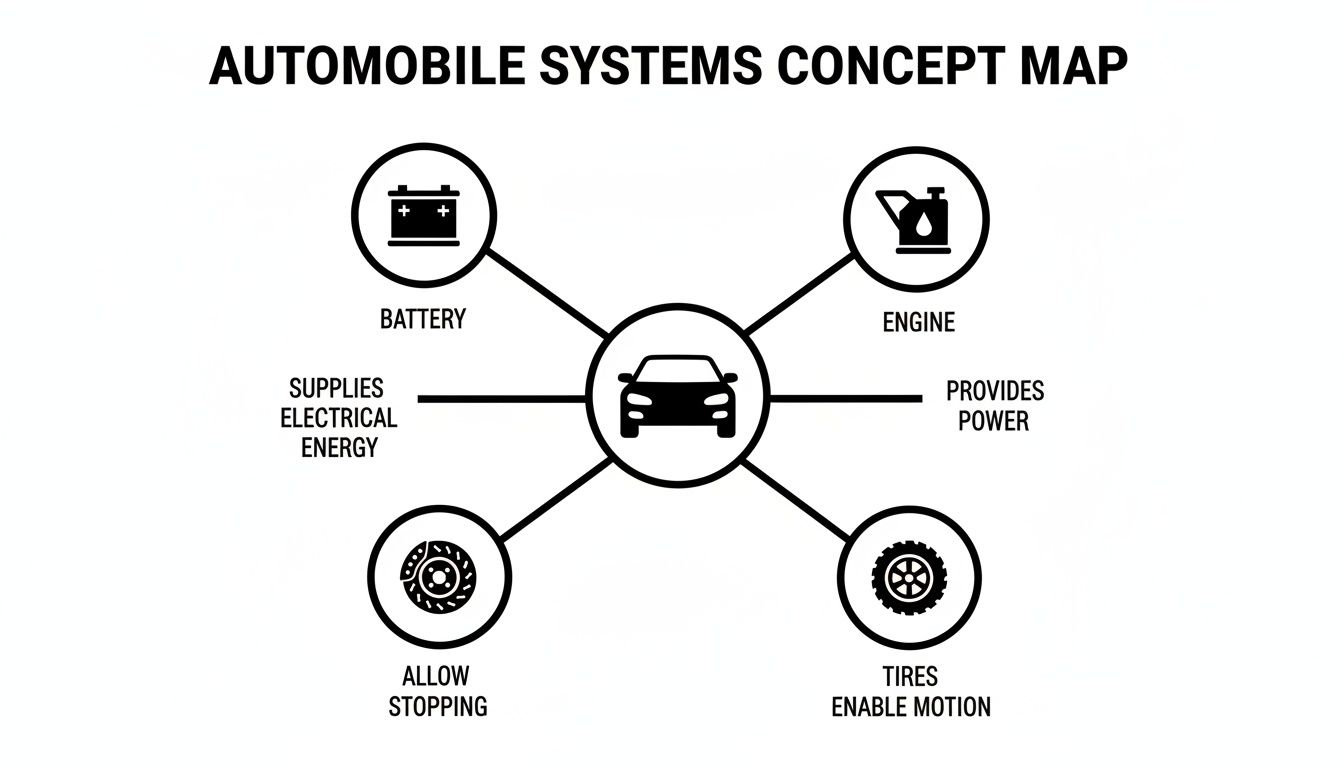
As the infographic highlights, issues with the engine, tires, brakes, or battery will each trigger a specific warning light, giving you a direct signal about where the problem lies.
Common Dashboard Symbols and What to Do
Let's break down some of the most common symbols you're likely to see and the practical steps you should take for each one.
1. Check Engine Light (Yellow)
This is easily the most common—and most misunderstood—warning light. It’s a catch-all alert that means the engine's computer has detected a problem with the powertrain or emissions system.
- What it means: The problem could be anything from a loose gas cap to a failing catalytic converter. It's a huge range.
- What to do: First, do the simple thing: tighten your gas cap. If the light stays on, you need a diagnostic scan. Driving is usually okay if the light is solid, but a flashing Check Engine light signals a severe misfire that could be actively damaging your engine. In that case, reduce your speed and get to a mechanic immediately.
2. Engine Temperature Warning (Red)
This light, which looks like a thermometer dipping into liquid, is one of the most serious warnings you can get. It means your engine is overheating.
- What it means: Your engine has shot past its normal operating temperature, likely due to low coolant or a failure in the cooling system.
- What to do: Pull over and shut off the engine immediately. Seriously. Continuing to drive an overheating car can cause catastrophic damage, like a warped cylinder head, which can lead to thousands of dollars in repairs. Let the engine cool down completely before you even think about checking the coolant level.
3. Oil Pressure Warning (Red)
This symbol, which looks like an old-fashioned oil can, signals a dangerous loss of oil pressure. This is another critical, "stop-driving-now" situation.
- What it means: Your engine isn't getting the lubrication it needs to keep metal parts from grinding against each other.
- What to do: Pull over and turn off the car instantly. Check your oil level with the dipstick. If it's low, you might have a leak. If the level is fine, the problem could be a failing oil pump. Do not restart the engine until a professional has looked at it.
When that dreaded Check Engine light comes on, guessing the cause is a losing game. For a precise diagnosis, you can learn more about our service engine light diagnostics at Kwik Kar. Our technicians here in Fort Worth use advanced diagnostic tools to read the specific trouble codes from your car’s computer, pinpointing the exact issue so you’re not paying for unnecessary repairs.
Building Your First Car Care Schedule
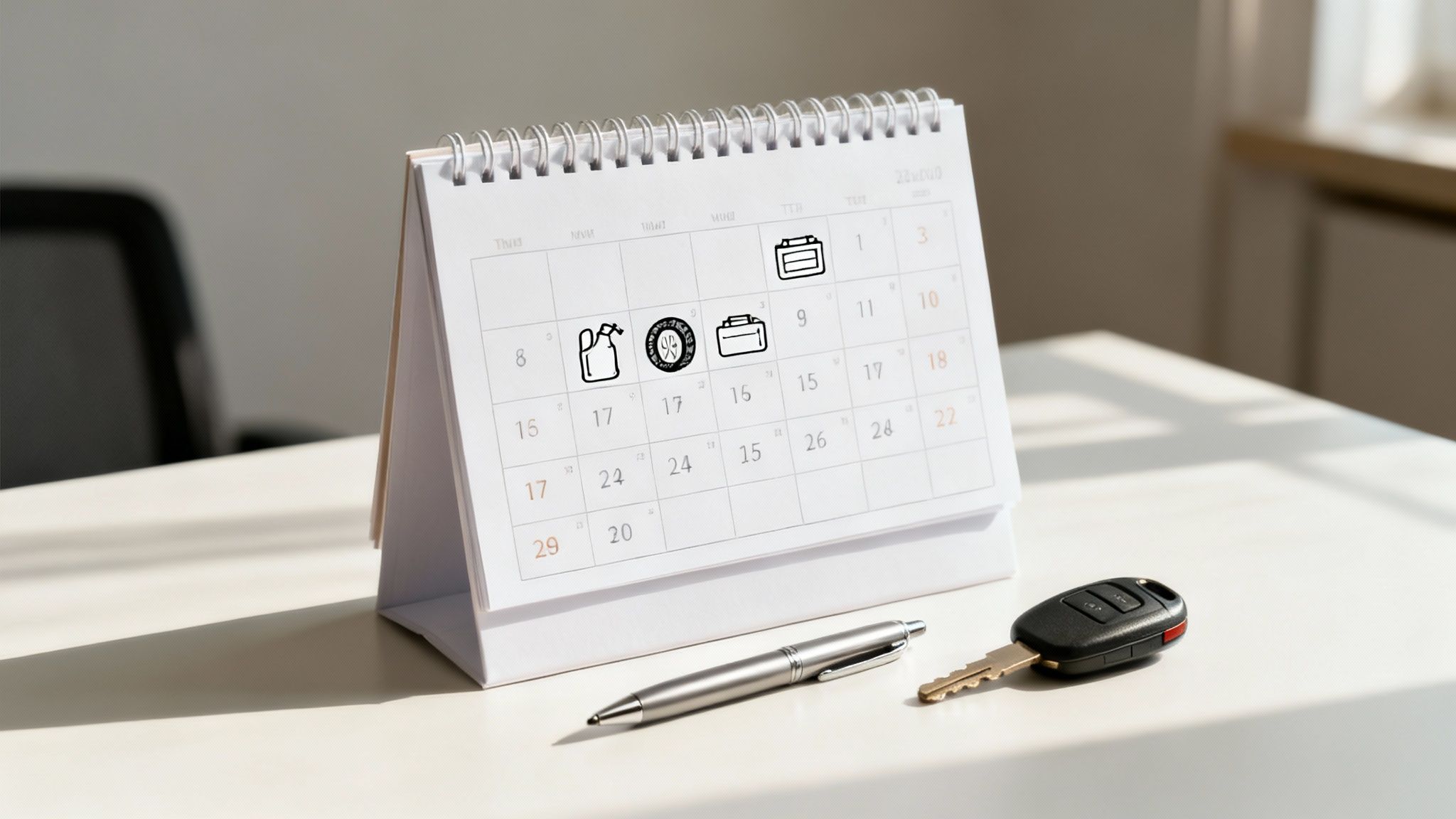
Consistency is the secret weapon of smart car ownership. Think of it like a personal health plan—a simple, predictable maintenance schedule keeps your vehicle running strong and stops small issues from turning into major mechanical headaches. You don't need a mechanic's expertise to build one, either. It’s all about creating easy-to-follow routines based on simple time intervals.
This approach turns car maintenance for beginners from a confusing chore into a set of manageable habits. By breaking down tasks into monthly, quarterly, and annual checks, you create a rhythm that ensures nothing important gets missed. This isn’t just a to-do list; it’s a proactive strategy for keeping your car on the road longer and saving a ton of money.
Your Monthly Five-Minute Health Check
Consider this your car’s quick monthly check-up. These tasks take less time than making a pot of coffee but give you a vital snapshot of your vehicle's immediate needs. Getting in the habit of doing these checks helps you catch problems right as they're starting.
- Tire Pressure Inspection: Your tires are your direct connection to the road and foundational to your car's safety. Grab a simple tire pressure gauge and make sure all four tires are inflated to the recommended PSI, which you can find on the sticker inside your driver's side door jamb.
- Fluid Level Glance: Pop the hood and do a quick visual on your key fluids. Check the engine oil dipstick for the level and color, then glance at the translucent reservoirs for coolant, brake fluid, and windshield washer fluid. You just want to see that they're between the 'MIN' and 'MAX' lines.
- Lights Walk-Around: Turn on your headlights and take a quick stroll around the car to confirm your headlights, taillights, and brake lights are all working. It's easiest to have a friend or family member help confirm the brake lights pop on when you press the pedal.
The Quarterly Deep Dive
Every three months or so, it’s time to look a little closer at the components that are working hard behind the scenes. These parts wear down slowly, so a quarterly inspection is the perfect way to monitor their condition before they give out.
A car is a complex system of interconnected parts. While monthly checks handle the fast-moving vitals, quarterly inspections focus on the support systems—the belts, hoses, and battery connections that keep everything running in harmony.
These checks are still very beginner-friendly and are mostly visual. You're simply on the lookout for obvious signs of wear and tear that tell you it’s time to plan for a professional service.
What to Look For:
- Belts and Hoses: With the engine off, look at the rubber belts for any signs of cracking, fraying, or a shiny, glazed appearance. Gently squeeze the larger coolant hoses; they should feel firm, not spongy or brittle.
- Battery Terminals: Check for that fuzzy, white or blue-green buildup of corrosion on the battery posts. This gunk can keep your car from starting and needs to be cleaned off.
- Air Filter: Your engine needs to breathe clean air to run efficiently. On many cars, the engine air filter is in an easy-to-open black plastic box with clips. Pop it open and take a look—if the filter is choked with dirt and debris, it's definitely time for a new one.
Annual Professional Service and Inspections
Once a year, it’s absolutely essential to bring your vehicle to a professional for the big-ticket items and official inspections. This is where you partner with certified technicians who have the right tools and expertise to perform a comprehensive wellness exam on your car.
This annual visit is the perfect time for things like a thorough brake inspection, a tire rotation and alignment check, and other services recommended in your owner's manual. While a mileage-based schedule is also important—as you can read about in our guide to car maintenance by mileage—the annual check-in ensures everything is in safe, working order.
For drivers here in Fort Worth, this yearly appointment serves another critical purpose: the Texas State Inspection. At Kwik Kar, we're a certified inspection station, which makes us your one-stop shop. We can perform your required state inspection and handle any needed services at the same time, saving you an extra trip and making sure your vehicle is both healthy and street-legal for another year. It’s a streamlined process that makes staying on top of your car care schedule incredibly simple.
Knowing When to DIY and When to Call a Pro
One of the best parts of learning about your car is gaining the confidence to handle small jobs yourself. But real confidence also means knowing your limits. Being able to draw a clear line between a simple DIY task and a repair that needs a certified technician is absolutely crucial, both for your safety and your wallet.
Making the wrong call can quickly turn a simple fix into a costly, complicated mess. So, before you even think about grabbing a wrench, it’s a good idea to ask yourself three simple questions. Think of it as a quick gut check to help you decide whether to roll up your sleeves or head to a trusted shop.
A Simple Framework for Your Decision
This is your go-to checklist before starting any project on your car. If you hesitate on any of these, it's a solid sign that calling in a professional is the smarter, safer move.
- Tools: Do I actually have the right tools for this job? A lot of car repairs require specialized equipment that goes way beyond a basic socket set. Trying to make do with the wrong tool can easily strip a bolt or damage a component, adding a whole new layer of expense and frustration to the mix.
- Safety: Are there serious safety risks involved? Anytime you're working under a car without proper jack stands, handling corrosive fluids without protection, or messing with high-voltage electrical systems, you're in high-risk territory. These situations are best left to trained experts who do this every day.
- Consequences: What’s the worst that could happen if I mess this up? If you install a wiper blade incorrectly, you get a streaky windshield. No big deal. But if you install a brake caliper incorrectly, the consequences could be catastrophic.
This quick evaluation helps you weigh the reward of a successful DIY project against the very real risks, making sure you stay safe while you're building your skills.
Clear Examples of DIY-Friendly Tasks
Getting your hands dirty is a fantastic way to connect with your vehicle and save a few bucks. The best tasks for beginners are always the ones that are low-risk, require minimal tools, and have a high chance of success. These are the jobs where a small mistake won't lead to a major safety problem.
Great Starter Projects:
- Replacing Windshield Wiper Blades: This usually takes just a few minutes and often requires no tools at all.
- Topping Off Washer Fluid: A simple pour-and-fill task that anyone can handle.
- Changing an Engine Air Filter: On most cars, this is as simple as opening a plastic box, swapping the filter, and closing it back up.
- Replacing a Blown Fuse: Just find the fuse box (your owner’s manual will show you where) and swap the tiny fuse. It's a straightforward fix.
The whole point of DIY car maintenance is to build confidence, not create new problems. Starting with these simple, low-stakes jobs lets you learn about your vehicle without the pressure of a complicated or dangerous repair.
If you're interested in tackling more yourself, there's a world of great information out there. Exploring good resources can expand your knowledge and help you figure out your next project. For a great place to start, check out these helpful DIY car care tips.
When to Trust the Professionals at Kwik Kar
Some jobs just aren't worth the risk, especially for a beginner. These tasks often involve complex systems, require specialized diagnostic equipment, or come with significant safety hazards. Trying to DIY these repairs can lead to thousands in damage or, even worse, a vehicle that isn't safe to be on the road.
Leave These to the Pros:
- Brake System Repairs: Anything beyond a quick visual check, like replacing pads, rotors, or brake lines, needs an expert.
- Transmission Service: This is a sealed, highly complex system that requires very specific fluids and procedures.
- Suspension Work: Swapping out shocks or struts involves specialized spring compressors, and it's extremely dangerous without them.
- Engine Timing Belt Replacement: If you make a mistake here, you can completely destroy your engine.
- Air Conditioning Service: The refrigerant is under high pressure and requires special equipment to be handled safely and legally.
Here at Kwik Kar in Fort Worth, our ASE-certified technicians have the training, the tools, and the experience to handle these complex jobs right the first time. We take the guesswork and the risk out of major repairs, making sure your car is fixed to the highest safety standards. Building your car maintenance for beginners knowledge means knowing who to trust when a job is over your head.
Got Questions About Car Care? We’ve Got Answers.
Jumping into the world of car maintenance can feel like learning a new language. There are new terms, new schedules, and it’s totally normal to have questions. We’ve put together some straightforward answers to the things new car owners often wonder about but might be a little hesitant to ask.
Our goal is simple: to help you feel confident and in control when it comes to your vehicle. Let's clear up some of that uncertainty so you can feel empowered every time you get behind the wheel.
How Often Should I Really Get an Oil Change?
That old "every 3,000 miles" rule you’ve probably heard? For most modern cars, it's pretty outdated. The best place to look for a real answer is your vehicle's owner's manual. It will likely recommend changing the oil every 5,000 to 10,000 miles, depending on the kind of oil your car takes.
But keep in mind, how you drive matters just as much. Here in Fort Worth, we deal with intense summer heat and a lot of stop-and-go traffic. Those conditions put extra stress on your engine, so it’s smart to stick closer to the lower end of that recommended range to give your engine the protection it needs.
What's the Most Important Fluid to Check Besides Oil?
Coolant, hands down. Also known as antifreeze, this is your engine’s number-one defense against overheating, especially in the Texas heat. A low coolant level is one of the most common reasons for a roadside breakdown.
A quick visual check of your coolant reservoir once a month can save you from a major headache. Just make sure the fluid is sitting somewhere between the 'MIN' and 'MAX' lines. It’s one of the simplest and most critical things you can do for your engine's health.
A couple of other key fluids to keep an eye on are your brake fluid—which is obviously crucial for stopping safely—and your windshield washer fluid, so you can always keep your view of the road clear.
Can I Trust a Local Shop More Than a Dealership?
Absolutely. A good, reputable independent auto shop can offer the same quality service—if not better—at a much more wallet-friendly price. The trick is to find a shop that employs ASE-certified technicians. That certification is the gold standard in the auto world and a sure sign of a mechanic’s expertise.
Local businesses are built on trust and their reputation in the community. They depend on repeat customers and word-of-mouth, which means they have every reason to provide honest work, fair prices, and reliable service on everything from state inspections to tricky engine repairs.
Is It Expensive to Start Maintaining My Own Car?
Not at all. Getting started with basic DIY car care costs a lot less than you’d think. You only need a few essential tools, and they'll pay for themselves over and over again.
- Tire Pressure Gauge: You can find a quality gauge for under $15.
- Funnel: A simple funnel for topping off fluids is just a couple of bucks.
- Basic Wrench Set: A starter set will run you about $30.
With just these simple items, you can handle dozens of small checks and top-offs that will save you hundreds of dollars in labor costs over the life of your car. The real expense in car ownership doesn't come from proactive maintenance; it comes from neglect.
Feeling more comfortable about starting your car care journey? For any job that feels a little too big to tackle on your own, the expert team at Kwik Kar Oil Change and Auto Care is here to help. From a simple oil change to professional diagnostics, we’ll make sure your vehicle gets the top-tier service it deserves. Schedule your appointment with us today!