Forget the dry, textbook definition. Let’s talk about something more familiar: a bicycle.
Think about what happens when you shift gears on a bike. You click into a low gear to power up a steep hill, and you shift to a high gear to cruise effortlessly on a flat road. Your car's transmission does the exact same job, just on a much more powerful and complex scale. It’s the critical link that translates your engine's raw power into the motion you actually need for driving.
What Is a Car Transmission and Why It Matters
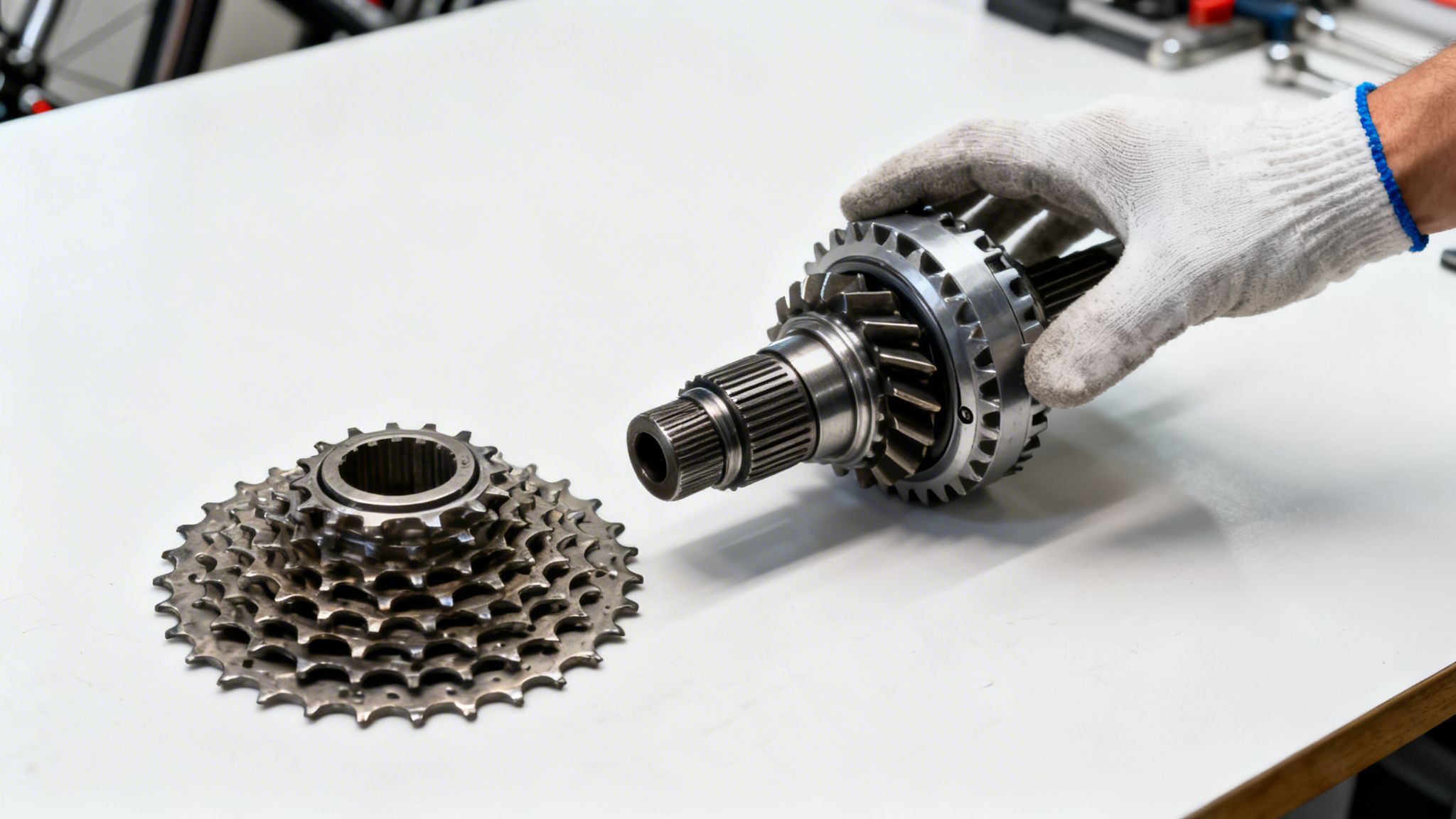
At its heart, the transmission is a brilliant piece of engineering that acts as the essential go-between for your engine and your wheels. An engine generates power by spinning incredibly fast—thousands of times per minute. But those speeds are totally impractical for pulling away from a stoplight or just cruising down the street.
That's where the transmission steps in.
The Power Translator
The transmission’s main job is to manage the engine’s power by using a set of gears. By shifting between these gears, it controls the amount of torque (the twisting force that gets you moving) sent to the wheels.
This is what allows your car to:
- Accelerate smoothly from a dead stop without stalling the engine.
- Maintain an efficient speed on the highway without making the engine scream.
- Deliver extra muscle for climbing hills or towing a trailer.
Low gears give you high torque for powerful, slow pulling (like first gear). High gears give you lower torque but allow for high-speed driving without over-revving the engine (like overdrive or sixth gear). Without it, your car would be stuck in a single gear, making it almost impossible to drive in the real world.
To put it simply, here are the key jobs your transmission is handling every time you drive.
Your Transmission's Core Functions at a Glance
| Core Function | Why It's Important for Your Car |
|---|---|
| Managing Torque | Provides the right amount of pulling power for different situations, from starting up to climbing hills. |
| Controlling Speed | Allows the engine to run at its most efficient speed (RPM) whether you're going 10 mph or 70 mph. |
| Enabling Reverse | Changes the direction of the drivetrain's rotation so you can back up. |
| Neutral Position | Disconnects the engine from the wheels, allowing the engine to run while the car is stationary. |
This little summary shows just how much we rely on the transmission for basic driving control and efficiency.
The transmission is the operational heart of modern vehicles. It's responsible for converting engine power into usable motion, directly impacting performance, fuel economy, and the overall driving experience.
A Cornerstone of Vehicle Health and Performance
The transmission’s importance goes way beyond just making the car move. Its health has a direct and significant impact on your vehicle's reliability—and your wallet.
The global automotive transmission market is set to grow from USD 183.5 billion in 2025 to a staggering USD 311.5 billion by 2035. Here in North America, with the average vehicle being over 12 years old, transmission failures make up about 20% of all major repairs, with costs often falling between $2,500 and $4,000. You can explore more about these industry trends and what they mean for car owners.
A well-maintained transmission keeps your car running efficiently, gives you a smooth ride, and helps you avoid the kind of expensive, sudden breakdowns that can leave you stranded.
Exploring the Different Types of Car Transmissions
So, we know a transmission’s job is to get power from the engine to the wheels. But how it does that can completely change your driving experience, not to mention your car's fuel economy and performance. They aren’t all built the same.
From the satisfying, hands-on feel of a classic stick shift to the effortless glide of a modern automatic, every transmission has its own unique personality. Let’s pop the hood and look at the four main types you’ll find on the road today.
The Traditional Manual Transmission (MT)
The manual transmission, or stick shift, is the purist’s choice. It offers the most direct and engaging connection between you and your car. When you're driving a manual, you are in complete control, using the clutch pedal and gear selector to manage the engine’s power.
- How It Works: The process is a simple dance between your feet and hands. You press the clutch pedal to disconnect the engine from the gearbox, shift into the gear you want, and release the clutch to send power back to the wheels. This gives you total command over the engine's RPMs.
- The Driving Experience: It's a tactile, hands-on experience that many driving enthusiasts swear by. While it requires a bit more skill, it pays you back with unmatched control, especially when you want to feel truly connected to the road.
- Where You'll Find It: Manuals are becoming rarer, but they're still the go-to for many sports cars, rugged off-roaders, and some budget-friendly compacts.
The Conventional Automatic Transmission (AT)
The automatic transmission is king of the road for a reason: it's all about convenience. This is the "put it in Drive and go" option that makes daily commutes and stop-and-go traffic a breeze. It handles all the gear changes for you.
Inside, a complex system of planetary gearsets and a fluid-filled torque converter work together to shift gears automatically. It senses your speed and how much throttle you’re giving it, delivering a smooth and predictable ride.
Automatic transmissions absolutely dominate the market. Projections show the industry rocketing from USD 207.30 billion in 2025 to an estimated USD 495.54 billion by 2034. Here in Fort Worth, where commuter cars and work trucks rule the roads, automatics are found in about 85% of all new vehicles sold.
The Continuously Variable Transmission (CVT)
A Continuously Variable Transmission, or CVT, is a different beast entirely. It throws the whole idea of fixed gears out the window. Instead of shifting between first, second, third, and so on, it uses a clever system of pulleys and a belt to create a seamless, infinite range of gear ratios.
This design allows the engine to stay in its most efficient power band at all times. The result is perfectly smooth acceleration with none of the "shift shock" you might feel in a traditional automatic. CVTs are popping up everywhere because they can boost fuel economy by up to 30% and cut down on emissions. When choosing a car, it's smart to weigh the pros and cons of different automatic styles, such as common CVT vs DCT issues.
The Dual-Clutch Transmission (DCT)
Imagine an automatic that thinks and shifts like a professional race car driver. That’s a Dual-Clutch Transmission (DCT). It’s essentially an automated manual that offers the best of both worlds: the convenience of an automatic with the lightning-fast performance of a manual.
A DCT uses two separate clutches—one for the odd-numbered gears (1, 3, 5) and another for the even ones (2, 4, 6). This brilliant setup allows the next gear to be pre-selected and ready to go, delivering shifts so fast and smooth they're practically instant. You’ll mostly find DCTs in high-performance sports cars and luxury vehicles. Due to their complexity, making sure you have a qualified technician for your automatic transmission service is absolutely critical.
Recognizing the Warning Signs of Transmission Trouble
Your car has a way of telling you when something’s wrong. Long before a small problem turns into a complete breakdown, you’ll usually get a few subtle hints. When it comes to your transmission, paying attention to these warnings is absolutely critical. Ignoring them is a bit like letting a small engine knock go unchecked—it only gets worse and a lot more expensive.
Learning to spot the common symptoms of a failing transmission can be the difference between a minor adjustment and a repair bill with a comma in it. Think of these signs as your vehicle’s cry for help, telling you it’s time to see a professional.
Strange Noises and Sensations
Often, the very first sign of trouble is something you either hear or feel. A healthy transmission should operate quietly and shift seamlessly. Any new, unusual sound is a good reason to turn the radio down and listen closely.
These noises might be faint at first, but they often point to specific issues. You’ll want to keep an ear out for a few key sounds:
- Whining or Humming: If you hear a high-pitched whine that gets louder as the engine revs, it could be a sign of a clogged transmission filter or even a problem with the torque converter.
- Clunking or Banging: A sharp clunk, especially when you shift from Park into Drive or Reverse, often suggests worn-out universal joints or failing transmission mounts.
- Grinding Noises: This is a serious one. A metallic grinding sound during a gear shift means the gears aren't meshing correctly, which can cause severe internal damage in a hurry.
Just as telling are the things you feel from the driver's seat. Does your car suddenly pause or hesitate when you try to accelerate? Do gear changes feel harsh and jerky instead of buttery smooth? This is often a classic case of gear slipping, where the engine revs higher but the car doesn't pick up speed to match.
A transmission problem will almost never fix itself. What starts as a faint hum or a slight hesitation can quickly escalate into a complete failure, leaving you stranded. Prompt diagnosis is the most effective way to prevent a minor annoyance from becoming a major expense.
This quick chart shows the two main families of transmissions found in most vehicles today.
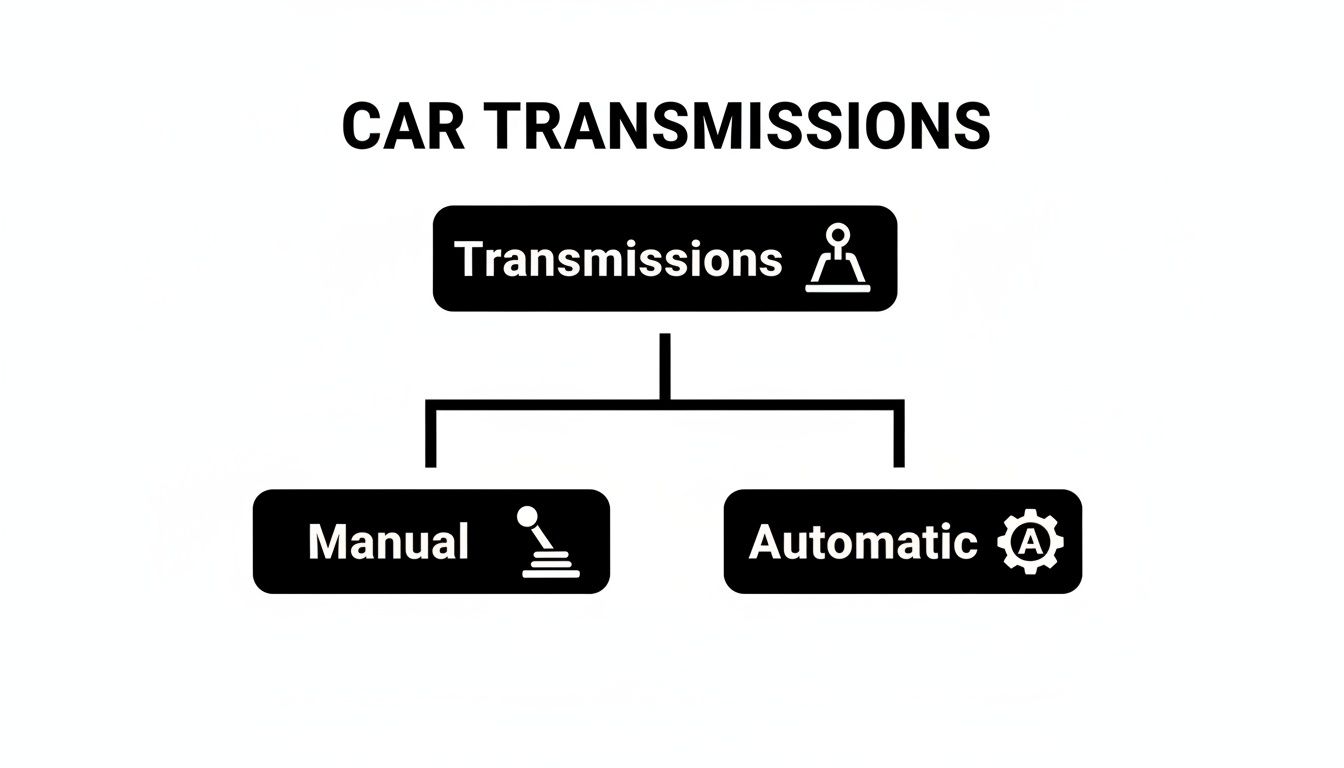
Knowing whether your car has a manual or automatic helps our technicians narrow down potential issues based on its specific design.
Visual and Olfactory Warnings
Sometimes the clearest signs of transmission trouble have nothing to do with sound or performance. A quick look under your car and paying attention to any strange smells can tell you a lot.
The most common red flag is a transmission fluid leak. This fluid is the lifeblood of your transmission, providing crucial cooling, lubrication, and hydraulic pressure to make it all work. Healthy fluid is typically a bright, translucent red with a slightly sweet smell.
If you spot reddish or dark brown puddles on your driveway, you’ve likely got a leak that needs to be fixed right away. When fluid levels get too low, the transmission can overheat and suffer catastrophic damage. Another dead giveaway is a burning smell, often compared to burnt toast, which is a classic symptom of old or overheating fluid.
Finally, don’t ever ignore your dashboard lights. That little Check Engine light can pop on for dozens of reasons, and transmission faults are a frequent culprit. For a deeper dive, you can learn more about specific auto transmission problems and signs to get better prepared.
Transmission Problem Symptom Checker
Noticing one of these issues? This quick table can help you match what you're experiencing with what it might mean. Remember, this is just a guide—a professional diagnosis is the only way to be certain.
| Symptom You Notice | What It Could Mean | Recommended Action |
|---|---|---|
| Red fluid on the ground | Leaking gasket, seal, or hose | Get the leak source identified and fixed immediately. Top off fluid. |
| Whining or humming sound | Low fluid, clogged filter, or worn torque converter | Have a technician check fluid levels and the transmission system. |
| Gear shifts feel harsh | Low or dirty fluid, worn-out components | Schedule a transmission fluid flush and diagnostic check. |
| Car hesitates or won't move | Gear slipping due to internal wear or low fluid | Avoid driving if possible. Tow your vehicle to a repair shop. |
| Burning smell | Overheating or old, burnt transmission fluid | Stop driving to let it cool. Get the fluid and system inspected. |
| Grinding noise during shifts | Seriously worn gears or failing synchronizers | Stop driving immediately to prevent further damage. Seek professional repair. |
If you notice any of these symptoms, especially in combination, it’s best to get it checked out. Bringing your vehicle to Kwik Kar for a diagnostic check will pinpoint the exact cause, helping you prevent a small issue from sidelining your car for good.
Essential Transmission Maintenance for a Longer Life
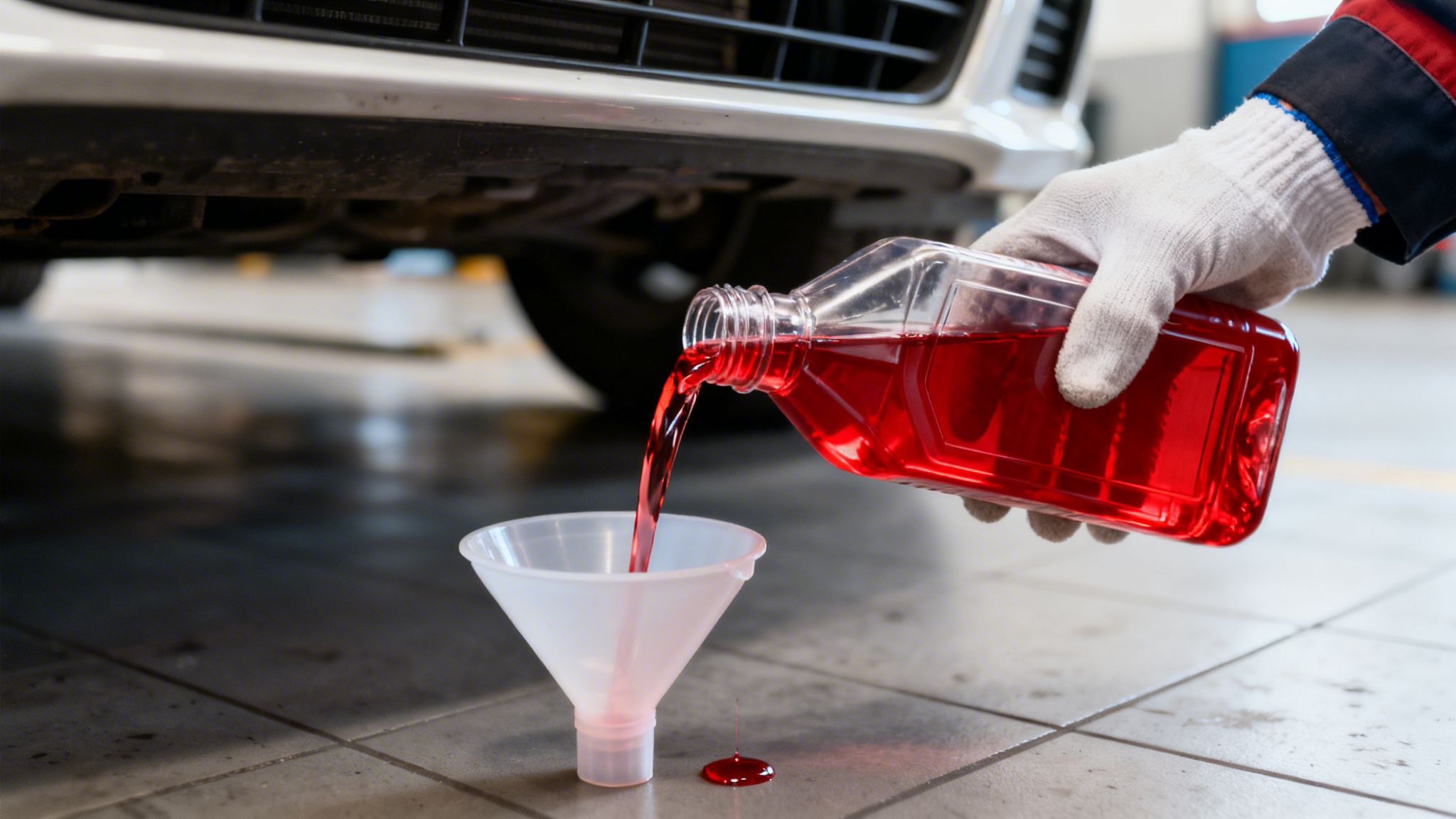
The secret to avoiding a four-figure transmission repair bill isn’t luck—it's proactive care. Just like regular oil changes are vital for your engine, consistent maintenance is the single best way to protect your transmission from premature failure and keep it running smoothly for years to come.
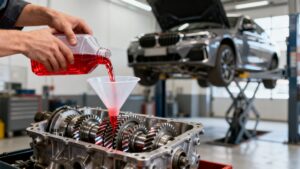
At the heart of this routine is one critical element: transmission fluid. This specialized fluid is the lifeblood of your transmission, performing several jobs at once. It’s far more than just a simple lubricant.
Think of it as a multi-talented workhorse for your gearbox. It lubricates moving parts to prevent grinding, cools the system to stop overheating, and cleans away tiny metal shavings. Most importantly, it provides the hydraulic pressure that allows an automatic transmission to shift gears in the first place.
Managing Your Transmission Fluid
Over time, this hardworking fluid breaks down. Heat and constant friction degrade its protective qualities, eventually turning it from a clean, translucent red into a dark, gritty sludge. When the fluid gets dirty, it can't do its job, leading to overheating, harsh shifting, and accelerated wear on all those delicate internal parts.
This is exactly why following your vehicle manufacturer's recommended service interval is so important. For most modern cars, this falls somewhere between every 30,000 to 60,000 miles. Sticking to this schedule is a small investment that prevents massive headaches down the road. When it comes time for service, you generally have two options.
- Fluid Drain-and-Fill: This is the more basic of the two services. A technician drains the old fluid from the transmission pan, often replaces the filter, and refills it with fresh fluid. While it certainly helps, this method only swaps out about half of the total fluid in the system.
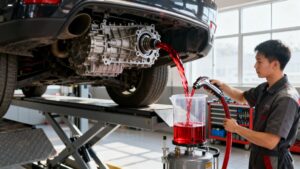
- Transmission Flush: A more thorough service, a flush uses specialized equipment to pump out nearly 100% of the old, degraded fluid while simultaneously refilling the system with new, clean fluid. This process also clears out the torque converter and cooler lines, which a simple drain can't reach.
A flush is generally the better choice for completely cleaning the system and ensuring maximum protection. However, the best method really depends on your car's age, mileage, and service history.
A transmission flush is like a full detox for your car's gearbox. By replacing virtually all the old, contaminated fluid, it restores the system's ability to cool, lubricate, and shift effectively, which is key to preventing long-term damage.
Choosing the Right Service for Your Car
For newer vehicles or those with a consistent maintenance history, a transmission flush is typically the best way to keep the system in prime condition. It’s a fantastic preventative measure.
On the other hand, for some older, high-mileage vehicles that have missed a few service intervals, a simple drain-and-fill might be the safer bet. The concern is that a powerful flush could dislodge built-up sediment that might then clog narrow fluid passages.
Not sure which service is right for you? Our expert technicians at Kwik Kar can inspect your fluid and recommend the best course of action for your specific vehicle. If you're curious about the process, you can learn more about how a professional automatic transmission fluid exchange can protect your investment. Proper care is the foundation of a reliable car.
Deciding Between a Transmission Repair and Replacement
Hearing you have a major transmission problem can be a gut-punch. It’s one of those repairs that feels big, and it comes with an equally big decision: is it better to repair the transmission you have, or replace it altogether? There’s no single right answer, because the best path forward really depends on the specific failure, your vehicle’s age and mileage, and your budget.
Your choice will almost always boil down to two main routes: a transmission rebuild or a transmission replacement. Getting a handle on what each one involves is the first step to making a smart decision you can feel good about.
Understanding a Transmission Rebuild
A transmission rebuild is exactly what it sounds like—a highly detailed, technical process. A specialized technician takes your transmission completely out of the vehicle and disassembles it, laying out every single internal part on the workbench. From there, every gear, seal, clutch, and gasket gets a thorough cleaning and inspection for wear and tear.
- Only the parts that are worn out or broken are swapped for new components that meet or exceed the original factory standards.
- Once everything is up to spec, the transmission is carefully put back together, tested, and reinstalled in your car.
A rebuild can be a great, cost-effective option, especially if only a few specific parts have failed. It also ensures the transmission is a perfect match for your vehicle because, well, it’s the one it came with.
Evaluating a Transmission Replacement
A replacement, on the other hand, means taking out your entire faulty transmission and swapping it with a different one. This usually isn't a brand-new unit straight from the manufacturer, as that would be incredibly expensive. Instead, you'll typically have two choices for a replacement unit:
- Used: This transmission comes from a salvage or junk yard. It’s the cheapest route but also the biggest gamble. You don't know its history, and the warranty—if there is one—is usually very limited.
- Remanufactured: This is the gold standard for replacements. A remanufactured transmission was professionally rebuilt in a factory setting back to its original factory specifications. It includes all the latest engineering updates and comes with a strong warranty, often covering you for several years or tens of thousands of miles.
While a rebuild customizes the repair to your specific car, a remanufactured replacement often offers superior long-term reliability and a stronger warranty, providing excellent peace of mind.
Getting a remanufactured unit is often faster than waiting for a rebuild, getting you back on the road sooner. The upfront cost might be a bit more than a rebuild, but the comprehensive factory restoration and solid warranty offer tremendous value. At Kwik Kar, our experts can pinpoint the exact cause of your transmission trouble and walk you through the pros and cons of each option, helping you make the best choice for your car and your wallet.
The Future of Transmissions in Electric and Hybrid Cars
As cars evolve, so does the technology that makes them go. The shift toward electric and hybrid vehicles is completely changing how we think about transmissions, and the classic gearbox is getting a serious high-tech makeover. While you won't find a traditional automatic or manual in most electric vehicles (EVs), the core job of managing power is more critical than ever.
EVs are famous for their instant torque, delivered directly from whisper-quiet electric motors that work efficiently at almost any speed. This is exactly why most EVs don't need a bunch of gears. Instead, they rely on a simple single-speed transmission, which is more like a gear reduction box. This straightforward setup gets power to the wheels efficiently, giving you that smooth, silent, and immediate acceleration EVs are known for.
New Technology for New Cars
Hybrids, on the other hand, are a different story. They have the complex job of blending power from a gasoline engine and at least one electric motor. To pull this off, they use a special piece of hardware called a power-split device. Think of it as a super-smart transmission that constantly decides whether to use gas, electric, or a combination of both for the best possible efficiency.
Looking forward, the technology is only getting more interesting. The EV transmission market is growing at a staggering pace, projected to jump from USD 6.52 billion in 2023 to USD 32.65 billion by 2032. While single-speed systems are the norm now, some high-performance EVs are already adopting multi-speed transmissions to push performance and efficiency even further. As you can learn from the latest market research, this technology is a huge part of what's next for driving.
EV transmissions aren't just about going fast; they’re about going farther. Advanced "e-axles" that combine the motor, electronics, and gearbox into a single unit are already cutting vehicle weight by 20% and boosting driving range by up to 15%.
This constant innovation shows just how vital the transmission—in all its new forms—remains to your vehicle's performance. Here at Kwik Kar, we're dedicated to staying ahead of these trends, ensuring our technicians have the skills to service the car you drive today and the one you'll be driving tomorrow.
Common Questions About Car Transmissions
Even with a good grasp of how transmissions work, it's natural to have a few more questions. We hear them all the time from drivers just like you, so let's clear up some of the most common ones we get at the shop.
How Often Should I Really Change My Transmission Fluid?
For most modern cars with an automatic transmission, a good rule of thumb is to have the fluid changed every 30,000 to 60,000 miles. But that's just a starting point. Your driving habits play a huge role.
If you’re regularly towing a trailer, stuck in stop-and-go city traffic, or driving in extreme hot or cold weather, your transmission works harder and its fluid breaks down much faster. Your owner’s manual is always the best place to start, but a professional inspection will tell you the real story.
Is It Safe to Drive with a Transmission Problem?
We strongly advise against it. Driving your car when you suspect a transmission issue is a serious gamble. What might start as a minor slip or a slight hesitation can quickly spiral into a complete and catastrophic failure.
Continuing to drive with a transmission fault is a risk. You could easily turn a manageable repair into a complete replacement, potentially leaving you stranded and facing a much larger bill.
Getting the problem diagnosed right away is always the safest and most cost-effective decision you can make.
Is a Transmission Flush Better Than a Simple Drain?
A transmission flush is definitely a more thorough service. It uses specialized equipment to push out nearly 100% of the old, contaminated fluid from the entire system—including the torque converter and cooler lines where old fluid loves to hide. A simple drain-and-fill, on the other hand, only replaces about half of it.
For the long-term health of most vehicles, a flush is the way to go. However, some older or more delicate transmissions don't respond well to the pressure of a flush, so a technician may recommend a gentler drain-and-fill to be safe.
When you need clear answers and expert service for your vehicle, trust the certified technicians at Kwik Kar Oil Change and Auto Care. We provide honest diagnostics and reliable repairs to keep your car running smoothly. Schedule your appointment or stop by our Fort Worth location today!