



If your engine runs hot, takes forever to warm up, or your heater blows cold air, you’re likely looking at thermostat failure symptoms: overheating, a gauge that reads too low or bounces erratically, and weak cabin heat. If the temperature gauge is climbing fast or you see steam, pull over and stop driving before you check anything else.
TL;DR:
- If the engine remains cool beyond about 10 minutes of normal driving, scan for P0128, which can flag a stuck open thermostat.
- A stuck closed thermostat can overheat an engine within minutes; a cool upper hose, constant fan, steam, or coolant smell warns of head gasket risk.
- Low coolant or visible leaks should be checked first; water pump, radiator, fan, trapped air, and sensor faults can also imitate thermostat failure.
- Compare hose temperatures and run a pressure test and OBD II scan; P0128 supports a diagnosis, but technicians should confirm coolant flow before replacement.
Table of Contents
- What the thermostat does and how it fails
- How to spot a thermostat stuck open (engine running too cool)
- How to spot a thermostat stuck closed (dangerous overheating)
- Other parts that can mimic thermostat symptoms
- Practical checks you can perform or ask a shop to run now
- When to stop DIY and how a shop diagnoses and repairs thermostat faults
- Kwik Kar’s shop-grade tests, what to ask your technician, and transparency signals
- Kwik Kar perspective on timely diagnosis
- Schedule a cooling-system diagnostic at Kwik Kar
- FAQ
- Sources
What the thermostat does and how it fails
Your thermostat is a small valve that controls how much coolant reaches the radiator. Inside it sits a wax-filled element that melts and expands as the engine heats up, pushing the valve open once coolant reaches roughly 180 to 195 degrees Fahrenheit. Below that temperature, the valve stays shut so coolant recirculates only through the engine, letting it warm up quickly.
When the wax element wears out or the valve linkage sticks, the thermostat fails in one of two directions:
- Stuck open: coolant flows to the radiator constantly, so the engine never reaches full operating temperature.
- Stuck closed: coolant can’t reach the radiator at all, and heat has nowhere to go.
Either failure throws off the balance your engine needs for efficient combustion, clean emissions, and even wear on internal components.
How to spot a thermostat stuck open (engine running too cool)
A thermostat stuck open lets coolant bypass the engine too early, so the block never gets hot enough to run efficiently. Watch for these signs:
- Temperature gauge that climbs slowly or never reaches the normal middle range.
- Heater that blows lukewarm or cool air, even after several minutes of driving.
- Noticeably worse fuel economy as the engine computer compensates for a cold-running condition.
The engine should typically reach optimal operating temperature within about 10 minutes of normal driving. If yours is still cool to the touch well past that point, a stuck-open thermostat is a strong suspect, and it may trigger diagnostic trouble code P0128. Running cold for long stretches encourages sludge buildup and accelerates wear, since oil and coolant both work best at their designed temperatures. If your heater is the main complaint, our heater troubleshooting checks walk through the same symptom from a different angle.
How to spot a thermostat stuck closed (dangerous overheating)
A thermostat stuck closed blocks coolant from ever reaching the radiator, so temperature rises fast with nowhere for the heat to escape. This is the more urgent failure mode, and it calls for quick action:
- Watch the gauge climb rapidly, often within minutes of starting the engine, well past the normal range.
- Listen for the cooling fan running constantly as the system tries and fails to compensate.
- Check for steam or a sweet coolant smell coming from under the hood, both signs the system is already overheating.
- Feel the upper radiator hose, which may stay surprisingly cool while the engine itself heats up fast, since coolant isn’t circulating through it.
- Note any temperature or check engine warning lights on the dash.
Driving on a stuck-closed thermostat risks a warped cylinder head or a blown head gasket, repairs far more involved than the thermostat itself. If your dash temperature light comes on, our guide on what the engine temperature warning means covers the immediate steps to take.
Other parts that can mimic thermostat symptoms
Several cooling-system components can produce symptoms that look like thermostat failure, which is why technicians combine several checks rather than assuming the thermostat is at fault from one symptom alone. Before replacing a thermostat, rule out these lookalikes:
- Water pump: weak coolant circulation causes overheating similar to a stuck-closed thermostat, often paired with a whining noise or visible leak at the pump shaft.
- Radiator blockage: restricted airflow or clogged fins cause overheating mainly at highway speed or under load.
- Cooling fan failure: overheating that worsens in stop-and-go traffic but improves at highway speed points to a fan, not a thermostat.
- Air in the system: trapped air pockets cause erratic gauge swings without the steady pattern of thermostat failure.
- Faulty temperature sensor: an inaccurate reading can mimic either failure mode even when the thermostat itself is fine.
Visible coolant loss shifts the focus toward a leak rather than the thermostat. For a closer look at pump-specific symptoms, see our water pump diagnostic checks.
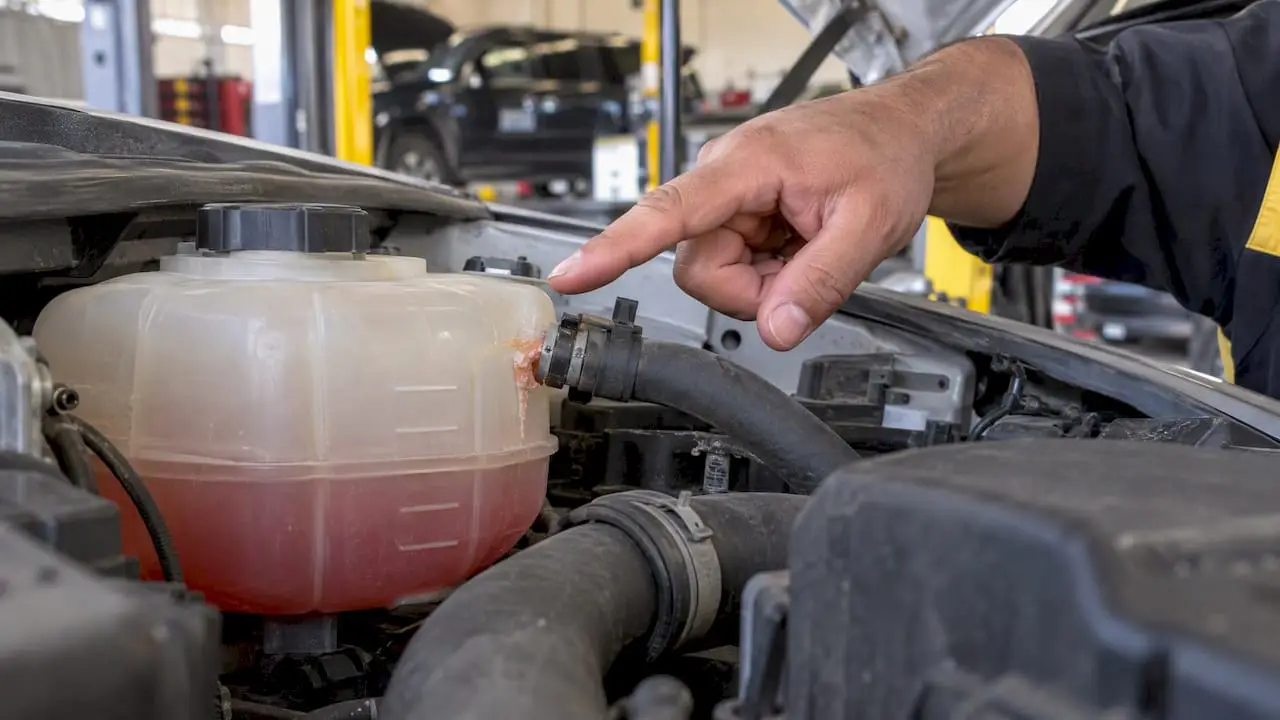
Pro Tip: Before replacing any cooling part, check coolant level and look for visible leaks first. A low system can mimic nearly every thermostat symptom on this list.
Practical checks you can perform or ask a shop to run now
A few simple checks can confirm or rule out a bad thermostat before any parts come off the car.
- Run a cold-start test. Start the engine cold and feel the upper radiator hose every few minutes. A warm upper hose early in warm-up suggests coolant is bypassing the engine, a sign of a stuck-open thermostat.
- Compare hose temperatures once warm. After the engine reaches normal temperature, the upper and lower radiator hoses should feel close in warmth. A big gap points to restricted flow rather than a straightforward thermostat fault.
- Ask about a bench boiling test. Technicians verify a removed thermostat by submerging it in boiling water and watching whether it opens at its rated temperature, a reliable way to confirm failure before replacement.
When to stop DIY and how a shop diagnoses and repairs thermostat faults
Some symptoms mean it’s time to stop driving and get professional eyes on the cooling system rather than continuing to test at home:
- The temperature gauge is climbing into the red or a warning light is on.
- You see steam, smell coolant, or notice fluid pooling under the vehicle.
- The heater has stopped working entirely alongside overheating symptoms.
At the shop, a proper diagnosis typically includes a system pressure test to find leaks, hose temperature comparisons, an OBD-II scan, and a flow check to confirm coolant is moving correctly through the radiator. Many thermostats are replaced in a single visit, though vehicles with hard-to-reach housings or additional cooling issues may need extra labor or parts. Working through these steps in order matters because it keeps a shop from replacing a water pump or radiator when the thermostat was the actual cause all along.
Kwik Kar’s shop-grade tests, what to ask your technician, and transparency signals
A thorough cooling-system check goes beyond swapping a part and hoping the symptom goes away. Our certified technicians combine upper and lower hose temperature comparisons, an OBD-II code readout (including codes like P0128), a coolant pressure test, and observation of the engine through a full warm-up cycle before recommending any repair.
- Ask to see the hose temperature comparison, not just a code reading.
- Ask whether a pressure test was run to rule out leaks.
- Ask for a clear explanation of which component the evidence points to and why.
Pro Tip: A shop that shows you digital inspection photos and walks through its findings is giving you the transparency needed to trust the diagnosis, not just the repair bill.
Kwik Kar perspective on timely diagnosis
A thermostat that’s starting to stick rarely announces itself loudly at first, just a slower warm-up or a heater that takes an extra minute to get going. We’d rather catch that early than see a driver come in after a head gasket has already failed from sustained overheating. We prioritize diagnosing issues correctly the first time to prevent further damage.
— Kwik Kar
Schedule a cooling-system diagnostic at Kwik Kar
If any of these symptoms sound familiar, a cooling-system check is a straightforward way to get a clear answer instead of guessing. Our team performs hose temperature comparisons, OBD-II scans, and pressure tests to determine whether the thermostat, water pump, or another component is responsible.

Visit our services page to see our full range of cooling-system and engine diagnostic work, and book an appointment at a time that fits your schedule.
FAQ
What is the function of the thermostat in a car?
The thermostat regulates coolant flow between the engine and radiator, keeping the engine at its designed operating temperature. It stays closed during warm-up so the engine heats quickly, then opens to let coolant reach the radiator and prevent overheating.
How do you know if your thermostat is stuck closed?
A thermostat stuck closed causes the temperature gauge to climb rapidly, often with the cooling fan running constantly and steam or a coolant smell present. The upper radiator hose typically stays cool because coolant isn’t reaching the radiator, even as the engine itself overheats.
Can a bad thermostat cause a coolant leak?
A failing thermostat itself doesn’t usually cause a leak, but the gasket or housing around it can seep coolant if it degrades or if excess pressure builds from a stuck-closed valve. Visible coolant loss generally points toward a leak at a hose, gasket, or the radiator rather than the thermostat valve itself.
How to tell if a thermostat or water pump is bad?
A stuck thermostat tends to show a clear warm-up pattern, either too slow or too fast, along with uneven hose temperatures. A failing water pump more often brings a whining noise, visible leakage near the pump shaft, or overheating that happens regardless of how long the engine has been running, which is why a full pump inspection helps separate the two.
Sources
- How does the thermostat in a car’s cooling system work? | HowStuffWorks
- Thermostat diagnosis: how to spot the fault before overheating starts | DENSO
- What are the common signs of a bad thermostat? | CarParts