Think of an oil change with synthetic oil as more of a performance upgrade for your engine than just another item on your maintenance checklist. While conventional oil is refined from crude oil, synthetic oil is engineered in a lab for superior purity and performance. This scientific approach is precisely why it protects your engine better and for a whole lot longer.
Why a Synthetic Oil Change Is Different
To really get why synthetic oil is worth it, you have to think small—down to the molecular level.
Picture conventional oil as a bucket of random rocks and pebbles. Sure, they fill the space, but there are all sorts of gaps and inconsistencies. Synthetic oil, on the other hand, is like a box filled with perfectly uniform marbles. They create a smooth, consistent, and incredibly strong layer of protection.
This uniformity is what makes all the difference. The molecules in synthetic oil are all engineered to be the same size and shape, which dramatically cuts down on friction between your engine's moving parts. Less friction means less wear and tear, a cooler-running engine, and ultimately, a longer and healthier life for your vehicle.

Purity And Performance Under Pressure
Conventional oil has natural impurities straight from the crude oil it comes from—things like sulfur and waxes. Over time, these can cook into harmful sludge and deposits inside your engine, clogging up vital oil passages and hurting performance.
Synthetic oil goes through an extensive refining process to remove almost all of these impurities. This purity, combined with a powerful package of performance-boosting additives, gives it some major advantages:
- Superior Temperature Resistance: It stands up to the intense summer heat we get here in Fort Worth without breaking down. It also flows smoothly during cold winter starts, giving your engine immediate lubrication right when it’s most vulnerable.
- Enhanced Engine Cleanliness: It contains advanced detergents that actively clean away existing sludge while preventing new deposits from ever forming. Your engine stays much cleaner on the inside.
- Reduced Oil Consumption: Synthetic oil is less volatile, meaning it doesn't evaporate as much at high temperatures. You'll find yourself needing to top it off less often between changes.
The core difference is simple: conventional oil is a natural resource that is refined, while synthetic oil is a high-tech fluid designed specifically for the extreme demands of a modern engine.
This engineered quality is why a synthetic oil change is a true investment in your vehicle's health and longevity. To make it even clearer, this table breaks down the key differences at a glance.
Synthetic vs Conventional Oil At a Glance
This table provides a quick comparison of the key characteristics and benefits of synthetic, conventional, and synthetic blend oils for car owners.
| Feature | Full Synthetic Oil | Conventional Oil | Synthetic Blend |
|---|---|---|---|
| Origin | Chemically engineered | Refined from crude oil | Mix of synthetic and conventional |
| Purity | Highest purity, few impurities | Contains natural impurities | Better purity than conventional |
| Performance | Excellent in extreme temps | Average performance | Improved performance over conventional |
| Protection | Maximum engine protection | Basic engine protection | Enhanced engine protection |
| Change Interval | 7,500 – 15,000 miles | 3,000 – 5,000 miles | 5,000 – 7,500 miles |
As you can see, full synthetic oil is the clear winner when it comes to performance, protection, and allowing for longer intervals between oil changes.
The Real-World Benefits of Full Synthetic Oil
Let's move past the lab-coat science and talk about what a synthetic oil change actually does for your car in the real world. This isn't about marketing fluff; it’s about tangible advantages you'll notice in your vehicle's performance and how long it stays on the road. These benefits are a direct result of the oil's advanced engineering.
The engineered purity of synthetic oil means you get a much cleaner, healthier engine. Because it's built from the ground up without the waxes, sulfur, and other gunk found in conventional oil, there’s far less material to cook into harmful sludge.
This is a huge deal here in Texas, where summer heat can bake conventional oil, leading to deposits that clog up passages and starve critical engine parts of the lubrication they desperately need.
Unlocking Superior Engine Protection
Think of your engine as a complex dance of metal parts moving at blinding speeds. The oil’s main job is to form a thin, slippery film between them so they don't grind each other into dust.
This is where synthetic oil truly shines. Its uniform molecular structure creates a stronger, more resilient film that doesn’t break down under intense pressure and heat. It simply lubricates better, reducing friction far more effectively than old-school oil.
Less friction translates directly to several great perks for your vehicle:
- Less Wear and Tear: By preventing metal-on-metal contact, synthetic oil dramatically slows down the aging process for pistons, bearings, and other vital components. This is the single biggest key to a longer engine life.
- Cooler Operating Temperatures: When there’s less friction, there’s less heat. A cooler-running engine is a happier, more efficient engine that's far less likely to suffer from overheating damage.
- Improved Fuel Economy: An engine that moves more freely needs less energy—and less fuel—to do its job. It might seem small on a single tank, but those savings can really add up over the course of a year.
The investment in a synthetic oil change is an investment in your engine’s future. It’s proactive protection that helps prevent the sludge buildup and premature wear that can lead to expensive repairs down the road.
This advanced protection keeps your vehicle reliable, whether you're stuck in stop-and-go traffic on I-30 or cruising down the highway on a summer road trip.
Maximizing Performance and Durability
The robust additive packages blended into synthetic oil are specifically designed to keep it performing at its peak for thousands of miles longer than conventional oil could ever hope to last. These additives are like a special forces team for your engine.
Specialized detergents get to work dissolving any existing sludge while preventing new deposits from forming, keeping all the internal parts squeaky clean. At the same time, anti-wear agents bond to metal surfaces for an extra layer of defense, and antioxidants stop the oil itself from breaking down under assault from heat and oxygen.
That thermal stability is a total game-changer. Synthetic oil resists boiling off or breaking down at temperatures that would turn conventional oil into useless sludge. It holds its protective viscosity and lubricating power, ensuring you get consistent performance from the first mile after your oil change to the last. For any driver in Fort Worth, this ability to stand up to our heat is a massive advantage.
This all leads to a few key outcomes:
- Extended Drain Intervals: Because the oil is so durable, you can safely go much longer between services—often 7,500 to 15,000 miles—which means less time spent at the shop.
- Consistent Performance: Your engine runs efficiently and smoothly through the entire oil life cycle, not just for the first couple thousand miles.
- Enhanced Longevity: Protecting your engine's components from wear, heat, and gunk is the most effective strategy for ensuring it has a long and trouble-free life.
Of course, a good oil change is just one part of a smart maintenance routine. For some engines, a thorough engine flush can also be used to remove built-up contaminants and ensure optimal health. Think of a synthetic oil change as the cornerstone of a strategy focused on long-term vehicle wellness.
How Often You Really Need a Synthetic Oil Change
Let's start by busting one of the biggest myths in car care: the old "change your oil every 3,000 miles" rule. While that was solid advice for the cars our parents and grandparents drove, a modern oil change with synthetic oil has completely rewritten the rulebook. It's time to ditch the old-school thinking and get on a smarter, more efficient maintenance schedule.
What changed? The advanced chemistry of synthetic oil. It's engineered from the ground up to resist breaking down under heat and stress, meaning it protects your engine effectively for a much, much longer time. This incredible resilience means you can say goodbye to those frequent, quarterly trips to the service center.
So, how long can you really go? For most modern cars running on full synthetic, the recommended interval is typically between 7,500 and 15,000 miles. That’s a huge leap from the old standard, and it adds up to real savings in both time and money over the life of your vehicle.
Your Car Knows Best: Find the Right Interval
Instead of relying on outdated advice, your first move should be to check the two most reliable sources for your specific vehicle. They’ll give you the precise guidance you need to keep your car running perfectly without wasting money on oil changes you don't need yet.
These are your go-to sources:
- The Owner's Manual: Think of this as your car's official instruction book. The manufacturer spent countless hours testing your specific engine to figure out the ideal service interval for peak performance and long-term health. Flip to the maintenance section—the answer is right there.
- The Oil Life Monitoring System (OLMS): Many newer cars have an onboard computer that does the thinking for you. It actively tracks your driving habits—engine revolutions, operating temperatures, and mileage—to calculate the remaining life of your oil. It’s a personalized, real-time recommendation.
Trusting your vehicle's manufacturer and its built-in monitoring system is the smartest way to schedule your synthetic oil change. These systems are designed to perfectly balance maximum engine protection with a sensible maintenance schedule.
When "Severe" Driving Conditions Change the Game
While that 7,500 to 15,000-mile range is a great guideline, it assumes "normal" driving conditions. The thing is, many of us, especially here in Fort Worth, put our cars through what the auto industry calls "severe" conditions. This doesn't mean you're a race car driver; it just means your daily driving habits put a lot more stress on the engine and its oil.
You might be a severe-duty driver if you regularly:
- Make lots of short trips (under 5-10 miles), where the engine never really gets up to full operating temperature.
- Sit in constant stop-and-go traffic—a daily reality for most of us in the DFW area.
- Tow a trailer or haul heavy loads, which puts a massive strain on the engine.
- Drive in extreme heat or on dusty roads, both of which are common in our Texas climate.
If this sounds like your daily commute, your synthetic oil is going to break down faster. In these cases, it’s wise to lean toward the shorter end of the recommended interval, maybe closer to the 7,500-mile mark instead of pushing it toward 15,000. To see how this fits into your car's bigger maintenance picture, our guide on car maintenance by mileage lays out a helpful timeline.
The goal is to find the sweet spot for your car and your life. By checking the official recommendations and being honest about your driving habits, you can create a smart, effective oil change schedule that keeps your engine protected and running strong for years to come.
Calculating the True Cost of a Synthetic Oil Change
It's easy to get a little sticker shock when you see the price of a synthetic oil change on the service menu. There’s no question that it has a higher upfront cost than a conventional one. But if you only focus on that single transaction, you're missing the bigger picture of what you're actually paying for and the long-term value you get in return.
When you opt for a synthetic oil change, that price tag reflects a highly engineered, premium product. But it’s not just about the oil itself. The service also has to include a high-quality oil filter designed to go the distance. A standard filter would clog up and fail long before the synthetic oil is ready to be changed, which makes pairing the right filter with the right oil a critical part of the investment.
Shifting Focus to Long-Term Value
The best way to measure the cost is to look at your total spending over a typical year of driving. Let’s say you drive 15,000 miles annually. With conventional oil, you'd likely need three separate oil changes to cover that distance, assuming you stick to a 5,000-mile interval.
With full synthetic oil, you could easily cover that same 15,000 miles with just one, or maybe two, service appointments.
- Fewer Service Visits: This means less time stuck at the shop and more time back in your busy life.
- Reduced Labor Costs: Paying for one service instead of three means you’re paying for labor less often.
- Potential for Savings: When you add it all up—the cost of oil, filters, and labor for multiple conventional changes versus one synthetic service—the numbers often come out surprisingly close. Sometimes, synthetic even comes out ahead. For a more detailed breakdown, you can learn more about Kwik Kar oil change costs on our pricing page.
This chart really puts into perspective how much further a synthetic oil change can take you.
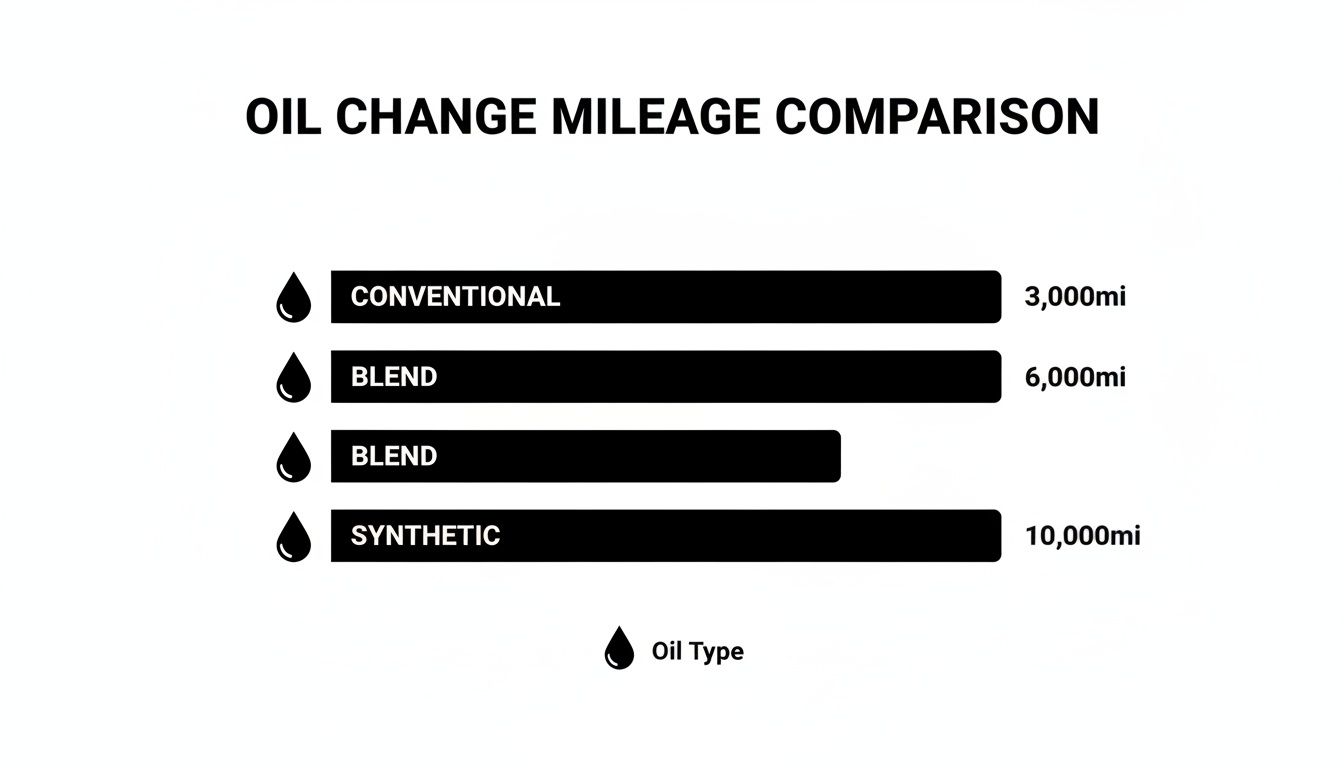
As you can see, full synthetic oil is engineered to last significantly longer, which directly cuts down on how often you need to schedule maintenance.
An Investment in Engine Longevity
Looking beyond the direct service costs, a synthetic oil change is really an investment in preventing much more expensive problems down the road. The superior lubrication and cleaning power of synthetic oil protect your engine's most critical components from premature wear and nasty sludge buildup. This proactive protection helps you avoid the kind of major engine repairs that can run into the thousands.
The question isn't just "How much does the oil change cost today?" but rather, "How much can this oil change save me over the next 50,000 miles?"
Ultimately, choosing a synthetic oil change is about smart financial planning for your vehicle. You pay a little more upfront for a service that protects your engine better, lasts much longer, and helps you steer clear of those costly, unexpected repair bills in the future.
Your Go-To for a Synthetic Oil Change in Fort Worth
Choosing where to get your synthetic oil change is a big deal. It’s not just about swapping out old oil for new; it’s about trusting the technicians who have your engine’s life in their hands. Here at Kwik Kar in Fort Worth, we get that. We’ve built our entire service around being completely transparent and bringing real expertise to the table, so you can drive off feeling confident your car is in prime condition.
When you pull into our shop, you're getting more than just a quick drain and fill. We see an oil change as the cornerstone of smart, proactive car care, not just another task to check off a list. Our process is designed to be thorough, leaving no stone unturned.

What to Expect During Your Service
We aim to make your visit as smooth and valuable as possible. It starts with a quick chat—we want to know about your driving habits and double-check what your car's manufacturer recommends. This little step ensures we’re grabbing the perfect full synthetic oil that’s an exact match for your engine.
From there, our ASE-certified technicians take over. These aren't rookies; they’re seasoned pros who are up-to-date on the latest automotive standards and handle every step with meticulous care.
Here’s a look at how we get it done:
- Draining the Old Oil: First, we get all the old, worn-out oil out of there. This gets rid of the contaminants and grime that have built up in your engine.
- Replacing the Oil Filter: A new, premium oil filter goes in next. We use filters specifically designed to work with long-lasting synthetic oil, which is key to making sure it keeps cleaning effectively for the entire interval.
- Adding Premium Synthetic Oil: We then refill the engine with the exact amount and grade of full synthetic oil your car's manufacturer specifies. No guesswork, just precision.
- Final Checks and Reset: Before we hand you the keys, we do a final check for leaks, make sure the oil level is perfect, and reset your car's oil life monitor. This way, your car's system can accurately track when you’re due for the next service.
At Kwik Kar, a synthetic oil change is more than a simple fluid swap. It's a comprehensive service performed by certified professionals dedicated to upholding the highest standards of automotive care for our Fort Worth community.
More Than Just an Oil Change
We believe in giving you the most bang for your buck. That’s why every oil change at Kwik Kar comes with a complimentary multi-point vehicle inspection. Think of it as a complete health report for your car, helping you spot small issues before they snowball into expensive headaches.
This isn't a quick glance-over; it's a thorough check of your car's most essential systems.
Our Complimentary Inspection Includes Checks On:
- Fluid Levels: We’ll check and top off other vital fluids, like windshield washer, power steering, and coolant.
- Belts and Hoses: Our techs look for any signs of cracking, fraying, or wear that could leave you stranded.
- Tire Pressure and Condition: We check the air in all your tires and look for uneven wear, which could signal an alignment problem.
- Air Filter: A quick peek at the engine air filter tells us if it's clean enough for your engine to breathe easily and run efficiently.
- Lights and Wipers: We do a quick check of your headlights, taillights, and wiper blades to make sure your visibility and safety aren't compromised.
This extra layer of care is part of our commitment to you and your vehicle's long-term health. When you choose Kwik Kar for your oil change with synthetic oil, you’re not just getting an oil change—you’re partnering with a team that looks after your entire car. We'll give you a detailed report of everything we find, so you always know exactly where you stand.
Common Questions About Synthetic Oil
Making the switch to a full synthetic oil change is one of the smartest things you can do for your engine, but we get it—it comes with questions. It’s only natural to want all the facts before changing up your car's maintenance routine.
We’ve gathered the most common questions we hear from drivers right here in our Fort Worth shop to give you clear, straightforward answers. Let’s clear up the confusion so you can feel confident you're making the right call.
Can I Switch to Synthetic Oil in an Older or High-Mileage Car?
Absolutely. In fact, it’s often one of the best things you can do for an aging engine. There's a persistent myth that synthetic oil is somehow "too slippery" for older cars or will cause leaks, but the truth is the exact opposite.
Modern synthetic oils are engineered with advanced seal conditioners that actually help soften and rejuvenate older, hardened rubber seals. This can reduce or even stop minor oil seeps.
Plus, one of the biggest enemies of an older engine is sludge—that thick, tar-like gunk left behind from years of conventional oil. Synthetics contain powerful detergents that gently clean away those existing deposits, improving circulation and helping the engine run smoother. It's a great way to restore a little performance and health to a high-mileage vehicle. For cars with a lot of miles on the clock, you can learn more about specialized formulas in our guide to the best oil for high-mileage engines.
Is It Okay to Mix Synthetic and Conventional Oil?
In a pinch, yes, but think of it as a temporary fix, not a long-term strategy. If you're on a road trip and the oil light comes on, adding a quart of whatever conventional oil is available at the gas station won't cause immediate, catastrophic damage. All motor oils sold today are required to be compatible.
However, mixing oils is never something we'd recommend for regular maintenance. When you pour conventional oil into your synthetic, you're just diluting the high-performance formula you paid good money for.
Mixing oils immediately compromises the benefits of the synthetic. You lose the superior temperature stability, the advanced cleaning power, and most importantly, the extended drain interval.
The new mixture will behave more like a basic synthetic blend, meaning you'll need to change it much, much sooner. To get the full value and protection from your synthetic oil change, always top off with a full synthetic of the same grade.
Does My Driving Style Affect My Oil Change Interval?
It sure does. Your daily driving habits play a huge role in how often you need to change your oil, even with a long-lasting synthetic. While synthetic oil allows for impressive intervals of 7,500 to 15,000 miles for "normal" driving, many of us fall into the "severe service" category without even realizing it. This kind of driving puts a lot more stress on your engine and breaks down the oil faster.
You’re likely a "severe service" driver if your routine includes:
- Frequent Short Trips: Constantly driving less than five miles at a time means the engine never fully warms up, which lets moisture and fuel contaminants build up in the oil.
- Constant Stop-and-Go Traffic: The daily grind of city driving, a reality for many Fort Worth commuters, is much tougher on an engine than smooth highway miles.
- Towing or Hauling: Pulling a trailer or loading up the truck bed puts a significant strain on the engine, generating extra heat and stress.
- Extreme Temperatures: Driving in that intense Texas summer heat or in dusty conditions causes oil to degrade much quicker.
If any of this sounds familiar, you should follow your car manufacturer's severe service schedule. This usually means changing your oil at the lower end of the recommended synthetic interval to keep your engine properly protected.
Do I Need a Special Filter for Synthetic Oil?
Yes, and this is a non-negotiable part of a proper synthetic oil change. Pairing a premium synthetic oil with a standard, cheap filter is like buying a high-performance sports car and putting budget tires on it—you’re completely undermining the investment.
Synthetic oil is built to last for thousands of miles, but it can only protect your engine if the filter can keep up. A standard oil filter is only designed to last for the 3,000 to 5,000 miles of a conventional oil change.
If you try to stretch that same filter to a 10,000-mile synthetic interval, it’s going to clog up long before the oil is done. A clogged filter will either stop cleaning the oil altogether or force a bypass valve to open, which allows dirty, unfiltered oil to circulate right back through your engine. That’s the last thing you want.
To get it right, always use a high-quality filter specifically designed for extended drain intervals. These premium filters use stronger materials and have more capacity to trap contaminants, ensuring they work effectively for the entire life of the synthetic oil. Here at Kwik Kar, we always pair your synthetic oil with a filter that’s built to match its longevity.