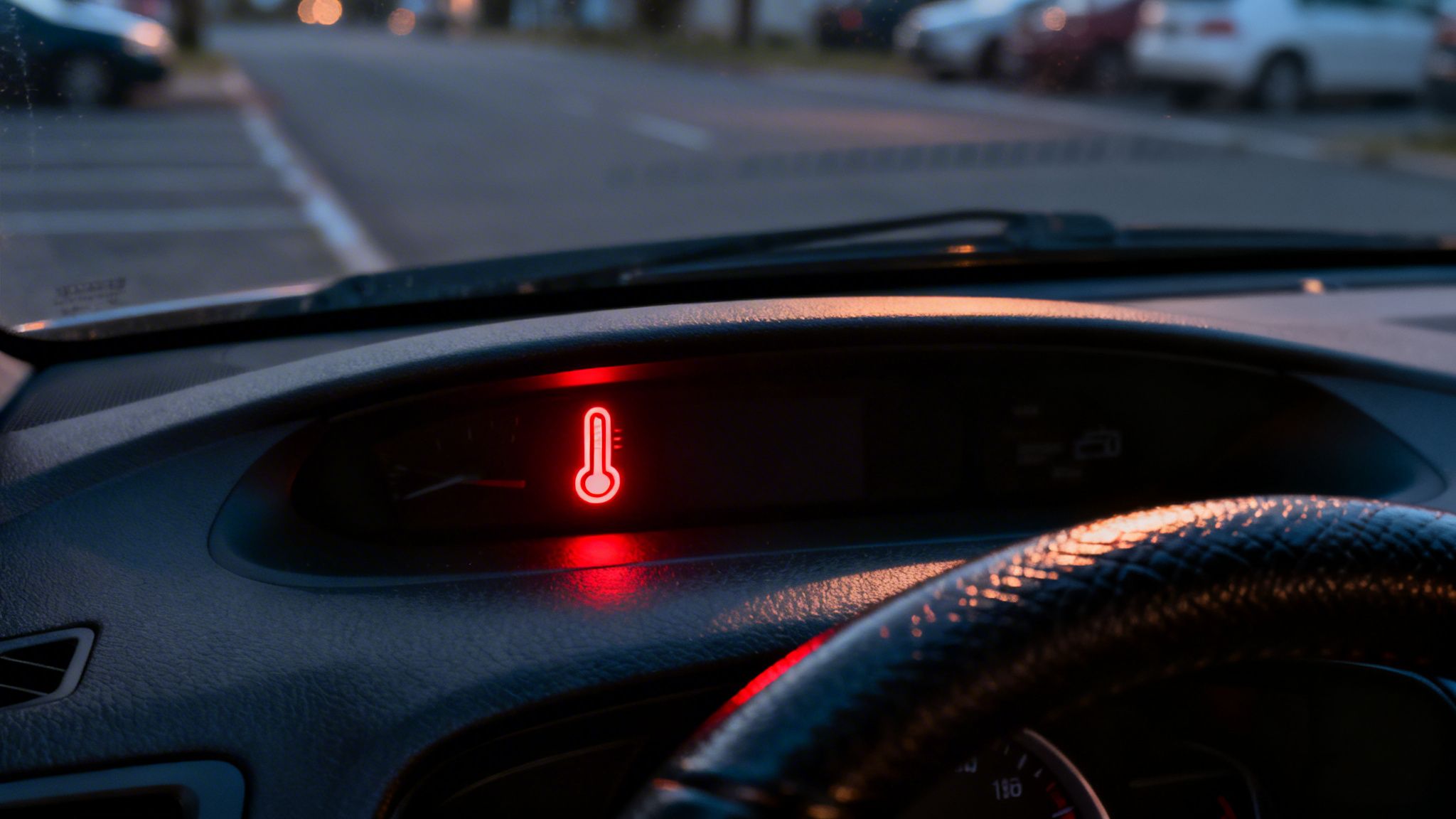
That little engine temperature light glowing on your dashboard is your car’s version of a red alert. Think of it as your car telling you it has a fever, and it's a signal that demands immediate attention to head off serious, and often expensive, engine damage.
What to Do When Your Engine Temperature Light Turns On
When that red or orange thermometer icon pops up, it’s one of the most critical warnings your car can give. While a check engine light can mean a hundred different things, the temperature light almost always points to a serious issue. It’s a clear sign that heat is building up faster than the cooling system can handle it, putting your engine’s most important parts at risk. It's easy to feel a jolt of panic, but knowing the right steps can be the difference between a minor fix and a catastrophic engine failure.
Your Instant Action Plan for Dashboard Temperature Lights
Not all temperature lights mean the same thing. Some cars use a blue light to indicate the engine is still cold, while red is the universal sign for "too hot." Here’s a quick guide to what the light is telling you and what to do next.
| Light Color | What It Means | Immediate Action Required |
|---|---|---|
| Blue | The engine is still cold and not yet at optimal operating temperature. | Drive gently until the light turns off. Avoid hard acceleration or high RPMs. |
| Yellow/Orange | The engine temperature is starting to climb above the normal range. | Reduce speed, turn off the A/C, and monitor the gauge. Prepare to pull over if it turns red or continues to rise. |
| Red (or Flashing) | The engine is overheating. This is a critical warning. | Pull over and turn off the engine as soon as it is safe to do so. Do not continue driving. |
Following the correct steps for a red warning light is absolutely essential to prevent lasting damage to your engine.
Your Immediate 60-Second Action Plan
Your first few moves are the most important. You need to act fast, and you can find a full breakdown of quick safety steps if your car is overheating to keep yourself safe while minimizing the damage. The main goal here is to reduce the engine's workload and get that temperature down as quickly and safely as possible.
This simple, three-step process is your go-to guide for the moment that light appears.
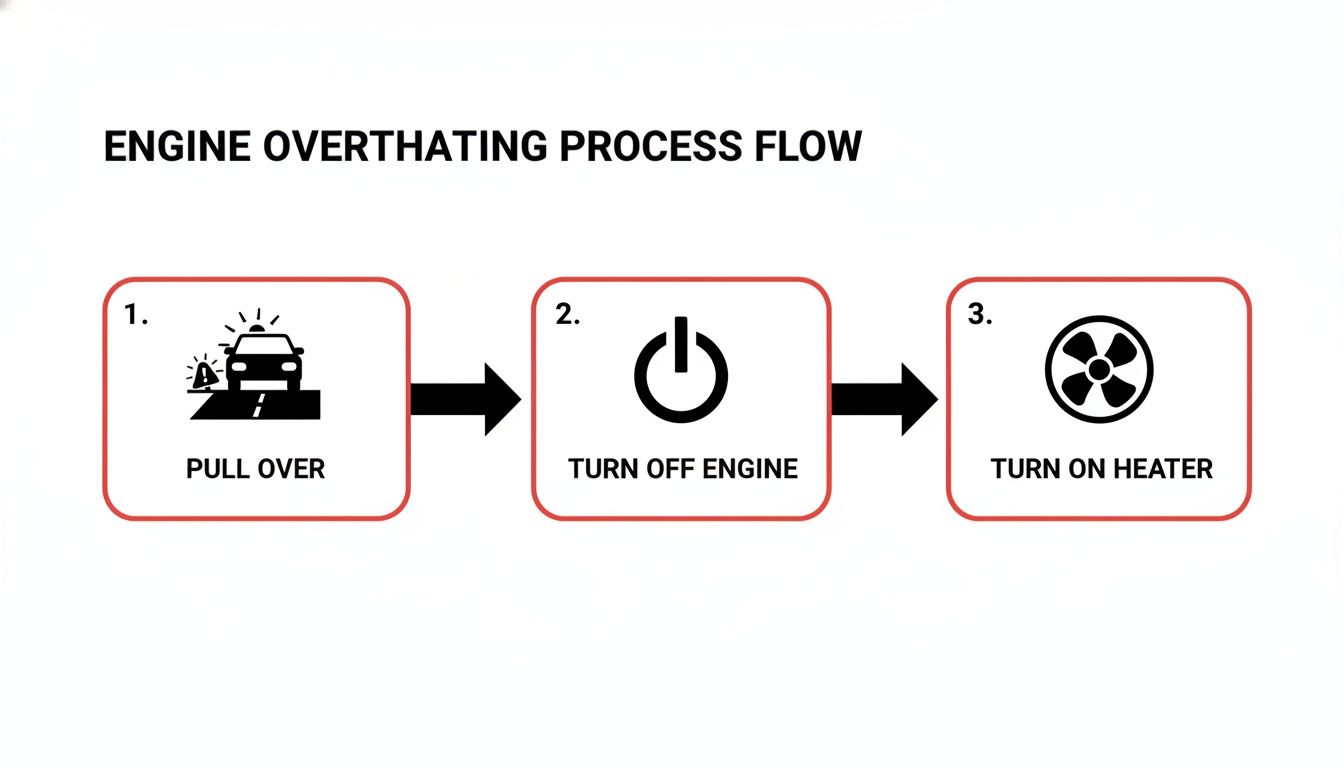
Following these steps—pulling over, shutting it down, and cranking the heater—stops the engine from generating more heat and actively helps pull the remaining heat away from the engine block.
Why You Must Turn on the Heater
I know it sounds completely backward, especially on a sweltering Fort Worth day, but turning your heater and fan on full blast is a crucial move. Your car's heater actually uses heat from the engine's coolant to warm up the cabin. By turning it on, you’re basically using the heater core as a mini-radiator, giving the overwhelmed cooling system a helping hand in getting rid of that dangerous excess heat.
Critical Safety Warning: Never, ever try to open the radiator cap while the engine is hot. The system is under extreme pressure, and unscrewing the cap can unleash a violent spray of boiling coolant. This can cause severe burns. Always let the engine cool down completely, which can take an hour or more.
Once you’re safely pulled over with the engine off, take a look for any obvious signs of trouble. Are you seeing steam billowing from under the hood? Do you spot a puddle of green, pink, or orange fluid forming on the ground? These are classic signs of a coolant leak, one of the most common reasons for overheating. If you think you've got a leak, our guide on how to check for coolant leaks can give you some things to look for while you wait for help.
Decoding the Common Causes of an Overheating Engine
So, you've safely pulled over, and now you’re wondering what’s really going on under the hood. That engine temperature light didn't just pop on for fun—it’s a clear signal that something in your car's cooling system is failing or just can't keep up.
Think of the cooling system like your car’s own internal air conditioner. Its entire job is to circulate a special fluid, called coolant, to pull heat away from the engine. That heat then travels to the radiator to be released. When any part of this chain breaks, heat builds up fast, and that’s when you run into trouble.
H3: Low Coolant: The Engine’s Running on Empty
This is easily the most common reason you’ll see that dreaded temperature light. Coolant is the lifeblood of your cooling system. If your car were an athlete, coolant is its water bottle—without enough, the engine basically gets dehydrated and overheats.
But low coolant rarely just means it evaporated. More often than not, it’s a sign of a leak somewhere.
- Cracked Hoses: Over time, rubber hoses get brittle and can form tiny cracks, letting coolant seep out.
- Bad Radiator Cap: If the cap is worn, it can't maintain pressure, which allows coolant to boil over and escape.
- Radiator Leaks: Road debris or simple corrosion can puncture the radiator itself, causing a leak.
Topping off the coolant is only a temporary fix. You need to find and repair the leak to keep that light from coming back on.
H3: Faulty Thermostat: The Gatekeeper Is Stuck
The thermostat is a small but critical valve that acts as a gatekeeper, controlling when coolant flows to the radiator. It stays closed when the engine is cold to help it warm up efficiently. Once it hits the sweet spot, usually around 200°F, it opens up.
A thermostat that's stuck closed is one of the fastest ways to overheat an engine. It's like having a traffic guard who refuses to let cars through during rush hour. Coolant gets trapped in the hot engine, and temperatures can spike in minutes, even on a short trip.
This is a pretty common failure, especially in vehicles with more than 80,000 miles. A telltale sign is your temperature gauge shooting straight up much faster than usual right after you start the car.
H3: Failing Water Pump: A Weak Heart in the System
If coolant is the blood, then the water pump is the heart of your cooling system. It’s responsible for actively pushing fluid through the engine, radiator, and heater core. When the pump starts to go, it can't move the coolant effectively.
A weak pump is just like a weak heart—it can’t circulate blood properly. The coolant stalls in the hot engine, sits there, and starts to boil. Common signs of a failing water pump include:
- A distinct whining or grinding noise from the front of the engine.
- Coolant dripping from the front-center of your car.
- The temperature gauge suddenly climbing, especially when you accelerate.
A total water pump failure will cause your engine to overheat very quickly, making it a critical part you don’t want to ignore.
H3: Clogged Radiator or Broken Fan: The System Can’t Exhale
Finally, let's talk about the radiator and its fan—think of them as your car’s lungs. The radiator’s job is to transfer heat from the coolant into the air. The fan helps by pulling air through the radiator fins, which is especially important when you’re stopped or moving slowly.
If the radiator gets clogged with rust, sludge, or outside debris like leaves, it's like a blocked artery. Coolant can’t flow through to cool down, and the heat has nowhere to go.
A broken radiator fan causes a similar problem. It’s like being stuck in a hot room with no breeze. The system just can’t get rid of heat when you're not moving fast enough for air to rush through the grille naturally. This is exactly why a bad fan often makes the engine temperature light pop on during that classic stop-and-go Fort Worth traffic.
To help you put it all together, here’s a quick look at how these common issues stack up.
Common Overheating Causes at a Glance
| Component Failure | Common Symptoms | Average Mileage for Failure | When to See a Pro |
|---|---|---|---|
| Low Coolant / Leak | Sweet smell, visible puddles, frequent need to add fluid | Varies; hoses fail 60k-90k+ miles | Immediately. A leak won't fix itself. |
| Faulty Thermostat | Temp gauge spikes quickly; erratic temperature readings | 80,000 – 100,000 miles | As soon as you notice symptoms. |
| Failing Water Pump | Whining/grinding noise, coolant leak at the front | 60,000 – 100,000 miles | Immediately. Complete failure is imminent. |
| Clogged Radiator | Engine overheats at high speeds or under load | 100,000+ miles or due to neglect | When flushing doesn't solve the problem. |
| Broken Radiator Fan | Overheating in traffic or at idle; fine on the highway | Varies; motor can fail anytime | As soon as possible, especially in a hot climate. |
While this table gives you a good idea of what might be happening, remember that every car is different. A professional diagnosis is always the best way to pinpoint the exact cause and get you back on the road safely.
Why Low Coolant Is an Engine’s Worst Enemy
Out of all the reasons an engine temperature light might pop on, one is far and away the most common: low coolant. You can think of coolant as your engine’s personal cooling system. Its whole job is to circulate through the engine, absorb the massive amount of heat created during combustion, and carry it away to the radiator to be released.
Without enough of this vital fluid, your engine is left to fend for itself. Heat builds up fast with nowhere to go, sending the temperature gauge soaring into the red. In fact, low coolant levels are the number one cause of overheating, responsible for roughly 40% of all engine temperature light warnings, according to automotive diagnostic data. When there isn't enough coolant, temperatures can quickly spike above 250°F—the point where expensive metal parts can warp and critical gaskets fail.
How to Check Your Coolant Level
Checking your coolant is one of the easiest and most important things you can do for your car. The golden rule: always make sure your engine is completely cool first. Never, ever try to open the radiator cap on a hot or even warm engine.
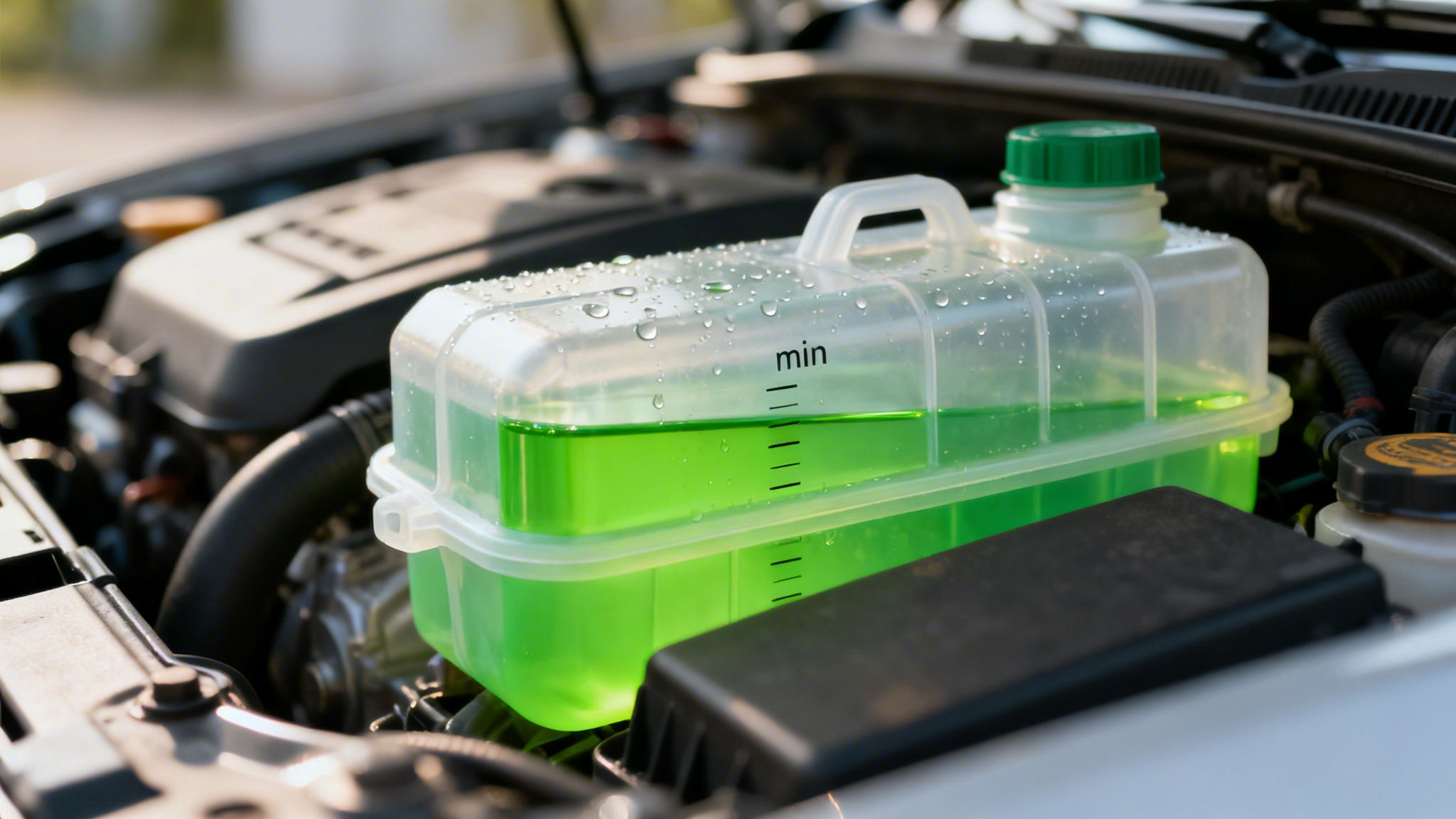
Instead, look for the see-through plastic overflow tank, which is usually mounted near the radiator. You'll see 'MIN' and 'MAX' lines marked on the side. The fluid level should sit comfortably between these two marks.
If it's below the 'MIN' line, you've found a problem. While it’s tempting to just pour more in, that’s usually just a band-aid solution. Your car’s cooling system is a closed loop; if the fluid is low, it had to have leaked out somewhere. Just adding more won’t fix the leak, meaning you’re guaranteed to overheat again. Our guide on what happens when there is no coolant in the car details just how serious this can be.
Key Takeaway: Topping off low coolant without fixing the underlying leak is like refilling a leaky bucket. You're addressing the symptom, not the problem, and setting yourself up for another overheating event down the road.
Why the Right Coolant Matters
When you do need to add coolant, it’s non-negotiable to use the correct type. Different vehicles need specific formulas—often color-coded orange, green, pink, or blue—that are made to work with the specific metals in their engines. Using the wrong kind can cause corrosion, clog up coolant passages, and destroy parts like your water pump.
A few common culprits for coolant leaks include:
- Cracked Rubber Hoses: Over time, heat and age make the rubber brittle and prone to cracking.
- Faulty Radiator Cap: A worn-out seal on the cap can no longer hold pressure, allowing coolant to escape.
- Radiator Leaks: Corrosion or a stray rock can puncture the radiator, creating tiny leaks.
If you think you have a leak, it’s time to bring your vehicle to a professional. A mechanic can perform a quick pressure test to pinpoint the exact source of the leak, ensuring a permanent fix that keeps your engine safe and cool.
How a Faulty Thermostat Can Damage Your Engine
It might be a small and simple part, but your car’s thermostat plays a huge role in keeping the engine healthy. You can think of it as a gatekeeper for your cooling system, deciding precisely when to let hot coolant flow from the engine to the radiator to be cooled down.
When your car is cold, the thermostat stays shut. This keeps coolant circulating within the engine, allowing it to warm up to its optimal temperature—typically between 195°F and 220°F—much faster. Once it hits that sweet spot, the thermostat opens up, and the cooling cycle begins.
This little valve is constantly working to keep your engine in its happy place. But when a thermostat fails, it almost always gets stuck in one of two positions, and both spell trouble.
When the Gatekeeper Gets Stuck
A failing thermostat will usually get stuck either wide open or completely closed. One scenario is an inconvenience; the other is a potential disaster for your engine.
Stuck Open: If the thermostat is stuck open, coolant is always flowing to the radiator. This makes it incredibly difficult for your engine to warm up properly, especially on colder days. You'll likely see the temperature gauge stay low and might notice your fuel economy getting worse as the engine struggles to reach the right temperature.
Stuck Closed: This is the one you really need to worry about. A thermostat stuck in the closed position traps all the hot coolant inside the engine. With no way to get to the radiator, the heat builds up incredibly fast, triggering the engine temperature light and sending the gauge into the red zone within minutes.
According to repair data, a bad thermostat is the culprit behind roughly 25-30% of temperature warning lights. It’s a common failure point after 50,000-80,000 miles, and when it sticks closed, engine temps can soar by 50-100°F in just a few minutes. You can read more about common thermostat failures from the experts at Seacoast Mazda.
From Minor Fix to Major Catastrophe
You simply cannot ignore the danger of a stuck-closed thermostat. Continuing to drive, even for a short distance, can cause catastrophic engine failure. All that trapped heat can warp the cylinder heads or, in the worst-case scenario, crack the entire engine block.
What should have been a relatively cheap fix—usually under $200 for the part and labor—can suddenly turn into a repair bill in the thousands. Fixing a warped cylinder head or a cracked block can easily set you back between $2,000 and $3,500.
This is why it's so critical to keep an eye on your temperature gauge. If you see it climbing way faster than normal right after you start the car, that’s a classic sign of a thermostat that's stuck shut. Pulling over immediately could be the one thing that saves you from a massive repair bill and protects the heart of your vehicle.
Proactive Maintenance to Prevent Overheating
The best way to handle that dreaded engine temperature light is to make sure you never see it in the first place. While it’s smart to know what to do in an emergency, the real secret is shifting from a reactive mindset to a proactive one. A few simple habits can prevent most overheating issues from ever happening and dramatically improve your engine’s reliability.
Think of it like this: your engine's cooling system needs regular checkups, just like you do. You monitor your health to avoid getting sick, and your car needs that same consistent attention to its vital fluids and parts. This approach doesn't just save you from a breakdown on a hot Fort Worth day—it also boosts fuel efficiency and helps your engine last longer.
Building a Simple Cooling System Routine
You don’t have to be a mechanic to get ahead of cooling system problems. A basic maintenance schedule is surprisingly easy to follow and incredibly effective. It’s all about creating good habits that become second nature over time.
Start by making these three tasks a regular part of how you care for your car:
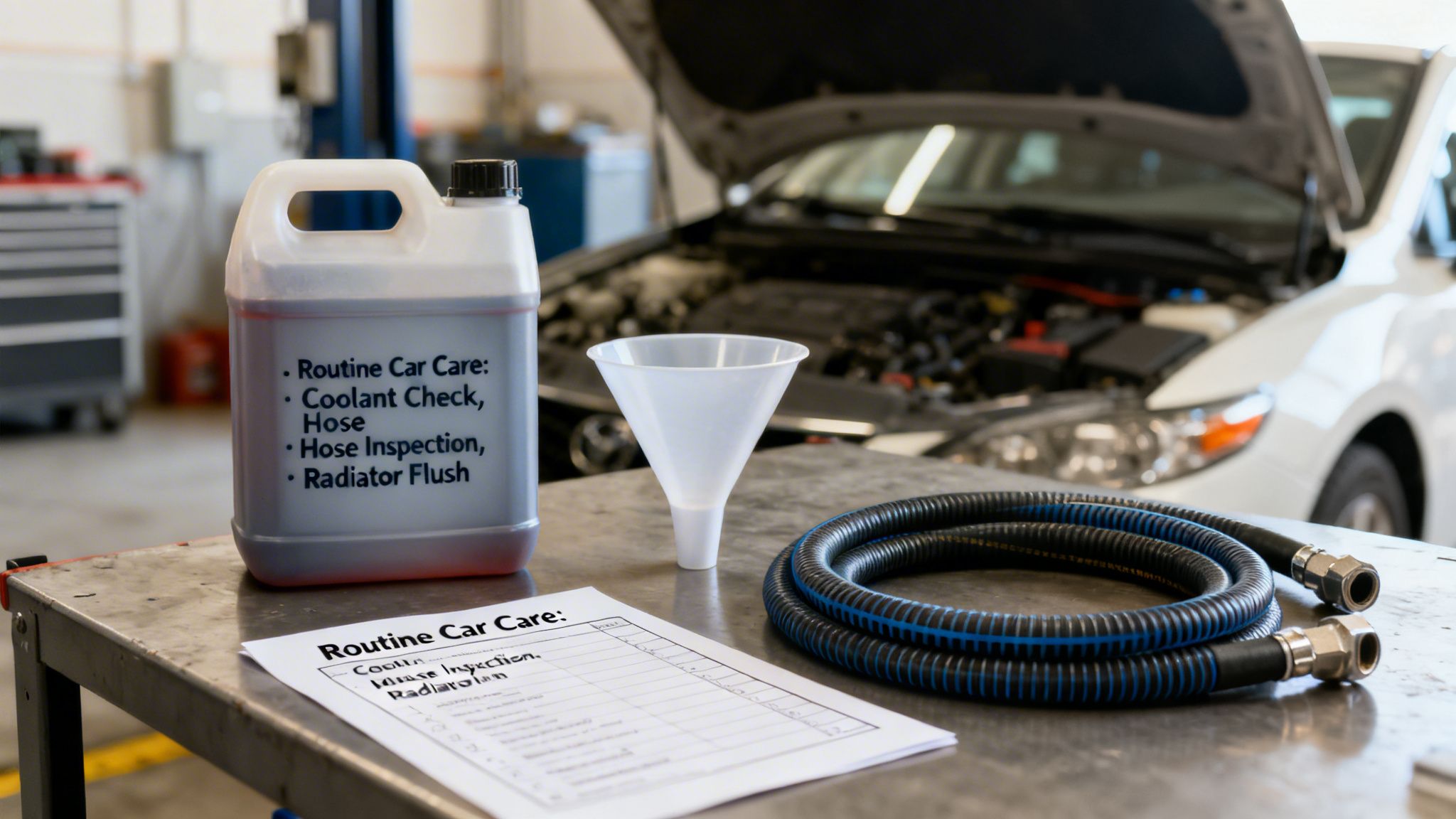
- Check Your Coolant Level Monthly: Once a month, when your engine is completely cool, pop the hood and check the coolant reservoir. It only takes a minute. Just make sure the fluid is between the 'MIN' and 'MAX' lines. This is especially important right before the Texas summer heat really kicks in.
- Visually Inspect Hoses and Belts: Every time you get an oil change, take a quick peek at the big rubber hoses connected to your radiator. You’re looking for any cracks, soft spots, or bulges. At the same time, check the serpentine belt for any signs of fraying or a glazed, shiny appearance.
- Schedule a Coolant Flush: Over time, the coolant in your engine breaks down and loses its ability to protect against heat and corrosion. Plan on a complete coolant flush every 30,000 to 50,000 miles, or whatever your vehicle’s manufacturer recommends. This service drains the old, worn-out fluid and any gunk, refilling it with fresh coolant.
Adopting these habits is the core difference between preventive and reactive maintenance. A little time invested now can prevent unexpected, expensive repairs later, ensuring your car stays dependable for your daily commute. You can learn more by reading our guide on preventive maintenance vs reactive maintenance to keep your vehicle in top shape.
Your Trusted Experts for Cooling System Repair in Fort Worth
When that dreaded engine temperature light comes on, you need a team you can count on to figure out the problem quickly and correctly. Here at Kwik Kar on White Settlement Road, we blend expert-level diagnostics with straightforward, honest service to get you back on the road with confidence. Our shop is staffed by ASE and RepairPal certified technicians who know the ins and outs of modern cooling systems.
We don’t believe in guesswork. Our process always starts with a complete inspection, which includes everything from reading the OBD-II codes to pressure testing the entire system to find even the tiniest, most hidden leaks. We only use high-quality parts, so you can trust that any repair we do is built to last. A lot of the time, serious issues can be avoided with simple maintenance—even things you might not think of, like Burping a Radiator to Prevent Engine Overheating, can make a huge difference.
Don't let a warning light turn into a major repair. Our advanced diagnostics pinpoint the exact cause, saving you time and money while ensuring your vehicle is safe and dependable for the miles ahead.
If you see that warning light pop up on your dash, don't put it off. Give our Fort Worth team a call and schedule an appointment. We'll get to the bottom of it with a professional diagnostic check and a repair you can rely on.
Frequently Asked Questions About Engine Temperature
That little temperature light can cause a lot of anxiety. When it pops on, a million questions probably run through your mind, and you need answers fast. We get it. Here are some quick answers to the questions we hear most often from drivers, so you can make a smart, safe decision.
Can I Drive My Car If the Temperature Light Is On?
This is the big one, and the answer is a hard no—if the light is red. A steady red light is your engine’s way of screaming for help. It’s overheating, and pushing it any further, even for just a few blocks, can cause catastrophic damage. We're talking warped cylinder heads or a cracked engine block, which are some of the most expensive repairs a car can have. The only move is to pull over safely and shut it down.
If you see a yellow or orange light, that’s more of an early warning. Your engine’s temperature is climbing higher than normal. You might have enough time to get to a safe spot off the road or a nearby repair shop, but keep a close eye on that temperature gauge and drive with extreme caution.
Is It Safe to Just Add Water to My Coolant Reservoir?
In a true emergency, adding plain water can be a last-ditch effort to limp to a shop, but it's absolutely not a fix. Water boils much faster than engine coolant and lacks the essential anti-corrosion additives that protect your engine’s delicate metal parts. Plus, if your coolant is low, that means you have a leak somewhere that needs to be properly repaired.
Important Note: Never, ever pour cold water into a hot engine. The drastic temperature shock can crack the metal, leading to a complete engine failure right then and there. Always let the engine cool down completely (for at least an hour) before you even think about opening the radiator cap.
How Much Does It Cost to Fix an Overheating Car?
The cost really depends on what’s causing the problem, which is why a proper diagnosis is so important. A simple fix, like a bad radiator cap, could be less than $50. Replacing a stuck thermostat is a common repair that usually falls in the $150-$300 range.
If the culprit is a failing water pump, you could be looking at anywhere from $400 to over $1,000, depending on your vehicle. For more severe damage, like a blown head gasket, repair bills can easily climb to $2,000 or more.
If you're facing an overheating issue in Fort Worth, don't guess what's wrong. Let the certified professionals at Kwik Kar Oil Change and Auto Care perform an accurate diagnostic to protect your engine. Visit us at https://www.kwikkarwhitesettlement.com to schedule your service.