




A brake warning light on your dashboard means the car has detected either an applied parking brake, low brake fluid, or a fault in the braking system. Check the parking brake first. If the light stays on after you release it, treat it as a brake problem: pull over when it is safe and have the car inspected before you keep driving.
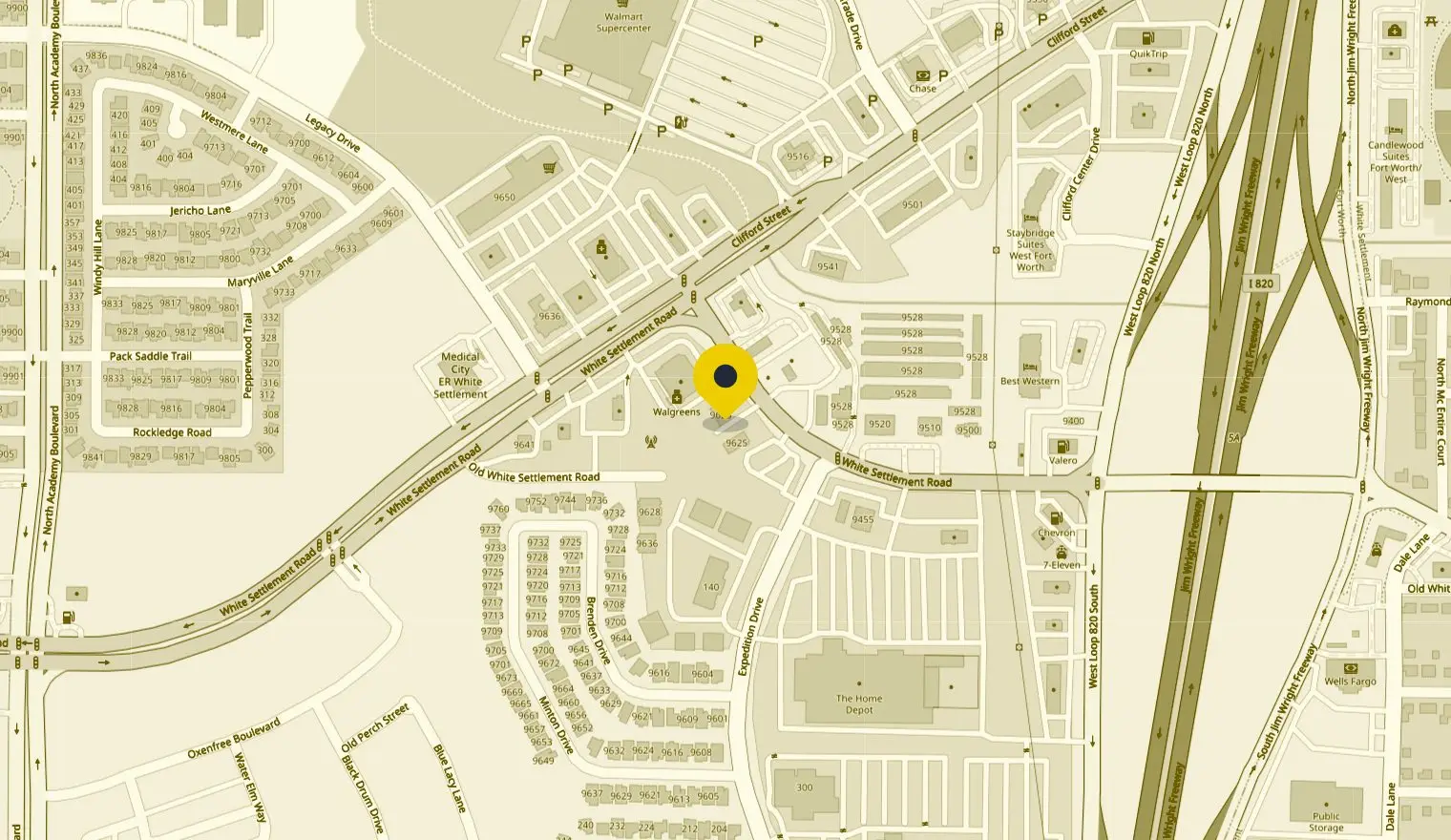
This guide explains the different brake lights, the common causes, how to tell a pad-wear alert from a hydraulic warning, and what we do in the shop when a car comes in with the light on. We are Kwik Kar Oil Change & Auto Care at 9613 White Settlement Rd, Fort Worth, TX 76108, and we see this light on cars from White Settlement, West Fort Worth, Westworth Village, Westover Hills, River Oaks, Lake Worth and Benbrook.
TL;DR
- A red brake light that stays on after the parking brake is fully released points to low brake fluid or a brake system fault. Stop driving the car and get it checked.
- A brake pad wear light, or a message that pads are low, is an early alert. Plan service soon, before worn pads damage the rotors.
- An amber ABS light means the anti-lock function is off, but the regular brakes usually still work. Red and amber together is more serious.
- Never keep adding fluid and driving. Low fluid usually means worn pads or a leak, and either one needs a technician.
- Book a brake inspection at our shop, and we will find the cause and explain the repair options before any work starts.
Table of Contents
- What does the brake warning light mean?
- The brake lights you may see, and how they differ
- Why is my brake warning light on?
- Is it safe to drive with the brake warning light on?
- What if the light comes on, then goes off?
- What does the brake pad warning light mean?
- How we diagnose a brake warning light in Fort Worth
- Fort Worth driving and your brakes
- Texas inspection rules and your brake light
- Get your brakes checked in West Fort Worth
- FAQ
- Sources
What does the brake warning light mean?
The brake warning light is usually a red circle with an exclamation mark, sometimes the word BRAKE. On many cars it does two jobs. Ford’s owner support explains that the Brake System Warning Lamp is dual-function: it comes on when the parking brake is applied with the ignition on, and also when there is a brake fault or low brake fluid, whatever position the parking brake is in. Mopar says the same about its vehicles: if the light stays on with the parking brake off, it indicates a brake system malfunction or low fluid.
So the first question is simple: is the parking brake fully down? Many drivers pull away with it partly engaged, and Car and Driver lists that as a common reason the light glows. If the light goes out when you release the lever or pedal, that was the cause. Driving around with it partly applied can wear the rear brakes, so it is worth fixing the habit.
If the light stays on, the car is telling you something is wrong with the hydraulic system that stops you.
The brake lights you may see, and how they differ
Dashboards use several symbols that look alike. Symbols vary by make and model, so your owner’s manual is the final word on yours.
| Light | Typical look | Usual meaning | What to do |
|---|---|---|---|
| Red brake warning | Circle with “!” or the word BRAKE | Parking brake on, low fluid, or brake fault | Release parking brake. If it stays on, stop driving and get it inspected |
| Amber ABS | The letters ABS | Anti-lock system fault, often a wheel speed sensor or wiring | Drive carefully and book service soon |
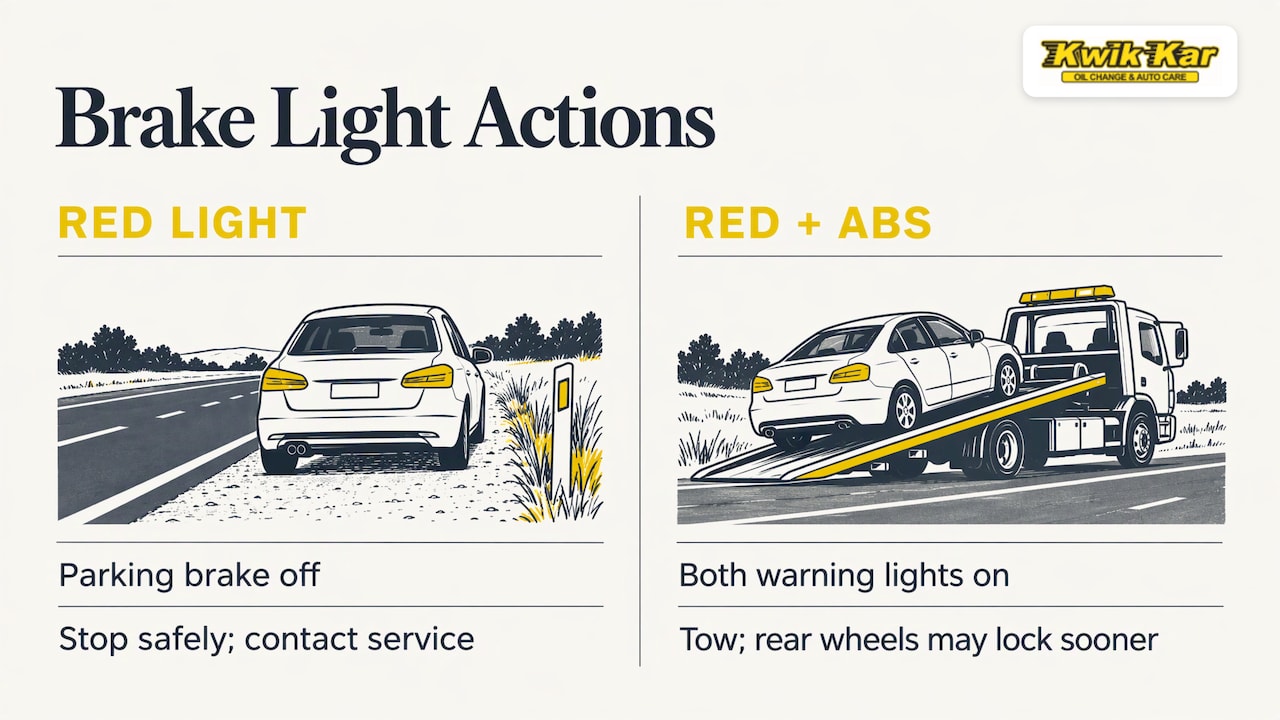
| Red brake plus amber ABS | Both lit | Braking system not working normally | Do not drive. Have the car towed |
| Brake pad wear | Circle with dashed lines, or a dash message | Pads worn to the sensor’s trigger point | Schedule pad inspection promptly |
| Brake lamp (outside the car) | Not a dash light | Bulb or switch issue at the rear | Check the lights with someone behind the car |
That last row clears up a common mix-up. When people search for “brake light on,” some mean the bulbs at the back of the car. This article covers the dashboard warning.
Why is my brake warning light on?
Most cases come down to a short list of causes.
- Parking brake engaged, even slightly.
- Low brake fluid in the master cylinder reservoir, which usually points to worn pads or a leak.
- An ABS problem that also trips the brake light on some vehicles.
- A faulty fluid level sensor, switch or wiring, such as a bad connection or broken wire.
- A pressure problem inside the system, such as a failing master cylinder.
Low brake fluid
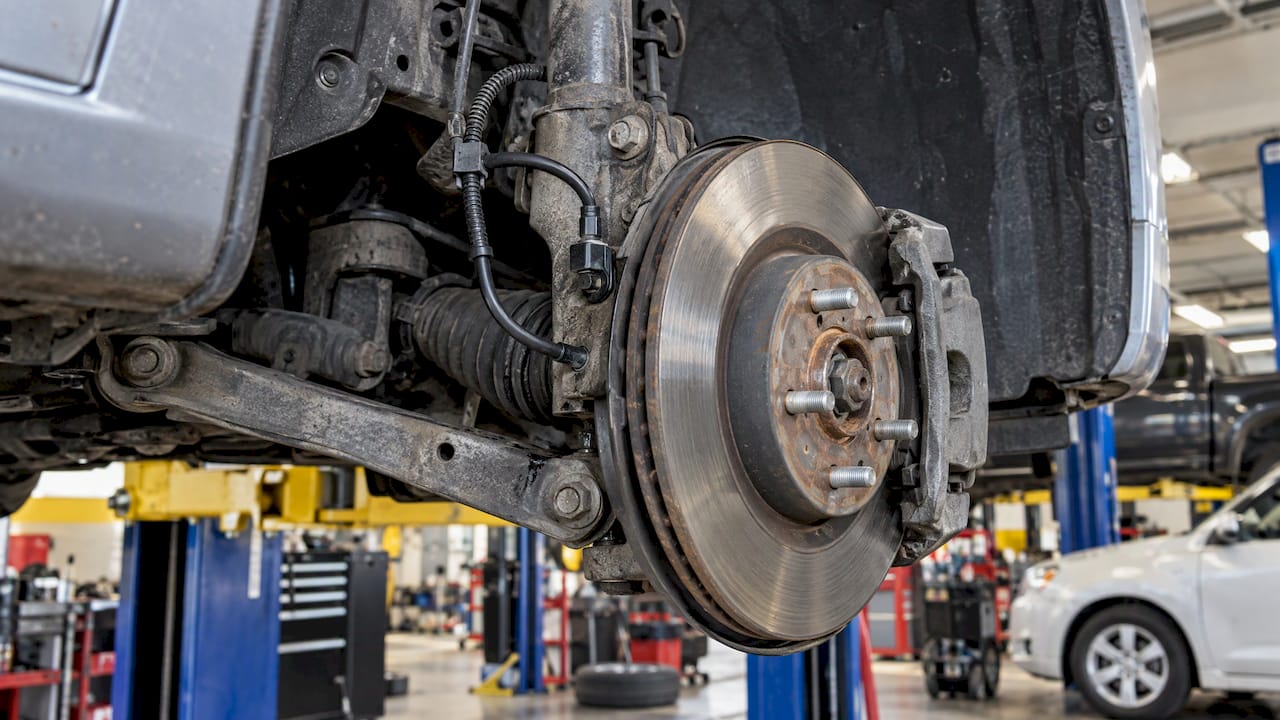
The brake fluid reservoir has MIN and MAX marks. As pads wear, the caliper pistons extend and the level in the reservoir falls a little, so a level near MIN can simply mean worn pads. A level that drops quickly, or a damp spot near a wheel, points to a leak. Either way, topping off does not solve the cause. Hyundai’s manual says that if you find a leak, or the light stays on after checking, do not drive the vehicle.
If you check the level yourself, do it with the engine off on level ground, and never open anything on the brake lines. Leave repairs to a technician.
An ABS fault
When the ABS light is on, Car and Driver says it often means a wheel speed sensor or a wiring and connection problem. Normal braking usually still works, but you lose anti-lock help in a panic stop. We cover the amber light in detail in our guide on what the ABS light means and what to do next.
Sensor, switch or wiring trouble
Sometimes the brakes are fine and the light is not. A fluid level float sensor, a parking brake switch or a corroded connector can each keep the light lit. The catch is that you cannot know that from the driver’s seat. A sensor fault looks identical to a real low-fluid warning, which is why the light should be diagnosed rather than ignored or assumed to be a glitch.
Is it safe to drive with the brake warning light on?
If the parking brake is off and the red light is on, no. Ford warns that driving with the lamp on is dangerous because braking performance may decrease significantly and stopping may take longer. Mazda’s manual is blunter: with the light on, the brakes may not work at all or could fail at any time. Toyota’s Camry manual tells the driver to stop in a safe place and contact a dealer.
With both the red brake light and the ABS light on, Mazda adds that the rear wheels could lock more quickly in an emergency stop, and the car should be towed. AAA’s guidance on red warning lights is similar: a red hydraulic brake light can mean low fluid, an applied parking brake, or a serious brake problem for a certified technician.
If the light comes on while you are driving
Honda’s owner’s manual describes what brake failure feels like: the pedal goes down much farther and needs more force. Its advice is to slow down by downshifting and lifting off the accelerator, then pull off the road as soon as it is safe.
In practice:
- Check that the parking brake is fully released.
- Turn on your hazards and ease off the accelerator.
- Pump firmly if the pedal feels soft, and brake early and gently.
- Pull into a parking lot or onto a safe shoulder. On a Loop 820 or I-30 stretch, that may mean taking the next exit rather than stopping in a live lane.
- Call for a tow rather than driving to the shop if the pedal feels low or the car stops poorly.
What if the light comes on, then goes off?
An intermittent light is still a message. It can come from a fluid level that sits right at the sensor threshold, a float sensor that sticks, or a loose connection that flickers over bumps. Fluid sloshing during hard braking or on a ramp can also trip a marginal level.
Do not treat it as solved because it went out. Note when it appears (after braking, on bumps, on cold starts) and tell the technician. That detail speeds up diagnosis.
What does the brake pad warning light mean?
A pad wear warning is different from the red hydraulic light. It tells you the pads are getting thin, not that the system has failed. Cars do this in two ways:
- Mechanical indicators. Honda says its pads have audible wear indicators, and a metallic screech when you brake means the pads need replacing. Chevrolet describes metal tabs that rub the rotor and produce chirping, squealing or whistling.
- Electronic sensors. Some vehicles wire a sensor into the pad and light a dash symbol or message when the pad reaches a set wear level. Chevrolet’s Brake Pad Life Monitor uses thickness sensors and shows a message when service is needed.
When the warning appears, schedule service soon. Waiting until you hear continuous grinding can mean damaged rotors, which turns a pad job into a bigger repair. Toyota suggests pad material under a quarter inch is the time to consider new pads. We go deeper in our guides to brake pad symptoms and when to replace pads based on thickness.
Keep in mind that some sensors monitor only one pad per axle, so a warning can mean one corner reached the threshold first. An inspection of all four wheels is the safe way to see the full picture.
How we diagnose a brake warning light in Fort Worth
We do not guess and we do not start by replacing parts. A typical visit follows this order:
- Talk through the symptoms. When does the light show up? Does the pedal feel different? Any noises, pulling or vibration?
- Check the parking brake and the fluid. We look at level, condition and any sign of seepage.
- Scan for codes. Professional diagnostic equipment reads ABS and related modules, which helps separate a sensor issue from a hydraulic one.
- Perform a digital vehicle inspection. We look at pads, rotors, calipers, lines, hoses and the master cylinder, and share what we find so you can see the condition of each part.
- Explain your options. You get the findings, what is urgent and what can wait, before work starts.
Our technicians include ASE-certified professionals, and the shop holds RepairPal certification. Qualifying repairs are backed by our 24-month/24,000-mile warranty. Kwik Kar has also earned CARFAX Top-Rated recognition. Ask us which of your repairs qualify when you book.
Typical repairs once the cause is found
- Worn pads or rotors: brake pad and rotor replacement restores stopping power and usually stops the low-fluid trigger caused by wear.
- Leaking caliper, line or hose: repair or replacement of the leaking part, followed by a fluid refill and bleeding.
- Failing master cylinder: replacement, because internal leaks can drop pressure without any visible drip.
- Sensor, switch or wiring faults: repairing the connection or replacing the part so the light reflects reality.
- ABS faults: wheel speed sensor or module-related repairs. See our guide for Fort Worth drivers with an ABS light on.
We cannot quote a price without seeing the car, since it depends on your vehicle and which parts are involved.
Fort Worth driving and your brakes
Brakes work harder in some conditions we see every day around West Fort Worth. Stop-and-go traffic on White Settlement Road and Camp Bowie, highway runs on I-30 and Loop 820, and towing or hauling with a pickup all add load. Texas summer heat is hard on a car overall, and brake fluid ages with time and moisture, which is why checking it on a schedule matters. Our post on the brake fluid change interval explains how manual guidance compares with shop testing.
The best prevention is the maintenance schedule in your owner’s manual plus regular inspections. We do not use one-size-fits-all intervals, because they depend on the vehicle and how it is driven. Rideshare and delivery drivers, who put on a lot of city miles, benefit from checking pads more often. Businesses with several vehicles can look at our fleet maintenance services to keep brakes on a regular inspection cycle.
Texas inspection rules and your brake light
A brake warning light is not a state inspection issue anymore for most drivers, but it still matters for safety. The Texas Department of Public Safety confirms that as of January 1, 2025, non-commercial vehicles no longer need a safety inspection before registration, under House Bill 3297. Emissions tests are separate, and vehicles registered in emissions counties, which include Tarrant County, still need them if eligible. Qualifying commercial vehicles remain subject to safety inspection requirements. Check the DPS page for the current rules for your vehicle.
Our perspective: why we inspect before we replace
When a driver comes in with the brake light on, the most helpful thing we can do is slow the situation down. The light is a symptom, and one light can point to a dozen causes, from a parking brake switch to a leaking caliper.
We believe a brake visit should end with you understanding what is wrong, what is urgent and what can wait. That is why we use digital vehicle inspections and professional diagnostic equipment, and why our technicians explain findings in plain language.
Brakes are not a part to postpone. We would rather see you for an inspection and send you home with a clear answer than have you drive on a warning for another week.
Kwik Kar
Get your brakes checked in West Fort Worth
Kwik Kar is a full-service auto repair and maintenance shop, not just an oil change stop. Brakes, diagnostics, electrical, suspension, alignment, tires and A/C are all handled under one roof at 9613 White Settlement Rd, Fort Worth, TX 76108. Drivers from Westworth Village, Westover Hills, River Oaks, Lake Worth and Benbrook come to our one location. See the full list on our services page or visit our website.
If the light is on and the car feels normal, schedule a brake inspection. If the pedal feels low or the car stops poorly, have it towed instead of driving it in.
FAQ
Can I drive a short distance with the brake warning light on?
If the parking brake is released and the red light remains on, we advise against driving. Manufacturers warn that braking performance may drop sharply or fail. Park safely and arrange a tow or roadside help.
Why is my brake light on but my brakes feel fine?
The cause may still be real. Low fluid from worn pads or a slow leak can show up before you feel any change. A faulty sensor or switch can also light it. Either way, it needs a proper inspection.
What is the difference between the brake light and the ABS light?
The red brake light concerns the main braking system, fluid and parking brake. The amber ABS light concerns the anti-lock function. The car usually still brakes with ABS off, but if both lights show, do not drive.
Should I add brake fluid when the light comes on?
A low level normally means pad wear or a leak, so adding fluid only hides the symptom. If you do check the reservoir, do it with the engine off and have a technician inspect the system before driving.
Does a brake pad wear light mean my brakes are failing?
No. It is an early alert that pad material is getting low. Have the pads inspected soon, because waiting can damage the rotors and make the repair larger.
Sources
- Ford: what the dashboard lights mean
- Mopar: dashboard warning lights and symbols
- Car and Driver: dashboard warning lights explained
- Hyundai 2026 owner’s manual: warning and indicator lights
- Mazda 2018 CX-5 owner’s manual: warning lights and sounds
- Toyota Camry owner’s manual: if a warning light turns on
- AAA Northeast: what to do when your car breaks down
- Honda owner’s manual: the braking system
- Chevrolet vehicle support: the brake system
- Toyota knowledge center: signs you may need new brake pads
- Texas DPS: vehicle safety inspection program changes