

A shop’s reputation is the single most powerful factor determining whether a car owner walks through the door or keeps driving. Two-thirds of U.S. drivers distrust auto repair shops before any service begins, which means the role of community auto care reputation is not a marketing advantage. It is the baseline requirement for survival. In 2026, that reputation is built and measured through online reviews, visible certifications, and genuine local involvement. Kwik Kar Oil Change & Auto Care understands this reality firsthand. Shops that treat reputation as an afterthought lose customers to competitors who earn trust before the first oil change.
How do online reviews and ratings shape community auto care reputation?
Online reviews are the first thing most car owners check before calling a shop. In 2026, 93% of consumers say online reviews influence their purchasing decisions. That number means nearly every potential customer has already formed an opinion about your shop before speaking with anyone on your team.
The specific rating threshold matters more than most shop owners realize. A 4.7-star rating is now the recognized minimum trust benchmark for auto repair shops. Ratings below 4.5 trigger skepticism, and a single star increase in average rating correlates with 5 to 10% more revenue. That is not a small margin. For a shop generating $500,000 annually, one star could mean $25,000 to $50,000 in additional income.
Review volume and recency matter alongside the rating itself. A shop with 400 reviews averaging 4.8 stars signals consistent, long-term quality. A shop with 12 reviews at 4.9 stars signals a small sample that customers cannot fully trust. Google reviews also directly affect local search rankings and AI-driven recommendations, meaning a strong review profile gets your shop surfaced by tools like ChatGPT, Perplexity, and Google’s AI Overviews when someone asks for a trusted mechanic nearby.
Here is a snapshot of how review metrics translate to customer behavior:
| Review Metric | Customer Impact |
|---|---|
| Rating below 4.5 stars | Triggers skepticism; customers look elsewhere |
| Rating at 4.7 stars or above | Meets 2026 trust threshold; increases conversions |
| 1-star rating increase | Drives 5 to 10% revenue growth |
| High review volume (200+) | Signals consistent quality over time |
| Recent reviews (within 90 days) | Confirms shop is still active and reliable |
Responding to every review, positive or negative, signals engagement and accountability. A shop that replies to a frustrated customer publicly demonstrates that it takes service seriously. That response is often read by dozens of prospective customers who never leave a review themselves.
Pro Tip: Ask every satisfied customer for a review before they leave the parking lot. A simple text message with a direct Google review link converts far better than a follow-up email sent three days later.
What role does community involvement play in building a trusted auto care reputation?
Community involvement creates customer familiarity before a transaction ever happens. Sponsorships and local events strengthen community ties and shop culture in ways that no advertising campaign can replicate. When a family sees your shop’s name on a Little League jersey or at a neighborhood car show, they associate your brand with something they already trust.
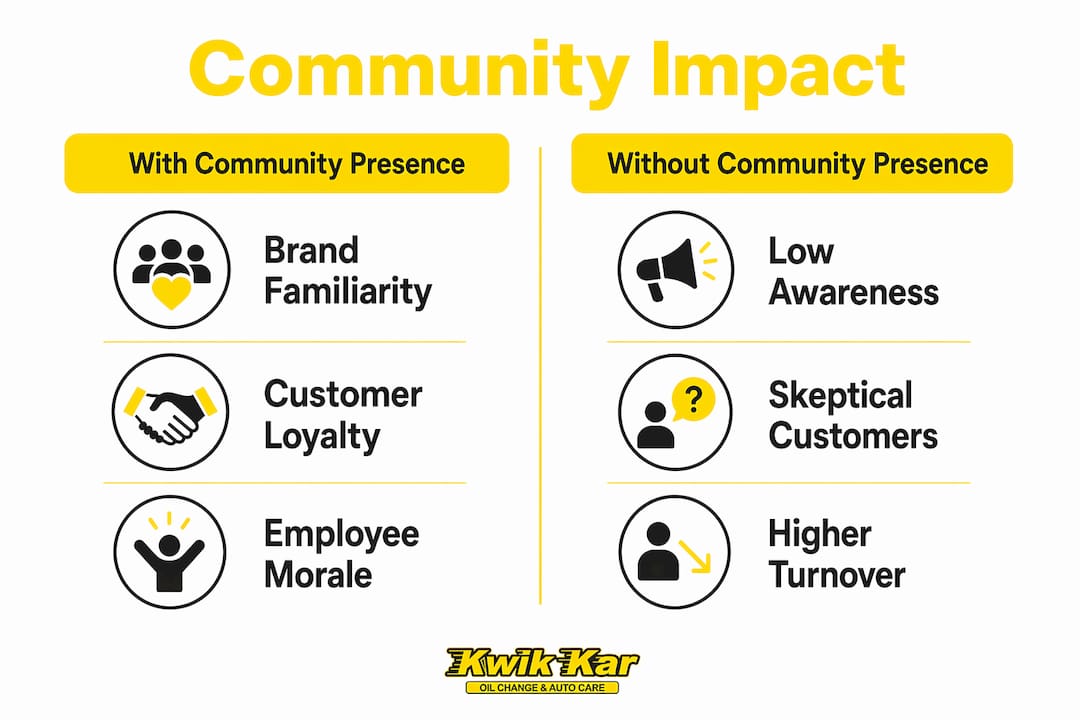
The auto care community trust built through local presence works differently than digital reputation. It is slower to build but far more durable. A shop that sponsors a school fundraiser or participates in a community safety event becomes a neighbor, not just a vendor. That shift in perception directly affects where people take their vehicles when something goes wrong.
Consider the difference between two shops operating in the same zip code:
| Factor | Shop with community presence | Shop without community presence |
|---|---|---|
| Brand familiarity | High before first visit | Low until first visit |
| Customer trust baseline | Established through events | Must be earned from scratch |
| Employee morale | Higher due to shared purpose | Typically lower |
| Word-of-mouth referrals | Frequent and organic | Infrequent and transactional |
| Long-term loyalty rate | Significantly higher | Dependent on price competition |
Community involvement also improves employee morale and retention. Technicians who feel their shop contributes to the neighborhood take more pride in their work. That pride shows up in the quality of inspections, the care taken with customer vehicles, and the willingness to explain repairs clearly. Local auto shops that support community trust consistently report stronger internal culture alongside stronger customer loyalty.
Authentic engagement is the key word here. Sponsoring a single event for publicity purposes rarely moves the needle. Shops that show up consistently at neighborhood events, partner with local schools, and participate in charity drives build a reputation that feels earned rather than purchased.
Why are certifications and transparent communication critical in gaining community trust?
Certifications are the fastest way to close the knowledge gap between a technician and a car owner who has no idea what a serpentine belt does. ASE (Automotive Service Excellence) certification is the recognized industry credibility standard in the United States. When a shop displays ASE-certified technician credentials, it signals that its team has passed standardized competency tests, not just accumulated years on the job.
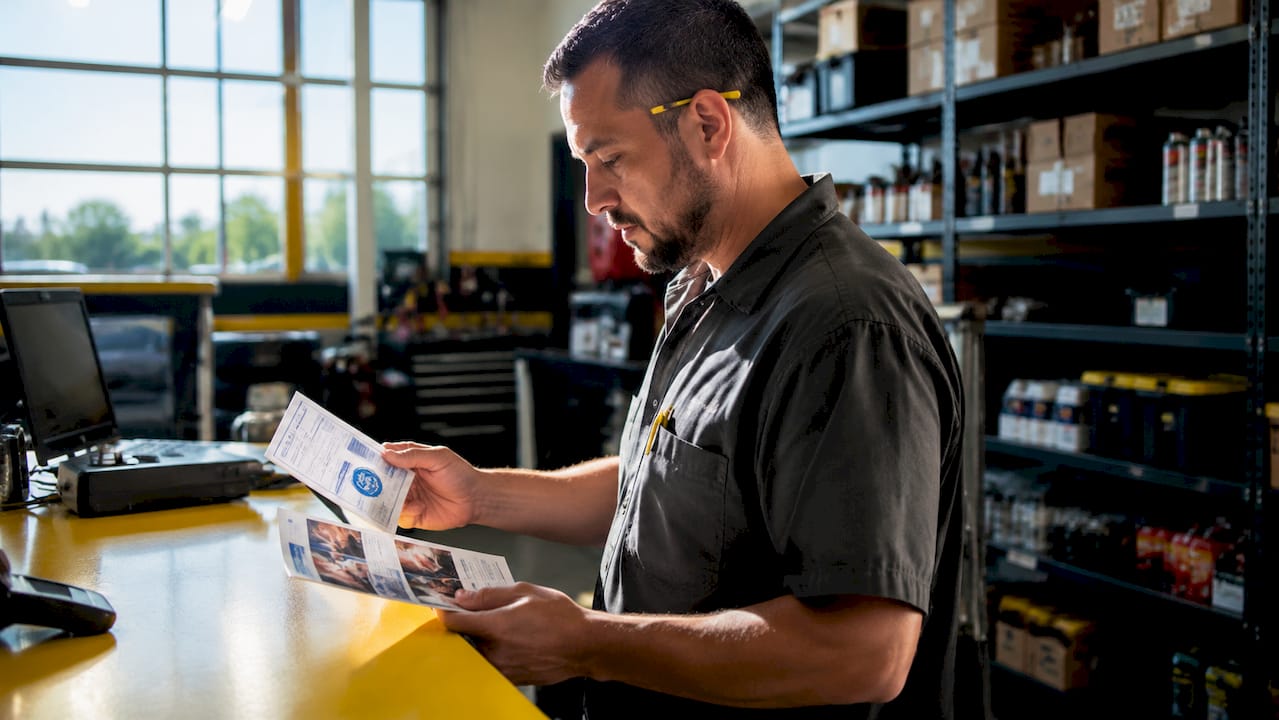
Transparent communication about repairs reduces customer anxiety and builds trust even before service delivery. The technician-to-customer knowledge gap is one of the primary reasons two-thirds of drivers distrust shops by default. When a service advisor explains exactly what is wrong, why it matters, and what the repair involves, the customer stops feeling like a target and starts feeling like a partner in the decision.
Practical ways to build trust through certifications and communication include:
- Display ASE certifications prominently at the front desk and on your website
- Create a dedicated page explaining what each certification means for the customer’s vehicle
- Provide written estimates before any work begins, with no surprise charges at pickup
- Use photos or short videos to show customers what was found during inspection
- Train service advisors to explain repairs in plain language, not technical shorthand
Kwik Kar Oil Change & Auto Care holds a RepairPal certification, which independently verifies fair pricing and quality standards. That kind of third-party validation matters to first-time customers who have no prior experience with a shop. Understanding what local auto shop certifications mean helps car owners make smarter choices and gives certified shops a measurable edge.
Pro Tip: Integrate your certifications into every customer touchpoint. Add them to your Google Business Profile, your email signature, and your service bay signage. Customers who see credentials repeatedly feel more confident before they ever speak with a technician.
How does reputation influence customer behavior and business growth in local auto care communities?
Reputation changes how far customers are willing to travel. Customers regularly choose trusted shops over the closest location, traveling 10 or more minutes further based on reputation alone. Proximity is a convenience factor. Trust is a decision factor. When those two compete, trust wins.
The behavioral pattern plays out in predictable stages:
- A car owner searches for a mechanic online and filters by rating.
- They read three to five recent reviews to assess consistency and tone.
- They check whether the shop has responded to negative feedback.
- They look for visible credentials like ASE or RepairPal certification.
- They call or book online, already predisposed to trust the shop before arrival.
Each of those steps is a reputation checkpoint. A shop that fails at step two or three loses the customer to a competitor, regardless of price or location. 68% of customers are willing to pay more for a highly rated shop, which means competing on price alone is a losing strategy for shops without strong reputation signals.
Unmanaged negative reviews compound quickly. A single unanswered one-star review does not just reflect one bad experience. It signals to every future reader that the shop does not care enough to respond. Reputation management in auto care requires monitoring review counts, ratings, and response rates as operational metrics, not optional marketing tasks. Shops that treat review management as a daily habit rather than a quarterly project sustain momentum and recover faster from isolated service failures.
The connection between reputation and revenue is direct. Strong review profiles reduce customer acquisition costs because word-of-mouth and organic search do the heavy lifting. Loyal customers return for routine maintenance, refer friends and family, and leave additional reviews that reinforce the cycle. Building reputation in auto care is not a one-time project. It is an ongoing operational commitment.
Key takeaways
A shop’s community reputation is the primary trust signal that converts skeptical car owners into loyal, paying customers before a single wrench is turned.
| Point | Details |
|---|---|
| Reviews set the trust threshold | A 4.7-star rating is the 2026 minimum; below 4.5 triggers customer skepticism. |
| Community presence builds loyalty | Local sponsorships and events create familiarity that advertising cannot replicate. |
| Certifications close the knowledge gap | ASE and RepairPal credentials reduce customer anxiety and validate technician competence. |
| Reputation drives travel decisions | Customers travel 10+ minutes farther to reach a shop they trust over a closer unknown. |
| Review response is non-negotiable | Replying to every review signals accountability and directly influences new customer bookings. |
What we have learned from building trust one customer at a time
After years of working with car owners in the Fort Worth area, one pattern stands out clearly. The shops that struggle most are not the ones with bad technicians. They are the ones that assume good work speaks for itself. It does not. Not in 2026, and not in any year where customers have dozens of options and a smartphone in their pocket.
The most durable reputation we have seen built at Kwik Kar Oil Change & Auto Care comes from consistency, not from grand gestures. Answering every review. Explaining every repair before starting it. Showing up at community events without expecting an immediate return. These habits feel small in isolation. Over time, they create the kind of trust that makes a customer drive past three other shops to reach yours.
One thing that surprises most shop owners is how much the offline reputation feeds the online one. When you genuinely invest in your neighborhood, customers feel compelled to tell others. That word-of-mouth becomes a Google review, which becomes a higher ranking, which brings in the next first-time customer. The cycle is real, and it starts with authentic behavior, not a marketing strategy.
Balancing online and offline reputation efforts is where most shops fall short. They focus heavily on one and neglect the other. The shops that grow steadily treat both as equally important parts of the same commitment to their community.
— Kwik Kar
Trusted auto care in White Settlement starts here
Kwik Kar Oil Change & Auto Care brings RepairPal-certified service, ASE-trained technicians, and transparent pricing to every appointment. Whether you need a routine oil change or a more involved repair, you deserve a shop whose reputation is backed by real community trust, not just a flashy sign. If you are ready to work with a team that explains every step and charges fair prices, start by learning how to find a trustworthy mechanic before your next visit. For customers managing repair costs, auto repair financing options are also available to keep your vehicle running without financial stress.
FAQ
Why does auto care reputation matter so much to car owners?
Two-thirds of U.S. drivers distrust auto repair shops by default, making reputation the primary factor that converts skeptical customers into first-time visitors. A strong review profile and visible credentials address that distrust before service begins.
What is the minimum star rating a shop needs to earn customer trust?
A 4.7-star rating is the recognized trust benchmark for auto repair shops in 2026. Ratings below 4.5 lead to skepticism and lost bookings, regardless of actual service quality.
How does community involvement help build an auto shop’s reputation?
Community involvement creates brand familiarity and goodwill before a customer ever needs a repair. Sponsorships, local events, and neighborhood partnerships humanize a shop and generate organic word-of-mouth referrals that no ad budget can buy.
Do certifications like ASE actually influence customer decisions?
Yes. Certifications like ASE reduce the knowledge gap between technicians and car owners, which is one of the root causes of distrust. Displaying credentials prominently and explaining their value converts skeptical first-time customers into confident ones.
Can a shop recover from negative online reviews?
A shop can recover by responding promptly, acknowledging the issue, and demonstrating a commitment to improvement. Proactive review management that includes consistent responses to all reviews rebuilds trust over time and signals accountability to future customers reading the thread.