




When a car starts hesitating between gears, flaring the RPMs, or slamming into drive, most owners have the same reaction. They want one straight answer. Is this fixable, how much is it going to cost, and is the car still worth saving?
That's where rebuilding automatic transmission work gets confusing. People hear “rebuild” and assume it means either a cheap patch or a total gamble. In real shop terms, it means something much more specific. It's a major internal repair done when the transmission has enough value to save, but not so much damage that the smartest move is replacing the whole unit or walking away from the vehicle.
A lot of drivers in Fort Worth are making this decision on older daily drivers, work trucks, and family vehicles that still have useful life left. The right answer usually isn't based on one symptom or one estimate. It comes down to the condition of the vehicle, the quality of the diagnosis, and whether the repair gives you dependable service afterward.
What Is Rebuilding an Automatic Transmission
A transmission rebuild is a full internal restoration of your existing automatic transmission. The unit comes out of the vehicle, gets completely disassembled, cleaned, inspected, rebuilt with new wear components, and then reassembled and tested.
That's very different from replacing one obvious failed part and calling it done. It's also different from removing your original transmission and installing another used, remanufactured, or new unit.
For a worried car owner, the easiest way to think about it is this. A simple repair targets one broken piece. A replacement swaps the whole assembly. A rebuild saves your original transmission case and reusable hard parts, then renews what wears out inside.
What gets addressed in a real rebuild
Inside an automatic transmission, you have friction materials, seals, gaskets, valves, solenoids, pumps, drums, planetary gearsets, and hydraulic passages that all have to work together. If one clutch pack burns up, debris often spreads through the entire unit.
That's why a true rebuild is so thorough. According to Fortune Business Insights on the transmission repair market, the global transmission repair market was valued at USD 148.81 billion in 2026 and is projected to reach USD 224.58 billion by 2034. That matters because it shows transmission repair is an established service category, not an outdated corner of the trade.
Practical rule: If the transmission has internal damage, “just replace the bad part” usually isn't a complete strategy.
Why drivers choose rebuilding automatic transmission service
Rebuilding automatic transmission work makes sense when the vehicle is still worth keeping and the transmission failure is serious enough that partial repair won't be reliable. It's common on vehicles with solid engines, clean bodies, and owners who want to avoid the cost of a full replacement.
A rebuild can also preserve fit and compatibility better than gambling on a used unit from another vehicle. You're repairing the transmission that already belongs in the car.
For many owners, the biggest benefit is control. A rebuild lets the technician inspect what failed, correct known weak points, and make a recommendation based on the condition of the whole vehicle, not just the broken symptom.
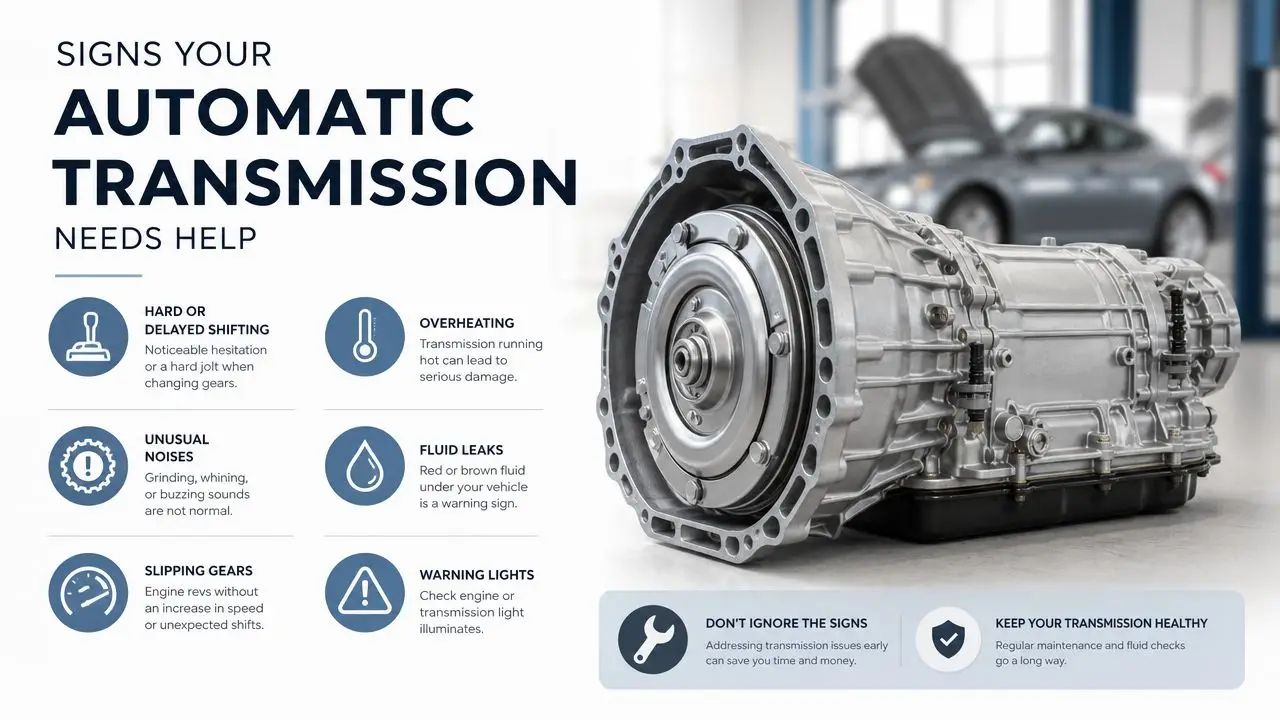
Signs Your Automatic Transmission Needs Help
Most automatic transmissions don't fail without warning. They usually complain first. The problem is that drivers often mistake those warnings for engine trouble, low power, or a simple fluid issue.
This visual covers the common red flags.
What slipping and delayed shifting feel like
A slipping transmission often feels like the engine is working harder than the car is moving. You press the gas, the RPM rises, but the vehicle doesn't accelerate the way it should. It can feel like a manual transmission with a worn clutch, except the vehicle is automatic.
Delayed engagement is another classic warning sign. You shift into drive or reverse, pause, and nothing happens for a moment. Then it engages with a bump. That usually tells a technician that hydraulic pressure, internal seals, or valve body function needs closer inspection.
Noises, smells, and behavior changes
Drivers often notice symptoms in everyday situations like backing out of the driveway, accelerating onto I-30, or creeping through a parking lot.
Watch for problems like these:
- Harsh shifting: The car bangs into gear instead of moving smoothly.
- Shudder or shake: It may feel like driving over rumble strips during a shift or at certain speeds.
- Whining or humming: Some transmissions make a rising noise that changes with vehicle speed or gear load.
- Burning smell: Burnt transmission fluid has a sharp, overheated odor. That's never something to ignore.
- Fluid leaks: Red or dark fluid under the vehicle deserves immediate attention.
A transmission usually gets more expensive to fix after it starts slipping. It rarely gets cheaper by waiting.
Why early diagnosis matters
A transmission can act up because of internal wear, fluid contamination, valve body trouble, electronics, or a combination of those issues. The symptom you feel at the driver's seat doesn't always point neatly to one failed component.
That's why the smart move isn't guessing. It's getting the vehicle inspected before the damage spreads. If a shop catches the problem early, you may still have options besides a full teardown. If the unit keeps running while clutches burn and debris circulates, rebuilding automatic transmission work becomes more likely.
Transmission Rebuild vs Replacement Deciding Your Best Option
This is the decision that matters most. Not “what's cheapest today,” but which option gives you the best total value for this vehicle.
The comparison below helps frame the choices.
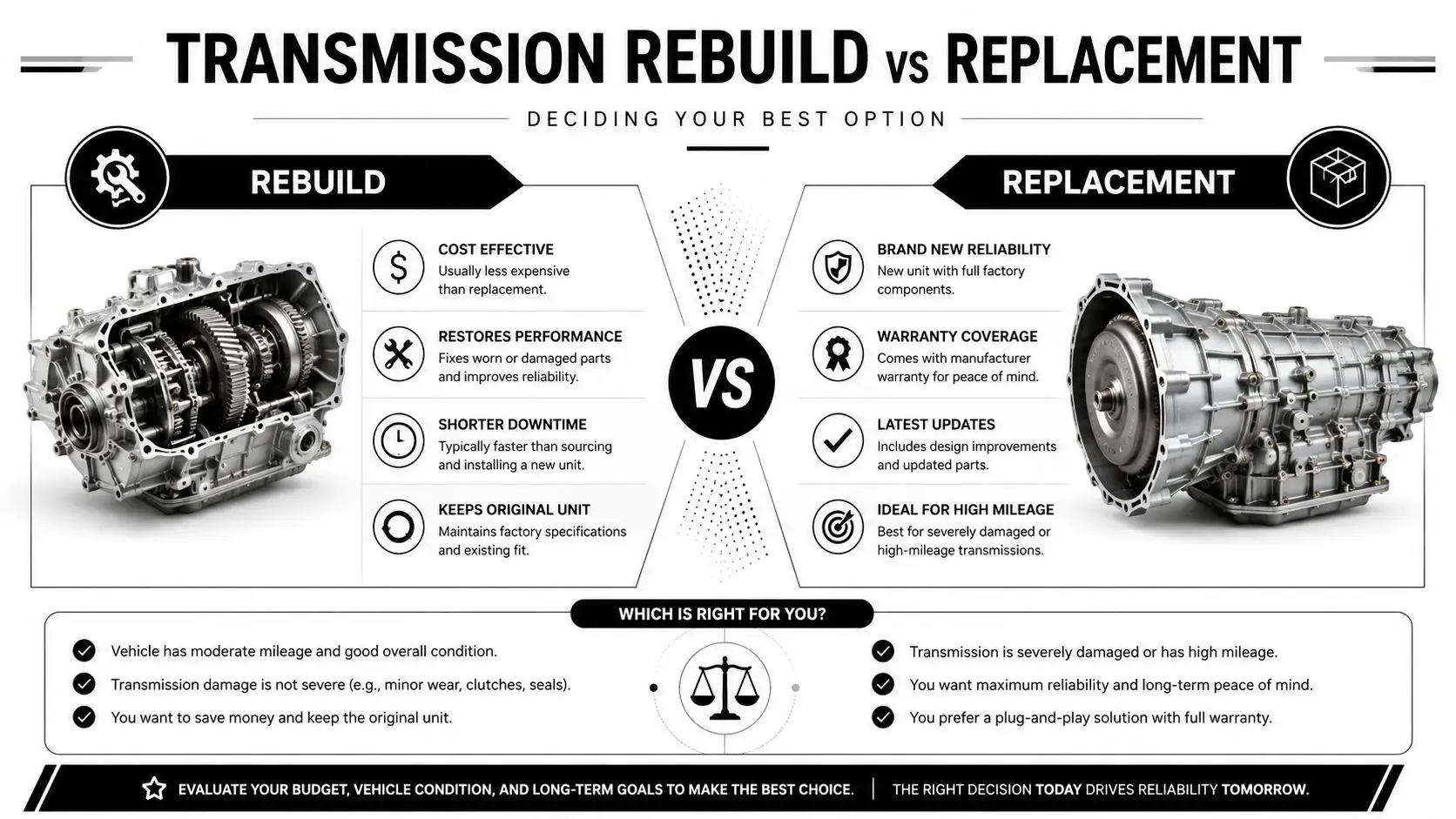
According to Key Transmission and Gears on rebuild versus replacement costs, a transmission rebuild typically costs between $1,500 and $3,500. The same source says a remanufactured unit can cost $1,500 to $3,000 plus labor, while a new OEM transmission can run from $3,000 to over $7,000 for the part alone.
A side by side comparison
| Option | Upfront cost | Reliability outlook | Best fit |
|---|---|---|---|
| Rebuild your original transmission | Usually lower than major replacement options | Strong when the diagnosis is correct and the rebuild is complete | Vehicles with good overall value and owners planning to keep them |
| Used transmission | Often attractive on the first estimate | Depends heavily on unknown history and condition | Lower-value vehicles where budget is the main factor |
| Remanufactured transmission | Higher parts cost, plus labor | Often a solid option when original unit damage is extensive | Owners wanting a replacement path instead of rebuilding |
| New OEM transmission | Highest cost | Can be appropriate on newer or higher-value vehicles | Vehicles where total vehicle value supports the expense |
| Retire the vehicle | No repair spend | Ends the risk of another major transmission bill | Vehicles with low value and multiple major needs |
The decision framework that works in the shop
I tell owners to answer four questions before approving transmission work:
What is the vehicle worth to you now?
Not just resale value. If the car is paid off, otherwise dependable, and fits your life, it may still be worth repairing.How long do you plan to keep it?
A driver keeping the vehicle for years should think differently than someone trying to get through a few more months.What else does the vehicle need?
If the transmission is bad but the engine, suspension, cooling system, and body are all solid, a rebuild may make sense. If the vehicle has several expensive problems stacked together, retiring it may be the smarter financial move.What kind of risk can you tolerate?
A used transmission can lower upfront cost, but it may come with unknown wear. If you want more confidence in the repair path, compare that against a rebuild or a remanufactured unit.
For owners reviewing all their replacement choices, this guide on replacing a transmission can help frame the conversation.
If the car is structurally sound and you trust the rest of it, rebuilding automatic transmission components often makes more sense than buying another unknown used unit.
When retirement is the right answer
Shops don't always say this clearly enough. Sometimes the right repair is no repair.
If the vehicle's value is low, the body is rough, the engine has issues, and the transmission estimate is only one part of a long list, stepping away can be the wise move. A good shop should be willing to tell you that.
The Automatic Transmission Rebuild Process Explained
A proper rebuild is detailed work. It isn't just opening the pan, changing a few parts, and sealing it back up. A real rebuild starts with removal and ends only after the unit is reinstalled, adjusted, and tested.
This process visual shows the work flow clearly.
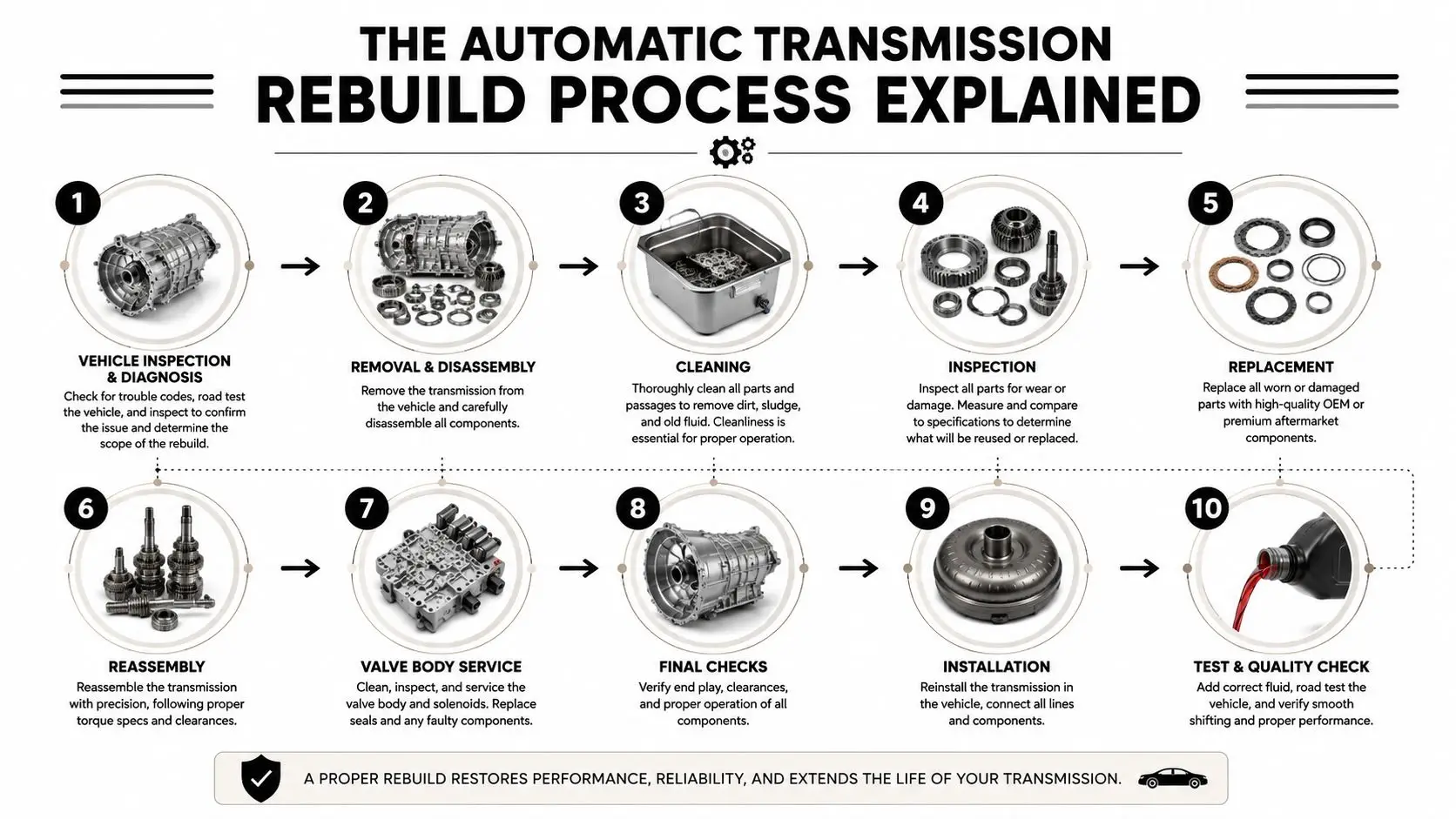
According to Mister Transmission's explanation of a true rebuild, a true rebuild involves complete disassembly where every hard part and wear item is evaluated. The same source notes that technicians routinely replace all friction surfaces, seals, and gaskets, while also checking for manufacturer technical service bulletins to correct known design weaknesses.
What happens on the bench
Once the transmission is out of the vehicle, the technician tears it down completely. Clutch packs, bands, bushings, seals, valve body components, drums, pumps, and geartrain parts all get inspected.
The key word is completely. If friction material has failed, debris can spread through the valve body, cooler circuit, torque converter, and pump passages. Leaving that contamination behind is one of the fastest ways to repeat the same failure.
A solid rebuild usually includes these phases:
- Removal and teardown: The unit comes out of the vehicle and gets disassembled to the last major internal assemblies.
- Cleaning: The case, valve body, passages, and reusable parts are cleaned thoroughly.
- Hard-part inspection: Technicians check drums, shafts, gears, pump surfaces, and other rigid components for wear or damage.
- Wear-part replacement: Friction materials, seals, gaskets, and other common wear items are replaced.
- Update checks: Shops review known service updates or design changes for that transmission model.
Why detail matters so much
Automatic transmissions work on hydraulic pressure, friction, and timing. A sticky valve, leaking seal, or worn clutch clearance can turn a healthy-looking transmission into one that slips, bangs, or burns up again.
Think of the valve body like the transmission's hydraulic control center. If debris is left in those passages, the transmission may install fine, move the vehicle, and still shift badly because pressure isn't being directed correctly.
Cleanliness is not cosmetic in a transmission rebuild. It's part of the repair.
Reassembly and final testing
Reassembly takes patience and precision. Clutch clearances, end play, sealing rings, pump condition, and valve body operation all have to be right. Then the unit goes back into the vehicle, gets filled correctly, and is road-tested with scan data and shift behavior in mind.
That's why rebuilding automatic transmission systems is considered premium technical work. The customer sees one estimate line. The technician sees dozens of opportunities for a shortcut to create a comeback. Good rebuilds avoid those shortcuts.
Can You Rebuild a Transmission Yourself
Technically, yes. Realistically, most people shouldn't.
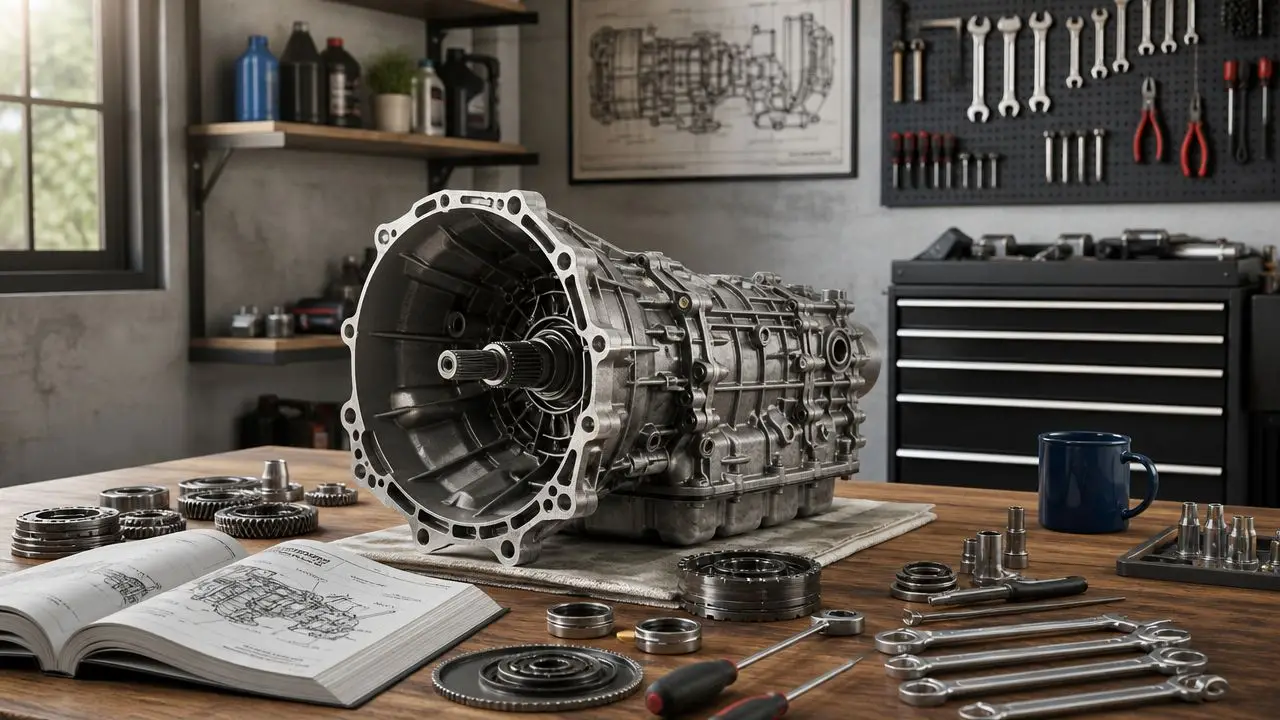
Automatic transmissions are one of the most unforgiving assemblies on the vehicle. You can do engine work in a home garage and still get humbled by a transmission because the tolerances, cleanliness requirements, hydraulic logic, and assembly order are much less forgiving than they look from the outside.
What makes DIY rebuilding automatic transmission work so hard
The challenge isn't just turning wrenches. It's doing every small thing exactly right.
A home mechanic has to manage:
- Special tools: Transmission jacks, measuring tools, spring compressors, seal installers, and model-specific service tools.
- A clean work area: One speck of debris in the wrong hydraulic passage can create a shift complaint later.
- Correct identification: Many internal parts look similar but are not interchangeable.
- Service information: Assembly order, torque specs, clutch clearance setup, and check-ball placement all matter.
- Electronic follow-up: Modern units may need adaptation resets or programming after mechanical work.
The mistake that costs the most
The expensive part of a failed DIY rebuild isn't usually the first parts order. It's the second removal.
If the transmission has to come back out because of a sealing issue, valve body problem, or wrong internal setup, the labor multiplies. The owner often ends up paying a shop to diagnose and correct a unit that has already been apart once.
For many drivers, basic maintenance is the smarter do-it-yourself lane. If you're staying ahead on service, this overview of a transmission fluid and filter change is a much more practical place to start than a full teardown.
A transmission rebuild is one of the jobs where “I can probably do it” and “I can make it reliable” are two different questions.
When a DIYer might still attempt it
A dedicated builder with factory information, specialty tools, a clean bench, and time to learn one transmission family can succeed. But that's not the average weekend repair.
For most owners, professional rebuilding automatic transmission service buys two things that matter more than pride. A better chance of first-time success, and someone standing behind the result.
Choosing a Professional Rebuild Shop in Fort Worth
Not every shop that replaces brakes or handles oil changes should be your first choice for a transmission rebuild. This job demands diagnostics, teardown discipline, parts knowledge, and electronic capability.
The hardest part for owners is that many transmission symptoms overlap. A vehicle can feel like it needs a rebuild and have a control issue. It can also have severe internal damage hiding behind what seems like an electrical complaint. The shop has to sort that out before selling a repair.
What to ask before approving work
Start with the basics, but ask more than “Do you work on transmissions?”
Use a checklist like this:
- Ask about diagnostics first: The shop should explain how it confirms whether the problem is internal, hydraulic, electronic, or a mix.
- Ask who performs the rebuild: You want to know whether the work is done in-house, outsourced, or installed as a replacement unit.
- Ask about update capability: Modern transmissions often need scan-tool procedures after mechanical repairs.
- Ask what gets replaced: A quality answer should include friction materials, seals, gaskets, and related wear components, not vague language.
- Ask about contamination control: Cooler service and system cleaning matter after an internal failure.
Electronics matter more than many owners realize
According to Admiral Tire on transmission rebuild steps and programming, on modern vehicles, a mechanically correct rebuild can still perform poorly if the transmission control module is not properly reprogrammed or its learned adaptations are not reset.
That's a major dividing line between shops. A transmission can be assembled correctly and still shift poorly if the computer side isn't handled properly. Consequently, current scan tools and programming access are no longer optional.
If you're comparing local options, this list of transmission shops in Fort Worth TX can help you start your search.
What a strong shop answer sounds like
A good shop usually sounds calm, specific, and a little cautious. It won't promise a miracle before inspection. It will explain the likely path, the possible risks, and what has to be verified before a final recommendation.
Kwik Kar Oil Change and Auto Care on White Settlement Road is one local option that states it provides transmission service along with broader diagnostics and repair capability, which is useful when a transmission complaint overlaps with other vehicle systems.
The right shop doesn't rush to “you need a transmission.” It proves why.
What doesn't inspire confidence
Be careful with shops that skip diagnosis, refuse to discuss electronics, or speak in generalities like “we'll just put some parts in it and see.” A transmission rebuild is too expensive for guesswork.
You want a shop that can explain what failed, what will be replaced, what support steps are required after installation, and how it will verify operation before returning the vehicle.
Your Kwik Kar Transmission Service Experience
When you bring a vehicle in for transmission concerns, the process should start with clear diagnosis and honest conversation. You need to know whether the issue points toward service, repair, rebuilding automatic transmission work, replacement, or a broader decision about the vehicle's future.
According to Hershey Brothers on automatic transmission repair, a professional transmission rebuild typically takes 3 to 5 days, and quality shops often support that work with 12-month/12,000-mile coverage. That kind of timeline and warranty reflects how much labor, inspection, and care goes into a proper repair.
At Kwik Kar on White Settlement Road, that should translate into a straightforward experience. Inspect the vehicle carefully. Explain the findings in plain English. Present the realistic options. Use quality parts and proper procedures. Then stand behind the work performed.
That's what most owners want when transmission trouble shows up. Not pressure. Not guesswork. Just a reliable answer they can use to make a smart decision.
If your vehicle is slipping, shifting hard, or struggling to engage, Kwik Kar Oil Change and Auto Care can inspect the problem and help you weigh the practical options. Whether the right move is service, repair, replacement, or rebuilding automatic transmission components, the next step is getting a clear diagnosis before the damage gets worse.