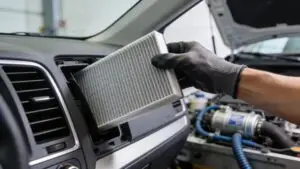





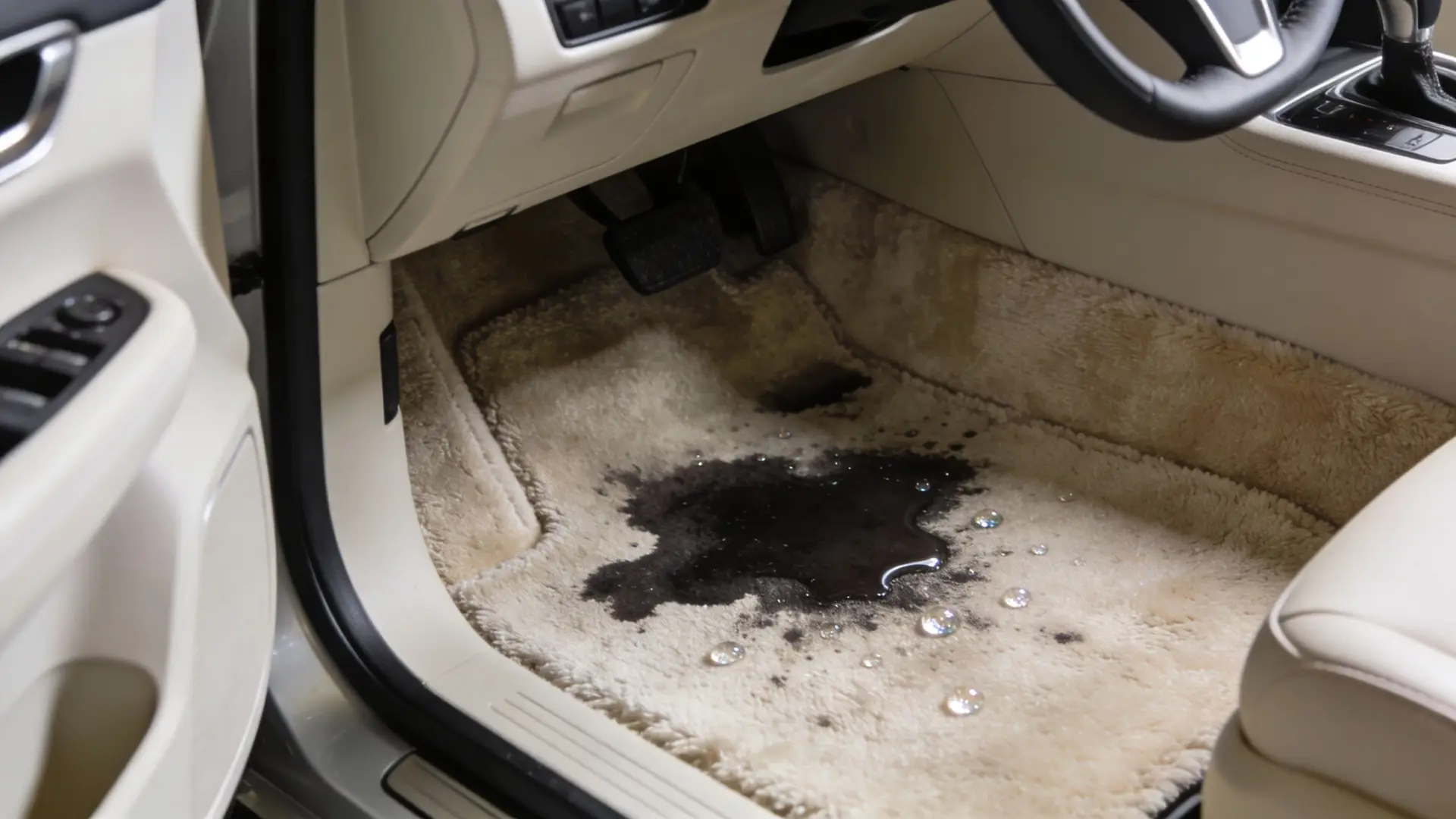
You walk out to your car after a hot Fort Worth afternoon, open the passenger door, and find the floor mat damp. Maybe it’s a small puddle. Maybe it’s just a stubborn mildew smell that shows up every time you turn the AC on. A lot of drivers assume they have a windshield leak, a heater core problem, or spilled water somewhere under the seat.
Sometimes the culprit is much simpler. A clogged ac drain can trap condensation inside the HVAC case and send that water into the cabin instead of under the car where it belongs. This shows up in vehicles more often than is commonly perceived, especially in humid weather and in older cars that have collected years of dust, leaf debris, and grime.
Why Is My Car Floor Wet? Understanding Your AC Drain
If your passenger-side carpet is wet and you’ve been running the air conditioner, start with the condensate drain. Your car’s AC system removes humidity from cabin air as it cools. That moisture collects on the evaporator core, then drains out through a small tube in the HVAC case.
When that tube plugs up, the water has nowhere to go. It backs up inside the case and eventually spills onto the carpet, insulation, or trim panels.
What the drain actually does
Think of the evaporator like a cold drink on a summer day. Moisture forms because warm humid air hits a cold surface. In your car, that water is normal. The drain tube is what keeps normal condensation from becoming an interior leak.
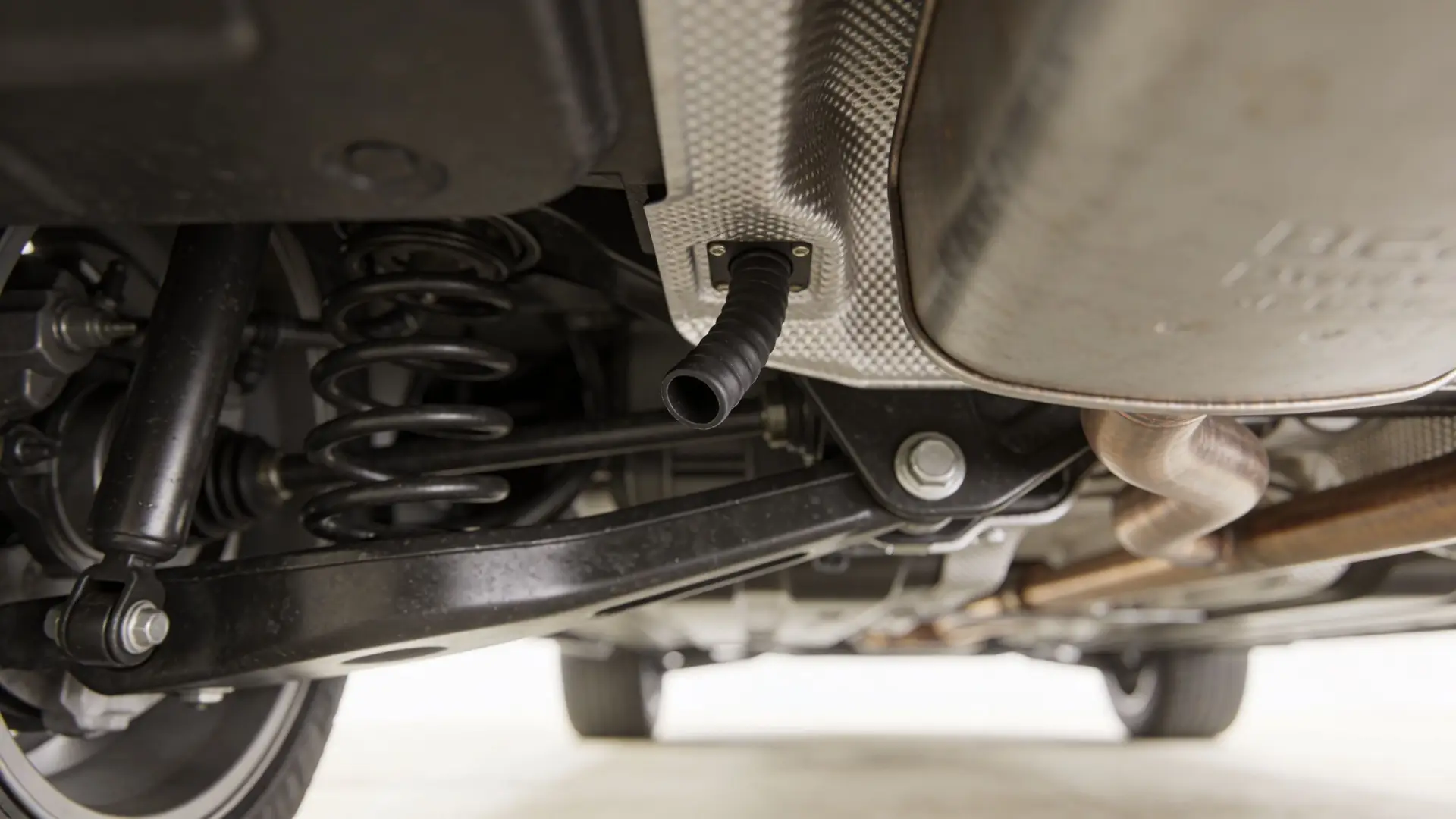
On most vehicles, the tube exits through the firewall on the passenger side. It’s small, easy to ignore, and usually hidden behind other parts. That’s one reason drivers miss it.
Why vehicle owners miss this problem
Most online advice covers home HVAC clogs, but vehicle AC drain maintenance is an often-overlooked issue. Anecdotal evidence from repair forums suggests this is a common complaint among owners of vehicles over 8–10 years old, particularly in humid regions, leading to preventable interior water damage, as noted in this vehicle-focused overview of clogged AC drain issues.
That gap in advice matters. A home system usually has a more obvious service point. A car hides the drain deep in the engine bay or underneath the firewall, so drivers often don’t realize the AC is causing the wet floor.
Practical rule: If the passenger floor gets wet only after AC use, check the drain before assuming you have a major leak.
If you want a quick refresher on where condensation fits into the cooling cycle, this overview of how automotive AC works helps connect the dots. And if you’re sorting through other moisture-related cooling problems, this explanation of why AC coils freeze and fixes gives useful context on what happens when airflow and drainage problems overlap.
Spotting the Telltale Signs of a Blockage
A clogged drain usually leaves a pattern, not just one symptom. The trick is reading those clues together instead of chasing them one at a time.
Three signs that point to the drain
- Wet carpet on the passenger side. This is the classic complaint. The water may show up near the front footwell, under the mat, or along the lower edge of the center console.
- A musty smell from the vents. A noticeable musty smell when the AC runs is a key signal of a clogged drain line, indicating stagnant water is accumulating inside the system and providing a breeding ground for mold and mildew, according to Lennox’s explanation of clogged drain symptoms.
- No drip under the vehicle after the AC has been running. On a hot day, many cars will leave a small puddle of condensation under the passenger side area. If your AC is working and there’s no water under the car, that can be a clue that the water is staying trapped.
What these symptoms mean
A musty smell points to standing moisture inside the HVAC box. Wet carpet means that trapped water has risen high enough to escape somewhere it shouldn’t. If airflow also feels weaker than usual, the evaporator area may be damp and dirty enough to affect how air moves through the case.
If water is dripping behind the glove box instead of under the car, the drain path is usually blocked or restricted.
One symptom by itself can fool you. Wet carpet could be a door seal. A smell could be an old cabin filter. But when the odor, moisture, and missing under-car drip show up together, a clogged ac drain moves to the top of the list.
How to Safely Locate Your Vehicle’s AC Drain Tube
Finding the drain tube is often the hardest part of the job. Clearing it is usually easier than spotting it.
Where to look first
On many cars, the drain tube comes through the passenger-side firewall. It often looks like a short rubber elbow, a stubby nipple, or a small open-ended hose pointing downward. On trucks and SUVs, you may need to look a little higher from underneath. On compact cars, it may be tucked behind a heat shield or near the exhaust tunnel.
Start with these checks:
- Park on a level surface and set the parking brake.
- Let the engine cool down if you’ve been driving. You don’t want your forearm against a hot exhaust or catalytic shield.
- Look from above first with a flashlight. Check the passenger side of the firewall in the engine bay.
- Then look from below if needed. Use ramps or jack stands if the car must be lifted. Never rely on a jack alone.
What you’re trying to identify
The drain isn’t a metal line and it isn’t part of the refrigerant circuit. It’s usually a simple rubber outlet from the HVAC case. You’re looking for something that lets water drip out, not a pressurized component.
A good way to confirm you’ve found it is this: after running the AC, the tube area may look damp even if the outlet is partially blocked.
For a visual walkthrough, this clip helps show what the search looks like on a real vehicle:
Common mistakes when locating it
| Mistake | Why it causes trouble |
|---|---|
| Confusing it with a vacuum hose | You can disconnect the wrong system and create a new problem |
| Probing blindly near the firewall | You can damage soft rubber parts or wiring insulation |
| Crawling under an unsupported vehicle | This is the biggest safety risk in the whole job |
If access is tight, don’t force it. Some models hide the outlet so well that a mirror, trim removal, or lift access makes the job much safer.
Your Step-by-Step Guide to Clearing the Clog
Once you’ve found the drain, the goal is simple. Open the path without damaging the tube or forcing debris deeper into the HVAC box.
Start with the least aggressive method
Before you grab tools, wear safety glasses. If the clog breaks loose all at once, dirty water can come out fast.
Good tools to have nearby:
- Flashlight for seeing the tube opening
- Shop towels for runoff
- Wet/dry vacuum such as a Shop-Vac
- Duct tape or rags to help seal the hose connection
- Compressed air nozzle if you have one
- White distilled vinegar for follow-up cleaning
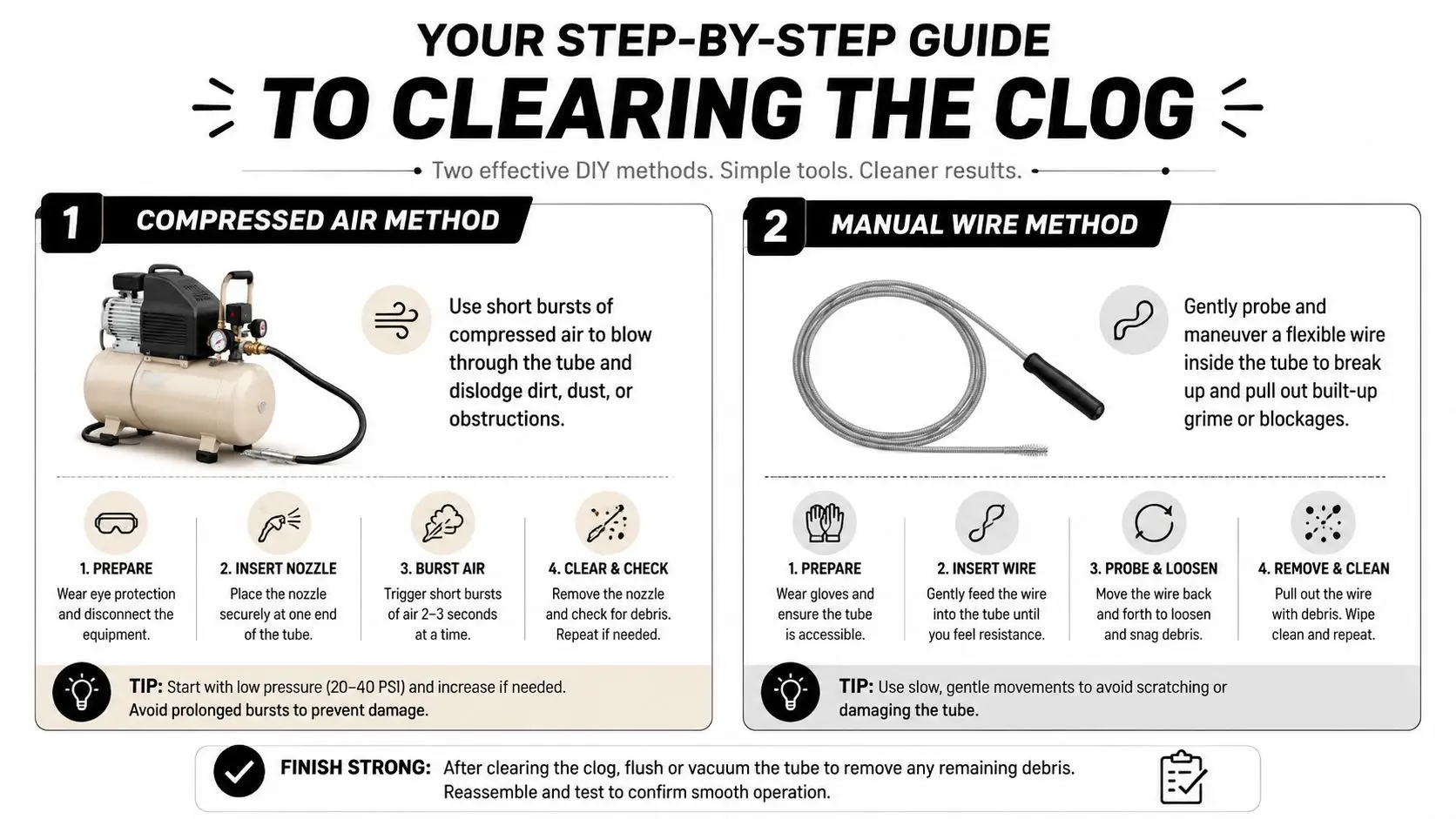
Method one with compressed air
Compressed air works best when the blockage is near the outlet and the tube is still in good shape. Use short, controlled bursts only. Don’t hammer the line with sustained high pressure.
Hold the nozzle near the drain opening and pulse air into the tube. Then stop and check for water release. If you hear bubbling inside the HVAC case and then get a sudden dump of water, you’ve likely opened the clog.
What doesn’t work well is blasting hard air for too long. That can pop a weak rubber elbow off, split an old tube, or push sludge farther upstream.
Use patience, not force. A drain tube is a small outlet, not a pipe built for aggressive pressure.
Method two with a wet dry vacuum
This is the method I trust more when the clog is stubborn. Using a wet/dry vacuum has an 85-90% first-attempt success rate for professionals when the seal is airtight and the vacuum runs for 1-2 minutes, according to Cool Today’s drain clearing guidance.
The seal is the whole game here. Vacuum hoses usually don’t fit the drain opening closely, so wrap the connection with duct tape or pack rags around it to eliminate air gaps. Then run the vacuum for at least a minute and watch what comes out. Brown, dirty water and slime are good signs that you’re pulling the blockage out instead of just moving it around.
After vacuuming, test the drain with water if the design gives you a safe way to do so, or run the AC and watch for normal dripping under the car.
Finish with a vinegar flush
After the blockage is cleared, a cleaning flush helps deal with the residue that caused it. In home systems, a practical reference is this Covenant Aire Solutions home maintenance guide, and the same basic principle applies in a vehicle drain once the outlet is open.
A standard protocol is to pour approximately 1 cup of undiluted white distilled vinegar into the drain access point and allow a 30-minute dwell time, then flush with water to confirm drainage, based on Larry’s Heating and Cooling guidance on drain clog treatment.
If your vehicle doesn’t offer a practical top-side access point to the evaporator case, don’t force vinegar into a random opening. Some cars make this easy. Others don’t.
How to confirm the fix
Use this quick check:
- Run the AC for several minutes with the blower on
- Look underneath near the passenger side for steady dripping
- Check the carpet later to make sure no new moisture appears
- Smell the vents over the next few drives. The odor should begin fading if standing water is gone
If the tube drains briefly and then backs up again, the clog may be deeper inside the HVAC case or the line may be collapsing.
Preventing Future AC Drain Clogs
Prevention is easier than drying carpet, pulling trim, and chasing mildew odors out of a car interior. In Fort Worth heat, the AC runs hard for long stretches, and moisture plus debris is exactly how these clogs start.
What keeps the drain cleaner
In humid climates where AC systems run frequently, algae and mold growth are the primary culprits behind clogs, and routine preventative flushing with a cleaning solution is the most effective way to prevent blockages from forming, according to FloXtreme’s discussion of drain line maintenance.
For a vehicle owner, that translates into a few simple habits:
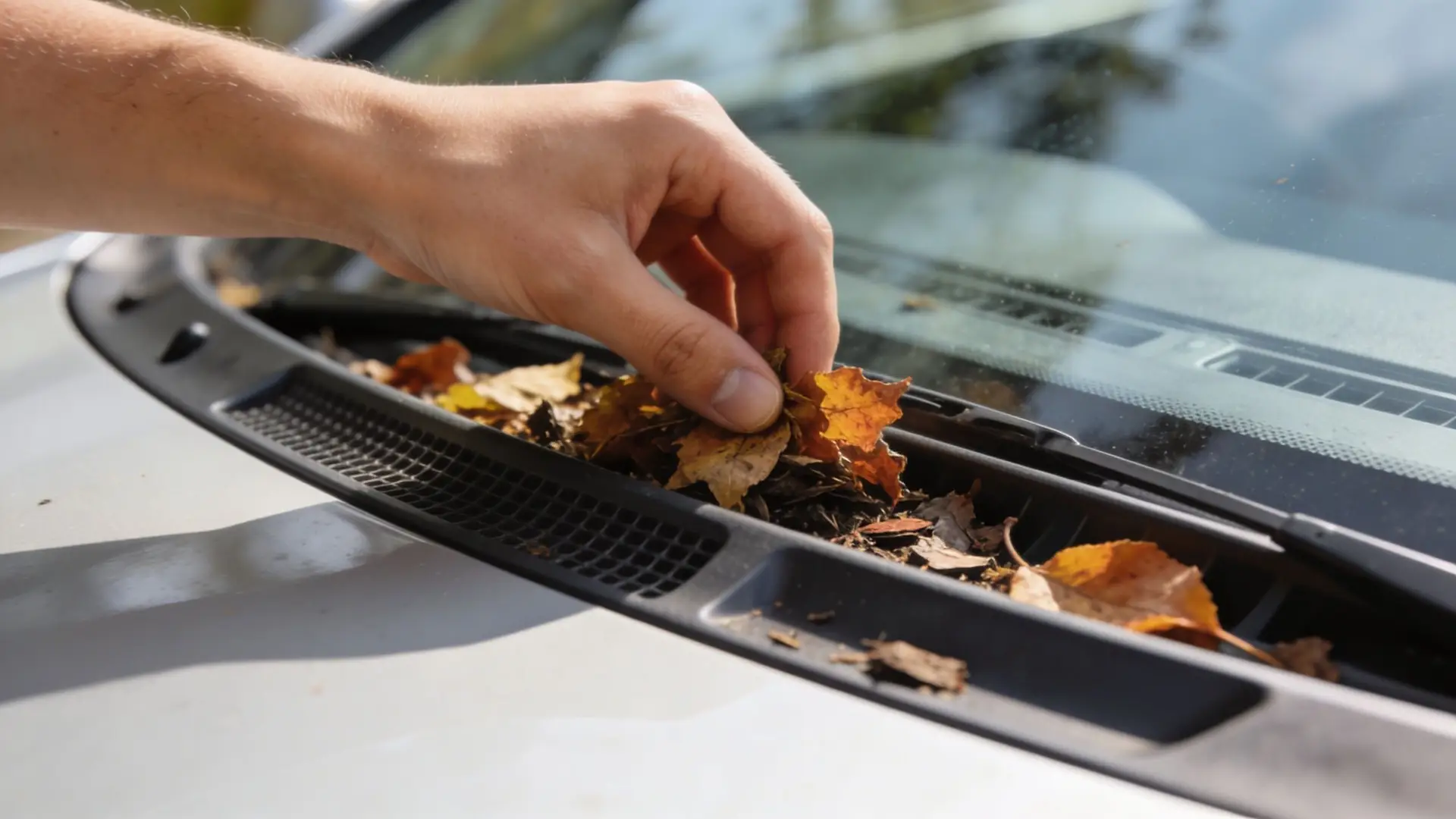
- Check the cowl area. Leaves and debris near the windshield intake eventually make their way into places they shouldn’t.
- Replace the cabin air filter on time. A loaded filter sheds dust and allows more contamination to circulate through the HVAC case.
- Pay attention to odor changes. A mild musty smell early on is easier to address than soaked insulation later.
- Inspect the drain during routine service. Every so often, have someone confirm it’s open and dripping normally.
A realistic maintenance rhythm
You don’t need an elaborate schedule. Tie AC drain awareness to work you’re already doing.
| During routine maintenance | What to look for |
|---|---|
| Oil change visits | Quick visual check for normal condensation drainage |
| Cabin filter replacement | Debris load, moldy odor, dirty intake area |
| Before peak summer use | Drain outlet condition and interior moisture check |
If you’re already dealing with lingering odor after a clog, this practical guidance for stopping mold is worth reading. It applies well to vehicle interiors too, especially if carpet padding stayed wet for more than a short time. For airflow-related upkeep inside the cabin, this guide on how to clean car AC vents is another useful companion step.
When to Skip the DIY and Visit Kwik Kar
Some AC drain jobs are simple. Others stop being simple the minute water reaches electronics, trim insulation, or a hidden part of the HVAC box.
Stop the DIY attempt if any of these show up:
- The clog returns quickly after you clear it
- The drain tube is cracked, brittle, or missing
- You can’t safely access the outlet
- Water has spread far into the carpet or under-seat area
- You suspect moisture near wiring, modules, or airbag connectors
A shop can do more than just poke at the drain. A proper inspection checks the evaporator case, confirms the drain path is fully open, and looks for collateral damage from trapped moisture. If you’re not sure how the system is laid out on your vehicle, this overview of the car HVAC system gives a helpful baseline before you decide whether the job is in your comfort zone.
If a clogged ac drain has already soaked the interior, fixing the drain is only half the repair. The trapped moisture still needs attention.
That’s the point where professional service saves time and prevents repeat problems.
Frequently Asked Questions About AC Drain Issues
Is the water leaking into my car dangerous
The liquid itself is usually condensation, not coolant. But once it sits inside the HVAC case or soaks carpet, it can support mold and mildew growth. That’s where the health concern starts, especially if you notice odor every time the blower runs.
Can a clogged AC drain damage other parts of my car
Yes. Water can soak carpet padding, insulation, lower trim panels, and nearby electrical areas. If enough moisture builds up, it can affect blower components and anything mounted low in the passenger-side footwell. The longer it sits, the more cleanup usually follows.
Can I use vinegar to clean the drain
Yes, but only after you’ve confirmed a safe access point and opened the clog enough for drainage. A standard treatment is approximately 1 cup of undiluted white distilled vinegar with a 30-minute dwell time, followed by a water flush to confirm flow. That’s a recognized protocol for algae growth and mineral buildup, as described in this vinegar treatment reference.
Why does my car smell musty even if the AC still blows cold
Because cooling performance and drainage are two different things. The AC can still produce cold air while water sits in the evaporator case. That trapped moisture is often what causes the odor.
How much does it cost to have a professional clear a clogged AC drain
The price depends on access, vehicle design, and whether the shop also has to inspect or dry surrounding areas. Some vehicles are quick. Others require more disassembly to reach the drain safely. The best approach is to get it checked early, before a simple drain service turns into interior cleanup.
If your passenger floor is wet, your vents smell musty, or you just don’t want to crawl under the car guessing at hoses, Kwik Kar Oil Change and Auto Care can help you get to the cause quickly. Our team serves Fort Worth drivers with straightforward inspections, honest recommendations, and practical repairs that protect your interior before a small AC drain issue turns into a bigger mess.