




You're probably here because you opened the hood, looked at the oil cap, or stood in front of a shelf full of bottles and thought, what oil do i put in my car? That's a normal question. Motor oil labels can look more like a code than a maintenance item.
I've explained this to a lot of drivers over the years, and the confusion usually comes from the same place. You see numbers like 5W-30, 0W-20, or 10W-40, then another set of labels like API SP or ILSAC GF-6, then words like synthetic, blend, and high mileage. It feels like you need a chemistry degree just to buy oil.
You don't. You just need a simple way to sort the important information from the marketing.
Why Choosing the Right Motor Oil is So Important
A lot of oil questions start after a driver notices something small. Maybe the engine sounds a little tick-tick-tick for a few seconds on startup. Maybe it feels sluggish pulling away from a stoplight on a hot Fort Worth afternoon. Maybe the car just does not feel as smooth as it used to. Oil choice can be part of that story because oil affects how quickly protection reaches engine parts and how well that protection holds up once the engine gets hot.
Motor oil has several jobs at once. It forms a thin protective film between moving metal parts so they do not grind against each other. It helps carry heat away from internal engine parts. It also suspends dirt and combustion byproducts so the filter can trap them instead of letting that material build up inside the engine.
The easiest way to understand it is to picture the oil as the engine's working fluid, not just a slippery coating. If it is too thick for the engine's design, it can take longer to flow where it needs to go during startup. If it is too thin for the conditions, that protective film can be weaker under heat and load. The result is wear that happens little by little, often without an immediate warning light.
That is why the exact recommendation matters. Engineers choose an oil grade based on bearing clearances, oil passage size, operating temperature, and how quickly the oil needs to circulate after startup. In Fort Worth, that matters even more because summer heat, stop and go traffic, and long highway runs all put extra stress on oil.
Why so many people get stuck
The confusion usually is not about one decision. It is about several decisions stacked on top of each other:
- Weight or viscosity: 5W-30, 0W-20, 10W-40
- Oil type: conventional, synthetic blend, or full synthetic
- Performance standard: API and ILSAC labels
- Special use: high-mileage, diesel, towing, or extreme heat
That can feel like a lot when you are standing in the aisle holding two bottles that both claim to protect your engine.
Here is the practical rule I give customers at Kwik Kar. Start with what your engine was built to use, then consider your climate and driving habits. The right oil is the one that matches the engine's design and still protects well in your real-world conditions. That is how you help the engine start cleanly, run smoothly, and hold up over time.
Find Your Car's Recommended Oil in Under a Minute
You are in the parts store, your phone battery is low, and five different bottles all look right. The fastest way to cut through that confusion is to check the two places your vehicle already gives you the answer.

Check the owner's manual first
Your owner's manual is the best source because it reflects how your specific engine was designed to run. The oil recommendation is tied to real mechanical details like internal clearances, operating temperature, and how quickly oil needs to circulate after startup. In Fort Worth, where summer heat and stop and go driving can push oil harder, following that spec matters even more.
Look under sections such as:
- Maintenance
- Capacities and Specifications
- Fluids and Lubricants
- Index under “oil” or “engine oil”
You are usually looking for two things. First, the viscosity grade. Second, any performance requirement the oil has to meet.
Then check the oil cap
The oil filler cap gives you a quick shortcut. Many caps list the viscosity grade right on top, such as SAE 0W-20 or SAE 5W-30.
That cap is helpful, but it is only a shortcut. The manual gives the fuller answer, especially if your vehicle has notes about synthetic oil, temperature ranges, or special engine requirements. If the cap and the bottle label seem to tell a different story, go with the vehicle specification.
A simple way to avoid mistakes is to match the bottle to the wording in the manual, not the marketing on the front. If you want a plain-English refresher before you compare bottles, this guide on what oil viscosity means can help clear up the numbers.
What you are actually trying to find
You do not need to memorize every detail on the page. You just need the exact oil spec your engine calls for.
That usually includes:
- The viscosity grade, such as 0W-20 or 5W-30
- The required service standard, such as API SP or ILSAC GF-6
- Any note about synthetic oil, if the manufacturer calls for it
One minute with the manual can save you from using an oil that flows too slowly on startup, thins out too much in heat, or does not meet the standard your engine was built around.
Decoding Oil Viscosity Grades and Performance Logos
Once you've found a grade like 5W-30, the next question is usually, “What do those numbers mean?”
What viscosity means in plain English
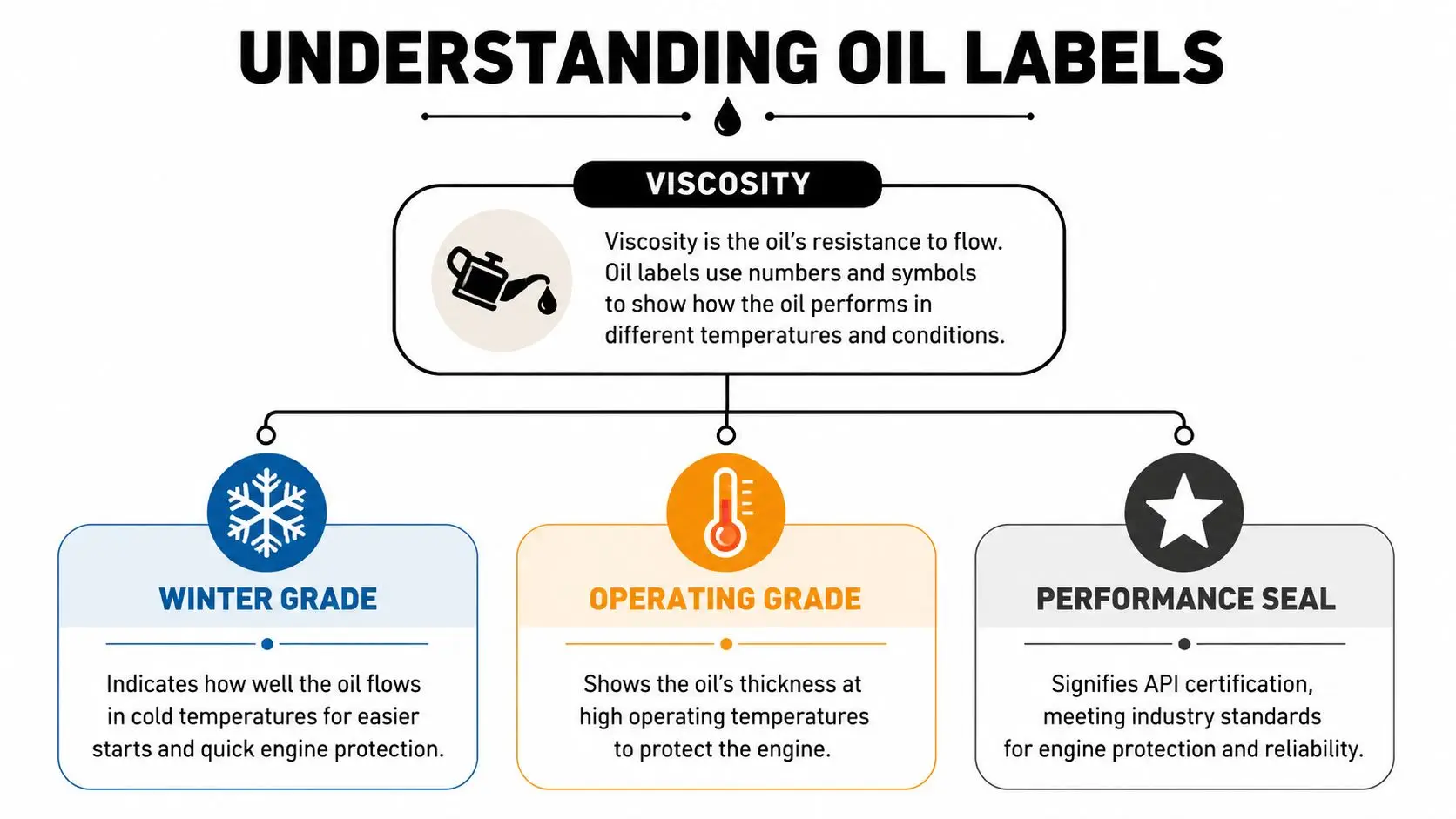
Viscosity is just how easily oil flows. Think about honey. When it's cold, it pours slowly. When it warms up, it flows more easily. Motor oil works the same way, but it has to do a much tougher job. It has to move quickly when the engine is cold, then still protect parts when the engine gets hot.
If you want a deeper plain-language breakdown, this short guide on what oil viscosity means is a good companion to the labels you see on the bottle.
Breaking down 5W-30
The “5W” is the low-temperature side of the grade. The lower that first number is, the faster the oil can flow during a cold start. The “30” is the high-temperature side, which tells you how the oil holds its protective thickness once the engine reaches operating temperature.
According to US Lube's explanation of engine oil grades, the SAE viscosity grade “5W” indicates viscosity at low temperatures, with lower numbers ensuring faster flow during cold starts, reducing wear by up to 50% in the first 30 seconds. The second number, like “30,” denotes high-temperature viscosity at 100°C, maintaining film strength to help prevent engine damage under load.
Why the numbers matter in real driving
Here's the practical side of it.
- Cold morning start-up: Oil needs to move fast so engine parts aren't running dry for those first moments.
- Highway driving in summer: Oil needs enough strength to stay protective as heat builds up.
- Stop-and-go traffic: The engine cycles through changing temperatures, so stable oil matters.
A common misunderstanding is thinking thicker always means safer. It doesn't. Oil that's too thick for the engine can move too slowly when the engine needs quick lubrication. Oil that's too thin for the application may not provide the protection the engine was designed around.
What the API and ILSAC logos tell you
The bottle doesn't just need the right weight. It also needs the right performance standard.
Look for labels such as:
- API categories like SN, SN PLUS, or SP
- ILSAC categories like GF-5 or GF-6
These markings tell you the oil meets industry performance requirements for things like engine protection and compatibility with modern engine needs. The manual often lists these standards right alongside the viscosity grade.
The safest shortcut is simple. Match both the oil weight and the performance standard printed in your manual.
When you understand those two pieces, the label stops looking like a code and starts looking like useful information.
Synthetic vs Conventional A Practical Comparison
Once you know the right viscosity and performance standard, the next question is oil type. This is the part that confuses a lot of drivers, because the bottles can make every option sound like the best one.
A simpler way to look at it is this. Conventional, synthetic blend, and full synthetic all lubricate the engine. The primary difference is how well they hold up as heat, time, and engine stress work against them. In Fort Worth, that matters. Summer heat, long idle times in traffic, and high engine temperatures can wear oil down faster than many drivers expect.
The basic difference
Conventional oil starts with refined crude oil and uses additives to help it protect the engine. If your owner's manual allows it, conventional oil can still be a reasonable choice for some older or less demanding engines. The tradeoff is that it tends to break down sooner under heat and repeated stop-and-go driving.
Full synthetic oil is engineered to stay more stable across a wider temperature range. In plain terms, it keeps its protective qualities longer, especially during hot running conditions, cold starts, and heavy use. That is one reason many newer engines are designed around synthetic oil from the start. If the manual specifies full synthetic, that is the standard the engine was built around, not just a premium upgrade.
Synthetic blend falls between the two. It mixes conventional and synthetic base oils, so it usually offers better protection than conventional without the full cost of a full synthetic.
If you want a plain-English breakdown of service differences, this guide to a synthetic oil change and what it includes is a useful reference.
Motor Oil Type Comparison
| Attribute | Conventional Oil | Synthetic Blend | Full Synthetic Oil |
|---|---|---|---|
| Typical use | Older or simpler engine applications where allowed | Drivers wanting a middle-ground option | Many modern engines, especially those calling for synthetic |
| Temperature performance | Basic protection | Better stability than conventional | Strongest stability in heat and cold |
| Oil change interval | Shorter service life in many applications | Varies by product and vehicle | Usually longer-lasting than conventional when approved by the manufacturer |
| Cost | Usually the lowest upfront cost | Mid-range | Usually the highest upfront cost |
| Best fit | Budget-conscious owner whose manual allows it | Driver wanting added protection without full synthetic cost | Newer vehicles, tougher conditions, or engines that require it |
The table gives you the quick comparison. Here is the practical takeaway.
If your vehicle is older, lightly used, and specifically allows conventional oil, conventional may be fine. If you drive in heavy traffic, take frequent short trips, or own a newer engine with tighter internal tolerances, synthetic usually gives you a bigger safety margin because it resists thinning, oxidation, and deposit buildup better over time. That is the "why" behind the recommendation. The oil is not just lasting longer in the bottle. It is holding its protective film longer inside a hot, working engine.
A good analogy is cooking oil in a pan. Under mild heat, a basic oil may do the job. Under repeated high heat, a more stable oil holds up better before it starts to break down. Motor oil works in a similar way, except the stakes are much higher because the engine depends on that thin film to separate moving metal parts.
Where high-mileage oil fits
High-mileage oil is not its own viscosity grade. It is a formulation made for aging engines, usually those with higher mileage, worn seals, or increased oil consumption. These oils often contain additive packages aimed at helping seals stay conditioned and reducing problems like minor seepage or burn-off.
That does not mean every older vehicle needs high-mileage oil. It makes the most sense when the engine is showing age-related symptoms and the product still matches the viscosity and specifications your manual calls for.
If your manual calls for full synthetic, stay with full synthetic. Saving a little on the oil itself is rarely worth the risk of faster wear, sludge buildup, or poor protection in the conditions your engine was designed to handle.
How Climate and Driving Habits Affect Your Oil Choice
You leave home for work in Fort Worth on a July afternoon. The truck has been sitting in a parking lot, the pavement is radiating heat, and a slow crawl on I-35W or Loop 820 is waiting for you with the A/C running the whole time. In that kind of driving, your oil is dealing with heat, idle time, and repeated stop-and-go load before you even get across town.

Fort Worth heat puts oil under real stress
Fort Worth drivers feel this most from late spring through early fall, when long hot days, warm overnight temperatures, and heavy afternoon traffic keep engine temperatures up. Add construction slowdowns, school pickup lines, and long idles in drive-thrus, and the oil spends a lot of time working in high-heat conditions.
Oil works like a protective liquid cushion between moving engine parts. As temperatures rise, that cushion has to keep its thickness and flow characteristics. If the wrong oil is too thin for the conditions or too weak for the engine's design, protection can drop right when the engine is hottest.
That does not mean you should jump to a thicker oil just because Texas is hot. Your owner's manual still calls the shots. A modern engine that specifies 0W-20 or 5W-30 usually needs that exact grade because the oil passages, bearing clearances, and fuel economy systems were designed around it. The climate changes how hard the oil works, not the engineering target your vehicle was built around.
The way you drive matters just as much as the weather
Two Fort Worth vehicles can use the same factory oil grade and still need different oil types or service attention because their daily routine is different.
Here are the driving patterns that put extra strain on oil:
- Short trips around town: The engine may not stay hot long enough to boil off moisture and fuel dilution.
- Stop-and-go traffic on roads like I-35W, 183, or Camp Bowie: Airflow drops, idle time increases, and heat builds up under the hood.
- Towing, hauling, or carrying work equipment: Extra load increases pressure on the oil film that separates metal parts.
- Frequent remote starts and long idles: The engine runs, but the miles do not show how much time the oil has been working.
- Older engines that use some oil between changes: A high-mileage formula may help if it still matches the required specs.
- Diesel trucks: These need the correct diesel-rated oil standard, not a close substitute.
Here's a helpful visual overview before we go further.
A practical way to choose
Start with the manual. Then ask a simple shop-floor question: does your vehicle live an easy life, or a hard one?
A garage-kept commuter that spends most of its time cruising at steady speed has an easier job for oil than an SUV that idles in Fort Worth traffic, makes repeated short errands, and pulls a trailer on weekends. Same city. Very different workload.
That is why full synthetic often makes more sense for North Texas drivers, even when conventional oil is technically available for the vehicle. Synthetic oil handles heat better, resists breakdown during long idle periods, and keeps its protective film more consistently in the kind of summer traffic many local drivers deal with. If you also want a better sense of service basics, this guide on why you should change your oil and filter together helps connect the oil choice to overall engine protection.
If your manual lists more than one approved option based on service conditions, choose the one that fits how the vehicle is used in Fort Worth, not just the one that looks familiar on the shelf. That approach protects the engine for the world it drives in every day.
Common Oil Change Mistakes That Can Harm Your Engine
A lot of engine trouble starts in a driveway on a Saturday morning. The oil gets changed, the car runs fine, and it feels like the job is done. Then a slow leak shows up, the oil pressure light flickers, or the filter starts seeping because one small step was missed.
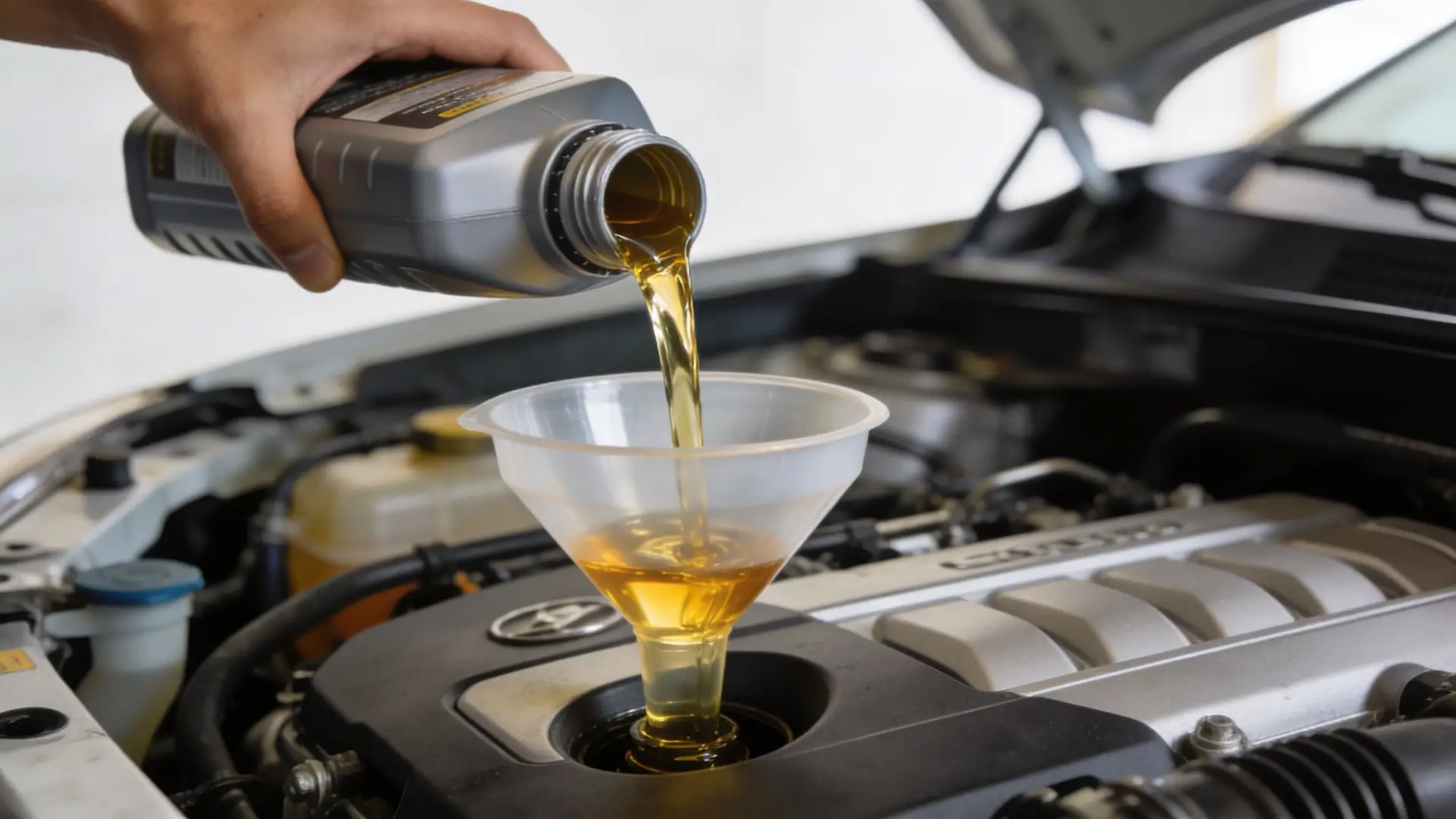
The mistakes that hurt engines are often mechanical, not just about which bottle came off the shelf. That matters in Fort Worth, where long hot drives and stop-and-go traffic put extra stress on any weak point in the lubrication system.
Mistakes that happen during the oil change itself
Using the wrong oil filter: Filters are not all built the same inside. A filter may thread on and still be the wrong match for the engine's oil flow needs or bypass valve setting. The result can be poor filtration, restricted flow, or noisy cold starts.
Leaving the old filter gasket stuck to the engine: This is a classic DIY problem. The old rubber seal can stick to the mounting surface, and if the new filter goes on top of it, oil can leak out fast once the engine builds pressure. It works like stacking two jar lids and expecting a tight seal.
Cross-threading the filter or drain plug: Metal threads need to start straight. If the filter or drain plug goes on crooked, it can damage the threads in the pan or housing. That turns a routine oil change into a repair.
Tightening parts the wrong way: Too loose causes leaks. Too tight can crush a gasket, strip threads, or make the next oil change far harder than it should be. Snug and properly seated is the goal.
Mistakes with oil level and cleanup
A second group of problems comes from the final checks.
Forgetting to confirm the oil level after filling: Engines need the oil level checked on the dipstick after the oil has settled. Capacity numbers are a guide, but the dipstick shows what the engine has.
Spilling oil and not cleaning it off: Oil left on the engine can smoke, smell burnt, and make a harmless spill look like an active leak later. Cleaning the area lets you spot real problems.
Skipping a quick leak check after startup: Let the engine idle for a minute, then look underneath and around the filter. Catching a drip right away is much better than finding it after a hot drive across Fort Worth.
If you handle your own maintenance, this guide on why you should change your oil and filter together explains how those parts work as a team to protect the engine.
A good oil change is part fluid service, part careful assembly. The oil can be perfect, but a damaged gasket or loose drain plug can still put the engine at risk.
The practical fix is simple. Use the correct parts, start every thread by hand, replace sealing surfaces properly, and check your work before calling the job finished.
Get The Right Oil Every Time at Kwik Kar Fort Worth
By now, the question isn't just what oil do i put in my car. It's also why that answer matters.
The short version is straightforward. Check your owner's manual. Confirm the viscosity grade on the oil cap if it's listed there. Match the required performance standard on the bottle. Then choose the oil type that fits your vehicle's requirements, mileage, climate, and driving habits.
That sounds simple on paper, but in real life it can still be a hassle. Oil specs vary by engine, model year, and use case. Add Fort Worth heat, high-mileage vehicles, and newer engines that want specific synthetic formulations, and it's easy to see why people second-guess themselves.
That's where a good service shop earns its keep. A trained technician can look up the correct spec, confirm capacity, install the right filter, and make sure the oil in your engine matches what the manufacturer intended. That protects your time, your warranty requirements, and your confidence that the job was done right.
If you like handling maintenance yourself, you now know what to look for. If you'd rather skip the guesswork, having a professional handle it is often the easiest way to make sure your car gets exactly what it needs.
If you want a simple, reliable answer instead of guessing in the oil aisle, Kwik Kar Oil Change and Auto Care can help you get the right oil, filter, and service for your vehicle. Their team on White Settlement Road in Fort Worth handles everything from routine oil changes to deeper diagnostics, so you can protect your engine and get back on the road with confidence.