



Head gasket repair on a typical modern passenger car usually runs $2,400 to $3,200. It’s a major repair, and the final price depends on how much labor your engine layout requires, what parts are replaced, and whether overheating has damaged anything beyond the gasket itself.
If you’re reading this because your car just overheated, started blowing white smoke, or pushed coolant where it shouldn’t, you’re probably trying to answer two questions fast. How bad is it, and what is this going to cost me?
That’s a stressful spot to be in, especially if you still need the car for work, school runs, or daily driving around Fort Worth. A head gasket problem sits in that uncomfortable category between “maybe it’s minor” and “this could turn into a very expensive engine repair.”
The good news is that this repair is understandable once someone strips away the mystery. The bill is high for a reason, not because shops are making up numbers. If you know what the gasket does, what failed, and what a proper estimate should include, you can make a smarter call and avoid paying for the wrong fix.
That Sinking Feeling A Blown Head Gasket
A lot of drivers first notice the problem in traffic or after a short stop. The temperature gauge climbs, the heater starts acting strange, and then you see smoke or smell coolant. At that moment, the phrase head gasket repair cost stops being an internet search and becomes a real budget decision.
In Fort Worth, many drivers depend on older, high-mileage cars, trucks, and SUVs. That matters because when a cooling system issue gets ignored even once, the engine can overheat enough to damage the sealing surfaces that the head gasket depends on. If you’ve also been dealing with recurring temperature spikes, it helps to review common overheating causes and symptoms before assuming the gasket is the only problem.
What makes this repair feel so overwhelming
The gasket itself isn’t the whole story. The repair involves opening up the top of the engine, removing major components, checking for heat damage, cleaning surfaces precisely, and putting everything back together to exact torque specs.
That’s why the number shocks people. National pricing for a typical passenger vehicle lands in the mid-$2,000 range, and that’s before complications push it higher. For many owners, the hard part isn’t just paying for the job. It’s figuring out whether the quote is fair and whether the vehicle is worth repairing.
Practical rule: If the engine has been overheating repeatedly, assume the quote needs to account for more than just one gasket.
What a clear estimate should do
A useful estimate should answer three things plainly:
- What failed: Was the diagnosis based on actual testing, not just symptoms?
- What’s included: Gasket set, head bolts, fluids, machine work, and related parts should be spelled out.
- What could change: Shops should explain what may be found after teardown, especially on engines that got hot.
That kind of transparency matters more than a low opening number. A cheap quote that skips machine work, bolts, or root-cause cooling system repairs can become the expensive option later.
Your Engine’s Most Critical Seal
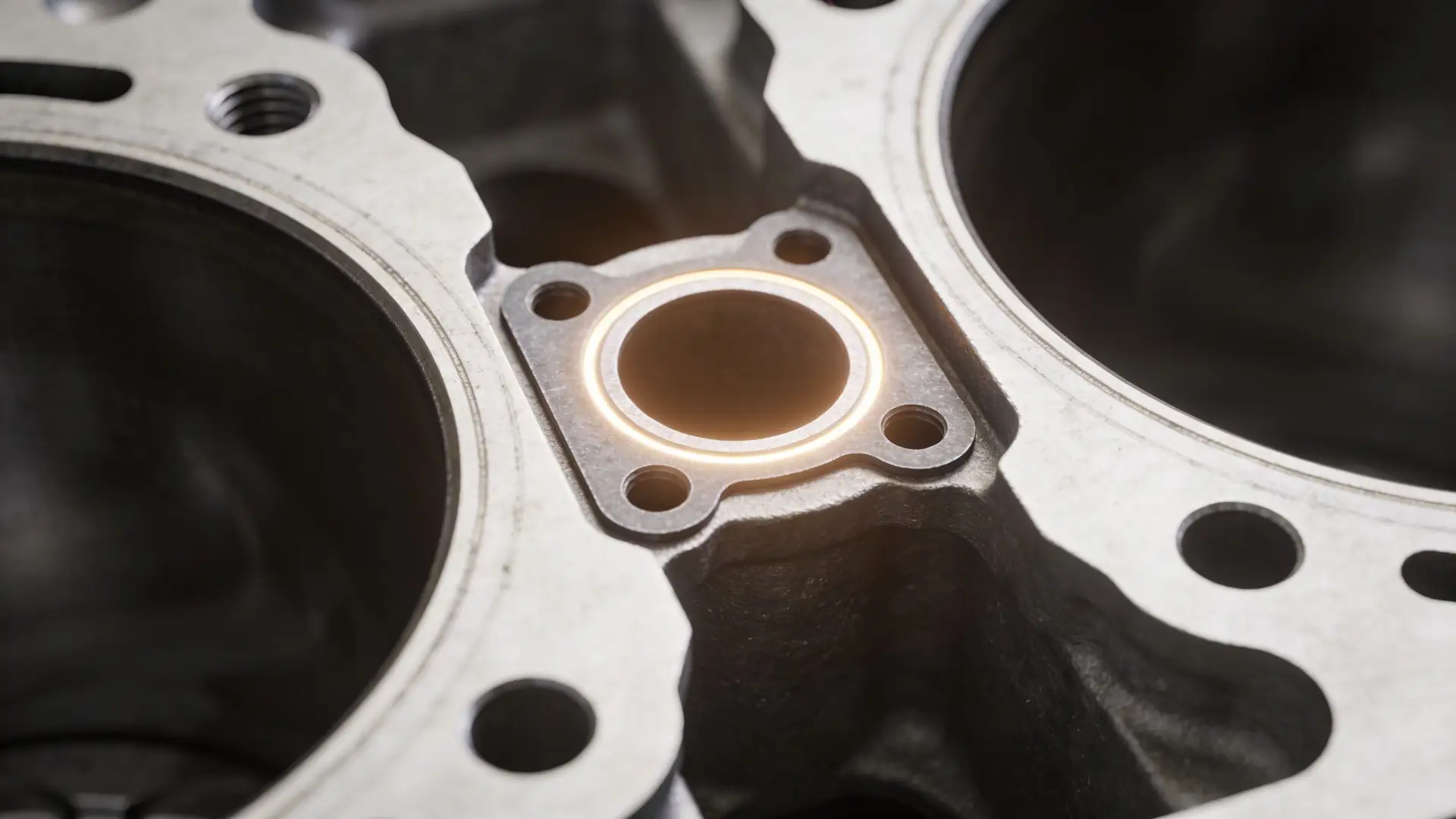
The head gasket is the seal between the engine block and the cylinder head. In plain terms, it sits between the lower half of the engine and the upper half, keeping three things where they belong: combustion pressure, coolant, and oil.
Think of it as the peacemaker in a very hostile neighborhood. Right next to each other, you have extreme heat and pressure from combustion, circulating coolant passages, and oil passages. Those systems have to stay separated while the engine runs thousands of times per minute. When that seal fails, those systems start crossing paths.
What the gasket is doing every time you drive
A healthy head gasket has to do several jobs at once:
- Seal combustion chambers: It holds back the pressure created during ignition.
- Separate coolant passages: It keeps coolant moving through the engine without entering the cylinders.
- Separate oil passages: It keeps oil lubricating the valvetrain and upper engine without mixing with coolant.
If any one of those barriers breaks down, the engine can misfire, overheat, lose compression, contaminate oil, or push exhaust gases into the cooling system.
Why they fail
The most common villain is overheating. When an engine gets too hot, the metal parts expand beyond normal limits. The cylinder head can warp enough that the gasket can no longer seal evenly. Once that happens, replacing the gasket without addressing the heat damage is a setup for a repeat failure.
Other causes show up too. Age, repeated thermal cycling, poor prior repairs, cooling system neglect, and severe detonation can all contribute. But in the shop, overheating is usually the event that turns a tired gasket into a failed one.
A head gasket rarely fails in isolation. The smart repair always asks what caused the engine to run hot in the first place.
Why understanding the cause matters
Customers sometimes ask whether a shop can “just replace the gasket.” Sometimes the answer is yes. Sometimes that would be the wrong repair.
If the radiator, thermostat, water pump, fan operation, or coolant loss problem isn’t found and corrected, the new gasket gets dropped into the same bad environment that killed the old one. That’s one reason experienced technicians spend time tracing the full chain of failure instead of treating the gasket like a stand-alone part.
Decoding the Head Gasket Repair Bill
A lot of Fort Worth drivers get the same shock. The car came in for overheating, rough running, or coolant loss, and the estimate lands in the range of a used commuter car down payment.
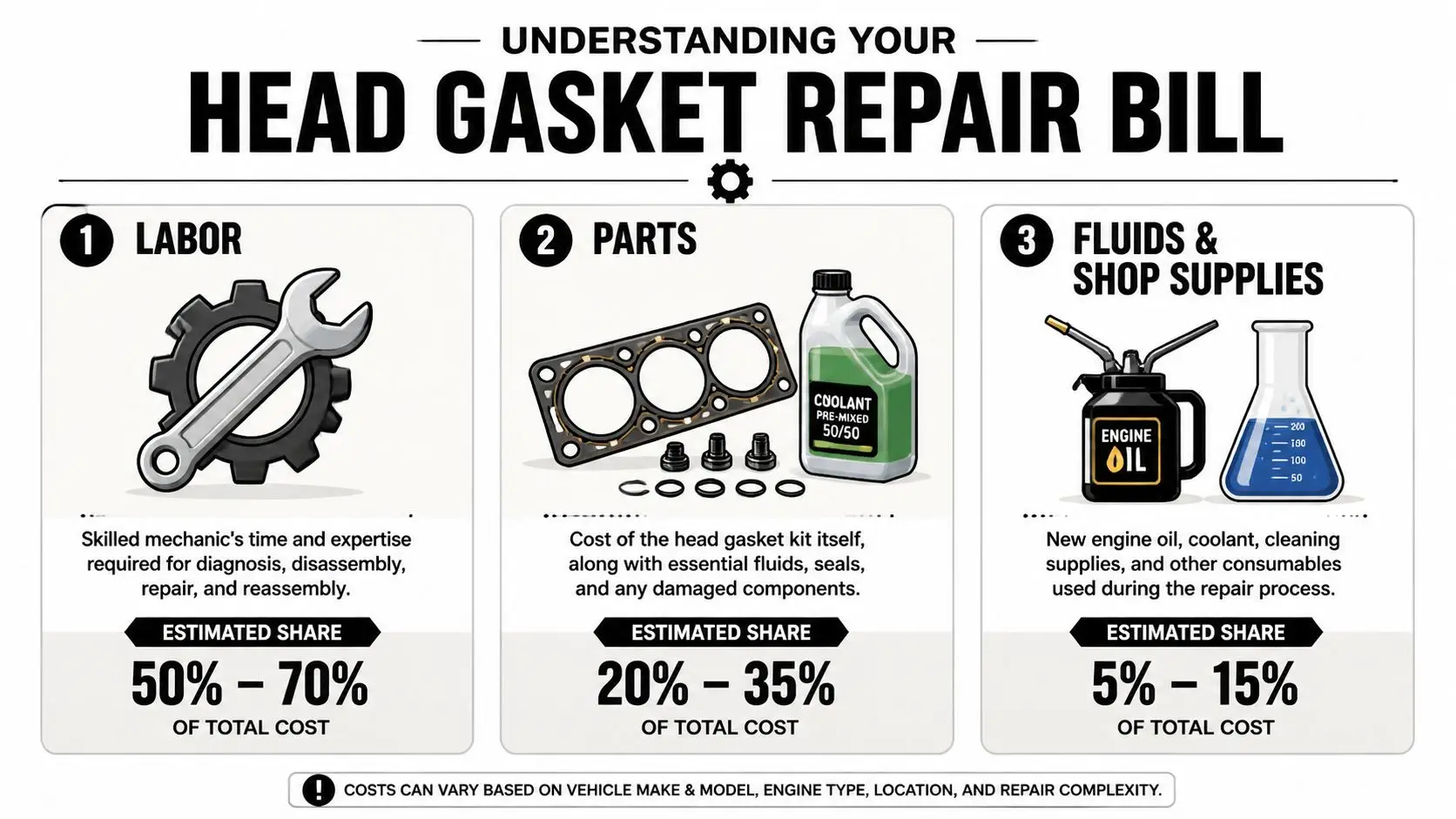
Most of that bill is labor. Analysts summarizing national repair invoice data found that head gasket replacement on a typical modern passenger car often lands around $2,400 to $3,200, with labor making up the biggest share because the job usually requires hours of teardown before the gasket can even be reached, as outlined in national repair invoice data summarized by CarParts.
Why labor drives the price
The gasket itself is not the expensive part. Getting to it is.
On many engines, the technician has to remove intake parts, exhaust connections, ignition components, timing components, valve covers, and the cylinder head before the failed gasket is exposed. Then everything has to go back together in the correct order, with clean mating surfaces, proper torque procedures, fresh fluids, and a final check for leaks or timing issues. That time is what customers are paying for.
Fort Worth estimates can vary a lot because local shop rates, engine layout, and vehicle condition all change the labor hours. A transverse V6 in a tight engine bay usually costs more to handle than an older inline four with better access. A truck may have more room in places, but it can still need more parts, more fluid, and more teardown than drivers expect.
What should be included in the parts line
A solid estimate usually covers more than a single gasket. In most real repairs, the parts list includes a full gasket set, new head bolts if the engine uses torque-to-yield hardware, fresh oil, coolant, filters, and seals or gaskets disturbed during disassembly.
Machine work can change the number fast.
If the engine overheated hard enough to affect the cylinder head surface, resurfacing may be required before the new gasket goes on. That recommendation is not padding the bill. Flat sealing surfaces are required for a lasting repair. If a shop skips that step on a warped head, the new gasket may fail early and the customer pays twice.
If your vehicle has also been losing coolant for a while, it helps to review common warning signs of an internal or external coolant leak before approving major engine work. That context helps you ask better questions about what caused the failure and whether anything else needs attention.
A practical way to compare Fort Worth quotes
For local drivers, the smart move is not chasing the lowest number. It is checking what each estimate includes.
A cheaper quote may leave out machine shop charges, head bolts, fluids, diagnostic time, or cooling system repairs tied to the original overheating problem. At the counter, I would tell a customer to ask three direct questions. What parts are being replaced besides the gasket? Is head inspection or resurfacing included if needed? What happens if teardown shows cracked components or deeper engine damage?
Here is a realistic comparison guide for common vehicle types around Fort Worth. It is meant to help you read an estimate, not promise a fixed price for every model.
| Vehicle Type | Typical Labor Hours | Estimated Parts Cost | Total Estimated Cost Range |
|---|---|---|---|
| Compact or midsize 4-cylinder sedan | 8-12 hours | Moderate, depending on gasket set, bolts, and fluids | Often within the standard passenger-car range |
| Midsize SUV or crossover | 8-12+ hours | Higher when access is tighter or extra seals are disturbed | Usually near or above standard passenger-car pricing |
| Full-size truck or V8 SUV | 8-12+ hours | Higher when additional gaskets, bolts, fluids, or machining are needed | Commonly above sedan pricing, especially after overheating |
| Luxury or performance vehicle | 6-12+ hours | Higher parts pricing and stricter labor procedures | Frequently among the most expensive repairs in this category |
That is why local context matters. A Fort Worth commuter sedan with an early caught failure may still be repairable at a level that makes financial sense. An older SUV with severe overheating, coolant contamination, and machine work may cross the line where replacement or vehicle trade-in deserves a serious discussion.
If you manage an RV or tow vehicle, repair planning gets even more important because engine access and packaging affect labor across many vehicle types. That’s why I like practical breakdowns such as RVupgrades.com slide out expertise. It’s a different repair category, but the same budgeting principle applies. Complex jobs are priced by access, labor time, parts, and the risk of hidden damage.
Confirming the Diagnosis Signs and Tests
Not every overheating car has a blown head gasket. Not every puff of white exhaust means the engine is done. The right move is to separate warning signs from proof.
The signs drivers notice first
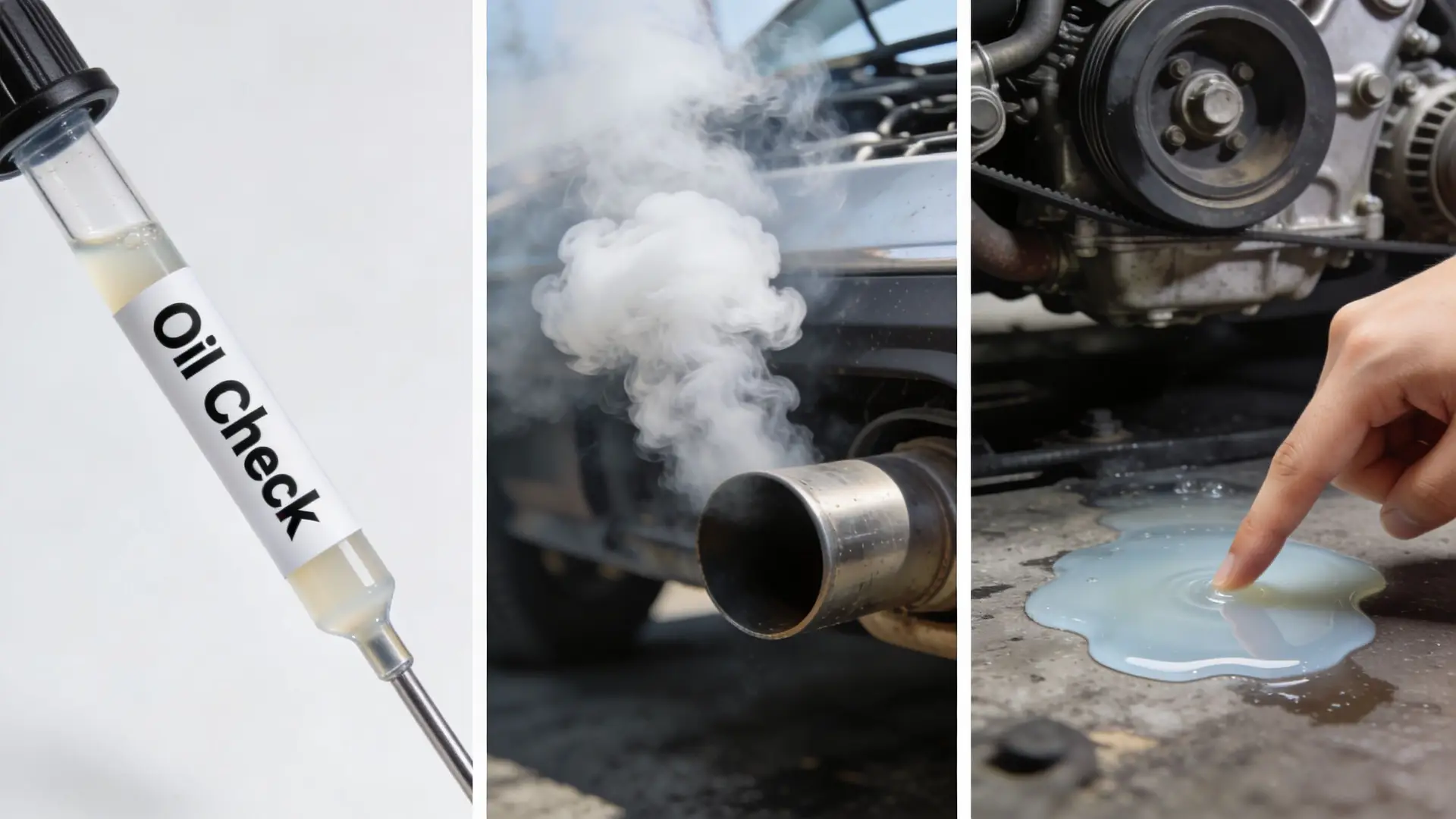
Most customers describe one or more of these problems:
- Sweet-smelling white exhaust: Coolant can enter the combustion chamber and exit as white vapor.
- Unexplained coolant loss: The reservoir keeps dropping, but the leak isn’t obvious.
- Milky oil: Oil that looks like coffee with cream can point to coolant contamination.
- Persistent overheating: The temperature keeps climbing even after topping off coolant.
- Rough running at startup: A cylinder with coolant intrusion may stumble, especially cold.
If you’re tracking coolant loss and trying to tell whether it’s an external leak or something internal, this guide on how to check for coolant leaks is a useful place to start.
What a shop does to verify it
A professional diagnosis should move beyond symptoms and into testing. Shops use a combination of inspection and pressure-based tests to confirm whether combustion gases, coolant, or compression are moving where they shouldn’t.
Common tests include:
- Chemical block test: This checks for combustion gases in the cooling system.
- Compression test: This compares cylinder sealing strength across the engine.
- Cylinder leak-down test: This helps pinpoint where pressure is escaping.
- Cooling system pressure test: This can expose leaks that only appear under pressure.
- Spark plug inspection: A plug that looks unusually steam-cleaned can support the diagnosis.
Don’t approve a major engine repair on symptoms alone. A good shop should be able to explain what test results support the recommendation.
For drivers who like to stay ahead of developing engine issues, connected vehicle tools can also add context. Systems that track maintenance alerts and vehicle behavior, such as diagnose car health data, won’t replace hands-on testing, but they can help you catch abnormal patterns before a problem becomes a breakdown.
A visual explanation can make these symptoms easier to recognize in real life:
What diagnosis should sound like
Clear diagnosis sounds specific. A technician should be able to tell you whether the engine failed a block test, whether a cylinder has weak compression, or whether coolant pressure is dropping without an external leak.
Vague diagnosis sounds like guessing. If the explanation is only “it’s probably the head gasket,” ask what test confirmed it. On a repair this expensive, evidence matters.
The DIY Dilemma vs Professional Repair
You see white smoke, the temp gauge climbs, and now you are staring at a repair bill that can easily run into the thousands. At that point, doing the job in your own garage can sound like the only affordable option.
The problem is that head gasket work sits in the narrow band between “possible at home” and “very expensive if one step goes wrong.” Parts alone may look manageable. The full job usually is not. On many Fort Worth daily drivers, especially trucks and SUVs with tight engine bays, access, teardown time, and inspection work are what drive the overall cost.
Where DIY usually gets expensive
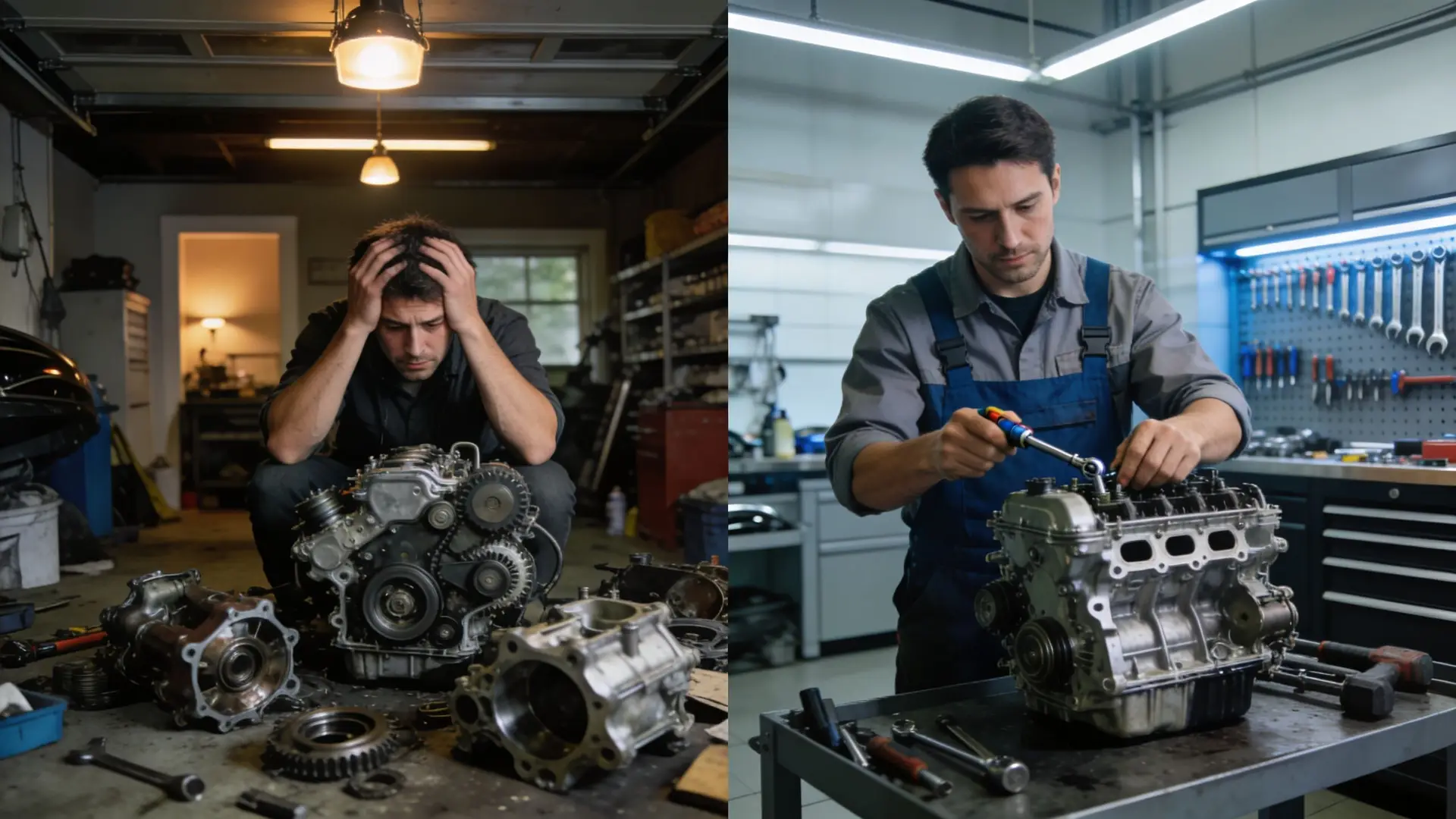
A head gasket replacement is not a simple gasket swap. The job involves draining fluids, removing top-end components, keeping timing in sync, checking the head and block surfaces, following exact torque specs, and reassembling everything without contamination.
That leaves a lot of room for costly mistakes.
Common DIY problems include:
- Poor surface cleaning: Leftover gasket material or an uneven surface can prevent the new gasket from sealing.
- Incorrect bolt installation: Many engines use torque-to-yield head bolts that should be replaced, not reused.
- Timing mistakes: One tooth off can create a no-start, rough running, or internal engine damage.
- Skipping machine shop work: If the cylinder head is warped from overheating, the new gasket may fail quickly.
- No plan for surprises: Broken exhaust studs, seized fasteners, cracked plastic connectors, and hidden damage are common on older vehicles.
I have seen owners save money on parts, then lose those savings on a second teardown, a tow bill, and machine work they did not plan for the first time.
What you are paying for at a shop
Professional repair means more than labor hours. You are paying for the ability to inspect the engine correctly once it is apart, measure the mating surfaces, send the head out for machine work if needed, and put it back together to spec.
That matters even more after an overheating event. A shop may find a warped head, damaged valves, contaminated oil, or cooling system issues that helped cause the failure in the first place. If those problems are missed, the gasket job may not last.
For Fort Worth drivers, local context plays a significant role. A four-cylinder commuter car and a high-mileage pickup do not carry the same risk, parts cost, or labor time. A transparent estimate should reflect the vehicle you drive, not a broad national average.
When DIY makes sense, and when it usually does not
DIY can make sense for someone with strong mechanical experience, a service manual, precision tools, enough workspace, and a second vehicle. It is a serious weekend project at minimum, and on some engines it is much more than that.
For everyone else, the better question is not “Can this be done at home?” It is “What happens if I get halfway in and find warped parts, timing issues, or damage I cannot measure?”
That is why many owners in Fort Worth choose a shop for this repair even when the upfront number hurts. One approved bill is usually easier to manage than paying for parts, downtime, machining, and a second repair attempt.
Kwik Kar Oil Change and Auto Care is one local option drivers use to start that budgeting conversation. If you are comparing shops, this guide on questions to ask when choosing a trustworthy mechanic can help you evaluate whether the estimate is clear, itemized, and honest.
A head gasket job rewards precision. If the repair plan does not include that, the lower price is not really the lower cost.
Choosing a Trustworthy Fort Worth Auto Shop
Local experience matters. Most online resources throw out a very broad national range of $1,000 to $6,000, but they don’t give Texas-specific benchmarks for the pickups, SUVs, and aging daily drivers common around Fort Worth. That gap is exactly why transparent local guidance matters, as noted in Synchrony’s discussion of head gasket replacement pricing gaps.
A trustworthy shop won’t just hand you a single total and wait for approval. They’ll explain what they know now, what they’ll verify during teardown, and what could raise the cost if overheating damaged the head or related components.
What to ask before you approve the work
Use a short checklist. The answers will tell you a lot.
- Ask for an itemized estimate: Labor, gasket set, bolts, fluids, and machine work should be separated clearly.
- Ask what confirmed the diagnosis: You want test-based evidence, not a guess.
- Ask about technician credentials: ASE certification is worth asking about on engine work.
- Ask what happens if they find more damage: A good shop explains the approval process before teardown starts.
- Ask about warranty coverage: Parts and labor terms should be stated plainly.
If you’re comparing local repair shops, this guide on how to find a trustworthy mechanic gives you a solid framework for evaluating communication, estimates, and consistency.
What a fair Fort Worth experience looks like
For local drivers, a fair experience usually has three traits. The shop respects your budget, explains the repair in plain English, and doesn’t hide the fact that head gasket work can uncover more damage once the engine is opened.
That doesn’t mean the cheapest quote wins. It means the quote is clear enough that you can compare it fairly. On a repair this involved, transparency is part of the value.
If your vehicle is older or high-mileage, ask one more hard question: is repairing this engine smarter than replacing the vehicle? A good shop will answer that directly, even if the answer isn’t what the shop would make the most money on.
If you need a clear, itemized opinion on a possible head gasket problem in Fort Worth, Kwik Kar Oil Change and Auto Care can inspect the vehicle, verify the diagnosis, and walk you through the estimate in plain language so you can decide whether repair makes sense before costs snowball further.