



You pull into the driveway after work, shut the engine off, and catch a smell that wasn’t there yesterday. Maybe it’s faint. Maybe it smells like burnt toast. Maybe it’s sweet in a way car fluids shouldn’t be. Either way, it gets your attention fast.
That reaction is the right one. A transmission fluid smell isn’t a random quirk. It’s your vehicle telling you the fluid has changed, leaked, overheated, or started breaking down. Sometimes the problem is still small enough to fix with service. Sometimes that smell is the only early warning you get before shifting gets rough or the transmission starts slipping.
Fort Worth drivers see this more often than they should, especially in older vehicles and in cars that spend a lot of time in traffic and summer heat. If you’ve also noticed spots under the car, it helps to compare that smell with the signs described in this guide on fluid leaking from your car. Smell and leaks often show up together.
That Unfamiliar Smell From Your Car
A lot of drivers first notice it at a stoplight or right after parking in the garage. The car still moves. The dash may not show a warning light. That’s what makes this symptom easy to second-guess.
The most common description I hear is simple. “It smells hot.” That usually means the fluid has started changing from what it should be into something the transmission can’t rely on anymore.
Why the smell matters
Healthy transmission fluid is supposed to be relatively odorless or slightly sweet. Burnt fluid smells different. It has a scorched, sharp odor, often compared to burnt toast. That change matters because it usually means the fluid has been overheated enough that it’s no longer handling heat the way it should.
Think of transmission fluid like cooking oil in a pan. Fresh oil handles heat well. Leave it too long, run it too hot, and it starts to smoke and break down. Transmission fluid does the same thing inside the unit, except the parts depending on it are expensive.
Practical rule: If the smell is new, don’t wait to “see if it goes away.” Car smells rarely fix themselves.
What drivers usually get wrong
The biggest mistake is assuming smell alone means “old car” or “normal after a long drive.” It isn’t normal for transmission fluid to smell burnt. Another mistake is checking only the engine oil and ignoring the transmission completely.
If you catch the issue early, service may be straightforward. If you ignore it, the smell can turn into delayed shifts, harsh engagement, noises, or a no-move condition where the engine runs but the vehicle won’t go where it should.
Decoding What Different Transmission Fluid Smells Mean
Smell gives you clues, but only if you match it with what the fluid looks like and how the car behaves. Start with the odor, then compare it to fluid color and driving symptoms.
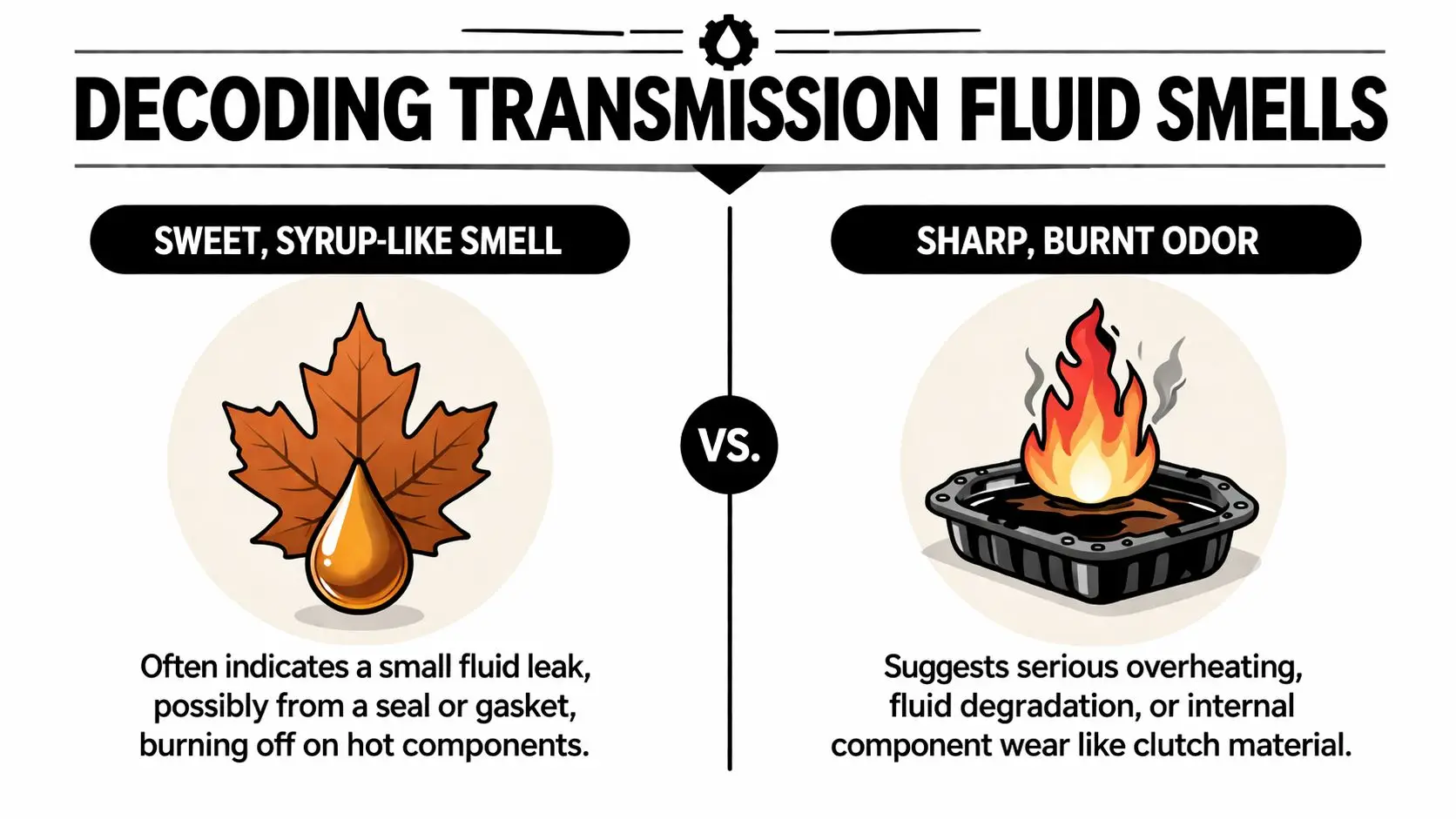
Sweet smell versus burnt smell
Fresh transmission fluid is typically bright red or pink and has a neutral to slightly sweet odor. As contamination builds from metal shavings and burnt residue, it darkens. A burnt smell with dark, murky fluid means the fluid’s protective film has degraded and internal parts are seeing more wear, as described in this overview of contaminated transmission fluid warning signs.
That gives you a useful first check:
| Smell | Likely fluid condition | What it suggests |
|---|---|---|
| Slightly sweet or tart | Fresh or fairly healthy | Normal baseline, unless paired with an obvious leak |
| Syrupy and unusual around a hot car | Possible leak contacting hot surfaces | Needs inspection before low level creates a bigger problem |
| Sharp, burnt odor | Overheated or degraded fluid | High urgency |
| Burnt smell plus dark brown or black fluid | Advanced breakdown or contamination | Immediate professional diagnosis |
Use smell and behavior together
Odor alone can mislead you if another fluid is leaking nearby. That’s why I tell customers to pair smell with what the vehicle is doing on the road.
Look for a combination like this:
- Burnt odor with delayed shifting means the fluid may no longer be providing proper hydraulic control.
- Burnt smell with whining, grinding, or clunking points more toward contamination and increased friction inside the unit.
- Sweet smell with visible residue often means fluid is escaping before the level has dropped enough to affect shifting.
A lot of these overlap with the broader signs of transmission problems that show up before a breakdown.
If the smell changed recently, the transmission changed recently. Fluids don’t suddenly smell burnt without a reason.
What a faint chemical odor can mean
Not every transmission problem smells dramatically burnt. Sometimes drivers notice a hot chemical odor that comes and goes after highway driving or heavy stop-and-go use. In practice, that often means fluid is aging, seeping, or beginning to overheat without having fully cooked yet.
That’s the stage where inspection helps most. You want to catch the problem before the fluid gets thick, dark, and unable to protect the moving parts inside.
Common Causes of a Transmission Fluid Smell
Smells come from a handful of root problems. The fluid itself doesn’t go bad for no reason. Something pushed it there.
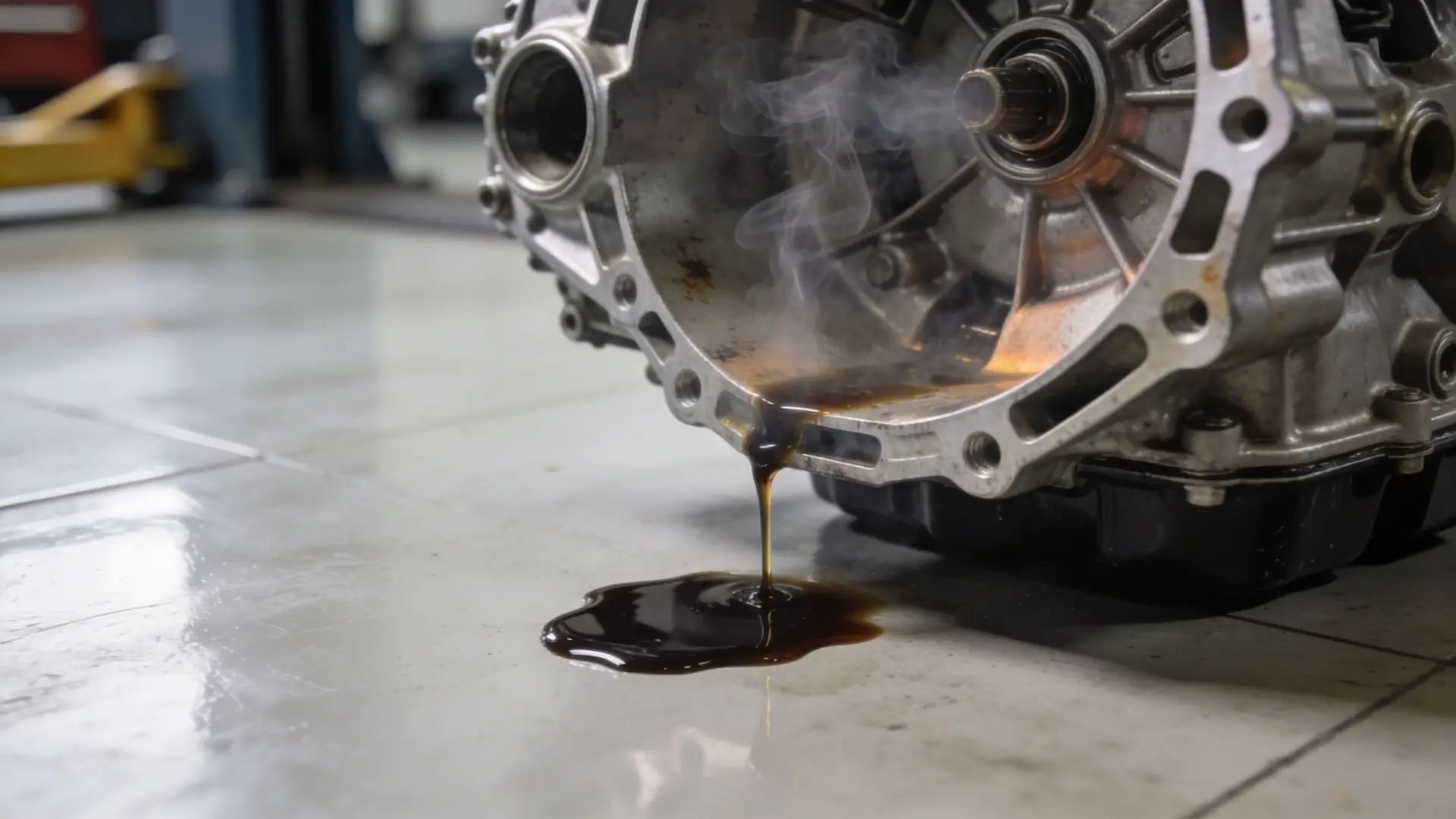
Overheating breaks the fluid down
The biggest cause is heat. When transmission fluid gets too hot, its chemistry changes and it starts releasing the compounds that create that burnt odor. According to this breakdown of burning transmission smell causes, fluid begins to degrade at approximately 200°F, and over 80% of transmission failures are heat-related.
That’s why Texas heat matters so much. Add long lights, slow traffic, towing, or repeated short trips, and the transmission spends more time fighting temperature than people realize.
Think back to that cooking oil analogy. Once oil has been overheated, you can’t make it fresh again by cooling it off. Transmission fluid works the same way. Once it’s burnt, the damage to the fluid is done.
Low fluid and leaks
A transmission can also smell bad because it’s running low. Even a small leak changes how much fluid is available to lubricate and move heat away from the internal parts.
Common problem spots include:
- Pan gaskets that seep slowly over time
- Axle or input seals that start leaking as rubber hardens with age
- Cooler lines and fittings that lose fluid under pressure
- Case seams or pan edges coated with oily grime instead of obvious drips
A low-fluid transmission is like an engine running low on coolant. It may keep going for a while, but it’s doing it with less protection than it needs.
Contamination and restricted flow
Old fluid also collects debris. Metal particles, dirt, and burnt residue turn clean red fluid into something darker and heavier. If the filter is clogged, the fluid can’t circulate as well, so heat stays trapped and wear speeds up.
That’s when drivers often notice noise along with smell. Whining, grinding, or clunking usually means the fluid film between parts has weakened and the transmission is working harder than it should.
A fluid flush won’t fix broken hard parts, but degraded fluid can absolutely create symptoms that feel worse than the actual mechanical damage. That’s why diagnosis matters.
Internal wear
In some cases, the smell is the result of internal clutch material and friction components wearing down. By the time that odor shows up, the transmission may already have wear beyond what routine service alone can solve.
That doesn’t always mean replacement is next. It does mean the smell should be treated as a warning, not a nuisance.
The Risks of Driving with a Bad Transmission Smell
The question most drivers ask is straightforward. “Can I still drive it?” Sometimes, for a short distance. Sometimes, you shouldn’t.
A transmission that smells burnt can still shift for a while, but that doesn’t make it safe. As the fluid loses its lubricating and cooling ability, the unit can start slipping, hesitate before going into gear, or shift harshly when you need smooth control in traffic.
What can happen if you keep driving
The first risk is inconvenience. You may get stranded after what started as a serviceable fluid problem.
The second risk is loss of drivability. If the transmission delays engagement, slips between gears, or bangs into gear unexpectedly, the vehicle becomes harder to control smoothly in intersections, on entrance ramps, and in stop-and-go traffic.
The third risk is money. Ignoring burnt-smelling fluid can turn a maintenance issue into a major repair.
Use this simple rule of thumb:
- Mild smell, no other symptoms. Limit driving and schedule an inspection soon.
- Smell with rough shifting or odd noises. Stop using the vehicle for anything unnecessary.
- Smell with smoke, severe slipping, or failure to engage. Pull over safely and have it transported.
What not to do
Don’t add random fluid because a friend said “it probably just needs some.” Modern transmissions can require specific fluid types, and the wrong one can create new problems.
Don’t keep driving because the vehicle “still makes it home.” Transmissions often fail gradually, then all at once. The smell is your warning window.
How to Check Your Fluid and When to Call a Professional
Start with the type of transmission your vehicle has. That changes what you can check yourself.
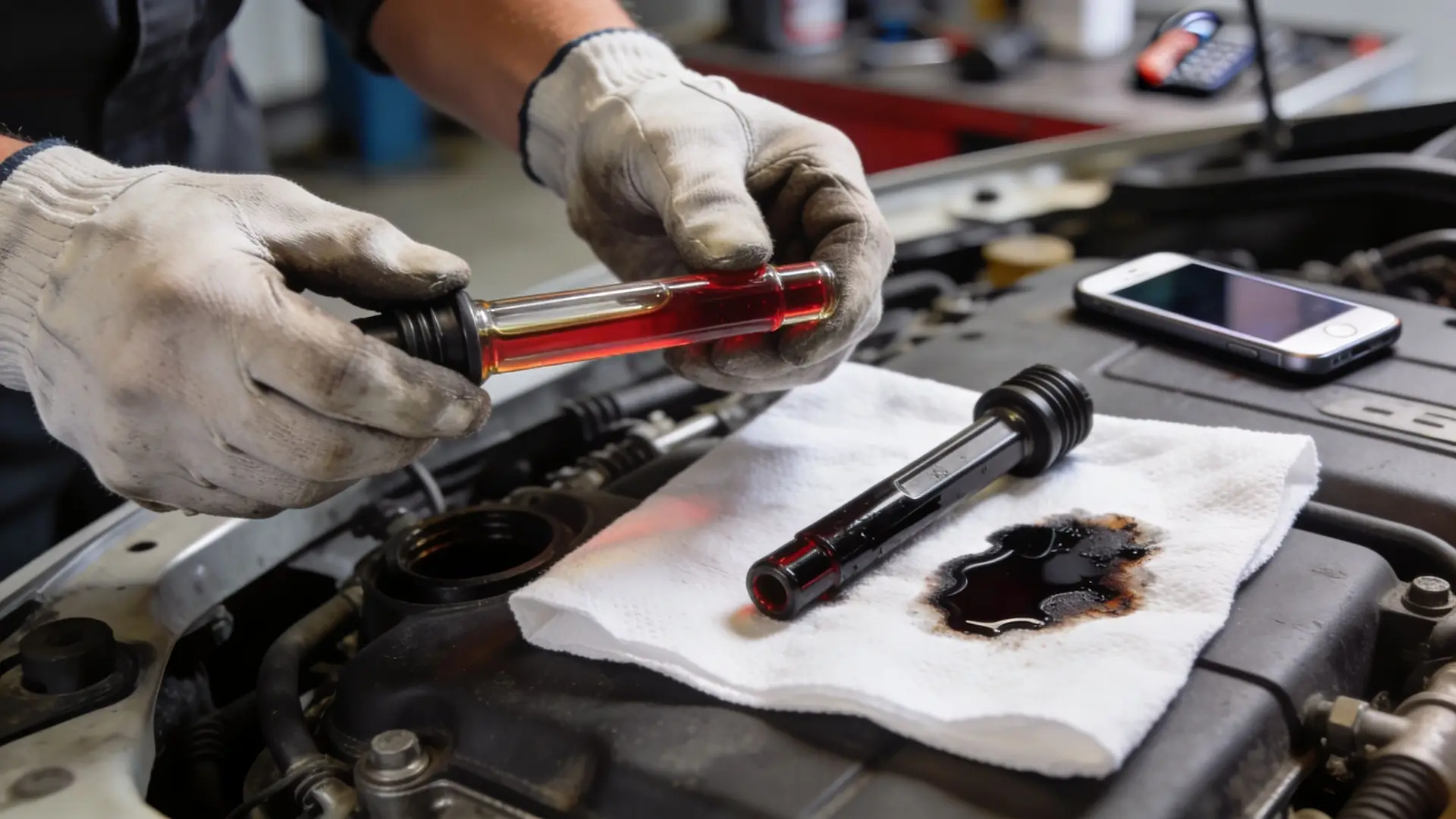
If your vehicle has a dipstick
Older vehicles and some trucks still let you inspect transmission fluid directly. For those, a basic driveway check can tell you a lot.
Use this process:
- Park safely on level ground. Set the parking brake.
- Warm the vehicle up. Fluid should be checked at operating temperature if your manufacturer calls for that.
- Put the vehicle in park. Follow the vehicle’s procedure.
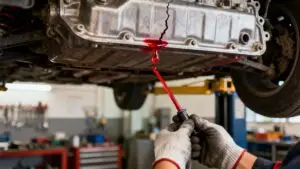
- Pull the dipstick and wipe it clean. Then reinsert it and pull it again.
- Check level, color, and smell. Healthy fluid should look bright red or pink and not smell scorched.
If it’s dark brown, black, or smells burnt, stop guessing. That fluid needs professional evaluation.
If your vehicle has a sealed transmission
Many DIY articles often overlook a critical aspect: Since 2020, over 70% of new vehicles feature sealed transmissions without a dipstick, and in these vehicles a burning smell is often the first warning because drivers can’t easily check fluid level themselves, according to this review of sealed transmission fluid replacement signs. That same source notes that ignoring “lifetime” service intervals, often 60,000 miles, can accelerate varnish buildup and overheating, especially in hot climates like Texas.
So what can you do at home?
- Look under the car for reddish puddles or fresh oily spots near the transmission area.
- Inspect the pan and case exterior for wet residue around seals and edges.
- Pay attention to shifting quality after the smell appears.
- Notice when the smell happens. After highway driving, in traffic, while climbing grades, or only after parking.
If your car has a sealed unit, this service guide on what a transmission service includes helps explain why diagnosis usually requires shop equipment and the correct fill procedure.
A quick visual walkthrough can also help you understand what technicians look for first.
When it’s time to stop DIY checks
Call a professional if any of these apply:
- The smell is strong and appears every drive
- You feel shifting changes such as flare, slip, or delay
- You see leaks but can’t confirm the fluid source
- Your vehicle has a sealed transmission and there’s no safe way to check level at home
Modern sealed transmissions hide fluid problems better than older designs. That doesn’t make them less vulnerable. It just means smell matters more.
Your Next Steps Kwik Kars Solutions in Fort Worth
If your transmission fluid smell is mild, you may still be in the stage where service prevents bigger damage. If it’s burnt and paired with poor shifting, the vehicle needs diagnosis before anyone promises a simple fix.
What the right shop should do
A proper transmission inspection should identify whether the problem is:
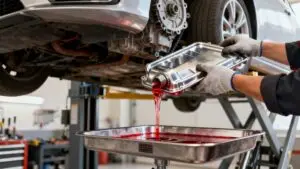
- Degraded fluid that needs a service
- A leak source that has to be repaired before fresh fluid is added
- Restricted flow or contamination affecting operation
- Internal wear that requires a deeper repair plan
For many automatics, industry guidance calls for transmission fluid flushes at 60,000 to 100,000 miles, and that service can prevent up to 90% of premature failures tied to fluid neglect, according to this summary of transmission fluid service intervals and failure prevention. That same source notes that ignoring warning smells can lead to rebuilds costing over $3,000.
Why Fort Worth drivers should act sooner
Texas heat is hard on fluid. High-mileage vehicles, daily commuters, and work fleets all put extra thermal load on the transmission. That means a smell that might seem minor on Monday can become a much more expensive problem by the weekend.
The best next step is simple. Get the vehicle checked while it still drives in under its own power. That gives you more repair options, more control over cost, and less chance of being stranded.
If you’re in Fort Worth and your car smells like burnt transmission fluid, don’t wait for a complete failure to make the decision for you.
If you’ve noticed a transmission fluid smell, shifting changes, or signs of a leak, schedule an inspection with Kwik Kar Oil Change and Auto Care. The team on White Settlement Road can inspect the transmission, diagnose the cause, and help you decide whether the fix is a fluid service, leak repair, or deeper transmission work before the problem gets more expensive.