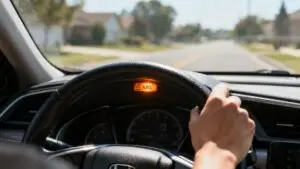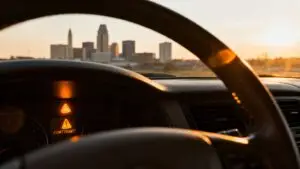




You head out for work, back out of the driveway, and spot the ABS light glowing on the dash. The car may still feel normal, which is exactly why this warning catches Fort Worth drivers off guard. In many cases, the vehicle will still brake in everyday traffic, but the anti-lock function may not be there when you need maximum control on wet pavement, loose gravel, or during a hard stop.
The right response is simple. Do not panic, and do not ignore it.
An ABS light usually means the car needs diagnosis soon, not that it is unsafe for every last mile. Some causes are minor enough to confirm at home, like a weak battery after a hard start, road grime around a wheel speed sensor, or a problem that showed up right after hitting a pothole. Other cases call for a shop visit right away, especially if the red brake warning light is also on, the pedal feels soft, or the vehicle pulls when braking.
That is the goal here. Give Fort Worth drivers a clear triage guide, explain what is safe to check yourself, what common fixes usually involve, and show you when to keep driving cautiously versus when to park it and call for help.
That Unsettling Glow What Your ABS Light Means
The ABS light tends to come on at the worst time. You’re not hearing anything dramatic, the car may feel normal, and that makes the warning more confusing. A lot of drivers assume, “If it still stops, it must be fine.” That’s only partly true.
When the ABS warning light stays on, the car has detected a fault in the anti-lock braking system. The base braking system will usually still stop the vehicle under normal conditions, but the system that helps prevent wheel lockup during hard braking is offline. On a dry road with gentle stops, you may not notice much. In a panic stop or on a rainy Fort Worth morning, you might.
ABS light versus brake warning light
This distinction matters.
- ABS light only: The anti-lock system has a fault, but normal braking usually remains available.
- ABS light plus red brake warning light: Treat that as much more serious. That combination can point to a broader braking problem, not just a loss of anti-lock function.
- Soft pedal, noises, or pulling while braking: Don’t talk yourself into “just one more trip.” Those symptoms need immediate attention.
Practical rule: If the amber ABS light is on by itself, drive cautiously and schedule diagnosis soon. If a red brake light joins it, or the pedal feels wrong, stop and get help.
Why the light can feel random
Drivers often tell us the light came on after rain, after hitting a pothole, or after other suspension or brake work. That’s believable. ABS relies on sensors and wiring near the wheels, and those parts live in a rough environment. Dirt, moisture, corrosion, and road debris don’t need much to trigger a fault.
Another common source of confusion is that the light may come and go. An intermittent light doesn’t mean the problem fixed itself. It usually means the system is seeing an inconsistent signal, then losing it again.
The important takeaway is simple. The warning is not a reason to panic, but it is a reason to pay attention.
How Your Anti-Lock Braking System Protects You
ABS steps in during the kind of stop that catches drivers off guard. A dog runs into the street. Traffic stacks up on I-30 in the rain. You hit the brake pedal hard, and the system helps keep the wheels from locking so you still have a chance to steer.
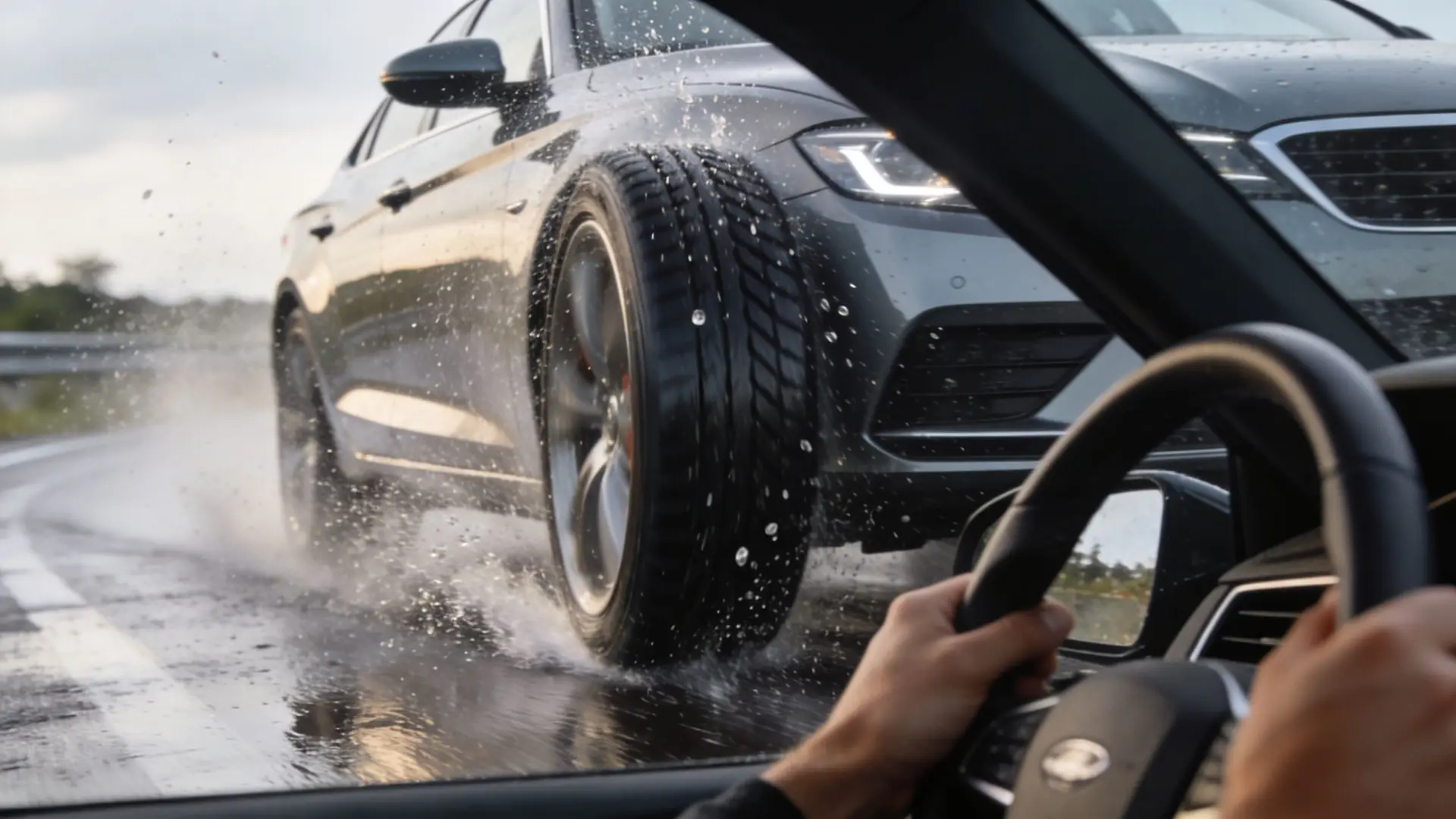
What ABS is actually doing
During a hard stop, ABS rapidly releases and reapplies brake pressure many times per second. The goal is simple. Keep the tires near the edge of traction instead of letting them lock and slide.
That is why the brake pedal may chatter or vibrate in a panic stop. In the shop, we explain that feeling to customers all the time. It usually means the system is working as designed.
A locked tire slides across the road. A rotating tire can still help the driver steer around a problem.
Why that matters on Fort Worth roads
Fort Worth drivers deal with quick weather changes, slick intersections, metal bridge joints, and standing water that shows up fast after a storm. ABS helps most in those moments because it is built to preserve control, not just brake force.
That trade-off matters. On some loose surfaces, such as gravel, a locked wheel can dig in and stop differently, but on the paved roads most local drivers use every day, maintaining steering control is the bigger safety advantage.
| Situation | With ABS working | With ABS disabled |
|---|---|---|
| Hard stop on wet road | Wheels are less likely to lock, and you can keep steering | Wheels may slide, and steering control drops |
| Sudden obstacle ahead | Better chance of braking while maneuvering | Higher chance of a skid during panic braking |
| Uneven or slick pavement | Brake pressure adjusts quickly at each wheel | One bad signal or lockup can upset the stop |
Brake fluid condition matters here too, because modern ABS depends on clean hydraulic pressure to react properly. If you want a plain-English explanation, our guide on why brake fluid should be changed on schedule covers what happens as fluid absorbs moisture over time.
The practical point is this. If the ABS light is on, the car may still stop normally in routine traffic, but you have lost a layer of control that matters most in an emergency.
Top Reasons Your ABS Brakes Light Is On
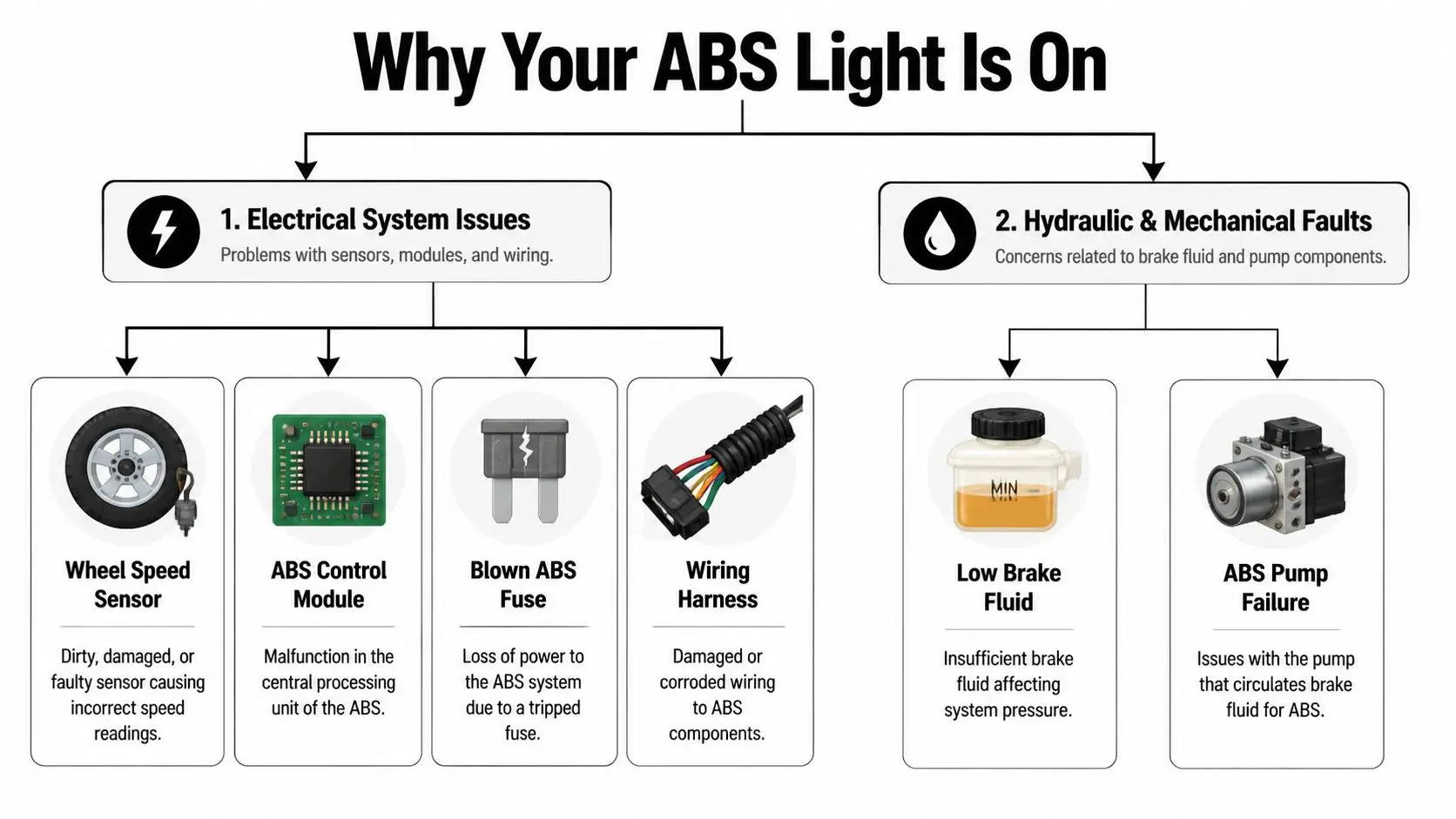
ABS warning lights usually come from a short list of repeat offenders. In the shop, I see the same pattern over and over. Start with the parts that fail most often and are easiest to verify. That keeps Fort Worth drivers from spending money on a module or pump when the problem is a sensor, wiring issue, or low fluid condition.
Wheel speed sensor problems lead the list
A wheel speed sensor is the first place many technicians look, and for good reason. These sensors live down by the hub where they catch water, road salt, brake dust, and pothole shock. One weak signal can turn the ABS light on and shut the system off.
The fix is not always a new sensor. A damaged connector, rust buildup, a loose wheel bearing, or debris on the tone ring can create the same symptom. Good diagnosis means finding which wheel is dropping out before any parts get ordered.
Low brake fluid can trigger the light
Low brake fluid is another common cause, especially on vehicles with worn pads, a small leak, or overdue hydraulic service. If the fluid level drops far enough, the ABS system may flag it along with the regular brake warning light.
Topping it off without finding the cause only hides the problem for a while. Drivers who want the background on fluid condition can read why brake fluid should be changed on schedule. Clean fluid helps the hydraulic side of the system respond the way it should.
Tone rings and wheel bearing issues can fool the system
ABS depends on a clean, consistent wheel speed signal. If a tone ring is cracked, rust-swollen, or packed with debris, the sensor may read an erratic speed even though the sensor itself is still good. I also see bad wheel bearings create extra play at the hub, which changes the sensor gap and causes intermittent ABS faults.
This is one reason parts-swapping gets expensive fast. The light may point to one wheel, but the actual failure can be the bearing or tone ring that supports the reading.
Wiring faults are common on older vehicles
Wiring near the wheels takes abuse. Harnesses get rubbed through, clips break, connectors fill with moisture, and previous repairs sometimes leave wires stretched too tight. On trucks and SUVs that see rough roads, I pay close attention to harness damage near the suspension and frame.
These faults often act intermittent. The light may come on after rain, after a car wash, or only during turns and bumps.
Fuses, modules, and pumps do fail, but they are not the first guess
A blown ABS fuse, failed control module, or pump motor can turn the light on. Those repairs are real, and they do cost more. They are also less common than sensor, wiring, bearing, or fluid-related issues.
That trade-off matters if you’re trying to judge repair cost before you come in. A sensor or harness repair is often manageable. Module and hydraulic unit failures usually require more testing, higher parts cost, and sometimes programming.
Recent brake or suspension work can be the trigger
If the ABS light came on right after brake service, tire work, hub replacement, or suspension work, mention that right away. A sensor may have been bumped, a wire may be out of place, or a connector may not be fully seated. That detail can cut diagnostic time.
Drivers who do their own lifting for wheel or brake work should use the right equipment. This expert guide to 12 ton jacks is a good example of the kind of load and safety considerations that matter before getting under a vehicle.
The practical takeaway
The most expensive part is rarely the first part to suspect. In a real ABS diagnosis, we confirm the fault, check the related wheel end carefully, and separate a simple repair from a system-level failure before recommending anything. That saves time, avoids wasted parts, and gives you a clearer idea of what is safe to drive and what needs attention now.
Simple DIY Checks Before You Visit a Mechanic
You don’t need to take the car apart to gather useful information. There are a few safe checks you can do in your driveway that may either spot a simple issue or at least give a shop a better starting point.
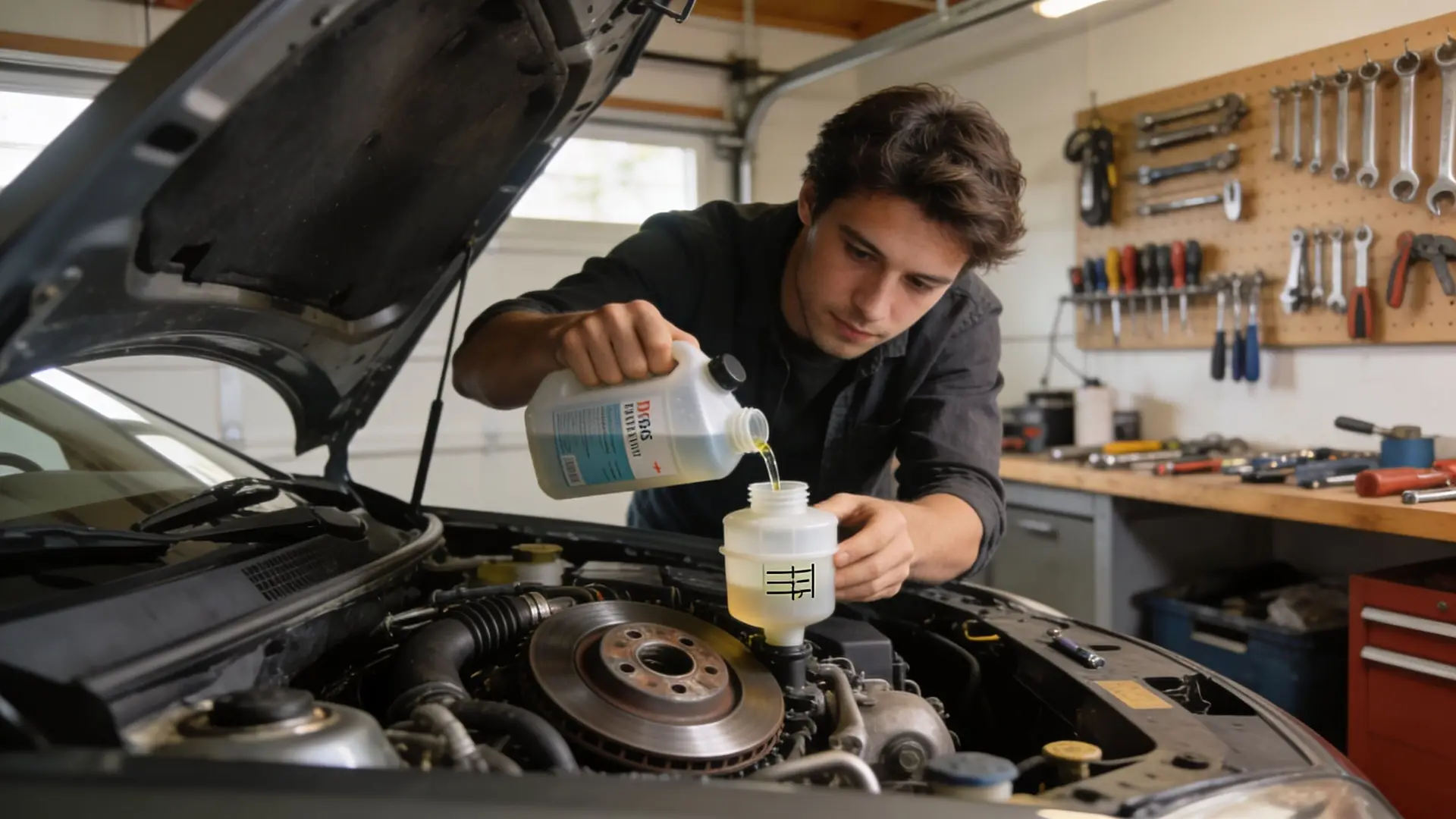
Before visiting a shop, drivers can safely verify that tire pressures are even, inspect brake fluid level, look for visible wiring damage near the wheels, and use a basic scanner that may cost $20 to $50 to check for simple codes (Cars.com on safe ABS checks at home).
Start with the easiest checks
Use this order. It keeps the process simple and avoids turning a small inspection into a risky DIY repair.
- Check tire pressure first: An underinflated tire can confuse wheel speed readings and trigger an intermittent ABS light.
- Look at the brake fluid reservoir: If the fluid is low, don’t stop at topping it off mentally. Ask why it’s low.
- Inspect what you can see near each wheel: Look for broken clips, hanging wires, obvious rubbing, or corrosion around connectors.
- Check for recent work: If the light started after brake, bearing, tire, or suspension work, mention that when you have it diagnosed.
What not to do at home
Don’t unplug random sensors and hope the light clears. Don’t replace parts without a code or test result. And don’t crawl under a vehicle supported by a flimsy jack setup.
If you’re lifting a vehicle for a visual inspection, use proper support equipment and follow safe procedures. A practical reference is this expert guide to 12 ton jacks, especially for truck and SUV owners who assume any jack will do.
If you want a quick refresher on wear items that often tie into low fluid level, this brake pad replacement guide helps explain what pad wear looks like and why it affects the whole system.
A short walkthrough can also help if you’re more comfortable seeing the process than reading about it:
When the DIY step is over
If the light stays on after these checks, that’s your line. ABS diagnosis usually needs a scan tool that can read brake system codes, not just generic engine codes. That’s where professional testing starts paying off.
The Professional Fix What to Expect at Kwik Kar
By the time an ABS light gets to the shop, the job is simple in principle. Find the actual fault before recommending any parts. The same warning light can come from a dirty wheel speed sensor, a damaged wire, low fluid related to brake wear, or a more expensive control issue. Good diagnosis separates those quickly.
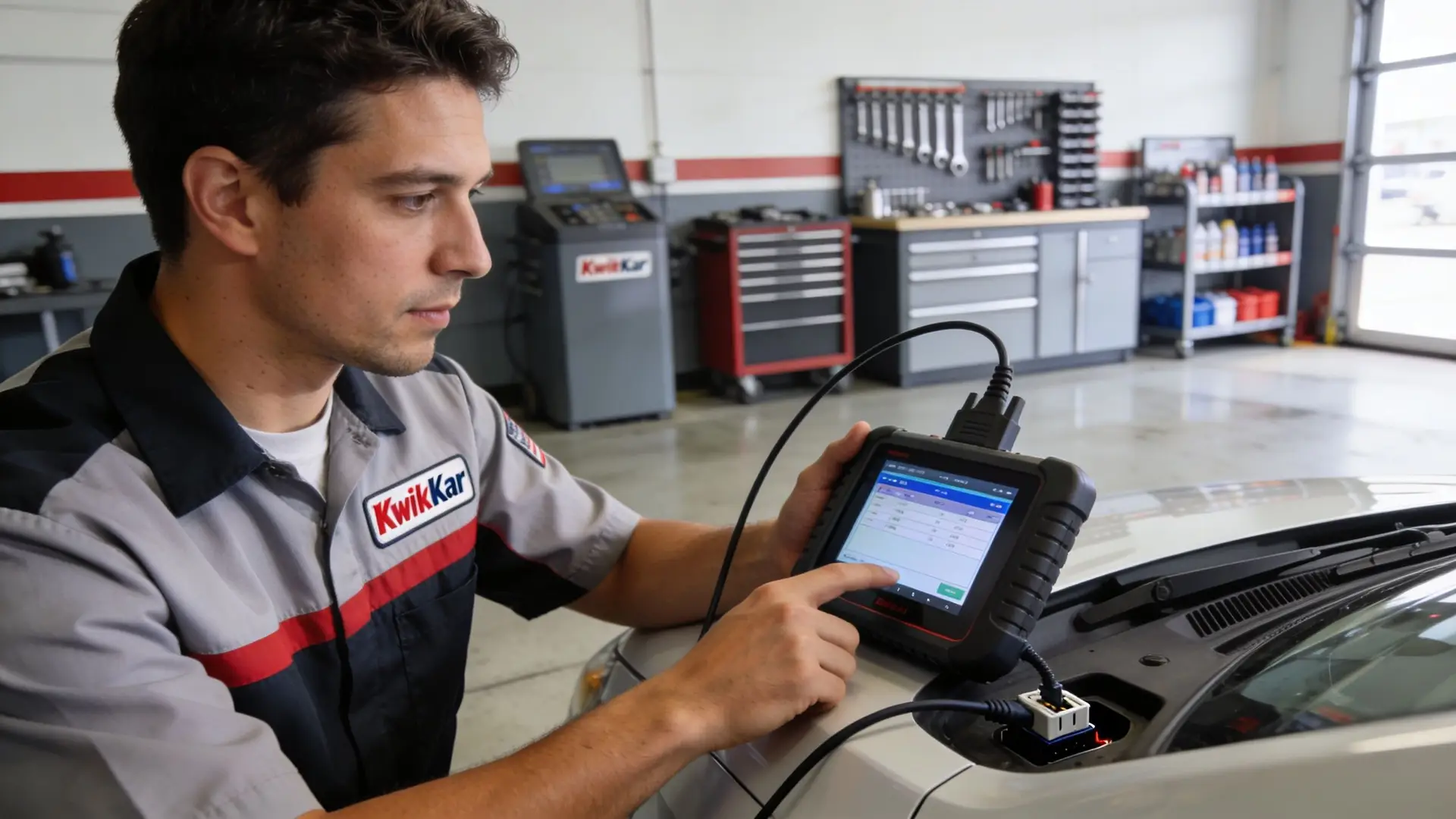
What a proper diagnostic visit looks like
At Kwik Kar, ABS diagnosis usually starts with a scan tool that can read brake system codes, not just engine codes. That tells us which wheel or circuit the module is unhappy with, but a code alone does not equal a part.
From there, we verify it. We inspect sensor wiring, connectors, wheel-end components, brake fluid level, and any recent repair area that could have disturbed a harness or sensor. If needed, we check live wheel speed data and basic electrical values to confirm whether the problem is the sensor, the tone ring, the wiring, or the module seeing bad information.
Then we repair the cause and retest the system. The light needs to stay off for the right reason.
Common repairs and what they cost
Most ABS light repairs fall into a few buckets, and the price depends on parts access as much as the part itself.
- Wheel speed sensor cleaning or replacement: Often one of the more affordable fixes. Cost usually depends on whether the sensor is easy to reach or built into a hub assembly.
- Brake service related to low fluid or pad wear: If worn brake pads have dropped the fluid level enough to trigger a warning pattern, the repair may involve standard brake work instead of ABS parts. This overview of what brake service includes gives you a good baseline for what the shop is checking and replacing.
- Wiring repair: A rubbed-through harness, corrosion in a connector, or damage after suspension or wheel-bearing work can take more labor to trace than customers expect.
- Hub, bearing, tone ring, or module faults: These are less common than sensor and wiring issues, but they do happen, and cost climbs faster because testing and parts are more involved.
In the bay, the trade-off is straightforward. Spending a little on accurate testing usually saves money compared with guessing on parts.
What usually works and what wastes money
The repair that sticks is the one tied to a confirmed fault. If a code points to the left front wheel, we still verify whether that corner has a bad sensor, a broken wire, a damaged reluctor ring, or a wheel bearing issue affecting the signal.
What wastes money is replacing parts based on hunches. I have seen customers come in after changing a sensor themselves, only to find the underlying problem was wiring damage a few inches up the harness.
Kwik Kar Oil Change and Auto Care can scan the ABS system, inspect the brake hardware, and match the repair to the fault that is present. That matters when you are trying to decide whether this is a manageable shop visit or the start of a larger brake repair.
Red Flags When You Need Immediate Service in Fort Worth
Some ABS warnings can wait long enough for a cautious drive to a shop. Some shouldn’t.
If the abs brakes light comes on by itself and the car brakes normally, you may still be able to drive carefully for a short period while you arrange diagnosis. But there are situations where the safe answer is to stop driving and get immediate service.
Don’t keep driving if you notice these signs
- The ABS light and the red brake warning light are on together
- The brake pedal feels soft, spongy, or drops farther than normal
- You hear grinding or other abnormal brake noise
- The vehicle pulls hard during braking
- The light came on with traction control or stability control warnings on a newer vehicle
On newer vehicles, ABS faults can affect stability control and other driver-assist systems. Ignoring those interconnected warnings can increase skid risk by up to 30% on slick surfaces (Neighborhood Tire Pros on ABS, traction control, and ADAS).
Why Fort Worth conditions matter
Fort Worth drivers deal with sudden rain, standing water, rough pavement, and heavy traffic. Those aren’t ideal conditions for “I’ll keep driving and see what happens.” The ABS system is there for the moment you have to brake hard while still steering around trouble.
If your warning light is intermittent, your pedal feels normal, and you just need a diagnosis, schedule it soon. If the warning is paired with any change in pedal feel, braking sound, or another brake light, treat it as urgent.
If your ABS light is on and you want a clear answer instead of guesswork, schedule a brake inspection with Kwik Kar Oil Change and Auto Care. We can inspect the system, scan for the exact fault, explain what needs repair, and help you decide the safest next step for your Fort Worth vehicle.