


One minute your car feels normal. The next, the temperature gauge is climbing, a warning light is on, or steam is rolling out from under the hood while you're trying to get across Fort Worth traffic. If you're asking why is my car overheating, the first priority isn't diagnosis. It's getting yourself and your engine out of danger.
An overheated engine can go from inconvenient to expensive fast. The good news is that the warning signs usually give you a chance to act before things get worse. The better news is that a lot of overheating problems follow a pattern, and once you know what to look for, you can make smarter decisions about whether it's safe to check something yourself or time to call for a tow.
Pull Over Safely Your First Steps When Your Engine Overheats
When the gauge spikes or you see steam, stay calm and act in order. Panic causes bad decisions. Bad decisions around a hot cooling system can cause burns or major engine damage.
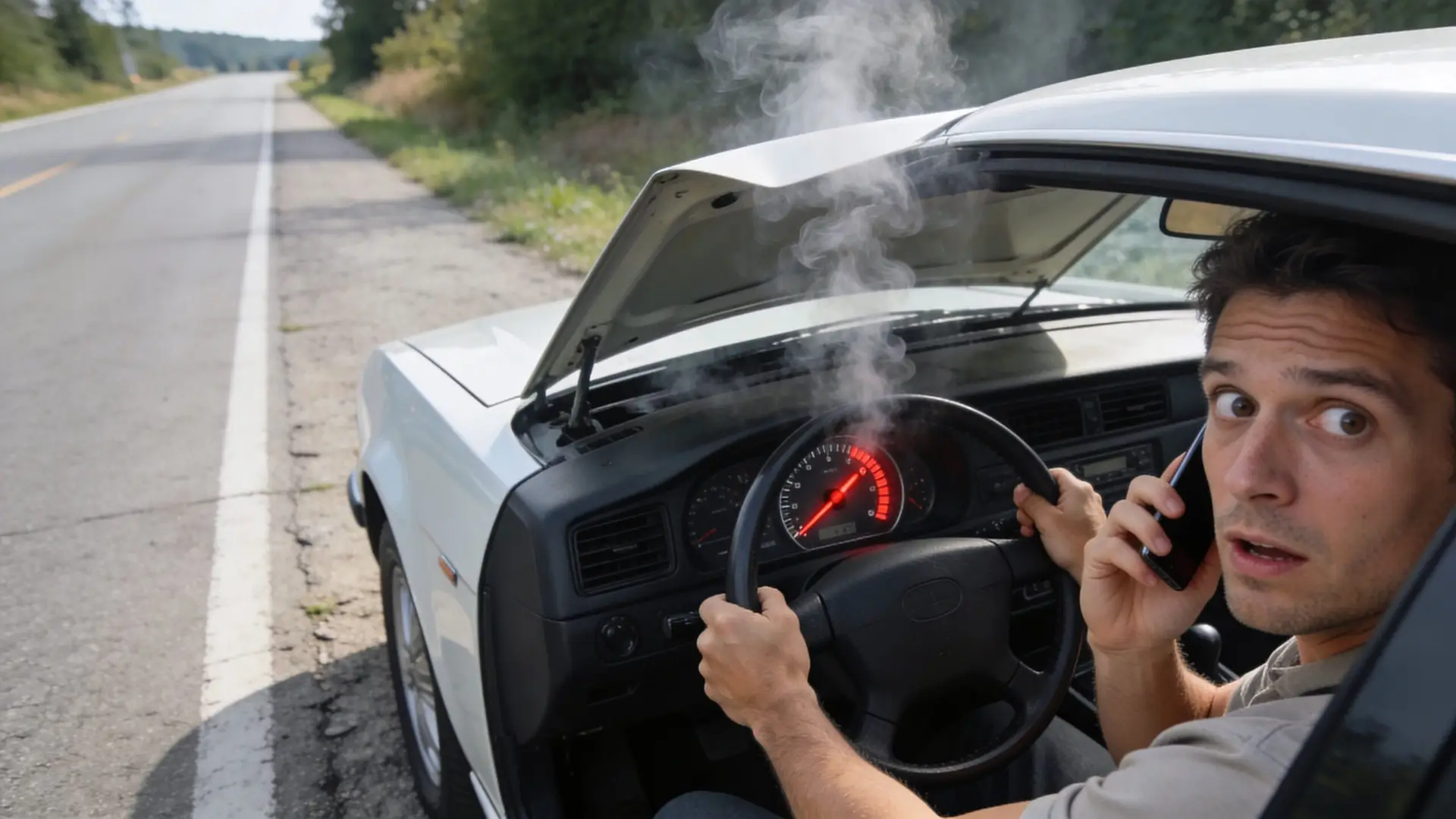
What to do right away
Turn off the A/C. Air conditioning adds load and heat. Shut it off immediately.
Turn the heater on high. It feels backward, but it helps move some heat out of the engine and into the cabin. Open the windows if needed.
Look for a safe place to stop. Get out of traffic. A parking lot, wide shoulder, or side street is better than sitting in a live lane with an overheating engine.
Shut the engine off once you're safely stopped. If the engine is already very hot, continuing to idle can make it worse.
Keep the hood closed for a moment if steam is pouring out. A pressurized cooling system can release scalding coolant. Give it time.
Don't remove the radiator cap while it's hot. That's one of the fastest ways people get burned.
What helps and what doesn't
Some drivers try to "push through" the last few miles home. That usually costs more than a tow. Heat can warp metal parts, damage seals, and turn a smaller repair into a much larger one.
Practical rule: If the gauge is in the red, the warning light is on, or steam is visible, driving farther is a gamble.
If you want a simple roadside checklist to keep on your phone, these quick safety steps for car overheating are worth saving.
When to get back out of the car
If you're stopped in an unsafe place, stay buckled until it's safe to exit. If you're in a safe area, let the vehicle cool fully before you even think about checking under the hood. A hot engine bay isn't just uncomfortable. It can be dangerous.
Watch for these conditions before approaching:
- Active steam means the system may still be under pressure.
- A strong coolant smell often means fluid is escaping somewhere hot.
- Dripping under the front of the car can point to a leak, but don't reach in yet.
If the engine overheated once and then returned to normal, don't assume the problem fixed itself. Cooling systems rarely heal on their own. They usually fail in stages.
How to Read Your Car's Overheating Symptoms
A technician doesn't rely on one clue. We look at the whole pattern. The way your car overheats tells you a lot about what's failing.
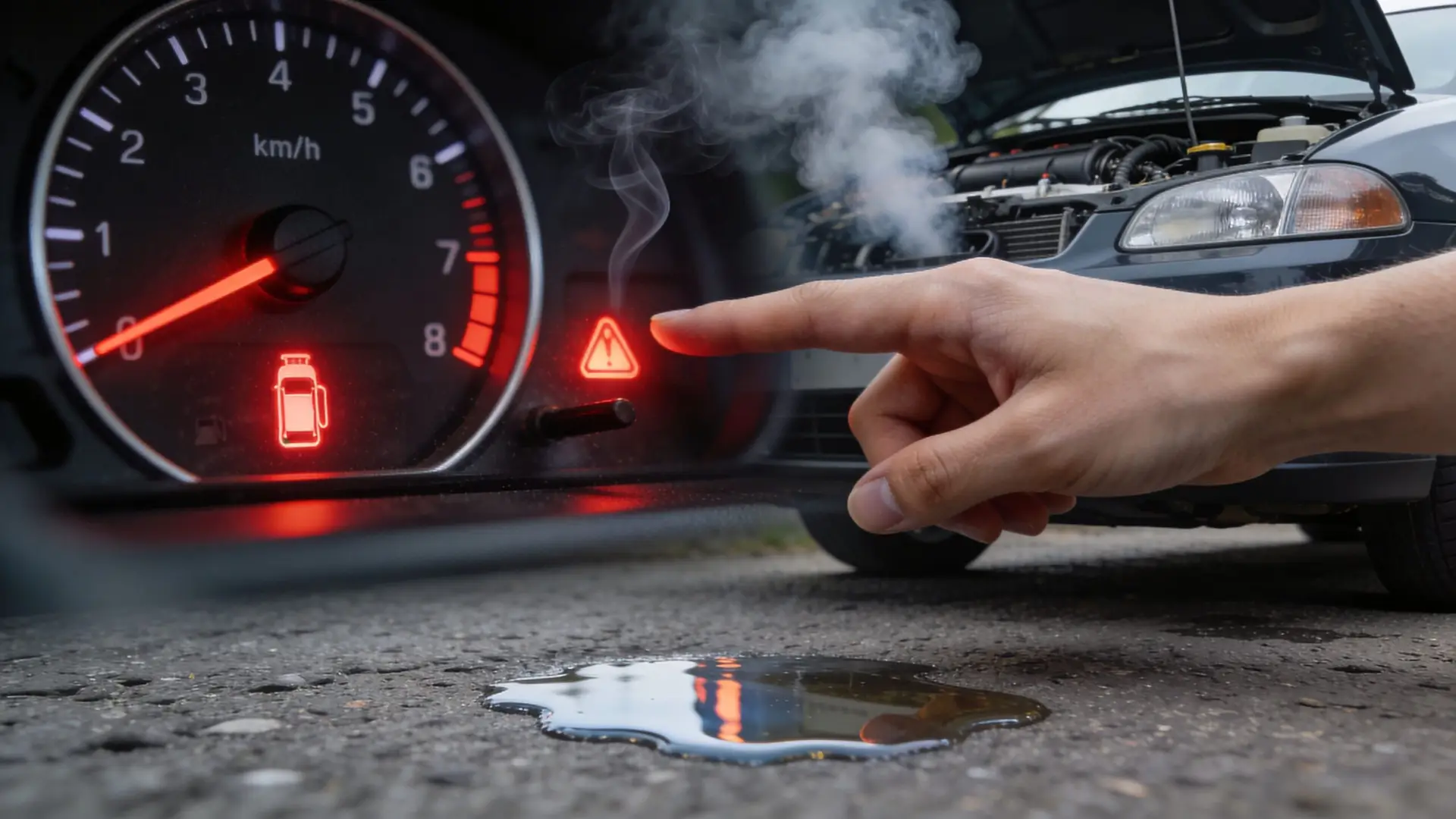
What the dashboard is telling you
Start with the obvious signs. If the temperature needle climbs steadily and doesn't come back down, the engine isn't shedding heat the way it should. If the warning light comes on suddenly, the problem may have escalated quickly.
Some vehicles give you more than one clue at once. If you need help understanding what a temperature warning means on your dash, this guide to the engine temperature light gives a useful plain-language breakdown.
Use your nose and ears
Coolant has a distinct sweet smell. When drivers describe it, they usually say it smells syrupy or chemical-sweet. If you notice that smell after parking, there's a good chance coolant is leaking onto a hot engine part or escaping from the cooling system.
Sounds matter too. Listen for:
- Hissing from under the hood, which can mean coolant or steam is escaping
- Knocking or pinging when the engine is under load, which can happen when heat builds where it shouldn't
- A loud fan that never seems to settle down, which can suggest the system is struggling to keep temperatures under control
Look underneath and around the hood
After the car has cooled, check the ground where you parked. A colored puddle can point to coolant loss. You may also see crusty residue around hose connections, the radiator, or the coolant reservoir cap.
Here are common visual clues that matter:
- Steam from the engine bay often means coolant is hitting a hot surface
- Wet spots around hoses can point to seepage or a loose connection
- Residue on the radiator area can suggest past leaks that dried
If your car overheats mostly in traffic but seems better at highway speed, airflow problems move higher on the suspect list.
This walkthrough can help you connect what you're seeing to common cooling system issues:
Patterns that point to specific trouble
Not all overheating looks the same. The timing matters.
| Symptom pattern | What it can suggest |
|---|---|
| Overheats at idle or in traffic | Fan or airflow problem |
| Heats up quickly after startup | Coolant flow restriction |
| Runs hot on long drives or under load | Low coolant, radiator trouble, or circulation issue |
| Temperature rises and falls unpredictably | Intermittent flow or pressure problem |
That pattern is useful when you talk to a shop. Instead of saying "it got hot," tell them when it gets hot, whether you smelled coolant, and whether steam was visible. That saves time and often gets you to the underlying cause faster.
The Top Reasons Your Engine Is Overheating
Think of the cooling system as the engine's heat-transfer loop. Coolant absorbs heat inside the engine, carries it to the radiator, and the radiator releases that heat into the air. If one major part in that chain fails, the engine starts storing heat instead of shedding it.
A study of overheating engines found that coolant issues, radiator damage, and fan problems accounted for 80% of cases based on Pareto analysis, with low coolant, damaged radiator cores, and loose fan belts standing out as the dominant causes over smaller issues like thermostat faults, according to the engine overheating study in IJETT.
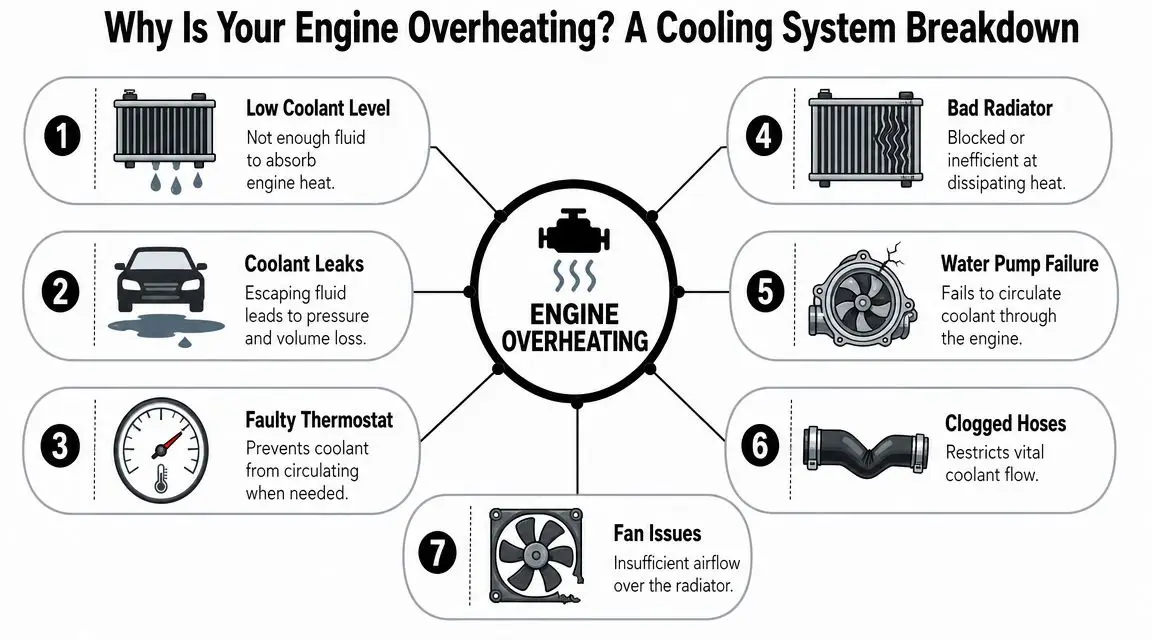
Coolant problems
Low coolant is the most common starting point in real-world overheating. The engine can't move heat away if there isn't enough fluid in the system, and it also can't maintain proper circulation if air gets pulled in where coolant should be.
Coolant problems usually come from one of these situations:
- The level is low because of a leak or neglect
- The mixture is wrong so heat transfer isn't as effective as it should be
- The system has contamination that reduces flow or cooling efficiency
In practical terms, coolant is the delivery truck carrying heat out of the engine. If the truck is half empty, leaking, or stuck in traffic, heat backs up.
Radiator damage and restriction
The radiator's job is simple. It needs to pass coolant through small passages and expose that heat to airflow. When the core is corroded, blocked with debris, or physically damaged, the radiator can't release heat efficiently.
This is one of those failures drivers often miss because the car can seem fine for a while. Then summer traffic, towing, stop-and-go driving, or a long uphill pull exposes the weakness.
Typical radiator-related overheating includes:
- External blockage from dirt, leaves, or road debris
- Internal restriction from corrosion or old coolant deposits
- Bent or damaged core sections that reduce heat dissipation
A weak radiator often shows itself when the vehicle needs cooling capacity most, not when conditions are easy.
Fan problems
At road speed, moving air helps cool the radiator. At idle or in slow traffic, the fan has to do the work. If the fan doesn't move enough air, temperatures rise quickly when the car isn't getting natural airflow.
On older belt-driven setups, belt looseness can reduce fan performance. On electric fan systems, the fan motor, control circuit, relay, or sensor logic can be the issue. The symptom many drivers notice is simple. The car runs hotter in a drive-thru line than it does cruising on the highway.
The thermostat issue
The thermostat is a gatekeeper. It stays closed while the engine warms up, then opens so coolant can circulate through the radiator. When it sticks closed, coolant flow is restricted right when the engine needs it most.
A faulty thermostat is a primary cause of rapid overheating. Replacement is a common repair, typically between $200 and $400 including parts and labor, and handling it early can prevent a head gasket repair that can cost over $2,000, according to this thermostat and overheating repair overview.
Other causes worth checking
Not every overheating problem falls into the top three. A few other failures can still trigger the same symptom:
- Water pump trouble can reduce coolant circulation
- Collapsed or clogged hoses can choke flow
- Pressure loss from a cap or leak can lower the system's ability to manage heat
The important part is this. Overheating is usually not random. It comes from a specific breakdown in coolant level, coolant flow, heat release, or airflow. Once you identify which part of that chain failed, the repair path gets a lot clearer.
What You Can Safely Check Before Calling a Mechanic
Only do these checks on a fully cooled engine. Not warm. Not "it seems okay now." Fully cooled. If the upper hose still feels hot or the engine just shut off recently, wait.
Start with the coolant reservoir
Look at the translucent overflow tank and find the molded level marks. If the coolant is clearly below the minimum line, you've learned something important. It doesn't tell you exactly where the problem is, but it tells you the system may be losing fluid or wasn't filled correctly.
If you want a more detailed walkthrough, this page on how to check for coolant leaks covers the leak-check basics in a practical way.
Check what you can see without taking anything apart
You don't need special tools for a first pass. Use good light and look for obvious signs.
- Hoses. Look for swelling, cracks, rubbed spots, or wet connections.
- Radiator area. Check for leaves, plastic bags, mud, or packed debris blocking airflow.
- Coolant reservoir. Look for staining, cracks, or signs that coolant has been pushed out.
- Belt condition. If your setup uses a serpentine belt to drive cooling components, look for glazing, fraying, or looseness.
Pay attention to the simple clues
A lot of overheating diagnoses start with ordinary observations that people ignore. Did the problem show up only with the A/C on. Did it happen after a long idle. Did the heater suddenly stop blowing warm air. Those clues matter because they help separate low coolant from airflow issues from circulation problems.
Shop-floor advice: Write down what happened before you forget it. Hot day, stuck in traffic, gauge climbed, heater turned cold, steam near passenger side. That kind of note helps a technician faster than "it overheated."
What not to do in your driveway
Some checks create more risk than value.
- Don't open the radiator cap on a hot engine
- Don't keep topping off fluid without finding out where it's going
- Don't pour random fluids into the cooling system
- Don't ignore belt squeal, coolant smell, or repeated warning lights
If you find a low reservoir, damaged hose, or obvious leak, you've done enough for a safe first inspection. At that point, the next step is diagnosis and pressure testing, not guesswork.
Overheating Repairs What to Expect and Likely Costs
Drivers usually ask two things right away. What failed, and how much is this going to cost me.
Both are fair questions. An overheating repair can be a relatively small cooling system job, or it can turn into major engine work if the vehicle was driven too long while hot. The difference often comes down to how quickly the engine was shut off and whether the shop verifies the root cause instead of replacing parts based on guesswork.
A proper repair should answer three points clearly. What failed first. What that failure may have damaged. Whether the system holds pressure and stays at the correct operating temperature after the repair.
How a good shop approaches the repair
The process usually starts with testing, not parts replacement. That includes pressure testing the cooling system, checking for leaks, confirming fan operation, verifying coolant flow, and looking for signs that the overheating event affected the engine itself.
That last part matters.
On some vehicles, replacing the failed part is the easy portion of the job. The bigger concern is making sure the heat did not warp a cylinder head, damage a head gasket, or create a small leak that shows up a week later. In the shop, I would rather spend extra time proving the repair than send a driver back out with a problem that is only half fixed.
Common overheating repairs and likely cost ranges
One repair range can be stated clearly from verified data. Thermostat replacement typically falls between $200 and $400, depending on the vehicle and coolant service needed. Other overheating repairs vary more because labor access, parts design, and related damage can change the bill fast.
| Symptom/Cause | Likely Repair | Estimated Cost Range |
|---|---|---|
| Faulty thermostat | Thermostat replacement with coolant service as needed | $200 to $400 |
| Head gasket damage after repeated overheating | Major engine repair | Over $2,000 |
| Low coolant from an external leak | Leak diagnosis and replacement of the failed component | Varies by source of leak |
| Radiator restriction or damage | Flush, repair, or radiator replacement depending on condition | Varies by radiator condition and vehicle layout |
| Fan problem at idle or in traffic | Fan system diagnosis and repair | Varies by whether the issue is mechanical or electrical |
| Belt-related cooling problem | Belt inspection and replacement if worn or loose | Varies by belt system and access |
If old coolant, rust, or internal buildup is part of the problem, a radiator service may solve the restriction before it becomes a larger repair. This overview of a radiator flush service gives a clear picture of what that maintenance does and when it helps.
Where repair costs usually climb
Delay is what turns a manageable repair into an expensive one.
A thermostat, hose, fan relay, or small leak may be annoying and affordable at first. Keep driving with the temperature climbing, and the risk changes from cooling system repair to internal engine damage. That is where costs jump hard. A few hundred dollars can become a few thousand.
The practical goal is containment. Stop driving. Confirm the cause. Repair the failed part. Then test the system under real operating conditions so the problem does not come back on the next hot day or the next long traffic light.
What you should hear from the service advisor
Clear explanations matter, especially if you are worried about cost. The shop should tell you whether the bill covers diagnosis only, a confirmed failed part, coolant service, or follow-up testing. If multiple repairs are recommended, ask which item caused the overheating and which items are preventive or related wear.
Kwik Kar Oil Change and Auto Care handles overheating complaints in Fort Worth with the standard checks that matter here. Coolant loss, radiator problems, fan faults, pressure testing, and post-repair verification. That kind of step-by-step diagnosis helps drivers avoid paying for parts that did not need to be replaced.
Special Considerations for Hybrid and Electric Vehicles
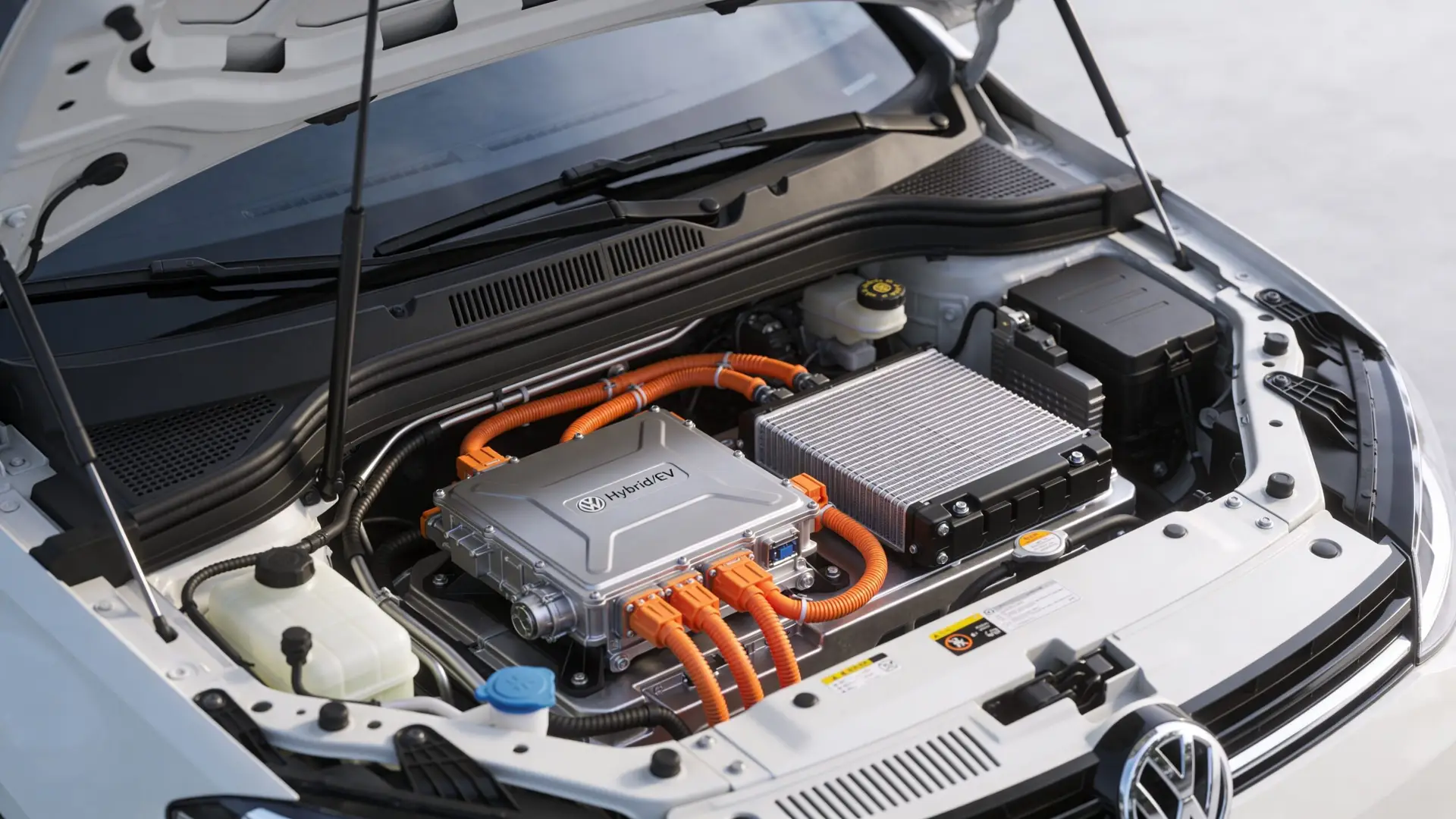
Hybrid and electric vehicles can overheat too, but the problem doesn't always look like a traditional gas-engine overheating event. Instead of a temperature needle racing upward, the first sign may be a warning message, reduced power, or a noticeable drop in driving range.
With EV sales up 52% in Texas, overheating tied to EV and hybrid battery cooling systems is becoming a bigger service issue, and a 2025 AAA report notes that inadequate battery cooling causes 15% of service calls for these vehicles, often showing up as reduced range before a temperature warning appears, according to AAA's overheating guide.
How EV and hybrid overheating feels different
In a gasoline vehicle, overheating usually centers on the engine cooling system. In an EV or hybrid, heat management can involve the battery pack, power electronics, electric motors, cabin cooling integration, and control software.
Drivers often report symptoms like:
- Reduced range
- Power limitation
- Thermal warning messages
- Cooling system fans running more aggressively than usual
Why diagnosis is less obvious
You can't treat an EV or hybrid thermal issue like an old radiator-and-hose problem and expect a reliable answer. These systems are more integrated, and some faults need scan-tool data and model-specific procedures to identify correctly.
If a hybrid or EV shows thermal warnings, don't guess and don't keep pushing it. Battery and power electronics cooling issues need proper diagnosis.
The main takeaway is simple. If you're driving a newer hybrid or EV and asking why is my car overheating, the answer may involve battery cooling rather than the traditional engine parts commonly considered first.
Why Choose Kwik Kar for Overheating Issues in Fort Worth
Overheating isn't a symptom to watch for a few more days. It's a stop-and-address-it problem. Once an engine gets too hot, the risk isn't just inconvenience. It's warped parts, damaged gaskets, repeat breakdowns, and repairs that grow because the first warning was ignored.
Drivers in Fort Worth need a shop that can sort out the actual cause, not just top off coolant and send the car back out. That means using real diagnostics, inspecting the cooling system as a whole, and checking whether the overheating event caused any follow-on damage.
What matters in a repair visit
A trustworthy overheating diagnosis should include:
- A clear explanation of what failed and why
- A verification step after the repair so the fix is confirmed
- Fair communication about urgent repairs versus optional maintenance
Why that matters for budget-conscious drivers
The cheapest invoice isn't always the least expensive outcome. If a shop misses the root cause, you pay twice. If they replace parts by guesswork, you pay for labor that didn't solve the problem.
Kwik Kar on White Settlement Road works with ASE-certified and RepairPal technicians, premium-quality parts, and standard diagnostic equipment. For overheating complaints, that matters because cooling system failures often involve more than one symptom, and the right repair starts with identifying the failure point instead of assuming.
Frequently Asked Questions About Car Overheating
Can I just add water to my radiator
You can use water only as a roadside stopgap, and only after the engine has cooled fully. It may help you in an emergency if coolant is not available, but it should not stay in the system. Your cooling system is built to run on the correct coolant mix for heat control, corrosion protection, and proper boiling point. If the level is low, the underlying issue is the leak or failure that let it drop.
How long can I drive an overheating car
Do not keep driving it. A hot gauge, temperature warning light, or visible steam means engine heat is already outside the safe range. I have seen small cooling system problems turn into warped heads and blown head gaskets because the driver tried to make it a few more miles.
Pull over safely, shut the engine off, and let it cool.
If it overheated once and now seems fine, am I okay
Not always. Many overheating problems are intermittent at first. A thermostat can stick once and then act normal again. An electric fan can fail only at idle. A small coolant leak may show up only after the system is fully hot and pressurized.
That is why a one-time overheat still deserves attention.
Does turning on the heater really help
Yes, sometimes. The heater core works like a small extra radiator, so turning the heat on full can pull some heat out of the engine for a short time. It may buy you enough time to reach a safe shoulder or parking lot.
It does not fix the cause, and it does not make continued driving safe if the temperature keeps climbing.
Is overheating always a radiator problem
No. The radiator is one piece of the system. Low coolant, a bad thermostat, a weak water pump, cooling fan issues, a pressure loss, or even combustion gases entering the cooling system can all cause overheating.
The symptom is the same. The repair is not.
If your vehicle is running hot, showing a temperature warning, or losing coolant, schedule an inspection with Kwik Kar Oil Change and Auto Care. We can identify the cause, explain the repair in plain language, and help you avoid paying for parts that do not solve the problem.