



You’re sitting at a long light on White Settlement Road in August. The A/C is on, traffic isn’t moving, and you notice the temperature gauge climbing higher than it usually does. Nothing gets a driver’s attention faster than that.
Most of the time, that moment starts with a cooling system that hasn’t been maintained the way it should. Coolant doesn’t last forever. It breaks down, loses its protective qualities, and can turn from a heat-transfer fluid into something that slowly works against the radiator, water pump, heater core, and passages inside the engine.
That’s why people searching for radiator flush valvoline are usually trying to answer two practical questions at once. First, can I handle this myself? Second, is it smarter to let a shop do it quickly and correctly? For Fort Worth drivers, that decision matters even more because heat exposes weak cooling systems fast, and our local hard water can make a bad DIY flush worse if the wrong water goes back in.
Keeping Your Engine Cool on Hot Texas Roads
A healthy cooling system has one job. It moves heat away from the engine and keeps temperatures stable when you’re idling, towing, commuting, or running the A/C in triple-digit weather. When the coolant is fresh and the system is sealed, the engine stays in its normal operating range. When the coolant is old, contaminated, or the wrong type, the whole system starts losing margin.
In the shop, we see this play out in ordinary ways. A driver says the car “runs a little warmer than it used to.” Another notices weak cabin heat in winter, then overheating in spring. Someone else sees dried residue around the radiator cap or overflow tank and assumes it’s minor. Those small signs often point back to coolant condition.
What coolant is really doing
Coolant isn’t just colored liquid in a reservoir. It helps control temperature, protects metal surfaces from corrosion, and supports the moving parts in the cooling system. Over time, it degrades. Once that happens, it can become corrosive to the system instead of protective.
Practical rule: If your temperature gauge starts acting differently than normal, don’t wait for a warning light before checking the cooling system.
A flush matters because it removes old coolant and contamination that a simple top-off leaves behind. That’s especially important on aging vehicles, used cars with incomplete service history, and anything that may have had the wrong coolant added at some point.
Why Fort Worth heat changes the stakes
Texas heat doesn’t create cooling system problems, but it exposes them fast. A system that seems fine on a mild morning may show its weakness in afternoon traffic.
If your dash warning has already come on, it helps to know what that signal means before driving farther. This guide to the engine temperature light breaks down the difference between a minor warning and a shut-it-down-now situation.
The bottom line is simple. If your coolant is overdue, discolored, contaminated, or mismatched, you’re not maintaining a comfort system. You’re protecting the engine itself.
Signs Your Car Is Asking for a Radiator Flush
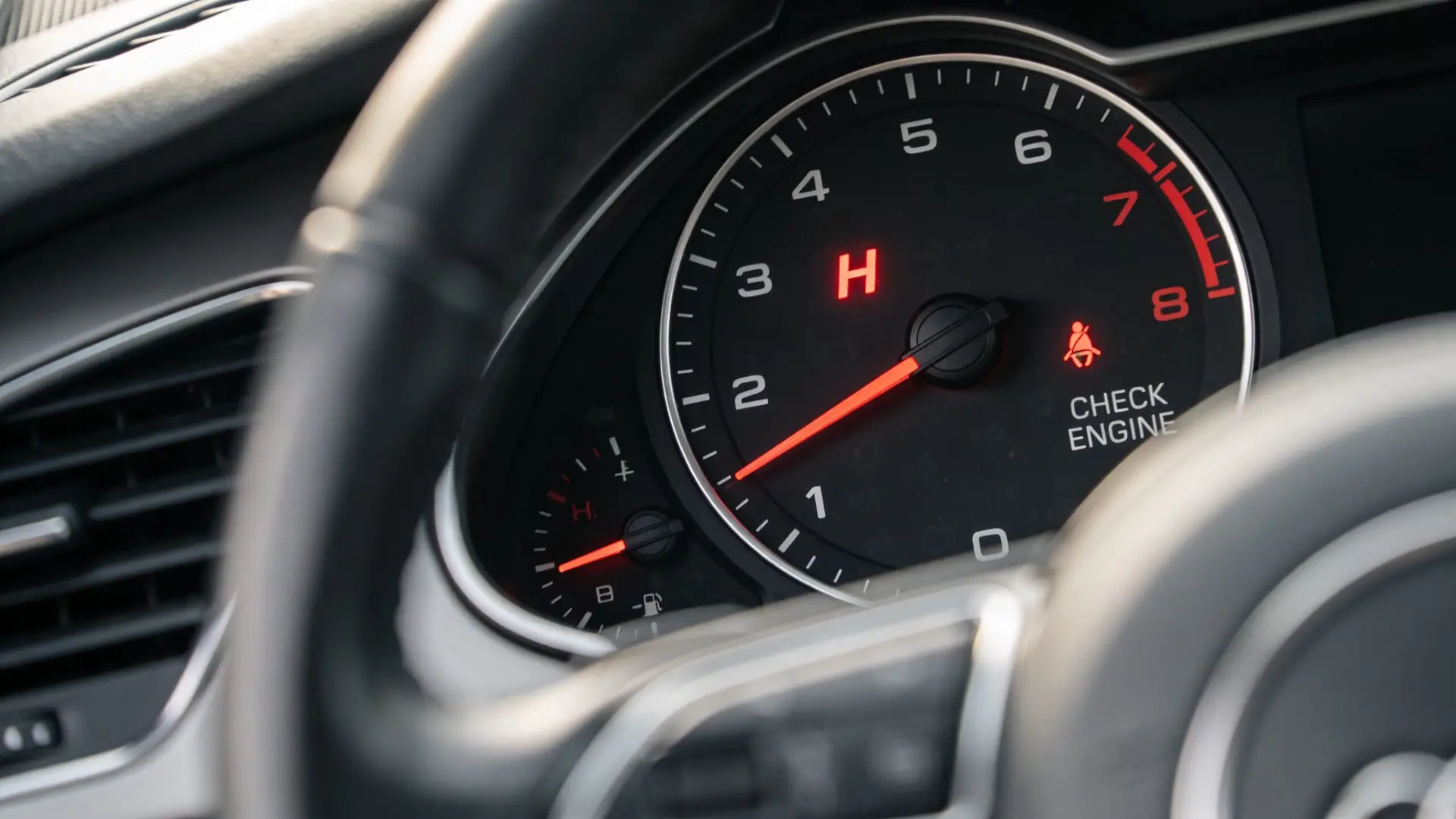
You sit through a Fort Worth traffic light with the A/C running, glance down, and notice the temperature gauge riding a little higher than usual. The car still drives. The heater may still work. But that slight change is often how cooling system trouble starts showing itself before you get stranded on Camp Bowie or I-30.
What to look for under the hood and on the road
A radiator flush makes sense when the coolant is worn out, contaminated, or mixed with something that does not belong there. It does not fix every overheating problem, so the goal is to recognize the signs that point to coolant condition instead of guessing.
Start with a cold engine and check what the system is telling you.
- Coolant looks rusty, muddy, or oily: Healthy coolant should look clean and consistent. Brown sludge, cloudiness, or an oily film usually means corrosion, contamination, or a bigger mechanical problem.
- Sweet coolant smell after driving: That smell often means coolant is escaping somewhere, even if you do not see a puddle yet.
- Temperature gauge runs higher than normal: A small change matters, especially in Texas heat. If the gauge has a new habit, pay attention.
- Crusty residue around cooling parts: White, pink, orange, or green deposits around the radiator, hoses, cap, water pump, or reservoir usually mean coolant has been leaking and drying there.
- Weak heat from the vents: Poor cabin heat can point to restricted coolant flow or air trapped in the system.
- Frequent top-offs: Coolant does not get used up like fuel. If the level keeps dropping, there is a reason.
If you want to narrow down whether the problem is a leak, pressure loss, or a bad connection, this guide on how to check for coolant leaks can help you inspect it safely.
Service timing matters, but condition matters more
Coolant does not always fail on a neat schedule. Some vehicles can go years without trouble. Others need attention sooner because of age, heat, neglected maintenance, or the wrong coolant being added at some point.
That last one is common on used cars. A reservoir full of bright fluid can still hide a bad mix. Color alone does not confirm the chemistry is correct, and mixed coolant types can leave deposits that a simple drain and refill will not remove well.
If you bought a vehicle with no clear service records, treat the cooling system with some suspicion. We see that a lot at Kwik Kar. People assume, top it off, and keep driving until the gauge starts climbing.
A few signs drivers dismiss too long
Small cooling system problems rarely stay small in Fort Worth summer driving.
If the overflow bottle keeps dropping and no one knows why, the system needs to be checked before it turns into an overheating repair.
These clues get ignored all the time:
- A hose feels swollen, soft, or brittle: Old coolant and age both wear rubber parts down.
- Residue around the radiator cap or reservoir cap: Pressure may be escaping before the system can work correctly.
- The cooling fan seems to run more often than it used to: That can happen when the system is working harder to control heat.
- Mystery coolant in a used car: If you do not know what is in it, a proper flush is often safer than repeated top-offs with whatever is on the shelf.
A radiator flush is maintenance, not a magic fix. It helps when the coolant is degraded, dirty, or mismatched. It will not repair a cracked radiator, a stuck thermostat, a failed water pump, or an electrical fan problem. The hard part is knowing which situation you have, and that is where DIY can save money or waste it fast if the diagnosis is off.
How to Choose the Right Valvoline Coolant
Before anybody talks about flushing, the smarter question is this. What coolant belongs back in the system when you’re done? That’s where plenty of DIY jobs go sideways.
Don’t choose by color alone
Coolant color can help identify a product family, but it’s not a safe selection method by itself. Different formulas can look similar, and some manufacturers use different dye colors for fluids with very different additive packages.
The safer path is to check the owner’s manual and look for the exact spec or approved coolant type. Drivers often hear shorthand names like IAT, OAT, and HOAT. Those labels matter because each formula uses a different corrosion protection package, and the engine was designed around that chemistry.
Here’s the plain-English version:
- IAT: Older conventional coolant chemistry, more common in older vehicles.
- OAT: Long-life organic acid technology used in many newer vehicles.
- HOAT: Hybrid organic acid technology used in various domestic and European applications.
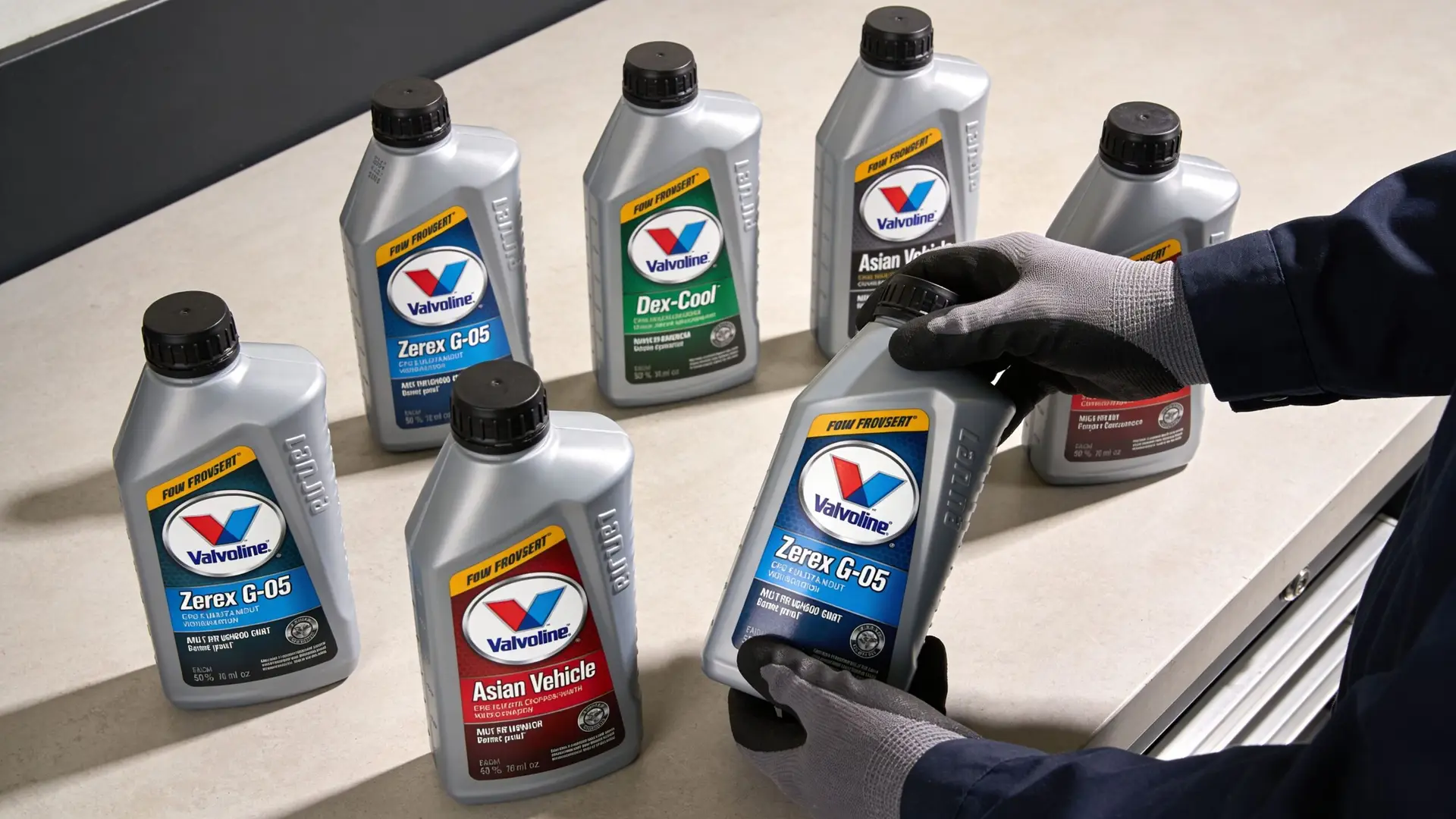
Valvoline products such as Zerex G-05 and Zerex Asian Vehicle are examples of coolants chosen by vehicle specification, not by guesswork.
The used-car problem
One of the biggest headaches with radiator flush valvoline searches is the driver who bought a used car and later discovers the previous owner mixed coolants. That’s common on high-mileage vehicles because somebody topped off the system with “whatever was on the shelf.”
Forum discussions show people asking whether to use Valvoline Radiator Super Cleaner during a multi-run distilled water flush after finding out the wrong coolant caused corrosion, as reflected in Valvoline’s own educational content on how to flush coolant.
Wrong coolant doesn’t always cause an immediate failure. Sometimes it creates a slow mess. Corrosion, deposits, and restricted passages build over time, then overheating shows up later.
What to do if you suspect a mismatch
If you think incompatible coolant is in the system, don’t just top it off with another formula and hope the colors blend. That usually makes the situation harder to diagnose.
A practical approach looks like this:
- Confirm the required spec: Use the owner’s manual, not the bottle color.
- Assume contamination if history is unknown: Especially on older or recently purchased vehicles.
- Use distilled water for rinsing if you’re doing it yourself: Fort Worth tap water is not your friend in a cooling system.
- Refill with the exact correct coolant after the system is clean: Not the “close enough” option.
When a vehicle has visible corrosion in the system or signs that multiple coolant types have been mixed, that’s where experience matters. The flush itself is only half the job. Choosing the right refill fluid is what keeps you from repeating the problem.
A Practical DIY Radiator Flush Using Valvoline
A DIY flush can be done at home, but this isn’t the same as dumping old fluid and pouring new fluid in. A proper radiator flush valvoline process takes patience, clean handling, and attention to detail. The mistake people make is treating the cooling system like an oil change. It’s less forgiving than that.
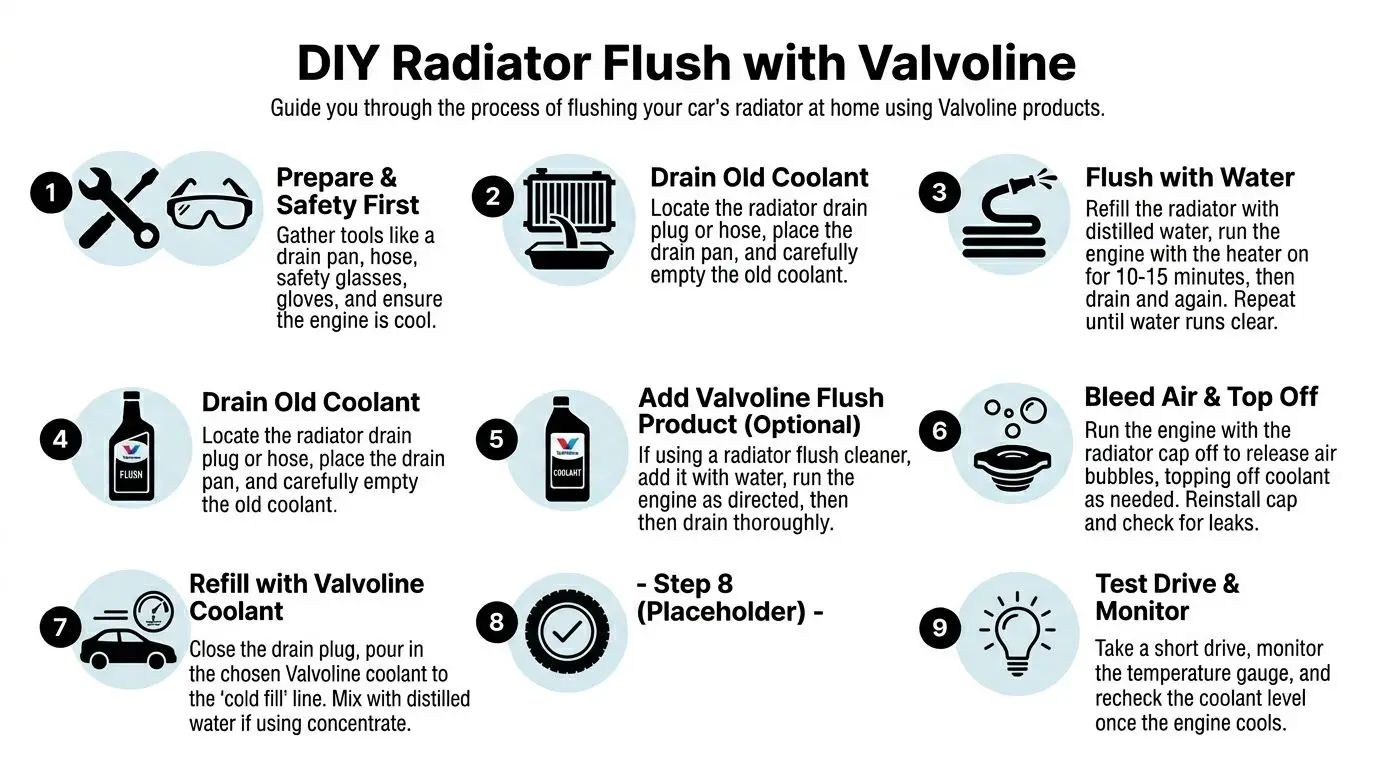
To help visualize the workflow, this infographic lays out the basic sequence:
Start cold and stay organized
The engine must be completely cool before you open the system. That’s not a suggestion. Hot coolant under pressure can cause serious burns.
Gather what you’ll need before touching the radiator cap. A drain pan, gloves, safety glasses, a hose for controlled draining, distilled water, the correct Valvoline coolant for the refill, and if needed, Valvoline Radiator Super Cleaner. Keep containers ready for used coolant because it needs proper disposal.
Draining the old coolant the right way
With the vehicle parked level and the engine cold, remove the radiator cap slowly. Then open the drain point and direct the old coolant into the pan in a controlled way. Sloppy draining turns a service job into a cleanup problem fast.
If the coolant that comes out looks rusty, muddy, or mixed, that supports doing a full flush instead of a quick drain-and-fill.
Use cleaner only when it helps
If you’re dealing with visible contamination, corrosion, or signs of the wrong coolant having been used, a chemical cleaner can help loosen deposits that water alone may leave behind. Add the cleaner as directed on the product label, then top up with distilled water and run the engine long enough for the system to circulate with the heater on.
Many DIYers become impatient. They want instant clean coolant on the first drain. That rarely happens on a neglected system.
After the cleaner cycle, drain it fully and repeat the rinse with distilled water until the discharge is much cleaner.
A walkthrough video can help if you want to see the general process before starting:
The step many people skip
The most overlooked part of a thorough flush is backflushing. It involves reversing the flow through part of the cooling system to help push debris out of areas a normal drain won’t clear well.
A rigorous DIY flush can yield 98% system cleanliness, but 40% of DIYers skip the critical backflushing step, leaving 10% to 15% of contaminants behind. That remaining contamination can contribute to electrolysis and pitting within 1 to 2 years, based on the verified benchmark tied to this DIY radiator flush reference.
That one point is why some home flushes “look successful” right away but still leave the cooling system dirty enough to cause trouble later.
Shop-floor advice: If you’re going to do this at home, don’t rush the rinse cycles and don’t skip backflushing just because the coolant looks cleaner.
Fort Worth water is a real issue
Local conditions are a critical factor. Hard tap water leaves mineral content behind. In a cooling system, those minerals can contribute to scale and deposits. If you’re flushing in Fort Worth, use distilled water for the rinse cycles and for mixing concentrate if the coolant isn’t pre-mixed.
That sounds minor, but it isn’t. A driver can do everything else correctly and still create new problems by filling a freshly cleaned system with mineral-heavy water.
Refilling and bleeding air out
Once the system is drained and clean, close the drain, add the correct Valvoline coolant, and bring the level up properly. Then bleed air from the system. Air pockets are one of the classic DIY mistakes because they can make a vehicle run hot even after a fresh flush.
Let the engine run with the cap off when appropriate for the vehicle design, monitor the coolant level, and allow trapped air to escape before sealing the system. Then road test the car, let it cool, and recheck the level.
A flush done carefully can work well. But it takes more than basic hand tools and good intentions. It takes clean fluid selection, complete rinsing, proper backflushing, safe handling, and a final bleed to remove trapped air.
The DIY Dilemma vs Kwik Kar's Professional Flush
It is 102 in Fort Worth, traffic is crawling on Loop 820, and the last thing you want is a temperature gauge creeping up because a flush did not get finished right.
A radiator flush at home can absolutely work. I have seen plenty of careful DIYers do a good job. The problem is that a cooling system is less forgiving than people expect, especially if the car came to you with unknown coolant, old deposits, or signs that someone mixed fluids in the past.
Where DIY is worth it, and where it starts getting risky
DIY makes sense if you know the exact coolant spec, the system is in decent shape, and you have the patience to rinse, refill, and bleed it correctly. It also helps if you already have a clean way to catch and dispose of used coolant.
The job gets harder fast when the history is unclear.
Mixed coolant, rusty fluid, scale from hard water, a stubborn thermostat, or a system that traps air can turn a basic garage project into a half-day repair. Then there is the bigger question many guides skip. If the coolant in the car does not match what belongs there, are you really cleaning the problem out, or just diluting it and hoping for the best?
That is where many drivers decide to stop gambling with it and book a professional fluid exchange service instead.
DIY vs. Kwik Kar Professional Radiator Flush
| Factor | DIY Radiator Flush | Kwik Kar Professional Service |
|---|---|---|
| Time | Often longer than expected once rinse cycles, parts checks, and air bleeding are included | Quicker for drivers who need the car back the same day |
| Wrong or mixed coolant | You have to identify what is in the system and decide whether a rinse is enough or a full flush is needed | We inspect the condition, handle the flush correctly, and refill with the proper coolant |
| Water quality | Distilled water is the safe choice. Tap water in Fort Worth can leave minerals behind | We control the fluids used in the service process |
| Chemical flush decision | You need to judge whether a chemical cleaner will help or whether it may loosen debris in an already weak system | We can spot when chemicals make sense and when a gentler approach is smarter |
| Mess and disposal | You handle spills, cleanup, and legal disposal of old coolant | We handle the mess and disposal for you |
| Risk after refill | Air pockets, low level after cooldown, and missed leaks are common DIY trouble spots | Lower risk because the system is checked as part of the service |
Why many Fort Worth drivers choose the shop
The actual trade-off is not pride versus convenience. It is how much risk you want to carry yourself.
A home flush can save money if everything goes smoothly and the system is simple. But once you add coolant, distilled water, a catch pan, possible cleaner, shop towels, and your time, the savings narrow. If the vehicle still runs hot afterward, or if the wrong coolant was already in the system, you can end up doing the job twice.
Professional service is usually the better call for family vehicles, work trucks, and high-mileage cars that need to be dependable in Texas heat. We also see plenty of cases where a driver thought they needed only a flush, but the underlying issue was a weak cap, a small leak, a sticking thermostat, or contamination from mixed coolant.
If you enjoy doing your own work and the system checks out clean, DIY is reasonable. If you want speed, correct fluid selection, proper disposal, and a better shot at fixing the problem the first time, we recommend letting the shop handle it.
Your Top Radiator Flush Questions Answered
A few radiator flush questions come up over and over, especially from drivers trying to decide between a simple drain-and-fill and a full flush.
Is a drain and fill the same as a full flush
No. A drain and fill removes only part of the old coolant. A full flush is more thorough because it works to move contamination, old fluid, and residue out of the system before the correct coolant goes back in. If there’s evidence of mixed coolant, discoloration, or corrosion, a full flush is the better fit.
How often do I really need a flush
For vehicles using conventional coolant, the recommendation is every 2 years or 30,000 miles. Vehicles using advanced antifreeze may go up to 5 years or 100,000 miles, based on the verified schedule noted earlier from Valvoline’s service guidance. The right answer still depends on your vehicle, its maintenance history, and what the coolant looks like when inspected.
Can I mix coolant colors if I’m low
That’s a bad habit. Color alone doesn’t confirm compatibility, so mixing by color can create more confusion and more contamination. If you don’t know what’s in the system, treat that as a problem to diagnose, not a guessing game to patch.
What if I added the wrong coolant already
Don’t keep driving on the assumption that it will be fine. If the wrong fluid was added, the safest next step is to identify the correct spec for the vehicle and plan for a proper flush. The longer incompatible coolant stays in the system, the more time it has to leave deposits or accelerate corrosion.
Are chemical flushes always better than repeated water rinses
Not always. On a lightly contaminated system, repeated distilled water rinses may be enough. On a neglected system or one with signs of corrosion or wrong-fluid history, a chemical cleaner may help break loose deposits that water alone won’t remove as effectively. The trick is using the cleaner correctly and rinsing thoroughly afterward.
Why does Fort Worth tap water matter so much
Because minerals stay behind. In a cooling system, that can contribute to scaling and restricted flow. Distilled water is the safer choice for flushing and mixing concentrate, especially when you’ve already gone to the trouble of cleaning the system properly.
If your car is running hot, losing coolant, or you’re not sure what fluid is in the system, Kwik Kar Oil Change and Auto Care can help you sort it out and service it the right way. We work on everyday Fort Worth drivers, high-mileage vehicles, and work fleets that can’t afford cooling system surprises. Stop by, schedule service, and get a clear answer before a small coolant problem turns into engine damage.