



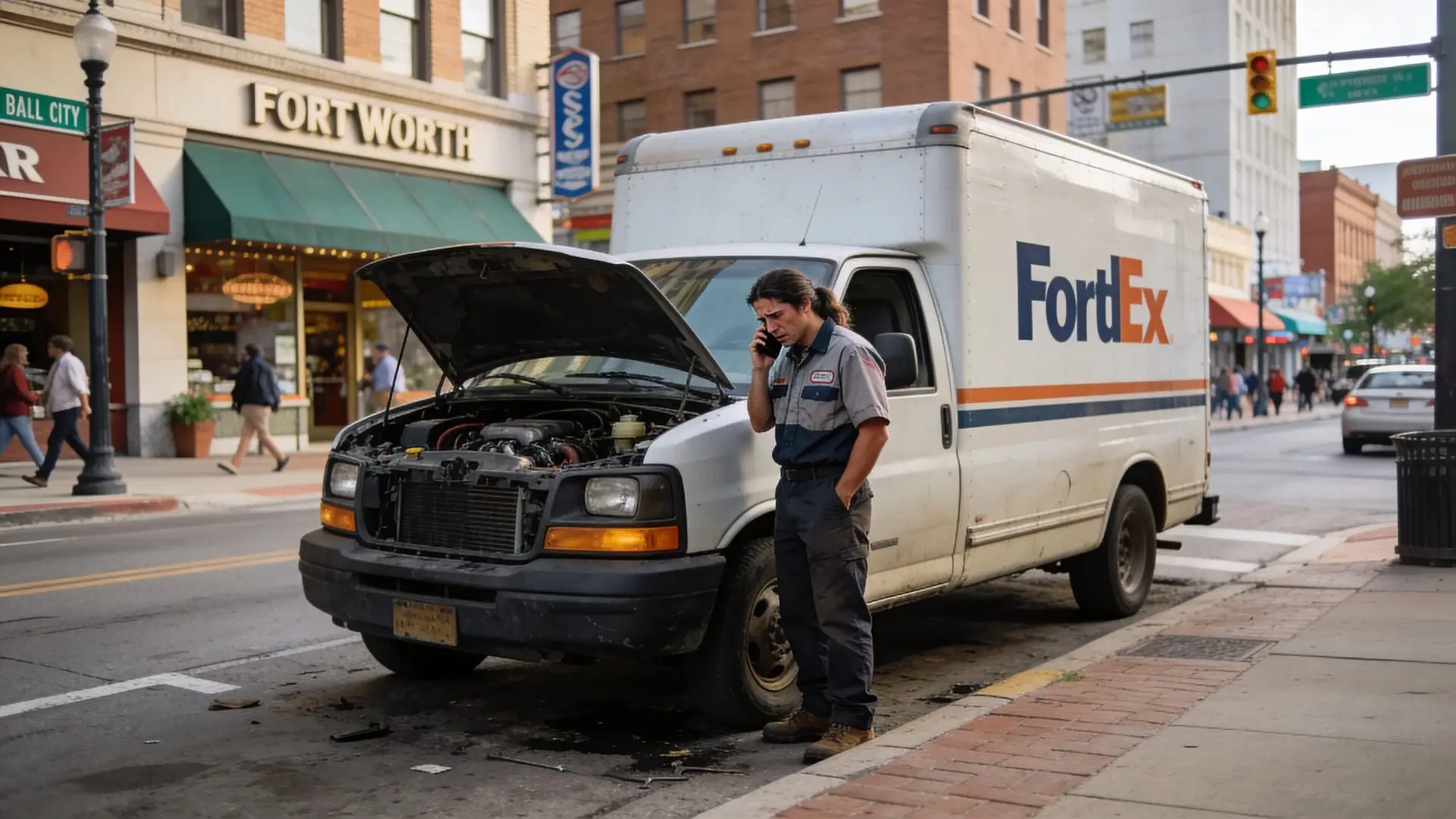
A lot of small business owners in Fort Worth don’t think about a fleet vehicle maintenance program until the phone rings at the wrong time.
One van is on the shoulder. A tech is late to a job. A delivery gets pushed. Then the repair bill comes in higher than expected because what started as a manageable service item turned into a roadside problem. That cycle is expensive, frustrating, and common when maintenance is handled only when something fails.
A fleet vehicle maintenance program changes that. It gives you a repeatable way to keep company vehicles available, safer, and easier to budget for. For a small fleet, that matters even more because one truck down can throw off the whole day.
What Is a Fleet Vehicle Maintenance Program Really?
A fleet vehicle maintenance program is more than oil changes on a calendar.
It’s the operating system behind how your business keeps vehicles ready for work. That includes scheduled service, inspections, repair decisions, maintenance records, and clear rules for what gets handled now versus later. If those pieces live in different notebooks, text messages, and memory, the fleet runs on luck.
It’s a business system, not a repair list
The simplest way to explain it is this. A maintenance program is the difference between routine care and constant emergency care.
If you react when a van won’t start, brakes grind, or a warning light has been ignored too long, you’re not managing a fleet. You’re absorbing breakdowns as they happen. That creates uneven costs and unpredictable downtime.
A program does four things at once:
- Plans recurring work so wear items get attention before they fail
- Catches defects early through inspections and driver reporting
- Documents everything so you know what was done, when, and why
- Supports decisions about repair timing, vendor use, and vehicle replacement
What it looks like in a small Fort Worth fleet
For a local contractor, plumber, delivery company, or service business, this isn’t a giant corporate system.
It’s a practical structure. Each vehicle has a service baseline. Each driver knows what to check. Someone tracks due dates, mileage, and repair history. The shop performing the work has enough context to spot patterns instead of treating every visit like the first one.
Practical rule: If a vehicle only gets attention when a driver complains loudly enough, there isn’t a maintenance program in place yet.
The shift most owners need to make
The hardest part isn’t technical. It’s mindset.
Many owners still see maintenance as an unavoidable repair expense. In practice, a good fleet vehicle maintenance program is a cost-control tool. It turns an unpredictable part of the business into a managed one.
That’s why I describe it as a health plan for work vehicles. You want regular checkups, trend tracking, and early intervention. You don’t want every problem treated like an ER visit.
For small fleets, that structure doesn’t need to be complicated. It does need to be consistent. When it is, vehicles stop being a daily question mark and start acting like dependable business assets.
Why Your Small Business Fleet Needs a Maintenance Program
A lot of owners hesitate because they think a maintenance program sounds like extra overhead.
In reality, skipping structure is what creates the bigger bill. Breakdowns happen at the worst times, emergency repairs cost more, and one out-of-service vehicle can disrupt the whole schedule when the fleet is small.
Breakdown reduction changes the whole equation
The strongest business case is reliability.
According to fleet benchmarking data, the industry average preventive maintenance compliance rate is 84%, while top-performing fleets achieve 94% or higher. That gap matters because fleets at 94% compliance average 0.4 breakdowns per vehicle per year, compared with 2.8 for fleets at 71% compliance (millennialsmaintenance.com/blog/fleet-maintenance-program-performance).
That’s the difference between mostly planned service and repeated roadside disruption.
For a small business, fewer breakdowns means:
- Less schedule chaos when a route vehicle or service truck goes down
- Lower secondary cost from towing, rush labor, and lost work time
- Better customer experience because jobs and deliveries happen on time
Maintenance protects uptime and safety
Uptime isn’t about keeping wheels turning. It’s about keeping commitments.
If your team depends on vans, pickups, or sedans every day, availability affects payroll efficiency, route planning, and customer trust. A maintenance program increases the odds that the vehicle starts, stops, cools properly, and handles safely when the driver needs it.
That safety side gets overlooked until something goes wrong.
A structured program helps by making these items routine instead of reactive:
- Brake condition
- Tire wear and inflation
- Fluid leaks
- Battery condition
- Lights and visibility items
- Steering and suspension concerns
A vehicle that misses service rarely fails in a convenient way. It usually fails on a busy day, with a customer waiting.
It helps you control the money, not merely spend it
Owners focus on the direct repair invoice. The bigger picture is total operating impact.
A fleet vehicle maintenance program helps you spot which vehicles are dependable, which ones are becoming expensive, and which service patterns keep repeat failures from happening. That lets you budget with actual history instead of guesswork.
It also preserves asset value. Vehicles with cleaner service histories, fewer neglected issues, and less severe wear are easier to keep longer or rotate out with fewer surprises.
Fuel economy and wear don’t fix themselves
Poor alignment, neglected tires, overdue fluid service, and dragging brakes all show up somewhere. Sometimes it’s in drivability. Sometimes it’s in fuel use. Sometimes it’s in component life.
The vehicle tells the truth eventually. You either pay gradually through planned care or abruptly through failure.
That’s why the best small-fleet programs aren’t built around perfection. They’re built around consistency. When maintenance becomes routine, the business gets fewer interruptions, clearer costs, and more control over how long vehicles stay productive.
The Four Pillars of an Effective Maintenance Program
Most fleet problems don’t come from one big mistake. They come from small gaps that stack up.
A missed service interval becomes brake damage. A driver notices a leak but nobody logs it. A shop invoice gets paid, but the record never makes it into the vehicle file. Then six months later, nobody knows what’s already been done. A strong fleet vehicle maintenance program closes those gaps.
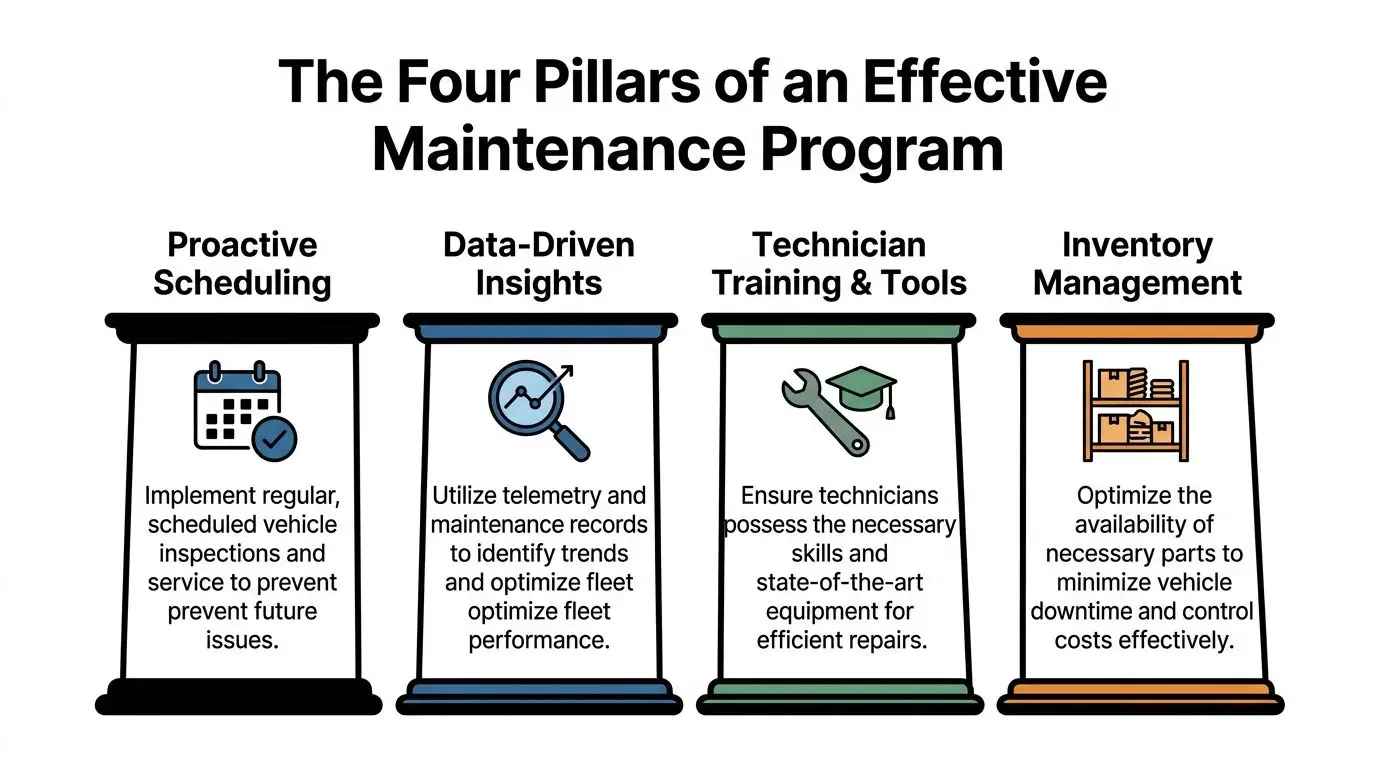
Pillar one is proactive scheduling
It's the point where most programs either work or drift.
A useful schedule isn’t based on one trigger alone. Hybrid preventive maintenance schedules combine usage-based, time-based, and condition-based triggers, and they outperform single-method approaches by reducing unplanned downtime by 25-40% and extending vehicle lifespan by 15-20% (mpofcinci.com/blog/fleet-vehicle-maintenance-plan).
That matters in Fort Worth because fleet use varies. One van may rack up miles fast. Another may idle at jobsites. A sedan may cover sales calls but sit on weekends. One fixed interval won’t fit all three.
A workable schedule should include:
- Mileage triggers for oil service, tire rotation, and other wear-driven items
- Calendar triggers for low-mileage vehicles that still age through time
- Condition triggers from inspections, warning lights, or telematics alerts
If you want a practical look at the mindset difference, this comparison of preventive maintenance vs reactive maintenance is useful because it shows why waiting for failure creates compounding cost.
Pillar two is consistent inspections
Drivers see vehicles every day. That makes them your first line of maintenance detection.
The mistake I see most is treating inspections like paperwork instead of operational input. A good inspection process catches tire damage, fluid loss, lighting issues, and brake concerns before the vehicle turns them into downtime.
This doesn’t have to be elaborate. It does have to be repeatable.
Use short pre-trip and post-trip checks that drivers can complete. Focus on items tied to safety, drivability, and visible wear. If a defect is found, it needs to move into a work order or service request quickly. Otherwise the inspection accomplished nothing.
The best inspection form is the one drivers will complete and managers will act on the same day.
Pillar three is recordkeeping that you can trust
If maintenance history is incomplete, your decisions will be weak.
Every fleet should track:
- Vehicle ID details such as VIN, unit number, and current mileage
- Service history including dates, work performed, and parts used
- Inspection findings with notes on defects and follow-up
- Repair costs by job, vendor, and vehicle
- Downtime notes so repeated availability issues stand out
Without records, you can’t see whether one truck is burning through brakes, whether another vehicle keeps repeating the same cooling problem, or whether a replacement decision is overdue.
This also matters for body and undercarriage preservation. North Texas fleets may not deal with the same road salt exposure as northern states, but moisture, debris, and neglected coatings create long-term corrosion issues. For owners managing older vehicles, this guide on how to protect car from rust is a useful companion resource because rust prevention affects asset life and repair costs over time.
Pillar four is a smart parts and supplier policy
Cheap parts can get expensive fast.
For fleet work, the goal isn’t buying the lowest invoice item every time. The goal is buying parts and services that hold up under your duty cycle. Brake components, filters, batteries, and cooling system parts all need to match how the vehicle is used.
It also helps to standardize who approves work, where common repairs go, and when outside estimates need review. If you use multiple vendors with no clear policy, costs get harder to compare and harder to control.
Sample preventive maintenance schedule for a mixed fleet
Below is a practical starting point. Always adjust to OEM guidance, actual usage, and inspection findings.
| Service Task | Light-Duty Van (e.g., Ford Transit) | Sedan (e.g., Toyota Camry) | Work Truck (e.g., Ford F-150) |
|---|---|---|---|
| Oil and filter service | Mileage-based with calendar backstop | Mileage-based with calendar backstop | Mileage and duty-cycle based |
| Tire rotation | Regular interval tied to tire wear checks | Regular interval tied to tire wear checks | Regular interval, especially under load use |
| Brake inspection | Frequent checks in stop-and-go service | Routine checks during service visits | Frequent checks for towing or heavy cargo use |
| Battery and charging check | Before peak heat season and during routine service | During routine service | During routine service and before heavy-use periods |
| Cooling system inspection | Priority item before summer demand | Routine seasonal check | Priority item for towing and heat exposure |
| Suspension and steering check | At inspection and when tire wear appears uneven | At inspection and if handling changes | At inspection, especially on rough routes |
Measuring Success KPIs and Cost-Benefit Analysis
A maintenance program stays alive only if you can prove it’s working.
That’s especially true in a small business, where every expense gets compared against payroll, fuel, insurance, and parts costs. If your program saves money but nobody can see it, it will feel optional. It isn’t.

The KPIs that matter
You don’t need a giant dashboard. You need a few numbers that show whether the fleet vehicle maintenance program is reducing surprises and controlling spend.
Start with these.
PM compliance rate
This tells you how many scheduled preventive services were completed on time compared with how many were due. If PM compliance is weak, the rest of the system gets expensive.Planned versus unplanned maintenance ratio
This shows whether your shop activity is mostly scheduled work or emergency repair work. A healthier program pushes more labor into planned service and less into reactive repair.Vehicle downtime
Track how long each vehicle is out of service. Even if the repair invoice looks manageable, long downtime can make one unit far more costly than it appears.Cost per mile for maintenance and repair
This helps compare vehicles fairly across the fleet. A truck that looks cheap on a single invoice may be expensive when you track its cost over time.
Watch this closely: one repeat-failure vehicle can distort labor schedules, dispatch plans, and customer commitments long before it looks terrible on a profit-and-loss report.
How to use ROI without overcomplicating it
The value case for PM is strong when you measure avoided disruption, not just avoided parts.
An effective fleet vehicle maintenance program shows $3 to $5 in savings for every $1 spent on preventive maintenance, and a 2025-2026 analysis found a 3:1 ROI for small fleets by cutting reactive repairs by 40% (autosist.com/blog/best-vehicle-maintenance-programs).
For a small fleet owner, that should shape how you look at budget decisions. The question isn’t whether preventive maintenance costs money. It does. The question is whether you want to spend that money in a controlled way or let breakdowns decide the timing and severity.
A practical way to build your own cost-benefit view
Use a simple monthly review.
Create one sheet or report with these categories:
| KPI | What to review monthly | What a change usually means |
|---|---|---|
| PM compliance | Completed scheduled services versus due services | Lower compliance points to future repair pressure |
| Downtime | Days or hours each vehicle was unavailable | Rising downtime often means poor scheduling or slow approvals |
| Repair mix | Planned work versus emergency work | More emergency work usually means the program is slipping |
| Vehicle cost trend | Total maintenance cost by vehicle | Rising outliers signal repeat-failure units |
Then ask four blunt questions:
- Which vehicles are consuming the most repair attention?
- Which services keep getting delayed?
- Which repair types are repeating?
- Which unit would hurt operations most if it went down tomorrow?
Those answers usually matter more than a long spreadsheet full of line items.
The best KPI process is simple enough that someone will review it every month. If the tracking process becomes harder than the maintenance itself, the system won’t hold.
Your Step-by-Step Implementation Guide for Small Fleets
Monday starts with a no-start service van, a pickup that is 1,200 miles past its oil change, and a driver mentioning brake noise after three weeks of stop-and-go jobs. That is how small fleet problems usually show up in Fort Worth. Not as one big failure, but as a string of avoidable interruptions that pull time and cash out of the business.
A workable fleet vehicle maintenance program fixes that by giving each vehicle a schedule, a record, and a clear approval path. If you run five to fifty units, keep the setup simple enough to manage in-house and structured enough to hold up when business gets busy.

Step one, baseline every vehicle
Start with a real inventory, not a rough memory of what is in service.
Build a file for each unit with the VIN, plate, current mileage, last service date, known repair history, tire condition, brake condition, battery age if you have it, and any repeat complaint. Add one more field that generic guides often skip. Document how that vehicle works. A van making twenty stops a day in west Fort Worth has a different maintenance pattern than an estimator's SUV. A half-ton pickup that tows equipment should not share the same service rhythm as a parts runner.
If your records are incomplete, use what you can verify and fill in the gaps during the next shop visit.
Each vehicle file should answer five questions:
- What unit is this
- What shape is it in today
- What kind of duty does it see
- What service comes due next
- Is this a repeat-problem vehicle
Step two, build a schedule your team can follow
Use the manufacturer schedule as the floor, then adjust it for your real operating conditions. Fort Worth fleets often deal with heat, idle time, short-trip driving, trailers, and jobsite dust. Those conditions shorten service intervals, especially for brakes, tires, fluids, batteries, and cooling systems.
Keep the paperwork short. Drivers need a quick daily or weekly check. The shop needs a slightly deeper inspection at each visit. If the checklist is too long, it will be skipped or pencil-whipped.
A practical starting point is this preventive maintenance checklist template, which you can adapt for a mixed gas, diesel, and EV fleet.
Step three, pick tools that match your size
A spreadsheet still works for many small fleets. It works best when one person owns it, updates it weekly, and uses calendar reminders for upcoming service.
Problems start when vehicles multiply, approvals get delayed, and nobody is sure whether a driver reported an issue, a manager approved it, or the shop completed it. At that point, software earns its keep by cutting down missed handoffs.
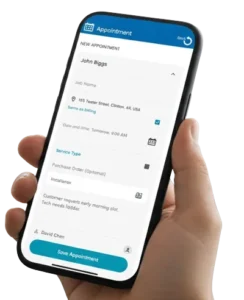
For service businesses with route-based crews, pairing maintenance tracking with field service scheduling software can help you line up shop time with lighter workdays instead of losing revenue on your busiest afternoons.
You do not need enterprise fleet software on day one. You do need one system of record.
Step four, set response rules before the first problem hits
Small fleets get in trouble when everyone handles issues differently.
Drivers should know what to inspect, what to report the same day, and what takes a vehicle out of service. Managers should know who approves repairs, how fast approvals happen, and when overdue PM work gets escalated. Shops should know who to call and what documentation you expect back.
Keep the rules plain:
- Drivers report new defects the same day
- Safety concerns get immediate review
- PM work is rescheduled only with a documented reason
- Every repair invoice and recommendation goes into the vehicle record
That discipline matters even more with mixed fleets. An ICE unit may need fluid, belt, and exhaust-related checks. An EV may need fewer routine fluid services but more attention to tire wear, brakes, software alerts, and charging issues. The reporting process should reflect those differences so one checklist does not miss fleet-specific problems.
A maintenance process holds up when drivers, managers, and the shop all know what happens after a defect is reported.
This short video gives a useful visual overview of how a structured process comes together in real-world fleet operations.
Step five, choose the right maintenance partner
A small business usually does better with one dependable shop relationship than with constant vendor switching. Consistency makes recordkeeping cleaner, helps catch repeat failures earlier, and reduces the time wasted re-explaining vehicle history.
Ask direct questions before you hand over the fleet:
- Can they handle both scheduled service and unexpected repairs
- Do they inspect and document findings clearly
- Can they service the types of vehicles you run
- Do invoices show parts, labor, and recommendations in a way you can audit
- Will they flag repeat issues across multiple units
A local option like Kwik Kar Oil Change and Auto Care fits this model for some Fort Worth businesses. The value is not branding. The value is having one place that can handle routine service, inspections, and repair follow-up without creating extra communication gaps.
What works and what does not
What works
- Service intervals based on actual use
- Short inspections that drivers will complete
- One record for each unit
- Fast approval rules
- A monthly review of overdue work and repeat repairs
What does not
- Running the fleet from memory
- Defect reporting through scattered texts
- Using one interval for every unit
- Skipping PM during busy weeks
- Changing shops so often that no one sees patterns
For a small Fort Worth fleet, the goal is control. Keep the system simple, keep the records current, and catch problems while they are still cheap to fix.
Fort Worth Fleet Tips and Modern Maintenance Challenges
Fort Worth driving conditions are hard on working vehicles in ways national guides gloss over.
Stop-and-go traffic, long idle periods, summer heat, and mixed-duty routes all accelerate wear. You’ll see it in brakes, tires, batteries, cooling systems, and A/C complaints long before a generic maintenance chart would suggest a problem.
Adjust the program for local operating reality
If your fleet spends the day in city traffic or at repeated jobsite stops, don’t rely on highway-style assumptions.
Move these items higher on your watch list:
- Brake inspections because repeated stops build heat and wear
- Cooling system checks because summer load exposes weak hoses, fans, and fluid condition
- Battery testing because heat is rough on battery life
- Tire condition reviews because curb contact, debris, and underinflation show up fast in urban service work
This is also where dispatch and maintenance need to talk to each other. If one vehicle gets the heaviest route every week, it deserves a different maintenance rhythm than the rest of the fleet.
For teams trying to tighten that coordination, even a simple visual from field service scheduling software can help managers think through how route planning and shop timing affect uptime.
Mixed ICE and EV fleets need different triggers
More small businesses are adding hybrids or EVs while running gas and diesel units.
As of early 2026, EV adoption in commercial fleets has surged 45% year over year, and predictive maintenance for EVs can reduce downtime by 30% through AI-driven battery degradation alerts, though small fleets often lack affordable software and can end up with higher repair costs without a proactive approach (government-fleet.com/articles/how-to-implement-a-fleet-preventive-maintenance-program).
That changes how you manage the fleet.
Gas and diesel vehicles need the familiar service structure. EVs need attention on battery health, charging habits, thermal management, and connector condition. A mixed fleet program should separate service logic by vehicle type instead of forcing every unit into the same template.
If you’re comparing local support options for that kind of setup, the overview of fleet services in Fort Worth is worth reviewing because mixed-fleet support works better when routine service and issue tracking are centralized.
Parts inflation changes repair decisions
Owners feel this every day. Parts cost more, delays last longer, and “we’ll get to it later” can turn into a much more expensive invoice.
That’s why prioritization matters. Keep common wear items moving. Don’t delay inspections that identify secondary damage. And when a vehicle starts repeating repairs, treat that as a business decision point, not just another ticket.
A modern fleet vehicle maintenance program isn’t solely about service intervals. It’s about adapting to changing vehicle types, local operating stress, and tighter repair economics without losing control of uptime.
Your Fleet Maintenance Questions Answered
How do I set a realistic budget for a PM program for a small fleet of 5 to 10 vehicles
Start with your actual operating pattern, not a generic monthly guess.
Review the last year of oil services, brake work, tires, batteries, inspections, and unscheduled repairs for each vehicle. Then separate spending into two buckets. First, the predictable recurring items. Second, the unpredictable failures that you want to reduce.
Build the budget around recurring service first. Then keep a repair reserve for aging vehicles or heavy-use units. If one or two vehicles consume a disproportionate amount of attention, don’t hide that. Flag them separately so they don’t distort the whole budget.
Can I manage a program myself with simple tools, or is software mandatory
You can manage it yourself if the fleet is small, the records are clean, and one person owns the process.
A spreadsheet, shared calendar, and inspection forms can work for a modest fleet. Where owners run into trouble is follow-up. If inspections aren’t reviewed quickly, due services aren’t tracked reliably, or repair history gets scattered across invoices and texts, simple tools stop being enough.
Software isn’t mandatory at the start. Consistency is mandatory.
What’s the best way to handle a mixed fleet with both new and high-mileage vehicles
Don’t force them into the same service assumptions.
Newer units need disciplined routine care and documentation so they stay on schedule and preserve value. High-mileage vehicles need closer observation for repeat failures, fluid loss, suspension wear, cooling concerns, and drivability changes.
Use one program, but divide the fleet into groups by age, use, and vehicle type. That keeps the process organized without pretending every vehicle has the same risk profile.
Keep one standard for documentation, but use different maintenance rhythms for different vehicle groups.
The fleets that stay reliable aren’t always the ones spending the most. They’re the ones paying attention early, tracking patterns, and making repair decisions before a small issue takes a vehicle out of service.
If you want help building or tightening a fleet vehicle maintenance program for your business, Kwik Kar Oil Change and Auto Care in Fort Worth handles routine service, inspections, and repair support for company vehicles. For a small fleet, having one shop track maintenance history and keep up with recurring service can make day-to-day operations a lot easier to manage.