




You feel it before you see it. The steering wheel needs a small correction on a straight road. A new vibration shows up at highway speed. Maybe the car doesn’t seem “wrong,” but it doesn’t feel as settled as it used to.
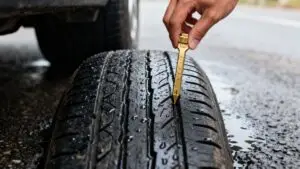
Then you crouch down by a tire and notice the tread doesn’t look even. One edge seems thin. One section feels rough. That’s usually the moment drivers start asking what causes uneven tire wear.
Your tires are one of the best diagnostic tools on the whole vehicle. They touch the road every second you drive, so they record what the suspension, alignment, inflation, and even your driving habits have been doing. In the shop, we read tire wear the same way a doctor reads symptoms. The pattern matters. The location matters. Even the way the tread feels under your hand matters.
If you learn to read those clues early, you can often catch a problem before it turns into a full set of ruined tires, poor fuel economy, or a safety issue. The aim is not just naming problems, but helping you connect a wear pattern to the most likely cause and the right next step.
Your Tires Are Talking What Are They Saying
A lot of drivers come in with a story that starts the same way. “It just started pulling a little.” Or, “I heard a humming sound on the freeway.” Or, “I got new tires not that long ago, so why do these already look off?”
Those small changes usually aren’t random. Your tires are sending a message.

Think of tire wear like the soles of your shoes. If one heel wears down faster, you assume something about how you walk is off. Tires work the same way. If the center is wearing faster than the shoulders, that means something different than a tire that’s scalloped or sharp on one side of the tread blocks.
What drivers often notice first
Some clues show up before anyone looks closely at the tread:
- A pull to one side when the steering wheel is straight
- A vibration that wasn’t there before
- Road noise that sounds like humming or droning
- A rough feel when you brush your hand across the tread
- Poorer fuel economy because the tire isn’t rolling cleanly
Those symptoms don’t always mean you need tires right away. Sometimes the tire is warning you about an alignment or suspension problem that needs attention first.
Your tires don’t just wear out. They usually wear in a pattern, and that pattern tells you where to look.
A quick tread check can tell you a lot about safety too. If you haven’t looked at your tire grooves in a while, this guide to tire tread depth and safety is a good place to start.
Understanding How Tires Should Wear Normally
A healthy tire should wear down gradually and evenly across the tread. Not perfectly identical at every point, but close. The left side, center, and right side should all look like they’re aging together.
That’s the baseline. If you don’t know what normal wear looks like, every tire pattern starts to seem mysterious.
The shoe sole comparison
A good pair of walking shoes gives you the easiest analogy. If you walk normally and the shoes fit right, the soles wear down in a balanced way. If one edge gets chewed up quickly, something is off with your gait, the fit, or the support.
A tire has the same job. It carries weight, absorbs impacts, and keeps a flat contact area on the road.
That contact area is called the contact patch. It’s the part of the tire that’s touching pavement at any moment. When inflation, alignment, and suspension are all working together, the contact patch stays balanced. That spreads the load across the tread instead of concentrating it in one area.
What normal tread should look like
Look across the face of the tire from shoulder to shoulder.
You want to see:
- Even groove depth across the tread
- No single edge wearing much faster than the rest
- No scalloped dips or chopped sections
- No sawtooth feel when you run your hand over the tread blocks
If one tire looks very different from the others, that’s often a clue by itself. A vehicle problem doesn’t always affect all four tires in the same way.
How to do a quick at-home check
Use this routine in your driveway:
- Turn the front wheels so you can see more of the tread face.
- Compare inside, center, and outside sections of each tire.
- Run your palm lightly across the tread in both directions.
- Look for wear bars, the raised indicators built into the grooves.
- Check all four tires, not just the fronts.
Many drivers only inspect the visible outer shoulder. That misses a lot. Inner-edge wear is easy to overlook until the tire is already in bad shape.
For wear prevention, regular tire rotation and alignment service matters because it helps spread normal wear and catch developing problems before they lock into the tread.
Practical rule: If one part of the tread looks or feels different from the rest, don’t assume it’s “just an old tire.” Uneven wear usually has a reason.
Why this baseline matters
When a tire wears normally, it’s rolling, braking, and cornering the way it was designed to. When it doesn’t, the tread becomes a report card. The pattern tells you whether the issue is inflation, wheel angle, worn parts, or driving style.
That’s why mechanics don’t just check whether a tire is worn out. We check how it got there.
How to Read Your Tire Wear Patterns
You pull into the driveway after a normal week of driving, glance at a front tire, and notice one edge looks more worn than the rest. That tire is giving you a clue. The trick is knowing how to read it before you spend money on a new set and leave the underlying problem untouched.
A tire wears a lot like the sole of a shoe. If your shoes wear evenly, your stride is probably fine. If one heel is chewed up or one side is smooth, something about how you walk has changed. Tires work the same way. The pattern matters as much as the amount of tread left.
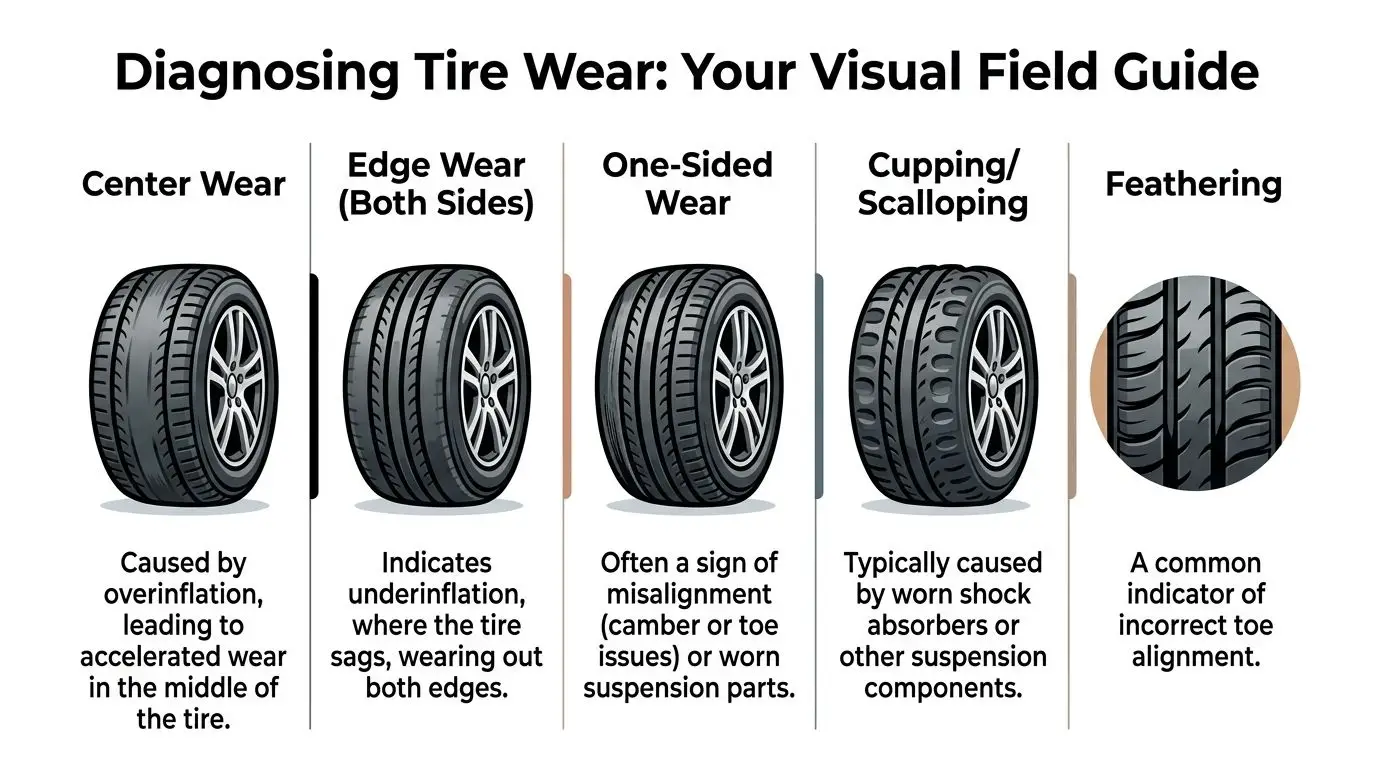
Start by reading the tread in three zones: inner edge, center, and outer edge. Then read the surface texture. Is it smooth, sharp, chopped, or wavy? A mechanic does not just ask, “Is the tire worn out?” We ask, “What pattern got it there?”
Tire Wear Pattern Diagnostic Chart
| Wear Pattern | Visual Description | Primary Cause | What It Feels Like |
|---|---|---|---|
| Center Wear | Middle of tread is worn more than both shoulders | Overinflation | Smoother in the center than the edges |
| Edge Wear Both Sides | Both outer shoulders wear faster than the center | Underinflation | Both edges feel lower than the center ribs |
| One-Sided Wear | Inner edge or outer edge is much more worn than the rest | Alignment issue or worn suspension parts | One shoulder feels thinner or more rounded |
| Feathering | Tread blocks are worn smooth on one side and sharp on the other | Incorrect toe alignment | Sawtooth feel when you slide your hand across tread |
| Cupping or Scalloping | Dips or scooped patches around the tire | Worn shocks, struts, bearings, or severe balance issues | Bumpy, chopped, or wavy as you run your hand around the tire |
Center wear
Center wear usually means the middle ribs are doing more work than the shoulders. The most common reason is too much air pressure.
That extra pressure changes the tire’s contact patch, which is just the part of the tread touching the road. Instead of sitting flatter, the tread crowns slightly in the middle. Over time, the center gets scrubbed down first.
If the middle looks tired but both shoulders still have healthy depth, check inflation before you blame steering or suspension.
Edge wear on both sides
Wear on both shoulders points in the opposite direction. The tire is often running with too little air.
A low tire flexes more at the edges, so both shoulders carry more of the load. That creates more heat and more scrubbing at the outer ribs. Drivers sometimes mistake this for an alignment issue, but the pattern gives it away. If both sides are wearing together, pressure is usually the first thing to check.
One-sided wear
One-sided wear means either the inner edge or the outer edge is disappearing faster than the rest of the tread. That is a strong clue that the wheel is not meeting the road squarely.
Camber problems often show up this way, and worn suspension parts can create a similar pattern by letting the wheel tilt or shift under load. Inner-edge wear is especially easy to miss because it hides underneath the car. By the time you spot cords or heavy thinning on that inside shoulder, the tire may already be unsafe.
If this pattern shows up with a steering pull or an off-center steering wheel, review these signs your car needs alignment.
Feathering
Feathering is easier to feel than to see at first. Run your hand across the tread blocks one way, then the other. One direction feels smooth. The other feels sharp, almost like the edge of a saw.
That pattern usually points to toe misalignment. In simple terms, the tires are not tracking straight ahead together, so the tread blocks get dragged sideways a little with every rotation. The tire is still rolling forward, but it is also scrubbing across the pavement. That is why replacing the tire alone does not solve the problem. If the toe setting stays wrong, the next tire can develop the same pattern.
If you want another plain-language overview of what causes uneven tire wear, that guide covers the big causes from a driver’s point of view.
Cupping or scalloping
Cupping looks like shallow dips spaced around the tread. It often sounds bad before it looks bad. Many drivers notice a rhythmic hum, growl, or droning noise at speed.
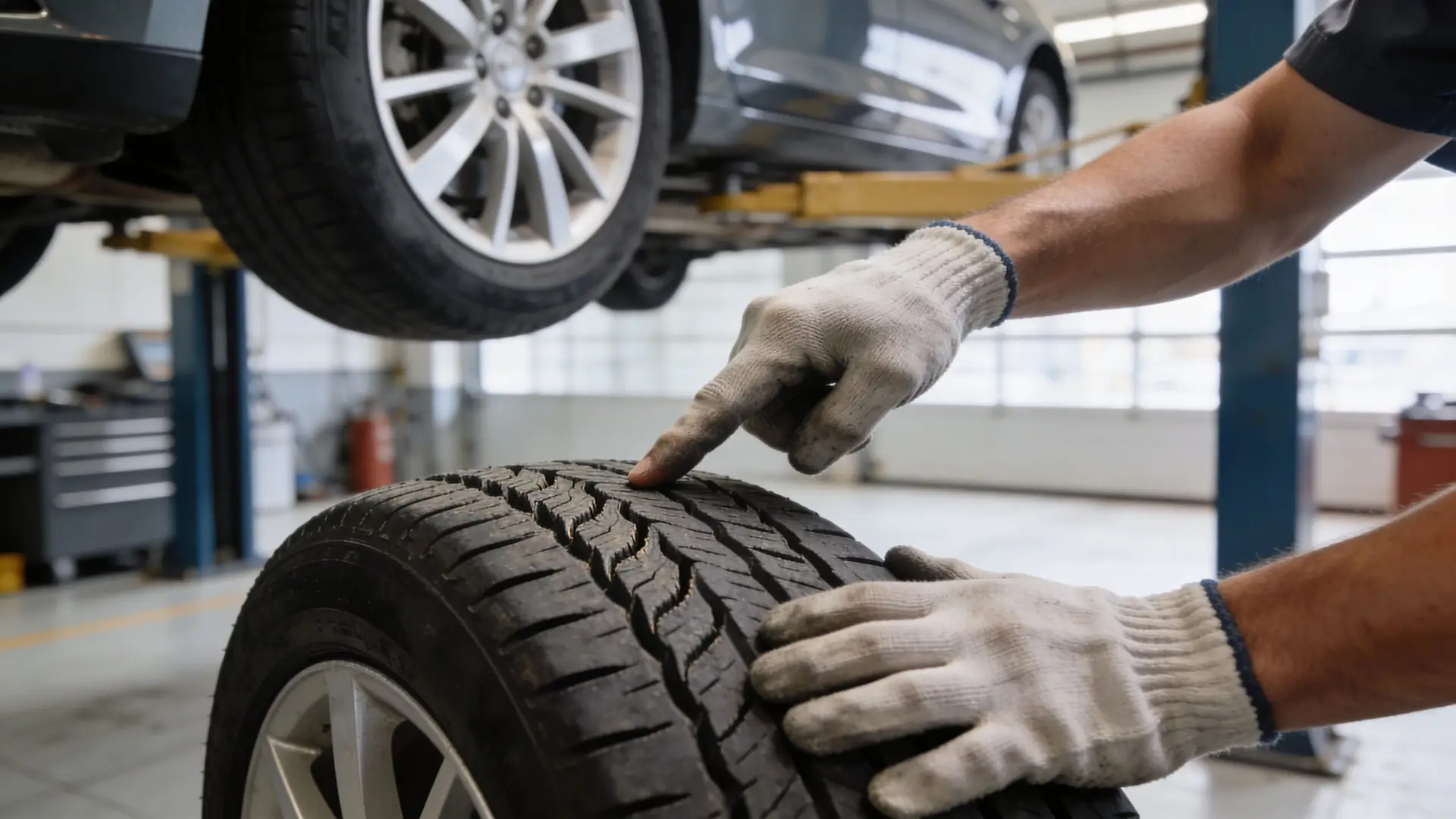
This pattern usually points to a tire that is bouncing instead of staying planted. Worn shocks or struts are common causes. Wheel balance problems and loose bearings can contribute too. Instead of pressing evenly against the road, the tread hits in spots, skips, then hits again. That repeated slap creates the high and low patches you feel with your hand.
A smooth tire rolls with little noise. A chopped tire is often reacting to movement elsewhere in the vehicle.
Practical rule: if the tread pattern has a clear shape, there is usually a clear reason. Read the pattern first, then diagnose the cause before buying tires.
Investigating the Primary Causes of Bad Tire Wear
A tire wears unevenly for the same reason a pair of shoes wears crooked. Something about how it carries weight, points, or moves is off.
That is the big diagnostic idea here. The tread pattern tells you what happened on the road, and the root cause usually lives in one of three places. Air pressure, alignment, or suspension and steering parts. Sometimes you get one clear culprit. Sometimes two small issues stack up and create one ugly wear pattern.
Improper inflation changes the tire’s footprint
Your tire is supposed to press evenly across the pavement. Pressure controls that footprint.
If the tire is overinflated, the center of the tread tends to do more of the work. If it is underinflated, the outer edges carry more load than they should. In both cases, part of the tread gets overworked while the rest does less.
A simple way to read it:
- Overinflation often shows up as faster wear down the center
- Underinflation often shows up as extra wear on both shoulders
- Chronic pressure neglect turns a small pressure error into a visible tread problem
One point confuses a lot of drivers. The number on the tire sidewall is not the target pressure for normal driving. It is the tire’s maximum rating. The correct everyday pressure is usually the number on the vehicle placard, checked when the tires are cold.
Alignment problems make the tire scrub across the road
Alignment is just wheel positioning. If the wheel points a little wrong or leans a little wrong, the tire still rolls forward, but it also scrubs as it goes. That scrub is what burns away tread.
Toe
Toe describes whether the fronts of the tires point slightly toward each other or away from each other.
Even a small toe problem can wear a tire faster than drivers expect because every rotation drags the tread blocks sideways a little. That is why feathering often feels like one edge of the tread is smooth and the other edge is sharp. The tire is recording sideways friction.
Camber
Camber describes whether the top of the tire leans inward or outward when you look at the vehicle from the front.
If camber is too far positive or negative, one shoulder carries more of the vehicle’s weight. Over time, that overloaded edge wears down first. Inner-edge wear often points technicians toward camber, but worn suspension parts can create a similar result, so the pattern alone is only the first clue.
Caster
Caster affects straight-line stability and steering return.
Drivers usually do not identify caster trouble from tread wear alone, but it still matters because it changes how the steering behaves and how the other alignment angles act while driving. A shopping cart wheel with a bad pivot is a good comparison. It rolls, but it does not want to track cleanly.
For another plain-language explanation of what causes uneven tire wear, that outside resource connects visible wear patterns with the mechanical issues behind them.
Tread wear is physical evidence. Alignment measurements explain why that evidence showed up.
Suspension and steering wear can mimic an alignment problem
A car can leave the alignment rack within spec and still chew up tires if worn parts let the wheel shift on the road.
That is what makes suspension-related tire wear easy to miss. The wheel angle may look acceptable sitting still, then change during braking, cornering, or bumps because a part has play in it. The tire does not care what the alignment sheet said an hour ago. It only reacts to the angle it sees while rolling down the road.
These parts deserve a close look:
- Shocks and struts control bounce and help keep the tread planted
- Bushings hold suspension arms in the right position
- Wheel bearings prevent looseness at the hub
- Tie rods and ball joints keep steering angles steady
When those parts wear out, the contact patch changes moment by moment. That often leads to cupping, patchy wear, steering wander, vibration, or road noise that seems to get louder as speed rises.
Why new tires do not fix the underlying problem
Replacing a worn tire without correcting the cause is like putting on new shoes while still walking with one leg shorter than the other. The fresh rubber may feel better for a while, but it starts following the same bad pattern.
That is why a good diagnosis goes past the tire itself. A technician should read the wear pattern, confirm tire pressure, inspect alignment angles, and check for looseness or weak suspension parts before recommending the fix. That approach usually saves money because it targets the reason the tire failed, not just the symptom.
The goal is simple. Stop the pattern from coming back.
How Your Driving Habits and Maintenance Routine Matter
Some tire wear starts in the shop. A lot of it starts with daily habits.
The good news is that drivers have more control here than they think. Small routine checks and smoother driving can change how long a tire lasts and how the vehicle feels every day.
The maintenance habits that matter most
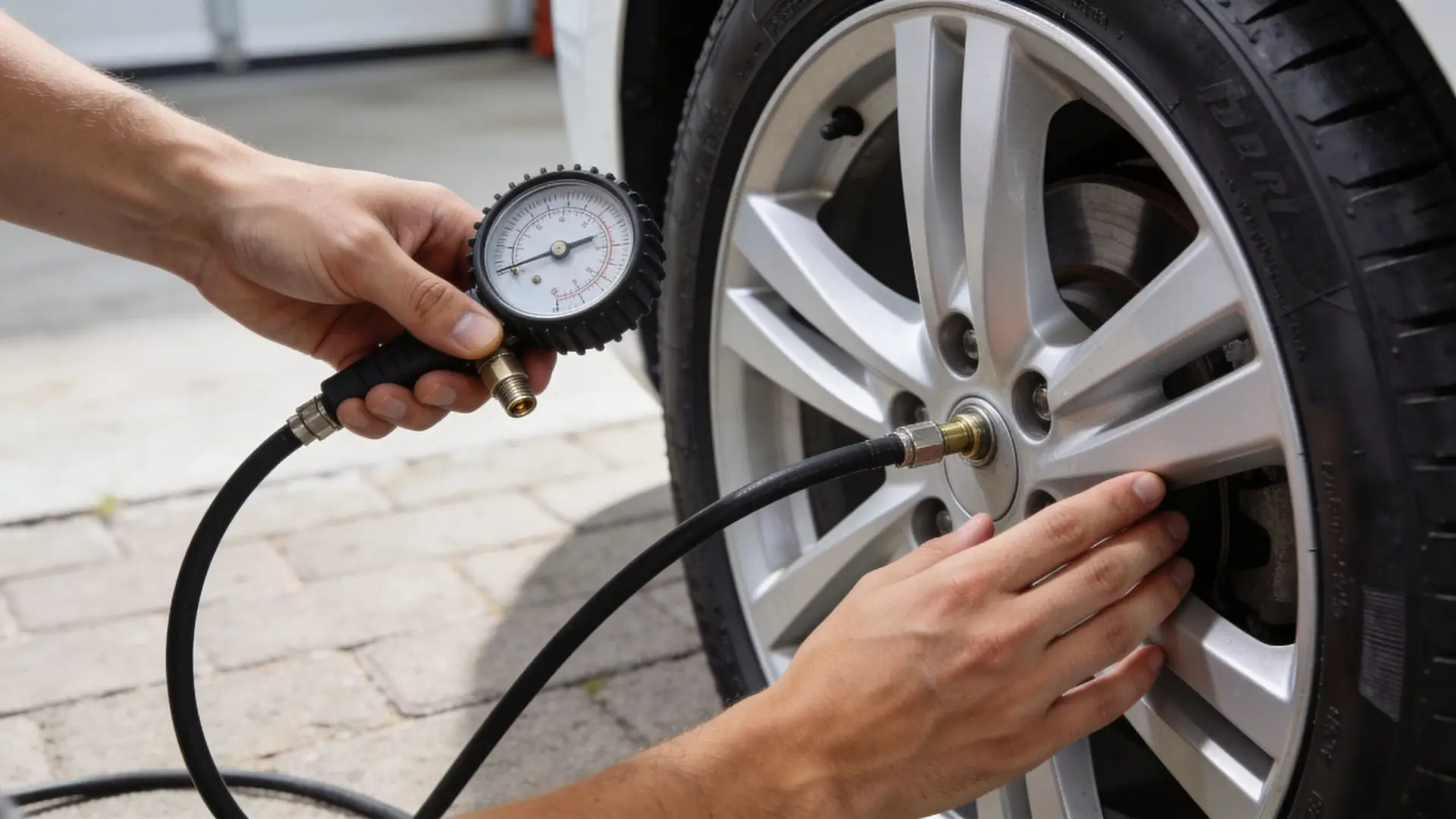
If you want to cut down the chances of uneven wear, keep your routine simple and repeatable.
- Check pressure regularly because tires can’t wear evenly if they aren’t carrying the load correctly.
- Rotate on schedule so each tire spends time in different positions on the vehicle.
- Pay attention after impacts like potholes or curbs, since one hard hit can change alignment.
- Inspect tread by hand instead of only glancing at it from a standing position.
For drivers in Fort Worth, rough roads and parking-lot curb contact do more damage than people realize. The vehicle may still drive “fine,” but the tread can tell a different story weeks later.
Your driving style leaves a signature
Aggressive driving doesn’t just affect fuel use or brakes. It can show up directly in the tread.
Commercial Tire notes that aggressive driving, including hard acceleration and frequent sharp turns, can amplify edge wear and create drag that makes your car work harder and burn more fuel (Commercial Tire tire wear patterns guide).
That matters because many drivers assume tire wear is only mechanical. It isn’t.
A few examples:
- Hard cornering loads tire shoulders heavily
- Fast starts can add stress and scrub, especially on driven wheels
- Abrupt braking increases tread stress and heat
- Repeated pothole hits can upset alignment and suspension parts
Smooth inputs help tires live a quieter life. Sharp inputs make them scrub, flex, and heat up more than they need to.
A short visual refresher helps if you want to see inspection basics in action:
Why routines beat guesswork
The cheapest tire wear fix is often the one you catch before the tread pattern becomes severe.
One workable routine is to pair tire checks with something you already remember, like a fuel stop, a wash, or regular maintenance. If you’re already getting service, ask for a tread pattern check instead of waiting for the car to start pulling or humming.
If you want a shop to handle the rotation, alignment evaluation, and general inspection in one place, Kwik Kar Oil Change and Auto Care offers those services as part of routine vehicle maintenance. That kind of combined visit can help catch wear patterns before they become expensive.
When to DIY and When to Visit Kwik Kar
Some tire problems are easy to spot at home. Some need tools and measurements you just won’t have in the garage.
The key is knowing the difference.
What you can do yourself
A good DIY check is basic triage. You’re not trying to replace a professional diagnosis. You’re trying to decide whether the tire is showing a pattern that needs one.
At home, you can:
- Check cold tire pressure with a quality gauge
- Inspect all four tires for center, edge, one-sided, feathered, or cupped wear
- Run your hand across the tread to feel for sharp-and-smooth feathering
- Look for obvious damage like exposed cords, bulges, or severe shoulder wear
If the pattern points to simple underinflation or overinflation and the wear is mild, correcting pressure and monitoring the tire may be enough to stop it from getting worse.
When a professional needs to step in
A shop visit makes sense when the pattern suggests the vehicle itself is creating the damage.
That includes:
- One-sided wear that hints at camber or suspension trouble
- Feathering that points to toe misalignment
- Cupping or scalloping that may involve shocks, struts, bearings, or balance
- A pull, vibration, or steering issue that matches the wear pattern
- Repeated wear on replacement tires because that usually means the root cause was never corrected
A professional alignment check measures angles that are too small to judge by eye. A suspension inspection looks for looseness, worn bushings, weak ride control parts, and other problems that change tire contact with the road.
The decision that saves money
If the tire is worn out evenly, replacement is the obvious answer.
If the wear is uneven, replacing the tire without fixing the cause is often the expensive answer. That’s especially true with feathering and cupping because those patterns usually point to a condition the next tire will inherit.
A short inspection now is often cheaper than another tire purchase later.
Answering Your Top Tire Wear Questions
Can uneven tire wear be reversed
The worn rubber is gone for good. A tire works a lot like the sole of a shoe. Once one side is worn down, you cannot put that material back.
What you can do is stop the pattern from continuing. If the tire still has safe tread left and the wear is still mild, fixing the root cause, such as air pressure, alignment, or a suspension problem, can help the rest of the tread wear in a more normal way.
How often should I get a wheel alignment
There is no single mileage rule that fits every car and every driver. A vehicle that spends its life on smooth highways may stay in spec much longer than one that deals with potholes, rough shoulders, curbs, and railroad crossings.
A better approach is to treat alignment like a diagnostic check, not just a calendar item. Get it checked when the steering wheel is off-center, the car starts pulling, you notice fresh uneven wear, or you have a hard impact with a pothole or curb.
If you keep replacing tires and seeing the same pattern return, that is another clue. The tire is telling you the vehicle setup has not been corrected.
Will rotating my tires fix uneven wear
Rotation helps share normal wear between positions on the vehicle. It does not cure the reason the wear started.
If the front right tire is scrubbing because the toe angle is off, moving that tire to the rear does not correct the toe. It just changes where you will notice the symptom first. Rotation is a maintenance tool. Diagnosis is the money-saving step.
Is it safe to keep driving on unevenly worn tires
Sometimes for a short time. Sometimes no.
Mild wear that you catch early is often a warning sign more than an immediate emergency. Severe inner-edge wear, heavy cupping, exposed cords, bulges, or a tire that shakes the car is different. Those conditions can reduce grip, increase stopping distance, and make the vehicle less stable.
If the tire looks damaged or the vehicle feels wrong, treat that as a shop-now situation.
What’s the fastest way to tell what causes uneven tire wear
Start by reading the tire the way a technician would read it.
Look at where the wear is happening. One edge, both edges, the center, random dips, or a saw-tooth feel across the tread each point in a different direction. Then match that pattern with what the car is doing on the road. Pulling often lines up with alignment issues. Bouncing and vibration often line up with balance or suspension trouble. A tire that is worn on both shoulders often sends you back to inflation habits.
That is the shortcut. Pattern plus symptom usually gets you close to the cause.
Should I replace the tire first or fix the problem first
Fix the cause first whenever the tire is still safe enough to evaluate and the wear pattern is clearly uneven.
Otherwise, the new tire can start wearing the same way as the old one. It is like buying new shoes without fixing the way your foot is landing. The fresh rubber may look great on day one, but it can start showing the same problem surprisingly fast if the vehicle angles or suspension parts are still off.
If the tire is already too worn or damaged to keep using, replace it and correct the cause at the same visit.
Uneven tire wear is easier to handle when you stop looking at it as random damage and start reading it as a clue. The team at Kwik Kar Oil Change and Auto Care can inspect the tread pattern, check for alignment or suspension issues, and help you decide what needs attention now versus what can be monitored.