



Absolutely. A bad fuel injector is one of the most common culprits behind an engine misfire. When your engine stutters or shakes, it’s often because one of its cylinders isn't firing correctly. And more often than not, the problem traces back to the precise, high-pressure spray of fuel that's supposed to happen—but isn't.
How A Faulty Fuel Injector Triggers An Engine Misfire
Think of your engine as a team of sprinters, with each cylinder being a sprinter. For the team to run smoothly, every sprinter needs the right amount of energy at the exact right time. In your engine, that energy comes from a perfectly balanced mix of air and fuel, ignited by a spark plug. The fuel injector is the component responsible for delivering that fuel with incredible precision.
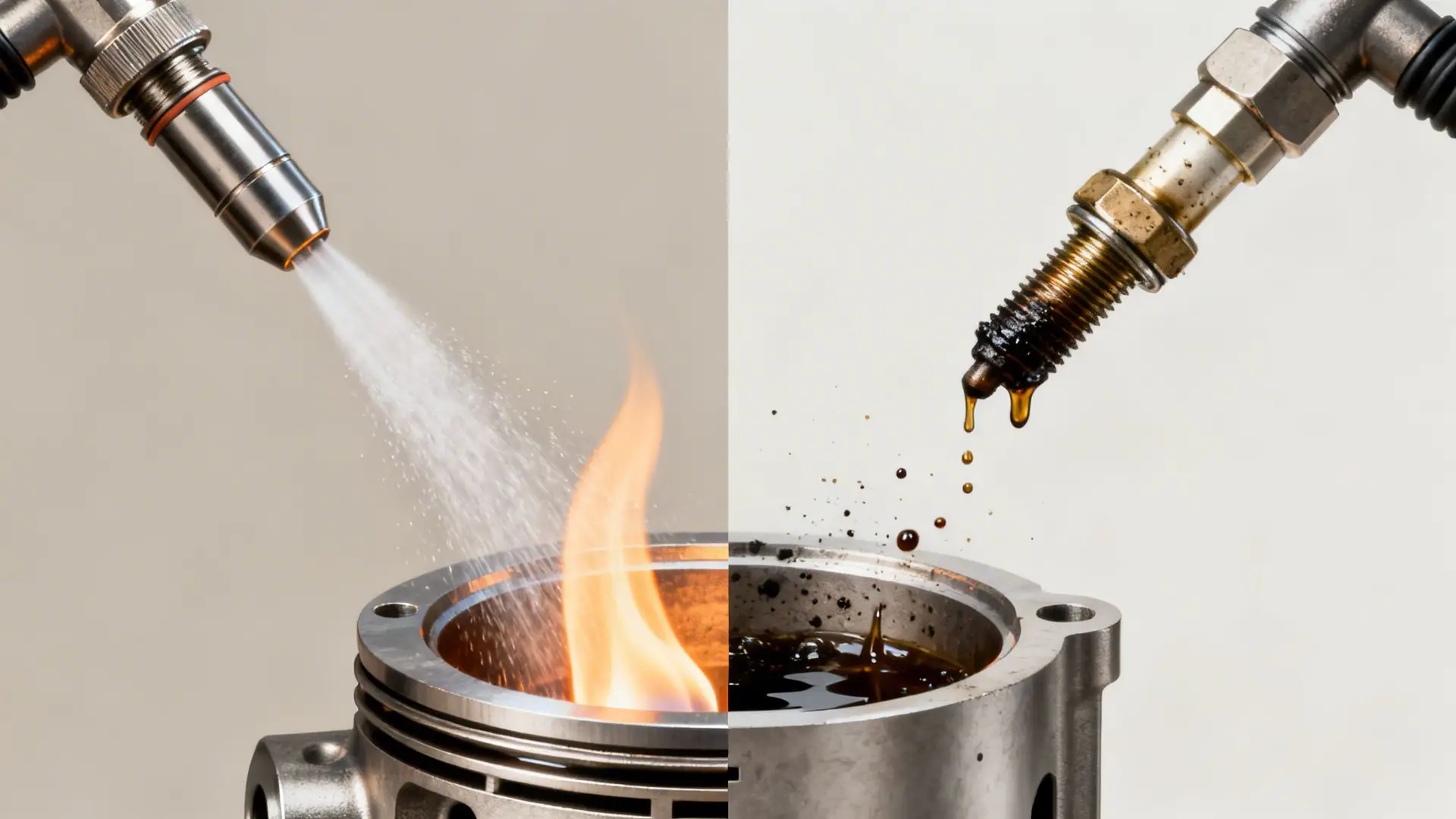
When everything is working as it should, the injector sprays a fine, cone-shaped mist of fuel into the cylinder. This atomized fuel mixes perfectly with the air, creating the ideal conditions for a clean, powerful explosion that pushes the piston down. But when an injector starts to fail, it throws that delicate balance completely out of whack.
The Two Ways An Injector Misfire Happens
A faulty injector almost always causes a misfire in one of two ways: by delivering too little fuel or way too much.
Lean Misfire (Too Little Fuel): This is the one we see most often. Over thousands of miles, tiny contaminants and carbon deposits from gasoline can build up on the injector’s nozzle. It’s like a showerhead getting clogged with mineral deposits—the flow gets weak and the spray pattern becomes erratic. This leads to a “lean” mixture, where there isn’t enough fuel to burn properly, causing a misfire.
Rich Misfire (Too Much Fuel): On the flip side, an injector can fail internally and get stuck open. Instead of a controlled mist, it just dumps raw, unatomized gasoline into the cylinder. This “rich” mixture is so saturated with fuel that it can actually douse the spark plug, preventing it from creating a spark at all. The result is the same: a misfire.
This diagram gives you a clear look at how these different failures disrupt the engine's performance.
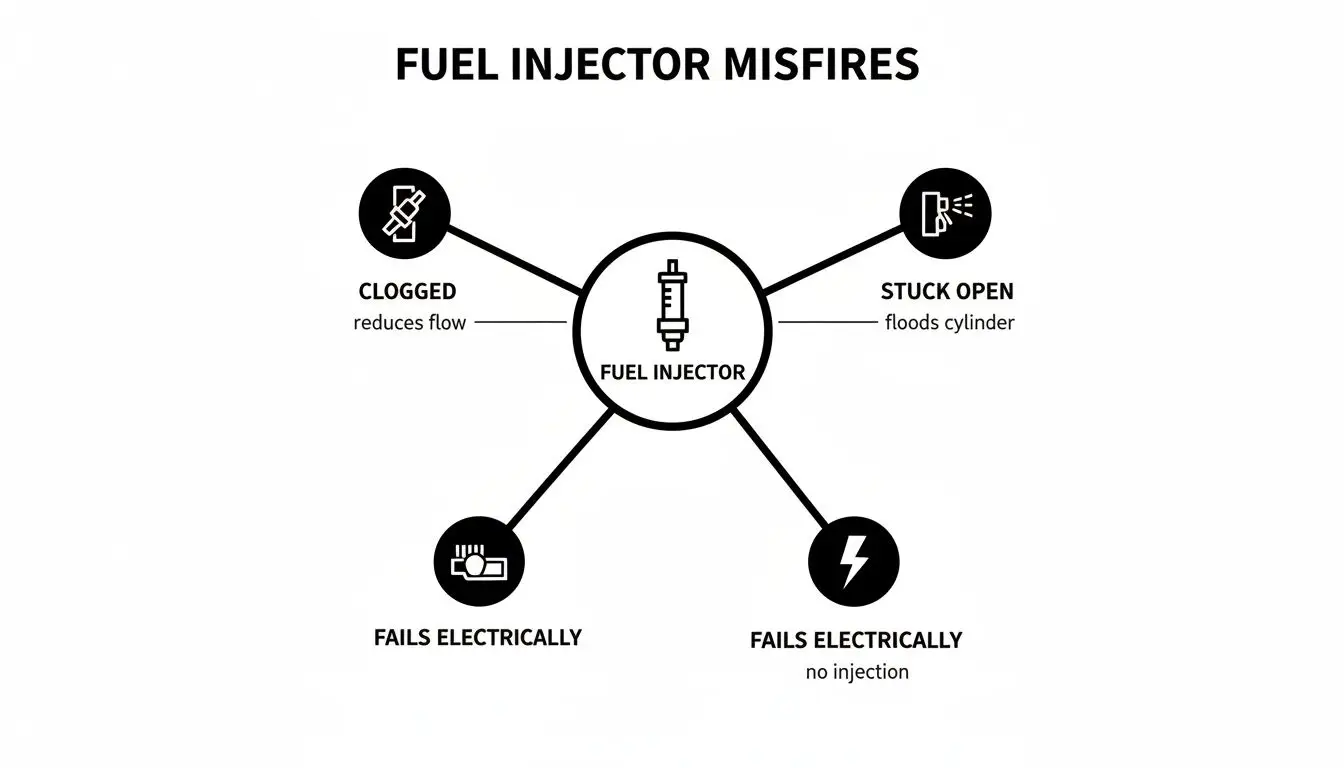
As you can see, whether it’s a clog, a stuck-open valve, or an electrical issue, the end result is a disruption to that critical air-fuel ratio.
To put it simply, a misfire is your engine's way of telling you something is wrong with the combustion process. Here's a quick breakdown of how these injector problems connect to what you might be experiencing.
Quick Guide to Injector-Related Misfires
| Injector Problem | Resulting Air-Fuel Mixture | Most Common Symptom |
|---|---|---|
| Clogged Injector | Lean (not enough fuel) | Engine hesitates, feels weak, or stutters during acceleration. |
| Stuck-Open Injector | Rich (too much fuel) | Rough idle, strong smell of unburnt gas from the exhaust. |
| Electrical Fault | No Fuel or Inconsistent Fuel | A consistent misfire in one cylinder, often with a flashing check engine light. |
Both lean and rich conditions will almost certainly trigger your check engine light, which is your car’s way of telling you it's time to get things checked out. A misfire might start as a small annoyance, but ignoring it can lead to more serious (and expensive) engine damage down the road.
Identifying the Warning Signs of a Bad Fuel Injector
A bad fuel injector rarely fails all at once. Instead, it starts dropping hints—subtle at first, but they get louder over time. Learning to spot these early warnings is the key to catching a simple misfire before it snowballs into a serious engine problem.
Think of these signs as your car's way of telling you that its delicate air-fuel mixture is out of whack. The first thing you'll likely notice is a rough idle. You’ll feel a distinct shudder or vibration running through the car while you're stopped at a light. That's a classic signal that one of the cylinders isn't firing the way it should be.
Acceleration Issues and Fuel Smells
Beyond a shaky idle, a failing injector often makes itself known when you're actually driving. You might step on the gas to merge onto the highway, only for the engine to hesitate or stumble dangerously. This happens when a clogged injector can’t supply the burst of fuel needed for acceleration, triggering a momentary misfire.
Another dead giveaway is the unmistakable smell of raw gasoline. If an injector gets stuck open, it floods the cylinder with way too much fuel. Since it can't all burn, the unburnt gas escapes out the exhaust, creating that potent odor that usually points to a rich misfire.
Picture this: You're accelerating onto I-30 from Fort Worth, but your truck hesitates, shakes violently, and the tachometer needle dances erratically—hallmarks of a fuel injector-induced misfire affecting roughly 20% of all check engine light activations in vehicles over 75,000 miles.
This scenario is far more common than most drivers think. If these symptoms sound familiar, you can get a more in-depth look at our detailed article on the signs of bad fuel injectors.
The Financial and Diagnostic Clues
The trouble from a bad injector will eventually show up on your dashboard and hit your wallet, too. Keep a close eye out for these clues:
- Decreased Fuel Economy: A faulty injector, whether it's clogged or leaking, is a major fuel waster. If you find yourself at the gas pump more often than usual, it’s a strong hint that your engine isn't running efficiently.
- Check Engine Light: This is your car's most direct cry for help. A bad fuel injector will almost always trigger the check engine light. Hooking up an OBD-II scanner will likely reveal codes from P0300 to P0308, pointing to a misfire in a specific cylinder.
- Erratic Tachometer: Watch the RPM gauge. If the needle jumps around or acts erratically while your foot is steady on the pedal, it’s reflecting the engine's inconsistent firing caused by the misfire.
In fact, data from across the auto repair industry shows that dirty injectors are the culprit behind 1 out of every 5 engine performance complaints. Ignoring these signs isn't just bad for your driving experience; it puts expensive parts like your catalytic converter at risk of serious damage.
So, Why Do Fuel Injectors Go Bad?
Fuel injectors are tough, but they lead a hard life. They're constantly being blasted with extreme heat and intense pressure while managing the nonstop flow of gasoline. After thousands of miles, it's not surprising that they can start to wear down. Figuring out why they fail is the key to preventing a frustrating engine misfire down the road.
By far, the most common culprit is contamination. Think of it like a slowly clogging pipe in your house. Over time, gunk from low-quality gas and tiny bits of sediment create carbon deposits that block the injector’s delicate nozzle.
This buildup messes with the finely-tuned fuel spray your engine needs. Instead of a perfect mist, you get a weak, uneven drizzle—a guaranteed recipe for a lean misfire.

Contamination and Clogs
The fuel going into your tank isn't always as pure as you'd hope. Debris can sneak in from a few places, but it all leads to the same destination: a clogged-up injector.
- Carbon Buildup: This is the big one. As fuel burns, additives can leave behind a sticky varnish and hard carbon deposits. This gunk bakes onto the injector tip, slowly strangling the fuel flow.
- Fuel Tank Debris: If you have an older or high-mileage vehicle, there's a good chance rust and sediment have settled at the bottom of your fuel tank. When the tank runs low, that gunk gets stirred up and sucked right into the fuel lines, eventually jamming up the injectors.
- Poor Quality Fuel: Gassing up at a station with questionable fuel quality can introduce all sorts of contaminants that speed up the clogging process.
This happens more often than most drivers think. Picture this: you're cruising down White Settlement Road in your trusty SUV, and suddenly the engine starts to sputter and shake. That’s a classic engine misfire, and a bad fuel injector is the cause in about 30-40% of these cases. In fact, you can trace 65% of those injector-related problems back to dirty or clogged tips, as detailed in data from Hotshot's Secret.
Mechanical and Electrical Failures
It's not always about clogs. Fuel injectors have tiny moving parts and electrical wiring that can simply wear out or break from all the stress.
Inside each injector is a solenoid—a small coil of wire that uses magnetism to open a valve. If that little coil overheats and burns out, the injector gets stuck closed. No fuel gets into the cylinder, and you've got a dead cylinder on your hands.
On the flip side, the internal springs and pintle caps can break from all the vibration and constant heating and cooling. If a part fails, the injector might get stuck open, flooding the cylinder with way too much gas. This causes a nasty rich misfire and can destroy your catalytic converter.
Either scenario is serious business. A stuck-closed injector makes your engine run rough, while a stuck-open one wastes gas, creates a powerful fuel smell, and risks expensive collateral damage. This is why getting a proper diagnosis and repair as soon as possible is absolutely critical.
How to Diagnose a Faulty Fuel Injector
When you suspect a bad fuel injector is behind your engine misfire, the next step is to play detective and track down the source of the problem. Luckily, there are a few simple checks you can do right in your driveway to start narrowing things down before bringing it in for a professional look. These first steps can help you figure out if the issue is coming from one specific cylinder.
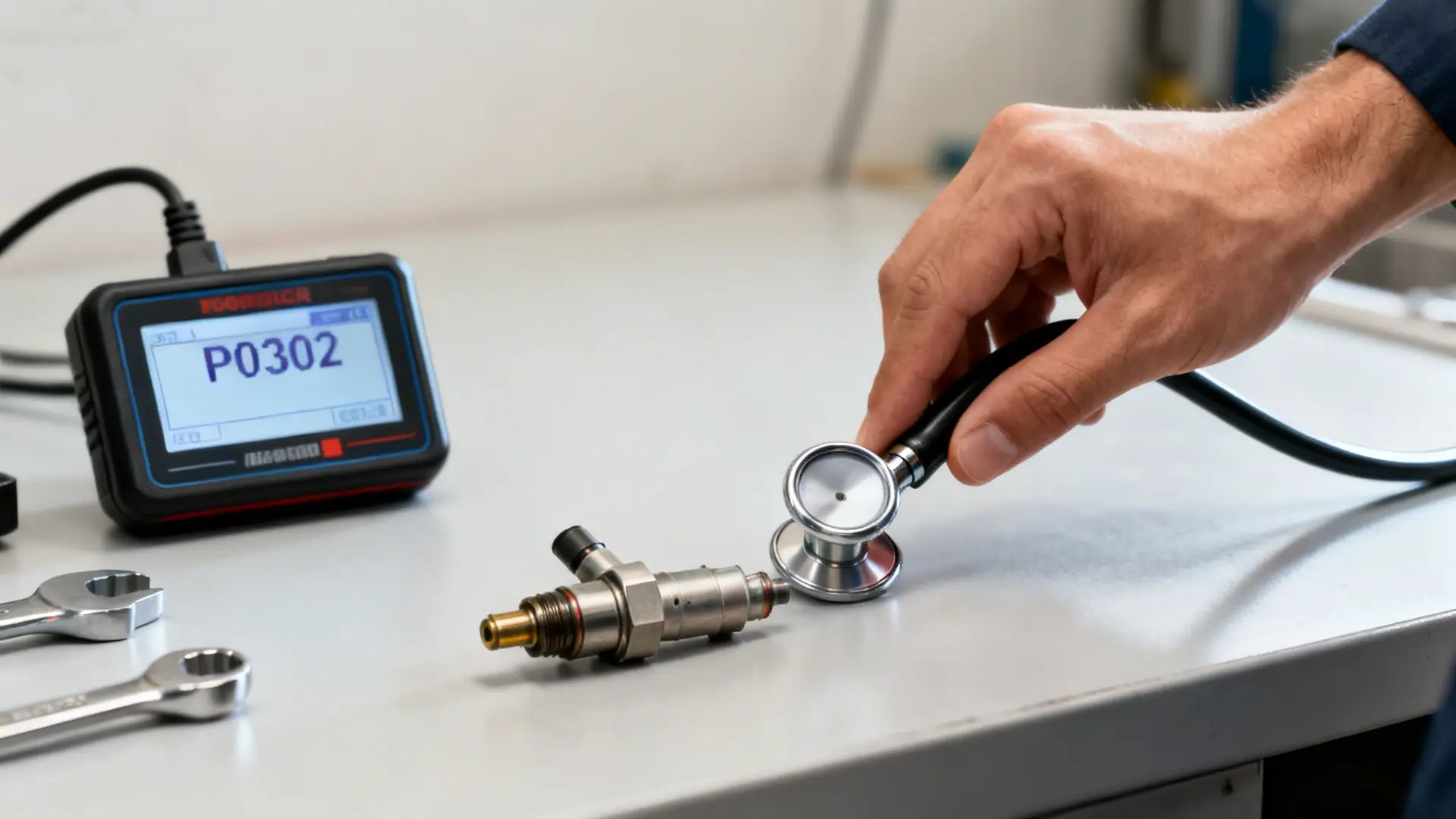
The first and easiest test doesn't require any fancy tools—just your ears and a long screwdriver or a mechanic's stethoscope. With the engine running, carefully touch the screwdriver's tip to the body of each fuel injector and press your ear against the handle. A healthy, working injector will make a clear, steady clicking or ticking noise as its tiny internal valve opens and closes.
If you make your way down the line and find one injector is silent while the others are happily clicking away, you've almost certainly found your culprit. A quiet injector usually means it’s either not getting an electrical signal or it has failed internally.
Using an OBD-II Scanner for Clues
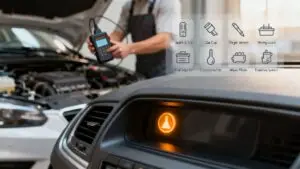
For a more high-tech approach, an OBD-II scanner is a fantastic tool to have. Whenever your check engine light pops on, your car’s computer logs a Diagnostic Trouble Code (DTC) that acts like a breadcrumb trail to the problem. If a faulty injector is causing a misfire, you'll almost always find a code waiting for you.
Just plug the scanner into your car’s OBD-II port, which is usually found under the dashboard, and let it read the codes. You’ll want to keep an eye out for codes between P0300 and P0308.
- P0300: This code is for a "Random/Multiple Cylinder Misfire," which tells you the problem isn’t tied to just one cylinder.
- P0301-P0308: These codes are specific to each cylinder. For instance, a P0302 code points directly to a misfire in cylinder number two. This is a huge clue that the injector, spark plug, or ignition coil for that cylinder is the source of your trouble.
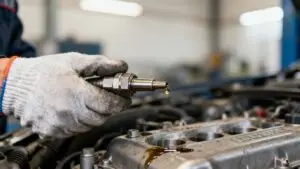
Keep in mind, a misfire code points you to the right cylinder, but it doesn't automatically condemn the fuel injector. The issue could just as easily be a worn-out spark plug or a failing ignition coil. To get a better handle on other parts that can cause similar symptoms, take a look at our guide on when to replace spark plugs.
Professional Diagnostic Techniques
If your own tests don't give you a clear answer, or you just want to be absolutely sure, it’s time to let a professional take over. At a shop like Kwik Kar, our technicians use advanced equipment to get a definitive diagnosis and confirm what’s really causing the misfire.
A professional injector balance test is the gold standard for diagnosis. It precisely measures the amount of fuel each injector sprays over a set period, revealing if one is clogged and underperforming or stuck open and over-delivering fuel.
We also use a few other trusted methods to get to the bottom of it:
- Noid Light Test: This simple but effective tool plugs directly into the injector’s wiring harness. If the light flashes while the engine is running, it confirms the injector is getting the electrical pulse it needs from the computer. No flash, no power.
- Fuel Pressure Test: A technician will hook a pressure gauge to the fuel rail to make sure the entire system is getting the right amount of pressure from the tank. Low pressure might point to a weak fuel pump rather than a bad injector.
Comparing Fuel Injector Repair and Replacement Costs
So, you’ve pinpointed the misfire to a bad fuel injector. What’s next? You’re really looking at two options: giving the injector a deep clean or replacing it altogether. The best choice often boils down to the root cause of the problem and your budget.
If the injector is just clogged up with carbon and fuel gunk, a professional cleaning can work wonders. This isn't a job for a simple fuel additive from a bottle; we're talking about removing the injectors and using ultrasonic cleaning to break loose stubborn deposits. This process can bring a sluggish injector right back to factory-fresh performance for a fraction of the cost of a new one.
Cost Breakdown: Cleaning vs. Replacement
Of course, cleaning only works if the injector is just dirty. If there's an electrical problem, like a fried solenoid, or an internal mechanical failure, no amount of cleaning will bring it back to life. In those situations, a full replacement is your only move.
The price to replace a fuel injector can swing pretty wildly based on your car. A new injector can run anywhere from $50 to over $200, and that’s before you even get to high-performance or diesel models. Labor costs also play a big part—some engines give you easy access to the fuel rail, while others require a lot more work to get to. Understanding what it takes to change a fuel injector can give you a good sense of the job's scope.
To make it clearer, let's compare the two routes side-by-side.
Fuel Injector Cleaning vs Replacement
| Service Option | Average Cost Range | Best For | Key Benefit |
|---|---|---|---|
| Ultrasonic Cleaning | $25 – $50 (plus labor) | Injectors that are clogged but not broken. | Restores performance for a much lower cost. |
| Injector Replacement | $150 – $400+ (parts & labor) | Injectors with electrical or mechanical failure. | A guaranteed, long-term fix for a failed part. |
As you can see, cleaning is a great budget-friendly option for clogged injectors, while replacement is the definitive solution for one that has failed completely.
The High Cost of Ignoring the Misfire
Whatever you do, don’t put off the repair. Driving with a misfire might seem like you're saving money in the short term, but it’s one of the worst financial gambles you can make with your car. A misfiring cylinder dumps raw, unburned fuel straight into your exhaust system.
That unburnt fuel will superheat your catalytic converter, causing it to melt down and fail in a hurry.
A catalytic converter replacement is a massive expense, typically costing between $1,000 and $2,500. Suddenly, that relatively small injector problem has snowballed into a bill that costs ten times as much.
Ignoring a misfire is a surefire way to turn a small problem into a wallet-draining catastrophe. To keep your entire system running clean and prevent this kind of buildup, a professional fuel system flush is a fantastic preventative service that protects all of these critical components.
When to Get a Professional Misfire Inspection
While a little at-home diagnostic work can point you in the right direction, knowing when to hand the keys to a professional is just as crucial. Some symptoms are clear indicators that your vehicle needs an expert eye to prevent a small problem from snowballing into a major, expensive repair.
The most serious warning sign is a flashing check engine light. This isn't your average alert; it's an urgent message that a severe misfire is happening right now. A flashing light means raw fuel is likely getting dumped into your exhaust system, which can quickly overheat and destroy your catalytic converter—a very costly part to replace. If you see that light blinking, pull over as soon as it's safe and call for a tow. It's not worth the risk of driving any further.
When Symptoms Linger
Even if your check engine light isn’t flashing, persistent problems are your car’s way of telling you it’s time for a professional opinion. You should schedule an inspection if you’re running into these issues:
- Persistent Symptoms: You’ve tried the basics, but the rough idle, sluggish acceleration, or poor fuel economy just won’t go away. It’s time for a deeper look.
- Inconclusive DIY Tests: You've listened for the tell-tale clicks and even scanned for codes, but the root cause is still a mystery. Technicians have advanced equipment to get to the bottom of it.
- You Smell Raw Fuel: A strong gasoline odor inside or outside your car often points to a leaky or stuck-open injector. This is a serious fire hazard that needs immediate attention from a qualified mechanic.
Trusting ASE-certified technicians isn't just about getting a repair; it's about getting a reliable diagnosis. Professionals use advanced equipment like injector balance testers to measure the exact spray volume from each injector, definitively identifying a bad fuel injector and eliminating guesswork.
Bringing your vehicle to a trusted shop like Kwik Kar ensures that the problem is pinpointed accurately. This approach saves you from spending money replacing the wrong parts and gives you the confidence that the job will be done right the first time, protecting both your engine and your wallet.
Frequently Asked Questions About Fuel Injectors
When you're dealing with engine trouble, it's natural to have questions. If you suspect a bad fuel injector is the culprit behind your car's misfire, you're not alone. Let's clear up a few of the most common concerns we hear from drivers.
Can You Drive With A Bad Fuel Injector?
While your car might still run with a bad fuel injector, we strongly advise against it. Continuing to drive puts a huge amount of stress on the engine and can easily damage other critical, and expensive, parts.
For instance, a leaking injector will pour unburned fuel straight into your exhaust system. This can rapidly overheat and destroy your catalytic converter—a repair that can easily top $1,500. If your check engine light is flashing, that’s a sign of a severe misfire. Pull over as soon as it's safe and shut off the engine to prevent catastrophic failure.
Will A Fuel Additive Fix A Clogged Injector?
Sometimes, but it really depends on how bad the clog is. A high-quality fuel injector cleaner can be a great preventative tool, as its detergents can dissolve minor carbon deposits that build up over time.
However, these over-the-counter solutions often aren't powerful enough to clear out heavy, baked-on gunk that’s causing a noticeable misfire.
For really stubborn clogs, nothing beats a professional off-car ultrasonic cleaning. This service involves removing the injectors entirely and using high-frequency sound waves in a cleaning solution to blast away even the toughest buildup, restoring the factory spray pattern.
How Often Should Fuel Injectors Be Cleaned?
There’s no single answer that fits every car, as it comes down to your vehicle’s age, your driving style, and the quality of fuel you use.
That said, a good rule of thumb is to have a professional fuel system cleaning performed every 30,000 to 45,000 miles. This kind of proactive maintenance is one of the best investments you can make in your engine’s health, helping stop carbon from building up in the first place.
If you’re dealing with a rough idle, weak acceleration, or a check engine light that just won't go away, it’s time to stop guessing and get real answers. The ASE-certified technicians at Kwik Kar Oil Change and Auto Care have the advanced diagnostic equipment to find the true source of your engine misfire. Schedule your professional inspection today and get back on the road with confidence.