



So, how often should you swap out that fuel filter? The quick answer you’ll hear most often is every 20,000 to 40,000 miles. But honestly, it’s not that simple.
Think of it like the water filter in your refrigerator. You don’t just change it on a random date; you change it based on how much water you use and how clean that water is to begin with. Your car’s fuel filter works on the same principle.
Your Guide to Fuel Filter Replacement Schedules
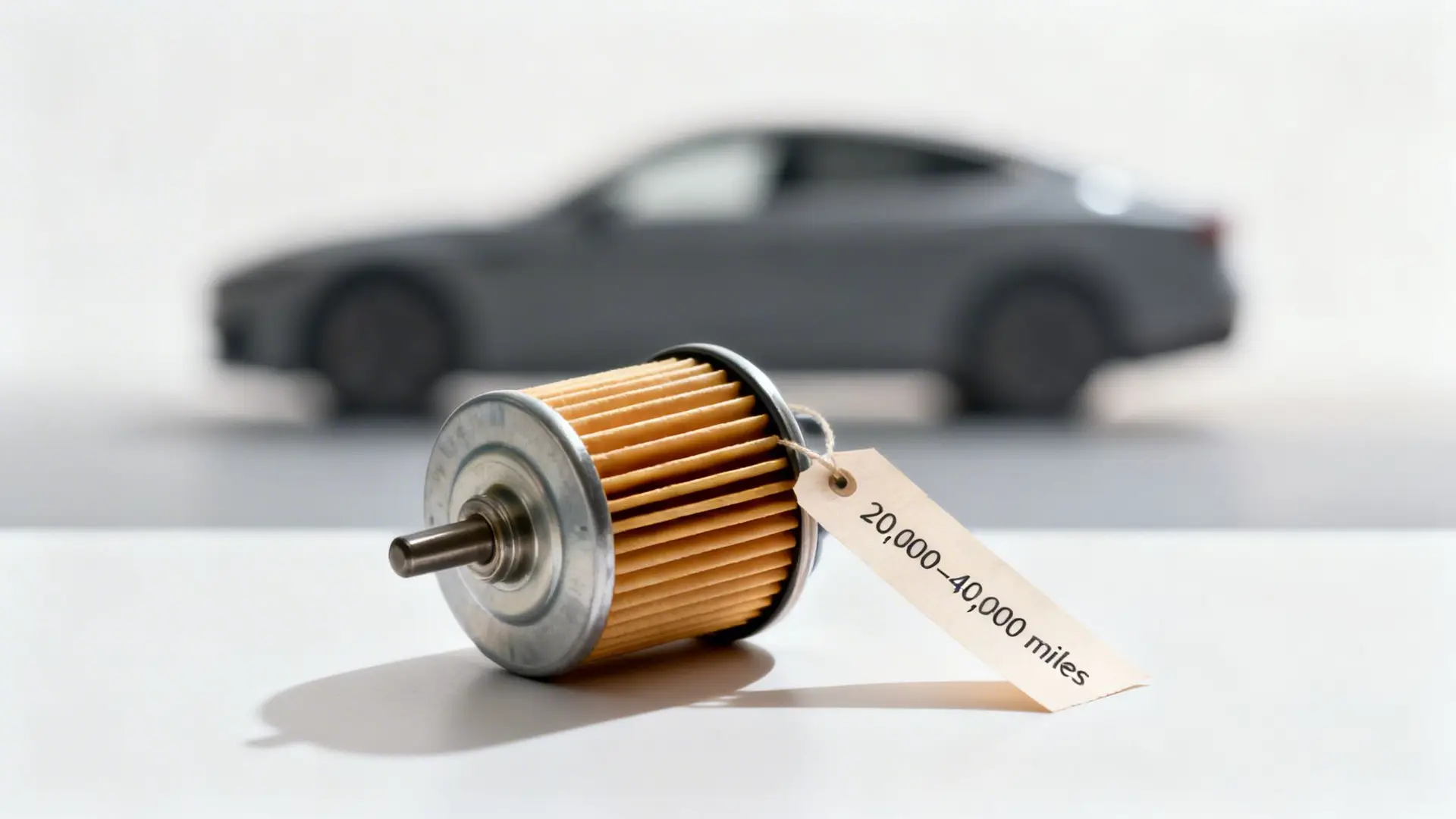
Knowing the right time to change your fuel filter is one of those small things that makes a huge difference in your engine’s health and performance down the road. While that 20,000 to 40,000-mile window is a great starting point, your car’s real needs depend on its age, the kind of fuel you use, and where and how you drive every day.
Over the years, as fuel quality improved and engine designs became more advanced, that general guideline became the standard. But it’s just that—a guideline. If you’re driving in a dusty, rural area, your filter is going to clog up a lot faster than someone who sticks to clean city highways. It’s all about context.
General Replacement Timelines
To give you a better idea of where your vehicle might fall, we’ve put together this quick reference table. Think of this as a baseline, not a hard-and-fast rule. We’ll get into the specific factors that can change these numbers in just a bit.
| Vehicle Type / Condition | Recommended Interval (Miles) | Notes |
|---|---|---|
| Modern Gasoline Cars | 20,000–40,000 | The most common range for sedans, SUVs, and trucks. |
| Diesel Engines | 15,000–30,000 | Diesel engines are more sensitive to fuel contaminants and water. |
| Older Vehicles (Pre-2000s) | 15,000–25,000 | Older gas tanks can have more sediment buildup. |
| Harsh Driving Conditions | Every 20,000 or less | Includes dusty roads, heavy stop-and-go traffic, or frequent short trips. |
| High-Quality Fuel & Highway Driving | Up to 40,000 or more | Cleaner fuel and consistent engine operation extend filter life. |
Key Takeaway: A dirty fuel filter forces your fuel pump to work harder, reducing its lifespan and hurting your gas mileage. Proactive replacement is a small investment that prevents much larger, more expensive repairs down the road. It’s not just about following a schedule; it’s about protecting your engine.
Understanding Your Fuel Filter’s Critical Role
Think of your fuel filter as the unsung hero of your engine. It’s a small, simple part with one critical job: to stand guard between the fuel tank and your engine, catching all the dirt, rust, and debris before it can cause any trouble.
This role is absolutely vital. Modern fuel pumps and injectors are incredibly precise instruments, and even the smallest particles can lead to clogs, abrasive wear, and eventually, some very expensive repair bills. A clean filter ensures these sensitive parts get nothing but pure, liquid fuel.
The Fuel’s Journey to Your Engine
To really get why this matters, let’s follow the fuel from the pump to your engine. The gasoline or diesel you put in your tank isn’t perfectly clean. It can pick up sediment from the large storage tanks at the gas station or even tiny rust particles from inside your own fuel tank as it ages.
When your fuel pump kicks on, it sends that fuel on a high-pressure journey toward the engine. But first, it has to get past the filter. Inside is a very fine paper or synthetic mesh designed to trap contaminants just a few microns in size—that’s many times smaller than the width of a human hair.
This simple process guarantees that only clean fuel makes it to the combustion chamber. Understanding how every part works together is key, and it’s helpful to know all the integral fuel system components that keep your car moving.
More Than Just a Sieve
A modern fuel filter is often smarter than you’d think. It doesn’t just trap solid gunk; many filters, especially in diesel trucks, also serve as a water separator. Water can condense in the fuel tank, and it’s a huge enemy of diesel injection systems. The filter is designed to isolate this water, keeping it safely away from your engine.
Think of a clogged filter like a pinched garden hose. Your fuel pump has to work much harder to force fuel through, leading to premature pump failure, poor engine performance, and a noticeable drop in gas mileage.
Essentially, the fuel filter is a low-cost, sacrificial part meant to protect high-cost components. Swapping it out isn’t just another line item on a maintenance list—it’s a direct investment in your vehicle’s power, efficiency, and long-term health. A fresh filter is one of the smartest ways to maintain a clean fuel system and avoid surprise breakdowns and costly shop visits.
Factors That Influence Your Replacement Schedule
That little book in your glove box gives you a good starting point for your fuel filter, but real-world driving often tells a different story. The manufacturer’s recommendation is just a baseline. Your actual driving habits, your vehicle’s age, and even the gas you use can mean your filter needs changing much sooner.
When you understand what affects your fuel filter, you can create a smart maintenance plan that goes beyond the manual and truly protects your engine. Let’s break down the main things that cause a filter to clog up faster.
Vehicle Age and Condition
The age of your vehicle makes a huge difference. Older cars, especially those with original steel gas tanks, have a tendency to shed tiny bits of rust and sediment over the years. Every time you drive, those particles get sloshed around and sent straight to your fuel filter, clogging it far more quickly than in a newer car with a modern, corrosion-resistant plastic tank.
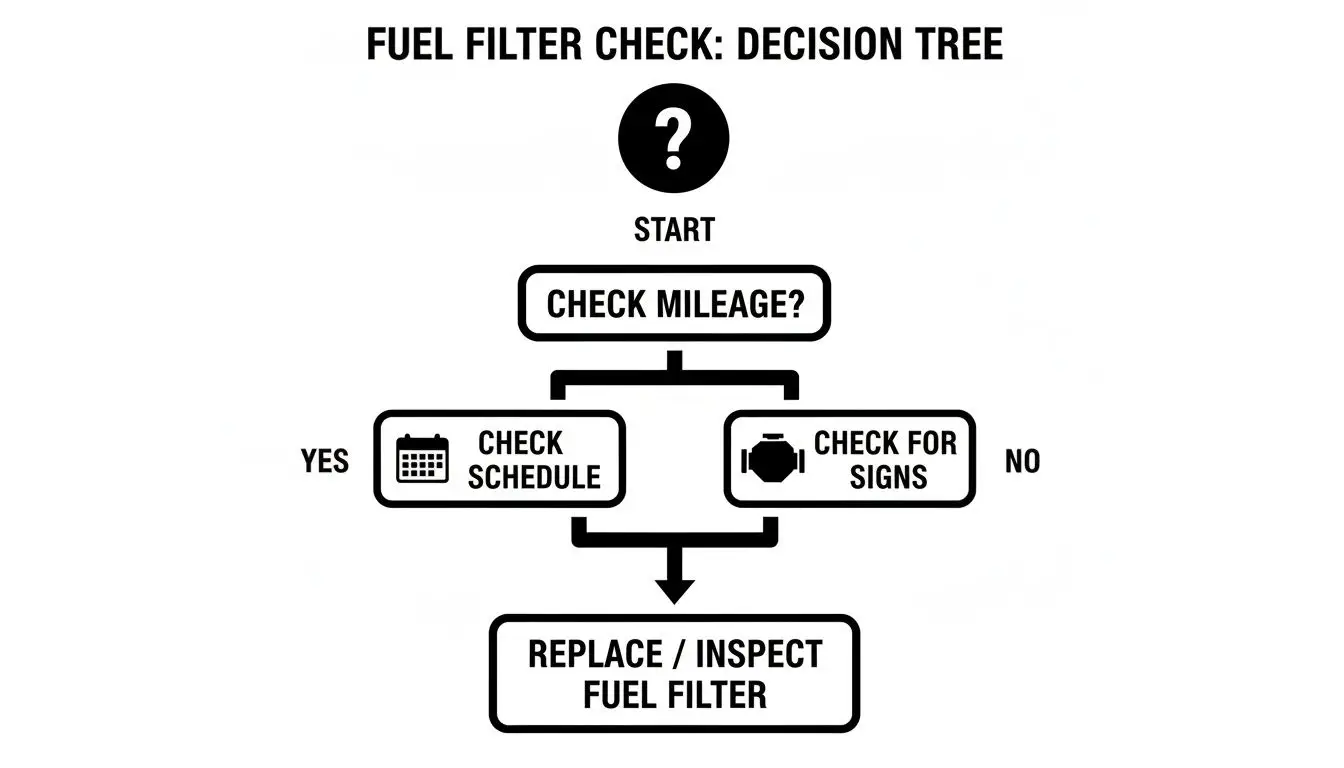
So, where do you start? This decision tree can help you figure out your next steps.
Fuel Quality and Type
Believe it or not, not all gas is created equal. While the big-name brands usually have good detergents mixed in, cheaper gas from off-brand stations can come with more impurities. If you consistently fill up with lower-quality fuel, you’re basically fast-tracking your filter to an early retirement.
- Gasoline Engines: Modern gas engines are tough, but they’re still vulnerable to gunk and sediment from dirty fuel.
- Diesel Engines: Diesel fuel systems are a whole different ballgame—they are extremely sensitive. Diesel fuel can attract water, and the high-pressure pumps and injectors demand perfectly clean fuel. A clogged filter in a diesel isn’t just an annoyance; it can lead to catastrophic and expensive failures.
As a rule of thumb, most fuel filters should be swapped out before 50,000 miles to keep the engine happy and avoid damaging the fuel pump. This is especially true for diesel trucks, older cars, or any vehicle you drive in tough conditions. To see what that looks like in practice, you can explore more insights on fuel system maintenance.
Your Local Driving Conditions
Where you drive matters just as much as how much you drive. Your daily environment has a direct impact on how long your fuel filter lasts.
Consider this: A work truck that spends its days on dusty Fort Worth construction sites and in heavy stop-and-go traffic will likely need two fuel filter changes in the time a highway commuter car needs one.
Harsh conditions like dirt roads, construction zones, or even just our humid Texas climate (which can cause water to condense in the tank) force your filter to work overtime. On the flip side, long, smooth highway drives are much easier on your entire fuel system.
Warning Signs of a Clogged Fuel Filter
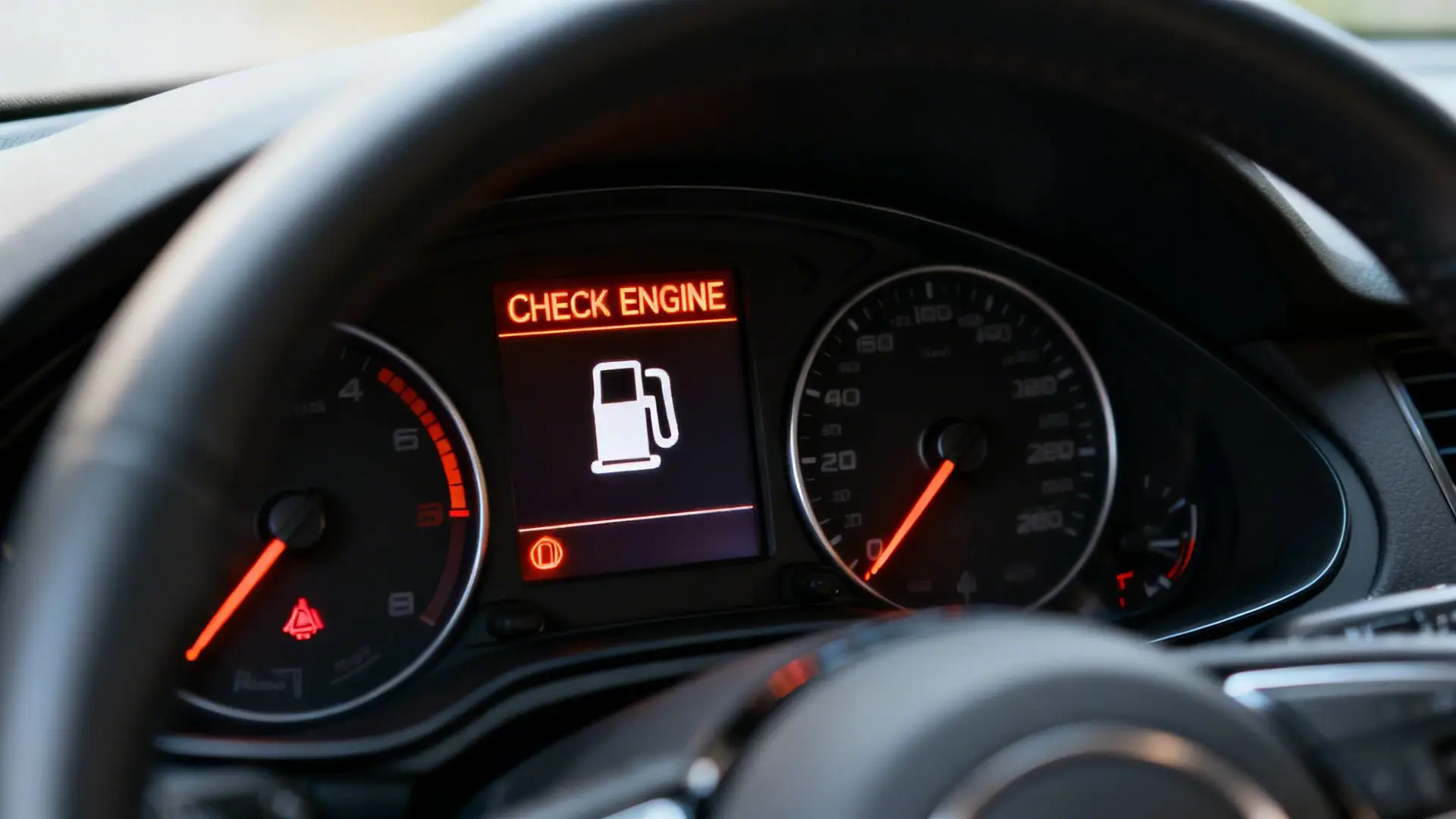
Your car is pretty good at telling you when something’s not right. A clogged fuel filter is no exception—you just have to know what to listen for. Think of these signs as your engine’s way of saying it’s struggling to get the clean, steady stream of fuel it needs to perform.
When that filter gets packed with dirt, rust, and other gunk, it creates a bottleneck. This forces your fuel pump to work overtime just to push gas through, which can cause a whole host of problems that only get worse the longer you ignore them.
Trouble Starting and Rough Idling
One of the first things you’ll probably notice is that your car is harder to start. You might find yourself cranking the engine longer than usual, especially on a cold morning. This happens because the clogged filter is holding back the fuel your engine needs to fire up quickly.
Once it’s running, a rough idle is another dead giveaway. Instead of a smooth, even hum, your engine might shake, sputter, or feel like it’s about to stall out. That’s a direct result of an inconsistent fuel supply.
A clogged filter makes your engine feel like it’s trying to breathe through a straw. The fuel pump is working its heart out, but the engine still can’t get enough gas, leading to all sorts of hesitation and poor performance.
Loss of Power and Poor Acceleration
This is where a clogged filter really shows its true colors—especially when you need power the most. Think about accelerating onto the highway, climbing a steep hill, or pulling a trailer. You’ll hit the gas, but the car will feel sluggish and weak, almost like it’s being held back.
That loss of power happens because your engine needs a much higher volume of fuel when it’s under load. A clogged filter simply can’t keep up with the demand, starving the engine right when it’s hungriest. You might also experience:
- Engine Stuttering: Your car might hesitate, jerk, or “buck” as you accelerate. That’s the engine struggling with an unsteady fuel supply.
- Worsening Fuel Economy: Since your fuel pump is working harder to fight the clog, it’s using more energy. That extra work translates directly into fewer miles per gallon.
- Check Engine Light: If the clog gets bad enough, it can cause your engine to run too “lean” (too much air, not enough fuel). This will often trigger your Check Engine Light. Codes like P0171, P0174, or P0087 are common culprits pointing to a fuel delivery issue.
It’s important to remember that these symptoms can also point to other problems, like worn-out spark plugs or failing fuel injectors. If these issues sound familiar, you can learn more about the signs of bad fuel injectors to help narrow it down. Ultimately, a professional diagnosis is the only surefire way to pinpoint the exact cause and avoid paying for repairs you don’t need.
DIY vs. Professional Fuel Filter Replacement
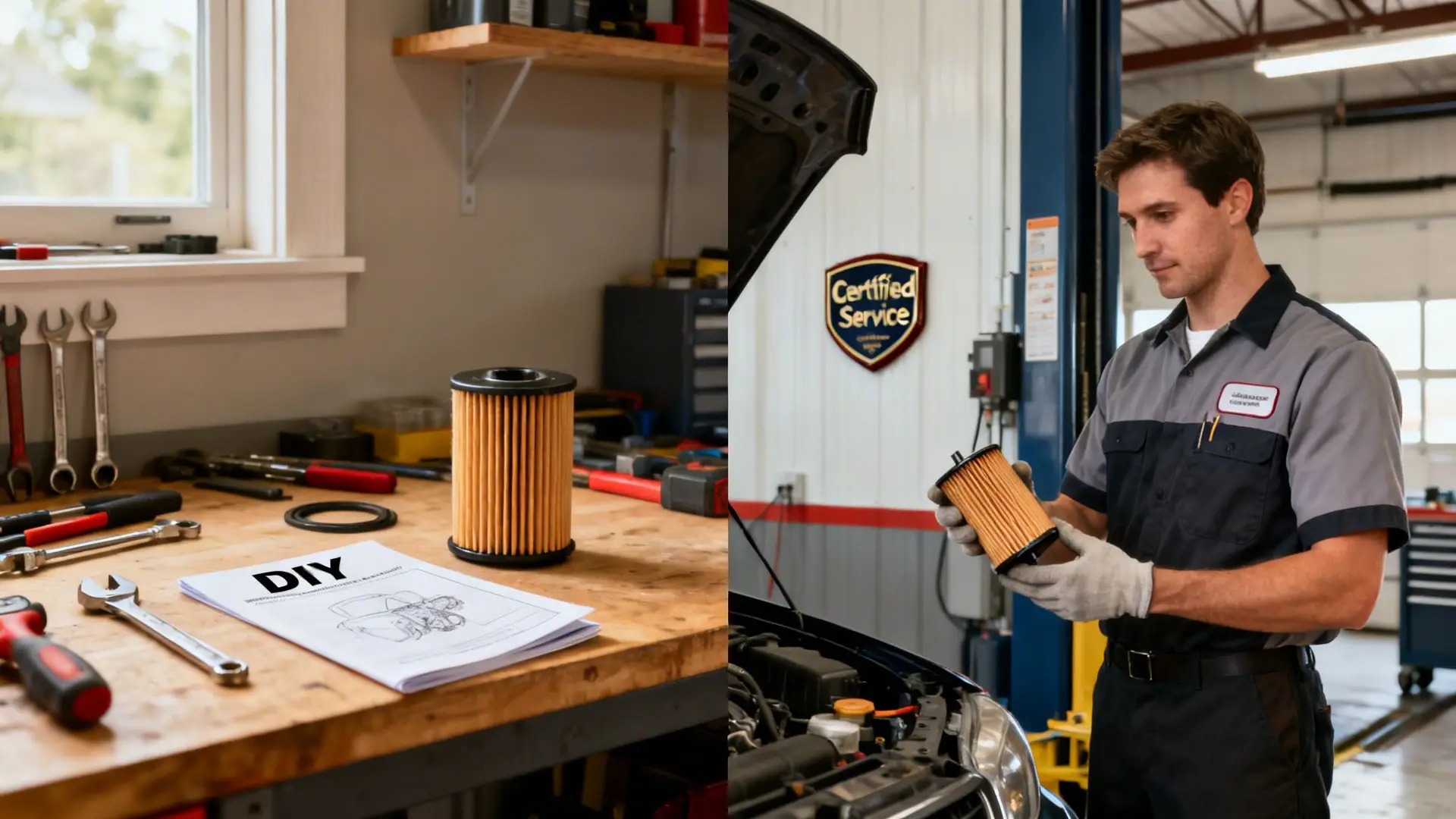
When it’s time for a new fuel filter, you’ll find yourself at a familiar crossroads: do you tackle it yourself, or do you call in the pros? For the dedicated weekend warrior with the right tools and a deep respect for automotive safety, swapping a fuel filter can feel like a rewarding, money-saving win.
But let’s be crystal clear—this isn’t like changing your air filter. Your vehicle’s fuel system is under high pressure, and a small mistake can lead to big, dangerous problems. Before you even think about grabbing the wrenches, it’s important to understand what this job really involves.
The Realities of a DIY Fuel Filter Change
Taking this on in your garage means preparing for a few serious risks. This job is much more than just unscrewing an old part and slotting in a new one.
Here’s what you’re up against:
- Handling Pressurized Fuel: First, you have to safely depressurize the fuel lines. If you skip this or do it wrong, you risk gasoline spraying everywhere—a massive fire hazard and a serious health risk.
- Managing Spills: Even with the system depressurized, you’re going to spill some fuel. You need a plan to safely catch it and dispose of it properly. A little bit of gas can quickly fill a closed garage with dangerous fumes.
- The Risk of Leaks: Getting the new filter sealed perfectly is the most critical part. If those fittings aren’t torqued just right, you could end up with a slow, hazardous fuel leak that you might not even notice until you’re driving.
This kind of job often requires more than a standard socket set. Depending on the car, you might need special fuel line disconnect tools, a torque wrench to hit exact specifications, and the right personal protective equipment (PPE), like fuel-resistant gloves and safety glasses.
To help you weigh the decision, here’s a straightforward comparison of what to expect.
DIY vs. Kwik Kar Professional Fuel Filter Replacement
| Aspect | DIY Replacement | Professional Service (Kwik Kar) |
|---|---|---|
| Safety Risks | High risk of fuel spray, fire, and fume inhalation if done incorrectly. | Minimal risk to you. Technicians are trained in safe fuel handling and depressurization. |
| Tools & Equipment | Requires purchasing or renting specialized fuel line tools and safety gear. | We have all the manufacturer-specific tools for any make and model. |
| Accuracy & Leaks | High risk of improper sealing, leading to dangerous fuel leaks after the job is done. | Guaranteed, leak-free installation with proper torque specs and professional-grade seals. |
| Time & Convenience | Can take several hours, especially for a first-timer. Includes tool runs and cleanup. | Typically a quick and efficient service. You can relax while the experts handle it. |
| Cost | Lower upfront cost on parts, but potential for expensive mistakes (e.g., broken fuel lines). | Higher upfront cost that includes parts, labor, and a guarantee on the work. |
| Warranty | No warranty on your own labor. If it leaks, the fix is on you. | Our work is backed by a warranty, giving you complete peace of mind. |
As you can see, while the DIY route seems cheaper on the surface, the hidden costs and safety risks can add up quickly.
The Kwik Kar Advantage
While we admire the DIY spirit, the peace of mind that comes from professional service is often the smarter choice. At Kwik Kar, our certified technicians work on fuel systems day in and day out. We have the training, the specialized tools, and the experience to get it done right—safely and efficiently.
When you bring your vehicle to us, you’re not just getting a part replaced. You’re getting:
- Guaranteed, Leak-Free Work: Our technicians follow precise procedures and torque settings to ensure every connection is rock-solid, eliminating the worry of a dangerous leak down the road.
- Specialized Tools for the Job: We have the exact tools needed for your car, preventing damage to delicate fuel line connectors that can become brittle and expensive to replace.
- Proper Fuel Handling: We manage and dispose of all fuel safely and according to environmental standards, keeping your property clean and hazard-free.
A fuel filter replacement is a crucial piece of your car’s overall health. To see how this service fits into a broader maintenance plan, you can learn more about our comprehensive fuel system flush that restores performance. Ultimately, opting for a professional service at Kwik Kar is the safest and most reliable choice for both you and your vehicle.
Frequently Asked Questions About Fuel Filters
Even after going through the details, it’s completely normal to have a few more questions about something as vital as your car’s fuel filter. We get plenty of them from drivers right here at our Fort Worth shop. To help clear things up, we’ve gathered the answers to the questions we hear most often.
Is It Safe to Drive with a Clogged Fuel Filter?
We strongly advise against it. While your car might keep chugging along for a little while, a clogged filter is forcing your fuel pump to work overtime. That extra strain can cause the pump to fail prematurely—a repair that’s a whole lot more expensive than a simple filter swap.
You’re also running the risk of your engine stalling out of nowhere, which is the last thing you want to happen in the middle of traffic. It’s best to treat the symptoms early before they turn into a much bigger, and potentially dangerous, problem.
Can a New Fuel Filter Improve My Gas Mileage?
Absolutely. If your old filter is clogged, replacing it can definitely give your gas mileage a boost. A restricted filter makes the fuel pump work much harder to deliver fuel to the engine, and all that extra effort burns more gas.
Once a fresh filter is in place, fuel flows freely again, and the pump can do its job without straining. Many drivers tell us they notice a real difference in their MPG after a replacement, especially when the old filter was seriously gummed up.
Expert Insight: In today’s vehicles, especially diesels, the fuel filter is a key player in the emissions system. A clean filter ensures the engine burns fuel completely and efficiently, which helps you pass emissions tests and protects expensive parts like the catalytic converter from damage.
Why Do Diesel Engines Need More Frequent Filter Changes?
Diesel engines are much more sensitive to dirty fuel than gasoline engines, and it comes down to a few key things.
- Higher Injection Pressures: Diesel injectors operate under immense pressure. Even the tiniest speck of dirt can cause major, costly damage to these finely-tuned components.
- Water Contamination: Diesel fuel can attract and hold water, which is a recipe for rust and corrosion inside the fuel system. Most diesel fuel filters are also designed as water separators, so they perform a critical dual role.
- Fuel Composition: Diesel fuel isn’t always as refined as gasoline, meaning it can sometimes carry more impurities straight from the pump.
For these reasons, sticking to a strict replacement schedule is non-negotiable for diesel owners. Keeping up with how often you should change the fuel filter is one of the best things you can do to prevent catastrophic and expensive engine problems down the road.
Does the Brand of Fuel Filter Matter?
Yes, the quality of the fuel filter you choose matters a lot. A cheap, off-brand filter might not catch all the contaminants it should, and its seals could be poorly made, leading to dangerous fuel leaks. In some cases, a low-quality filter can even collapse under pressure, cutting off fuel flow entirely.
Always go with a filter from a reputable brand or an OEM part that meets your car’s specifications. Using a cheap filter is like hiring a security guard who takes naps on the job—it might look like you’re protected, but you’re leaving your engine wide open to attack.
At Kwik Kar Oil Change and Auto Care, our ASE-certified technicians only use premium, reliable parts to make sure your vehicle gets the protection it deserves. If you have any worries about your fuel system or just want a professional to take a look, schedule your visit with us today. Find out more about our services.