



When that little red oil light flashes on your dashboard, it’s easy to feel a pit in your stomach. Seeing it light up—or finding the dipstick is low yet again—is more than just a hassle. It's your engine's way of telling you something is wrong internally. If your car is burning oil fast, it’s often a sign of worn-out piston rings, aging valve seals, or even a clogged PCV system.
Think of your engine oil as its lifeblood. When it starts disappearing quickly, it means that lifeblood is getting past its protective barriers and ending up in places it was never designed to be.
Decoding Your Engine's Cry for Help
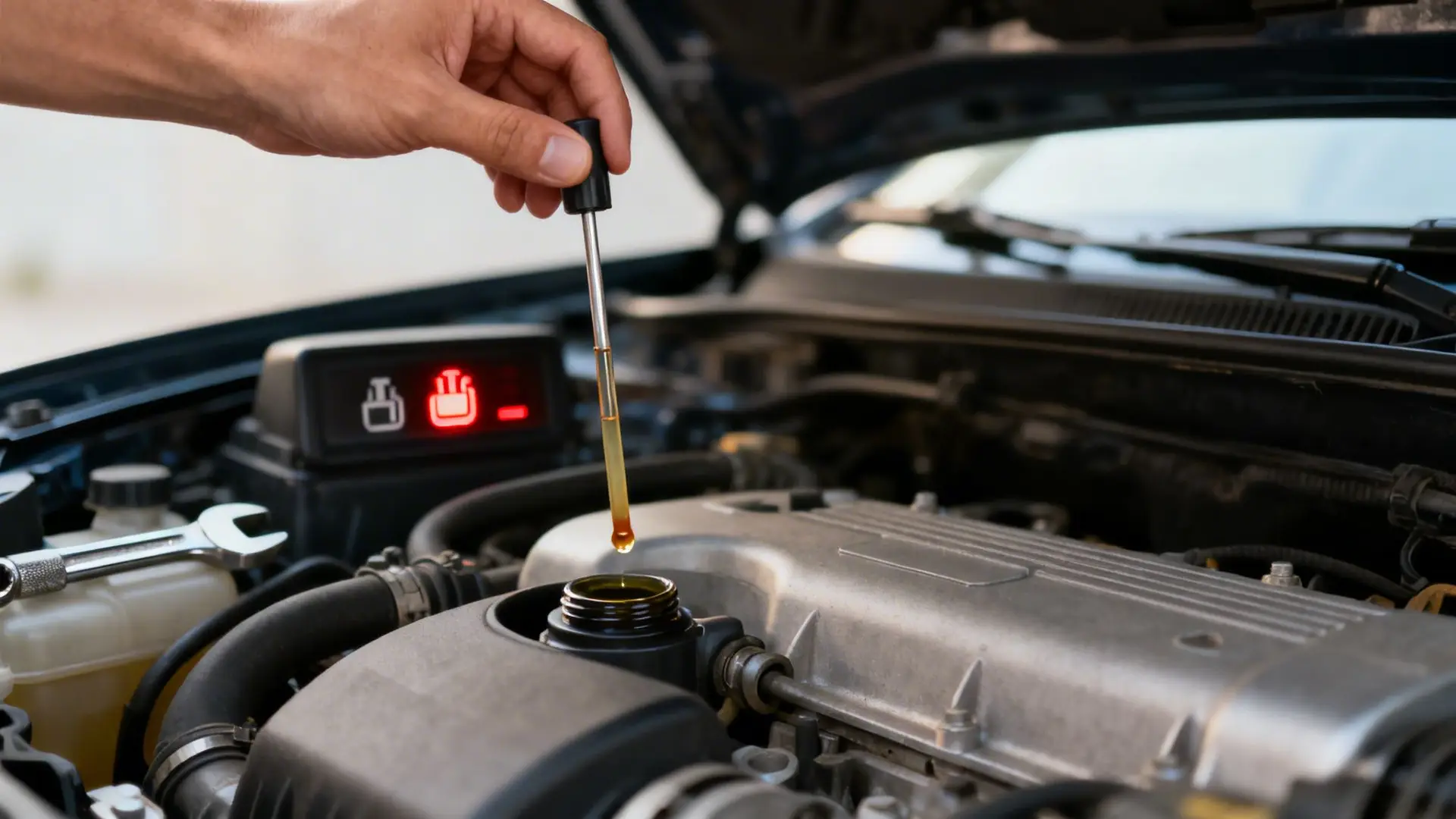
A sudden drop in your oil level isn't something you can just top off and forget about. For many drivers here in Fort Worth, especially those with high-mileage vehicles, it’s a familiar but serious problem. When oil burns, it’s being incinerated inside the combustion chamber, which can coat critical engine parts with carbon deposits, hurt performance, and eventually lead to catastrophic failure.
This issue is more common than you might think, and it has real financial consequences. It’s no surprise that older cars are often the biggest culprits. Data shows that many vehicles in the U.S. with over 100,000 miles on the clock start consuming oil at rates up to a quart every 1,000 miles. This adds up, costing you hundreds in top-offs, causing a 5-10% drop in fuel efficiency, and putting you at risk for engine repairs that run into the thousands. You can dig deeper into global fuel consumption trends from Statista.
The Most Common Symptoms
Recognizing the early warning signs is your best defense against a major repair bill. Your car will almost always give you hints that trouble is brewing, and paying attention can help you nip the problem in the bud.
Here's a quick look at the most common signs that your vehicle is burning through its oil.
Quick Guide to Oil Burning Symptoms
| Symptom | What It Looks Like or Means | Severity Level |
|---|---|---|
| Blueish/Gray Exhaust Smoke | This is the classic sign of oil burning in the combustion chamber. You might see it on startup or when you accelerate hard. | High |
| Smell of Burning Oil | A sharp, acrid smell usually means oil is leaking onto hot parts like the exhaust. It can also point to an internal burn. | Medium to High |
| Frequent Low Oil Levels | If the dipstick is constantly low but there are no puddles on the ground, the engine is drinking the oil. | Medium |
| Illuminated Oil Light | This light means oil pressure is dangerously low. Your engine is being starved of lubrication and at risk of immediate damage. | Critical |
Catching these symptoms early gives you the best shot at a simpler, less expensive fix.
To put it simply, here are the key indicators you can't ignore:
- Blueish or Gray Smoke: This is the dead giveaway. Seeing puffs of blue-tinged smoke from the exhaust pipe, especially when you start the car or step on the gas, is a clear signal that oil is burning with the fuel.
- The Smell of Burning Oil: That distinct, sharp smell often means oil is dripping onto a hot surface like the exhaust manifold. It can also be a sign of oil burning internally.
- Frequent Low Oil Levels: If you’re checking your dipstick between oil changes and it’s consistently low (but you don’t see any leaks on your driveway), your engine is consuming it.
- Illuminated Oil Light: This light signals that your oil pressure is critically low. By the time it appears, your engine could already be at risk of serious damage from a lack of lubrication.
Key Takeaway: Blue smoke coming from the exhaust is the most definitive symptom that your car is burning oil. It’s a direct visual confirmation that oil has gotten past the engine's internal seals and is being burned up with the gasoline.
The Top Reasons Your Engine Is Consuming Oil
To get to the bottom of why your car is burning oil fast, you have to picture what’s happening inside your engine. It's an intense, high-heat environment where metal parts are moving at blinding speeds, and the only thing protecting them is a thin film of oil. When that oil starts to vanish, it’s a sign that it’s finding its way out of its designated pathways and into places it was never meant to be.
Your engine relies on a series of seals, rings, and gaskets to keep the oil contained where it can do its job. But over time, heat and constant friction cause these components to wear out. When they fail, oil can seep into the combustion chamber, where it gets burned right along with the gasoline. This is what leads to that tell-tale blueish smoke from the exhaust and a dipstick that’s always reading low.
Worn Piston Rings
Think of the pistons pumping up and down inside the engine's cylinders. Each piston is fitted with piston rings, which are springy, split rings that create a seal against the cylinder wall. Their job is to keep the explosive pressure of combustion above the piston while preventing oil from the crankcase below from getting into that fiery chamber.
After thousands of miles of intense work, these rings can simply wear out. The metal thins, the tension weakens, and the once-tight seal develops a small gap. That tiny opening is all it takes for oil to sneak past and get incinerated during combustion, leading to steady oil loss.
Failing Valve Seals
Another common culprit is the valve seals. Your engine has intake and exhaust valves that constantly open and close, and they pass through small passages called valve guides. At the top of these guides sits a tiny, umbrella-like seal made of a special rubber.
These seals act as a barrier, stopping oil from the upper part of the engine from running down the valve stems and into the cylinders. But after years of heat cycles, these rubber seals can get hard, brittle, and crack. When that happens, oil drips past them—often causing a puff of blue smoke when you first start your engine after it’s been sitting for a while.
An aging vehicle fleet means internal wear is increasingly common. Reports show that up to 20% of vehicles over 150,000 miles experience excessive oil burning. In severe cases involving issues like scored cylinder walls, this can lead to losing 1-2 quarts of oil every 500 miles. You can explore more data on the automotive oil market from Future Market Insights.
A Clogged PCV Valve
Every engine has a Positive Crankcase Ventilation (PCV) system, which is basically a one-way valve that lets the engine breathe. As the engine runs, some combustion gases inevitably blow past the piston rings and build up pressure in the crankcase. The PCV system safely vents this pressure back into the intake manifold to be burned off.
The problem is, this little valve can get gummed up with oil sludge over time. If it gets stuck closed, pressure builds up inside the engine and can force oil past perfectly good seals and gaskets. If it gets stuck open, it can suck too much oil vapor into the engine. Either way, a bad PCV valve is a simple but surprisingly common cause of oil consumption.
Problems in Turbocharged Engines
Turbochargers are incredible for adding power, but they also introduce another potential point of failure for the oil system. A turbo spins at astonishing speeds—sometimes over 150,000 RPM—and it absolutely depends on a steady supply of clean engine oil for lubrication and cooling.
To manage this, the turbo has its own set of internal seals to keep the oil contained. If these high-stress seals wear out, oil can leak into either the intake system or the hot exhaust housing. When it does, it gets burned up immediately. If you have a turbocharged car that’s suddenly guzzling oil, the turbo itself is one of the first things a good mechanic will inspect.
How to Check for an Oil Burning Problem Yourself
If you have a hunch your car is burning through oil way too fast, you don't have to sit around waiting for a mechanic to confirm it. You can actually play detective right in your own driveway to gather some real evidence. These simple, step-by-step checks will help you figure out what's going on before you even need to book an appointment.
Start a 1,000-Mile Oil Consumption Test
By far, the most reliable way to know for sure if you have an oil-burning problem is to measure it. Think of this as establishing a baseline for your engine's health. It’s a straightforward process that gives you hard data, not just a guess.
- Get a Fresh Start: Kick things off with a recent oil change, or at the very least, make sure your oil is topped off to the "Full" mark on the dipstick. For an accurate reading, always check it when the engine is cold and the car is parked on level ground.
- Record the Mileage: Take a quick note of your car's current mileage. You can jot it down in a notebook or just snap a picture of your odometer with your phone.
- Drive as Usual: For the next 1,000 miles, just drive your car like you normally would. Try to avoid any unusually aggressive driving or long periods of idling, as that could throw off the results.
- Measure Again: Once you've hit that 1,000-mile mark, park in the same level spot, let the engine cool down, and check the dipstick again. If you’ve lost a full quart or more, that’s a clear sign of excessive oil consumption.
Running this simple test gives you a specific rate—like "one quart per 1,000 miles"—that you can share with a technician. That's a whole lot more helpful than just saying, "I think it's low."
Perform Visual Inspections
Your dipstick isn't the only thing that can tell you a story. Your car offers other visual clues that can help you distinguish between a simple leak and a more serious internal burn.
- Check the Exhaust Smoke: This is the classic giveaway. Have a friend start the car while you stand back and watch the exhaust pipe. A puff of blueish-gray smoke right at startup that quickly vanishes often points to worn valve seals. If the smoke is constant while you're driving or puffs out when you accelerate, worn piston rings are the more likely culprit.
- Inspect Your Parking Spot: Take a good look at the ground where you normally park your car. If you see dark, oily stains, you have an external leak coming from a gasket, seal, or maybe a loose drain plug. But if your oil level is dropping and the ground is bone dry, that oil is being burned up inside the engine.
- Examine the Oil Filler Cap: Unscrew the cap where you add engine oil. A healthy engine's cap will just look a little oily. If you find a milky, sludgy, or light-brown gunk on it, that could mean coolant is mixing with your oil—a sign of a serious problem like a blown head gasket, which often goes hand-in-hand with oil consumption issues.
This straightforward decision tree can help you start narrowing down the possibilities based on what you see.
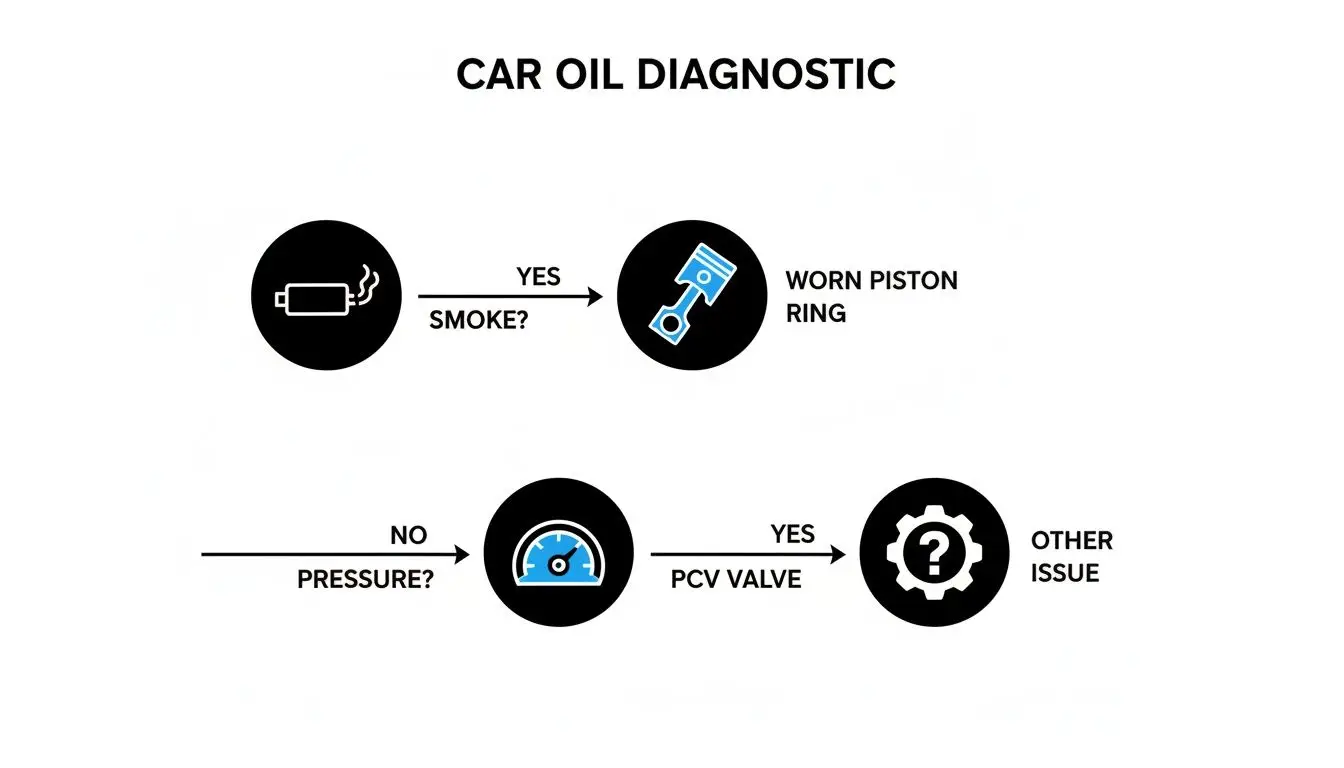
As the visual guide shows, blue smoke is a strong indicator of an internal engine issue. If there's no smoke, it's time to investigate other potential causes, like a faulty PCV system. For anyone in the market for a used vehicle, performing these checks is crucial to avoid inheriting someone else's expensive problem. You can find some great tips for buying a second-hand car that often cover how to properly inspect the engine.
Key Insight: If your oil consumption test shows a significant loss and you’re seeing blue smoke, you have strong evidence pointing to an internal oil-burning problem. If your check engine light also happens to be on, that adds another important piece to the puzzle. You can learn more about what to do when your engine light is on in our detailed guide.
Understanding Repair Costs for Oil Burning Issues
So, you’ve realized your car is burning oil fast. The first question that probably popped into your head was, "How much is this going to cost me?" It’s a fair question, and the answer really depends on what’s causing the problem. The final bill can range from a simple, affordable fix to a major engine overhaul.
Honestly, the cost spectrum is huge. A repair could be as minor as replacing a clogged PCV valve, which is often one of the most budget-friendly solutions you could hope for. On the other hand, you could be looking at a more intensive job, like replacing worn-out valve seals or piston rings. These are complex tasks because they require a mechanic to get deep inside the engine.
Breaking Down the Costs
Repair costs here in the Fort Worth area will fluctuate based on your vehicle's make and model, plus the specific labor involved. Still, we can give you a realistic look at what you might expect for common repairs tied to excessive oil consumption.
Below is a table that breaks down some of the usual suspects and what it might take to fix them.
Common Oil Burn Repairs and Cost Estimates
| Repair Job | Typical Cost Range (Parts & Labor) | Complexity Level |
|---|---|---|
| PCV Valve Replacement | $75 – $200 | Low |
| Valve Cover Gasket Replacement | $250 – $500 | Low to Medium |
| Valve Seal Replacement | $800 – $2,000+ | High |
| Piston Ring Replacement | $2,000 – $4,500+ | Very High |
| Turbocharger Repair/Replacement | $1,500 – $3,500+ | High |
As you can see, the price differences are significant. This is exactly why a proper, thorough diagnosis is non-negotiable. Swapping out a PCV valve is a small investment, but replacing piston rings is a major financial decision that starts getting close to the cost of a full engine rebuild.
The High Price of Ignoring the Problem
When you’re staring down a potentially big repair bill, it’s tempting to just keep a jug of oil in the trunk and top it off as needed. We get it. But that approach almost always leads to a much more painful financial blow down the road.
The Honest Truth: Ignoring a smaller issue today, like bad valve seals, can cause irreversible damage. Fouled spark plugs, clogged catalytic converters, and scored cylinder walls are common side effects that multiply the final repair cost. A problem that might have cost $800 to fix can easily spiral into a $5,000+ engine replacement.
Making an informed decision now can save you thousands. While a simple oil top-off seems cheap, it's just a band-aid. For a clear picture of what goes into routine upkeep, check out our guide on the Kwik Kar oil change cost and the value it provides. Transparent pricing for both minor and major services is central to how we operate at Kwik Kar Fort Worth.
How Proactive Maintenance Can Prevent Oil Burning
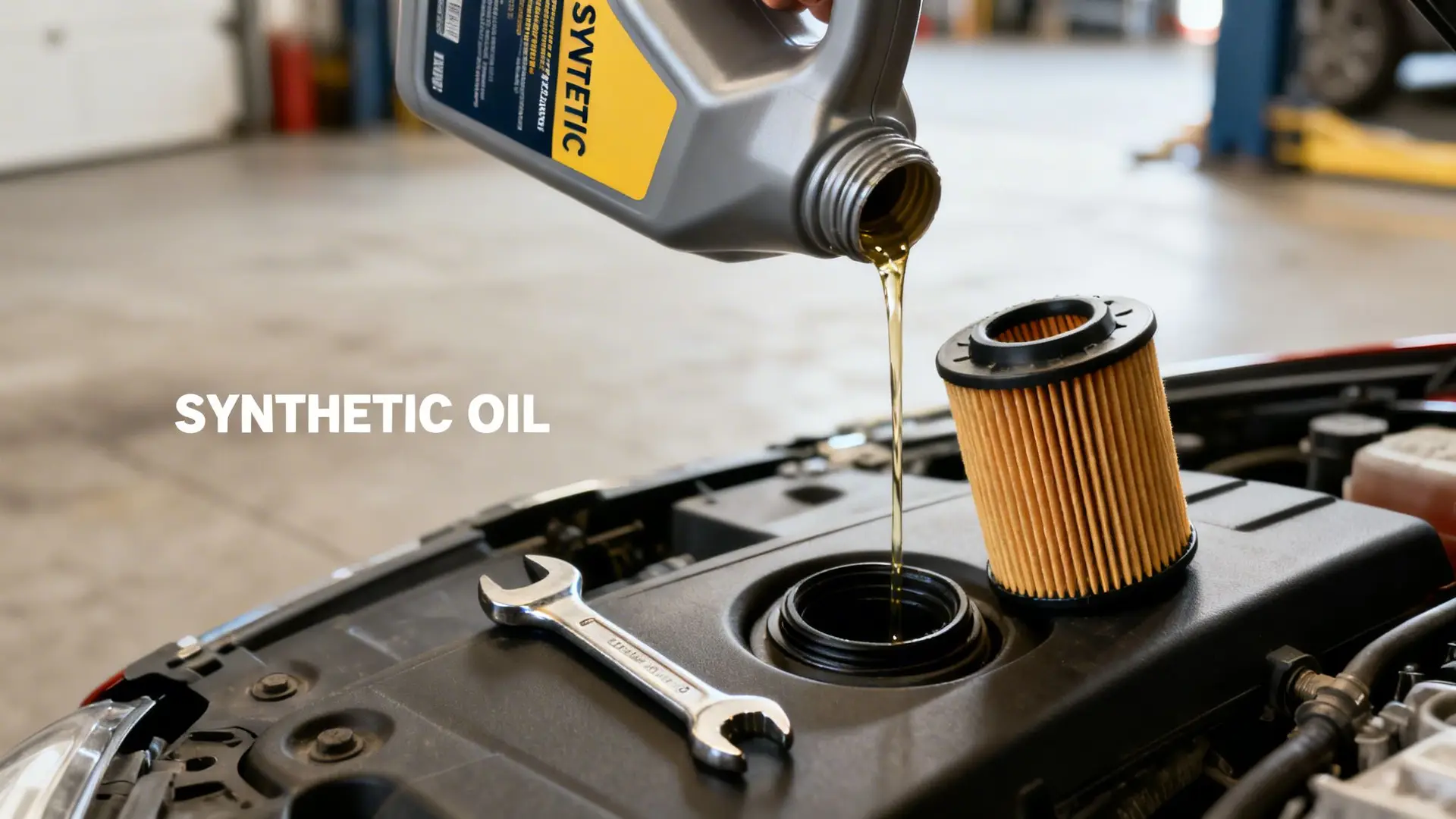
They say the best repair is the one you never have to make. When it comes to stopping a car burning oil fast, that wisdom holds true. Think of proactive maintenance not as a chore, but as your engine's first and best line of defense against wear and tear. A few smart habits can protect your engine’s internals and save you a world of hurt—and expense—down the road.
One of the easiest and most powerful steps you can take is simply choosing the right motor oil. A high-quality synthetic oil is a game-changer, especially under the intense Texas heat. It’s engineered to resist breaking down, which prevents the formation of that thick, tar-like sludge that clogs up oil passages and wears out your piston rings and valve seals way too fast.
The Power of Smart Oil Choices
It’s time to stop thinking of oil changes as just a routine task. They're an essential cleaning and protection service for your engine's heart. Fresh oil is packed with detergents that actively scrub away contaminants, holding them in suspension until they’re drained out with the old oil and filter. Sticking to a consistent schedule is the only way to prevent the gunk and buildup that eventually leads to oil consumption.
For vehicles that have seen a few more miles, high-mileage oil formulations offer an extra layer of defense. These oils are blended with special seal conditioners and additives that can breathe new life into aging, brittle rubber seals. By helping these seals swell just enough, the oil creates a tighter barrier that can slow down or even stop minor leaks and consumption in its tracks.
Mechanic surveys show that 30-40% of oil consumption in high-mileage vehicles comes from burning, costing owners $500+ every year. Using quality synthetics can slash that oil burning by as much as 40% while also extending how long you can go between changes.
Building a Preventative Routine
A solid maintenance plan isn’t just about oil, though. It’s about taking a holistic view of your vehicle’s health.
- Consistent Oil Changes: Don't guess. Follow the service intervals your vehicle’s manufacturer recommends. This simple habit is the single most effective thing you can do to give your engine a long, healthy life.
- Use Quality Filters: A premium oil filter is just as critical as the oil itself. It’s your last line of defense, trapping harmful grit and metal particles before they can score and damage your engine.
- Address Leaks Promptly: That small drip from a valve cover gasket might seem like no big deal, but it steadily lowers your oil level. This can lead to overheating, which in turn breaks down your oil even faster, starting a vicious cycle.
Beyond your regular fluid checks, staying ahead of problems can also involve using advanced tools for a complete picture of engine and car performance, such as modern vehicle health monitoring systems. Understanding the difference between being proactive and reactive with car care is everything—one approach saves money, while the other often leads to surprise bills. You can learn more in our guide on preventive maintenance vs. reactive maintenance.
Your Guide to Common Questions About Oil Consumption
Now that we’ve covered the technical side of things, let’s tackle some of the most common questions we hear from drivers right here in Fort Worth. Think of this as your quick-reference guide to help you feel more confident about what's happening under your hood.
Is It Normal for a Car to Burn a Little Bit of Oil?
It's a great question, and the answer is yes—to a point. Almost every engine is designed to use a small amount of oil as it runs. You might even see a dip on the stick of up to a quart between oil changes, and that’s often nothing to worry about.
The real red flag is when you find your car burning oil fast. If you're having to top it off with a quart every 1,000 miles (or even sooner), that’s your engine telling you something is wrong. That’s the time to get a professional diagnosis before a small problem gets much bigger and more expensive.
Can I Fix an Oil Burning Problem by Using Thicker Oil?
Switching to a thicker, higher-viscosity oil or a specialized high-mileage formula can sometimes slow down a minor oil consumption problem. Because these oils are denser, they can help create a slightly better seal inside an older, more worn engine.
However, it's crucial to understand that this is only a temporary patch, not a real solution.
Key Takeaway: Using thicker oil is like putting a bandage on a wound that needs stitches. It might hide the symptom for a little while, but the underlying mechanical issue—like worn-out rings or seals—is still there and will only continue to get worse.
Will My Car Pass Inspection If It's Burning Oil?
You’d be taking a big risk. If your car is puffing out that noticeable blue or grey smoke from the tailpipe, it’s almost certain to fail the emissions portion of the Texas state inspection.
On top of that, if the problem causing the oil consumption has also triggered your Check Engine light, that’s an automatic failure right there. Your best bet is always to get the issue diagnosed and repaired by a pro well before your inspection sticker is due.
What's the Difference Between Burning Oil and Leaking Oil?
This one comes down to where the oil is going. An oil leak is external—it leaves evidence you can see. You’ll find those tell-tale dark puddles or drips on your garage floor or in your parking spot.
Burning oil, on the other hand, happens entirely inside the engine. You won't see a single drop on the ground. The clues are different: a steady drop in the oil level on your dipstick and that signature blue-grey smoke coming from the exhaust, especially when you start the car or accelerate.
If you're dealing with a car that’s burning oil fast, don’t wait for a small issue to become a major engine failure. The certified technicians at Kwik Kar Oil Change and Auto Care are here to provide an honest diagnosis and expert repair. Visit us in Fort Worth or schedule your appointment online today.