


While there’s a general rule of thumb that shocks should be replaced every 50,000 to 100,000 miles, that’s just a starting point. For anyone driving around Fort Worth, our roads tell a different story. Between the constant construction zones and those jarring potholes, your vehicle’s suspension often works a lot harder, meaning your shocks might need attention sooner.
Your Quick Guide to Shock Absorber Replacement

It helps to think of your car’s shocks like the soles of a good pair of running shoes. When you first get them, they cushion every step, giving you a smooth, stable experience. After logging thousands of miles, that cushion wears thin, and you start to feel every little rock under your feet. Your shocks wear down in the exact same way.
Knowing when it’s time for a replacement is a matter of both comfort and safety. This guide will walk you through the telltale signs that your shocks are on their way out and explain why putting off this repair is a risk you don’t want to take. Let’s start with a quick overview of what to look for.
Mileage and Driving Conditions
Mileage is often the first thing people think about, and shocks are typically built to last between 50,000 and 100,000 miles. But that number can change fast depending on how and where you drive. Navigating the pothole-riddled streets around Fort Worth, like parts of White Settlement Road, puts a ton of extra stress on your suspension system.
Because of this, regular inspections are far more reliable than just watching the odometer. This is true for any vehicle, but especially for larger ones that carry heavy loads or have specialized suspension needs. For more on that topic, these essential RV maintenance tips offer some great insights.
The Bottom Line: Don’t just go by the mileage. Your car will give you plenty of signals when its suspension needs help. The best thing you can do is learn to listen to it.
Shock Absorber Replacement At a Glance
Worn shocks aren’t just about a less comfortable ride; they create real safety issues. From taking longer to stop to feeling unstable in a sudden swerve, failing shocks can seriously compromise your control.
To make it simple, we’ve put together a table that breaks down the key symptoms. Think of this as your quick-reference checklist for spotting trouble early.
| Indicator | What to Look For | Why It Matters |
|---|---|---|
| Bouncy Ride | Your car continues to bounce long after hitting a bump or dip in the road. | Indicates shocks are no longer dampening spring movement, reducing tire contact with the road. |
| Nose-Diving | The front of your car dips excessively forward when you apply the brakes. | This can increase your stopping distance and signals a loss of stability. |
| Swaying or Leaning | The vehicle feels unstable and sways or leans heavily during turns or in crosswinds. | Compromises handling and makes the vehicle harder to control, especially at high speeds. |
| Visible Leaks | You notice oily fluid leaking down the body of the shock absorber itself. | A clear sign that the seals have failed and the shock can no longer function properly. |
Paying attention to these indicators will help you know exactly when it’s time to get your suspension checked out, keeping you safer on the road.
Understanding What Your Shock Absorbers Actually Do
It’s a common misconception that shock absorbers are just there for a smooth, cushy ride. While they certainly improve comfort, their real job is far more critical to your safety—it’s all about control.
Think of your car’s shocks as its muscles. They work constantly to keep your tires firmly planted on the pavement, managing the energy from the suspension springs. Without them, hitting a bump would send your car bouncing down the road like a pogo stick, making it nearly impossible to steer or stop safely. They’re what gives your vehicle stability and predictable handling.
Essentially, by taming all that bouncing and swaying, shocks ensure your car responds exactly how you expect it to, whether you’re braking hard or navigating a sharp corner.
Shocks Versus Struts Explained
One of the most frequent questions we hear from drivers is about the difference between shocks and struts. It’s easy to get them confused since they do similar work, but they aren’t interchangeable parts. Knowing what’s under your car helps you understand what it needs.
-
Shock Absorbers: A shock is a simple hydraulic cylinder that works in tandem with your suspension spring. Its sole purpose is to dampen the spring’s movement. It’s an important helper, but it’s not a structural part of your suspension.
-
Struts: A strut is a complete suspension assembly. It combines the shock absorber and the coil spring into a single, structural unit. This means it doesn’t just absorb bumps; it also supports your vehicle’s weight and plays a key role in your steering and alignment.
Your car might have shocks, struts, or a combination of both (often struts up front and shocks in the back). The main thing to remember is that both are absolutely vital for a safe, controlled ride.
Why Healthy Shocks Are a Cornerstone of Safety
When your shocks are working properly, they provide the constant downward pressure needed to keep your tires glued to the road. That continuous contact is what gives you grip for accelerating, steering, and most importantly, braking.
As shocks wear out, that control starts to slip away. You’ll notice the car taking longer to settle after hitting bumps, the front end “nose-diving” when you brake, or the body leaning uncomfortably through turns. These aren’t just minor quirks—they are clear signs that your car’s safety and responsiveness are compromised.
Ultimately, knowing when to replace shock absorbers is about more than just getting that new-car feel back. It’s about maintaining the systems that allow you to control your vehicle in the first place. A single worn-out shock can trigger a domino effect, leading to everything from poor handling and longer stopping distances to premature tire wear. In the next section, we’ll dive into the specific signs that tell you it’s time for a replacement.
The Telltale Signs Your Shocks Are Failing

Your car has its own way of telling you when something’s not right, speaking through a language of sounds, vibrations, and subtle changes in handling. When it comes to your shock absorbers, learning to read these signals is the key to staying safe and in control behind the wheel.
These symptoms often sneak up on you, getting worse so gradually that you might not even notice at first. But a worn-out shock isn’t just a minor annoyance that makes for a bumpy ride—it’s a critical safety component that’s failing. Let’s break down what your car is trying to tell you, so you can catch the problem before it becomes a serious hazard.
Changes in Your Ride and Handling
The most direct clues come from how your car feels on the road. When shocks lose their ability to control the suspension springs, you’ll feel it in the way your vehicle moves and responds.
A classic sign is an overly bouncy or “floaty” ride. Good shocks absorb a bump and immediately get the car back to a stable position. When they’re worn, that energy has nowhere to go, causing the car to keep bouncing long after you’ve passed the pothole or speed bump. If you want a closer look at this issue, our post on why your car bounces while driving goes into more detail.
Another red flag is “nose-diving” when you brake. Any hard stop will shift the car’s weight forward, but with bad front shocks, the dip is dramatic. This isn’t just an uncomfortable feeling; it can seriously increase your stopping distance, which is a major safety risk.
You might also notice the car swaying or rolling excessively in turns. As you steer through a corner, it can feel like the vehicle is leaning hard to one side. This happens because the shocks can no longer keep the car’s body stable, compromising your control when you need it most.
How to Perform the Bounce Test
One of the oldest tricks in the book for checking your shocks is the simple “bounce test.” While it’s not a substitute for a professional diagnosis, it’s a great first step you can do right in your driveway.
Here’s the process:
- Stand at one corner of your vehicle.
- Using your body weight, push down firmly on the bumper or fender.
- Let go quickly and watch how the car responds.
A car with healthy shocks will rebound once and then settle immediately. If it bounces two, three, or more times, the shock at that corner is probably shot and has lost its ability to dampen movement. It’s time for a professional inspection.
The bounce test can be your first warning. If your car keeps bobbing up and down after you push on a corner, it’s a clear sign the shocks aren’t absorbing energy like they should.
Visual Clues You Can See
Sometimes the best clues aren’t about how the car feels, but what you can actually see with your own eyes. A quick visual check can tell you a lot about the health of your suspension.
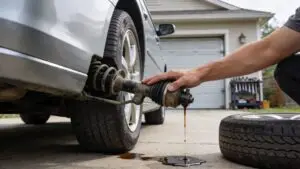
The most definitive sign of a bad shock is a visible fluid leak. Shocks are filled with hydraulic fluid, and if you see an oily, greasy film coating the shock’s body, it means the internal seals have failed. A leaking shock is a broken shock—it can’t do its job and needs to be replaced, period.
Your tires can also tell a story. Worn shocks let the tires bounce off the pavement, creating a distinct wear pattern called “cupping” or “scalloping.” This looks like a series of high and low spots along the tire’s tread. Seeing this pattern is a strong sign your shocks have been failing for a while. If you ignore it, you’ll not only have a dangerous ride but will also end up ruining a good set of tires.
How Fort Worth Roads Impact Your Shocks

Sure, your car’s manufacturer provides a recommendation for replacing shock absorbers, but that’s a number for ideal conditions. It assumes you’re cruising on smooth, flawless pavement every day. For anyone who actually drives in Fort Worth, we know that’s rarely the case.
Think of it like a good pair of running shoes. They’ll last a long time on a cushioned track, but take them on a rocky trail every day and they’ll wear out much faster. Your car’s shocks are exactly the same. Every pothole, crack, and uneven patch of road forces them to work overtime to keep your ride smooth and your tires planted firmly on the pavement.
With the constant construction, cracked asphalt, and sudden dips all over the DFW area, your suspension takes a beating. This is why drivers around here often need to be a lot more mindful of their suspension than folks in cities with better roads.
The Impact of Local Road Conditions
Fort Worth’s unique mix of city and suburban driving puts your shocks through the wringer daily. The manufacturer’s estimate of 50,000 to 100,000 miles is based on a best-case scenario, but our local roads create a much tougher reality.
In fact, driving on rough roads all the time can cut a shock absorber’s lifespan by 50% or more. A set of shocks that might last ten years on perfect pavement could be worn out in less than five here. You can learn more about how road quality affects shock longevity from the experts at Doylestown Auto Repairs.
This is precisely why going by mileage alone isn’t enough for Fort Worth drivers. The real question isn’t just about the odometer reading, but about the real-world conditions your car faces day in and day out.
A shock absorber’s job is to manage thousands of tiny impacts per mile. Driving on rough Fort Worth streets is like asking it to run a marathon every day, leading to faster fatigue and failure.
Your Driving Habits Matter Too
Beyond the roads themselves, your own driving style plays a huge part in how long your shocks last. Certain habits can put a lot of extra strain on your suspension, bringing you into the shop for a replacement much sooner.
Think about whether any of these sound familiar:
- Aggressive Cornering: When you take turns too fast, your car’s weight shifts hard, forcing the shocks to work overtime to prevent body roll and keep you stable.
- Frequent Hard Stops: Constant, sudden braking puts a ton of pressure on your front suspension components. It’s the same force that causes that “nose-diving” we talked about, and it wears parts out quickly.
- Hauling Heavy Loads: If you’re always using your truck or SUV to tow a trailer or carry heavy gear, you’re putting a continuous, heavy demand on your rear shocks. This can easily lead to them failing ahead of schedule.
When you combine Fort Worth’s tough roads with your personal driving habits, you get a wear-and-tear profile that’s unique to your vehicle. It’s why you might need a suspension check sooner than you think—and why getting it looked at is so important for your safety and your car’s health.
The Hidden Dangers of Driving on Worn Shocks

Ignoring the signs of failing shocks is more than just putting up with a rough ride—it’s a serious gamble with your safety. That bouncing and swaying might seem like a minor annoyance, but it’s a clear signal that a critical safety system is failing. Worn shocks compromise your ability to control your vehicle, turning everyday driving into a potential emergency.
Thinking about when to replace shock absorbers shouldn’t just be about comfort. It’s really about preventing danger. These parts are your first line of defense against losing control on the road. When they fail, the consequences can be immediate, affecting everything from how your car stops to how it handles on a wet Fort Worth street.
Increased Braking Distance
One of the scariest results of bad shocks is a major increase in your braking distance. Healthy shocks are designed to keep your tires pressed firmly against the pavement, giving you maximum grip when you hit the brakes. When shocks wear out, your tires can literally bounce off the road surface, losing that crucial contact.
That momentary loss of traction means your car needs more road to come to a complete stop. In an emergency, that extra distance can be the difference between a near miss and a serious collision. In fact, studies show worn shocks can increase your vehicle’s stopping distance by a staggering 10-20%. That could easily be an entire car length—a gap that matters when every foot counts.
Worn shocks don’t just make for a bouncy ride; they make your car take longer to stop. This hidden danger turns a routine stop into a potential rear-end collision, a risk no driver should take.
Higher Risk of Hydroplaning and Loss of Control
Tire grip is everything, especially on wet roads. Worn shocks make it much harder for your tires to channel water away and stay connected to the pavement, which dramatically increases your risk of hydroplaning. When your car hydroplanes, you’re basically skiing on a thin layer of water with almost no steering or braking control.
This loss of control isn’t just for wet conditions, either. A sudden swerve to avoid an animal or debris in the road can quickly turn into a dangerous fishtail if your shocks can’t manage the rapid shift in your car’s weight. The combined risk of longer stopping distances and hydroplaning can easily lead to a serious accident. If the unthinkable does happen, it’s always good to know what to do after a car accident.
A Domino Effect of Expensive Damage
Putting off shock replacement doesn’t just put you at risk—it also hits your wallet hard. Bad shocks set off a destructive domino effect that ripples through your vehicle, causing accelerated wear on many other parts.
- Premature Tire Wear: Worn shocks are a leading cause of tire “cupping,” an uneven wear pattern that ruins tires long before their time. This can shorten a tire’s life by as much as 50%, forcing you to buy a new set far sooner than you should have to.
- Suspension Component Damage: The constant jarring from bad shocks puts immense stress on your ball joints, control arm bushings, and other critical suspension parts. This leads to more complex and costly repairs down the road.
- Excessive Vehicle Shaking: This can be a direct symptom of failing suspension parts. If you’re wondering what might be going on, we explore several reasons for what causes a car to shake while driving in another one of our guides.
Ultimately, replacing your shocks is an investment. It’s an investment in your safety, the longevity of your vehicle, and your peace of mind, protecting you from a single problem that can quickly become a cascade of expensive repairs.
Your Trusted Partner for Shock Replacement in Fort Worth
Once you’ve spotted the signs of failing shocks, the next step is finding a team you can count on to handle the job right. Here at Kwik Kar Oil Change & Auto Care, we’ve built our reputation on being that trusted partner for drivers all across Fort Worth. When you bring your car to our shop on White Settlement Road, you’re getting more than just a repair—you’re getting the confidence that comes with quality work.
We get it. Car maintenance can feel overwhelming, which is why we keep things simple and clear from start to finish. Our certified technicians begin with a complete inspection of your suspension system, looking beyond just the shocks to understand the full picture of your vehicle’s health.
Our Commitment to Quality and Trust
What really makes Kwik Kar different is our dedication to doing things the right way. We never cut corners, especially on a part as important as your suspension. That commitment shows in everything we do.
- Certified Expertise: Our technicians are ASE and RepairPal certified. This means they’ve passed tough industry tests and hold themselves to the highest standards of quality and skill.
- Premium-Quality Parts: We stick to parts that meet or beat the original equipment manufacturer (OEM) specs. This ensures your new shocks perform exactly as they should, giving you the safety and durability you depend on.
- Honest Communication: After we inspect your vehicle, we’ll walk you through what we found, explaining what needs attention and why. You’ll get a clear, itemized estimate with no hidden fees or surprises.
At Kwik Kar, our approach is simple: we give honest advice and expert service. We’re here to help you make the right call for your car and your safety, not to sell you something you don’t need.
A Seamless and Convenient Experience
We know your time is valuable. Having your car in the shop can throw off your whole day, so we’ve made our service as efficient and hassle-free as possible. You can schedule an appointment that works for you, and our team will work hard to get you back on the road safely and without delay.
To see everything our suspension services include, you can learn more about our professional shock and strut replacement services in Fort Worth. We’re ready to answer your questions and deliver the reliable auto care you deserve. Choose Kwik Kar for a straightforward, high-quality suspension service that puts you and your safety first.
Frequently Asked Questions About Shock Absorbers
To wrap things up, let’s tackle some of the most common questions we hear from drivers every day. Think of this as your quick-reference guide for making smart decisions about your car’s suspension.
Should I Replace All Four Shocks at the Same Time?
We always recommend replacing shocks in pairs—either both fronts or both rears. Your car’s handling is designed to be perfectly balanced, and putting just one new shock on an axle can create a serious imbalance. This can mess with your steering and stability, especially during a sudden stop or sharp turn.
If all four of your shocks are original and have seen a lot of miles, replacing all of them at once is the safest bet. It’s the best way to restore that predictable, factory-fresh handling and keep you safe for the long haul.
What Is the Average Cost to Replace Shocks?
The cost can vary quite a bit depending on your vehicle. For a typical sedan, you might expect to pay anywhere from $400 to $700 for a pair of shocks, which includes the parts and the labor to install them.
However, if your car has struts—which are more complex—the cost for a pair can jump to between $500 and $1,200. Trucks and luxury cars often land on the higher end of that scale. Here at Kwik Kar Fort Worth, we believe in total transparency. We’ll always give you a detailed quote before we start any work, so you know exactly what to expect.
A key difference between shocks and struts is their role in your suspension. A strut is a structural part of the system, while a shock absorber is not. This distinction often impacts the cost and complexity of the replacement job.
What Is the Difference Between Shocks and Struts?
It’s a great question, and one we get a lot. While they both dampen your car’s bounce, they do it in different ways.
- A shock absorber is a standalone hydraulic part. Its only job is to control the spring’s movement. It’s not a structural piece of your suspension.
- A strut is a complete all-in-one unit. It combines the shock absorber and the coil spring into a single structural assembly that supports your car’s weight and even acts as a pivot point for steering.
Some cars have shocks, some have struts, and others have a combination of both. Our certified techs can pop your car on the lift and show you exactly what your suspension system looks like.
Can I Replace My Own Shock Absorbers?
Technically, a skilled DIY mechanic with the right tools can do it, but we generally advise against it. This job, especially when it involves struts with their highly compressed springs, can be incredibly dangerous without proper equipment and training.
A small mistake during installation can have a huge impact on your vehicle’s safety and handling. For guaranteed results and your own peace of mind, this is one of those jobs best left to the certified professionals.
When it’s time for a suspension check or replacement, you can count on the certified experts at Kwik Kar Oil Change and Auto Care. We provide honest advice and professional service to keep you safe on Fort Worth roads. Schedule your appointment today.