

When your car needs work, finding a certified mechanic near me is the very first step toward a repair you can actually trust. The right technician means your vehicle is handled by someone with proven expertise, saving you from headaches, costly do-overs, and giving you peace of mind on the road.
Why Finding a Certified Mechanic Matters More Than Ever
Let’s be real—choosing a mechanic can feel like a high-stakes decision. With today’s complex vehicle electronics and advanced engine systems, the gap between a general handyman and a certified professional is massive. Trusting your car to just anyone is a gamble you can’t afford to take.
The Power of Proven Expertise
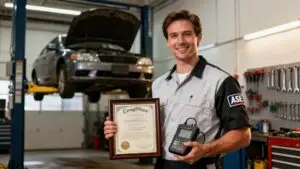
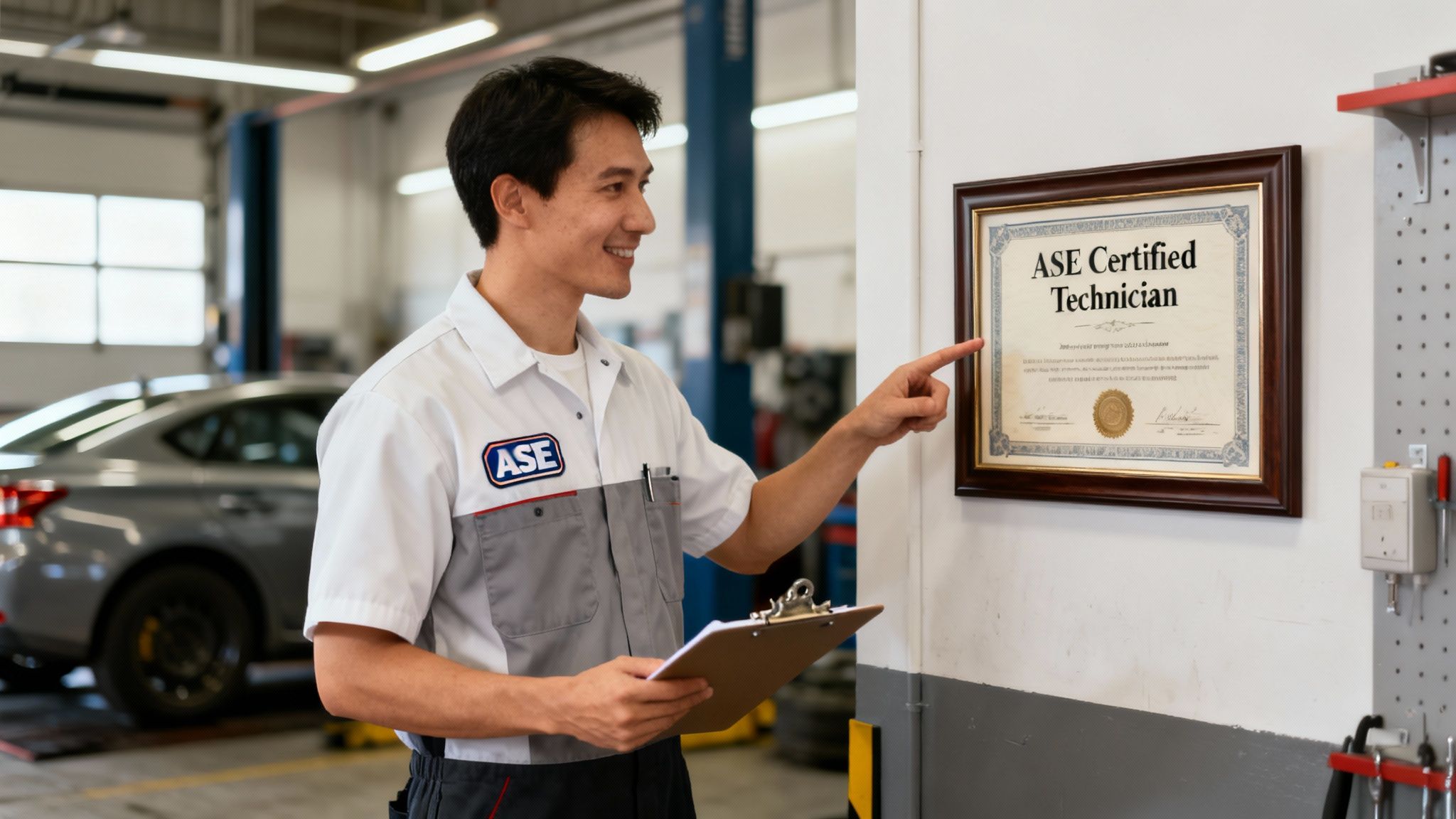
A certified mechanic brings a lot more than just experience to the garage; they bring validated knowledge. Certifications from respected organizations like the National Institute for Automotive Service Excellence (ASE) aren’t just pieces of paper. They represent a real commitment to ongoing education and a verified understanding of modern automotive technology.
These technicians have passed tough exams covering specific areas, such as:
- Engine Performance and Repair
- Brakes and Suspension Systems
- Electrical and Electronic Systems
- Automatic and Manual Transmissions
This level of specialization means they can diagnose complex problems way faster and more accurately. Instead of guessing, they follow methodical, industry-approved procedures to get right to the root of the issue. In the end, that saves you both time and money.
Accountability and Trust in Your Local Shop
Going with a certified professional also means choosing accountability. These mechanics are held to a higher standard and are dedicated to keeping their credentials current through continuous learning. That commitment builds a foundation of trust that’s absolutely essential for any good service relationship.
When a technician is ASE-certified, it signals they are serious about their craft. It demonstrates a dedication to quality and professionalism that goes beyond basic repairs, giving you confidence that your vehicle is in capable hands.
This same principle of professional management and verification applies at scale, too. Large organizations often rely on sophisticated solutions to manage their vehicles; for insights into how comprehensive systems can streamline vehicle upkeep, it’s interesting to look at options for the best fleet maintenance software. The core idea is the same whether you’re maintaining one car or a hundred: verified expertise matters.
When you start your search with a focus on credentials, you cut through all the guesswork. This guide will walk you through how to find and vet a top-tier certified mechanic near me, using local experts like Kwik Kar as a benchmark for quality and service you can depend on.
Building Your Shortlist of Local Auto Repair Shops
Finding the right certified mechanic doesn’t start when your car is already on the tow truck. The real work begins long before you even pick up the phone. A little bit of smart searching upfront will help you build a high-quality list of potential shops, saving you from sorting through less-than-stellar options later. Think of it as laying a solid foundation for your decision.

It’s an interesting time in the auto repair world. More and more people are moving away from dealerships and putting their trust in independent shops. In fact, a recent full service industry study from Cox Automotive found that dealerships now only handle 33% of service visits. That’s a huge drop from 68% just seven years ago.
So where did all that business go? It went to independent certified shops, which now handle 27% of all service visits—more than double what they used to. This shift is great news for drivers, as it means more high-quality, professional options are available right in your neighborhood.
Mastering Digital Search Tools
The first place most of us turn is online, and for good reason. Powerful platforms can connect you with reputable services in seconds. The key is to look beyond just the star ratings and dig into what real customers are saying.
Here’s where I’d focus my search:
- Google Maps and Business Profiles: Don’t just glance at the 5-star rating. Look for a shop with a high volume of recent positive reviews. I always read through the comments to see if people mention a specific technician by name or praise the shop’s honesty and clear communication.
- Yelp and Angi: These sites are great for more detailed, long-form reviews. Pay close attention to how the business owner responds to feedback, both good and bad. A thoughtful response to a negative review often tells you more about their commitment to customer service than a dozen glowing ones.
- RepairPal: This is a fantastic, industry-specific resource. Shops that earn a RepairPal certification have been independently vetted for fair pricing, high-quality work, and verified technician training. It’s a great seal of approval to look for.
Pro Tip: Always filter reviews by “most recent.” A shop might have stellar reviews from five years ago, but the team or standards could be completely different today. Consistent, current praise is the best signal of ongoing quality.
Tapping Into Hyperlocal Recommendations
As powerful as online tools are, you can’t beat a trusted word-of-mouth referral. Local knowledge helps you find those hidden gems—the shops that might not have a huge online presence but are beloved by the community for their honest work. You can learn more about what makes a great local shop by understanding the hallmarks of quality auto repair services in Fort Worth TX.
Try asking for recommendations in places where people aren’t afraid to share their honest experiences.
My Go-To Hyperlocal Sources:
- Neighborhood Social Media Groups: Local groups on Facebook or Nextdoor are absolute goldmines for this. A simple post like, “Hey neighbors, looking for a trustworthy certified mechanic near me for a brake job—who do you recommend?” can get you some incredibly valuable leads.
- Coworkers and Friends: This is an oldie but a goodie. Ask people you trust, especially if they drive a similar make or model. They can give you a firsthand account of their entire experience, from booking to billing.
- Local Auto Parts Stores: The staff at places like AutoZone or O’Reilly often have the inside scoop. They know which local shops do good work and, just as importantly, which ones to avoid.
By mixing broad digital searches with these targeted local inquiries, you’ll build a strong shortlist. I’d aim for three to five promising candidates, like Kwik Kar on White Settlement Road, before moving on to the next crucial step: verifying their credentials.
How to Vet Mechanics and Verify Their Credentials
Alright, you’ve got a shortlist of potential mechanics. Now comes the important part: digging a little deeper to see who really knows their stuff. This is where you separate the true professionals from the ones who just talk a good game. Taking the time to verify credentials and look for red flags is what turns a one-time fix into finding a shop you can trust for years.
The first thing I always look for is an ASE certification. This isn’t just some sticker they hand out—it’s the industry’s gold standard, issued by the National Institute for Automotive Service Excellence. To keep it, technicians have to prove their skills are up-to-date by recertifying every five years.
When you walk into a shop, keep an eye out for the blue and white ASE sign. You’ll often see technicians with patches on their uniforms or certificates hanging proudly in the waiting area. Don’t ever feel awkward about asking which specific certifications their mechanics hold. A good shop will be happy to tell you.
Decoding Key Mechanic Certifications
Not all certifications are the same, and knowing the difference can help you find the right person for your specific problem. The ASE program, for instance, has over 50 different tests covering everything from engines to electrical systems. This is fantastic for car owners because it lets you match a specialist to your exact issue.
To help you understand what you’re looking at, here’s a quick breakdown of the certifications that matter most.
| Certification | What It Signifies | Why It Matters to You |
|---|---|---|
| ASE Certification | A technician has passed standardized tests on specific automotive systems and has at least two years of hands-on experience. | This is your baseline assurance of competence and knowledge. It proves they’ve put in the work. |
| ASE Master Technician | A technician has passed a group of 8 specific tests (A1-A8) covering all major areas of auto repair. | This is the mark of a highly skilled, well-rounded expert who can tackle complex, multi-system problems. |
| Manufacturer-Specific | A technician has completed training directly from a car brand like Ford, Honda, or BMW. | If you drive a specific make, this certification means they have specialized knowledge of your vehicle’s unique systems. |
| RepairPal Certified | The shop has been independently vetted for fair pricing, high-quality work, and a commitment to customer satisfaction. | This provides an extra layer of trust, ensuring the shop’s business practices are as solid as their technical skills. |
These credentials give you a clear picture of a shop’s expertise. A technician who earns the ASE Master Automobile Technician title, for example, has demonstrated a very high level of skill across the board. You can learn more about what it means when shops like ours are both ASE and RepairPal certified and how that translates to better care for your car.
Think of it this way: if you have a tricky wiring problem, a mechanic with an A6 certification (Electrical/Electronic Systems) is going to be a far better bet than a generalist. Always try to match the technician’s proven expertise to your car’s needs.
Spotting Potential Red Flags
Credentials are a huge piece of the puzzle, but don’t ignore your gut. A shop can have every certificate under the sun, but if their business practices feel off, it’s time to walk away.
Here are a few common red flags I’ve learned to watch out for over the years:
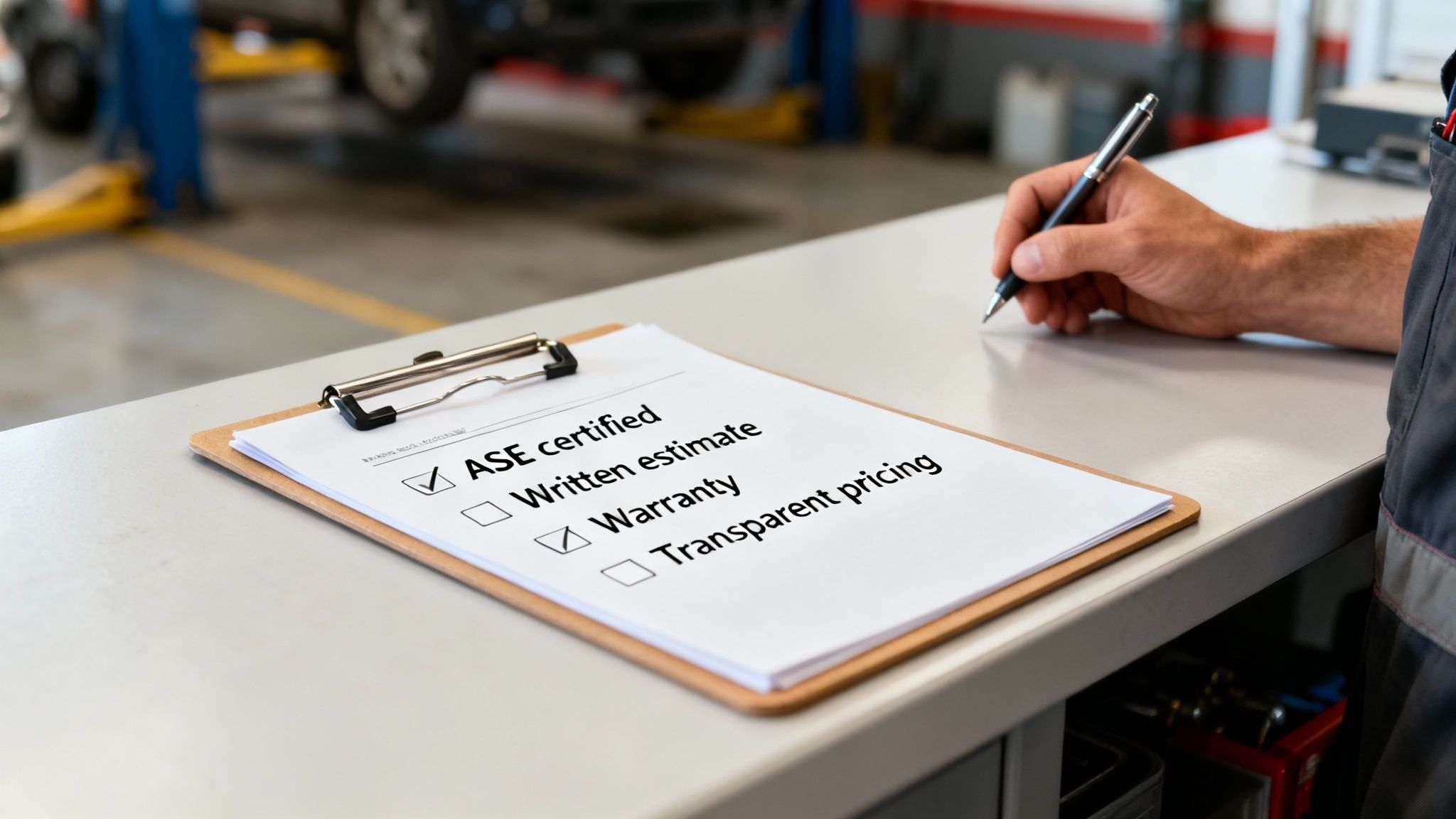
- Vague or Verbal-Only Estimates: A professional will always give you a detailed, written estimate before they touch your car. If they’re hesitant or just throw out a number, that’s a major warning sign of surprise costs later.
- High-Pressure Sales Tactics: Be wary of mechanics pushing for immediate, expensive repairs without a clear explanation. They should be able to show you the worn-out part and explain why it needs fixing, helping you tell the difference between urgent safety issues and things that can wait.
- A Messy, Disorganized Shop: Auto repair is a messy job, but a constantly chaotic and filthy workspace often points to a lack of professionalism and attention to detail. I look for a reasonably organized service bay and a clean customer area.
- Refusing to Use Certain Parts: If you request OEM (Original Equipment Manufacturer) parts and the shop pushes back without a good reason, it might be because they make more money on lower-quality aftermarket parts.
Here’s a real-world example: if a mechanic tries to sell you a $1,200 “preventative” transmission flush on a two-year-old car with only 20,000 miles, that’s a red flag. A trustworthy technician would check your car’s factory maintenance schedule and tell you that service isn’t due for a long time. Always trust the mechanic who values honest advice over a quick sale.
The Right Questions to Ask Before Any Work Begins
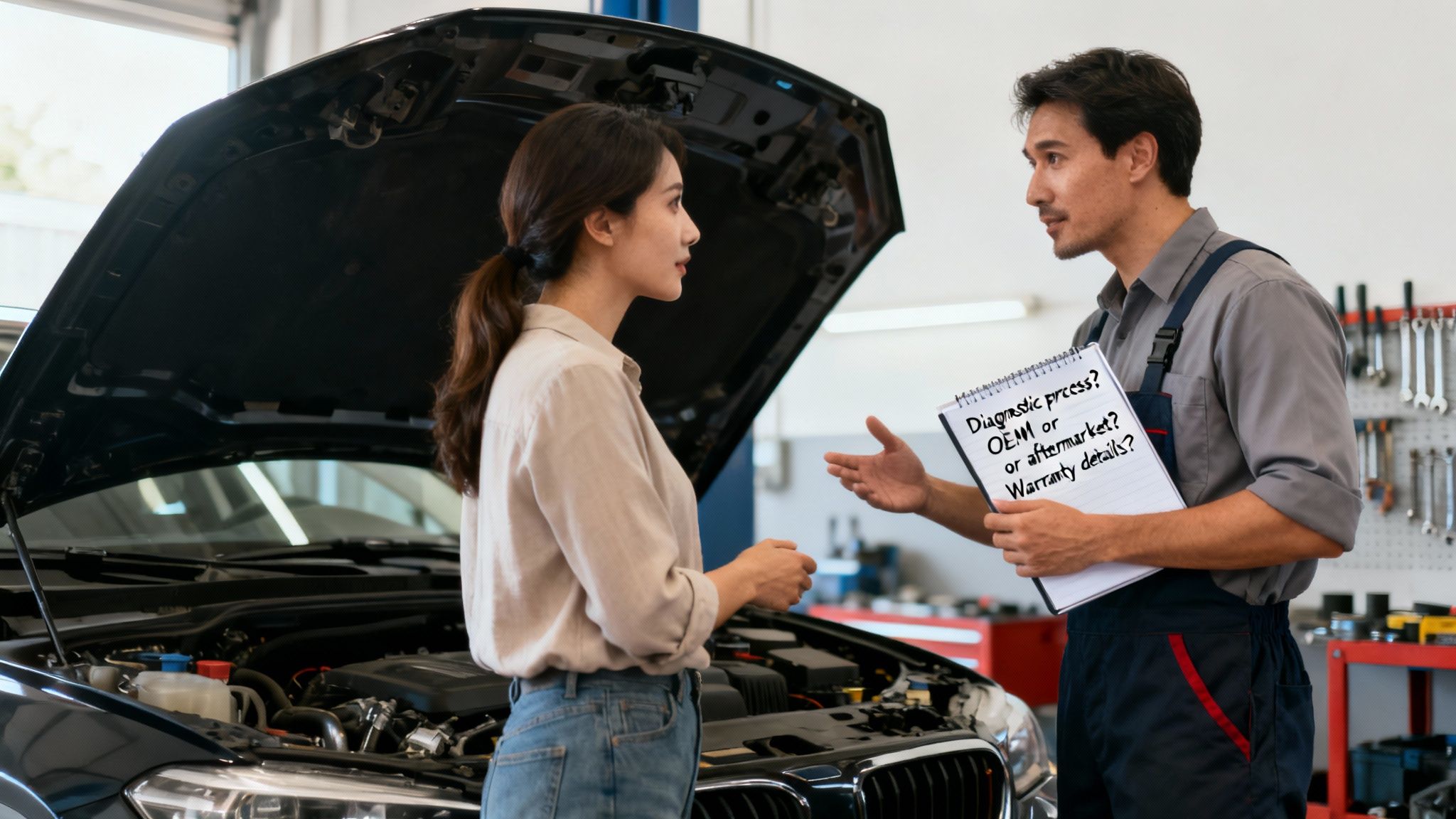
The quality of your auto repair experience often boils down to clear communication. Once you’ve found a promising certified mechanic, the conversation you have before they even pick up a wrench is what really sets the stage. Knowing what to ask can tell you a lot about a shop’s honesty and expertise.
The auto repair market is huge. North America alone accounts for 38.10% of the global market, partly because our cars are getting older—the average is now over 12 years. While traditional mechanical work still makes up a big chunk (45.10%), modern cars are packed with technology, making clear communication about diagnostics and parts more critical than ever. If you’re interested in the details, you can explore the full automotive service industry report to see how things are trending.
Clarifying the Diagnostic Process
Before you give the green light for any work, you need to understand how the shop figures out what’s wrong. If you get a vague answer here, consider it a red flag.
Start by asking a direct question to set clear expectations from the get-go:
“What’s your process for diagnosing the issue, and is the diagnostic fee applied to the final repair cost if I approve the work?”
This one question does two important things. First, it tells the mechanic you expect a methodical approach, not just a wild guess. Second, it gets their billing policy out in the open, so you don’t get hit with surprise charges on the final invoice.
A trustworthy shop will have no problem explaining their procedure, whether it’s a road test, computer scans, or a hands-on inspection. They should also be upfront about how they handle diagnostic fees.
Discussing Parts and Warranty Details
The parts going into your car and the warranty backing the repair are just as important as the mechanic’s labor. Don’t just assume—get the specifics. This conversation protects your investment and makes sure you know what to expect long after you’ve paid and driven away.
Never be afraid to ask for details. A true professional will welcome your questions. It shows you’re an engaged and informed customer, and their goal should be to build your confidence, not rush you into a decision.
Here are a couple of essential questions to kick off that conversation:
- “Do you use OEM (Original Equipment Manufacturer) or aftermarket parts for this repair?” Both can be good options, but a professional should be able to explain the pros and cons of each—like cost vs. longevity—and let you make the final call.
- “Can you walk me through the warranty? Does it cover both parts and labor, and for how long?” A solid warranty is a great sign that the shop stands behind its work. Make sure you understand the terms before they start any repairs.
Asking these kinds of targeted questions helps you feel out a mechanic’s commitment to quality and transparency. A shop like Kwik Kar, that prioritizes clear communication, will always be ready with detailed answers, making sure you feel good about your decision.
So, How Do You Make the Final Call?
You’ve done the legwork. You’ve checked credentials, asked all the right questions, and now it’s time to pull the trigger. Making that final choice feels good when you know it’s backed by solid research.
This isn’t just about getting a one-time fix. It’s about finding a local auto repair shop you can trust for the long haul—a true partner in keeping your vehicle healthy.
Let’s ground this in reality. Think of Kwik Kar Oil Change & Auto Care in Fort Worth as a real-world example of what a top-notch certified mechanic should look like. Their entire approach hits all the marks we’ve been talking about, turning these abstract ideas into concrete qualities you can spot.
What a Trusted Local Shop Actually Looks Like
First off, a great shop doesn’t hide its qualifications. It puts them front and center. At Kwik Kar, the technicians aren’t just experienced; they hold certifications from both ASE and RepairPal.
That double-whammy of credentials is a huge green flag. It tells you their skills are sharp, and their business practices are fair and transparent—all verified by independent organizations. You’re not just taking their word for it.
Choosing a certified shop is really just buying peace of mind. You’re putting your car in the hands of technicians who are held to the highest industry standards for skill, knowledge, and ethical conduct.
Beyond the badges, look at the services they offer. A professional auto care center can handle a lot more than just the basics.
- The Everyday Stuff: From routine oil changes and state inspections to brake jobs and tune-ups.
- The Tough Problems: They have the expertise for complex jobs like engine diagnostics, transmission work, and alternator replacements.
- All-in-One Convenience: Being able to get everything done under one roof saves you a ton of hassle and ensures you get consistent quality every time.
A shop that offers this wide a range of services has clearly invested heavily in its equipment and in continuous training for its team. That’s the kind of place you can rely on, no matter what your vehicle throws at you.
Why This Matters More Than Ever
The auto repair world is a big deal. The market is valued at roughly $1,047.75 billion and it’s only getting bigger, especially since the average car on the road is now over 12.8 years old.
Older cars simply need more TLC, from routine maintenance to more complex repairs. This is great news for shops that have put in the work to get certified and stay on top of their game. If you’re curious about the numbers, you can learn more about the global automotive repair market.
At the end of the day, your decision boils down to a mix of verified credentials, clear communication, and a solid reputation. This is where you have to see what real customers are saying. A shop that consistently gets great reviews, like the ones you’ll find when you see what our customers are saying about Kwik Kar, is showing you they deliver on their promises day in and day out.
Use a shop like Kwik Kar as your benchmark. Look for a local mechanic with clear certifications, a full menu of services, and a long line of happy customers. That’s how you make a choice you can feel confident about.
A Few More Questions About Choosing a Mechanic
Even after doing your homework, a few questions might still be bouncing around in your head. When you’re looking for a certified mechanic near me, getting straight answers is the final step to feeling totally confident in your choice.
Let’s clear up some of the most common things car owners wonder about.
Is a Dealership Really Better Than an Independent Shop?
Not necessarily. While dealerships are experts on their specific brand, a top-notch independent shop often brings the same, if not better, expertise to the table—usually at a much friendlier price. Think about it: technicians at independent shops see everything. They work on all sorts of makes and models, which gives them an incredibly broad diagnostic skillset.
And don’t worry about them being out of the loop. Thanks to “Right to Repair” laws, your local shop has access to the very same diagnostic equipment and service bulletins as the dealership. It really levels the playing field, making a trusted independent mechanic an excellent, and often more budget-friendly, option for everything from oil changes to major engine work.
What’s the Real Difference Between an ASE-Certified Mechanic and One Who Isn’t?
An ASE certification is more than just a piece of paper. It means a mechanic has passed tough, nationally recognized exams, proving they have the skills to work on specific parts of a car. It’s a reliable benchmark that tells you they’re competent with today’s complex vehicle systems.
Now, a non-certified mechanic might have years of hands-on experience, and that’s valuable. But the certification provides an extra layer of trust. It shows that the technician is serious about their craft, stays up-to-date with their training, and is held to a high professional standard. That’s your best guarantee for consistent, quality work.
Choosing an ASE-certified technician isn’t about ignoring experience; it’s about prioritizing proven, tested knowledge. It’s the simplest way to confirm a mechanic’s skills are current before they ever pop your hood.
How Do I Know if a Suggested Repair Is Actually Necessary?
This one is all about communication. A trustworthy mechanic won’t just hand you a big bill—they’ll be your guide. They should be able to walk you through why a repair is needed, maybe even show you the worn-out part, and help you understand the difference between a “fix this now for safety” issue and maintenance you can plan for down the road.
If you feel pressured or just aren’t sure, never hesitate to ask for a detailed written estimate. It is also 100% okay to get a second opinion from another certified shop. A great mechanic respects an informed customer and will never make you feel bad for double-checking their recommendation.
Should I Just Go with the Cheapest Quote I Can Find?
Chasing the absolute lowest price is almost always a bad idea in the world of auto repair. A quote that seems too good to be true usually is. It can be a huge red flag for a shop using cheap, low-quality parts, a technician cutting corners on the job, or—worst of all—an incomplete diagnosis that will just cause more headaches later.
Real value comes from a shop that offers fair, transparent pricing backed by excellent workmanship and a solid warranty on both their parts and labor. Paying a little more for a certified professional who stands behind their work will almost always save you money and stress in the long run. It’s all about getting the job done right the first time.
Ready to stop searching and start getting the expert care your car deserves? At Kwik Kar Oil Change and Auto Care, our ASE and RepairPal certified technicians are here to provide honest, reliable service you can count on.