



Think of your brake pads like the soles on your favorite pair of running shoes. They’re designed to take a beating and wear down over time, all while protecting the more important—and expensive—parts of your car’s braking system. This gradual wearing process is completely normal, but it’s also something you absolutely need to keep an eye on.
Why Brake Pad Wear Is a Critical Safety Indicator
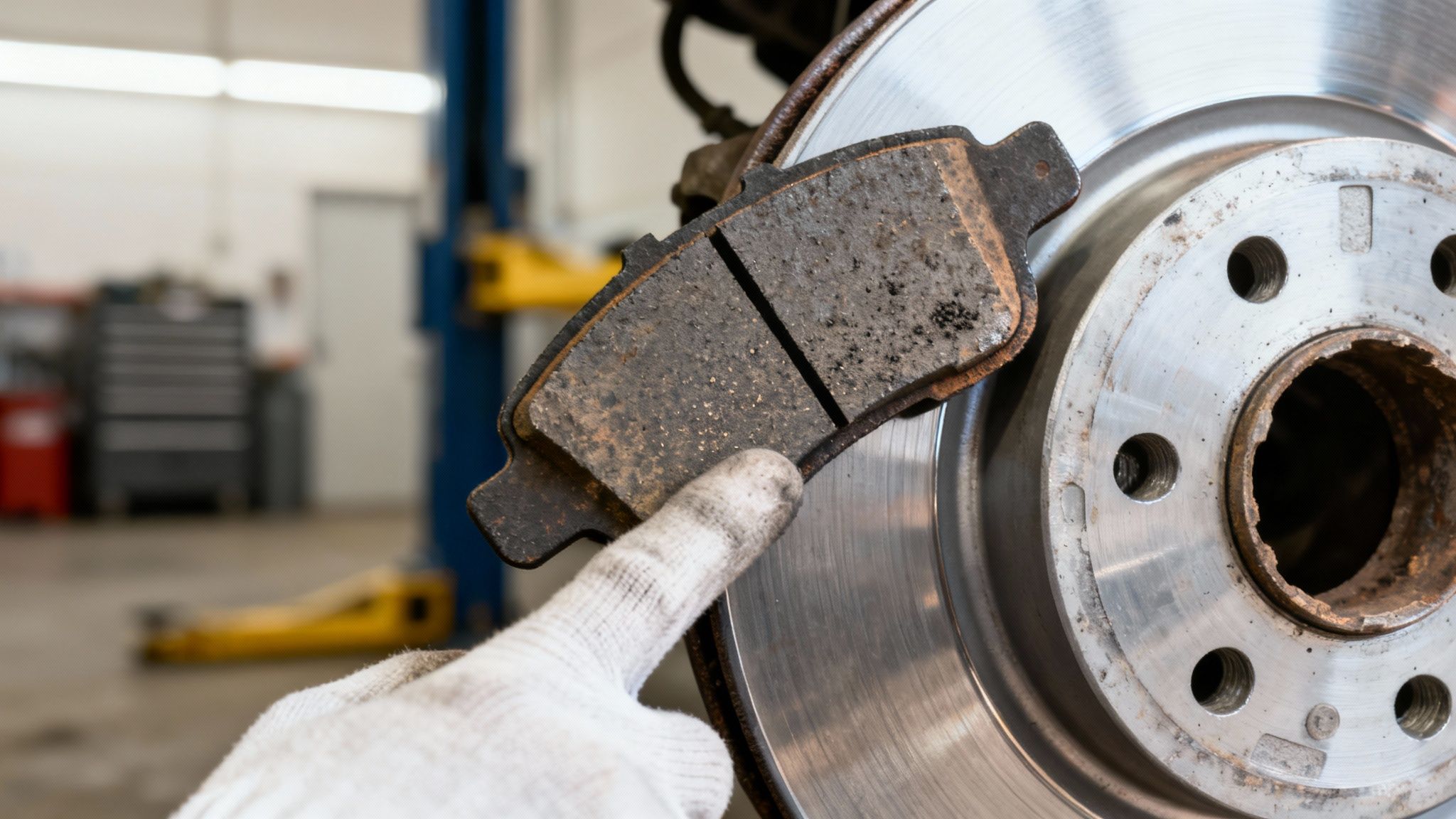
At its core, stopping a multi-thousand-pound vehicle relies on a simple concept: friction. When you hit the brake pedal, the pads squeeze against spinning metal discs called rotors. This action converts your car’s forward motion into heat, slowing you down. The brake pads are the component taking the brunt of this intense force.
Because they are literally designed to be sacrificed for the sake of stopping power, brake pad wear is a natural and expected part of driving. Letting them get too worn down, however, turns routine maintenance into a serious safety hazard.
A set of worn-out brake pads can dramatically increase the distance it takes to bring your car to a complete stop. What should have been a safe, controlled stop can quickly turn into a collision if your pads are too thin to create the friction needed.
From Routine Wear to Serious Risk
Understanding how your brake pads wear out empowers you to stay in control of your vehicle’s safety. As that friction material grinds away, the pad loses its ability to grip the rotor and dissipate heat effectively. It’s often a gradual decline, so you might not even notice the change in your day-to-day driving until it’s too late.
This is why proactive checks are so important. The global market for brake pads was valued at a massive USD 6.45 billion in 2023 and is expected to nearly double by 2030, which shows just how common this service is. Most experts suggest getting your pads inspected every 5,000 miles, especially since constant stop-and-go city traffic can speed up wear by as much as 30%.
This guide will walk you through what to look for, including:
- The sounds and feelings that signal wear.
- How to do a quick visual check yourself.
- Why a professional inspection is your best bet.
Catching brake pads wear early not only keeps you safe but also prevents expensive damage to other parts like your rotors and calipers. It’s also good to remember that the whole system is connected—for instance, old or contaminated brake fluid can hurt performance, too. You can learn more in our guide on why you need to change your brake fluid.
Decoding The Sounds And Signs Of Worn Brake Pads
Your car has a way of telling you when things are going wrong, and your brakes are surprisingly vocal about it. Learning to interpret these sounds and feelings is your first line of defense in catching brake pad wear before it spirals into a serious safety hazard. These aren’t just random noises; they’re specific alerts designed to get your attention.
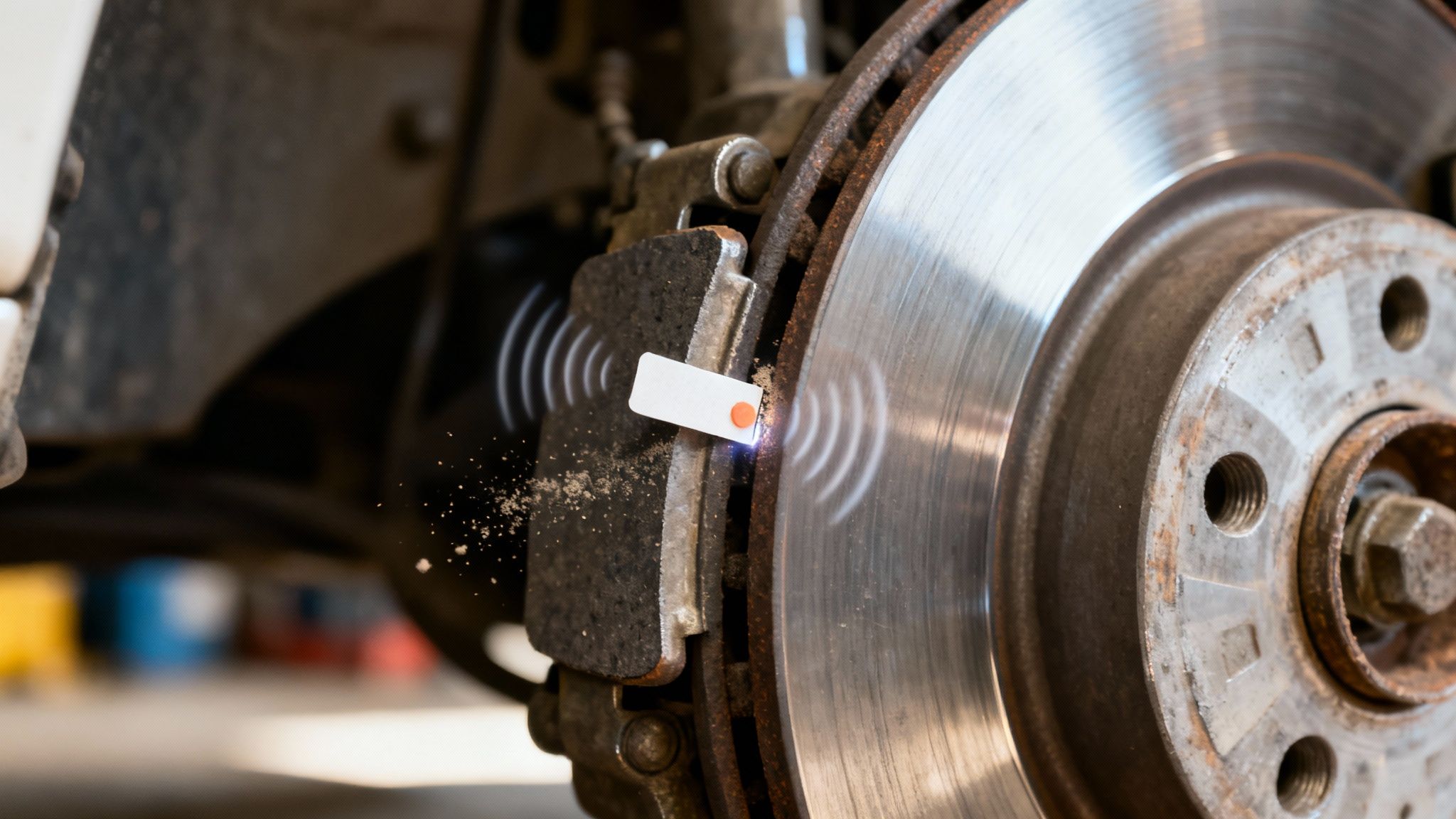
The most common warning sign is that high-pitched squeal you hear when you first press the brake pedal. This isn’t just an annoying sound—it’s a brilliant, built-in safety feature. Most brake pads are designed with a tiny metal tab called a wear indicator.
As your brake pads wear down over thousands of miles, this little metal tab gets closer and closer to the spinning brake rotor. Once the pad material hits its minimum safe thickness, the tab makes contact with the rotor, creating that unmistakable screech. Think of it as your car’s built-in alarm system, letting you know it’s time to schedule a brake inspection.
From Squeal To Grind
If you ignore that initial squeal, the brake pad wear will continue, and the warning sound will escalate into something far more alarming. The next noise you’ll likely hear is a loud, metallic grinding sound. This is a five-alarm fire for your braking system.
A grinding noise means the friction material on the pad is completely gone. What you’re hearing is the sound of the pad’s metal backing plate grinding directly against the metal brake rotor. This metal-on-metal contact drastically reduces your stopping power and generates a massive amount of heat, which can quickly destroy your rotors.
A grinding sound means you’re no longer just dealing with worn pads; you are actively damaging other critical parts of your brake system. This will make your repair bill much higher, as you’ll almost certainly need to replace the rotors along with the pads.
Vibrations And Other Physical Sensations
Your ears aren’t the only tool for detecting brake problems. Pay close attention to how your car feels when you stop, especially what you sense through the brake pedal and steering wheel.
A common sign is a vibration or pulsation that shakes the brake pedal or steering wheel when you brake. This often means the intense heat from worn-out pads has caused your brake rotors to warp, creating an uneven surface. As the pads clamp down on this warped disc, the inconsistent contact creates that shuddering feeling.
Another major red flag is a change in how the brake pedal itself responds. If the pedal feels “spongy,” soft, or sinks further toward the floor than it used to, it could point to severely worn pads or even a problem with the hydraulic system.
To help you sort through the signals, here’s a quick reference table for common brake symptoms.
Common Brake Wear Symptoms and What They Mean
| Symptom | What It Sounds/Feels Like | Potential Cause |
|---|---|---|
| Squealing | A high-pitched screech when braking, especially at low speeds. | The brake pad wear indicator is touching the rotor. |
| Grinding | A harsh, low-pitched metallic grinding or growling noise. | Brake pads are completely worn out; metal is scraping against metal. |
| Vibration | A pulsating or shaking feeling in the pedal or steering wheel. | Brake rotors are likely warped from excessive heat. |
| Spongy Pedal | The brake pedal feels soft or sinks slowly toward the floor. | Could be air in the brake lines or a failing master cylinder. |
| Pulling | The car veers to one side when you apply the brakes. | A stuck brake caliper or unevenly worn pads. |
| Burning Smell | A sharp, chemical odor after hard braking. | Overheated brakes or a dragging/stuck brake caliper. |
Any of these symptoms are a clear signal that you need a professional inspection right away to keep your vehicle safe on the road.
What Makes Brake Pads Wear Down Faster?
Ever wonder why your neighbor’s car, the exact same model as yours, seems to go 10,000 more miles before needing a brake job? It’s not a mystery. While two cars might roll off the assembly line identically, how they’re driven and where they’re driven makes all the difference. After 30,000 miles, one might be due for new pads while the other’s are barely broken in.
Let’s break down the key factors that can seriously speed up brake pads wear.
Your Driving Style is the Biggest Culprit
Hands down, the single biggest influence on your brake pad lifespan is how you drive. If you’re an aggressive driver—think last-minute, hard braking and jackrabbit starts—you’re generating a massive amount of heat. Heat is the number one enemy of brake pads, causing the friction material to break down and wear away far more quickly than it should.
On the flip side, gentle, gradual braking is your brake pads’ best friend. It allows the system to manage heat effectively, preserving the material and extending its life. Something as simple as coasting to a stop when you see a red light ahead, instead of slamming on the brakes at the last second, can add thousands of miles to your pads.
Your Daily Commute Makes a Huge Difference
Where you drive is just as important as how you drive. A car that cruises on the highway most of the time will see significantly less brake wear than one stuck in the daily grind of stop-and-go city traffic. Highway driving means long stretches with little to no braking, giving the whole system plenty of time to cool off.
City driving, however, is a brutal workout for your brakes. Every stop sign, traffic light, and crosswalk forces you to hit the pedal, creating repeated bursts of heat with almost no chance to cool down. This constant cycle is what chews through brake pads wear, making urban commuters some of our most frequent customers for brake service.
It all comes down to basic physics: the heavier an object is, the more energy it takes to stop it. That’s why a big, fully loaded truck or a heavy SUV will always burn through its brake pads faster than a lightweight compact car.
The Impact of Your Vehicle and Environment
The sheer weight of your vehicle plays a massive role. A three-ton SUV needs a lot more braking power to come to a stop than a one-ton sedan. That extra demand translates directly to faster wear on both the pads and rotors. If you regularly tow a trailer or haul heavy cargo, you’re putting even more strain on the system.
Finally, don’t forget about your local environment. Driving in hilly or mountainous areas means you’re on the brakes more often and for longer, especially going downhill. Other factors like high humidity can encourage rust to form on the rotors, while dusty or sandy conditions can kick up abrasive grit that grinds away at your pad material. Understanding these factors helps you stay ahead of your car’s needs and plan your maintenance accordingly.
How Brake Pad Materials Impact Performance and Longevity
Not all brake pads are created equal. The material they’re made from is probably the single biggest factor in how they perform, how long they last, and even how much noise they make. It’s a lot like choosing tires—different compounds are built for different jobs, from quiet city driving to aggressive track use. Getting a handle on the basic types helps you understand why a technician might recommend one over another for your specific car and driving style.
The three main categories you’ll run into are organic, semi-metallic, and ceramic. Each one strikes a different balance between durability, stopping power, and comfort.
The Quiet And Gentle Organic Pads
Organic brake pads, often called Non-Asbestos Organic (NAO) pads, are made from a mix of fibers and fillers like rubber, glass, and even Kevlar, all held together with a strong resin. They’re the softest of the bunch, which makes them incredibly quiet and easy on your brake rotors. That’s a big plus, since it means less wear on those expensive components.
But that softness is also their biggest weakness. Organic pads tend to create more brake dust and wear down faster than the other types, which means you’ll be swapping them out more often. They are a solid, budget-friendly choice for drivers who just want a quiet, smooth ride for daily commuting in lighter cars.
This infographic breaks down some of the major factors that cause brake pads to wear out.
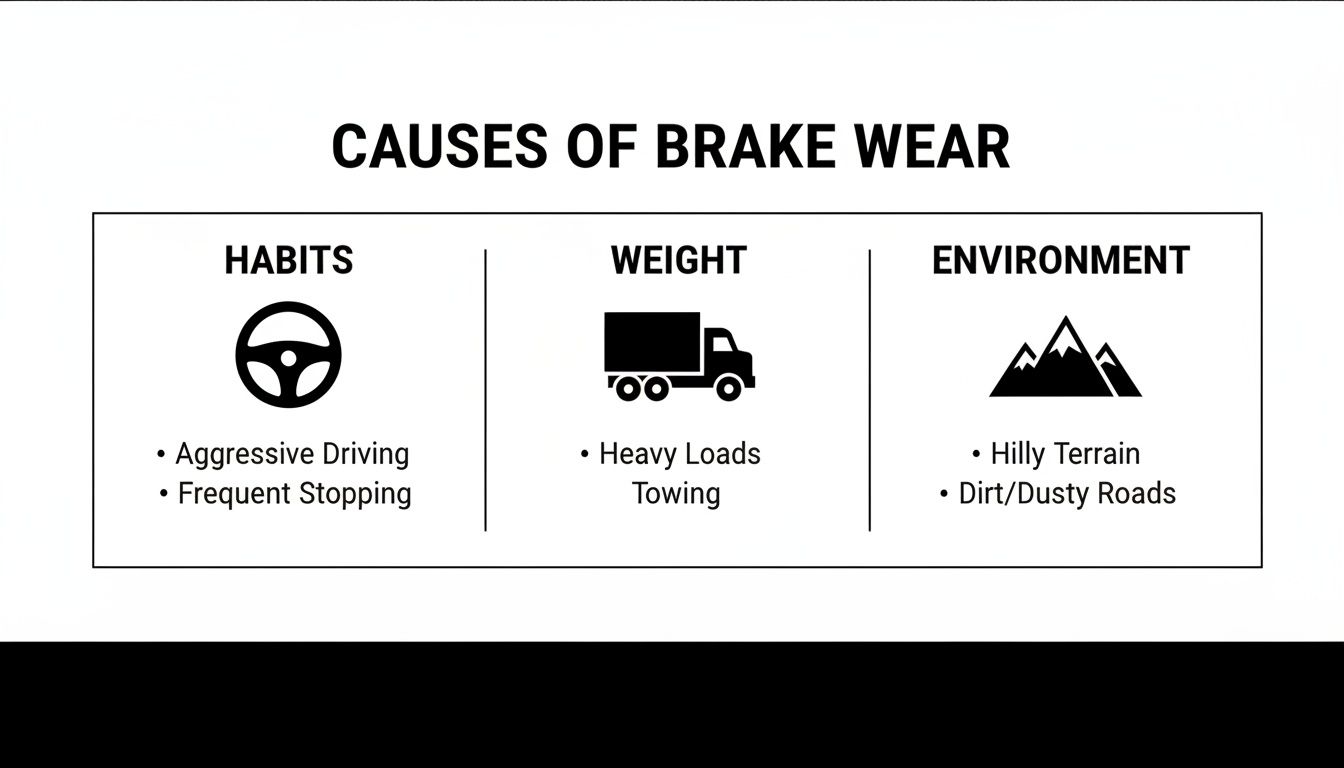
As you can see, your driving habits, your vehicle’s weight, and even the local environment are the main culprits behind accelerated brake pad wear.
The Durable Semi-Metallic Pads
For drivers who need a little more muscle, semi-metallic pads are the go-to option. These pads are made with 30% to 70% metal—think steel, iron, and copper—which makes them exceptionally durable and fantastic at shedding heat. This is exactly what you need for heavier vehicles like trucks and SUVs or for performance-oriented driving where hard braking is just part of the fun.
All that durability comes at a cost, though. Semi-metallic pads can be noisier, produce more of that dark-colored brake dust, and are definitely tougher on brake rotors than their organic or ceramic cousins. Even with those trade-offs, their superior stopping power and long life make them a really popular choice.
The Premium Ceramic Pads
Sitting at the top of the range, ceramic brake pads pretty much offer the best of both worlds. Made from dense ceramic materials with embedded copper fibers, they give you outstanding stopping power while staying extremely quiet. They also produce a fine, light-colored dust that’s way less noticeable on your wheels. On top of that, they manage heat exceptionally well, which helps reduce brake fade during long, demanding stops.
The primary advantage of modern materials is their resilience. Both semi-metallic and ceramic pads can resist wear up to three times better than traditional organic friction materials. This is especially true in harsh conditions, where a premium set of pads can extend brake life by over 50,000 miles and even shorten stopping distances by 10-15 feet from 60 mph. You can explore more about these performance gains from automotive brake pad market research.
Ceramic pads are the most expensive option, but their long life, clean operation, and quiet performance make them an excellent investment for many drivers who are looking for a premium, hassle-free experience.
Choosing the right brake pad really comes down to what you drive and how you drive it. To make it a bit clearer, here’s a simple breakdown of the three main types.
Brake Pad Material Comparison
| Material Type | Key Benefit | Typical Lifespan | Best For |
|---|---|---|---|
| Organic (NAO) | Quiet operation & low rotor wear | Shorter (20k-40k miles) | Daily commuting in lighter cars |
| Semi-Metallic | Excellent stopping power & durability | Medium (30k-60k miles) | Trucks, SUVs, performance driving |
| Ceramic | Quiet, clean, and long-lasting | Longest (40k-75k+ miles) | Premium daily drivers, luxury cars |
Ultimately, the best pad for you is the one that matches your vehicle’s needs and your personal preferences for noise, dust, and performance.
A Simple Guide to Visually Inspecting Your Brakes
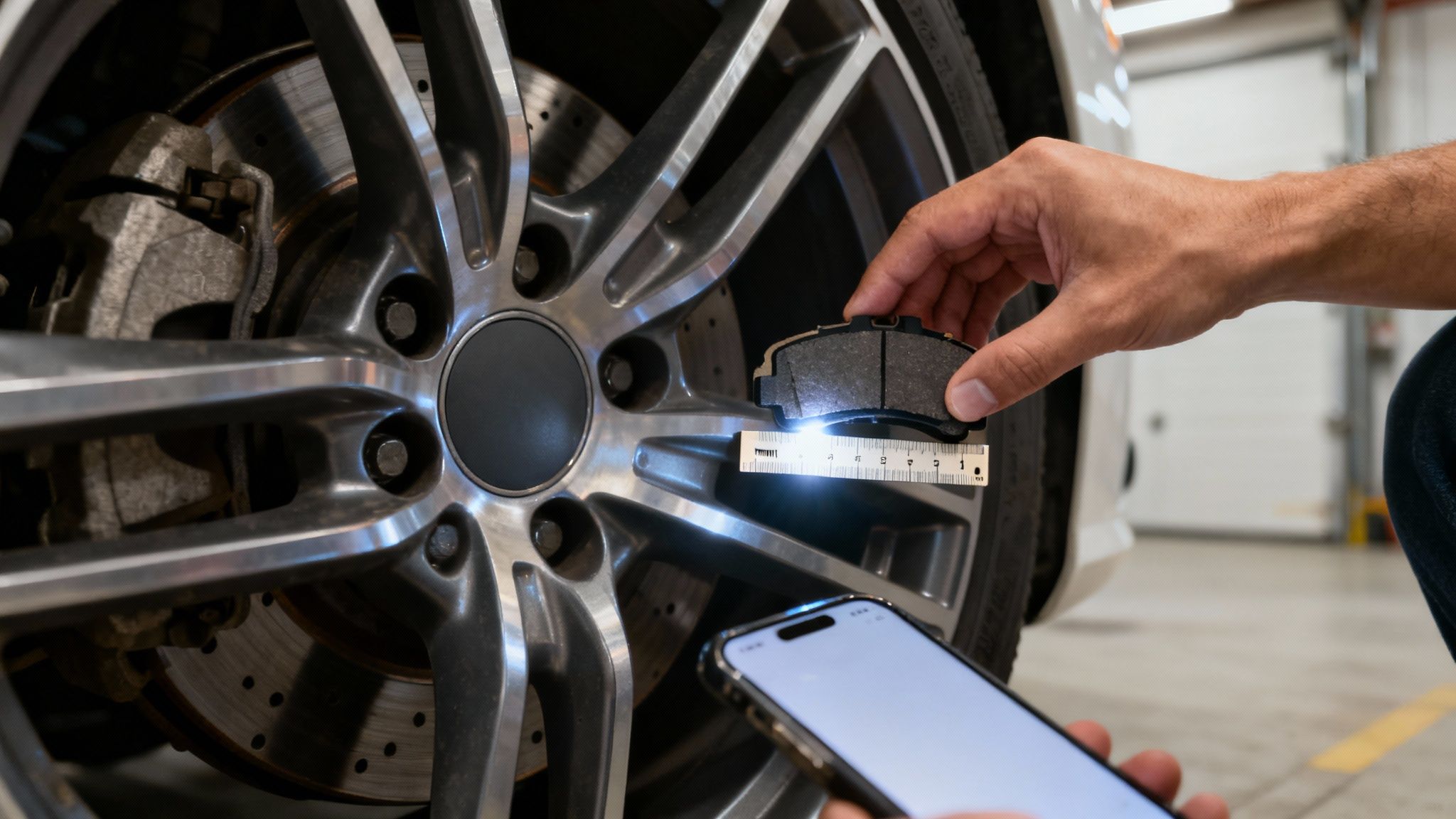
You don’t need a full mechanic’s toolset to get a sense of your brake pads’ health. A quick visual inspection is a fantastic, proactive step that pretty much anyone can do. This simple check empowers you to spot potential brake pads wear early and stay ahead of any issues.
For most cars with open-spoke wheels, you can see the key components right through the wheel. You’ll just need to park on a level surface and maybe grab a flashlight to get a clearer view. Your goal is to spot the brake caliper—that’s the metal housing that clamps down on the shiny, disc-like brake rotor.
What to Look For Through the Wheel
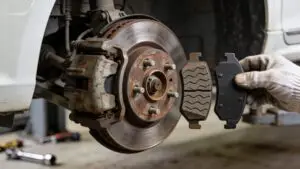
Peer through the spokes of your wheel and find that brake caliper. Tucked inside, you’ll see the brake pad pressed right up against the metal rotor. The part you’re interested in is the friction material, which is the thick, wearable part of the pad that does all the work.
The key is to gauge how thick that material is. A brand-new brake pad usually has about 10-12mm (around 1/2 inch) of friction material. As it wears down, that layer gets thinner and thinner.
A good rule of thumb is that your brake pads should have at least 1/4 inch (about 6mm) of friction material left. If they look much thinner than that, it’s a clear sign you should schedule a professional brake inspection soon.
One thing to keep in mind is that the outer pad (the one you can see most easily) might not wear at the same rate as the inner pad. That’s why a professional will always take the wheel off for a complete and accurate measurement.
To do a basic visual check yourself, just follow these simple steps:
- Park Safely: Make sure your vehicle is on a flat, level surface with the parking brake on.
- Look Through the Wheel: Kneel down and shine a light through your wheel spokes to locate the metallic brake rotor and the caliper clamped around it.
- Identify the Pad: Find the brake pad pressed against the rotor. You’ll see its metal backing plate and the friction material.
- Estimate the Thickness: Try to visually estimate how thick the friction material is. If it looks thinner than a standard pencil (about 1/4 inch), it’s definitely time for a professional check.
This quick visual inspection is a great habit to get into, just like checking your tire pressure. It’s an important part of any good routine, which you can learn more about with our car maintenance checklist PDF. Just remember, this is only an estimate. It can’t tell you about the condition of the inner pad, rotors, or brake fluid—for that, you need a pro.
When a Professional Brake Inspection Is Non-Negotiable
While a quick visual check is a great first step for keeping an eye on your brake pads, certain symptoms are your car’s way of screaming for immediate help. These aren’t just minor annoyances; they’re serious red flags pointing to problems that go way beyond simple pad replacement.
Ignoring these warnings is a gamble you don’t want to take. It can turn a straightforward, manageable repair into a catastrophic and expensive failure. If you experience any of the following, it’s time to see a professional—no excuses.
Critical Warning Signs
Don’t put off a trip to the shop if you notice these problems. A loud, metallic grinding sound is the most urgent of all. It means your brake pad friction material is completely gone, and you’re hearing metal grinding directly against metal. This isn’t just noisy; it’s actively destroying your rotors, which are far more expensive to replace than pads alone.
Another serious symptom is a pulsating or vibrating feeling, either in the brake pedal or the steering wheel. This is the classic sign of warped rotors. Warped rotors can’t provide the flat, smooth surface your pads need to grip properly. Slapping new pads on them is a waste of money—they’ll just wear unevenly and won’t give you the stopping power you need.
Finally, a spongy or soft brake pedal that sinks toward the floor is a major safety alert. This almost always points to an issue in the hydraulic system, like air in the brake lines or a failing master cylinder. These problems require immediate attention to restore your car’s ability to stop safely.
A professional inspection can uncover hidden issues a simple visual check will always miss. Technicians can spot problems like a stuck caliper or glazed pads, which can seriously compromise your ability to stop when it counts.
The Kwik Kar Advantage
Modern vehicles are packed with complex systems. Electronic wear sensors, for instance, are becoming more common—part of a market growing at a 6.04% CAGR. They’re designed to alert you when about 70% of the pad is gone, but that’s not the whole story.
A trained technician at Kwik Kar can spot issues those sensors miss, like glazed pads that can happen after just 30,000 miles of city driving. Catching these problems early can prevent repair costs from doubling later on. You can learn more about how advanced brake pad technology is shaping the market in this report.
Proper installation is just as critical as the parts themselves. When done right, it ensures even wear and can lead to 20% fewer repeat visits for brake-related issues. When your safety is on the line, let our experts provide a thorough and accurate diagnosis. You can explore our complete brake service options in Fort Worth to make sure your vehicle is in the best possible hands.
Answering Your Top Questions About Brake Pad Wear
When it comes to brake maintenance, it’s normal to have a few questions. Getting straight answers is the best way to feel confident about the decisions you make for your car’s safety. Let’s tackle some of the most common questions we hear from drivers every day.
How Much Does Brake Pad Replacement Typically Cost?
The price for new brake pads can swing a bit, but most drivers should budget somewhere between $150 to $300 per axle. What causes the range? It really comes down to your vehicle’s make and model, the kind of brake pads you go with (organic, semi-metallic, or ceramic), and what the local labor rates are.
If you drive a high-performance or luxury car, you can expect the parts to be pricier, which will push that total cost up. To make sure there are no surprises, it’s always a smart move to ask your mechanic for a detailed quote that breaks down both parts and labor before they start any work.
Should I Replace My Rotors at the Same Time as the Pads?
While it’s not an absolute must every single time, it’s definitely best practice to have your rotors inspected whenever you get new pads. If the rotors are warped, have deep grooves, or are worn thinner than the manufacturer’s minimum safety thickness, they absolutely need to be resurfaced or replaced.
Putting brand-new pads on worn-out rotors is just asking for trouble. It guarantees your new pads will wear down unevenly and way too fast, and you’ll never get that smooth, solid stopping power you’re counting on.
Why Do My Front Brakes Wear Out So Much Faster Than the Rear Ones?
This is completely normal—in fact, it’s how your braking system is designed to work. Every time you hit the brakes, the car’s weight lurches forward. This physical shift forces the front brakes to do the lion’s share of the work, handling up to 70% of the total stopping force. With a workload that heavy, it’s no surprise the front pads wear out much quicker than the ones in the back.
What’s a Brake Fluid Flush, and Is It Really Important?
A brake fluid flush is exactly what it sounds like: we completely drain the old, contaminated fluid from your brake lines and replace it with fresh, clean fluid. This is a critical piece of maintenance because brake fluid is “hygroscopic,” which is a fancy way of saying it loves to absorb moisture right out of the air.
Over time, that moisture lowers the fluid’s boiling point, which can lead to a mushy or “spongy” feeling in the brake pedal and seriously reduce your stopping power. Worse, it causes rust and corrosion inside your brake lines and calipers. That’s why most car makers recommend a full flush every two years to keep everything working safely and effectively.
If you have more questions or you’re noticing any of the classic signs of brake pads wear, don’t put it off. Schedule a professional brake inspection with the certified technicians at Kwik Kar Oil Change and Auto Care to make sure your vehicle is safe for the road. You can learn more and book an appointment on our website.