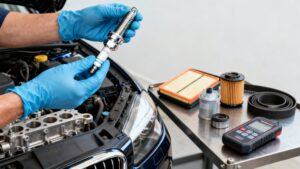
That little reddish puddle on your driveway is more than just a stain—it's your car's way of telling you something is wrong. A transmission fluid leak is a serious warning sign. If you see one, it's time to pay attention, because ignoring it can lead to some of the most expensive repairs a car owner can face.
What a Transmission Fluid Leak Means for Your Car
Think of your car's transmission as its powerhouse, the complex system of gears that sends power from the engine to the wheels. Transmission fluid is the lifeblood of this system. It's a special hydraulic fluid that does three critical jobs at once: it cools down all the moving parts, lubricates the gears so they don't grind themselves to dust, and builds the hydraulic pressure needed for you to shift from park to drive.
When that vital fluid starts to leak out, the whole system is in jeopardy. At first, you might not notice much, but as the fluid level drops, the problems get worse fast. Without enough fluid, the metal parts inside the transmission start creating a ton of friction and intense heat. That heat can literally cook delicate seals, warp precision-engineered components, and eventually cause the whole thing to fail.
The Immediate Risks of Ignoring a Leak
Let's be clear: a transmission fluid leak is a gamble you don't want to take. These problems don't just go away on their own—they get progressively worse and more expensive. Understanding the immediate dangers might be the push you need to get it checked out before a small drip turns into a full-blown breakdown.
Here's what you're risking:
- Jerky Gear Changes: Low fluid means low pressure, and that makes the transmission struggle. You'll feel it as rough, hesitant, or delayed shifts that make your car feel unpredictable and just plain unpleasant to drive.
- Overheating: This is the big one. Friction from a lack of lubrication creates so much heat that it can burn the remaining fluid, making it completely useless. Once that happens, internal parts start to melt, warp, and fail.
- Complete Transmission Failure: If the leak is bad enough and you lose too much fluid, the transmission can seize up entirely. You'll be stranded, and the repair bill could easily run into the thousands of dollars.
A transmission fluid leak isn't just an inconvenience. It’s a direct threat to one of your vehicle's most complex and expensive systems. Acting fast is the smartest way to protect your car and your wallet.
This is a surprisingly common issue, especially as cars get a bit older. With the average age of vehicles in the United States now over 12 years, it's no surprise that transmission fluid leaks account for roughly 15-20% of all transmission-related visits to auto repair shops. You can discover more insights about this trend and what it means for car maintenance.
Learning to recognize the signs is your first line of defense. That distinct reddish color and slightly sweet smell are your car’s SOS. By addressing a transmission fluid leak as soon as you spot it, you can head off major damage and keep your car running reliably for years. Here in Fort Worth, our team is always ready to help you figure out what's going on and get it fixed right.
Learning to Spot the Telltale Signs of a Leak
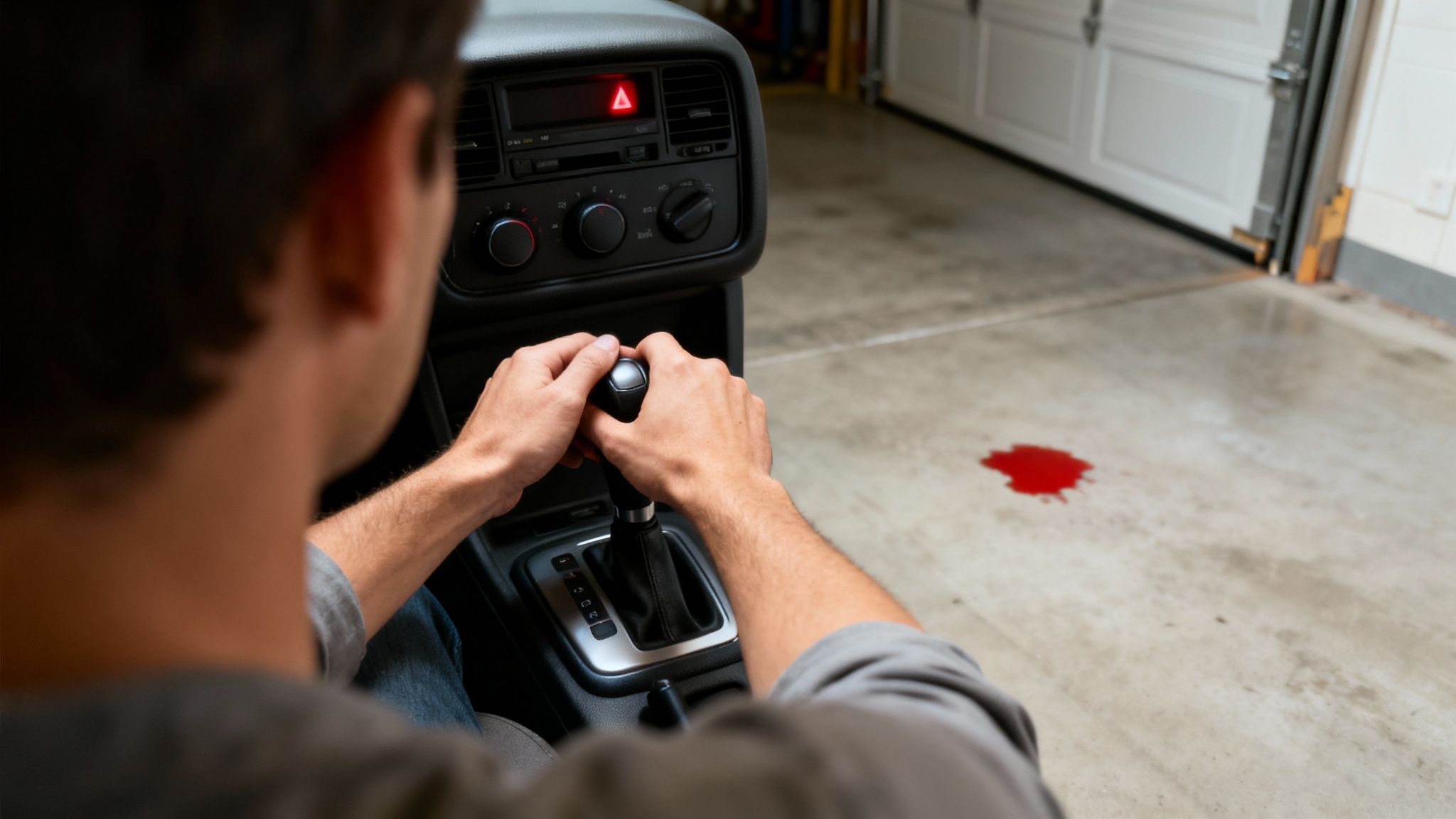
A transmission fluid leak rarely starts with a dramatic, movie-style puddle under your car. Instead, it usually begins with subtle whispers and quiet warnings that are all too easy to ignore. The key to preventing a minor annoyance from becoming a catastrophic failure is learning to recognize these early clues. Think of yourself as a detective—your car is giving you all the evidence you need.
The most obvious piece of evidence, of course, is a reddish-brown or pink spot on your driveway. Transmission fluid has a distinct color, unlike motor oil, which is typically dark brown or black. When it’s fresh, the fluid is a vibrant, almost translucent red. Over time, it darkens to a murky brown. If you spot these stains, it’s a clear signal that something is leaking.
But here’s the thing: many symptoms show up long before you see a single drop on the ground. These are the clues you can feel, hear, and even smell while you’re behind the wheel.
Performance and Sensory Clues
Your transmission is a creature of habit. It’s engineered to shift gears smoothly and predictably. When it starts acting up, low fluid is one of the most common culprits. You need to pay close attention to how your car behaves when you’re speeding up or slowing down.
Does your car seem to pause or struggle for a moment before lurching into the next gear? That hesitation is a classic symptom of low fluid, which causes a drop in the hydraulic pressure your transmission needs to shift properly.
You might also start hearing things you shouldn't. A healthy transmission is practically silent, but one that’s starved for fluid will protest with whining, clunking, or grinding noises. Those sounds are the gut-wrenching result of metal components grinding against each other without proper lubrication—a cry for help from your car's gearbox.
A burning smell is one of the most urgent warning signs. This distinct, acrid odor often means the remaining transmission fluid is overheating due to increased friction, breaking it down and rendering it ineffective.
That smell is a major red flag. It means internal damage isn't just a possibility; it's likely already happening. When you smell that, it’s time to get professional help immediately to prevent a complete system meltdown.
Transmission Slipping Explained
One of the most unnerving symptoms you can experience is transmission slipping. This is when your car’s engine revs up, but you don't actually go any faster. It can also feel like the car has suddenly popped out of gear and shifted into neutral all on its own.
Slipping is incredibly dangerous because it makes your car's acceleration totally unreliable. Imagine trying to merge onto a busy highway only to have your car lose power at the critical moment. This happens because low fluid pressure prevents the internal clutches from engaging correctly. If you're running into issues like these, it helps to read more about the common signs of auto transmission problems to understand the risks.
To help you get a better handle on what to look for, we've put together a quick guide to the most common symptoms.
Quick Guide to Transmission Leak Symptoms
Use this reference to quickly identify the visual, auditory, and performance signs that point to a potential transmission fluid leak in your vehicle.
| Symptom Category | Specific Sign to Watch For | What This Could Mean for Your Transmission |
|---|---|---|
| Visual | Reddish or brownish puddles under the car. | An active leak from a seal, gasket, or line. |
| Auditory | Grinding, clunking, or whining sounds. | Lack of lubrication causing metal-on-metal friction. |
| Performance | Delayed, rough, or jerky gear shifts. | Low hydraulic pressure affecting shift mechanisms. |
| Performance | Transmission slipping out of gear. | Severe fluid loss preventing gears from engaging. |
| Sensory | A distinct burning or acrid smell. | Fluid is overheating and breaking down. |
Spotting any of these signs early gives you the power to act before it’s too late. By addressing a transmission fluid leak at the first hint of trouble, you can sidestep a massive repair bill and keep your car running reliably for years to come.
Understanding the Common Causes of a Leak
Now that you know what to look for, let’s get under the hood and figure out what’s actually causing the problem. A transmission fluid leak isn’t just some random fluke; it’s a clear signal that a part of your transmission system has failed. The best way to think about your transmission is like a high-pressure plumbing network—if just one connection gives way, you’re going to have a leak on your hands.
This network is what we call a closed system, which means that fluid is meant to stay sealed up inside for tens of thousands of miles. When it starts escaping, it’s almost always because a component has worn out, cracked, or taken a direct hit. Knowing these common failure points helps you understand what a mechanic is searching for during an inspection.
Worn-Out Seals and Gaskets
One of the most common culprits behind a transmission leak is simple wear and tear on the seals and gaskets. These little parts are the unsung heroes of your transmission, working tirelessly to keep high-pressure fluid right where it needs to be.
Think about a good coffee thermos. It has a rubber ring in the lid that creates a perfect seal so your coffee doesn't end up all over your car seat. Transmission seals and gaskets do the exact same job. But over time, constant exposure to intense heat and pressure causes these parts—often made of rubber or cork—to turn hard, brittle, and cracked.
Once a seal loses its flexibility, it can no longer hold a tight barrier, and that’s when fluid starts to seep out. The usual suspects include:
- Pan Gasket: The transmission pan sits at the bottom of the unit and holds a reservoir of fluid. Its gasket is notorious for wearing out, leading to those tell-tale drips on your driveway.
- Output Shaft Seal: This seal stops fluid from leaking out where the driveshaft connects to the transmission.
- Input Shaft Seal: This one is tucked between the engine and transmission. It can also fail, but leaks here are often a bit trickier to spot.
Physical Damage and Component Failure
While old age is a big factor, physical damage can cause a sudden and much more serious transmission fluid leak. The underside of your car is constantly exposed to road hazards—potholes, debris, you name it—and one hard knock can spell big trouble for your transmission.
The transmission pan is especially vulnerable. It’s just a metal basin at the bottom of the transmission, so slamming it against a big rock or dropping into a deep pothole can easily dent, puncture, or crack it. A crack in the pan isn’t a slow drip; it’s often a major leak that can drain your fluid to dangerously low levels in no time.
Beyond the pan, the fluid lines themselves can spring a leak. These are the metal or rubber hoses that circulate fluid between the transmission and a cooler up at the front of your car. Rubber hoses can get brittle and crack with age, while metal lines can rust through or get damaged by road debris. Even the fittings where these lines connect can work themselves loose and let fluid escape.
A transmission is a complex puzzle of moving parts, and its integrity relies on every single piece doing its job. A failure in one small area, like a cracked torque converter or even a loose bolt, can compromise the whole system.
The torque converter, which connects the engine to the transmission in automatic cars, can also develop cracks and leak fluid. Problems like these are a sure sign you need a professional to get in there and pinpoint the exact source of the failure. The global transmission fluid market is projected to hit USD 13.86 billion by 2034, a number that shows just how many vehicles rely on these complex systems. As you can discover in more detail from industry analysis, the financial impact of leaks is a big driver of that market.
Finding the root cause is the first and most important step toward a solid repair. Whether it’s a simple gasket that needs replacing or something more serious, a proper diagnosis ensures the problem gets fixed right the first time—saving you from bigger headaches and more expensive repairs later on.
Checking Your Transmission Fluid at Home
If you think you might have a transmission fluid leak, you don't have to sit around and wait for a mechanic to get the first clue. A simple fluid check right in your own driveway is one of the best first steps you can take. This quick inspection tells you more than just the fluid level; it reveals its overall health, giving you a much clearer picture of what's going on inside your transmission.
Before you pop the hood, it's important to know that checking transmission fluid isn't like checking your engine oil. For an accurate reading, the fluid needs to be warm and circulating through the system.
The Right Way to Check Your Fluid
Follow these steps for a safe and precise check. But first, a quick heads-up: always check your owner's manual. Some modern cars, especially those with sealed transmissions, don't even have a dipstick.
- Warm Up the Engine: Take your car for a quick drive, about 10-15 minutes should do it. This gets the transmission up to its normal operating temperature, allowing the fluid to expand and circulate for an accurate measurement.
- Park on a Level Surface: This is a bigger deal than you might think. Parking on a slope can give you a false reading, making the fluid level seem higher or lower than it really is. Find a flat, level spot.
- Keep the Engine Running: Yep, you read that right. Unlike an oil check, the engine needs to stay on. Shift the transmission through each gear (Park, Reverse, Neutral, Drive), holding for a few seconds in each, before putting it back into Park or Neutral (your manual will tell you which).
- Locate and Pull the Dipstick: Open the hood and look for the transmission fluid dipstick. It usually has a brightly colored handle, often red or yellow, and might be labeled "TRANS." On front-wheel-drive cars, it's typically near the front of the engine. For rear-wheel-drive vehicles, you'll usually find it toward the back.
- Wipe and Re-insert: Pull the dipstick out, wipe it completely clean with a lint-free cloth, and then push it all the way back in. Make sure it's fully seated.
- Read the Level: Pull the dipstick out one more time and check the fluid level against the markings. You'll see "FULL" and "ADD" or "HOT" and "COLD" lines. If the level is below the "ADD" or "LOW" mark, a leak is almost certain.
What the Fluid's Color and Smell Reveal
The level is only half the story. The condition of the fluid is just as telling. Healthy, fresh transmission fluid is a bright, translucent red and has a slightly sweet, oily smell. If you see or smell anything else, it's a sign of a problem.
- Brown or Murky Fluid: This tells you the fluid is old and breaking down. It's not lubricating or cooling your transmission components the way it should be.
- Dark Brown or Black Fluid: This is a major red flag. Dark, thick fluid often means there's internal damage or contamination from worn-out clutch material.
- Burnt Smell: If the fluid has a sharp, acrid, or burnt toast smell, your transmission is overheating. This is a critical issue that needs a professional's attention right away.
Checking your fluid is a key part of good car maintenance. When you're doing routine checks, especially as part of your winter weather vehicle readiness, make it a habit to look for any signs of a transmission fluid leak.
This diagram breaks down the most common physical points of failure that cause a leak.
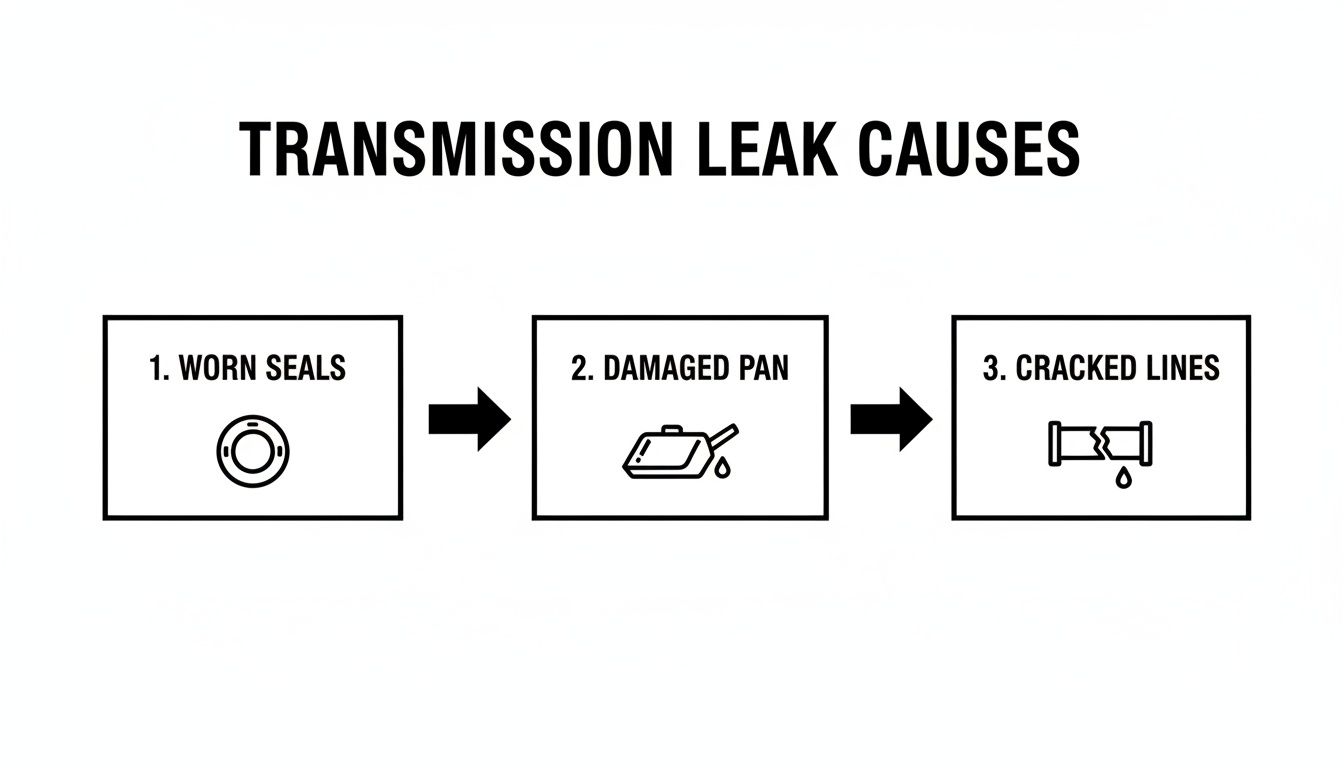
As you can see, worn-out seals, a physically damaged pan, or cracked fluid lines are the primary culprits. Each one represents a breach in the transmission's otherwise sealed system. By checking the fluid yourself and knowing these potential causes, you'll be much better prepared to have a conversation with a technician.
Estimating Potential Repair Costs and Options
When you spot a transmission fluid leak, the first thought that usually pops into your head is, "Okay, how much is this going to set me back?" The truth is, the answer can be all over the map. But getting a handle on the likely repair options and their price tags can help you make a smart call without feeling cornered. The final bill really just boils down to where the leak is coming from and how bad it is.
The good news? A lot of leaks are pretty minor and surprisingly affordable to fix, especially if you catch them early. Sometimes, it’s as simple as a loose transmission pan bolt that just needs a technician to tighten it up, costing next to nothing. Most of the time, though, it involves swapping out a specific part that's given up.
Minor and Moderate Repair Costs
For most drivers, a transmission fluid leak is just a sign that a component has worn out after thousands of miles of doing its job. These are typically the most common—and most budget-friendly—repairs you'll run into.
Here’s a quick look at what you can generally expect for these kinds of fixes:
- Transmission Pan Gasket Replacement: This is one of the most frequent culprits. The gasket is just a simple seal, but over time it can get brittle and crack. Swapping it out is a straightforward job for a pro, usually running between $150 and $400, parts and labor included.
- Fluid Line Repair or Replacement: The hoses that ferry fluid to and from the cooler can crack or even rust through. A simple patch or replacing a bad section of the line might cost you $100 to $350.
- Seal Replacements (Axle or Driveshaft): The seals around your axles or driveshaft can also wear out and start to seep. These repairs are a little more involved but still tend to land in the $200 to $500 range.
These repairs are manageable, but putting them off is a huge financial gamble. A slow drip can quickly escalate if the transmission starts running low on fluid, causing it to overheat and create internal friction that leads to way more serious damage. To keep things running smoothly, it helps to understand the benefits of changing your transmission fluid as part of your regular maintenance.
The High Cost of Major Repairs
If you ignore a leak, the damage can spiral, and repair costs can jump from a few hundred dollars to a few thousand. When a transmission is starved of fluid, the intense heat and friction will absolutely shred its internal parts—things like clutches, gears, and solenoids.
At that stage, you’re not just fixing a leak anymore. You’re dealing with a dying transmission.
The most important thing to remember is this: the cost of fixing a minor leak is a tiny fraction of what a full transmission rebuild or replacement will cost. Acting fast on a small drip is the single best way to protect yourself from a repair bill that could easily hit $3,000 to $7,000, or even more.
This isn't just about the money, either; it's a matter of safety. Transmission fluid leaks are a major risk, playing a role in countless roadside breakdowns when overheating transmissions suddenly seize up. In Europe and North America, leaks are a factor in 18% of all transmission failures. U.S. data even shows 28,000 warranty claims for leak-related damages in a single recent year alone. You can dig into more of these automotive trends in this market report on transmission fluids.
Ultimately, the most cost-effective move you can make is investing in a quick, professional diagnosis. A certified technician can pinpoint the exact source of your transmission fluid leak and give you a clear, honest estimate. That way, you only pay for what’s necessary and avoid the catastrophic expense of a complete transmission failure down the road.
Why Professional Service Is Your Safest Bet
When you're dealing with a transmission fluid leak, the DIY approach can seem mighty tempting. You've probably seen those stop-leak additives on the auto parts store shelf, promising a quick and cheap fix. But here's the reality: those products are often just a band-aid on a much bigger problem. They might mask the symptom for a bit, but they can cause a lot more harm down the road.
Think of a stop-leak additive like putting a piece of duct tape on a leaking pipe under your kitchen sink. Sure, it might slow the drip for a little while, but it does absolutely nothing to fix the cracked pipe itself. These additives work by making the seals inside your transmission swell up. While that can temporarily plug a small leak, it can also lead to clogged fluid passages and cause other internal parts to break down over time.
The only truly reliable solution is to get a professional diagnosis. A certified technician doesn't just take a guess; they use their experience and proper diagnostic tools to find the exact source of the leak and fix it for good.
The Value of an Expert Diagnosis
Fixing a transmission fluid leak the right way is all about precision. A professional mechanic has the equipment to safely lift your vehicle and get a clear look at every potential failure point, from the pan gasket to the torque converter seals. This kind of thorough inspection makes sure the root cause gets identified, not just the symptom you can see on your driveway.
A professional service isn't just about a repair; it's an investment in your vehicle's long-term health and your own peace of mind. Knowing the job was done right protects you from sudden breakdowns and much more expensive repairs later on.
Certified technicians live and breathe the intricate workings of modern transmissions. They know which parts tend to fail on specific makes and models and can recommend a permanent fix that brings back your vehicle's reliability. That's a level of expertise you just can't get out of a bottle.
Choosing a trusted shop like Kwik Kar means you’re getting more than just a one-time fix. You’re getting a commitment to quality that’s backed by:
- Advanced Diagnostic Tools: We use modern equipment to find the precise location and cause of the leak.
- Certified Technicians: Our experts genuinely understand the complexities of both automatic and manual transmissions.
- High-Quality Parts: We ensure every repair is durable and meets or exceeds manufacturer specifications.
- Transparent Communication: You'll always get a clear explanation of the problem and our recommended solution, so you can make a decision you're comfortable with.
When it comes down to it, your vehicle's most complex system isn't the place to cut corners. For a reliable transmission service in Fort Worth, trust the professionals to get the job done right the first time.
Your Top Questions About Transmission Leaks, Answered
Even with all this information, you might still have a few questions rattling around in your head about a potential transmission fluid leak. That’s completely normal. To help put your mind at ease, we’ve put together some quick, no-nonsense answers to the questions we hear most often from car owners.
Can I Still Drive My Car If It Has a Leak?
Honestly, driving with a known transmission leak is a huge gamble. What looks like a tiny drip can turn into a serious problem in a hurry, causing your transmission to overheat from a lack of lubrication and suffer major internal damage.
The smartest move? Park it. Driving should be kept to an absolute minimum—ideally, just to get it straight to a repair shop. Acting fast can be the difference between a simple, inexpensive repair and a gut-wrenching bill for a full transmission replacement. It's like finding a small leak under your sink; you fix it right away before it floods the whole kitchen.
Is Red Fluid Under My Car Always the Transmission?
While red fluid is a classic sign of a transmission leak, it's not a guaranteed diagnosis. Some cars also use red or pink-colored engine coolant (antifreeze), which can also spring a leak.
The good news is you can often tell them apart with a quick inspection:
- Transmission Fluid: This stuff will feel oily to the touch and usually has a petroleum-like, sometimes slightly sweet smell.
- Engine Coolant: This is much more watery and typically has a distinctly sweet, almost syrupy aroma.
Of course, the best way to be sure is to let a technician take a look. They can identify the fluid source without any guesswork, making sure you’re fixing the right problem.
A lot of people assume any red puddle means transmission trouble. While it's the usual suspect, confirming the fluid type is the first critical step to getting a proper diagnosis.
Do Transmission Stop-Leak Additives Really Work?
Those "stop-leak" products you see on the shelf are, at best, a temporary band-aid. We generally don't recommend them as a real, long-term fix for a transmission fluid leak. These additives work by making the seals and gaskets inside your transmission swell up, which might slow down a very minor leak from a hardened, old part.
The problem is, they don’t actually fix the root cause, like a cracked hose or a damaged pan. Worse yet, the chemicals in these additives can degrade other important components over time or even clog up narrow fluid passages, creating bigger headaches down the road. The only truly reliable solution is to have a professional find the source of the leak and replace the faulty part.
How Often Should My Transmission Fluid Be Checked?
Getting into the habit of checking your transmission fluid is a fantastic way to stay ahead of problems. A good rule of thumb is to check it every time you get an oil change, or at the very least, a couple of times a year. This makes it easy to spot a dropping fluid level long before it can cause any real damage.
As for a complete fluid replacement, you should always go by what your vehicle’s manufacturer recommends. You'll find this interval in your owner's manual, but it's typically somewhere between 30,000 and 100,000 miles. This can vary quite a bit depending on your car's make, model, and your driving habits.
If you're noticing any of these signs or just want the peace of mind that comes from a professional set of eyes, our team at Kwik Kar Oil Change and Auto Care is ready to help. Don't let a small leak turn into a big, expensive headache. Schedule your service with us today by visiting our website.