Picture this: you're driving home, and suddenly your brake pedal feels like it’s sinking into a sponge. That heart-stopping moment isn't just for movies; it’s a very real risk when brake fluid goes bad, leading to a number of dangerous brake fluid problems. The reality is that this small, often-overlooked fluid is the hydraulic lifeblood of your entire braking system.
The Hidden Dangers in Your Brake System
Think of your brake fluid as the messenger. When you press the pedal, the fluid carries that command through the lines to squeeze the brakes and stop your car. It’s designed to work under intense heat and pressure to bring thousands of pounds of metal to a safe halt. But unlike your oil, brake fluid has a peculiar and problematic trait: it's hygroscopic, meaning it naturally soaks up moisture right out of the air.
This one characteristic is the source of most brake fluid trouble, quietly chipping away at your car's stopping power without you even realizing it. As water seeps into the fluid, it drastically lowers its boiling point.
Why Moisture Matters So Much
Fresh, clean brake fluid has a very high boiling point, built to handle the extreme heat that braking creates. But once water gets in, that boiling point can plummet. The heat from a single hard stop can be enough to make the water in your brake lines boil and flash into steam.
Here's the real problem: steam is a gas, and gas can be compressed. Liquid can't. So when you hit the brakes, you’re just squeezing air bubbles instead of actually applying force to your wheels. This is what causes that terrifying "mushy" pedal that sinks to the floor with almost no stopping power.
This scary event, known as brake fade, can cause a total loss of braking ability right when you need it most. And it gets worse. That moisture doesn't just hurt performance; it also causes rust and corrosion inside your metal brake lines, calipers, and the very expensive ABS module, setting you up for major system failures and repair bills.
Knowing these risks is a huge part of being a responsible car owner. To get a better handle on these issues, you might want to check out your guide to brake fluid, which dives deeper into its role in your car's safety. Regular maintenance isn't just an upsell from your mechanic—it's a critical safety check. For reliable, safe braking, clean and dry fluid is non-negotiable.
The Five Most Common Brake Fluid Problems
Your brake system relies on hydraulic fluid to do its job, but that fluid doesn't last forever. Over time, several issues can pop up that compromise your stopping power and safety. Knowing what to look for is the first step in avoiding a dangerous situation on the road. Let's walk through the five most common problems we see in the shop.
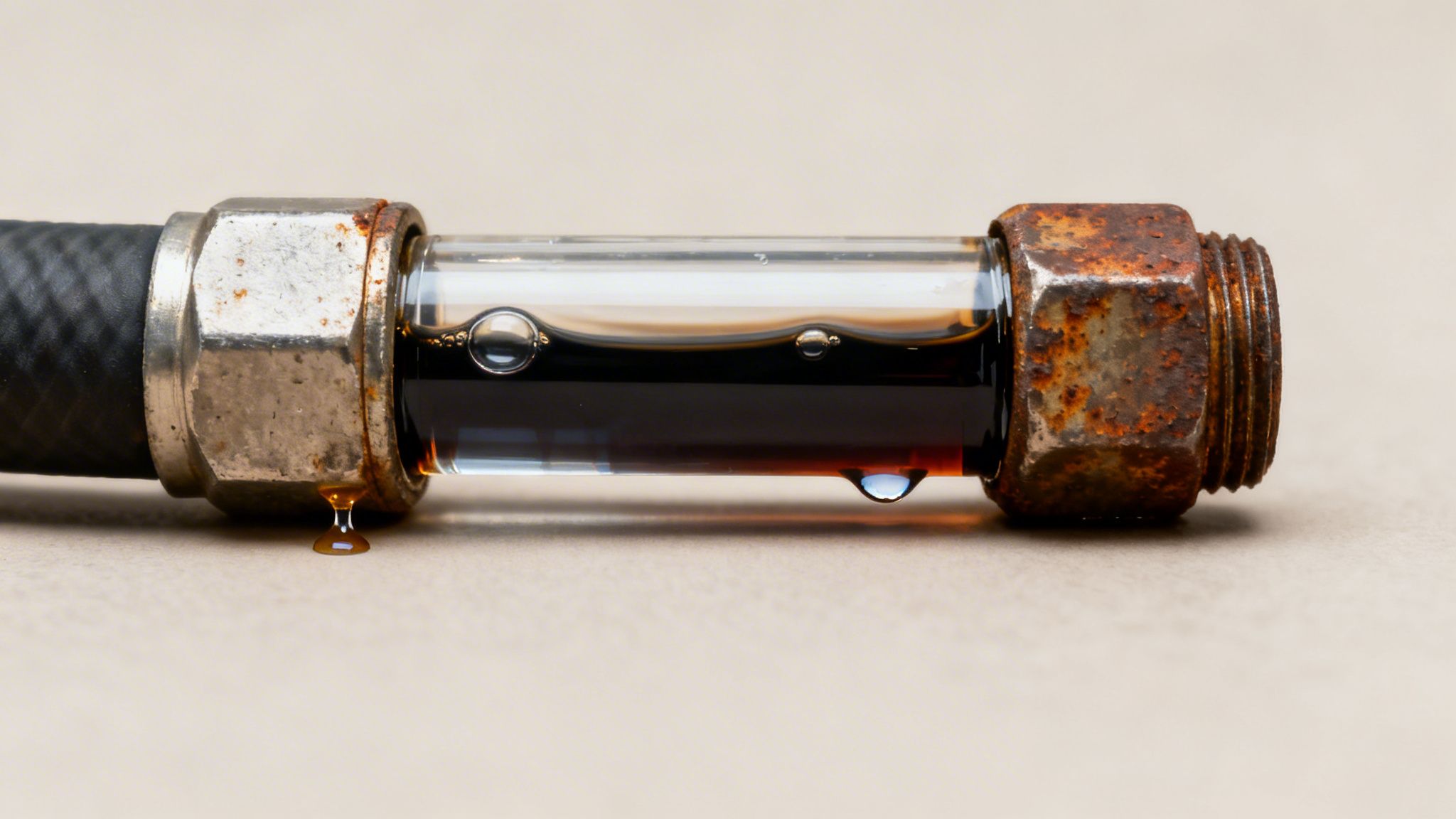
1. Moisture Contamination
This one is the silent killer of brake systems. Brake fluid is naturally hygroscopic, which is just a fancy way of saying it loves to absorb water right out of the air. As moisture builds up, it dramatically lowers the fluid’s boiling point.
It’s like trying to boil a pot of pure oil versus a pot with water mixed in. The water will turn to steam long before the oil gets truly hot. The same thing happens inside your brake lines. The heat from braking turns that absorbed water into steam bubbles.
Here's the scary part: steam can be compressed, but liquid can't. When you stomp on the brakes, you're just squeezing those steam bubbles instead of applying real force to the brake pads. This creates that terrifying "spongy" pedal that sinks to the floor with almost no stopping power—a classic case of brake fade.
2. Physical System Leaks
While moisture sneaking in is bad, brake fluid leaking out is an immediate crisis. Your brakes operate under tremendous hydraulic pressure, and any weak spot can turn into a leak. A leak means a loss of pressure, and without pressure, you have no brakes.
Leaks most often spring from a few key places:
- Cracked or Rusted Brake Lines: The metal lines running under your car are exposed to everything the road throws at them, and eventually, they can rust through.
- Worn Seals: Over time, the rubber seals in your brake calipers and wheel cylinders get old, brittle, and start to crack, letting fluid escape.
- Failing Master Cylinder: The master cylinder is the heart of the system. If its seals fail, fluid can leak out externally or internally where you can't see it.
If you ever spot a puddle of clear to brownish, slightly oily fluid under your car, don't wait. Get it to a professional shop immediately.
3. Degraded and Corrosive Fluid
New brake fluid is more than just hydraulic liquid; it’s packed with additives that prevent corrosion, lubricate seals, and keep things stable at high temperatures. But these crucial additives don't last forever and eventually break down.
Once the fluid gets old and saturated with moisture, it becomes acidic. Instead of protecting your brake system, it starts eating away at it from the inside. This corrosion can destroy expensive parts like your ABS module, master cylinder, and calipers, setting you up for some seriously costly repairs. This is why a brake fluid flush isn't just about removing moisture—it's about replacing worn-out, corrosive fluid with a fresh, protective batch.
4. Air in the Brake Lines
Just like moisture, air is public enemy number one for a hydraulic system. Air is highly compressible, and if it gets into your sealed brake lines, you’ll get the same spongy, ineffective pedal feel you'd get from boiling fluid. The cause, however, is different.
Air usually gets in one of a few ways:
- Improper Service: If a brake job isn't finished with a proper bleeding procedure, air gets trapped in the lines.
- Leaks: As fluid seeps out of a small crack or bad seal, air can get sucked in to take its place.
- Low Fluid Level: If the reservoir runs completely dry, the system will start pulling air directly into the master cylinder.
Air in the lines is one of the most common brake fluid problems we see, and it directly compromises your ability to stop safely.
5. Critically Low Fluid Level
A low brake fluid level in the reservoir is never normal—it's always a sign that something else is wrong. Brake fluid isn’t consumed like gas or oil. If the level is dropping, it means one of two things.
First, your brake pads might be extremely worn. As the pads get thinner, the caliper pistons have to push out further to make contact, which pulls more fluid from the reservoir into the lines, causing the level to drop. Second, and far more concerning, it means you have a leak somewhere in the system.
This problem is made worse by global supply chain issues, which have caused 22% cost hikes and shortages for common glycol-based fluids. Degraded fluid, which absorbs water at a rate of 1.5-3% per year, can cause rubber parts to fail, leading to leaks in 10-15% of vehicles over 100,000 miles that have missed regular service. You can find out more about the global market for auto brake fluid and these trends.
Warning Signs Your Brakes Are in Trouble
Your car has a way of telling you when something’s up, especially with the brakes. Long before a major failure, you'll often feel, see, or even smell the signs. Learning to spot these early warnings is the key to catching brake fluid problems before they become a real danger on the road.
Let's walk through what those signals actually mean and what you should look for during your daily drive.
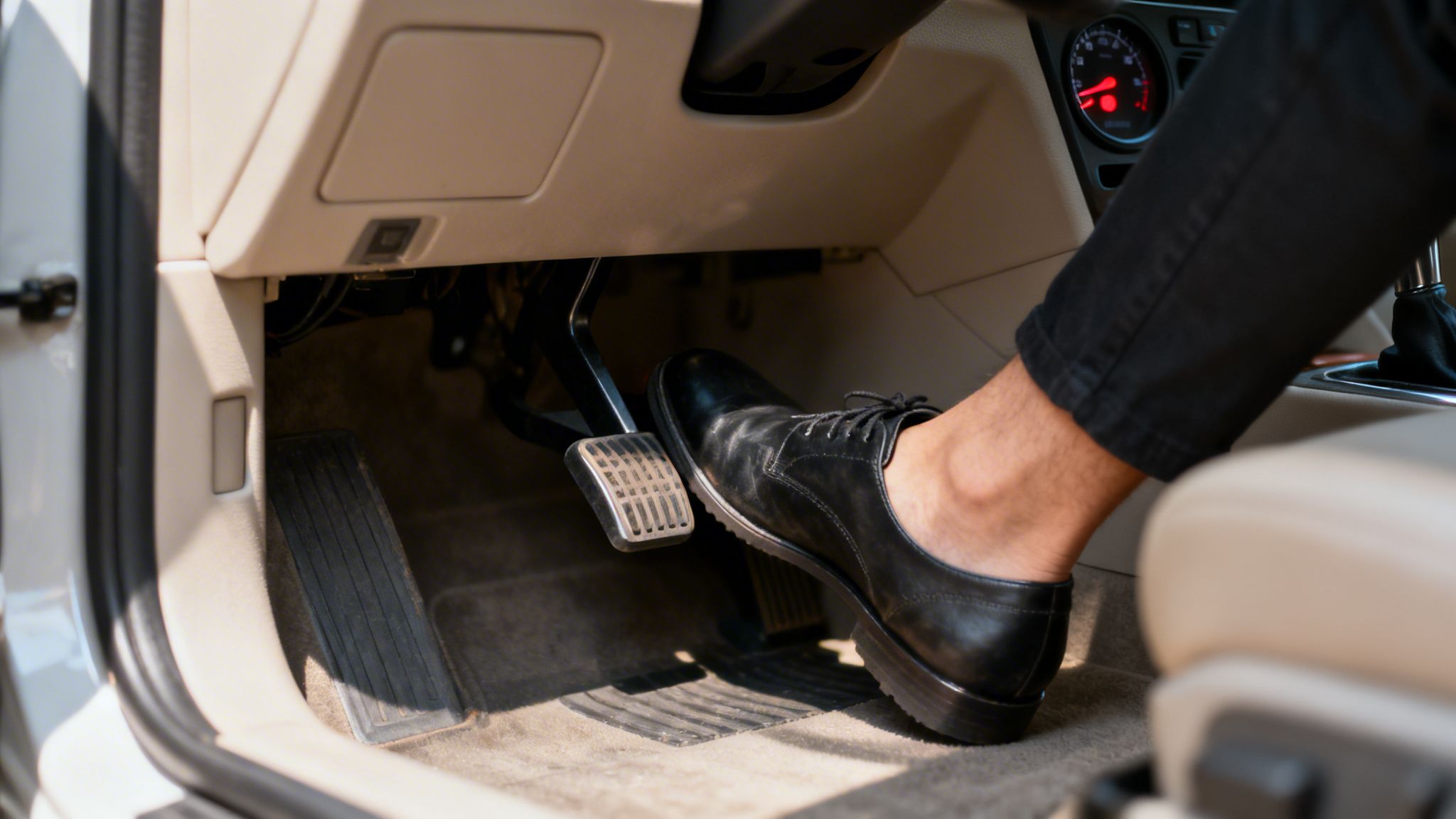
The single most common—and frankly, most unnerving—symptom is a change in your brake pedal. If it suddenly feels soft, spongy, or "mushy" when you push down, that’s a massive red flag. Instead of the firm, immediate response you’re used to, the pedal might sink toward the floor with way less resistance.
This sponginess happens for one simple reason: there's air or moisture in the brake lines. Hydraulic fluid isn’t compressible, but air is. When you step on the brakes, you're wasting energy squeezing those tiny air bubbles instead of applying solid pressure to the calipers.
Feeling the Difference in Performance
Beyond the pedal itself, you’ll likely notice a real-world drop in stopping power. You might find yourself having to brake much earlier for a stop sign or press the pedal a lot harder just to slow down. That’s a clear sign your brakes aren't working at 100%.
This is more than an inconvenience; it's a serious safety issue. The danger of failing brakes is tragically clear in accident statistics. For instance, mechanical failures, with brake problems being a major contributor, were behind 30.6% of all traffic accidents in India in 2023. These failures resulted in around 13,500 accidents and nearly 4,000 fatalities.
Another telltale sign is a sharp, burning smell after you've been braking hard, like when you're coming down a steep hill. That acrid, chemical odor often means your brake fluid is boiling. This is a direct result of moisture contamination, which drastically lowers the fluid's boiling point and renders it ineffective.
Visual and Audible Clues You Shouldn't Ignore
Your car is also equipped with its own warning system to get your attention. When these lights or signs appear, it's time to act fast.
- Dashboard Warning Lights: Modern cars are smart. If you see the brake warning light (usually a red or yellow circle with an exclamation mark) or the ABS light pop up on your dash, your car is screaming for help. Never, ever ignore it.
- Puddles Under Your Car: Take a look at where you park. Brake fluid is usually clear to light amber and feels a bit oily, different from engine oil or coolant. If you see puddles of it under your car, particularly near the wheels or under the hood, you’ve got a leak that needs immediate attention.
While a spongy pedal is a classic sign of a fluid issue, other sounds can point to different brake problems. Grinding or vibrating, for example, often means your rotors are worn out. You can learn more in our guide on how to inspect brake rotors.
By paying attention to these symptoms—from a soft pedal to weird smells and warning lights—you shift from being a passenger to an informed driver. Think of these signs as your car's early-warning system, giving you the chance to fix a small problem before it turns into an emergency.
DIY Checks vs Professional Brake Service
Knowing what you can check at home versus when it’s time to call in the pros is a huge part of smart car ownership. A few basic inspections can give you a heads-up on potential brake fluid problems, but it’s crucial to understand where a quick look ends and real diagnostics begin.
You can, and absolutely should, perform a few simple checks on your own. It only takes a minute, and it’s one of the best ways to catch a developing issue before it gets serious.
What You Can Check at Home
The easiest DIY task is checking the brake fluid reservoir. It’s that small, see-through plastic container under your hood, usually marked with "MIN" and "MAX" lines.
- Check the Fluid Level: The fluid should sit comfortably between the "MIN" and "MAX" lines. If it's hovering near or below "MIN," that’s a major red flag. It almost always points to one of two things: either your brake pads are extremely worn down, or you have a leak somewhere in the system.
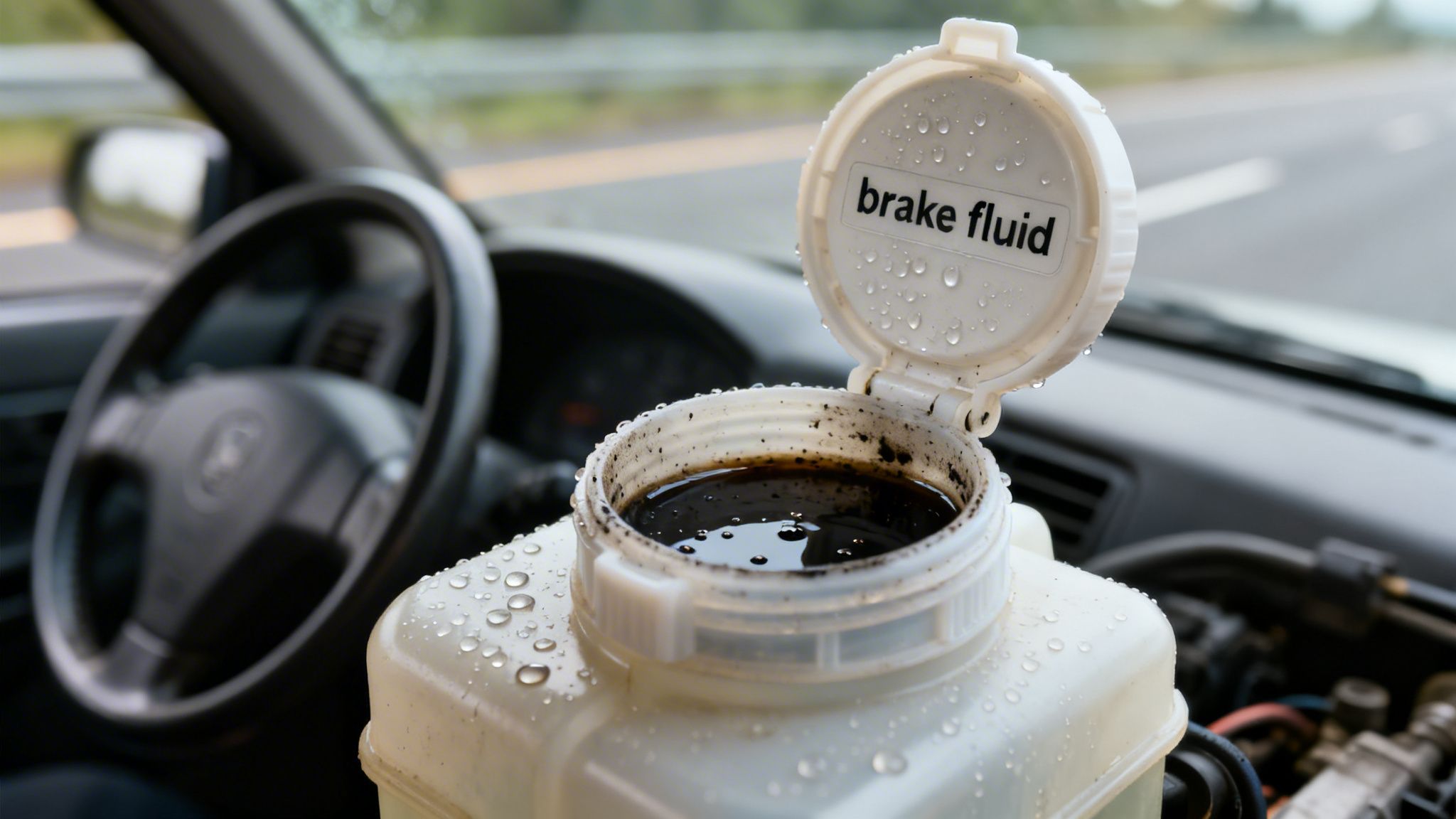
- Evaluate the Fluid Color: Pop open the cap and take a peek at the color. Fresh, healthy brake fluid is a pale, light amber—almost clear. As it ages, soaking up moisture and grime, it darkens, eventually turning a murky brown or even black.
Dark, dirty-looking fluid is a dead giveaway that it’s old and has lost its effectiveness. But here’s the catch: a visual check only tells you part of the story.
A visual inspection is a great starting point, but it's not a definitive test. Fluid can appear clean but still be dangerously saturated with moisture, which is invisible to the naked eye.
This is where the line between a DIY check and professional service becomes crystal clear. While you can spot the obvious stuff, a trained technician has the tools and experience to see what you simply can’t.
Why You Need a Professional Technician
A certified technician goes miles beyond a simple visual check to give you the complete picture of your brake system's health. They use specialized tools to get precise, scientific measurements that are impossible to guess at.
Professional Diagnostic Tools:
- Refractometer: This handy tool measures the exact moisture content in your brake fluid. Most experts agree that once moisture levels hit 3%, the fluid's boiling point has dropped to a dangerous level, and it’s time for a flush.
- Boiling Point Testers: Some shops use a device that heats a tiny sample of your fluid to find its true boiling point. This directly confirms whether it can stand up to the heat of real-world braking.
Beyond just testing the fluid, a professional service uncovers hidden issues a driveway inspection will always miss. For a deeper dive into everything our technicians look at, you can learn more about what a complete brake service includes. They can spot things like internal corrosion in metal brake lines or find micro-leaks in a complex ABS module that won’t even leave a puddle on your garage floor.
Ultimately, while a quick look at your reservoir is a smart habit, it’s no substitute for an expert diagnosis. Only a professional service can give you true peace of mind that your brakes are safe and ready for anything the road throws at you.
Brake Fluid Types and Realistic Repair Costs
Walking into an auto parts store can feel overwhelming when you see the wall of brake fluid options. All those numbers on the bottles—DOT 3, DOT 4, DOT 5, and DOT 5.1—aren’t just random. They tell a critical story about the fluid's chemistry and, most importantly, its boiling point.
Your car’s manufacturer didn’t pick a brake fluid type by chance. The entire braking system was engineered around the specific properties of that fluid. Using the wrong one isn't just a simple mistake; it's a major safety risk.
Decoding the DOT Numbers
Think of the DOT rating as a performance grade. The higher the number, the higher the boiling point, which means the fluid can handle more heat before it starts to fail. Here’s a quick breakdown of what they mean for your car.
DOT 3 & DOT 4: These are the workhorses of the brake fluid world and are found in most cars on the road today. They're both glycol-ether based, which means they are hygroscopic—they naturally absorb moisture from the air over time. DOT 4 simply has a higher boiling point, making it a better fit for vehicles that see heavy-duty use or have more advanced braking systems.
DOT 5: This one is the oddball. It’s silicone-based, doesn’t absorb water (it’s hydrophobic), and should never be used in a system designed for DOT 3 or DOT 4. It can cause rubber seals to swell, leading to a total and catastrophic loss of braking power.
DOT 5.1: Don’t let the name confuse you; this isn't a silicone fluid. It’s a high-performance, glycol-based fluid with an even higher boiling point than DOT 4. You’ll typically find it in race cars or high-performance street vehicles that generate extreme braking heat.
Mixing these fluids is a recipe for disaster. The absolute best practice is to stick with the exact type your owner’s manual recommends to avoid serious brake fluid problems. If you want to dive deeper into this, check out our guide on why you should change your brake fluid.
The High Cost of Neglect Compared to Maintenance
It’s one thing to check your fluid level and color at home, but that only tells you part of the story. The real danger is the stuff you can’t see.
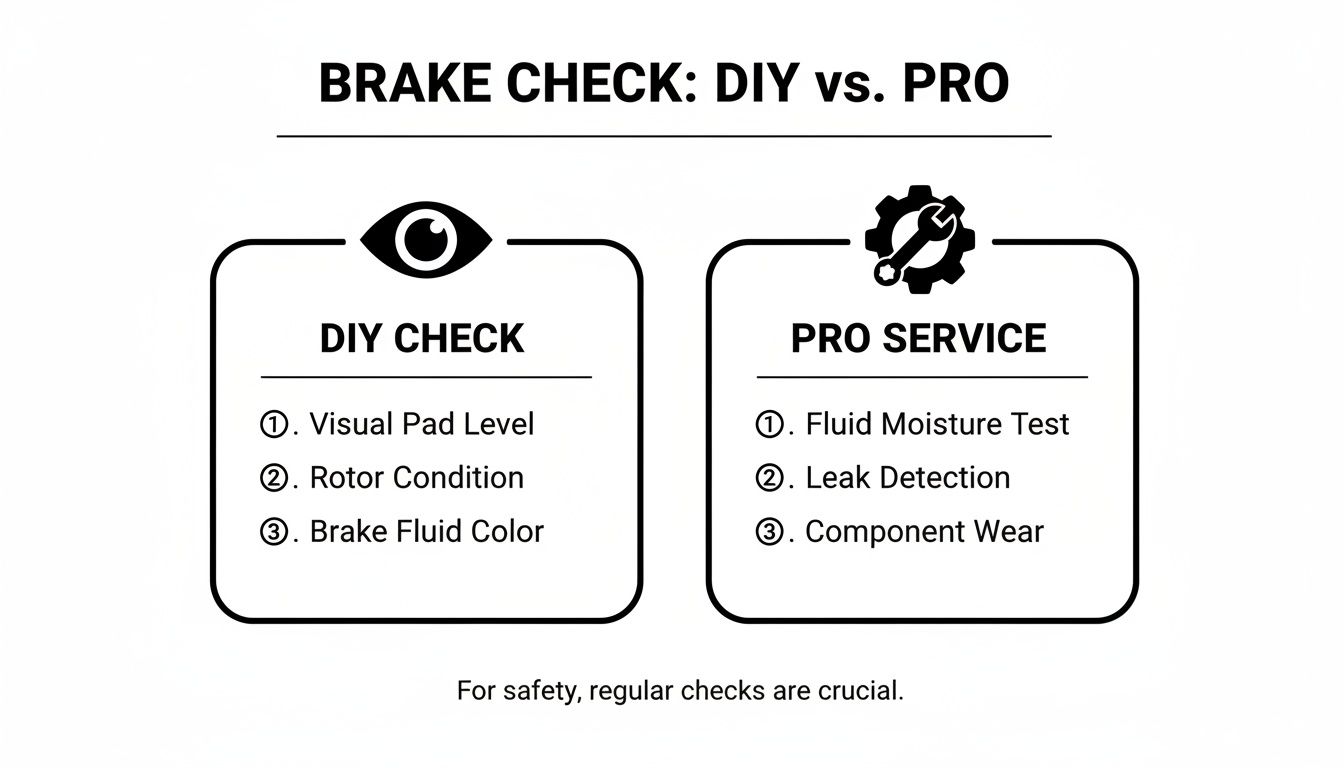
As this shows, what a professional technician can uncover is often invisible to the naked eye. The biggest culprit is moisture contamination, and catching it is what separates a small maintenance bill from a huge repair invoice. When it comes to your brakes, an ounce of prevention is truly worth a pound of cure—and a lot of money.
The numbers don't lie. Putting off a simple service almost always leads to a far more expensive and inconvenient repair down the road. Let's look at the real-world costs.
Brake Fluid Service and Repair Cost Estimates
This table shows the clear financial difference between being proactive with your brake system and waiting for something to break.
| Service / Repair | Typical Cost Range | Description |
|---|---|---|
| Brake Fluid Flush (Maintenance) | $100 – $200 | Proactively removes old, contaminated fluid and moisture, protecting the entire brake system from corrosion and wear. |
| Master Cylinder Replacement (Repair) | $350 – $700+ | This critical component fails when internal seals are destroyed by corrosion from old, moisture-filled fluid. |
| Brake Line Replacement (Repair) | $300 – $1,000+ | Old fluid allows moisture to rust steel brake lines from the inside out until they leak or burst under pressure. |
| Seized Caliper Replacement (Repair) | $250 – $600 per wheel | Moisture in the fluid corrodes the caliper piston, causing it to stick and creating uneven braking and rapid pad wear. |
As you can see, investing a small amount in a brake fluid flush is the smartest financial decision you can make. It protects every one of those other expensive components from premature failure.
These aren't rare issues, either. For drivers here in Fort Worth, old, contaminated fluid can slash your stopping power by 20-30% and put you at risk for a $500+ repair bill for a damaged ABS module. When you're getting work done, it's also helpful to be prepared by understanding why repair estimates can change as a technician gets a closer look.
The conclusion is simple: a small investment in a fluid flush today is the best way to avoid a major, budget-breaking repair bill tomorrow.
Answering Your Top Brake Fluid Questions
Even after you've got a good handle on the basics, a few questions always pop up. It’s completely normal. Let’s walk through some of the most common questions we hear from drivers every day here at the shop, so you can feel totally confident about what’s going on with your brakes.
How Often Should I Really Change My Brake Fluid?
This is probably the number one question we get, and the honest answer is: it depends. Most car manufacturers will tell you to flush your brake fluid every two to three years, and that’s a decent starting point.
But here in Texas, our humid climate throws a wrench in the works. Your brake fluid is hygroscopic, meaning it actively pulls moisture right out of the air. That moisture contamination quietly eats away at your stopping power, often well before you hit that two or three-year mark.
The only way to know for sure is to test it. We can use a special tool to measure the exact moisture content in your fluid. This takes all the guesswork out of it, moving you from a generic schedule to a precise, need-based service for your specific car.
Can I Just Top Off Low Brake Fluid Myself?
Technically, you can add a little fluid to the reservoir if you're in a pinch, but you should never, ever consider that a real fix. Low brake fluid isn’t like running low on washer fluid; it’s a big, bright red flag signaling a much bigger problem.
Think about it—the brake system is a sealed hydraulic system. The fluid has nowhere to go. So if the level is dropping, it’s for one of two reasons:
- Your brake pads are worn down to almost nothing. As the pads get thinner, the brake caliper pistons have to push out further to make contact with the rotors. That extra travel sucks more fluid down from the reservoir into the lines, making the level drop.
- You have a leak somewhere. This is the scarier possibility. A leak in a brake line, a caliper, or the master cylinder means you’re losing hydraulic pressure. Lose enough pressure, and you lose your ability to stop.
Just topping it off is like putting a band-aid on an arterial bleed. It doesn't solve the underlying issue, which will absolutely get worse. You need to get the system inspected by a professional right away.
What Happens If I Use the Wrong Type of Brake Fluid?
Using the wrong brake fluid is one of the most critical—and damaging—mistakes you can make with your car. Those different DOT ratings you see on the bottles (DOT 3, DOT 4, DOT 5) are not just suggestions; they are strict specifications. Mixing them can lead to total brake failure.
The absolute worst mistake is mixing a glycol-based fluid (like DOT 3, DOT 4, or 5.1) with a silicone-based one (DOT 5). They are chemically incompatible and will not mix. Instead, they can curdle into a thick, gelatinous sludge that clogs the tiny, sensitive passages in your brake lines and ABS module.
This gelling can trigger a complete and sudden loss of braking. Even mixing different types of glycol-based fluids can be a problem. For instance, putting DOT 3 fluid into a system engineered for DOT 4 can slowly destroy rubber seals and promote corrosion from the inside out. Always, always check your owner’s manual and use the exact fluid your car was designed for. It’s the only way to avoid catastrophic brake fluid problems.
Your Trusted Partner for Brake Service in Fort Worth
Now that you know what to look for with brake fluid issues, the next step is finding a team you can trust to handle the job right. Your brakes aren't just another part of your car—they're your most important safety system, and settling for anything less than expert service isn't an option.
At Kwik Kar on White Settlement Road, we take that responsibility seriously. Our ASE and RepairPal certified technicians have the experience and the right diagnostic tools to get to the bottom of any brake problem, big or small. We’ve built our reputation on trust, one car and one customer at a time.
Beyond the Basics: Proactive Care
We don't just fix what’s already broken; we help you stay ahead of future problems. Our technicians are trained to spot the subtle signs of wear that often go unnoticed, catching small issues before they turn into major, expensive repairs. This proactive approach is all about keeping you safe and saving you money in the long run.
Whether you're in for a routine brake fluid flush or a more complex ABS module repair, we promise transparency from start to finish. We’ll give you a clear, straightforward price and only use premium parts that meet or exceed what your car's manufacturer recommends. You’ll know exactly what we’re doing and why.
Your family’s safety is non-negotiable. We believe expert auto care should be accessible and built on a foundation of honesty and skill. That’s our standard, plain and simple.
Service Designed for Your Life
We get it—life is busy. Finding time for car maintenance can be a hassle, which is why we offer convenient weekend hours. You shouldn't have to rearrange your entire week just to keep your vehicle safe.
From the moment you walk in, you’ll feel the difference. We treat every car like it’s our own and every customer like a neighbor. Don’t let worries about brake fluid problems follow you on the road. Let our experts give you the confidence that your brakes are ready for anything Fort Worth traffic throws your way.
Don't wait for a warning light to tell you something’s wrong. Schedule your brake inspection with Kwik Kar Oil Change and Auto Care today and drive with the peace of mind you and your family deserve.