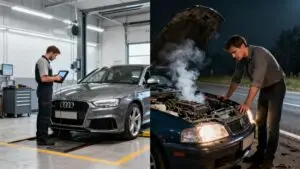



Your car usually gives you a little warning before something expensive happens. Maybe it feels sluggish pulling away from a light on a hot Fort Worth afternoon. Maybe the steering feels heavier than normal in a parking lot. Maybe the brake pedal feels softer in traffic than it used to.
A lot of drivers assume those changes mean a major part is failing. Sometimes the problem is simpler. The fluid inside that system has broken down, picked up contamination, or lost the properties that let it cool, lubricate, and transfer pressure the way it should.
That’s why flushing car fluids matters. Not because it sounds technical, but because every major system in your vehicle depends on clean fluid to survive Texas heat, stop-and-go traffic, and the wear that builds up on high-mileage vehicles.
Understanding Your Vehicle’s Lifeblood
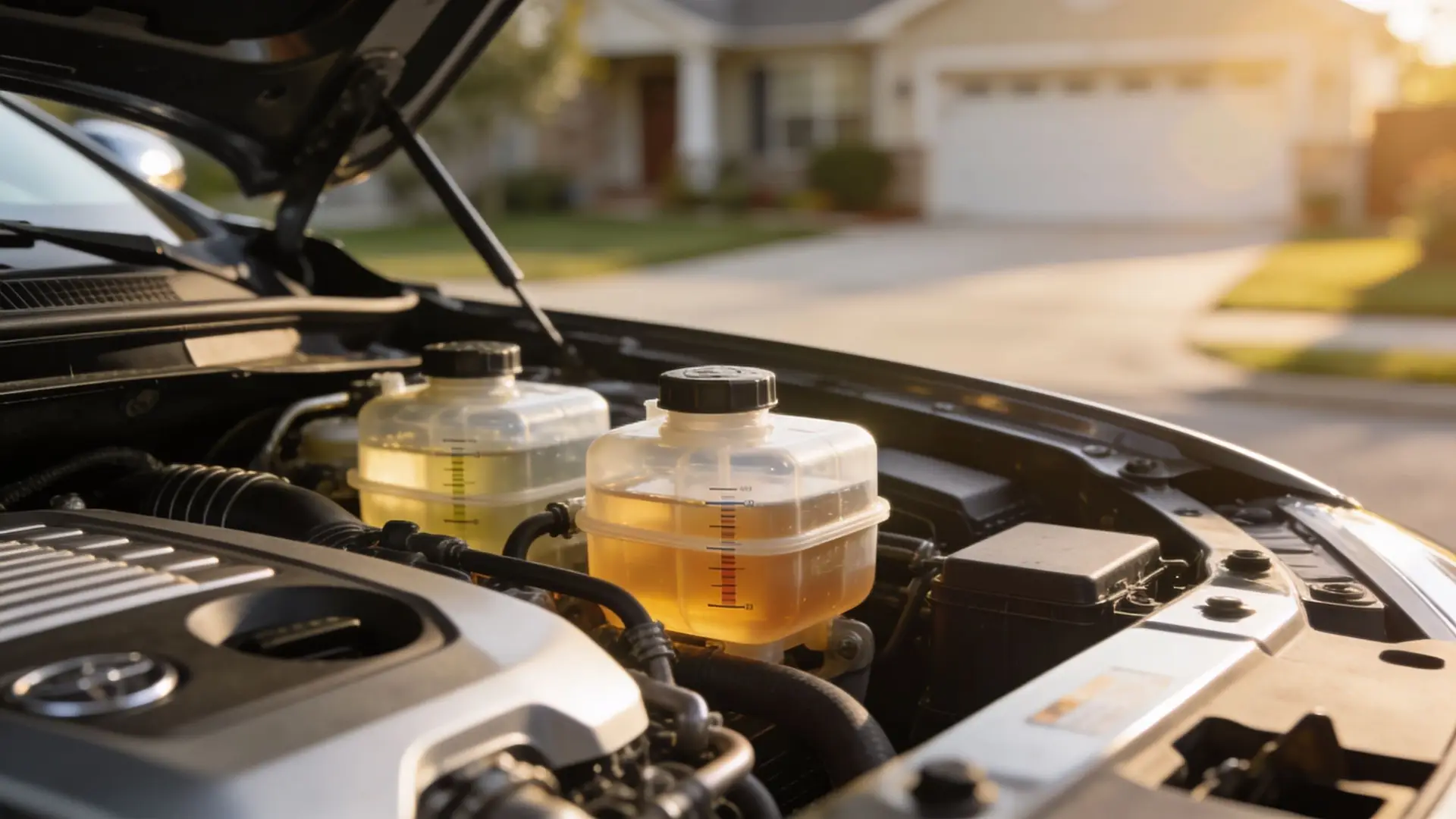
When a vehicle comes into the shop with shifting complaints, brake feel issues, or overheating concerns, fluids are one of the first things to evaluate. They’re the working medium inside the machine. Engine coolant carries heat away. Transmission fluid lubricates and controls hydraulic operation. Brake fluid transfers pedal force. Power steering fluid helps steering components move smoothly. Differential fluid protects gears under load.
When those fluids are fresh, the vehicle feels normal. When they age, the symptoms often show up as drivability problems long before a hard failure.
Why fluid service changed over the years
A lot of older advice about fluid service came from a different era. Vehicles built decades ago needed more frequent service because fluid chemistry wasn’t as advanced. Early lubricants broke down faster under heat and friction, so owners had to change them more often just to avoid damage.
Modern fluids last longer, but they also work inside tighter-tolerance systems that are less forgiving when the wrong product is used or contamination is ignored. That’s the trade-off. Service intervals improved, but the service itself became more technical.
One good example is coolant. Coolant flush intervals evolved from annual changes in pre-1990 vehicles to 3–5 years or 50,000 miles today, thanks to long-life OAT coolants introduced in the late 1990s, which cut corrosion rates by 60%, as explained in this overview of modern coolant interval changes.
What Fort Worth driving does to fluids
Fort Worth isn’t easy on vehicles. Long idle time in traffic builds heat. Summer temperatures push cooling systems harder. Short trips and repeated stop-and-go driving keep fluids cycling through hot and cold ranges without long steady operation.
That kind of use matters because fluid doesn’t just wear out from mileage. It also degrades from heat, moisture, oxidation, and contamination.
Practical rule: If your driving includes heavy traffic, frequent short trips, towing, or long summer idling, your vehicle often falls into a severe-use category even if you don’t think of it that way.
Drivers also tend to focus on engine oil and forget the rest. But if you’re maintaining an AWD or truck platform, gear oil matters too. Differential service is one of those items owners overlook until noise or binding shows up, which is why it helps to understand front and rear differential fluid service before problems start.
Flushes are about preserving function, not just replacing liquid
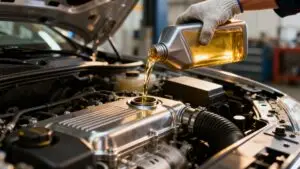
A fluid flush isn’t just swapping old liquid for new. The point is to restore the system’s ability to do its job. Clean fluid resists heat better, protects seals and moving parts better, and carries contamination out of the system instead of letting it circulate.
That matters most on vehicles you plan to keep. If you want reliable starts, consistent braking, smoother shifting, and fewer expensive surprises, fluid maintenance is one of the least glamorous jobs on the car and one of the most important.
Fluid Flush Schedules and Warning Signs
Some fluid services are triggered by symptoms. Others should happen on schedule before symptoms show up. Waiting for a warning sign can work with a minor issue, but it’s a bad strategy for systems like brakes or transmissions because by the time the car feels wrong, damage may already be underway.
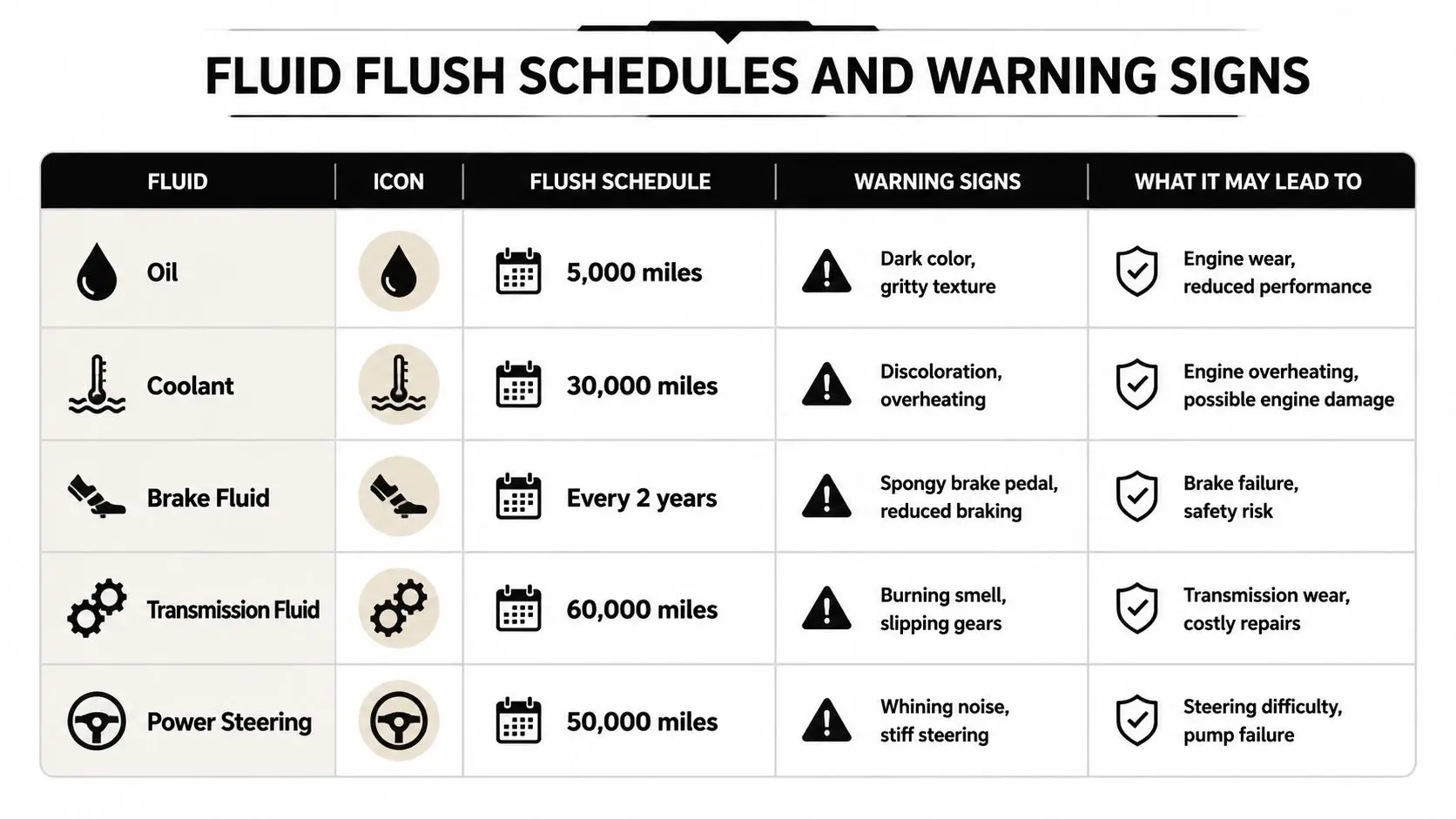
The chart below gives a quick visual reference.
Vehicle Fluid Flush Reference Guide
| Fluid Type | Primary Function | Signs It Needs a Flush | Recommended Interval |
|---|---|---|---|
| Oil | Lubricates engine internals and helps manage heat | Dark, dirty appearance; noisy operation; overdue maintenance | Around 5k miles shown in the chart |
| Coolant | Removes engine heat and protects against corrosion | Running hot, dirty reservoir, visible contamination | 3–5 years or 50,000 miles for modern long-life coolant systems |
| Brake Fluid | Transfers hydraulic pressure for braking | Soft pedal, contaminated fluid, moisture concern | 2–3 years or 30,000 miles |
| Transmission Fluid | Lubricates, cools, and supports hydraulic shifting | Delayed shifting, rough shifting, dark or burnt fluid | Commonly 30,000–50,000 miles for proactive care |
| Power Steering | Assists steering effort and protects system components | Stiff steering, noise, dirty fluid | Around 50,000 miles |
The fluids that deserve the closest attention
Transmission fluid gets overlooked because many drivers don’t see obvious leaks or don’t have a dipstick to inspect. But this is one of the most expensive systems to neglect. Proactive maintenance protocols recommend transmission fluid flush intervals of 30,000-50,000 miles for owners prioritizing transmission longevity, while severe conditions like towing may require service as early as 15,000 miles according to this review of transmission flush intervals under normal and severe use.
Brake fluid is different. It doesn’t usually get attention until the pedal feel changes, but it absorbs moisture over time. That moisture reduces braking performance and can corrode internal components. A car can still stop and still have brake fluid that needs service.
Coolant often fools people because the engine may not overheat every day. But coolant can lose corrosion protection before you get a dramatic temperature spike. In Fort Worth heat, that’s not something to gamble on.
If the fluid looks dirty, smells burnt, or the system has started acting differently, don’t treat that as a minor annoyance. Treat it as a maintenance decision point.
Schedule-based service beats symptom-based repair
The cheapest time to flush a fluid is usually before the car asks for it. Drivers save money when they service systems while they’re still functioning normally, not after contamination has caused wear.
Here’s a practical perspective:
- Use mileage as a baseline: If your owner’s manual gives an interval, start there.
- Adjust for real driving conditions: Heavy traffic, towing, repeated short trips, and high heat usually justify earlier service.
- Watch behavior changes closely: Rough shifts, steering noise, temperature movement, or a soft pedal should push inspection to the top of the list.
- Don’t treat all fluids the same: Coolant, brake fluid, gear oil, and transmission fluid age for different reasons and on different schedules.
What high-mileage owners should notice
Older vehicles often show more subtle warning signs. They may not throw a light. They may just feel less smooth than they did six months ago.
Look for patterns like these:
- During acceleration: A hesitation, flare, or harsh shift can point toward transmission fluid condition.
- At low speed: Groaning while turning the wheel may suggest power steering fluid condition or related wear.
- In traffic: A rising temp gauge or cooling fan running constantly can signal coolant issues.
- Under braking: A spongy pedal or inconsistent brake response can indicate moisture-contaminated brake fluid.
That’s where a good inspection matters. The goal isn’t to flush every fluid all the time. The goal is to match service to the vehicle’s condition, mileage, and actual use.
The Financial Case for Regular Fluid Flushes
A fluid flush can feel optional when the car is still moving and no warning light is on. From a shop perspective, that’s where a lot of expensive repair stories begin. The service people postpone is often the repair they end up paying for later.
Transmission service is the clearest example. AAA data cited here shows routine fluid flushes can extend transmission life by 40–60%, helping drivers avoid repairs that average $2,500–$5,000. The same source says a fuel system flush can improve fuel efficiency by 5–10%, saving a typical commuter $200–$400 annually. You can review those figures in this breakdown of fluid flush cost savings and vehicle longevity.
Cheap maintenance protects expensive parts
Most fluid services are small compared with the cost of replacing the component that depends on that fluid. A transmission rebuild, a cooling-system repair after chronic neglect, or hydraulic brake repairs all cost more than routine maintenance.
That’s why budget-conscious drivers should think in terms of cost per mile, not just invoice total. A flush isn’t exciting, but neither is paying for major repairs that clean fluid could have helped prevent.
If you want a practical example, this look at the benefits of changing transmission fluid explains why fluid condition has such a direct effect on shift quality and long-term wear.
Where Fort Worth drivers feel the difference
Local driving conditions make the money side even more obvious. Heat stresses cooling systems. Traffic creates repeated thermal cycles in transmissions. Delivery vehicles, work trucks, and family SUVs all spend time idling, creeping, and loading components hard at low speed.
That use pattern doesn’t always show up as dramatic failure right away. It shows up as accelerated wear. The vehicle still runs, but parts are working with contaminated or degraded fluid for thousands of miles.
Clean fluid is cheaper than friction, heat, and corrosion. Those three always send a bill eventually.
Skipping service usually doesn’t save money
Drivers sometimes delay flushes because they’re trying to keep costs down for the month. That’s understandable. But pushing maintenance too far usually removes your choices. Instead of scheduling service on your time, you’re dealing with a breakdown, a tow, lost work time, or a larger repair bill.
If the goal is keeping a vehicle reliable without overspending, regular fluid service is one of the most practical moves you can make. It protects the systems that are hardest to replace and easiest to ignore.
DIY Dangers The Risk of a ‘Wallet Flush’
There’s a big difference between topping off a fluid and flushing a system. Checking a reservoir level is basic maintenance. A full flush on a modern vehicle is a procedure with real consequences if it’s done wrong.
That matters most on high-mileage cars and trucks. Those are the vehicles most likely to attract DIY attention because the owner is trying to save money, and they’re also the vehicles most likely to punish a shortcut.
Where DIY can go sideways
The internet makes fluid service look simple. Drain this. Refill that. Start the engine. Done. The problem is that videos often skip the parts that matter most: fluid specification, system condition, service history, and whether a flush is even appropriate for that vehicle.
On a newer transmission, the wrong fluid can create immediate shift problems. On an older one, the wrong process can do even more damage.
Aggressive flushing in high-mileage transmissions with heavy varnish buildup can dislodge debris, clogging valves and causing instant failure. The same source warns that modern transmissions use diverse, specific fluids, and improper DIY mixes lead to significantly higher failure rates. That risk is outlined in this discussion of why DIY fluid flushes can backfire on high-mileage vehicles.
A wallet flush is when a cheap DIY fluid job turns into a much more expensive repair.
The biggest DIY mistakes
Some mistakes are mechanical. Others are judgment errors.
- Using a “close enough” fluid: Many systems need exact specifications, not universal substitutes.
- Flushing a neglected transmission too aggressively: If the unit already has varnish and debris, the wrong method can move contamination into passages and valves.
- Ignoring temperature and fill procedure: Some transmissions require fluid level checks at specific temperatures and conditions.
- Treating every service the same: A drain-and-fill, a fluid exchange, and a cleaning flush are not interchangeable procedures.
When DIY still makes sense
Not every fluid task belongs in a shop. There’s nothing wrong with basic owner maintenance if you know your limits.
A careful driver can often handle simple items like:
- Reservoir inspection: Checking coolant level in the overflow tank when the engine is cool.
- Visual checks: Looking for leaks, discoloration, or obvious contamination.
- Scheduled top-offs: Adding the correct approved fluid only when the system and procedure are clearly understood.
What usually shouldn’t be improvised is a full fluid exchange on a high-mileage transmission, a brake hydraulic service that introduces air, or a cooling-system procedure that leaves the system improperly bled.
Why high-mileage vehicles need a judgment call
A technician doesn’t just ask, “Can this system be flushed?” The better question is, “What service is safest for this vehicle right now?”
That depends on history. If the fluid has been maintained, a flush may be straightforward. If the vehicle has gone a long time without service and is already showing symptoms, the decision gets more nuanced. Sometimes a more conservative approach is smarter. Sometimes inspection comes before any flush at all.
That judgment is what most DIY guides leave out. They show the procedure. They don’t show the risk assessment.
What to Expect During a Professional Flush at Kwik Kar
A proper fluid service should never feel mysterious. You should know what fluid is being serviced, why it’s being recommended, and whether the shop is performing a simple drain-and-fill or a true flush.
At our Fort Worth location, that conversation starts before any machine gets connected. The vehicle’s mileage, symptoms, service history, and driving use all matter. A truck that tows, a commuter car stuck in daily traffic, and a high-mileage SUV with unknown maintenance history don’t all get the same recommendation.
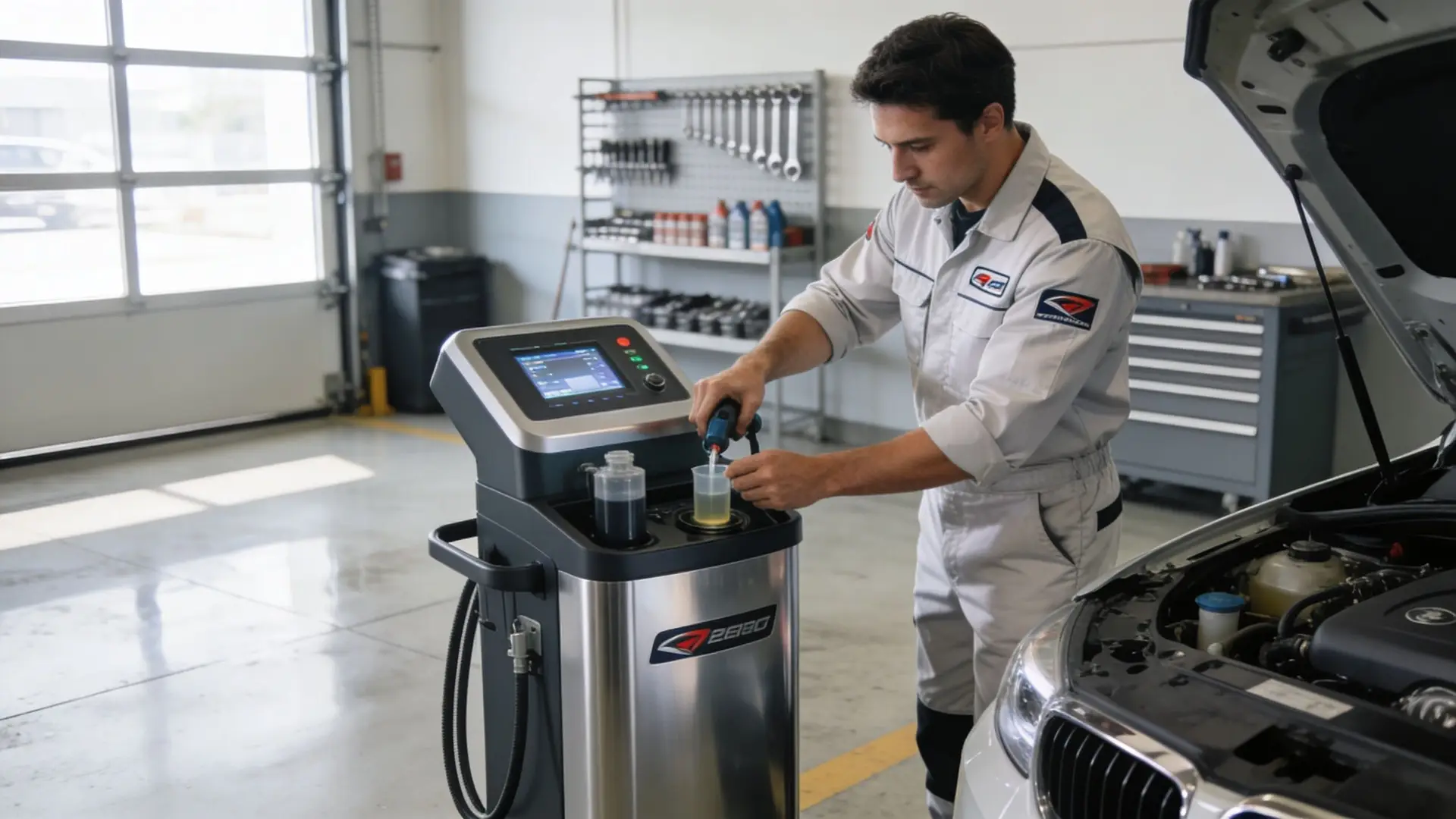
Drain-and-fill versus a real flush
A common source of confusion lies in the drain-and-fill process itself. A drain-and-fill removes only the fluid that can leave the system through a drain point or pan drop. That may be the right service in some situations, but it doesn’t exchange all the old fluid throughout the system.
A professional, multi-stage flush is more involved. According to this explanation of multi-stage fluid flushing methods, the process involves circulating specialized cleaning solution through the system, followed by multiple drain-and-refill cycles. Verification can be performed between stages to confirm contamination removal that a simple drain-and-fill leaves behind.
The value of a professional flush isn’t just new fluid. It’s controlled process, correct application, and confirmation that the contaminated fluid has actually been removed.
What the shop process usually looks like
A quality service visit is straightforward when it’s done correctly:
-
Initial evaluation
The technician checks condition, symptoms, service history, and whether the fluid service makes sense for the vehicle’s age and use. -
Correct fluid selection
The exact specification matters. This is especially important for transmissions, cooling systems, and power steering systems that are sensitive to chemistry and viscosity. -
Machine-assisted exchange or flush
Specialized equipment allows controlled circulation and replacement of fluid through the system, rather than relying on a partial drain alone. -
Post-service verification
The vehicle is checked for leaks, operation, and system behavior after the exchange.
If coolant service is part of the job, this overview of a radiator flush service process shows what that kind of maintenance typically involves.
Here’s a visual example of the kind of service equipment and process drivers often ask about:
Why professional flushing is safer for older vehicles
The biggest advantage of shop service isn’t just the machine. It’s the decision-making behind the machine. A trained technician can tell when a fluid exchange is appropriate, when a staged approach is safer, and when a simple service may be better than an aggressive flush.
That matters on vehicles with age, heat exposure, towing use, or incomplete service records. It also matters when one problem is masking another. Dirty fluid may be part of the complaint, but leaks, worn seals, failing coolers, or internal wear can all influence the right next step.
Kwik Kar Oil Change and Auto Care performs fluid exchange services that flush old fluids, refill with clean fluid, and inspect for related issues. That’s the difference between a quick product sale and an actual maintenance service.
A Proactive Approach to Your Vehicle’s Health
Most major fluid problems do not start with a dramatic breakdown. They begin in subtle ways. Fluid ages. Heat builds. Moisture gets in. Contamination circulates. Then the vehicle stops feeling quite right.
That’s why the smart move is to stay ahead of the problem. Know the basic schedule for your major fluids. Pay attention to changes in shifting, steering, braking, and temperature behavior. And be careful with high-mileage DIY flushes, especially on systems that need exact fluids and controlled procedures.
The practical takeaway
If you want your vehicle to last, focus on the systems owners ignore most often:
- Transmission fluid: Important for shift quality and long-term internal wear.
- Brake fluid: Critical for consistent pedal feel and hydraulic reliability.
- Coolant: Essential for heat control in Fort Worth traffic and summer temperatures.
- Power steering and differential fluids: Easy to forget, expensive to neglect.
Vehicles last longer when maintenance is timed before the symptom becomes a repair.
What good maintenance looks like
Good fluid service isn’t about flushing everything on a fixed script. It’s about matching service to condition, mileage, and use. A well-maintained commuter may need straightforward scheduled service. An older truck with unknown history may need a more cautious plan.
That kind of approach saves money because it avoids both extremes. You’re not ignoring maintenance, and you’re not doing unnecessary work. You’re making decisions based on what protects the vehicle best.
If your car, truck, or SUV has started feeling different, don’t wait for that small change to turn into a large repair. Get the fluids checked, ask what service fits the vehicle, and make the next maintenance decision before the problem gets expensive.
If your vehicle is due for fluid service or you want a second opinion on what it really needs, Kwik Kar Oil Change and Auto Care can inspect the major systems, explain the right service for your mileage and driving conditions, and help you avoid paying for repairs that clean, properly matched fluids could have prevented.