




Valvoline oil changes usually start around $45 for conventional, run about $68 for synthetic blend, and reach about $100 for full synthetic based on national pricing data. The problem isn’t the starting price. It’s that the final bill can move around a lot depending on your vehicle, your location, and what gets added once you’re in the bay.
If you’re in Fort Worth, you probably know the drill. The oil change light comes on, your week is packed, and that big Valvoline sign looks like the fastest fix on the road. You pull in expecting one number and leave wondering why the total feels higher than the ad suggested.
That’s why drivers keep searching for the final oil change cost at Valvoline. They don’t just want the menu price. They want to know what they’ll ultimately pay, what affects the total, and whether a quick-lube chain is really the best value for their car.
Demystifying the Real Oil Change Cost at Valvoline
A lot of drivers make the same reasonable assumption. If an oil change is advertised as quick and straightforward, the price should be straightforward too.
At Valvoline, it usually isn’t that simple.
The base service can look clear enough from a distance. Then the questions start. Does your car need conventional, synthetic blend, or full synthetic? Does it take more than the standard amount of oil? Is the filter standard or a specialty part? Are you being offered an air filter, cabin filter, or another add-on while you’re already there?
That gap between the advertised price and the final receipt is what catches people off guard.
Why drivers get surprised
The surprise usually isn’t about bad service. It’s about variable pricing. Valvoline’s model is built around speed and convenience, but the total cost changes with the oil type, the vehicle’s requirements, and local market conditions. That means two drivers can pull into different stores and walk out with different totals for what sounds like the same job.
A Fort Worth commuter in a basic sedan may have one experience. A family with a larger SUV may have another. A work truck owner may get a very different recommendation because the engine takes more oil or because the vehicle sees tougher use.
Practical rule: Never judge an oil change by the headline price alone. Judge it by the out-the-door total for your exact vehicle.
What matters more than the sign out front
When I talk with drivers about oil service, I tell them to focus on three things:
- Your owner’s manual requirement. That’s the starting point, not the upsell pitch.
- Your engine’s oil capacity. Bigger engines often mean a higher bill.
- The full service ticket. Ask what’s included before anyone starts.
That’s how you avoid paying premium money for convenience without realizing it.
Understanding Valvoline’s Good Better Best Pricing Model
You pull in expecting a basic oil change, then the menu starts climbing. Good. Better. Best. That setup is built to steer you upward unless you already know what your engine needs.
Valvoline uses a three-tier pricing model that sounds simple on the sign and gets expensive fast at the counter. The lowest tier is conventional oil, the middle tier is synthetic blend, and the top tier is full synthetic. The problem for Fort Worth drivers is not the existence of tiers. It is the gap between a posted starting price and the service your vehicle is likely to need.
The three tiers in plain English
| Service Tier | Typical Position | Best For |
|---|---|---|
| Conventional | Lowest-priced option | Older vehicles that still allow conventional oil |
| Synthetic Blend | Mid-tier option | Drivers whose manuals allow a blend and want more protection than conventional |
| Full Synthetic | Highest-priced option | Modern engines that require synthetic oil |
Good means conventional
Conventional oil is the budget option. If your owner’s manual allows it, and you drive an older vehicle with straightforward maintenance needs, it can be perfectly fine.
But plenty of drivers should skip it. Many newer cars are designed around synthetic oil from the start. If that is your vehicle, choosing the cheap tier to save a few bucks is a bad call.
Better means synthetic blend
Synthetic blend sits in the middle because it gives shops an easy upgrade path. Sometimes that recommendation is fair. Sometimes it is just the most profitable middle step on the board.
If your manual allows either conventional or blend, ask one direct question. What real benefit am I getting for the extra money on my specific vehicle? If the answer is vague, stick to the manufacturer standard. If you want a clearer explanation of when synthetic oil is actually worth paying for, start there before you agree to an upgrade.
Best means full synthetic
Full synthetic is the premium tier, and for many vehicles it is the correct one. Turbo engines, many late-model cars, and a lot of trucks call for it. In those cases, there is nothing to debate. Use the oil the engine was designed for.
Here is the part drivers need to catch. “Best” on a service menu does not always mean “required” for your car. It often means highest-margin. If your manual says full synthetic, buy full synthetic. If it does not, make the advisor explain the recommendation in plain English.
Follow the owner’s manual first. Treat the service board as a sales tool, not a maintenance guide.
What this pricing model really means for your wallet
Valvoline’s tiered setup makes comparison shopping harder because the advertised deal usually highlights the lowest service level, while many Fort Worth drivers leave with the middle or top tier. That is why one posted price can turn into a much bigger final bill without anything shady happening on paper.
A transparent local shop holds an edge. A trusted expert like Kwik Kar can tell you upfront what your vehicle calls for, what is included, and whether an upgrade is justified. That makes it easier to compare real value instead of chasing a headline price that only applies to the bottom rung of the menu.
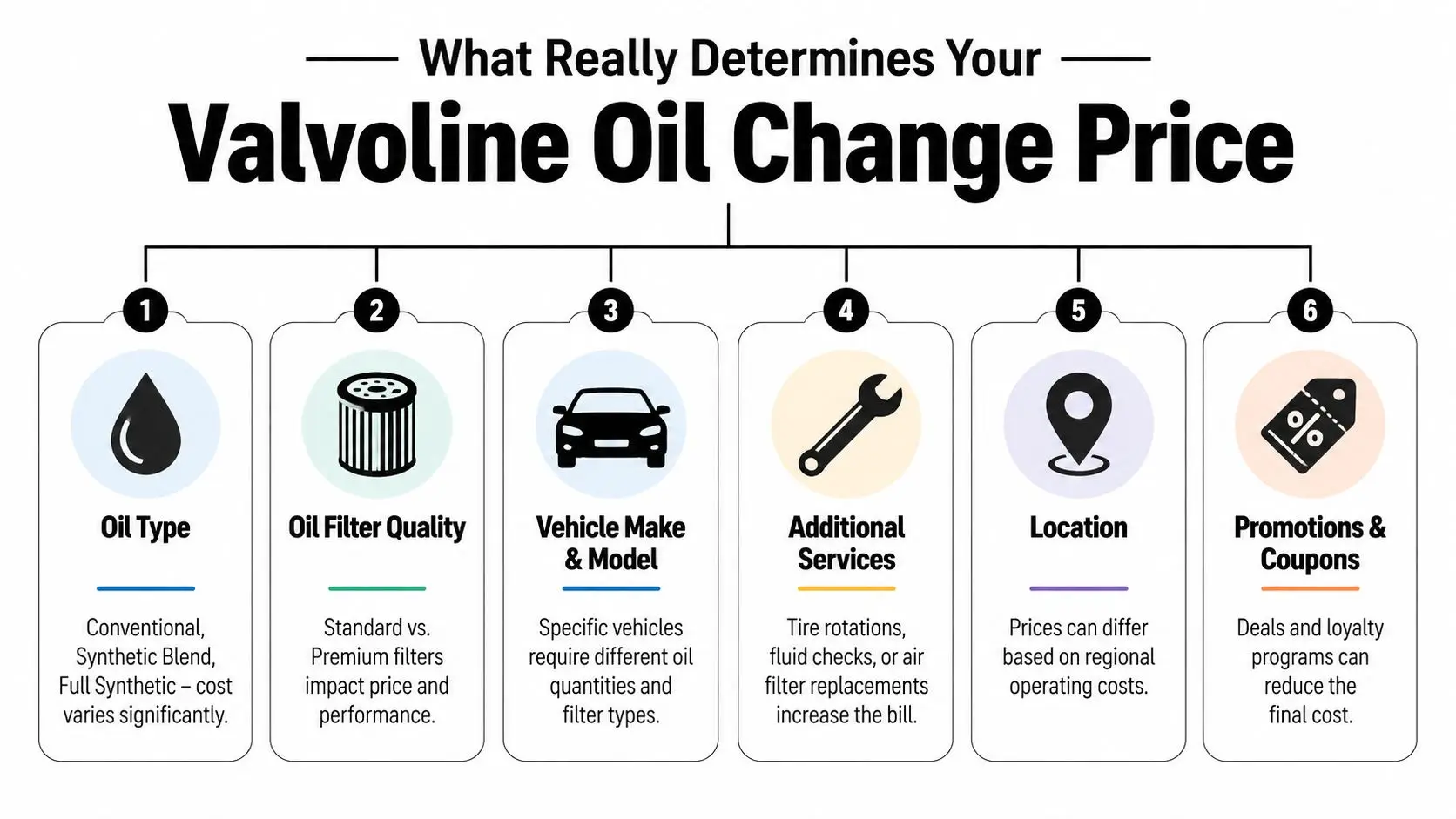
What Really Determines Your Valvoline Oil Change Price
You pull in expecting the coupon price. Ten minutes later, the total is climbing because your engine takes more oil, your car needs a specific filter, and someone is recommending two extra services. That gap between the ad and the receipt is what Fort Worth drivers need to watch.
Extra oil changes the math fast
Many advertised oil change prices assume a basic oil capacity. If your vehicle takes more than the standard fill, the bill goes up. That is common with trucks, SUVs, performance cars, and some luxury models.
Ask one question before you compare any coupon or menu price: how many quarts does my engine take? If you skip that step, you are not comparing real numbers.
Your ZIP code affects the price
Valvoline pricing is not fixed across every store. Local labor rates, store-level promotions, and regional demand all influence what you pay.
That matters in Fort Worth because a national advertised range does not tell you what your neighborhood location will charge today. Call the store. Give them your year, make, model, and engine. Then ask for the out-the-door price before you drive over.
Add-ons create the biggest surprise
Oil is only part of the ticket. The final bill often grows because the visit turns into a broader maintenance sale.
Common add-ons include:
- Engine air filters
- Cabin air filters
- Wiper blades
- Fluid top-offs or fluid exchanges
- Premium or vehicle-specific oil filters
Some of those items are worth doing. Some can wait. The smart move is simple. Approve work based on your maintenance schedule and the condition of the part, not because it is convenient to do it while you are already in the bay.
If you are unsure whether a synthetic upgrade is justified, read this guide on when full synthetic oil service makes sense for your vehicle before you agree to the higher tier.
Ask this before saying yes to any extra service: “Is this due by mileage, failed by inspection, or just recommended?”
Your vehicle design drives the final total
Two cars can pull into the same lane and get very different quotes. That is normal. Engine size, required oil spec, filter type, skid plates, and manufacturer requirements all affect service cost.
This is why posted pricing can feel slippery. The ad is built around a standard case. Your car may not be a standard case.
Fort Worth drivers should treat the advertised Valvoline price as a starting point, not a promise. A transparent local shop like Kwik Kar has an advantage here. You can get a straight answer on what your vehicle needs, what is included, and what can wait, so you compare real value instead of chasing a low headline number that disappears at checkout.
Comparing Valvoline Prices for Different Cars
General pricing gets real once you put a vehicle in the bay. That’s where the same service menu can feel cheap to one driver and expensive to another.
 car maintenance and inspection visits.” />
A college student with a Corolla
Let’s say you’re driving a basic compact sedan and trying to keep costs under control. This is the kind of customer who usually expects the advertised price to be close to the final bill.
If the car still qualifies for a lower-tier service and doesn’t need extra oil, the visit may stay fairly close to the entry-level number. The catch is that the recommendation may shift upward if the shop suggests synthetic blend or points out deferred maintenance items while you’re there.
For this kind of driver, the smart move is simple. Show up knowing what oil spec the car requires and decline anything that isn’t urgent.
A family with a Tahoe
Now take a larger SUV. With such a vehicle, the gap between menu pricing and the final total gets wider.
A vehicle like this is more likely to need a higher-end oil option and a larger fill. Once a bigger engine enters the equation, the standard offer stops being a reliable estimate. Add-ons also become more tempting because family vehicles often rack up hard miles, short trips, and stop-and-go use.
The family that came in expecting a quick standard oil service may leave realizing that “starting at” pricing didn’t really apply to them in the first place.
A small business owner with an F-150
Work trucks are where convenience pricing gets tested hard. If a truck sees long days, heavy use, or a lot of miles, owners usually don’t want the cheapest oil available. They want the right service with minimal downtime.
That can make a chain store appealing, but it can also make pricing less predictable. Trucks often fall outside the neat assumptions behind coupon ads. Once the engine needs more oil, a different filter, or closer inspection because the vehicle works for a living, the final receipt often climbs.
What these examples show
Three drivers can all ask the same question about the oil change cost at Valvoline and still get three different answers.
- Simple commuter car usually means the cleanest, most predictable bill
- Large family SUV often means more oil and more room for added cost
- Work truck usually demands a more careful look at the total value, not just speed
That’s why I don’t recommend comparing chains by the ad alone. Compare by vehicle type, oil requirement, and final approved services.
Actionable Tips to Save on Your Next Valvoline Visit
You pull in expecting a coupon price, then the final bill grows after extra quarts, a pricier oil recommendation, and a few add-on suggestions. That is the part Fort Worth drivers need to plan for.
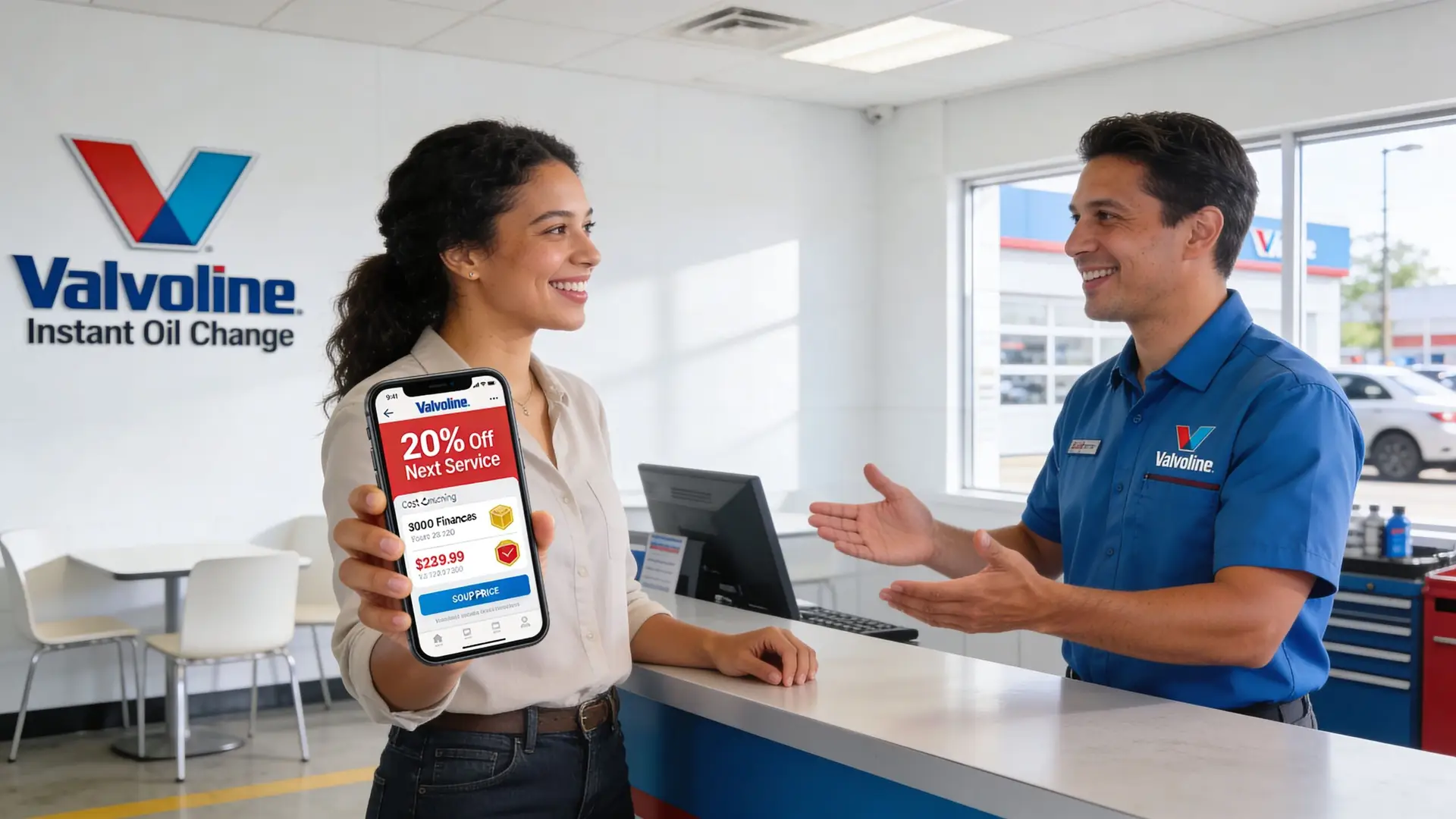
Use coupons as a starting point, not your budget
Yes, bring the coupon. Always.
But treat the advertised discount as the opening number, not the number you will automatically pay. As noted earlier, promo pricing often applies to a basic service setup. If your vehicle takes more oil, needs a specific filter, or gets pushed into a higher-tier package, the receipt changes fast.
That is why I tell drivers to check a local benchmark before they go. Look at current Fort Worth oil change coupons so you can compare the actual value, not just the ad.
Control the conversation before service starts
The easiest way to save money is to slow the process down for 30 seconds and ask better questions.
Use these lines:
- “Quote the oil change by itself first.”
- “Tell me the total with all required quarts.”
- “What does my owner’s manual call for?”
- “Separate recommended services from optional ones.”
- “I am only approving the oil change today.”
Clear wording protects your wallet. It also makes the visit easier for the technician because there is less confusion about what you approved.
Watch the invoice, not the pitch
Apps, email specials, and loyalty deals can help. The mistake is focusing on the discount and ignoring the line items.
Ask for the total before the work begins. Then check the final invoice against that quote before you pay. If the numbers changed, ask why. A fair shop should explain every item clearly. Shops that protect your auto shop also tend to take documentation and customer approval seriously.
This short video is a useful reminder that speed and savings only help if you stay focused on what you’re authorizing.
My simple pre-service checklist
Before they touch the car, get these three answers:
- What exact oil is going in my vehicle?
- What is my out-the-door total today?
- What add-ons are being suggested, and which ones can wait?
Do that every time. It turns a vague advertised price into a real number you can compare against a trusted local shop.
Valvoline vs Local Experts What Fort Worth Drivers Should Know
You pull into a quick-lube bay expecting the price from the sign. Ten minutes later, the total is higher, the oil is different than you expected, and now you’re sorting through add-ons while cars stack up behind you. That gap between the advertised deal and the final bill is what Fort Worth drivers need to pay attention to.
Valvoline is built for speed and convenience. A strong local shop is built for clarity, context, and consistency. If your only goal is getting in and out fast, a chain can work fine. If you want to know what your car needs and what it will really cost before the work starts, local expertise usually gives you a better experience.
Fort Worth pricing is won or lost at the counter
My issue with chain pricing is simple. The advertised number often gets you in the door, not out the door.
Valvoline prices can change based on oil type, vehicle requirements, oil capacity, filter choice, and whatever extra service gets suggested during the visit. Fort Worth drivers feel that in real time because the final invoice depends on the specific car in the bay, not the headline price on a promotion.
That makes side-by-side shopping harder than it should be.
Local experts usually make comparison easier
A good neighborhood shop will tell you, in plain English, what your vehicle calls for, what the service includes, and what can wait. That matters a lot if you drive a truck, an older SUV, a high-mileage sedan, or anything that falls outside the basic quick-lube routine.
It also matters if you plan to keep the car. A shop that knows your service history can spot patterns, not just today’s sale opportunity.
If you want a cleaner comparison, look at a local breakdown of Kwik Kar oil change pricing in White Settlement. It gives Fort Worth area drivers a more transparent benchmark than a generic chain promotion.
The better value is the shop that explains the bill
Oil changes are simple until they aren’t. A seep at the filter housing, signs of burning oil, a stripped drain plug, or uneven tire wear can turn a routine visit into a bigger conversation. At that point, brand recognition matters less than having a technician who can explain the problem clearly and tell you what needs attention now versus later.
That kind of accountability matters on the business side too. Shops that protect your auto shop tend to take vehicle care, documentation, and customer approval seriously.
Fast service has value. Clear pricing and informed advice usually save Fort Worth drivers more money over time.
Making the Smart Choice for Your Car and Budget
If your car is straightforward, you’re in a hurry, and the exact service is clear before they start, Valvoline can be a perfectly reasonable option. Convenience has value. So does getting in and out without scheduling a longer appointment.
But if you drive an older vehicle, a higher-mileage truck, a larger SUV, or anything that tends to trigger add-ons and special requirements, don’t shop by logo. Shop by clarity. You want the place that tells you exactly what your car needs, what it doesn’t need yet, and what the full bill looks like before the work starts.
My rule of thumb
Use a quick-lube chain when the job is simple. Choose a full-service local expert when the vehicle isn’t.
That decision gets even easier if you ask a few direct questions first:
- What oil spec does my manufacturer require?
- Does my vehicle need more than the standard oil fill?
- What’s included in the quoted service?
- Which recommendations are urgent, and which can wait?
- What is my out-the-door total before you begin?
Those questions protect your budget better than any coupon by itself.
Common Questions About Valvoline Oil Change Services
Is Valvoline’s fast service always realistic
Sometimes, yes. But a quick visit can slow down if the store is busy, your vehicle needs a less common filter or oil, or the staff starts reviewing extra services with you. Fast service is possible. It just shouldn’t be your only reason for saying yes.
Will a Valvoline oil change void my warranty
No, not if the shop uses the oil and specifications your manufacturer requires and the service is documented properly. The important part is matching the vehicle’s spec, not the logo on the building.
Do you have to accept every recommended add-on
No. You can say no to optional services. If something is urgent, the staff should be able to explain why in plain language. If they can’t explain it clearly, don’t approve it on the spot.
If you want an oil change quote that makes sense before the work starts, schedule with Kwik Kar Oil Change and Auto Care. You’ll get straightforward recommendations, experienced technicians, and a full-service shop that can handle more than a basic drain-and-fill when your car needs real attention.